Category: People

  • Tarun Nangia joins IICA monitoring committee as member

    Tarun Nangia joins IICA monitoring committee as member

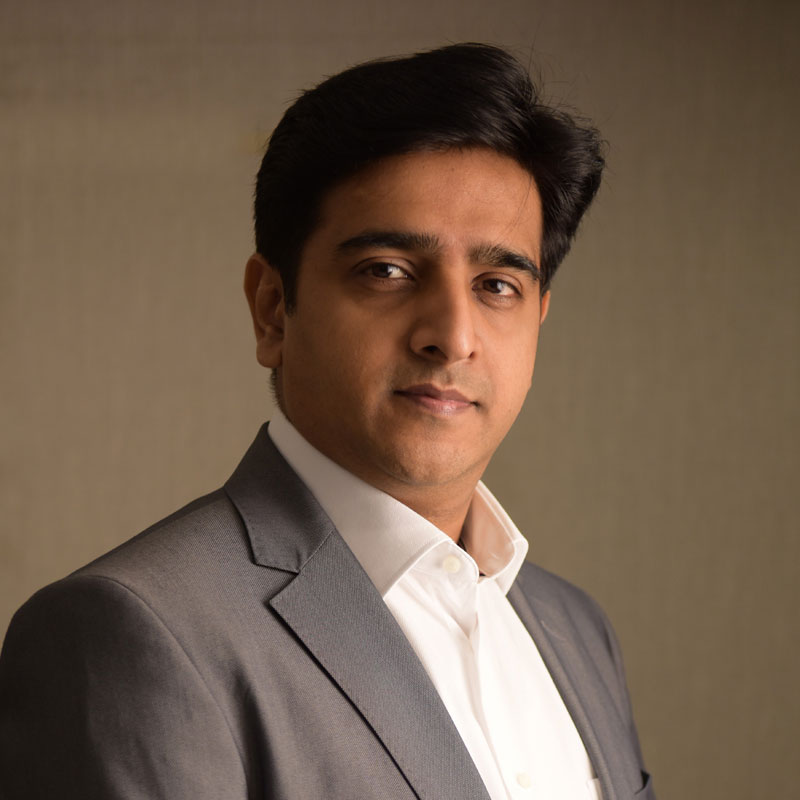
    NEW DELHI: NewsX associate editor (special projects) Tarun Nangia has been appointed as a member of the monitoring committee to the Indian Institute of Corporate Affairs (IICA), a think-tank under the ministry of corporate affairs, government of India.

    The monitoring committee has been constituted to oversee projects related to production and telecast of TV series on behalf of Investor Education and Protection Fund Authority (IEPFA).

    His mandate is to carry forward IEPFA’s mandate of investor education, awareness, and protection, offering advice to avoid disputes, offering media dissemination related advice and other activity incidental to investor awareness and protection. The work would involve improving financial literacy among Indian investors.

    Nangia produces hosts of popular weekly television shows i.e. Legally Speaking, Policy & Politics and Brand Story. 

    IEPFA is a fund set up under the guidance of the Securities and Exchange Board of India (SEBI) and ministry of corporate affairs, government of India. IEPFA is set up to pool all the dividends of the asset management companies, matured deposits, share application interests or money, debentures, interests, etc. that are unclaimed for seven years. All the money collected from the mentioned sources has to be transferred to IEPF. Investors, who are trying to seek a refund for their unclaimed rewards can now do so from the Investor Protection and Education Fund (IEPF)

    Follow Tellychakkar for the consumer facing news & entertainment

  • Johannes Larcher to head HBO Max International

    Johannes Larcher to head HBO Max International

    NEW DELHI: Johannes Larcher will take over as Head of HBO Max International, WarnerMedia, a division of AT&T Inc announced today. It has been reported that Larcher will report to WarnerMedia International Networks chief revenue officer & president Gerhard Zeiler. 

    Larcher will take care of the international rollout and management of WarnerMedia’s direct-to-consumer product HBO Max. His first aim is said to be the launch in Latin America, expected in 2021.

    Larcher will closely work with WarnerMedia Entertainment Networks Latin America president Whit Richardson and WarnerMedia Entertainment Networks EMEA & APAC president Priya Dogra. 

    Larcher comes with a vast experience, he has served as managing director, digital at MBC Group, the Middle East’s leading media company based in Dubai; prior to this he was co-founder and CEO of SubVRsive in Austin, Texas, a WPP funded, Emmy-nominated virtual and augmented reality studio. He was also associated with Hulu as senior vice president, international. Earlier, Larcher was president and CEO of Academy123.

  • Priya Dogra appointed WarnerMedia Entertainment Networks, EMEA & APAC president

    Priya Dogra appointed WarnerMedia Entertainment Networks, EMEA & APAC president

    MUMBAI: WarnerMedia, a division of AT&T Inc, announced the appointment of Priya Dogra as president, WarnerMedia Entertainment Networks, EMEA and APAC. For the time being, Dogra will continue her responsibilities as executive vice president, strategy and corporate development for WarnerMedia.

    With her added responsibilities, Dogra will report to Gerhard Zeiler, chief revenue officer, WarnerMedia & president, WarnerMedia International Networks. She replaces Giorgio Stock who stepped down at the end of June.

    In her new role, Dogra will have executive oversight and responsibility for programming, advertising, distribution and operations of the WarnerMedia Entertainment Networks which include the basic Turner and premium HBO networks in Europe, Middle East, Africa and the Asia-Pacific region. Dogra will share responsibility for the kids business in EMEA and APAC with Tom Ascheim who was recently named president, Global Kids, Young Adults and Classics at Warner Bros.

    Gerhard Zeiler said: “Priya is a world-class executive who has been driving WarnerMedia’s overall corporate growth initiatives and in particular our direct-to-consumer-strategy internationally. Her leadership, passion and knowledge of our international businesses will make an immediate impact on our organisation. She is a great addition to my leadership team and to our EMEA and APAC businesses.”

    Priya Dogra said: “I am excited to take on this role particularly now as we refocus our efforts to connect our beloved brands and high-quality content directly with consumers around the world. I look forward to working closely with Gerhard, our broader leadership team and the EMEA and APAC organisations to strategically position us for continued success in a highly competitive marketplace.”

    Dogra has been with the company since 2009. She currently serves as executive vice president, strategy and corporate development and was previously the head of mergers & acquisitions for Time Warner, Inc. During her tenure at the company, Dogra has led the company’s global growth strategies and managed investment and M&A activity to support those strategies. Prior to joining Time Warner, Dogra was a vice president in the technology, media and telecom investment banking group at Citigroup.

  • I am passionate about building businesses that have scale: Aditya Pittie

    I am passionate about building businesses that have scale: Aditya Pittie

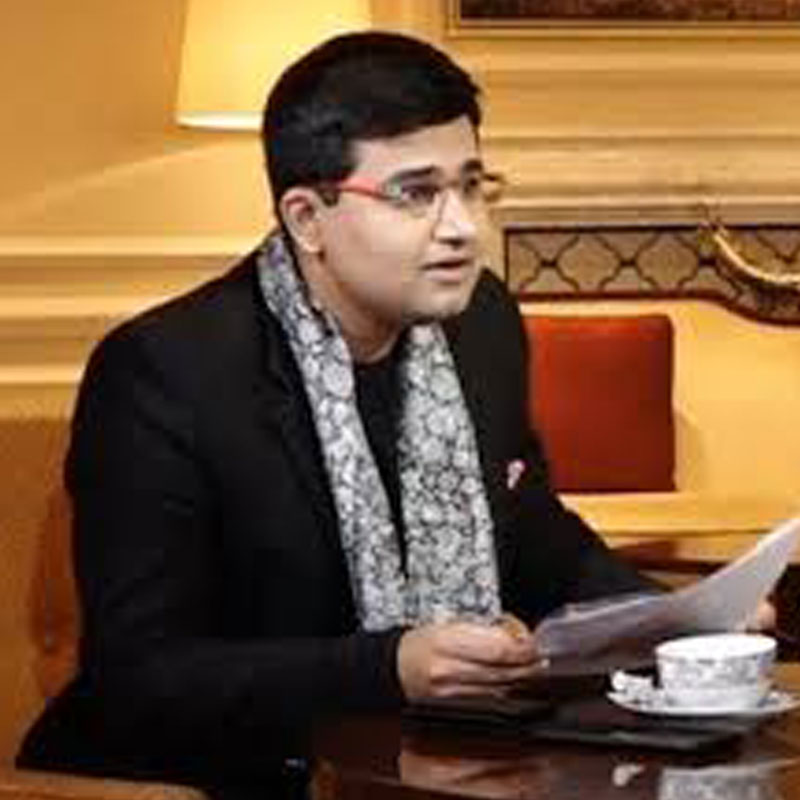
    From being a young man who had to Google about downlinking and uplinking and did not know how a satellite signal works a decade ago to an entrepreneur at the helm of a media conglomerate, IN10 Media Network and Pittie Group managing director Aditya Pittie has come a long way. Anand Mahindra- and Pittie-promoted IN10 Media has television (Epic TV), OTT platforms (Epic On and Docubay), and production house (Juggernaut) in its kitty.

    Pittie finds his passion is creating value and wealth and building scale.  “That’s why I am interested in multiple businesses, not just any particular business. I am passionate about business, and building businesses that have scale, that gives employment to many people. That is what drives me,” says Pittie during a virtual fireside chat with Indiantelevision.com group founder, CEO and editor-in-chief Anil Wanvari.

    Here he talks about his and his and his father’s association with Patanjali, Aastha and Sanskar television channels, the distribution business and how he ventured into the world of broadcasting. He is very clear about where he wants to position himself in the broadcast business when he says: “I realised that it is better to be part of a smaller genre but have a better market share, rather than be part of a big genre and have an insignificant market share.” Excerpts:

    Describe your journey with Patanjali.

    Our relationship has gone stronger over the years. We have a lot of common values in terms of how business can be used to create value for society at large. We have been connected to him since the seeding of the idea and therefore we share the long-term vision and we continue to be part of that journey in some way or the other.

    Your father had gone to Haridwar and seen him there and invited him to Mumbai and conducted the very big Yoga gathering some 14 years ago.

    That was much before Patanjali. At that time, Swamiji was spreading the knowledge of yoga across the country to as many people as possible and obviously through television. He used to come live on Aastha channel. He was able to create the awareness of how simplified yoga can be done by people in their homes and the value it can add to the health, not just from a weight-loss point of view but from general mental health. So that is the time when my father went to Haridwar first and did yoga camp with him and was impressed with the vision that this man had that we decided to be part of the journey.

    Aastha and he became a big name after that.

    TV played a big role in his popularity. A lot of people don't know this: Swamiji is actually one of the very people in this country who have travelled to every single district by road. Lot of people think his popularity came from TV, which he does. But he has physically conducted big yoga camps with millions of people in the country. I don't think anybody has done this kind of large yoga camps of this scale ever in the history of the country. So his ground connection with the people is so strong; that is where the whole idea or philosophy of Patanjali comes from. It is for the real people that would not have access to real quality products in a market where brands used to mark up their products by creating brand perceptions, sometimes by compromising the underlying value of products. When he travelled across the country, he realised that there was a big gap in that. And he wanted to give better value products to consumers. That was the mission. I think while television was an important part of his popularity, a lot of people don’t know that he really worked hard. Almost seven-eight years he travelled to conduct yoga camps in every part of the country.

    You had a good starting point in a way. Your dad, Acharyaji and Swamiji. Acharyaji was extremely good at Ayurveda. Your father was a good entrepreneur. He was into real estate. Then you came in and expanded the business. Tell us about that. 

    I worked with my father for eight – nine years after my graduation. After that I thought of building my own identity and business. That is when the idea of selling Patanjali in super markets came about. That time Patanjali was a Rs 700-800-crore company. They were not present in any of the supermarket chains. And there was a lot of noise around how modern retailers eventually were going to have a larger share going forward. And I was very intrigued by that. So I thought it was a good business opportunity to build from scratch. Before that, while we were part of the Patanjali journey, I was not involved in any of the management decisions or business of Patanjali. It was completely a new business for me. Luckily, Swamiji supported and gave me an opportunity to see if there is an interest among the retailers. Then the first retailer I went to was Reliance. While they liked the idea of Patanjali they were very supportive of the fact that as an entrepreneur I had to build a business. That’s how the journey started. We piloted with five Reliance outlets in Mumbai first. I still remember I used to make the invoices myself and take order sheets from merchants, just to understand how the business is done on the ground. Then Patanjali grew and we started contributing 10 per cent of Patanjali’s overall business.

    So there is a logistics side to the business, there is construction and there is Patanjali distribution and you came to the media business.

    Real estate is my father’s business. I am not actively involved in the business any more. Over the years we build a lot of capabilities at the backend. We designed solutions that specifically catered to supermarket chains. Dealing with chains was not as easy as dealing with the unorganised sector. We created solutions for the brand to increase market share in supermarket chains. We have a large warehousing network. Now we have started looking for other clients who require this kind of logistical reach and service. Our biggest client continues to be Patanjali.

    Are you open to distributing other companies’ products?

    We are very selective. I have just done a deal with an American company for their beauty brands; they are non-competing with Patanjali. I also have some companies that use only our warehousing logistics. It is sort of a complex structure we have now. We are trying to find our feet on what exactly we would be when we go forward.

    What actually inspired you to get into the media?

    The Sanskar opportunity came to us very organically. When the opportunity came, we thought that the product was really strong. Aastha and Sanskar had 95 per cent of market share in the genre at that time. Our family – though not an orthodox Marwari family – was a pretty religious family. And the family found the opportunity to have Sanskar in our portfolio and to be able to be part of the journey as a good decision. And that’s how we got into the media business, specifically in Sanskar. When I started out, the first thing I did was to google about downlinking and uplinking. Until that time, I did not know how a satellite signal works. That was almost 10 -12 years ago. Sanskar was a very different, unique business model. It wasn’t the typical broadcast business where you invest in programming and then monetise through ad sales. Most of the programming on the spiritual genre was given by the content owners for free, because they want reach. In fact, they pay you to use your platform. It was a great experience. We ran it for five years and sold it to Swamiji for a very good return. That’s how we got interested in the media business. Then we looked at starting other spiritual channels. That’s how Shubh TV came along. And during that time, I had met Anand a couple of times. That’s how the journey of Epic started. The primary objective of the relationship was to make sure that Epic as a brand, which was loved by millions, was able to survive and continue in a viable way with critically acclaimed products, something Anand was proud of. When I researched on the channel, I realized that the product was very strong and definitely worth putting some time to make it work. And that’s how my partnership with Anand started. That’s how we started building Epic again.

    So you also have invested in the channel, right?

    Yes, there is an arrangement where I am also a shareholder.

    With Epic what did you feel was right and what did you feel was wrong? And what did you do go about correcting it?

    The product was just very ahead of its time. Mahesh Samat is a very seasoned media professional. He ran big companies. A lot of people don’t know this: Mahesh is a consumer guy. He understands what a consumer wants in general. Some of the content he created is still our flagship ones. They did a lot of things right. The timing of TAM going away and BARC coming in, etc., and the fact that the content was slightly ahead of time, something the mass audience in India at the time did not accept as Mahesh would have thought. That’s the challenge they have faced. The opportunity was obviously the fact that there was strong brand affinity. While the viewership was low, it was loyal. My research found that in niche products you have less absolute viewership, but you have relevant one. For example, the number of people watching English news is far lower than mostly all genres. But the reason why they get so much traction and advertising is because brands want that TG and affinity require English news for that. With such strong positioning and niche, I felt in the long term it would definitely reap some value. That was the base concept behind my conviction that Epic can be turned around. Then we did the repositioning and changed the distribution strategy. We did multiple things to ensure that we stay on course and on our path to profitability.

    In terms of distribution what did you change? Did you get on to more DPOs?

    Epic was always a pay channel. When you launch a new channel you have to incentivise DPOs and cable operators to carry your channel. When I took over Epic had certain deals in the market with DPOs, which I felt was not ideal, and which we then turned around in a couple of years. This year Epic will be subscription-positive from a distribution point of view for the first time. So we went from being a pay channel that incentivises our DPOs and cable operators to carry the channel to becoming a net-positive subscription earner.

    From being a man who did not know what uplinking and downlinking to a media entrepreneur, you have come a long way. What next?

    My passion is creating value and wealth and building scale.  That’s why I am interested in multiple businesses, not just any particular business. I am passionate about business, and building businesses that have scale, that gives employment to many people. That is what drives me. In Epic and in my partnership with Anand Mahindra I felt that there was an opportunity for a young guy like me to really live up to that dream of wanting to create that opportunity for others.

    So you took up Epic four years ago when you were 32. What did you learn about the business?

    Honestly, I had the luxury of having people around me who had an equation that was not limited not just to work. I worked with them like they are my friends. We have a very democratic approach to finding solutions to challenges that epic faced. We used to always ideate. It was a collective effort. One of the things was to reposition Epic. While it was intended to be a GEC, somewhere in the programming it became a knowledge-based product. People started perceiving it as an infotainment channel. Even in the market, some of the brands started calling it an infotainment channel when it always was in the GEC space. I realised that it is better to be part of a smaller genre but have a better market share, rather than be part of a big genre and have an insignificant market share. That is why I felt that it would be smarter to be moving to infotainment which is what people perceived it to anyway. And that’s why the decision to rebrand the logo the reposition the channel from GEC to infotainment came about.

    It is a smart decision, because GECs’ carriage fee is much higher.

    Carriage fees are one part of the GEC. But content is the key. To get significant market share in GEC, you need a certain amount of capital. Otherwise you cannot compete in that space. At that time Epic was loved because to make it into a GEC would have compromised the value and brand identity of Epic and what it stands for. So the objective was not only to make it viable but also to keep the essence of Epic as a brand alive and to make sure that people who love continue to get that content. It wasn’t just about viability; we had to find the right fit. That’s why infotainment was the right fit. We do about 150 hours of original programming. We acquire a lot of programming as well. We have 600 hours of our own IP, all episodic programming. People love watching them multiple times.

    How was the advertisers’ reaction?

    Infotainment genre is pretty stagnant when it comes to advertising. In the infotainment genre there is a lot of brand integration. A lot of FCTs are done just based on ratings. We have been focusing a lot on content and trying to find brands to plug into the Epic positioning.

    What is the journey ahead for Epic? You launched Epic+ HD.

    A lot of our viewers have wanted an HD version of the channel for a very long time. We want to have a separate channel and programming line-up for Epic+ HD as and when we decide to launch it. 
  • Mathrubhumi chief and politician MP Veerendra Kumar passes away

    Mathrubhumi chief and politician MP Veerendra Kumar passes away

    MUMBAI: Mathrubhumi chairman managing director MP Veerendra Kumar, 84, passed away following a cardiac arrest in Kerala's Kozhikode district on Thursday night.

    For nearly four decades, he served as the top executive of the media house which comprises Mathrubhumi newspaper and Mathrubhumi News television channel, Mathrubhumi online, and a slew of niche publications in print. He was  serving as an independent Rajya Sabha MP backed by the Left parties.

    An active politician who followed the paths of socialist politician Jayprakash Narayan, Veerendra Kumar had undergone imprisonment during Emergency in 1975. None other than Jayprakash Narayan invited him to join the socialist party. He served as an all-India treasurer of the Samyukta Socialist Party from 1968 to 1970. Later, he joined the Janata Party and the Janata Dal factions. Later, he served as a union minister of state for finance and labour, and many times MP and MLA. An avowed champion of environmental issues, when he was the minister of forests in Kerala for a very short period, he infamously made his first order against cutting forests.

    A prolific writer and author of several award-winning books, Veereendra Kumar wore many hats: media owner, politician, and author.

    He was born to socialist leader and planter MK Padmaprabha Goudar and Marudevi Avva. He had his higher education from northern Kerala and from Cincinnati University, Ohio.

    He is survived by his wife and four children. His son M V Shreyams Kumar is the joint managing director of Mathrubhumi.

    The last rites will be held on Friday in the hilly district of Wayanad. 

  • UNWTO, CNN partner on Travel Tomorrow campaign

    UNWTO, CNN partner on Travel Tomorrow campaign

    MUMBAI: Inspiring people to dream of destinations to visit and Travel Tomorrow, when it is safe to do so, is the message behind a newly launched CNN campaign which was devised for the United Nations World Tourism Organization (UNWTO).

    The 60-second film, which runs on CNN International, takes viewers around the world, reminding them of the wonders beyond their neighbourhoods. Travel Tomorrow aims to drive imagination for future trips featuring adventure, business, culture, family and friends.

    Produced by Create – CNN International Commercial’s (CNNIC) in-house creative studio – the film features eight different countries and conveys optimism for prospective journeys. Recognising that travellers of the world have been grounded by Covid-19 and are missing exploring different locations and meeting new faces as they did pre-crisis, it highlights the importance of holding on to hope of travelling when the time is right, and encourages viewers to be enthusiastic about the places and people that they will soon be able to visit, in line with World Health Organisation (WHO) guidance. This also reflects the UNWTO’s messaging throughout the pandemic.

    “Travel and tourism is by far one of the most affected sectors as a result of this pandemic. Our commitment to supporting this industry is based on our work over many years with the UNWTO, its members around the world and other travel and tourism destinations. It is important to share this responsible yet aspirational message with CNN’s global audience, reminding people that while many have to stay home today, to not stop dreaming about where they want to travel to tomorrow.” Rani Raad, president, CNN worldwide commercial.

    "In these challenging times we must all play our part – staying home today, supporting the efforts of the global healthcare community in combating COVID19 – so that we can #TravelTomorrow. But this does not mean we should stop dreaming about the places we will one day travel to. I am excited by this new initiative created by CNN, a valued partner of the UNWTO, to keep the world connected to the people and places that wait for us when we can once again enjoy the gift of travel – a sector that will  be critical to global economic recovery, unity and opportunity." Zurab Pololikashvili, secretary general of the UNWTO.

    Check out the video here: https://bit.ly/2ZC6hZf

  • Latasha Jadhav leaves Sri Adhikari Brothers TV

    Latasha Jadhav leaves Sri Adhikari Brothers TV

    Mumbai: Latasha Jadhav has resigned from the post of chief financial officer from Sri Adhikari Brothers Television Network Ltd with effect from 26 May, 2020 on personal grounds, informed the company in filing to SEBI.

    The board of the network appointed Latasha Jadhav as CFO of the company from 23 April 2019. Jadhav is also on the board of several other companies.

    The filing also informed that it is submitting the disclosure in “SD mode” pursuant to the guidelines issued by BSE and National Stock Exchange of India Limited for submissions of documents on respective portals in the wake of Covid2019 virus and following the WFH policy.

    Sri Adhikari Brothers produces television programmes such as sitcoms, music shows, game shows, entertainment news and current affairs, soap operas, etc. 

  • Anjali Bhushan joins Viacom18 Studios as head creative content and production

    Anjali Bhushan joins Viacom18 Studios as head creative content and production

    MUMBAI: Anjali Bhushan, the creative mind associated with the media and entertainment industry, has joined Viacom18 Studios earlier this month. Bhushan will serve as Viacom18 Studios and Tipping Point creative content and production head. 

    She will be reporting to Viacom18 Studios COO Ajit Andhare. In her new role, she will be heading creative content and production for all digital series, direct-to-digital movies and theatricals as well. Bhushan comes with a wide array of experience in the Indian film industry. Her feature-length documentary My Home India gained strong word of mouth last year after premiering at a premium film festival.

  • Ofcom appoints Alison Marsden as director of content standards

    Ofcom appoints Alison Marsden as director of content standards

    MUMBAI: Ofcom has appointed Alison Marsden as director of content standards, licensing and enforcement.

    Alison will be leading the team with responsibility for setting and enforcing content standards for television, radio and on-demand services and Ofcom’s broadcast licensing programme.

    She will also sit on Ofcom’s content board, a committee of the main Ofcom board, which has advisory responsibility for a wide range of content issues.

    Alison joined Ofcom in 2007 as a broadcasting standards specialist. Since 2016 she has worked as director of the standards and audience protection team, responsible for setting and enforcing Ofcom’s broadcasting code.

    Before joining Ofcom, Alison worked in television production, firstly at the BBC producing and directing specialist factual and factual programmes, and later for various independent production companies.

    Alison Marsden said: “I’m thrilled to be taking on this role. I look forward to helping Ofcom maintain high levels of protection for broadcast and on-demand audiences, and ensuring that we license broadcasters in a way that’s effective but also reflects the challenges the industry faces.”

    Ofcom’s content group director Kevin Bakhurst said: “I am delighted that Alison Marsden will be taking on this critical position for Ofcom. Ali brings a wealth of editorial experience and judgement to the role, along with a strong commitment to the protection of audiences and to the broadcasting and on-demand sector.”

    Tim Suter, chair of Ofcom’s content board, said: “Alison will do an excellent job as our new director of content standards, licensing and enforcement. I’m also delighted the Ofcom Board accepted my recommendation that she be appointed as a member of the content board. I have the highest regard for her judgment and editorially sure-footed approach, and she will bring wisdom and weight to the board’s work in this area.”

    Alison takes up her new roles with immediate effect.

    Follow Tellychakkar for the consumer facing news & entertainment

  • Shemaroo hires Sandeep Gupta to head broadcast business

    Shemaroo hires Sandeep Gupta to head broadcast business

    MUMBAI: Shemaroo Entertainment, India’s leading content powerhouse, has announced the appointment of Sandeep Gupta as COO – broadcasting business. This comes at a time as the company announced its strategic entry into broadcast business with two channel launches – Shemaroo TV, the flagship Hindi GEC and the Marathi movie channel Shemaroo MarathiBana.  With this move, Shemaroo will consolidate its entire broadcast offerings under the able leadership of Sandeep Gupta.

    Sandeep has played an instrumental role in Shemaroo’s entry into the broadcast business to power its next growth phase. Before joining Shemaroo Entertainment, Sandeep has been the India CFO & COO – broadcasting business at B4U Television Network India Limited, where he played a significant role in scaling up and turning around the broadcasting business with improved market credibility and brand image, along with a couple of television channel launches.

    Shemaroo also announced key appointments and restructuring to focus on the broadcast business.

    Subhash Somani, deputy vice president, has helped scale Shemaroo DTH VAS business to newer heights and will now take additional charge of Shemaroo TV. Subhash will oversee the entire business for Shemaroo TV – content production & planning and channel distribution among others. Subhash comes with a rich experience of 10 years in the media sector, where he has driven business strategies, alliances and partnerships along with content production and other building block functions for many organizations. Prior to making a move to Shemaroo, Subhash was associated with Videocon d2h.

    Vivek Koka, assistant vice president, who heads the Bollywood category, will now be given additional responsibility of leading the Marathi movie channel ‘Shemaroo MarathiBana’. As a business professional of 17 years, Vivek has varied experience across broadcasting, DTH & telecom. In his last assignment, he led the marketing function for channels such as &pictures, &pictures HD, Zee Classic & Zee Anmol. Prior to Zee, he worked with leading brands such as Tata Sky & Tata Docomo handling leadership roles across key strategic functions.
    With a clear focus in the broadcast business, its agenda will be led by some of the finest minds in the television space and hence on the programming front Shemaroo has announced key hires. 

    Rakesh Jain, programming head, will be responsible for the programming and creative development of the Hindi GEC, Shemaroo TV and will work closely with the team to strengthen the channel’s position. He comes with over 18 years of experience in the media space where he has led the programming teams from inception stage and launched two successful Hindi GECs. He has also been instrumental in creating channel driver properties for Star group, ZEE group and Turner group from the broadcasting ecosystem. 

    Yojana Bahalkar Bhave, deputy general manager, will lead programming for Marathi movie channel Shemaroo MarathiBana. She comes with over 15 years of experience in the GEC and non-GEC space and has worked with leading brands like Zee Talkies, Colors Marathi, 9X Media, Music India, ETV Marathi etc. She was instrumental in launching 9X Jhakaas, first Marathi music channel and revamping of Zee Talkies. Yojana has vast experience in non-fiction programming and has worked on various TV show formats like music shows, reality shows, adventure and youth shows, multi-entertainment television shows and film award shows.

    Both the progamming leads bring on board an in-depth experience and a strong understanding of content curation that will be crucial in developing the broadcast portfolio for the company. With these new hires, Shemaroo has elevated the entertainment quotient for their newly launched Shemaroo TV and its audiences.

    Shemaroo Entertainment CEO Hiren Gada said:  "Shemaroo’s DNA has been to constantly evolve with the changing times and pre-empt market shifts and adopt unconventional approaches for an accelerated growth. Our endeavor has always been to build a future ready organisation with distinct capabilities and a distinctive culture with an emphasis on developing internal talent. This new structure will power us as we enter our next growth phase.” While congratulating Sandeep Gupta on the appointment, he said, “Sandeep  is one of those rare leaders in our industry who possess a sharp business acumen coupled with great insights on the pulse of the audiences. I am confident that he will be able to take our television offerings to greater heights as he leverages his experience of successfully building large scale television businesses.”

    Sandeep Gupta said: "Shemaroo is an established and homegrown name in the entertainment industry, entertaining consumers from the last 57 years. The company is constantly experimenting and tapping into many new businesses, and has always disrupted the archaic norms. It’s an exciting time to be a part of such a dynamic team at Shemaroo, while embracing the culture and bringing the best to the vision and leadership. I look forward to working with the teams here, and make significant contribution by making the category a household name. “

    Shemaroo is all set for a new innings in the broadcast space and has laced itself with all the ingredients required to be the top choice of the viewers.