Category: People

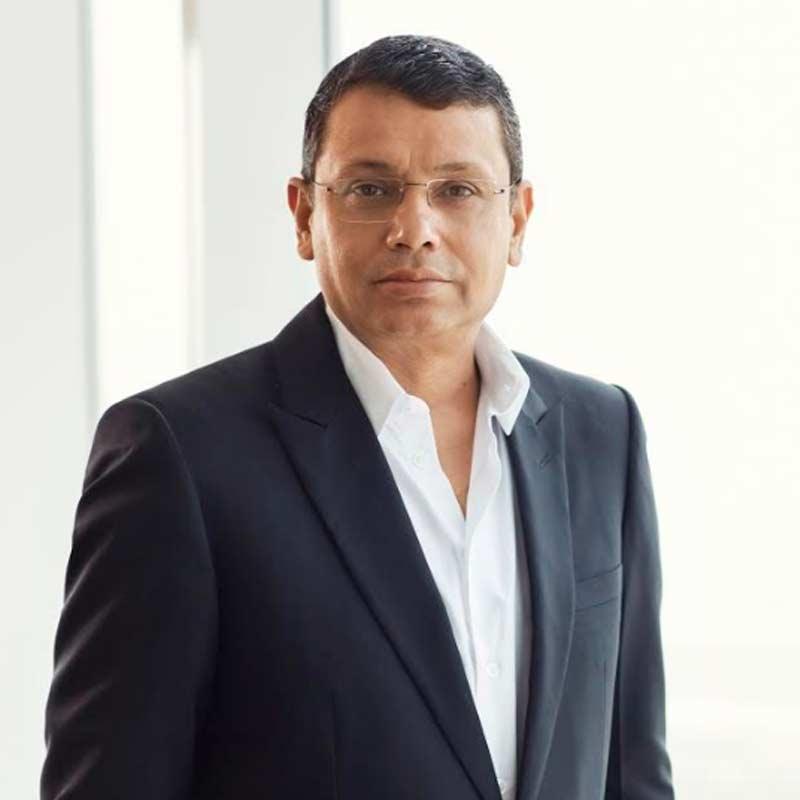
  • Uday Shankar steps down from Disney Star India

    Uday Shankar steps down from Disney Star India

    MUMBAI: This is big in the world of media and entertainment. The professional who helmed Star India for the past 11 years and saw it through with its merger with Disney – Uday Shankar- has decided to step down.

    The  president, The Walt Disney Company APAC and chairman, Star & Disney India, will be leaving effective  31 December 2020, it was announced today by Rebecca Campbell, chairman of Disney’s direct-to-consumer & international segment.

    Over the next three months, Shankar will work closely with Campbell to identify his successor to ensure a smooth transition.

    “I want to thank Uday for his leadership and dedication to our APAC business. With the successful launch of Disney+ throughout the region, he has helped put The Walt Disney Company in a commanding position in this dynamic and incredibly strategic part of the world. His vast experience and expertise have been invaluable in bringing together a strong, cohesive APAC leadership team to chart a path forward for our streaming businesses in the region and beyond,” said Ms. Campbell. “Uday has been a great friend, colleague and valued counselor to me personally, and I know I speak for all of DTCI when I say he will be greatly missed. At the same time, I understand and respect his desire to make this change. I am extremely grateful that he has agreed to stay on to help ensure a seamless transition.”

    Shankar said:  “I have always believed in the power of creativity and cutting-edge technology to create a better world and consider myself incredibly fortunate to have had the opportunity to do so at Star, 21CF and now at The Walt Disney Company. As I look back on this journey, I take pride in having set ambitious goals in my professional career, and achieving all that we set out to do. For some time now, I have been contemplating the question of how I give back to the country, community and the industry that have given me so much. I think the best way to express my gratitude to all of them will be to support and mentor a new generation of entrepreneurs as they set out to create transformational solutions that will have a positive impact on countless lives.I intend to partner with global investors and pioneers to achieve this.”

    Since February 2019, Shankar has served as president, The Walt Disney Company APAC and chairman, Star & Disney India. Previously, he was president of 21st Century Fox for Asia and the chairman & CEO of Star India. He took over the leadership of Star India in 2007 and transformed not only the Star business into one of the largest and most successful media companies in Asia but has also played a significant role in revolutionizing the media landscape of the region with a great team, audacious strategy and meticulous execution. A believer in the power of local execution, Shankar led Star’s aggressive foray into regional and local language programming, transforming Star into a content powerhouse which now broadcasts more than 30,000 hours of content every year. He also consolidated Star’s sports broadcasting operations through 21st Century Fox’s acquisition of its joint venture with ESPN. Today, Star Sports is India’s largest sports broadcaster and is fundamentally redefining India’s sports ecosystem. In a notoriously single sport country, Star has launched multiple domestic sports leagues like those in Kabaddi and Football and has pioneered the agenda of creating a thriving multi-sports culture.Under Shankar’s leadership, Star has also made strides in disrupting the country’s digital landscape with the launch of Hotstar, which is now India’s largest over-the-top (OTT) platform for professionally produced content and has gone global in its footprint with offerings in the US, Canada and the UK.

    He previously served as CEO and editor of Star News, which was the first 24-hour news channel in India. He was also the editor and news director at TV Today Group, where he spearheaded the launch of Aaj Tak, a leading Hindi news channel, in 2000 and Headlines Today, a leading English news channel, in 2003. Over the past decade, Shankar has played a key role in shaping the media and entertainment sector in India, bringing reforms for the industry and its consumers. A former president of Indian Broadcasting Federation (IBF), he is currently senior vice president of FICCI (Federation of Indian Chambers of Commerce and Industry) and in line to take over as its next president.

  • Reliance-Viacom18-Sony deal finally off?

    Reliance-Viacom18-Sony deal finally off?

    MUMBAI:  For a long time, media has been reporting that a deal between the Reliance-owned Viacom18 and Sony Pictures Networks is just about to be struck. That it is definitely on. Then reports surfaced that it's off. Now, here's another one harping on the latter, saying the two are not getting into bed together.

    On earlier occasions, the reasoning was that media and entertainment is too small a business for Reliance to want to continue with it; thus the assets it acquired from Raghav Bahl a few years ago would be jettisoned. Then, on others, when it appeared to have been forgotten, came the news reports that Sony wanted out as the valuation being demanded by Reliance was too high to be even considered by Sony.

    Read more news about Sony

    And even as we totally forgot that the two were even talking to each other, came reports that an arrangement would be struck by the end September-2020. And how synergies would shine when the two wedded each other. We, at indiantelevision.com looked on, with sardonic smiles on our faces, ignoring all the reams of paper that were wasted. The end of September has come and gone, and there's been no deal, nada.

    Now comes the news, that Reliance has opted out because it has had a change of heart and wants management control of the digital operations of the two firms – Voot, Voot Select, and SonyLiv and has suddenly developed a love for its media and entertainment vertical. That is a no-no for Sony. 

    Read more news on Viacom18

    "Media and entertainment is an essential pillar of Jio's business strategy," says a source. "Reliance plans to invest aggressively to grow the digital media business. There is a lot of interest from content companies and production houses in partnering with Reliance and Jio and investors are keen to back such a partnership.”

    Hopefully, it stays that way. And we hope it is the last time that the media will pay attention to this two-year-old "developing" story. 

  • Zee TV at 28: A walk down memory lane

    Zee TV at 28: A walk down memory lane

    MUMBAI: 28 years sounds like a long, long time. But it seems to have gone by in a flash – for Zee TV’s founders, for TV viewers, for media observers and for investors. It was certainly an audacious move when a goateed gentleman by the name of Subhash Chandra Goyal decided to set up an entertainment channel in 1992. The only TV entertainment we were familiar with was that of public broadcaster Doordarshan for close to twenty years. The last nine or 10 of those were in colour, while the first 10 were in black and white.

    Small cable TV operators with single master antenna television services (SMATV) used to serve us with those original Hiba (Nari Hira) movies, stolen copies of popular Hindi films, pirated versions of Mind Your Language, and Top of The Pops, as well as pornos late in the night during the late eighties and early nineties. Then they began to air Satellite TV Asian Region (Star TV) channels and shows including The Bold and the Beautiful, and Chinese subtitled movies and a mix of international and Chinese songs and finally CNN and BBC, when Li Ka Shing and Richard Li flagged off the ambitious service. Successful at tapping into the minds of India’s metro dwellers, the shows gave women in the first class compartments of trains enough to chat about – such as the exploits of Eric Forrester and Brooke Logan. VJ Nonie on MTV, which was part of the STAR bouquet..

    Into that uncharted territory stepped a bunch of maverick entrepreneurs. Among them: Subhash Chandra, better known for making lamitubes for toothpaste under Essel Packaging, and a cable TV operator named Siddharth Srivastava from the southern part of Mumbai. Srivastava beat everyone to the punch, launching ATN with the promise of many more channels offering songs, movies and sports to come. ATN was interesting but was on an ageing Russian satellite which wobbled. When it did, cable TV operators had to reorient their dishes, which was pretty frequent. Hence, when Zee TV was beamed off Asiasat-2 with its bright pictures and differentiated entertainment shows, Indians became glued to it. Not just in the metros, but in smaller towns and cities, and in some prosperous villages as well.

    And it seemed like Zee TV could do no wrong, even as others attempted to get into the same entertainment channel space. Business India TV and the Times of India unveiled flashy plans while the Hindustan Times and Dr JK Jain launched channels as well. But in time they dropped out of the race, a clear indication that experience in print or out of home media need not guarantee success in television. The highly successful Business India founder, Ashok Advani, borrowed big for his BiTV and cable TV forays, but floundered so badly that his publishing empire almost went belly up.

    Meanwhile, the business savvy Chandra attracted the shrewd Rupert Murdoch to partner with him, locking him in a deal which helped Zee TV grow, and kept the Star TV network in check. The duo finally parted ways with Chandra paying off the Ozzie media baron. 

    Chandra and team seemed to have his finger on the pulse of what viewers wanted to watch: both in non-fiction and fiction. He pioneered singing talent hunts, long before the Idol franchise was created globally, tried almost every genre of fiction programming, right from drama to crime to thriller to horror to adventure to kids. He also had the foresight to acquire rights to movies, paying what seemed like top dollar in those days to acquire them for perpetuity. .

    He succeeded beyond anyone’s wildest imagination: an increasing number of channels followed. Some succeeded, some he effortlessly folded up when he discovered that audiences did not approve. He forayed into cable TV with Siti Networks, DTH with Dish TV, news with Zee Media  – all of which are assets which have served the group well. Yes,  the group could definitely monetise them better, but for that regulations have to be conducive.

    Along the way, he brought in a string of executives who promised to grow his empire. CEOs like Digvijay Singh, Vijay Jindal, RK Singh, Sandeep Goyal, Pradeep Guha came and left. Yes, the TV network did grow, but it did, at times, randomly based on Chandra’s growth urge.

    It required his elder son Punit Goenka to come in and bring some sense of order into the company by hiring professionals from mainline FMCG companies. Of course, it’s to Chandra’s credit that he supported or maybe fronted those decisions. The group forayed into print with DNA – a segment which was challenged then and is  under even more pressure today with the spread of digital. Thankfully, better sense prevailed and the legacy business was shut down.

    Chandra tried to diversify the group into other ventures like infrastructure, which required a lot of capital. To fund those projects he pledged the family’s ownership of Zee. Unfortunately, the infrastructure venture did not go according to plan and the lenders came calling. They gave the group time to pay back. And Goenka promised he and his team would deliver.

    In the meantime, many in the industry and media wrote off Chandra and sons, saying they are sitting targets for an investor-led coup, or that they would be ousted by India’s richest industrialist. They questioned the business practice transparency levels of the Zee group. Others ridiculed and dismissed indiantelevision.com’s belief in Zee’s abilities to turn the situation around.

    The forebodings of naysayers and detractors never came to pass. Today, the family owns a minority stake in the business. But it has the trust of investors who helped the promoters pay back their debts against pledged shares to banks and financial institutions. Goenka heads the organisation, his younger brother Amit leads the international and digital businesses, while Chandra is chairman emeritus. Of course, old friends such as ad man and investor Ashok Kurien continue to support the family and are on-board. Goenka has put in place measures on transparency which have more than satisfied the investor community.

    Like many other companies in the media and entertainment space, revenues have plummeted this year due to Covid2019, lockdowns and precautionary measures put in place by the government. But team Zee has been slogging it out to pull a larger share of those earnings in. Some of those initiatives are working. Goenka is sanguine that Q3 and Q4 are going to show signs of turnaround. And next year is going to be stellar. The group is banking on its widespread network of channels serving several languages in India and its OTT streaming platform Zee5 to provide entertainment and information to its viewers in the country and globally. And bring in the revenues. Zee5 is showing every sign of scaling up even further – both on the SVoD and AVoD spaces. It has signed a slew of partnerships for content and distribution and is gaining viewers, without any sport as part of its programming.

    To Chandra’s, Amit’s  and Punit’s credit, Zee has a productive studio business which churns out films and TV shows, a music label and publishing initiative and even a live venture, – all of which were halted in their planned expansions and growth courtesy the pandemic. But they have a lot of potential, undoubtedly.


    Over the last several months, Zee has taken steps to aid different state governments in their battle against Covid2019, whether it be by  gifting ambulances, or providing funds for PPEs and medicines. In their twenty eight year run, even while grappling with their own financial pressures, Chandra and sons have been thinking about the public good.  Just the same as when he launched Zee TV to entertain Indian audiences.

  • Nippon TV elevates two executives, announces growth plan

    Nippon TV elevates two executives, announces growth plan

    MUMBAI: Currently ranked as the number one commercial TV broadcaster in Japan and having had significant global success since launching its International Business Division (IBD) in 2014, Nippon Television Network Corporation (Nippon TV), Japan’s leading multiplatform entertainment powerhouse, announced today that IBD is rolling out a comprehensive new global growth plan which includes strategic creative collaborations with international partners as an investment in future business and a way to expand its slate of brands. Marking this as one of Nippon TV’s top priorities, the global growth plan includes the promotion of two key executives within the company. The promotions are effective immediately and both executives will be based in Tokyo. The announcement was made today by Nippon TV board director programming, production, sports, business development operating officer Hiroyuki Fukuda.

    Overseeing this expanded division will be Keiichi Sawa, who has been promoted to operating officer of Nippon TV, while also retaining his current title of president of business development for Nippon TV. He will be responsible for the overall operations of IBD and will report to Fukuda.  Sawa replaces Atsushi Sogo, who will become president of NTV Personnel Center Corp, a group company of Nippon TV.  

    The second promotion is for IBD associate MD Mikiko Nishiyama, who has been promoted to MD of IBD and will report to Sawa. She will be responsible for the day to day operations of IBD.

    “Nippon TV is currently at the top of its game as the ratings champion broadcaster for six consecutive years and our digital strategy is accelerating with Hulu in Japan becoming the leading streaming platform.  Now, the timing is absolutely perfect for the expansion of our international business and I am honored to be leading this amazing IBD team.  My predecessors have done a remarkable job initially creating and ultimately growing Nippon TV’s international business thanks to our partners in the global content industry,” said Sawa.  “Our award-winning scripted formats Mother and Woman –My Life for My Children-, along with our leading unscripted formats Dragons’ Den and BLOCK OUT, are now seen around the world and continue to garner top ratings.”

  • IBF appointes Star & Disney India’s K. Madhavan as president

    IBF appointes Star & Disney India’s K. Madhavan as president

    Mumbai: At the twenty-first annual general meeting (AGM) of the Indian Broadcasting Foundation (IBF), held on 25 September 2020, the Board has elected Star & Disney India’s MD K. Madhavan as the foundation’s new president.

    Madhavan will succeed NP Singh, India MD &   CEO, Sony Pictures Networks, who held the position for two years.

    The IBF Board has also elected the following office bearers of IBF:-

    Vice President-IBF

    ·         India TV chairman Rajat Sharma

    ·         Turner International MD (south Asia) Siddharth Jain

    ·         Viacom18 MD Rahul Joshi

    Treasurer-IBF

    ·         Prasar Bharti CEO Shashi S Vempati 

    K. Madhavan said, “It is my honor to lead IBF at a time when the Indian broadcasting sector is going through a tumultuous time, battling the pandemic and instability in the regulatory space. IBF has played an instrumental role in advocating the interests of the sector, and my predecessors have contributed immensely in evolving the foundation’s stature and purpose. I take on this role with a great sense of responsibility and commitment to champion the cause of the broadcasting sector.”

    N.P Singh said, “I am pleased that someone of the caliber of K. Madhavan is taking over the reins and will lead the foundation. I welcome his selection wholeheartedly. His in-depth knowledge and insights into the sector will help guide the foundation members through these challenging times. I wish him the best in this new endeavor.”

    K. Madhavan has been an active member of IBF since 2012 and is also the chair of CII’s national committee on media and entertainment for the ongoing year. He started his journey with Star in 2009 and took over as the managing director of the network in January 2020.

    The other Directors on the IBF Board are as under:

    ·         TV Today chairman Aroon Purie

    ·         Sony Pictures Networks MD & CEO & director Bangla EnEntertainment N P Singh

    ·         Eenadu TV director I Venkat

    ·         Zee Media Corp MD & CEO Punit Goenka

    ·         Zee Entertainment CEO-domestic broadcast business – Punit Misra

    ·         Sony Pictures Networks president (network sales & international business) Rohit Gupta

    ·         The Walt Disney Company Asia Pacific  president &  chairman, Star and Disney India Uday Shankar

    ·         Discovery Communications India managing director (south Asia) Megha Tata  (co-opted director)

    ·        Malayalam Communications Ltd  managing director & chief editor John Brittas (co-opted director)

  • Disney Star India’s K Madhvan & the IBF presidency

    Disney Star India’s K Madhvan & the IBF presidency

    MUMBAI: Sony Pictures India MD & CEO NP Singh has handed over the baton of president of the Indian Broadcasting Foundation (IBF) to Star and Disney India MD & president K Madhavan during its most challenging phase. The broadcasting industry – like many other industries – is going through one of its most difficult phases thanks to the Covid2019 associated lockdown  with revenues plummeting for almost every player. Profitability has shrivelled for most and salary cuts and layoffs have been resorted to right size companies.

    Additionally, broadcasters have been fighting to stave off what they call the ‘draconian’ NTO 2.0 regulation which has been imposed on them by the Telecom Regulatory Authority of India (TRAI)

    The industry has been fighting the implementation of that regime for some months in India’s courts.  The TRAI had imposed NTO 1.0 hardly a year before promulgating its second version.

    Singh completed two years in the office of IBF president which is the maximum duration a head can hold office.

    Previous leaders  of the IBF include: Zee TV’s Punit Goenka, Sony Pictures Man Jit Singh, Jawahar Goel, Star India’s Uday Shankar, Prasar Bharti’s KS Sarma, Rajiv Ratna Shah, and  Anil Baijal, .

    Madhavan is probably best suited to drive the IBF during this phase. A banker, he was instrumental behind making Asianet, an ailing channel,  a huge success, which was later acquired by Star India. Madhvan then went on to build Star India’s southern bouquet, making it a major revenue contributor to the Star India group.

    He was appointed as MD of Star and Disney India when COO Sanjay Gupta departed for Google, leaving a void in the company. The then  CEO Uday Shankar was elevated to president Walt Disney Co APAC and chairman of Star India and Disney India.

    Since taking over Madhavan has taken the group’s leading GEC Star Plus to the top of BARC’s viewing  sweepstakes.

  • Viacom18’s Mahesh Shetty’s tips for sales teams & professionals

    Viacom18’s Mahesh Shetty’s tips for sales teams & professionals

    MUMBAI: Most management graduates harbour dreams of getting into a marketing job at one of the FMCG majors once they graduate. But if they have eyes on the corner office they would do well to get into sales, and not just be swayed by its more glamorous cousin, marketing. At least that’s the advice that Viacom18 network ad sales head Mahesh Shetty’s would like to give them. Says he: “Selling is core to any business. I think if you want to become the CEO of an organisation and you have done sales in the past you stand a better chance.”

    Shetty should know. He did the grind in sales at Pepsi, followed by marketing and then went back to sales. He then moved on to Radio Mirchi where he headed various sales functions before becoming the organisation’s COO. He was then hired to head a much larger organisation – Viacom18 network’s in the early part of 2019. 

    Read more news on Mahesh Shetty

    Shetty – whose key strengths lie in offering brand solutions to clients rather than just selling – says that working in sales for a substantial amount of time has many benefits. “Sales helps develop the right attitude and confidence in an individual,” he points out. “It improves communication skills and allows a person to know all aspects of the business right from selling the product, branding and marketing or dealing with the finance team at multiple levels.”

    Some of the key attributes and attitudes, he believes, sales people need to have include: be positive, be constantly hungry, always desire to do more, spot opportunities not just problems, every problem has an opportunity, read, learn,  and meet people.

    Elaborates Shetty: “Sales is not an usual eight hour job, it works round the clock. Meeting people and understanding brands is a very important part that helps. Before engaging with customers or clients it is important to equip ourselves with knowledge. It is important to have an intelligent conversation. Then, don't be dismayed if you don’t close a deal.  If there is one brand which has decided to not come on board then there are five other brands out there. It is important to find ways to excite them; this is what keeps me going day in and day out. Close to the year ending, if I am far from my numbers I will still have hope because there are many brands out there who want to grow their business and I have certain solutions which would help them to grow. That is my mantra.”

    According to Shetty, there are ways that organisations can hone the skill sets of sales people. 

    Watch virtual fireside chats with industry leaders

    Says he: “Large FMCG companies take you all around through sales, marketing, general management but many organisations still continue to keep sales people in the sales department. I think these companies lose the opportunity when they don’t move their best sales people into other departments because they lose the chance to create great leaders. I believe salespeople can do better in marketing as they have a good sense of the entire chain. They know what works with trade or distributors and they are also aware of what consumers want.”

    He also advocates that sales people need to get comfortable with data, for it can be a great lead generator as well as a deal maker. Says he: “Data gives you a lot of insights. I feel some of the sales people are not comfortable with data or pulling out the insights from the data. I want salespeople to understand that just don't get drowned in the data but try to remove key insights from the data.”

    Shetty admits that broadcasting is different from other direct to consumer businesses as sales people are selling products they create to an advertiser, whereas in other categories, the manufactured items are designed for the end consumer and sold to him or her.

    To do better at broadcast sales, executives need to have an open mind. “Accept the changing times. The pace with which digital is growing I believe broadcast sales people should have a good understanding of both television and digital,” he explains. “Television being so strong in the entire media pie, sales folks sometimes think that their job is just to sell FCT. But I think sales people need to broaden their horizons to learn all the things around them so that they can pitch the right solutions to the brand manager.  Because when you are going out and selling solutions, you could include brand integration or certain messaging driven by  social handles which would be more effective.”

    Read more news on Viacom18

    According to him, the pandemic induced social distancing has meant that physical meetings are few and far between.  And the pressure has come on sales to deliver now that economic activity is showing signs of reviving. “Everything has gone digital now,” says he. “The personal touch is something that will come back. Until then,  managers have to work to help his teams achieve what they want to do. At times it starts with opening doors with the client or helping them with the solutions, or closing the deal with the client. We are all under pressure but what's important is to focus our energies on getting a solution, and ourselves back.”

  • Arnab Goswami’s advice to budding digital news entrepreneurs and independent journalists

    Arnab Goswami’s advice to budding digital news entrepreneurs and independent journalists

    NEW DELHI: There is no denying the fact that Arnab Goswami today is one of the most successful entrepreneurs in the Indian news media space today, having taken his labour of love Republic TV Network to number 1 spot within a span of a few years of its launch. But it certainly wasn’t an easy journey for him to achieve that. 

    However,  he learnt a great many lessons on his way to excellence. And as he takes on the next step in the trajectory towards diversifying his digital reach, he recently shared his tips for budding entrepreneurs in the new media space during a virtual fireside discussion with Indiantelevision.com founder, CEO & editor-in-chief Anil Wanvari. 

    Read more coverage on Arnab Goswami

    1. Be financially independent

    Goswami pointed out that a journalist can retain his/her independence only if they are not dependent on someone else for the constant flow of money. He insisted that the money could be arranged through debt, equity, or donation. 

    “I will advise that one should avoid going into debt and not rely on donation. There is nothing called a free lunch. Do not accept any strategic investment if you are not sure about being able to give the investors an exit in the near future. You should ask yourself the question if you can’t give them an exit, will they be deciding your editorial content in future,” he noted. 

    2. Break-even

    Your initial focus should be on breaking even in the initial months of the business. The most important thing for any digital business is to break even. 

    “The mistake that many entrepreneurs in the digital space make that they get  excited with the initial rush of money but they should be very careful where they spend it. Ask yourself if you can break even in one month, and if you can’t you should not be taking away from your co-workers and essential resources. Don’t splurge on  vanity,” he explained. 

    3. Don’t launch a content strategy based on seasonality 

    One must not be creating a content strategy based on seasonal issues. The same editorial angle might not work in the long run as the audience's thought process might not sustain. Therefore, a content strategy should be independent. 

    “You should only be answerable to viewers who have faith in you. Do not change your editorial stance based on social media commentaries. The beauty of the media lies in the very fact that the people criticising you for one story might start supporting you for others,” Goswami quipped. 

  • TV9 Network appoints Gaurav Mehra as VP-revenue for TV9 Studio

    TV9 Network appoints Gaurav Mehra as VP-revenue for TV9 Studio

     NEW DELHI: Network has hired Gaurav Mehra as VP of its TV and digital convergence specialist unit, TV9 Studio. He will be reporting to Raktim Das, who recently joined as the COO of this business unit.

    Before joining TV9 Network, Mehra was national vertical head at Zee Innovation Studio. An alumnus of Faculty of Management (FMS), Delhi University and comes with a diverse experience of almost 2 decades in FMCG, Telecom, Radio, & Broadcast. He has held multiple positions with groups like Network18 Group, Reliance Broadcast Network Limited (BIG FM & BIG MAGIC), Idea Cellular Limited (Spice), Vodafone India (Hutch).

    TV9 Studio has been set up as a specialist unit that will enable the convergence of traditional TV and digital. Besides developing content products, TV9 Studio will offer innovative business solutions to brands, design platform-agnostic content to weave brand stories and sustain meaningful conversations with consumers.

    TV9 Network comprises four regional language leaders in TV9 Telugu, TV9 Kannada, TV9 Marathi and TV9 Gujarati, and the national Hindi news channel TV9 Bharatvarsh, which has earned a place for itself in the league of the Top 3.

  • Corey Smith appointed north American creative supervisor at ReDefine Montreal

    Corey Smith appointed north American creative supervisor at ReDefine Montreal

    MUMBAI: ReDefine, the innovative animation and visual effects services company, has appointed Corey Smith as north American creative supervisor in a further boost to its service offering.

    Corey will play a leading role in the studio’s creative direction, providing guidance, oversight and support for the projects going through ReDefine’s Montreal hub. He will also work closely with ReDefine’s global creative leadership team and support the development of new projects, co-productions and internal intellectual property in north America.

    Corey joins ReDefine from DNEG, where he was head of CG in Montreal. Prior to this, Corey worked as part of DNEG’s feature animation team, having previously spent many years at Walt Disney Animation Studios. At Disney, Corey worked on projects such as Dinosaur, Chicken Little, Tinker Bell and Meet the Robinsons, and was VFX supervisor on Gnomeo and Juliet. He is a graduate from the University of Buffalo with a BS in aerospace/mechanical engineering.

    Launched in 2019, ReDefine provides creative visual effects and animation services to expanding international markets and independent filmmakers everywhere. Leveraging DNEG’s groundbreaking technology infrastructure alongside a highly client-centric approach,ReDefine tailors its work to the individual needs of each project and client.

    Corey Smith said, “I am looking forward to hitting the ground running with the ReDefine team, helping to steer and support our creative process and continuing to ensure that we deliver the very best work for our clients. It’s exciting to bring my experience and knowledge to ReDefine’s exciting pipeline of projects. On a personal level, I’m also thrilled to have the opportunity to spend more time on my first love, animation.”

    ReDefine global head Rohan Desai said, “ReDefine has grown substantially over the course of the last year – both in terms of the scope of the projects that we are delivering for our clients and the size and experience of our global team. This is a great time to welcome Corey to ReDefine; he is an experienced and innovative creative leader, and he will be a fantastic mentor and guiding light for our teams as we continue to grow.”

    Corey’s appointment will bolster the creative team at ReDefine as it continues to deliver a growing pipeline of work. Current ReDefine visual effects projects include Sweet Girl and The White Tiger for Netflix; The Undoing for HBO; Brahmastra, written and directed by Ayan Mukherjee and starring Amitabh Bachchan, Ranbir Kapoor and Alia Bhatt; 83 for director Kabir Khan; and Kung Fury 2 for director David Sandberg and starring Arnold Schwarzenegger and Michael Fassbender. ReDefine is also in production on animation projects Rock Dog 2, Rock Dog 3 and The Silk Road Rally, having recently delivered 100% Wolf, a co-production with Flying Bark Productions which has been enjoying great box office success around the world.