Category: People

  • Sony-Zee merger marks the start of consolidation in the TV industry: Ashish Bhasin

    Sony-Zee merger marks the start of consolidation in the TV industry: Ashish Bhasin

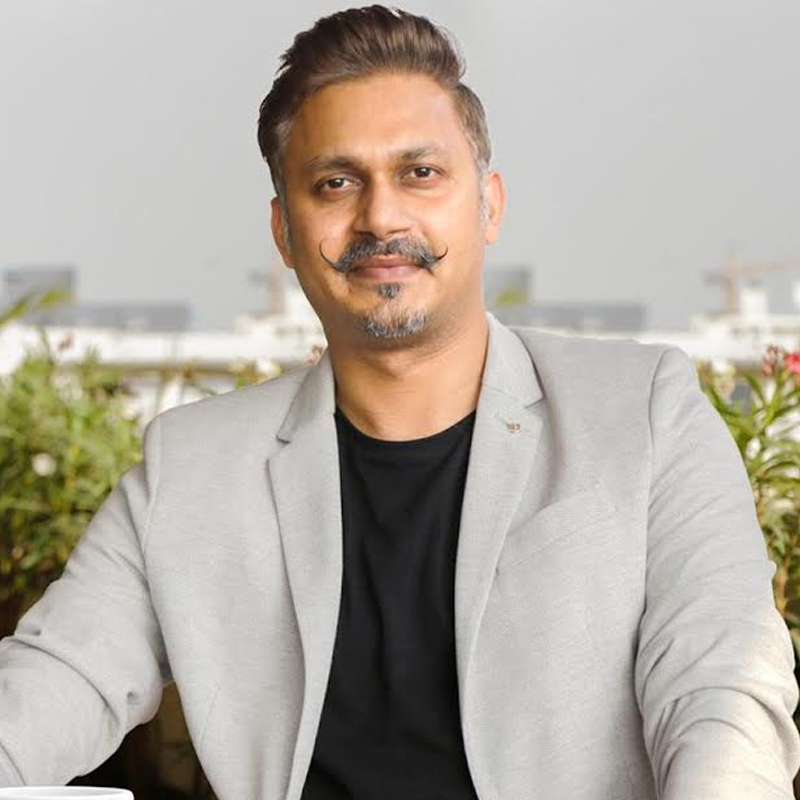
    Mumbai: Recently, the shareholders of Zee Entertainment Enterprises (ZEEL) gave their approval for the proposed merger with Sony. RD&X Network co-founder & chairman Ashish Bhasin feels that this is the first step of consolidation in the TV industry.

    “I think that in the coming three to five years you will see more major players being born through consolidation with deeper pockets and more muscle. They will join Disney-Star India, Sony-Zee, Warner Bros. Discovery and others. On OTT as well, there will certainly be consolidation. OTT will run through a similar cycle to TV. TV saw lots of smaller players. Now consolidation is happening. In OTT, I expect something similar, though, with a lag in the timeline. Furthermore, as 5G expands and consumers begin to cut the cord, the line between what is TV and what is OTT will blur. I am certain that consolidation will be the rule. All the big players will look for more and more consolidation opportunities.”

    He further pointed out that mediums that do not go in for consolidation will always struggle. He gives the outdoor industry as an example. “The strength to invest is not there. Bettering the quality of the medium will not happen till there are fewer but larger, consolidated players, with a longer-term vision. Not consolidating will be a handicap for the medium. Print is reasonably consolidated in some ways. And print is slightly different as many organisations have a long history. Some were set up before our independence. It plays a role that is beyond commercial. So the journey there will be different. But apart from print, consolidation will be important moving forward in every medium.”

    Talking about the ramifications of the Sony-Zee merger, he noted that this is the beginning of consolidation in the Indian TV industry. “There will be fewer, bigger, consolidated players. The reason for this is that content is becoming more and more expensive in games. Distribution does not come easy and cheap. The Sony-Zee merger is probably the first step towards that. Consolidation will happen across genres and languages.” He added that there are many regional channels and smaller channels that may be acquired. Also, with OTT becoming important, there is scope for better consolidation there and with digital in general.

    A larger player means more content investment, which will have a positive impact on ad revenue growth. “A very strong entity will be created. Between the two of them, excluding sports, they have a market share of closer to 25 per cent. That gives them the opportunity to get better content. This will also result in better distribution. If that happens, viewership will improve and so will ad revenues. Ultimately, ad revenues are a function of supply and demand. If they create stickiness through better content, then ad revenues will also go up. Zee and Sony are very experienced players. So together they will become an even more formidable combination.”

    He agrees that they will get better bargaining power both on the content side and the advertising side. Furthermore, they can engage in more innovations and experiments. “But it is not just about power. There will be a combination of many benefits. They will be able to do better, bigger packages, deals across genres.” He also noted that stronger consolidated players can result in better deals and gave the example of cricket rights being sold for a huge upside (IPL, ICC).

    On the OTT front, he believes that the merger provides the entity with a greater opportunity to acquire better content. “A merger of this size will give clout in multiple areas, not just in one silo.” In terms of cultural synergy, he noted that in any merger and acquisition, one of the key targets is how do you integrate? Culture is a key part. “Acquiring organisations are geared up to make sure that this area is addressed. Each organisation has a different DNA. The challenge of the leadership is retaining the essence of the DNA while at the same time getting them to work in one direction. This is an on-going exercise. I am sure that Sony-Zee have already thought of it and they already have a plan.”

    Speaking about the Warner Bros.-Discovery merger, he said that it is important to measure potential impact not against the universe but within the niche that it is playing within. “Every merger handled well has a positive impact. If an advertiser only targets kids and the merger creates a big leader, say in kids, then it is a very different scenario for both the entity and that advertiser.”

  • Gaurav Dhawan is Times Network’s new CRO

    Gaurav Dhawan is Times Network’s new CRO

    Mumbai : Times Network has promoted Gaurav Dhawan as its chief revenue officer. Gaurav will be in charge of the network’s broadcast ad revenue operations as well as the monetisation strategy for the network’s bouquet of channels covering Hindi and English news, entertainment, and branded content.

    Times Network managing director & CEO MK Anand said, “Given Gaurav’s successful background leading go-to-market teams and his relentless focus that drives sustained growth, the decision to move him into the Chief Revenue Officer role was clear. He’s already proven to be a strong leader and I’m confident he will continue to drive our strong revenue growth strategy.”

    Dhawan is a Times Network stalwart who has played a pivotal role in shaping the brand’s market leadership and has been passionately involved in scaling revenue and new opportunities throughout his tenure with the network.

    Talking about his new role, Dhawan said, “I’m excited and honoured to helm this mandate. I have been associated with Times Network for over 17 years and it is heartening to see the Network’s commendable growth over the years, demonstrating market dominance in its respective genres. This is an exciting phase as we continue to build new opportunities for our Hindi news brands and optimize emerging revenue streams and strategic partnerships to propel the network’s growth.”

    Gaurav has over 26 years of experience in the media and entertainment industry, and has a proven track record of driving businesses to profitability, impacting solutions, and innovating to deliver aggressive revenue expectations and sustained growth for businesses in television, print, and web.

  • India TV appoints Puja Sethi as group editor of digital

    India TV appoints Puja Sethi as group editor of digital

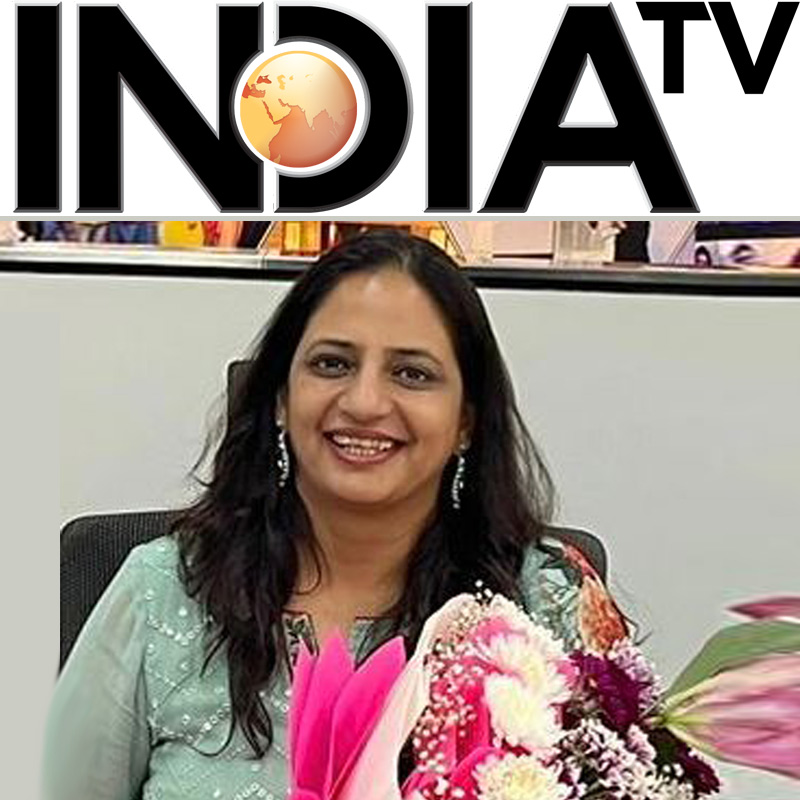
    Mumbai: India TV has roped in Puja Sethi as group editor of digital. Sethi, a senior journalist and digital strategist, brings over two decades of rich experience on board. Her last stint was with Zee Digital as a group editor.

    In the past, she has held senior leadership positions at Indiatimes, Jagran New Media, and myUpchar, amongst others. Her career has evolved around broadcast, print, and digital journalism. She is an alumnus of the prestigious Lady Shri Ram College and Miranda House, Delhi University.

    In her role at India TV, she would be responsible for managing the editorial. In addition, she will focus on strategic and innovative solutions and the development of an integrated digital strategy that cuts across paid, social and search.

    On her appointment, India TV managing director Ritu Dhawan said, “We welcome Sethi to the family. We are sure she will add value to India TV’s digital ecosystem and help us attain the predetermined organisational goals.”

    “I am extremely excited to take over the role of spearheading the digital strategy for India TV. I am looking forward to expanding the reach of our digital properties and further expanding the digital portfolio,” said Sethi.

  • The CTV India market maybe small, but it surely packs a big punch: mediasmart’s Nikhil Kumar

    The CTV India market maybe small, but it surely packs a big punch: mediasmart’s Nikhil Kumar

    With the changing digital landscape, consumers are warming up to connected TVs (CTVs) like never before. As Indian audiences increasingly embrace OTT content while gradually making the shift from traditional linear TV viewing, the change also presents an untapped advertising goldmine for brands and advertisers alike.

    On the sidelines of the Indian Digital Brand Fest organised by Indiantelevision.com, we caught up with mediasmart vice-president of India & SEA Nikhil Kumar, an Affle company, to understand how advertisers can buckle up to face this new beast in advertising. Last year, mediasmart commissioned research that helped understand the CTV behaviour patterns in India to provide greater market understanding. With mediasmart recently releasing its latest industry report on the CTV ecosystem in India that would help fast-track the growth of this industry, we take a deep dive into some of the underlying challenges and come away with some key takeaways.

    Kumar, a consumer marketing professional with over a decade of experience working in FMCG , retail, F&B, and ad-tech set-ups with global brands like TikTok, Puma, L’Oreal, Cafe Coffee Day, and InMobi, is extremely bullish about the current and future role of CTV as a medium for delivering impact for brands. He believes that CTV consumption today goes beyond the inhibitions of individual consumption on mobile screens and probably also brings back the family-viewing phenomenon of linear television, but with very measurable metrics of targeting and delivery.

    In an in-depth interaction with Indiantelevision.com, Kumar also talks about his journey from primarily marketing brands spread across the consumer goods sector, food retail, and sports & wellness, to now navigating the ad-tech space. While managing marketing for multiple brands, there were great learnings towards understanding consumer behaviour and sentiments, advertising objectives, media channel goals and analysis, and so forth. What I have really enjoyed after switching sides and working within ad-tech/mar-tech set-ups is the understanding of how each dollar spent is effectively reaching or not reaching the intended consumer. More importantly, the journey from ad exposure to intended purchase & the continued lifetime journey are built on strong data tech stacks with due diligence on consumer privacy. So for me, the whole journey from the brand side to now the adtech side has been an immense learning curve.”

    My learning, which I often share with my team, is—”Never sell the product, sell the insight—sell the solution to the problem that the marketer is intending to solve—that’ll bring better adoption for your offering,” shares Kumar.

    Edited excerpts:

    On why advertisers are cautious adapting to the CTV medium, despite the rapid adoption of it by consumers

    We live in an era that can be defined as pre-covid and post-covid. Covid played a huge catalyst in the growth of connected TVs as people realised that they could view the same content they see on their mobiles on a bigger screen via connected TV , thereby providing a better experience.

    For advertisers, the caution is actually natural, primarily because of the newness of the medium—connected TV & the scale/reach it brings from a planning lens. I think the hesitancy could also be derived from not understanding whether CTV reach spend should be bucketed under offline or digital spend, because it’s still TV and that’s well covered by most large spenders.

    Most large traditional advertisers feel they are already advertising on TV to a much more mass audience on broadcast, so why do they need to spend extra to advertise on CTV?

    When CTV started getting sold in India as an inventory for monetisation, it was being talked about as a digital medium. But then they are doing enough advertising for OTT already on mobile. And suddenly there’s this new accessibility for users via CTV. So you have to educate them that OTT is not CTV. The subset of CTV can be OTT, but that’s not the totality of it. There’s so much more that you can do on CTV, like play games, watch live news, etc., which led to its phenomenal growth. I think brands and advertisers, rather than being hesitant, are becoming more inquisitive.

    A year back, there was hesitancy, which has turned to inquisitiveness, and today, if you look at it, it’s a Fomo (Fear of missing out) created for every media planner or agency owing to the scale of CTV growth globally. If they don’t have CTV as a top priority, clearly it’s a miss. Even the agencies catering to smaller brands from tier II and tier III categories feel the need to hop onto the CTV bandwagon. More so because of the sheer pressure that the clients are creating on how to get their brand’s ads on the medium. Because that is where their audience is, watching their content.

    On whether the decline of DTH and linear TV viewing is leading to the spurt in CTV or vice versa

    It’s important to understand that sometimes users weren’t even contributing to DTH for them to decline from the database. These are the cord-nevers beyond the cord cutters.

    Suddenly, people are realising that the decline of DTH doesn’t mean the growth of CTV. Yes, it does imply that. But connected TV by itself as a base is growing. There’s a section of consumers who have never had a cable/DTH connection (cord-nevers), who bought a smart TV and immediately connected it to the internet and started watching it.

    Advertisers are also understanding that some of the audiences they want to reach out to are not there on TV. Thus, more than being hesitant, I think they are convincing themselves that this is a medium that’s creating more impact and providing a way to reach audiences they can’t reach otherwise on TV.

    Around 2.5 million DTH and cable subscribers have declined in the past two years or so, while comparatively, nine million wired broadband subscribers have increased. According to these two data points, the home wifi/broadband ecosystem is growing. There’s an accessibility to TV, while at the same time, there’s a decline in DTH, and last but not least, there’s suddenly a growth pattern in the availability of content. The number of OTTs that are available in the market is not just restricted to Hotstar, Netflix, Amazon, Sony, Zee, and Mx Player. There are 40 plus OTT players today—vernacular, regional, multi-lingual, event dialect-specific OTTs—there’s so much happening in the space.

    We have recently released a report titled “India CTV Report 2022,” which is one of the most comprehensive reports on this subject. Last year, when we first released it, it became a bespoke reference point for most avid marketers and media houses. This year, we did a very interesting comparison of the prices that you are paying. A comparison of the cost of these OTTs versus the average price of a DTH plan has not been put into perspective . If you compare the prices, it is actually not that expensive. So you can have all the content from around the world that you want to see at a price that is affordable. These are some of the factors that are really contributing to the growth of the connected television market in the country.

    And it’s not restricted to Gen-Z or millennial users, as we realised from our survey report. In our first-party survey covering a diverse audience segment across metros and non-metros, we realised more than 84 per cent claimed to be watching CTV with someone in the household rather than alone, similar to the TV broadcast era, in which family viewing was the dominant form of consumption. The TV broadcast era was followed by the era of mobile phones, which meant we went from a family viewing/co-viewing to a personalised content consumption experience on our mobile devices. This received a huge boost with the Jio revolution from 2016 onwards. And now, in a post-pandemic era, the connect TV experience has brought everybody back together for co-viewing, implying we have come full circle, but now with a way to answer the question: what happened after the TV ad was served?

    On how can agencies & advertisers overcome the lack of standard industry metrics- one of the key reasons limiting faster advertiser adoption of CTV

    There are always challenges related to a new medium in how measurability is going to happen. In fact, globally, one of the reports released recently claimed that there’s massive ad fraud happening already within the CTV space globally. If you see, most of the OTTs are owned by large broadcast networks. The OTT, or the platform, is evaluating the user reach and where your ads were served, along with who saw them. How does one evaluate ad fraud, which is obviously a difficult area?

    This is where programmatic advertising is becoming more and more important for advertisers, because for them it’s not important where the ad is shown, it’s more important to whom the ad is shown. The idea is to target audiences as opposed to targeting platforms where your ad is running, and hence, targeting the same user across multiple platforms becomes possible.

    Additionally, programmatic advertising provides transparency. You can access the dashboard. You can see the ads getting served, what time they were served, how they were served, which audience segments they were served to, and which audiences are engaging with them. Today we have technology where you can map a TV to a device id on a mobile phone. Hence the intuitive understanding that “this is the guy who has a TV at home; this is the device ID so I can continue the lifetime journey of engaging with that consumer either on his TV or on his mobile.”

    Technologies like ours are building that trust so that while currently there’s no measurement for what can happen on TV, you can link that journey to a user on their mobile where all possible mobile measurement options exist.

    And you can control it because it’s digital. So we know who saw the ad. Because you can track it down to a TV, to a location, to the size of a TV, to a certain household. So many data points can come up. You can target users by the size of the screen, by location, etc.—so many targeting options are available because of the digital nature of the medium. Hence, the trackability of success is also there. And hence, it’s clearly an impactful medium.

    On some of the underlying challenges & emerging trends in advertising on CTV in the domestic market

    So challenges can also be opportunities, and some of them we saw were in education, as India is still a market with high spending on traditional platforms like TV and print. We need to focus on educating advertisers and agencies on how CTV, as a digital medium, is a growing channel and an incremental reach medium at that. For instance, the festive season this time is all going to be about going back to retail, OOH, a massive print spend, and a big burst on television across brands. But, was your brand able to reach the users on CTV where they are most engaged and spend close to 4 hours a day? If not, you have clearly missed an opportunity. So that’s the first challenge in the ecosystem’s education.

    If we talk about trends, the growing trend is that gaming has grown by leaps and bounds on CTV and is going to become a destination. Another major trend is programmatic advertising via CTV to avoid spillovers. We are a country that does almost 60 per cent of media buying directly as opposed to 40 per cent programmatically. But how do you integrate the user’s journey across multiple ecosystems and screens that he operates on into one experience? That’s where programmatic advertising comes into the picture, which can help you build a unified view of the consumer.

    On how can marketers maximise viewer engagement on ads and improve the ad viewing experience for users on CTV?

    That’s an interesting premise because on CTV there are multiple ecosystems that clearly users spend time on—there is the OTT or on-demand content ecosystem, and the other is user-generated content (UGC) platforms. Beyond this, we also have news, gaming, and music, which are growing very fast.

    What does a user tend to do when they see an ad on a UGC platform? They are more likely to skip it since the 20-or 30-second ad in a three-minute video is more of a distraction.

    The user’s behaviour on on-demand OTT is observed to be very different, where on average they spend anywhere between 30 mins and an hour watching their favourite on-demand show or movie. The user is committed to spending a longer time there and hence doesn’t mind watching a 20-second ad here. Another thing to note here is that, as per the Ormax OTT Audience Report: 2022, only 31 per cent of India’s digital video audience is paid users, while the remaining 69 per cent is an advertising-based video-on-demand (AVoD) audience. Clearly, a huge chunk of the audience is reachable via ads on OTT and CTV.

    Also, CTV, with its immersive brand storytelling on the large screen, along with the ability to connect the journey from TV to mobile, can create an ecosystem that enables a user to retain the ad better for all kinds of segments like beauty, cosmetics, auto, FMCG, e-commerce, app-first etc. Ad retention and a CTA (call to action) created via omnichannel audience targeting, CTV household sync, and drive-to-store technologies enable users to act upon the ad that they have seen. Because at the end of the day, what is advertising for if not to act upon it?

    On how does the India market differ from the US and European markets in this aspect

    From a CTV advertising standpoint, I think the US and Europe are more evolved markets. They saw the trend almost three to four years ago. In the US, almost 90 per cent of households have at least one CTV device—clearly, it is a highly evolved CTV market. Besides, non-pay TV households are set to exceed pay TV households by 2023, indicating cord cutting and cord nevers are on the rise in the US.

    The European Union is very similar, though it obviously has GDPR (General Data Protection Regulation) laws and other regulations that affect how users are tracked. But in both global markets, the share of CTV impressions is growing really fast. In fact, in the US, the share of CTV impressions has exceeded the share of mobile, which has skewed the global average as well, in favour of CTV. If you look at the US, CTV ad spending will touch almost 10 per cent of the total ad spending by 2024. And within that high share, most ads are being transacted programmatically, not even direct buys. They have moved from a system dealing with multiple publishers. So, that’s the evolution and mindset that we are moving towards.

    If you compare it to India, it’s a very small market in terms of adoption. It’s been just two years since we started CTV advertising. So it’s early days, but last year we grew almost 30-40 per cent. We have seen the CTV reach go from six million to nine million and now to 14 million, and the pace is only increasing Q-o-Q. So, while the size of the market is small today, the adoption rate is very high in the domestic market. CTV penetration is growing really fast, and we predict that it will be 40–50 million by 2025. So, even though the Indian market is small, it is surely packing a big punch. CTVs are here to stay and grow.
  • Sony Pictures Networks acquires exclusive broadcast rights of Ballon d’Or 2022

    Sony Pictures Networks acquires exclusive broadcast rights of Ballon d’Or 2022

    Mumbai: Sony Pictures Networks (SPN) has acquired exclusive rights to broadcast the prestigious football award—the 2022 Ballon d’Or—in the Indian subcontinent, including India, Afghanistan, Bangladesh, Bhutan, Nepal, Maldives, and Sri Lanka—and non-exclusive rights in Pakistan. The broadcaster will telecast the Ballon d’Or ceremony live on Sony Ten 2 channels on 17 October 2022, at 10:20 p.m. IST. The awards will also be live-streamed on SPN’s on-demand OTT platform, SonyLIV.

    The Ballon d’Or is an annual football award hosted by France Football that honours top football players across various European clubs. Considered amongst the top football awards, the Ballon d’Or has played a significant role in recognising the greatest football players across the world. The award, which dates back to 1956, has seen some great players rise to fame, from Stanley Matthews to Lionel Messi. In 2018, the marquee award started honouring top female players, and Ada Hegerberg became the first female footballer to receive the Ballon d’Or.

    The 66th edition of the marquee awards will go down in history as it will be the first time the results will be announced based on season and not year. With seven-time winner Lionel Messi out of the race, the 2022 Ballon d’Or will see a new winner as top football players gear up for the night. While the nominees were announced this year on 12 August, fans are rooting for Real Madrid star Karim Benzema to steal the show and win the coveted award. Other players cutting it close in the race include Bayern Munich’s Sadio Mane and FC Barcelona’s Robert Lewandowski. In the women’s category, Barcelona and Spain midfielder, Alexia Putellas, lead the nominee list as fan favourites, followed by Chelsea’s Sam Kerr and Arsenal’s Beth Mead.

    Sony Pictures Networks India chief revenue officer, distribution and head of sports business Rajesh Kaul said, “The Ballon d’Or is considered the top football honour across the globe, and it is our privilege to be associated with such a prestigious award. The award is a pinnacle of recognition for football players worldwide, and we endeavour to provide such content to fans in India. The Ballon d’Or has recognised the greatest footballers in the past and continues to do so as football fans across the nation wait eagerly to see their favourite player crowned as the winner and enter the greatest of the greats club.”

  • Series Mania 2023 announces ‘Call for Series’ and ‘Call for Projects’ for its forum

    Series Mania 2023 announces ‘Call for Series’ and ‘Call for Projects’ for its forum

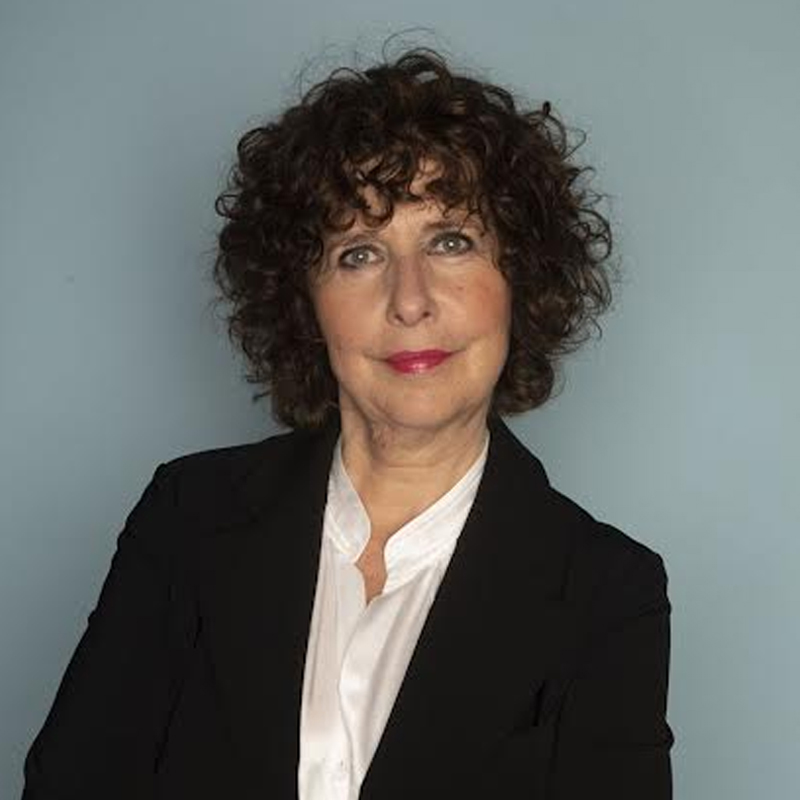
    Mumbai: Following a hugely successful 2022 edition, the festival’s founder and general director, Laurence Herszberg, announced the ‘Call for Series’ for the 2023 edition, as well as the ‘Call for Projects’ for the festival’s industry arm, the Series Mania Forum (21-23 March, 2023).

    The ‘Call for Series’ for the festival has a submission deadline of 6 January, 2023, while the ‘Call for Projects’ for the forum has a deadline of 16 December, 2022.

    “Today I am delighted to be announcing our ‘Call for Series’ and ‘Call for Projects,’ marking the beginning of Series Mania 2023. Our 2022 edition brought together more than 70,000 participants for the festival and 3,300 accredited professionals on-site from 64 countries for the Forum,” commented Herszberg.

    “Our festival continues to showcase top series from around the world, while the forum—including Lille Dialogues—is truly one of today’s premiere meeting places for showrunners, screenwriters, producers, broadcasters, key executives, and talent. I have no doubt Series Mania 2023 will be even larger,” added Herszberg.

    More than 60 series will be chosen to participate in the Series Mania programme on the festival side.

    During the closing event of the eight-day festival, 14 prizes will be given out by the various juries. The Baby (HBO/SKY), We Own This City (HBO), Kamikaze (HBO Max), Unorthodox (Netflix), The Virtues (Channel 4), The Rain(Netflix), The Split (BBC1), I Love Dick (Prime Video), I’m Dying Up Here (Showtime), and Ride Upon the Storm are just a few of the prestigious series that have debuted as a result of the Series Mania international competition (DR).

    Visit here to submit online proposals

    https://film.series-mania.festicine.fr/en

    Producers can submit their proposals for the annual co-pro pitching sessions, the Series Mania Forum’s main event and the idea behind it in the first place. 15 concepts will be chosen from these entries to take part and present themselves to TV industry decision-makers.

    The winning proposal will get a prize of 50,000 euros as chosen by a distinguished jury of top business leaders. The forum has served as the premiere location for a number of international television series, including No Man’s Land(France), Banking District (Switzerland), Eden (France), Keeping Faith (Great Britain), Manor House (Czech Republic), Stella Blomkvist (Iceland), Tabula Rasa (Belgium), Trepalium (France), Warrior (Denmark), Devils (Italy), The Head(Spain), Ever After (Italy), The Last Socialist Artefact (Slovenia, Finland), We Got This (Sweden), Des Gens Bien (Belgium), The Dreamers (Israel), Off Season (Switzerland) and Blackport (Iceland).

    To submit online, please go to

    https://seriesmania.com/forum/en/co-pro-pitching-sessions-2023/

  • India TV’s Group CEO Vinay Maheshwari moves on to explore new professional avenues

    India TV’s Group CEO Vinay Maheshwari moves on to explore new professional avenues

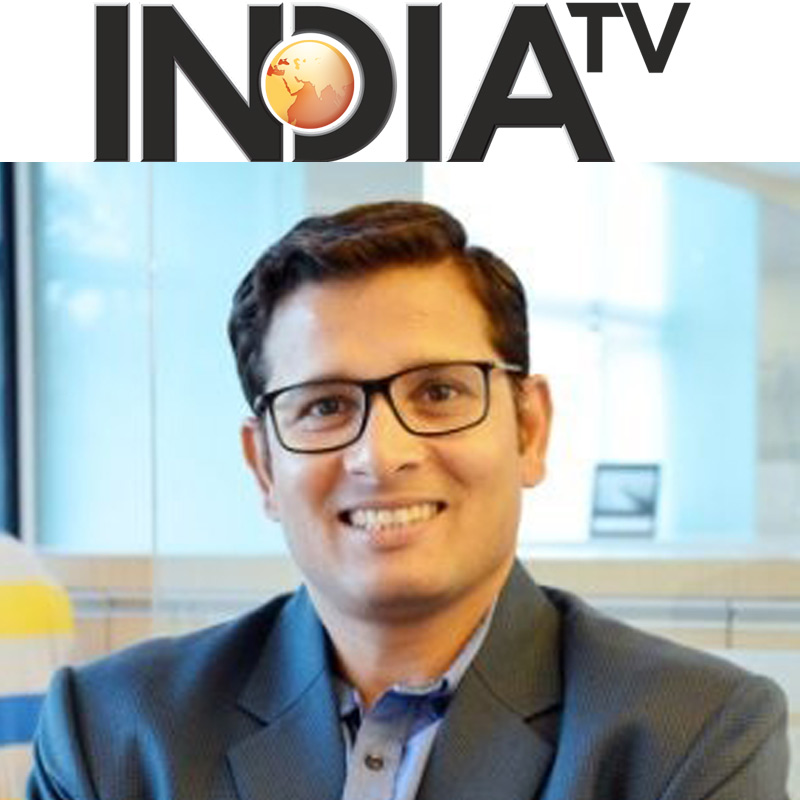
    Mumbai: India TV group CEO Vinay Maheshwari has decided to move on from the news network, according to a company statement. A champion of impact-driven leadership, he believes that the key to growth is to build a formidable team that will drive business and push towards success. During his six-month short-term tenure, Maheshwari has spearheaded the organisation to expand its business, achieve growth and drive profits.

    Vinay who had joined India TV in March 2022, will now move on to explore other professional avenues.

    India TV’s managing director Ritu Dhawan said, “India TV thanks Vinay for the passion and commitment he brought to the company. We appreciate his immense contribution in such a short time. We wish him the best in all his future endeavours.”

    Vinay Maheshwari said, “It was great working with India TV group though for a short tenure. Working with Rajatji and Rituji was a wonderful experience. Enjoyed every bit of it. I wish India TV all the success.”

    He is also an advisor to family-led businesses and helps many organisations to turn around their business. He is skilled in incubating ideas, coaching and innovating.

    Prior to this, he was also associated with Dainik Bhaskar Group and Hindustan Times in leadership positions.

  • Daniel Jurow joins DNEG as COO

    Daniel Jurow joins DNEG as COO

    Mumbai: Double Negative (DNEG) has roped in former Technicolor and R/GA executive Daniel Jurow as chief operating officer.

    With over twenty years of expertise in the creative industry, Jurow will be based out of DNEG’s London studio. He will be reporting directly to DNEG chairman & CEO Namit Malhotra.

    Speaking on Jurow’s appointment, Malhotra said, “As we continue to scale our business, growing our creative teams, bringing in the industry’s best creative leaders, and building out our technology infrastructure, it is important that we have a strong, forward-thinking executive committee dedicated to leading, supporting and empowering our teams.”

    “Daniel’s career-long passion for creative technology, his experience of delivering breakthrough results for both brands and for the teams that he oversees, and his strategic and methodical approach to his work, all mark him out as a great leader. I am delighted to welcome him to DNEG’s senior management team, where I have no doubt he will make a great impact,” he added.

    Jurow was serving as the Film and Episodic VFX division’s Chief Operating Officer .

    At Technicolor, Daniel was appointed as chief operating officer for the Film and Episodic VFX division. He spent more than 15 years with the international digital product and marketing agency R/GA before that, where he advanced to the position of EVP, global head of production, overseeing more than 200 producers.

    Jurow launched the ground-breaking Nike+ product agreement between Nike and Apple in 2006, which earned R/GA the title of “Digital Agency of the Decade” by Adweek. By the time of his departure in 2019, the agency had grown from 200 workers to over 2,000 across 17 global sites.

    Jurow has spoken at a number of international conferences, including the first 4 A’s Digital Conference for Agencies,Internet & Mobile World, Innovation Summit, ArabNet Digital Summit, and the annual Creative Equals conference, which aims to advance women in creative roles into leadership positions in the advertising industry.

    Commenting on joining his new role as DNEG COO, Daniel said, “I have long admired DNEG’s focus on its people, uniting the business in support of its incredibly talented artists, creative technologists, production and support staff. As a result of this focus, DNEG has a great track record of leaping from strength to strength, delivering stunningly innovative creative work, navigating unprecedented industry shifts, and stewarding impressive global growth. I feel very privileged to join Namit and his team as we usher in the next brilliant act of the DNEG story.”

  • Devdatta Potnis parts ways with Cosmos-Maya

    Devdatta Potnis parts ways with Cosmos-Maya

    Mumbai: After a ten-year partnership during which time the company grew steadily, Devdatta Potnis, the current chief growth officer, has announced his decision to leave Cosmos-Maya.

    Dev joined the studio as head of sales in 2011 and was instrumental in getting the animation studio’s first domestic IP, Motu Patlu, off the ground. The show is celebrating its ten-year milestone this year. In 2015, he planned another strategic move, diversifying the studio’s revenue streams by establishing one of the biggest digital kids’ networks globally, WowKidz, which has over 90 million subscribers worldwide across YouTube and Facebook. With Dev at the helm, the studio went on to produce a multitude of shows with leading kids’ broadcasters in India including Nickelodeon, Disney, Cartoon Network, Sony, Discovery and also cemented bonds with all the key OTT players like Amazon Prime Video, Netflix, Voot, Zee5 and Disney+ Hotstar among others.

    After this domestic success, the studio set its sights on international markets overseen by Dev. He placed Cosmos-Maya on a structured growth path across the European, Asian, and North American markets, and became the face of the animation studio globally. It was thanks to these consistent efforts, that the studio grew from 30 people to 1200+ artists & the coveted private equity investment came into the animation business, first with KKR backed Emerald Media in 2018 and then with TPG affiliate NewQuest Capital Partners in 2021. According to media reports, the company has grown phenomenally in the last decade, from one Indian series in 2012 to a market leadership position in India with a valuation of more than 90 million USD. Dev was a key architect in these endeavours.

    “It has been a pleasure working with this incredible company, Cosmos-Maya, and I thank the founders, Ketan Mehta, Deepa Sahi and Anish Mehta, who gave me the opportunity to grow this company, plan its strategic direction, and take it to the stage where it is now India’s #1 animation studio. I owe a lot of my professional expertise and development to Cosmos-Maya and the team, who will always be special to me, personally and professionally. I wish them all the best for the future,” said Potnis.

    Dev’s next move will be announced soon.

  • I&B discusses strategies for unleashing M&E’s potential with industry experts

    I&B discusses strategies for unleashing M&E’s potential with industry experts

    Mumbai: Development of the audio-visual sector requires industry-friendly policies, collaboration, and regular interaction between the government and industry stakeholders.

    On Monday, a meeting in Mumbai was organised by the National Film Development Corp. where acclaimed filmmakers and industry professionals marked their presence, namely, Maddock Films founder Dinesh Vijan, Dharma Productions CEO Apoorva Mehta, Ayan Mukerji, R. Balki, Abundantia CEO Vikram Malhotra, Amazon Prime Video’s Gaurav Gandhi and Aparna Purohit, Netflix’s Monica Shergill, PEN India chairman Jayanti Lal Gada, Balaji Motion Pictures CEO Bhavini Sheth, Producers Guild of India president Shibasish Sarkar, Nitin Tej Ahuja CEO Producers Guild of India, and producers Mahaveer Jain & Madhu Mantena.

    The deliberations centred around the strategic initiatives taken by the government to unleash the potential of the media and entertainment industries. The I&B ministry’s efforts at easing filming in India through the Film Facilitation Office and the onboarding of Invest India to expand its outreach to the domestic and international industry were highlighted.

    The recently launched incentive scheme for international productions and official co-productions was discussed in detail, including the benefits it would bring to content creation in India. The industry was urged to leverage the FFO ecosystem and their suggestions on the incentives were duly noted.

    The government’s efforts to make the forthcoming 53rd edition of the International Film Festival of India a success were emphasised, along with the opportunities being created for the industry. Feedback was sought on the amendments made in the Draft Cinematograph (Amendment) Bill, 2021. The feedback received from the industry participants was positive and they unanimously accepted the proposed amendments.

    The stakeholders were also apprised of the ministry’s recognition of the industry’s concern towards theatre density in India and the consequent development of a single window ecosystem and a model law for the ease of permission for construction of screens/theatres was in progress. The attention of the industry was drawn to many other interventions being made by the Ministry in the audio-visual sector.

    I&B secretary Apurva Chandra summed up the discussion as fruitful and said, “The engagement with industry served as a perfect opportunity to apprise the various stakeholders of the efforts being made by the ministry to give an impetus to the film industry. The response from the participants was encouraging and we have urged them to leverage these various platforms to support our endeavour to make India a global content hub.”