Category: People

  • India’s favourite ‘Bhabhi’ back to reel life

    MUMBAI: Come Monday Jan 29, UTV produced serial ‘Bhabhi’ on Star Plus would see the come back of one of Indian Television’s favorite bhabhi, Saroj played by the adorable Dolly Sohi. Bhabhi is an unrequited love story set in a classical mould, a story of conflicting value systems in a contemporary consumerist society. The Bhabhi crew has two reasons to celebrate, one is to have Saroj aka Dolly back after a gap of more than a year & the completion of 1000 episodes this month.

    It was the unvarying love and remembrance by the UTV team, which kept in touch with Dolly that got her back with a bang. Confesses Dolly “I realized how much my team loved me and missed my nonattendance as a part of the caste, along with the numerous mails from my fans who have always bestowed me with colossal affection consistently even when I was in Canada”. Having got to spend a lot of time with her family Dolly took complete rest aboard in contrast to her demanding and hectic life in Mumbai.

    Having settled in Canada after martial bliss Dolly aka Saroj left the show, which was artistically portrayed through the occurrence of Saroj taking Samadhi parting from all the worldly materialistic tie-ups. Now her track that airs on Mon Jan 29 would begin from Reshma, Saroj’s mother-in-law who takes a pilgrimage to Vaishnodevi, where she stumbles upon an absolutely radiant Saroj (her very own daughter in law) who has given up all worldly processions and become a recluse.

    She is busy taking care of the poor and needy. Reshma is ecstatic, she tries talking to Saroj and begins requesting her to come back home to help sort the crisis in the Chopra family. Saroj in her new Avtaar of a Jogan appears to be unaffected by the course of events that are unfolding in the Chopra family. Will she be able to find solutions to the problems of the Chopra family to find watch Bhabhi Mon- Thurs 1.30 pm with repeat at 7 pm.

    On being solicited about one thing she missed the most about India she quickly responds without pondering, “After leaving India it was Bombay’s fast Life that I missed the most in Canada, a place where everything happens on the appointed time compared to the busy unscheduled dynamic Mumbai life” says Dolly who bunged watching the serial after she felt her absence in the serial who initially was ecstatic when the show being broadcasting from September 2006.

    Dolly’s parents especially her mother has been upbeat about this come back along with her UTV serial crew, which boosted her morale on giving her first shot with the same energy and enthusiasm post her protracted gap. With a lot of expectation from this Indian Bhabhi, Dolly promises to deliver her level best and cover up for all the emptiness that her fans must have encountered in the past one-year.

  • Dr. Sanjay Gupta & Lance Armstrong team up for cancer special

    MUMBAI: In a powerful hour of informative and inspirational conversation, CNN’s Chief Medical Correspondent Dr. Sanjay Gupta and Tour de France champion and cancer survivor Lance Armstrong join forces to discuss the killer disease that touches everyone in some way: cancer.

    Also joining saving your life are renowned cancer experts, Dr. Harold Freeman, associate director of the US National Cancer Institute and medical director of the Ralph Lauren Center for Cancer Care and Prevention, and Dr. Jim Hotz, an expert on rural health care and cancer whose story inspired the movie Doc Hollywood. The panel also features dedicated individuals who devote their time to educate their community in better understanding cancer.



    The special program also includes the following segments:

    · A discussion with Armstrong, Freeman and cancer survivor and magazine editor Clifton Leaf in which they conclude that the lives of hundreds of thousands cancer victims could be saved through the application of current knowledge about cancer;

    · A profile of Baker and Terrell Counties in southwest Georgia, which hold some of the highest cancer rates and colon cancer death rates in the nation;

    · A profile of a young African-American woman with breast cancer and of Freeman, who designed a “navigator” system to help Harlem women with breast cancer have a better chance of survival;

    · A profile of a young Colorado boy with a rare bone cancer and a look at the issues of childhood cancers and orphan drugs;

    · A profile of a man who thought he had beaten cancer only to learn months later the cancer had spread. Gupta, Armstrong and Leaf examine the relative lack of funding for metastatic cancer, the most deadly form of the disease;

    · An exclusive look at Armstrong’s MRI images revealing the two large tumors that almost killed the man now synonymous with cancer survival.

    “This is an exclusive opportunity to hear from some of the most distinguished members of the medical community about their advice on how to avoid and beat cancer,” Gupta said. “It’s also a testament to those survivors who can offer firsthand advice that can save lives”

    Airtimes: Indian Standard Times

    Sat, January 13 at 1230hrs and 2030hrs

    Sun, January 14 at 1230hrs

    CNN is the world’s leading global 24-hour news network and one of the world’s most respected and trusted sources for news and information. The CNN brand is available to two billion people via 25 CNN branded TV, internet and mobile services produced by CNN Worldwide, a division of Turner Broadcasting System Inc and a Time Warner company.

    CNN International is the international directorate of CNN Worldwide and distributes news via 14 services in seven different languages. CNN International can be seen in almost 200 million television households and hotel rooms in more than 200 countries and territories worldwide, including more than 30 million across the Asia Pacific region and online at www.cnn.com/international.

  • Calls for firmer IP laws featured in IPO seminar

    Calls for firmer IP laws featured in IPO seminar

    MUMBAI:In a bid to broaden the effectiveness of government when dealing with intellectual property rights (IPR) cases involving the Philippines cable and satellite TV industry, the Intellectual Property Office (IPO) and the Cable and Satellite Broadcasting Association of Asia (Casbaa), with support from the National Telecommunications Commission (NTC) and the Philippine Cable TV Association (PCTA), recently staged a high level legal training seminar in Makati City.

    The seminar, specifically designed to support IPO and NTC officers, brought together pay-TV industry experts, including cable operators, content creators and program distributors, along with IPR experts from law firm Quisumbing Torres, states an official release.

    Participants from both the government and the private sector highlighted the importance of building strong IPR protection to spur industry growth and boost its contribution to national progress.

    “This is the first of a series of seminars that IP Philippines will undertake in partnership with the NTC and the pay-TV industry through Casbaa and the PCTA. The objective is to advance our common goal of curbing IP violations,” said IP Philippines deputy director General Pacifico Avenido.

    The training session came on the heels of a Memorandum of Agreement (MoA) between the IPO and the NTC, which transfers the investigation and resolution of pay-TV industry IP cases to the IPO.

    “As soon as the implementing rules and regulations (IRR) of the MoA are approved, the cases pending at the NTC will be transferred to the IPO”, said Avenido.

    “Thus, there’s an urgent need for our Bureau of Legal Affairs hearing lawyers to be trained comprehensively on pay-TV industry IP issues and the technical processes in broadcasting relevant to understanding the issues.”

    Meanwhile, John Medeiros, the Casbaa VP for Government Relations and Regulatory Affairs, expressed industry appreciation for the government’s efforts to address the worsening problem of pay-TV piracy.

    “We thank the IPO and the NTC for co-sponsoring this seminar, a truly positive step that demonstrates the value of cooperation between the government and the pay-TV industry,” said Mr Medeiros.

    PCTA president Allan Dungao echoed Casbaa’s call for the government of the Philippines to fortify the industry’s anti-piracy cause.

    “Industry estimates place pay-TV signal theft losses at billions of pesos. With the support of the NTC, the IPO, the different legislative bodies and local government units, laws and ordinances have been passed rendering signal theft a crime punishable with imprisonment. More intervention through further government legislation is required, particularly in addressing program piracy in the Philippines,” said Mr Dungao.

    Star TV Philippines VP, Liza Latinazo, with Tim Bautista, the COO of pay-TV channel distributor Cable Boss, joined Mr. Dungao on a panel of industry speakers during the training.

    As a follow-up, the IPO, NTC, Casbaa and the PCTA are planning a follow-up IP law seminar open to industry and public sector groups in October as part of the IPO’s IP Protect educational lecture series, adds the release.

  • Nimbus appoints Shashi Kalathil as CEO of Neo Sports

    Nimbus appoints Shashi Kalathil as CEO of Neo Sports

    MUMBAI: Nimbus has appointed Shashi Kalathil as Chief Executive Officer of its sports broadcasting business Neo Sports. This will be effective from October this year.

    Kalathil comes to Nimbus from the Tata Group and brings with him experience from the FMCG and telecom sectors. Prior to this he has served at Pepsi as executive director-marketing and has also had a stint with VSNL.

    In addition to Shashi, Scott Ferguson has been appointed as Chief Operating Officer and will be based in Singapore. Within the next few days, Nimbus expects to make more appointments in its sports broadcasting business.

    Commenting on his induction, chairman Harish Thawani said, “I have known Shashi over the years as a client (when he was at Pepsi) and apart from his obvious pedigree as a cutting-edge professional, above all he brings with him a level of integrity and values that are universally admired.”

    Shashi added, “My mandate will be to lead a world class and passionate management team that has amazing depth of sports expertise, to greater consumer focus and to deliver outstanding value to Neo Sports’ advertisers and viewers through innovative use of technology.”

    As previously disclosed, Nimbus shall be launching the first of its Neo Sports channels in the last quarter of 2006. Nimbus is constructing a state-of-the-art production and broadcasting facility in Mumbai’s western suburbs and expects to use several technological innovations to enhance the quality of sports broadcasting in India and be ready with interactive services by early 2007.

  • Worldwide mobile phone sales grew 18% in Q2 2006: Gartner report

    Worldwide mobile phone sales grew 18% in Q2 2006: Gartner report

    MUMBAI: Worldwide mobile phone sales totaled 229 million units in the second quarter of 2006, a 18.3 per cent increase from the same period last year, according to Gartner Inc. This compared to a 23.8 per cent increase in the first quarter.

    Gartner said it had expected the slight slowdown compared to quarter one and that its mobile phone sales forecast is still on track to reach 960 million units in 2006, with 238 million units in the third quarter of 2006.

    “While mobile operators in the mature markets of Western Europe and North America struggled to maintain the customer acquisition growth levels seen in previous quarters, but mobile operators in emerging markets continued to sign new customers driving handsets sales,” said Carolina Milanesi, principal analyst for mobile terminals research at Gartner, based in Egham.

    Leading vendors Nokia and Motorola both grew their market share and accounted for more than half of the worldwide mobile phone sales in the second quarter of 2006.

    Nokia maintained its number one position with a 33.6 per cent market share, gaining two per centage points compared to the same period last year. Gartner stated that as Nokia starts to ship more feature-rich phones (such as the N72 and N73) in the third quarter of 2006, it needs to ensure that it can also cater for users who put fashion ahead of functionality and are looking for thin products, states an official release.

    “Motorola is the big winner this quarter,” said Milanesi. The company achieved a market share of 21.9 per cent, growing its market share by 4.2 per cent year on year, the highest growth this quarter. Motorola maintained its lead in North America and Latin America and its second position in other markets. With the Morofone, KRZR and RIZR mobile phones due to ship from the third quarter of this year, Gartner said Motorola should be able to continue to gain market share in both emerging and mature markets, informs an official release.

    Samsung retained its third position but lost market share compared to the top two players. Sales reached 25.5 million units in the second quarter, approximately half of Motorola’s total sales this quarter. Lower sales in the home market coupled with weaker than expected demand in some key markets in Asia Pacific explained Samsung’s weaker performance. To grow market share in mature markets such as Western Europe and North America, Gartner said Samsung needs to match its high feature set with a more distinctive design.

    Sony Ericsson regained the fourth position with sales reaching 15.3 million units. “Sony Ericsson’s bet on music and imaging continued to pay back. 25 per cent of their sales came from the Walkman branded devices and the first Cybershot phone k800 was also well received by consumers,” said Milanesi.

    Despite the success of the KG800 Chocolate phone, LG lost 0.4 per cent market share year on year and slipped into fifth place. “Although The Chocolate phone sold very well and helped to increase LG’s brand awareness globally, ‘one swallow does not make summer’. LG needs to bring to market more products from the Black Label series including a 3G offering, to win back and hold the fourth position,” added Milanesi.

  • BBC sinks its teeth into Dracula

    BBC sinks its teeth into Dracula

    MUMBAI: UK pubcaster BBC has announced a new version of the classic Bram Stoker 1897 novel, Dracula. Filming begins this month on location in and around the West Country for transmission later in the year on BBC One.

    Marc Warren plays the title role. David Suchet who is best known for the television series Poirot plays vampire scholar and Dracula’s nemesis, Van Helsing.

    Returning to the original novel for his inspiration, Stewart Harcourt’s script draws both on elements of Bram Stoker’s own life and Victorian society to give this version of the vampire classic a new, modern sensibility.

    Executive producer Julie Gardner said, “Stewart Harcourt’s adaptation is a visceral, sexy and bold re-telling of Bram Stoker’s classic chiller which will blow the cobwebs off traditional period drama. And we’ve brought together a cast of thrilling young talent to bring it to life.”

  • ‘We will be a Rs 5 billion company by 2008’ : Atul Goel – E-City Ventures CEO

    ‘We will be a Rs 5 billion company by 2008’ : Atul Goel – E-City Ventures CEO

    His is a tale that is not just about multiplexes. E-City Investments and Holdings chief Atul Goel is hooking up a film exhibition, distribution and digital delivery business.

    At the centre of this game is the multiplex business. Fun Multiplex Pvt Ltd is on a massive scale up exercise, planning to ramp up from 23 screens to 150 by FY08 while acquiring 100 single screens to gain a pan-India presence.

    E-City Digital Cinemas will deliver movies to theatres via satellite as well as hard disk in a format that operates on low margins but is profitable. Being part of the Essel group, it will use the Essel Shyam facility at Noida near Delhi which is also utilised by Zee for uplinking its channels.

    Goel recently got IL&FS to invest Rs 1 billion for a 26 per cent stake in E-City Entertainment, the hived off entity that handles real estate development. His next big target: a combined turnover of Rs 5 billion by FY08.

    In conversation with Indiantelevision.com’s Sibabrata Das & Bijoy AK, Goel unveils the expansion plans he has chalked out for E-City.

    Excerpts:

    Why did you decide to hive off the multiplex and real estate businesses into separate companies?
    The best way to attract investors is to divide the two segments of business. They can enjoy their own valuations and investors. For instance, the investors in real estate may not necessarily want to take exposure in the multiplex business. We got Infrastructure Leasing & Financial Services Ltd (IL&FS) to pick up a 26 per cent stake in E-City Entertainment, which handles real estate development like setting up malls, for Rs 1 billion.

    Are you in the hunt for an investor in the multiplex business as well?
    Fun Multiplex Pvt. Ltd. still needs to scale up as we ended the last fiscal with a turnover of just Rs 450 million and a net profit of Rs 60 million. We are planning to pump in Rs 2.5 billion and have 150 screens by FY08. We have already put in Rs 300 million. We plan to raise money in a debt-equity ratio of 1.5:1. Our target in FY08 is to have a total income of Rs 2.5 billion and operating profit of Rs 720 million by FY08.

    What makes you project such a fast rate of growth in two years?
    The revenues will come mainly because of newer developments. We have 23 screens and are opening up three properties this month. We, in fact, will be adding 10 more screens by 15 August.

    Do you see revenue growth also coming from increase in ticket rates?
    Pricing power will continue to be more a movie-based strategy rather than a rate hike in tickets across the board. In case of Krrish, we increased the ticket rates. We will also see the emergence of differential pricing for off-time shows. We have, for instance, lowered the rates for early morning screenings.

    Multiplex operators are in a build up phase and Inox has even taken the acquisition route in Kolkata to enhance its pan-India presence. How are you planning to scale up your operations?
    We are also planning to take the inorganic route. We will be acquiring single screen theatres across the country. We aim to have 100 single screens by FY08. This will be in addition to the 150 multiplex screens we will have by then.

    The future trend could be special alliances between distributors and multiplex operators

    Multiplex operators have been made to pay more for premium film content by Yash Raj Films (YRF). When YRF asked for an increase in revenue share for the Aamir Khan blockbuster Fanaa, you took a hard stance. What made you compromise later?
    Initially, all the multiplex operators protested against the hike. But the unity didn’t stay and some of them went ahead to sign the new terms with YRF. Let me reiterate here that we were in a pure business deadlock and not a confrontation of any kind.

    Has YRF, with a lineup of Hindi blockbusters like Fanaa, Krrish and Kabhie Alvida Na Kehna, started a trend where film content distributors would push for higher revenue shares from multiplex operators?
    We are not in a position where we can take a hard stance against YRF. We have a business relationship going with them and are showing Krissh. The new terms are exceptional to YRF but with such high ratios, we can only break even. The future trend could be special alliances between distributors and multiplex operators.

    Are you in any such alliance with a big distributor?
    It is too early to carve out such relationships. In fact, we urge the distributors not to start hiking rates or getting into special relationships with certain multiplexes at this stage. The industry needs to scale up the infrastructure, there is an opportunity sitting out there. We should take measures that grow rather than kill the industry at this early stage.

    Have you taken a cautious approach in the film distribution business?
    E-City Films (ECF) has distributed Hindi movies like 36 China Town in Gujarat where we control 90 theatres. The market is fragmented and will take time to consolidate. Some companies are also acquiring some movies for distribution at unrealistic prices. We are cautious and have no plans to set up a film distribution outfit overseas. For international movies, our strategy is to distribute 10-12 a year. In the past, we have distributed Alexander (December 2004), One Dollar Curry (February 2005), Million Dollar Baby (March 2005) and Sahara (July 2005). Among ECF’s recently acquired movies are Astronaut Farmer, Babel, Miss Potter and Michael Clayton.

    Have you closed down your content syndication business?
    It is in a state of lull now, but we have revival plans.

    What are the expansion plans for E-City Entertainment after IL&FS has taken a stake in it?
    We are investing Rs 1 billion each for the Kanpur and Coimbatore properties. Lucknow will attract a further funding of Rs 250 million. We have already pumped in Rs 2.17 billion in developing four projects (Rs 600 million for Andheri in Mumbai, Rs 750 million in Lucknow, Rs 550 million in Ahmedabad and Rs 270 million in Chandigarh). We will have 10-15 properties by FY08. We expect our turnover to climb from Rs 210 million to Rs 800 million by then. As these are rental incomes, E-City Entertainment will always be a profitable venture.

    How are you funding these properties?
    We will be raising fresh equity. But we have not started talking with anybody yet.

    When is E-City Digital Cinemas starting satellite delivery of movies to cinema theatres?
    We plan to launch it by the end of this month. We will be using the uplinking facility of Essel Shyam at Noida near Delhi. Currently, the hard disk is physically distributed to the 22 theatres in Gujarat (we control 90 theatres there) which we have taken on long term hire basis. We are using Real Image’s encryption technology so that piracy is safeguarded. The movie is first converted into digital master using the telecine machine, after which it can be taken on to D5 tape or captured directly on the encoding server. After encryption and compression, the movie is uplinked to the satellite via transmission server and downloaded at the playout local server which is installed at the theatre. A digital projector is used for screening of the film. E-City Digital Cinemas will target A-class towns where the current net collections are over Rs 100,000 per week.

    How many theatres will have the digital system?
    We plan to digitise 500 screens by FY08. We have already acquired 30 cinemas including a few in Mumbai. The business operates on low margins and, on a turnover of Rs 300 million last fiscal, we have reached a break even situation. As we ramp up theatre acquisitions, we expect our revenues to touch Rs 2.5 billion by FY08.

    So will E-City Holdings go for an initial public offering (IPO) or will the different entities have separate listings?
    We haven’t decided anything yet. We have no IPO plans, as of now. But by FY08 the entire venture will be a Rs 5 billion company.

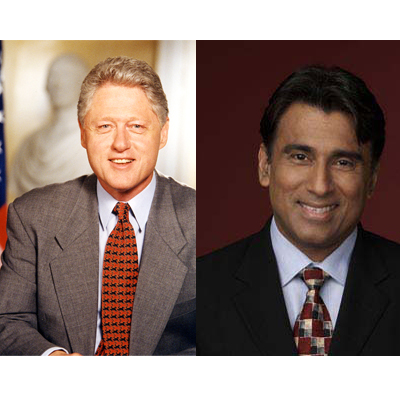
  • Former US president Bill Clinton in an exclusive interview with CNN’s senior International correspondent Satinder Bindra

    Former US president Bill Clinton in an exclusive interview with CNN’s senior International correspondent Satinder Bindra

    Discusses his plans to fight against AIDS in India
    through the William J. Clinton Foundation

    Interview aired on: Sunday, February 19, 2006 at 17:30hrs (IST)
    Former US President, Bill Clinton announced another initiative in New Delhi in his ongoing fight against AIDS. The latest plan is to train more Indian nurses to deal with 5 million HIV positive patients in India. President Clinton has over the years managed to convince pharmaceutical companies to bring down the prices of AIDS fighting drugs. To find out more about his plans, CNN’s senior International correspondent Satinder Bindra met up with him and started by asking him what the world should be most concerned about in the battle against AIDS.

    Given below is the full transcript of the interview:


    Bill Clinton: Clinton
    Satinder Bindra: Bindra
    Clinton: The thing that I am most worried about is that there were approximately 5 million new infections last year, and that primarily is because 90 per cent of the people who are infected, don’t know it. That is, when you and others including me, say that there are 43 million people in the world who are HIV positive – truth is we are guessing. So I think that’s the next big frontier here besides finding a vaccine and ultimately a cure.


    Bindra: With your foundation, these tests to find out if someone is HIV positive are cheaper, you have also brought down the price of AIDS fighting drugs but does more still need to be done?

    Clinton: We know for about fifty cents can give people the test which will tell you in 20 mins if you are HIV positive. We have brought down the medicine very low and we can test and see whether it’s working and we are now working on the second line of drugs. But, its all irrelevant unless we have people in the rural areas, for example, who are trained to do this, so we are doing more and more work to train personnel that’s what we are doing here in India working with nurses in rural areas. Even in India, which has the largest number of doctors anywhere including in rural areas, there are still numerous areas without doctors, without enough nurses, and paramedical people to do this work.


    Bindra: When you first approached these companies Mr. President asking them to reduce the prices of these drugs, how did they look at you, what was their reaction…
    Clinton: We knew that the reason these drugs were priced as they were, as I was told, relatively speaking, a low volume, high profit margin business where the buyers were often poor countries where payment was often delayed and sometimes uncertain. So we said that we want you to go to a high volume low profit margin business with prompt and certain payment. We will work out the prompt and certain payment and we’ll get the volumes up. That’s what got the prices down. None of these people are losing money. None of our partners lose money, but, they have a whole different business philosophy now.


    Bindra: If you and me were to meet Mr. President a year from now, would 8,000 people still be dying of this disease every day?
    Clinton: Probably! but I think that a year from now instead of a million people getting the medication we should have 3 million or more. A year from now, we should have far more people, like the nurses we are talking about here. And that means that the more you have education prevention and testing. I hope a year from now it would have drastically increased by millions, tens of millions the number of people getting tested. It will take a little while once you do all three things. Then that 8,000 a day will go down. Don’t, let anybody tell you that you can’t do it, I saw the death rate in Brazil drop 80 per cent in two years. In my first term, we dropped the death rate in America by 80 per cent.


  • Content differentiation key for FM radio business

    Content differentiation key for FM radio business

    MUMBAI: Radio has the potential to grow at a compounded rate of 30-35 per cent over the next 10 years. “In India, radio has the potential to become a 13 per cent medium. Currently, its share is just 3 per cent while the world averages 7-8 per cent,” said Radio Mirchi deputy CEO Prashant Pandey while speaking at the India Radio Forum 2006 here today.

    Several issues, however, need to be addressed, Pandey pointed out. “Spectrum needs to be freed, infrastructure needs to be set up. Radio operators must be given the permission to operate multiple frequencies in a city. Music royalty has to be settled. The government should also open AM for privatization too,” he added.

    Speakers at the Forum agreed that FM radio stations had to fix a differentiation strategy. “FM radio has to strive for differentiation while targeting an aggregated mass of listeners. In India it is difficult to carry out a segmentation by genre or even, perhaps, by era,” said Radio One CEO Rajesh Tahil.”

    Red FM COO Abraham Thomas stressed on difference in the delivery and advertising revenue should not be the only support, but to look for alternative revenue stream. Being aware that music is the only content available amongst the operators, thus bringing a differentiation in content is a task.

    Lintas Media Group chief strategy officer Raj Gupta pointed out that, 22 per cent of products advertised cater to youth. This accounts for 59 per cent of total adverting.

    He also said, 61.2 per cent of the population is below the age group of 30, and hence, the youth constitutes the main audience segment for any medium. “The Youth reach and spend more time on radio and hence, radio holds a lot of potential for the advertisers in terms of youth appeal. Radio has moved from background to foreground and has become relevant to the youth,” opined Gupta.

    Gupta also threw light on commodised content. “This has led to undifferentiated content and similar audiences,” he said.

    The session was moderated by Banyan Tree chief managing director Anish Trivedi.

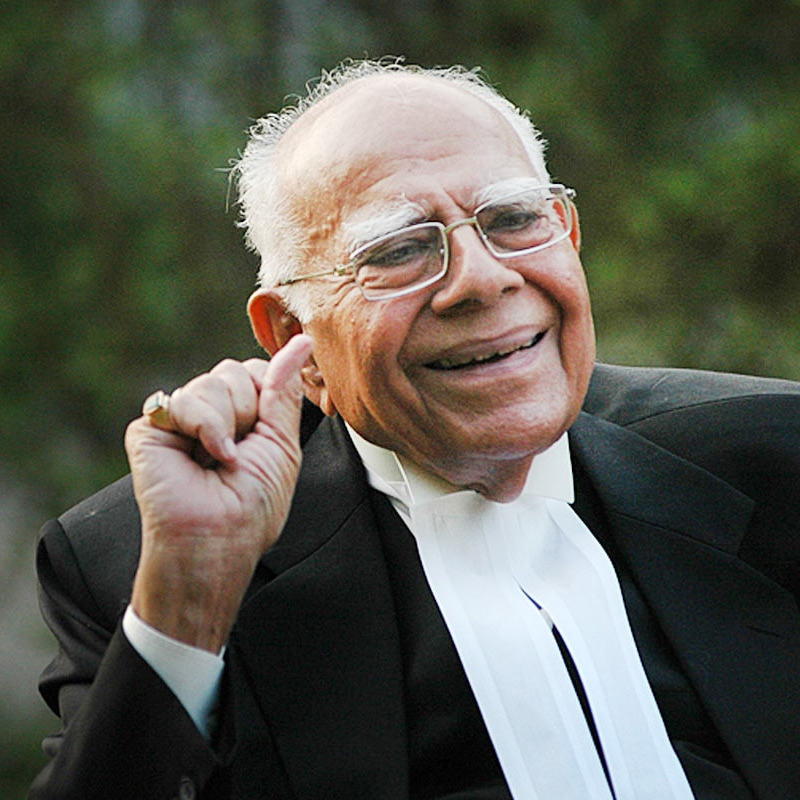
  • Ram Jethmalani talk on ‘Spirituaity and management’ on Sanskar TV

    Ram Jethmalani talk on ‘Spirituaity and management’ on Sanskar TV

    Mumbai July 11, 2006: This Sunday watch Mr. Ram Jethmalani, former Law Minister- Union of India speaking on “Spirituality and Management” at 01:40 pm on Sanskar TV. A versatile Lawyer still full of enthusiasm shares with the youth of India experiences of his life and what he thinks should be the purpose of life for the youth.
    He shares his life in India beginning at Ulhasnagar, after partition ,with only Rs. 10 in his pocket. He interprets the Bhagavad Gita as only how Ram Jethmalani could do it. He has his opinions on leadership, not sparing even Mahatma Gandhi and Pt. Nehru. He advises the youth on Management and that creation of wealth is no crime. The youth should learn that there are no failures and every adversity is an opportunity to move up in life. In the end he advises the youth that to rise in life you have to earn the trust of the people and that can be earned only by honesty and integrity.
    Watch all this and more on Sanskar TV on Sunday July 16 at 1.40 PM.

    Some of the administrative heads to appear and educate the populace about the relationship and dependency between spiritualism and administration are Vithal Kamat – CMD The orchid and Deena Mehta, a Chartered Accountant and MBA.

    Sanskar TV is a spirituality channel that imparts insight into humanity and goodwill. It is a free to air channel on Thaicom – 3.

    Media Contact
    Neelam Gupta – 98200 70564
    Vedika Tripathi – 98703 32920
    nr2image@gmail.com