Category: People

  • ‘We are identifying short term tasks and medium term tasks to get to a new, bigger Star’

    ‘We are identifying short term tasks and medium term tasks to get to a new, bigger Star’

    It’s the festival of lights. And for many the festival of noise courtesy exploding fireworks. In the hope of reducing the number of those belonging to the latter tribe, we, at indiantelevision.com, decided to put a display of firecracker articles for visitors this Diwali. We have had many top journalists reporting, analysing, over the many years of indiantelevision.com’s existence. The articles we are presenting are representative of some of the best writing on the business of cable and satellite television and media for which we have gained renown. Read on to get a flavour and taste of indiantelevision.com over the years from some of its finest writers. And have a happy and safe Diwali!

     (Written by: Thomas Abraham in 2007)

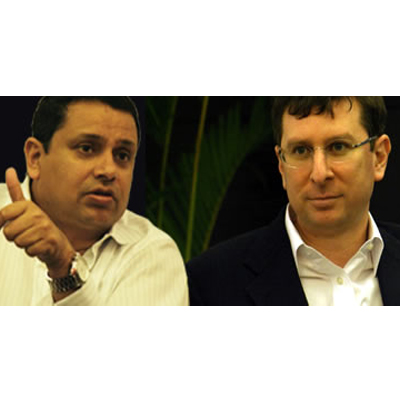
    Two men under whose collective leadership rest the fortunes of Asia’s most powerful media conglomerate. In a way, there is a commonality in how both have risen to the top at Rupert Murdoch’s Asian media arm – from the blue as it were. It was just under ten months ago that Paul Aiello, a one time investment banker, was pitchforked into the hot seat of a company riven by internal power politics and stalled growth stories in the key markets it was operating in.

    Three months later, Aiello opted for another dark horse in then Star News CEO Uday Shankar, giving the newshound turned corporate honcho operational charge of India’s lead broadcast network and the difficult task of setting things right there.

    In conversation with Indiantelevision.com’s Thomas Abraham a day after Shankar was elevated to Star India CEO (on 25 October), the two offer their most detailed overview yet, of the media conglomerate’s plans for this market and the region as a whole. Excerpts:

    These are exciting times for the industry with the economy booming and the sector seeing 20-25 % growth. How does Star view all this? What are the key factors that will drive its growth? What could work as impediments?
    Aiello: I continue to be extremely excited about the market and its growth, even though there are numerous uncertainties. You can argue that there are regulatory uncertainties, uncertainties created by increased fragmentation in viewership and increased competition. But these things are to be expected in a highly dynamic market place.

    The challenge for us is not about focusing on what Star is. It is really about what should the next Star be? What should Star be in the next five to ten years from now? That requires a lot of internal focus and development of strategies. 

    So whether it’s about our core broadcast business where we must deal with increased fragmentation, regionalization… all the phenomena that everyone looks at, we need to be there. As well as looking at the overall growth in the media market and knowing that there are other areas that we’re not in as Star; but areas where we have tremendous capabilities within News Corp and in Star, that we should move in to and make sense of.

    So we’ve been through a strategic review process and now we are coming out of that and are identifying the short term tasks and the medium term tasks to get to a new and bigger Star.

    If you get detracted by a noise event like a new show that someone else has come up with in the last one week or some uncertain ruling or regulatory decision, you can get paralysed and miss what is the more important strategic initiative on where you want to be.

    It is really important to keep that strategic vision because then you become really disciplined to stand by what the vision is and do the execution of the steps necessary, whether it is people moves or moving into new areas of business.

    So which are the new areas?
    Aiello: Certainly we need to expand the footprint of our core business of our channels. In the next six to nine months, we are going to be launching more channels.

    Five channels?
    Aiello:
    Five, six channels, yes. That is one manifestation of the extension of our core business. But we are looking at many other ways to build our business.

    Like for example?
    Aiello: News Corp has tremendous capabilities when it comes to films.

    Everybody was waiting for that. Are you going to go the Sony Pictures route? Will you be getting into movies big time and will that be under your mandate?
    Aiello:
    It is something for not just me to decide, but Fox to decide. We work very closely with our sister companies at New Corp. Let us see what we can do together if such opportunities make sense.

    News Corp is pretty strong in new media, internet as well.

    MySpace?
    Aiello: Yes, MySpace, Fox Interactive Media.

    Ajay Vidyasagar will be on that I am told.
    Aiello: Ajay is very involved in our new media strategy.

    If Ajay will be overseeing that side of the business, there are also the content challenges that lie ahead. How will all this be managed?
    Shankar: Ajay did an amazing job in the last eight-nine months when there was a creative management vacuum when people had left and gone away. Now we have ramped up our content team. So there is Anupama (Mandloi), there is Vivek (Behl), there is Monica and two or three others who have come in. We’ve also created a structure which is more channel focused. So there is a general manager of Star Plus, who’s Keertan (Adyanthaya). There is a GM of Star One, that’s Ravi (Menon). So the day to day channel management activities have become pretty much independent and self contained.

    So, for any of the other senior management, including myself, we don’t have that kind of daily interface. Our task has moved on to doing strategic and long term planning for the channels. Our internal understanding is that Ajay is going to primarily spend his time in building the internet business. And that’s in collaboration with MySpace wherever it’s possible. And internally, we will do a whole lot of other things.

    Where MySpace might not be a partner?
    Aiello: That’s right. Star will have its own new media strategy. At the same time Star will work with MySpace, Fox Interactive Media, in as many places as it makes sense. 


    The times of 50-on-50 top shows is history and we could soon well have a situation of three to four networks fighting it out for top honours. How do you see that panning out? 
    Shankar: I really feel that in this market, in the entertainment space, for a long time will continue to primarily be a two player market. Maybe there might be a third player who will have a little bit of traction. Who that first, second or third player is may change, in two or even in five years time. But I still think that for many years, that is what is going to be the situation.

    The big difference will be this. Typically in broadcasting globally, two key players will be the ones making money. In this market, in GEC, simply because of the size of the universe, it is possible that if people have a disciplined content approach, even the No. 3 and the No. 4 can make money.

    And our advertising space is becoming so segmented. Not everybody has to take big corporate advertisers. Not everybody has to target the same clients.

    What it requires is for people to clearly identify their TG, their target geography and smartly design unique or signature content for these TGs. My big problem is that in category after category you see, people are just cloning the leader.

    The fact is that it has worked because of the very size of the market. News is a classic example of that.

    Shankar: It has worked. But the returns are diminishing. If you see sustainable leadership in whichever category, somebody has been able to challenge the leader’s content model. Star News did whatever turnaround it could manage because it did not follow the Aaj Tak route of live breaking news. It went into appointment viewing and other kinds of signature programming.

    Now what you see is that everybody is chasing one or other player. The same thing is happening in music. You are seeing more and more commoditization of content and less and less differentiation. That is a big challenge.

    I think distribution is a huge challenge for this market; copy content is a big challenge. And the third, I am not saying necessarily in that order, huge challenge is the shortage of original quality talent; which nobody is really talking about. It is the same talent that is going around.

    If you are smart, you change three jobs in two years, your salary will go up four times, and you will get three more promotions. That does not mean that the person’s maturity has gone up or that person’s quality of skills have increased.

    Aiello: This is an issue that applies not only of India, but practically to all of Asia. You have to get fresh new talent. It is critical nurturing them and taking risks in developing them. 


    So the three biggest challenges over the next three years are distribution, commoditisation of content and talent management?

    Shankar: In distribution, if you were to further focus, the two challenges would be, 1) to strengthen the cable infrastructure to allow more and more channels to be delivered to the end customer, 2) is to create a regulatory environment where premium content is encouraged by monetizing.it.

    Not everybody has to pay Rs 500. There should be a good, decent family package available for Rs 75; but, somebody who wants to pay Rs 500 or Rs 1,000 and get great content, should have access to that. It is not to make an argument that people should pay through their noses; but people should have a choice.

    What is your view on Trai’s mandating pricing in non-Cas areas? I am told that broadcasters, as in the IBF, are debating challenging it legally. 

    Shankar: If there is a regulatory order, then everybody will have to comply with that. Obviously we have no choice.

    But this kind of price cap in non Cas areas, in an Indian environment where there is so much of opacity in declarations of subscriber base, is going to be extremely counterproductive for this industry. Because you’re operating in a situation where the cost of distribution has become a very important line item for all broadcasters. Except for one or two channels like Star Plus, everybody else has to shell out a large sum of money on distribution.

    The problem is that this kind of artificial cap on value, when the input costs are not being controlled, is very, very counterproductive. A whole bunch of broadcasters and many of the niches are going to become uncompetitive because of distortions in the distribution space. I think this is going to be highly detrimental.

    Yet you have all these new launches, new networks coming up.
    Shankar: Three reasons. People have faith in the Government, in God and the Regulator. 

    ‘You have to get fresh new talent. It is critical nurturing them and taking risks in developing them’

    It’s ‘karma’ then?
    Shankar: Seriously, if you look at it, there are niche channels where 30-40 per cent of their opex is the distribution fee. It is clearly unsustainable.

    This is a market where the talent costs are going through the roof because of the supply side shortage. It is a market where new competitors are coming, so your content costs are going up. Because clutter is going up, your marketing costs are going up. And your distribution costs are going completely out of whack.

    There is not even a logical relationship. Last year what you spent has no bearing on what you will have to spend this year. And in this market what you spend has no correlation to what you spend for similar deliveries in an adjoining market. This is clearly an insane situation.

    Aiello: That is not to say that some of these people will not succeed.

  • Pakistan foreign minister Khursheed Kasuri talk to Arnab Goswmai only on TIMES NOW

    MUMBAI: Pakistan foreign minister Khursheed Kasuri has rejected news reports of a possible Pakistan link to the Samjhauta blasts, saying that in South Asia investigations cannot always be taken at face value, because investigators often present facts keeping political factors in mind.


    Taking to TIMES NOW, Mr Kasuri was categorical in dismissing all initial leads and accusations, on who could be responsible for the tragedy.


    Mr Kasuri was appearing on the TIMES NOW show “Frankly Speaking” where he was talking to Arnab Goswami. Here’s the relevant excerpt:


    Arnab: There is talk of a phone call being made to Pak Occupied Kashmir (POK). Sources have been quoted as saying that there is some Pakistani link to the Samjhauta blast. We would like to know what you think about it?

    Kasuri: I would repeat what I said on the first day. It is totally counter-productive. To say that a Hindu or a Muslim or an Indian or a Pakistani (is responsible) you destroy the entire process of investigation. You know we live in South Asia, we know what our police and security agencies (are), you know the moment the leaders start saying something, you are supposed to produce results in consonance with what the leaders are saying. What I am saying is that lets hold our horses, let us wait for investigations to be completed let those details be shared with Pakistan and only then can we come to a conclusion.


    The Pakistan foreign minister also made it clear that whatever the findings of the Indian investigating agencies, they would have to be ratified by Pakistani agencies if his government is to take any action. This comment assumes great significance given India’s refusal to conduct a joint investigation into the Samjhauta blast, a unanimous demand of the National Assembly of Pakistan.


    Here’s the relevant excerpt.


    Arnab: What if evidence is given, what will you do with it?

    Kasuri: Well if evidence is given to us and our investigators come to the same conclusion then whosoever is involved will be punished.


    The Pakistan foreign minister also warned that the peace process will “fail” if it turns into a blame game or if India used it for “propaganda”.


    He said that now that India and Pakistan had turned over “a new leaf”the finger pointing must end, hinting at India’s constantly offering different forms of evidence about Pakistan supporting terror groups.


    Here’s the relevant excerpt.


    Kasuri: Both countries are suffering from terrorism. And let me tell you this (joint terror mechanism) will succeed for the simple reason that both countries have interest in it. And this is bound to fail if this is used for propaganda, for giving different swings, spins and twists.

    Arnab: What propaganda?

    Kasuri: Like ‘I gave you that name, you gave me that name and what have you done?”. Or saying that forty years ago that happened, or twenty years ago this happened. Nothing is going to work this way. You turned a new leaf when the two countries started talking to each other.”

    The interview with Pakistan Foreign Minister Khursheed Kasuri will be telecast on the show “Frankly Speaking with Arnab” at 2.30 pm and 8.30 pm on Sunday

  • Times Now interview with Bal Thackeray

    MUMBAI: In what can be seen as an open invitation to his politically estranged nephew, Raj Thackeray, Bal Thackeray, speaking to TIMES NOW in his first exclusive TV interview since the Mumbai polls, says he can think of bringing Raj back into the Shiv Sena fold.

    Talking extremely warmly about Raj, whose party failed to have much impact in the Mumbai polls, Balasaheb Thackeray said that “whatever the politics, ours is a blood relation” and that one could not rule out a coming together in the future.

    However, the Shiv Sena supreme hinted that matters would first have to be resolved between Uddhav and Raj Thackeray. When asked whether the coming together of the Thackeray’s under one political umbrella was possible in the future, Bal Thackeray said that “It all depends upon the youngsters today, how they amicably resolve the thing (their differences)”

    But Bal Thackeray also made it clear that it was up to Raj Thackeray to make the first public move of reconciliation. When pointedly asked whether he can think of bringing Raj back, Thackeray said that “I will not try, but if he wishes to, we (The Shiv Sena) will accept him back.

    Thackeray then went on to say that while people like Raj Thackeray were welcome to return to the Sena, he would not take back others who deserted the party like former Maharashtra chief minister Narayan Rane.

    Bal Thackeray also went on to reveal that he and Raj Thackeray are in touch and that they often speak on the phone. When asked if their relationship could return to the warmth of the past, Balasaheb said “Whenever I want I talk to him. And he telephones me. What is wrong in that? Let us not mix up politics with relationships. Keep relations aside and think of politics alone. Definitely, don’t mix it”

    Bal Thackeray’s comments and his open offer to Raj to return to the Sena is extremely significant, especially in the light of the Sena’s resounding success in the prestige Mumbai local elections recently.


    The Interview with Bal Thackeray will be featured on “FRANKLY SPEAKING WITH ARNAB” on Sunday 18 February at 2.30 pm and 8.30 pm on Times Now


    Excerpts:

    Arnab: You think the party under Uddhav Thackeray is being run well? And can be run well into the future?

    Thackeray: I can’t say. This question there is no answer. There are always uncertainties in life. Now the Congress has completed around 120 years or something. Do you think that same old congress is there? But it is there. The old charm and that’s gone. The new generation will do it. I’m confident about the new generation.

    Arnab: Wherever Raj Thackeray goes he still says that Balasheb is like God for me…

    Thackeray: Maybe because our relationship was like that.

    Arnab: Can that relationship come back, Mr Thackeray?

    Thackeray: Whenever I want I talk to him, he telephones me. What is wrong in that? Let us not mix up politics with relationships. Keep relations aside and think of politics alone. Definitely, don’t mix it.

    Arnab: Do you think there can be a coming together in future? Some people…after these elections people said that don’t be surprised that Narayan Rane, Udhav Thackeray, Raj Thackeray are back where they started.

    Thackeray: I may think of Raj but Mr Rane comes… he’s not welcome…

    Arnab: You may think of bringing Raj back?

    Thackeray: I will not try but if he wishes to, we will accept him back and not people like Narayan Rane.

    Arnab: What is it about Raj Thackeray that you would welcome him if he wishes to enter the party?

    Thackeray: Whatever it is whatever the politics, ours is a blood relation… You can’t afford to be that cruel actually because of politics. At least it is not my nature. Let us not discuss that problem… it is a family matter.

    Arnab: I understand but it is not something that can be ruled out in the future.

    Thackeray: It all depends upon the youngsters today, how they amicably solve the thing

  • The History channel puts the spotlight on Bollywood’s top notch directors in ‘Bollywood Bosses’

    MUMBAI: What makes Karan Johar the ultimate entertainer? Why is Ram Gopal Verma fascinated with anything that is larger than life? Why is Vidhu Vinod Chopra strident on doing things his way ? Find out all the answers on The History Channel’s entertaining new series, ‘Bollywood Bosses’ premiering February 19. The series will be aired every weeknight at 10 pm till February 24.

    ‘Bollywood Bosses’ takes a look at the careers of some of the biggest directors who have redefined the Hindi film industry. This February, join contemporary film makers such as Farhan Akhtar, Karan Johar, Yash Chopra, Sanjay Leela Bhansali, Ram Gopal Varma, Mahesh Bhatt, Subhash Ghai and Vidhu Vinod Chopra on the channel, as they look back at their lives and share the story of their journey – their struggle, box office lows, financial disasters to finally finding unparalleled success.
    “Bollywood Bosses is a great example of the kind of entertaining programming that The History Channel offers its viewers”, said Joy Bhattacharjya, Senior Vice President, Programming. ” The channel’s latest offering caters to viewers who are keen on delving into the scintillating and glamorous lives of some of India’s renowned directors. It profiles these ground breaking directors and reveals different aspects of their work that is seen by millions of people every year. The presentation of the programme brings these directors’ struggles and accomplishments to life making history entertaining and more relevant for the viewers, ” he added.

    The series provides an unprecedented access to not just the directors in profile, but virtually every top star & technician who counts in today’s Bollywood industry. Unique visual styles for each film and mimicking the technical signatures of the director in focus gives the series a glossy look.

    Tune in every weeknight at 10 pm to watch these interesting personalities in Bollywood Bosses only on The

  • Reliance Communications announces financial results for the quarter ended 31 DEC 2006

    MUMBAI: Reliance Communications Limited today announced
    its unaudited consolidated financial results for the quarter ended
    31 December 2006. The highlights of financial performance are:

    Net Profit of Rs. 924 crore (US$ 209 million), higher by 198% compared to Net Profit of Rs. 310 crore (US$ 70 million) in the corresponding quarter last year

    EBITDA at Rs. 1,527 crore (US$ 346 million), growth of 76% over the corresponding quarter last year

    Revenue growth of 26% at Rs. 3,755 crore (US$ 851 million) from Rs. 2,991 crore (US$ 678 million)

    EBITDA margin expands to a record 41% from 29%, with strong contributions across all businesses – Personal, Global and Enterprise.

    Shareholders Equity crosses Rs. 20,000 crore (more than US$ 4.5 billion). Net Debt to Equity Ratio further reduces to 0.07:1, providing substantial borrowing capacity to fund future growth

    Capex for FY2007 now expected at over Rs. 7,700 crore (US$ 1.75 billion) Commenting on the results, Mr Anil Dhirubhai Ambani, Chairman, Reliance Communications Limited said:

    “We have delivered another quarter of strong revenue and EBITDA growth across all our business segments. Net profits have increased by 3 times in the past year.

    This performance has lifted Reliance Communications into the select group of companies with annualised EBITDA of well over Rs 5,000 crore (US$1.1 billion), EBITDA margins above 40%, Shareholders Equity of over Rs 20,000 crore (US$4.5 billion), and a Stockmarket Value of nearly Rs 94,000 crore (over US$21 billion). Reliance Communications is now one of Asia’s most valuable telecom companies.

    We remain focused on further strengthening our position within India’s rapidly growing telecom sector, achieving profitable growth, and delivering long term value for our 2 million shareholders.”

    UNLOCKING VALUE

    FLAG TELECOM

    The Board of Reliance Communications has approved the global listing of FLAG Telecom.

    Reliance Communications has turned around the performance of FLAG Telecom over the past year and aligned it with the Indian franchise.

    FLAG Telecom sees enormous growth potential in bridging the digital divide and had recently announced its nearly Rs 7,000 crore (US$1.5 billion) Next Generation Network project which on completion will make the company the largest fully IP-enabled global undersea cable system operator touching 80% of the world population.

    The potential global listing of FLAG Telecom would highlight the hidden value created in its business and provide further focus on the unique growth opportunities.

    RELIANCE TELECOM INFRASTRUCTURE

    The Board of Reliance Communications noted the shareholder approval given to the scheme of demerger of the wireless towers business. The Board approved Reliance Telecom Infrastructure to examine options for unlocking the value of its assets.

    BUSINESS REVIEW

    PERSONAL (wireless)

    Reliance Communications added a record 4 million wireless customer (net) during the quarter, compared with 2.1 million in the corresponding quarter last year.

    At end-December 2006, the Company had over 30 million wireless customers on its network, representing a market share of 20.5% of the All India wireless market. It maintained market share of net wireless customer additions at 20.2% in Q3 FY2007.

    Revenues of the Personal business increased by 39% to Rs. 2,752 crore (US$ 624 million) from Rs. 1,981 crore (US$ 449 million). EBITDA increased 62% to Rs. 1,029 crore (US$ 233 million) from Rs. 636 crore (US$ 144 million).

    Global

    FLAG Telecom won major new contracts worth more than US$ 100 million (about Rs. 440 crore) during Q3 FY2007.

    In the increasingly competitive ILD market, Reliance Communications maintained its leading market share of 40%.

    Reliance India Call has recently been introduced in Australia and the worldwide access of our Reliance Global Call service has been extended to 200 countries.

    EBITDA increased by 68% during the quarter to Rs. 355 crore (US$ 80 million). The Global business achieved higher profit margins, with an increased contribution from the portfolio of data services. EBITDA margins increased to 27% from 15%.

    ENTERPRISE (broadband)

    The number of access lines increased to 530,000 in Q3 FY2007 from 217,000.

    Leveraging the 20,000 kms of metro fiber optic cables, the number of buildings directly connected to the Reliance network increased by 110,000 in the past quarter to 379,000.

    Major new orders booked by the Enterprise business during the quarter increased by over 25%. Reliance Communications has 50% market share of new Enterprise business acquisitions.

    Enterprise achieved revenue growth of 149% to Rs. 316 crore (US$ 72 million) and an EBITDA margin of 47% in Q3 FY2007.

    * * * * *

    Background

    Reliance Communications Limited is part of the Reliance – Anil Dhirubhai Ambani Group.

    Reliance Communications is India’s largest integrated communications service provider in the private sector with over 32 million individual consumer, enterprise, and carrier customers.We operate pan-India across the full spectrum of wireless, wireline, and long distance, voice, data, and internet communication services. We also have an extensive international presence through the provision of long distance voice, data and internet services and submarine cable network infrastructure globally.

  • Confluence of Young Film Makers

    NEW DELHI: Over 25 films from Germany, Nepal and India are to be screened in the First Frame 2007 international students’ film festival being held on February 6 and 7 in the capital.

    Organised by the Madhubala Institute of Communication and Electronic Media (MBICEM), the Festival will feature documentary, fiction and short films. Awards will be presented for best Direction, Best Cinematography, Best Film, and a special award to be presented by the co-sponsor UNITECH.

    First Frame 2007 has gone global this year and the media partner for the event is SAHARA NCR. The event has been co-sponsored by UNITECH and is supported by Bajaj Hindustan and other corporate organizations.

    Former Film and Television Institute of India Director Mr. Mohan Agashe, senior film critic and indiantelevision.com Consulting Editor Mr. B B Nagpal, and KATHA Centre for Film Studies Director Mr. Prabodh Parikh are among the jury for the Festival. The final entries were shortlisted from those received from Germany, Sri Lanka, Pakistan, Canada, Nepal and India by a four-member panel comprising renowned poet Kailash Bajpai and filmmakers Pankaj Singh, Ajay Bedi, and Raza Haider.

    Many of the entries received have been to prestigious festivals including the Mumbai International Film Festival, Berlin Asia Pacific Film Festival, Asian Film Festival (Singapore), Indian Social Forum 3-Screen Festival, and the first Wordless International Short Film Festival.

    The Film Festival opens on February 6, and screenings are open to all. Ancillary activities include workshops like Reality Films by renowned documentary filmmaker from Magic Lantern Foundation, Delhi, Gargi Sen, and Gone in 30 seconds, conducted by Advertising professional Azaz Ahmed, Creative Head, Publisis India. These workshops can be attended by registration and payment of nominal fee.

    Started in 1996, MBICEM is a media institute affiliated to Guru Gobind Singh Indraprastha University, imparting education in Print Media, Radio, Television, Advertising and Video Production. The institute aims to equip the students with professional skills to meet the requirements of the corporate media world.

    First Frame in its very first edition in 2003 screened both fictional and documentary films. The participation of students was from three media colleges of Delhi; MBICEM, IP College for Women and Sri Aurobindo Institute of Mass Communication. Mrs. Aruna Vasudev, Editor, Cinemaya, was the guest of Honor for the event. The 2004 edition was bigger, inviting participation from institutes at national level like MCRC, St.Xavier’s College Mumbai, YMCA and FTII.

  • Subha Barry to address IAA

    MUMBAI: Ms. Subha Barry Managing Director and head of Multicultural Careers and Inclusion for Merrill Lynch & Co., Inc., will address the India Chapter of the International Advertising Association (IAA) on 24th. January in Mumbai.

    Her address entitled “Desi’s as bosses in a Videshi Corporate World” assumes great relevance in the age of the Indian Multinational Corporation.

    This is the second in the IAA’s special series of lectures called “International Indians”. Ms. Barry is credited with creating the firm’s Multicultural and Diversified Business Development group that helped establish Merrill Lynch as the preeminent wealth management firm among diverse and multicultural markets.

    She headed the group until 2005 when she was appointed to her current role where she is responsible for managing and integrating existing and new diversity efforts across the corporation globally.

  • Arnab Goswami receives Society Young Achievers’ Awards

    Mumbai:Times Now editor in chief Arnab Goswami was awarded the Society Young Achievers’ Awards 2007 in the Media category at Hilton Towers, Mumbai on 25 January. The Society Young Achievers Award recognizes young talent for their achievements in the fields of media, fine arts, films, music, sports, fashion & business.

    The award for Young Achiever in Media was given to Arnab Goswami for his contribution and achievement in the world of News. A post-graduate from Oxford University, author and journalist, Arnab is Editor-in-Chief of the country’s fastest growing News channel, TIMES NOW. Amongst the others nominated for the award were Meneka Doshi, Mumbai Bureau Chief, CNBC TV 18; Muzamil Jaleel, Kashmir Bureau Chief, Indian Express and Arko Datta, Photographer, Reuters for their outstanding performance in journalism.

    On receiving the award, Arnab Goswami, Editor-in-Chief, TIMES NOW said, “What we do at TIMES NOW is News and for our viewers we are focused on making sense of the news. I accept this recognition on behalf of all my colleagues at TIMES NOW”

    Recipient of the Asian Television Award for the best news presenter, Arnab is known for his keen and insightful anchoring on ‘The News Hour’ and for his sharp interviews with prominent News makers on ‘Frankly Speaking’, both on TIMES NOW. He is known to have brought the otherwise reticent Sonia Gandhi for an interview on television.

    The award for the media category was adjudged by a jury comprising Mr. Vijay Darda and Mr. Kumar Ketkar and by votes from readers of the magazine.

  • James Murdoch taking more hands on role at Star?

    James Murdoch taking more hands on role at Star?

    Truth will out. After months of rumour and speculation, the pieces of the puzzle as to what exactly has been going on behind the scenes at Rupert Murdoch’s Asian arm are falling in place (or so we believe).


    Conversations Indiantelevision.com has had with industry executives in India and Hong Kong aver that the countdown to yesterday’s announcement of Star CEO Michelle Guthrie’s departure had been set in motion months before. The first inklings of that came with the creation last March of a new executive structure within Star wherein Steve Askew was named president of Star Entertainment in addition to COO of Star; and the appointment less than a month later, of Paul Aiello as president of Star.

    Aiello’s was a newly created role that put him in charge of developing strategic and business directions for the pan Asian broadcaster while overseeing corporate functions including business development, strategy and implementation, Star Ventures, government affairs and corporate communications.


    Similarly, the schism that has riven Star India these past months also directly links back to events of March 2006 and the shake up in the Indian operations wherein two units were created – Star Group and Star Entertainment – with Peter Mukerjea made CEO of Star Group India and Sameer Nair promoted from COO Star India to CEO of Star Entertainment India. More on that later though.


    Back in Hong Kong, meanwhile, the next significant appointment was in September of David Butorac as president, Platforms. That announcement marked the return to the News Corp fold of a BSkyB veteran who was then COO of Malaysia’s Astro DTH operator.


    All these moves are said to have been orchestrated out of London by BSkyB CEO and now looking ever more likely heir to the Murdoch legacy, James Murdoch. That James would have a personal interest in the affairs of Star is not surprising since his three-year stint as chairman and CEO of Star marked his coming of age as an entrepreneur.


    When James joined Star in May 2000, Star was losing ?100 million a year. When he handed over charge to Guthrie in November 2003 Star’s India operations were extremely profitable and China was beginning to show profitability. Guthrie’s mandate was to drive the company further into these markets and steer it into DTH, and pure pay TV plays with higher subscription revenues.


    In both China (due to political reasons as much as anything) and India (the cycle of change?) there has been a deceleration but that doesn’t really tell the story. One could argue that it is also down to the advantages of being an owner but there is no getting away from the fact that during James’ reign there was clarity and simplicity in both executive chains of command as well as corporate structure and direction.


    To say that the executive command structure at Star today is convoluted would be putting it kindly. And nothing exemplifies this better than the India operations where there is a strategic/corporate CEO in Mukerjea, an operational CEO in Nair, and a president in Paritosh Joshi responsible for managing revenues. And there soon may even be a COO if reports of a move to India of long time Star Hong Kong hand Sanjay Das pan out as true. We’re surprised that the name of long-time Star loyalist and former India business development head Jagdish Kumar has not cropped up anywhere in the speculations.


    According to our reading of the events of the past few months, James has been preparing the ground for a return to the lean, mean management style that was in place earlier and this could more than likely see more executive churn right through the Star system. At the top of that list of potential near term departures is Askew, currently on four months’ sick leave.


    A possible offshoot of this could be that James will sooner rather than later have a far more role in running the affairs of Star, maybe take on a designation of chairman of Star or some such.direct


    And truth is that Star really means India, the rest of it being not much more than feeder operations. So James will perforce have to send out a clear message there. The present neither here nor there two-CEO proposition has proved an unmitigated disaster.


    If the head honchos at Star were convinced that Nair was the man to lead it into the new and uncertain digital future then they should have gone with him and let him do his job. The presence of a shadow CEO (Mukerjea) was a huge disservice to Nair and even more so to Mukerjea, who had helmed the fortunes of Star India in its period of greatest dominance.


    POSTSCRIPT: The reasons for Nair’s deciding to quit (informed sources say he put in his papers on 28 December) remain shrouded in mystery because his is after all the most high profile media chief executive’s job in the country (shadow CEO notwithstanding). If anyone could be said to have had reasons to quit it was Mukerjea, and by current reckonings, both have resigned. So there is certainly some serious damage control that newly inducted CEO Aiello has to deal with when he arrives in India on Monday.

  • Amrita bags best TV channel award

    MUMBAI: Amrita TV, the Malayalam satellite channel set up in April 2005, has within a short span of time, established itself for innovative and quality programming targetting the entire family .Recently various forums presented Amrita TV with accolades including the Best Channel Award.

    The Forum for Better Television, presented Amrita TV with six Awards in the telefilms category out of which ‘Errul megangalkkum sooryres mikalkkum madhyee’ won three awards for best tele-film, best script writer, best editing ;while Neermathalathende pookal bagged three awards for best direction, best cinematography and best sound recording. Both these tele -films are in-house productions of the channel.

    The Kerala Film Audience Council also presented the best tele-film Award to Neermathalathende Pookal, an in-house production. The LIVE Chancellor awards honoured Amrita TV with best TV channel award. The other Awards comprised the best interview-based programme for Samagamam , an interactive show of the channel which is running since April 2005, and has been recognized as a channel identity programme; and special jury mention for Ularakal, an investigative current affairs programme –both these programmes are produced in-house by Amrita TV.

    The Chitram Television Awards adjudged Amrita TV as best TV channel. It also bestowed the best anchor award for Samagamam.

    A commissioned serial of the channel – Chitrashalabham- got three Awards for best direction, best serial and best actress.

    To maintain the quality and integrity of the channel’s programming character nearly 74 per cent of Amrita TV’s programmes are produced in-house by its team of talented and experienced directors.In May 2006, Amrita TV was bestowed with 15 of the 29 Kerala state awards for excellence in television in different categories–the first channel to be so honoured in its very first year of operation.