Category: People

  • Jon Zeff quits as BBC Trust director after a nine-month stint

    Jon Zeff quits as BBC Trust director after a nine-month stint

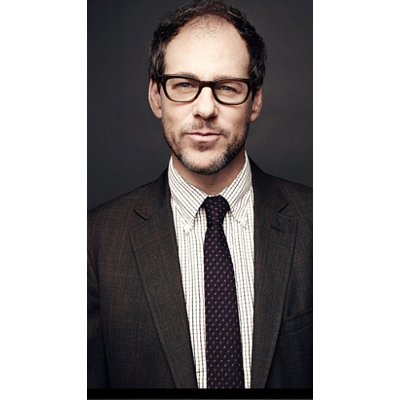
    NEW DELHI: Jon Zeff is quitting his post as director of the BBC Trust just nine months after taking over, to “pursue other opportunities.”


    Zeff was presently earning around ?180,000 (€250,000) a year.


    A previous veteran official with the Department of Culture, Media and Sport, Zeff will be replaced by the Trust’s deputy director Alex Towers.


    Zeff played a key role advising the Trust’s new chairperson Rona Fairhead, who has been embroiled in controversy over her ?10,000 a day consulting with HSBC bank. She eventually gave up her banking role.


    The Trust is likely to be dismantled by whoever wins the general election following a string of scandals at the corporation; with Fairhead conceding last month that reform was inevitable.

  • Zee TV programming head Namit Sharma quits

    Zee TV programming head Namit Sharma quits

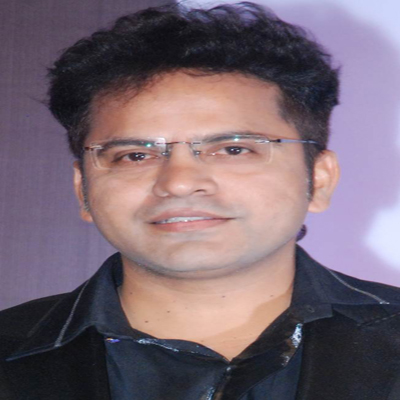
    MUMBAI: Zee TV programming head Namit Sharma has called it a day at the organisation after a stint that lasted a little more than a year.

    According to information available, Sharma put in his papers earlier this week and his last day at the organisation will be 8 May, 2015.

    In the interim,Zee TV business head Pradeep Hejmadi will be overseeing the programming at the channel till such time that a replacement is found.

    Confirming the development to Indiantelevision.com, Sharma says, “I’ve decided to move on from Zee TV and explore other opportunities.  I am happy that during my stint at Zee TV we have seen significant success with distinctive programming concepts in an extremely competitive genre. The last 14 months have been an incredible experience working with some of the best talent in the television business.”

    He further adds, “I am happy that our audience has reacted well to innovative content like Kumkum Bhagya, Jamai Raja, Neeli Chatri Waale and the recent DID Super Moms Season 2.  I have worked with a great team here and am confident that they’ll continue to lead the channel to even greater heights. As I complete 20 years in the entertainment business, it’s time to look forward to newer challenges.”

    Prior to joining Zee Entertainment Enterprises Ltd (Zeel) in February 2014, Sharma was Wizcraft Television and Films business head and chief creative officer. He had replaced Ajay Bhalwankar at Zee, who had quit to join Sony Entertainment Television (SET) as chief creative officer.

    As yet undecided on his next career move, Sharma will be taking a small mid-career break. “Honestly there are no plans as of now. But I will definitely be in the television business,” he informs.

  • Relativity EurpoaCorp appoints Candice McDonough as EVP – theatrical publicity

    Relativity EurpoaCorp appoints Candice McDonough as EVP – theatrical publicity

    MUMBAI: Relativity EuropaCorp Distribution has appointed Candice McDonough as executive vice president, theatrical publicity.


    McDonough will oversee publicity for the distribution company, which supports EuropaCorp’s film releases in the United States and Relativity’s slate.


    McDonough joins Relativity EuropaCorp Distribution following 14 years at New Line Cinema and Warner Bros. Entertainment, most recently serving as senior vice president of publicity and communications at New Line. During her tenure, she worked on such films as Wedding Crashers, Horrible BossesWe’re the Millers and The Conjuring franchise. Prior to New Line, McDonough worked at Creative Artists Agency (CAA) and in development at HBO Films.


    “Candice has a terrific reputation with a long history of success working with top talent on renowned film publicity campaigns. We are thrilled to welcome her to the RED team as we look to continue to creatively raise the visibility of our films,” said Relativity EuropaCorp Distribution president of theatrical marketing Tommy Gargotta.


    Relativity’s upcoming films include the 2015 Sundance Film Festival hit The Bronze(10 July), Masterminds (7 August) starring Zach Galifianakis, Owen Wilson and Jason Sudeikis, Kidnap (9 October) starring Halle Berry and Autobahn (30 October) starring Nicholas Hoult, Felicity Jones, Anthony Hopkins and Ben Kingsley.


    EuropaCorp’s upcoming films include The Transporter Refueled (4 September), Shut-In (19 February, 2016) starring Naomi Watts, The Lake (15 July, 2016) starring Sullivan Stapleton and JK Simmons and Nine Lives starring Kevin Spacey.


    McDonough begins her new role later this month.

  • Sanford Panitch named Sony Pictures Entertainment president intl. film & TV

    Sanford Panitch named Sony Pictures Entertainment president intl. film & TV

    MUMBAI: Sony Pictures Entertainment (SPE) has appointed Sanford Panitch as president of international film and television.  


    Panitch comes to SPE after serving as president of Fox International Productions, a division of 20th Century Fox.


    Sony Pictures Entertainment CEO Michael Lynton said, “Sanford is a talented and strategic senior executive with an exceptional career working with a wide range of international productions and talent. There is tremendous growth potential in the international and local language markets, and we are thrilled to have someone with Sanford’s experience join our team.”


    In his new role, Panitch will report directly to Lynton. He will oversee global film and television co-productions as well as local language film and television productions. In international television, he will coordinate with Sony Pictures Television president of international production Andrea Wong, who will continue with all her responsibilities supervising international television production.


    “I’m honored to join the SPE team at this pivotal moment in the studio’s history. I am eternally grateful for my years at Fox working with Jim and all my long time colleagues. This new role comes at a time of unprecedented change in the international marketplace especially in television; it’s a wonderful and unique opportunity to work with Steve Mosko, his outstanding organization and again with my friend Tom Rothman,” added Panitch.


    Panitch joins SPE following a successful tenure at Fox. As the founding president of Fox International Productions, he oversaw all local production activities in 12 territories around the globe in Latin America, Europe, India and China. Before establishing the division, Panitch served as New Regency filmed entertainment president and 20th Century Fox executive vice president of production.

  • Cisneros Media ropes in Wilma Maciel as VP, content management & acquisitions

    Cisneros Media ropes in Wilma Maciel as VP, content management & acquisitions

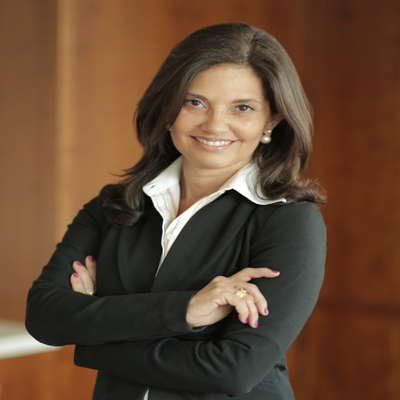
    MUMBAI: Cisneros Media, the corporate division encompassing the Cisneros’ media and entertainment businesses around the world, has appointed Wilma Maciel as vice president, content management & acquisitions for Cisneros Media Distribution (CMD), effective immediately.


    Based out of the Cisneros corporate headquarters in Miami, Florida, Maciel will report directly to Cisneros Media EVP of content distribution Marcello Coltro.


    “We are fortunate to be able to count on Wilma’s extensive expertise in the media industry as her role will be instrumental for the continuing implementation of our plan to consolidate the operations of the Pay TV and content sales areas of Cisneros Media Distribution. Wilma will work side by side with the executives of Pay TV and content sales in order to fulfill the growing demand of CMD’s international clientele, our broadcast and Pay TV channels, as well as the increasing number of digital platforms around the world,” said Coltro. 


    In this recently created position, Maciel will assist Coltro in the design and development of a comprehensive content portfolio strategy for Cisneros Media Distribution to maximize international exploitation and to streamline efficiency and revenue potential; including but not limited to identifying and developing new strategic relationships with key producers and broadcasters; evaluating partnership, licensing and alliance opportunities; revising the current Pay TV channel offering, programming and scheduling strategies, and acquiring content targeting their audiences; assessing new business models for adding external content to CMD’s catalogue; and establishing standard templates for commercial relationships with third-party producers.


    With a career spanning almost 25 years in the television industry, Maciel held key positions in several major media companies, bringing to CMD with her a vast experience in international markets, particularly Ibero-America.


    In recent years, she was Sony Entertainment Television Latin America vice president of programming, acquisitions, on-air planning and original productions; Warner Channel senior executive programming and acquisition director; in addition to her work with entertainment companies like ESPN and AMC.

  • “Good ideas always find an investor, so there is no point compromising with the idea:” Ronnie Screwvala

    “Good ideas always find an investor, so there is no point compromising with the idea:” Ronnie Screwvala

    20 years back when the word entrepreneur was rarely pronounced correctly, a 19 year old man in the midst of great legacy businesses turned out to be a stand-out first generation entrepreneur, who fearlessly kept invading into undiscovered territories.


    After starting as a local cable operator, he went on to finding United Television Group (UTV), ventured into sports with Kabaddi and funded e-commerce enterprises like Lenskart and Zivame. While the world was witnessing catastrophes, he decided to turn philanthropist with the Swadesh Foundation. From Shanti on Doordarshan to Swadesh on the big screen, from Rang de Basanti to Dev Dhe has enumerable number of trophies in his cabinet.  


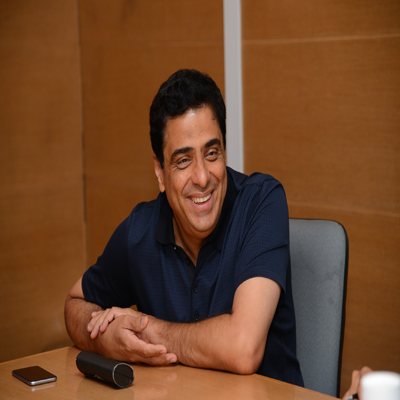
    The distinguished voyage that ignites million minds, the role model for aspiring entrepreneurs in India – Ronnie Screwvala in conversation with Indiantelevision.com’s Anirban Roy Choudhury, shares his priceless guidelines for young aspirants.         


    Excerpts:  


    What triggered you to pen Dream with Your Eyes Open?


    Entrepreneurship is a challenge and the perception that only people with huge initial capital can become an entrepreneur is a myth and that’s the message I wanted to convey and that’s where the book came into picture.


    Dream With Your Eyes Open is not an autobiography but a voyage that has both highs and lows, failures and success, encouragement and demotivation. Another reason behind penning down the book is to encourage aspirants to go for entrepreneurship passionately and not take it as a second option.


    What do you think is stopping India from becoming a global leader when it comes to entrepreneurship?


    20 years back when I started, people could hardly pronounce the word entrepreneurship. Even today, while on the one side, there are a fair amount of businesses, on the other, there is huge parental pressure of going and getting a good job. Entrepreneurship has always been plan B. But that doesn’t stand true.


    One can either go and get a good job or turn an entrepreneur – both are equally respectable. The most important reason for less growth is the fear of failure. In India, people don’t talk about this fear and if they do, they can’t handle it. For most people, failure means the end of the game… the fear that everything is over is what acts as an obstacle.


    The thought process needs to be that if you failed yesterday, you should see today as another day and move forward. When you have such a fear about failure, you don’t start. That is one of the reasons why India is ranked between 140 to 150 when it comes to entrepreneuring nations.


    How does an aspiring entrepreneur deal with the intriguing question of ‘How do I get funded’? Do you think in order to find that answer, the basic idea gets feeble or compromised?


    Everyone in India thinks that you need an investor to start a business and finding one is the biggest challenge. In my opinion, that’s not the procedure that you need to follow always. If we look at the entrepreneurs who are prospering today, all of them bootstrapped themselves on their own. Bootstrapping is a must when it comes to entrepreneurship. You have your idea and you should start executing it and only after you reach a particular level, should you go for an investor.


    Your success ratio goes up if you bootstrap first and then go for an investor. If you get an investor early on, you get spoilt. The entire work culture changes and half the time the investor runs the business that you are supposed to run. The hunger is much more when you are doing it on your own and hence if you have an idea, you should start executing it and after you have concept proofed it to yourself, you go for the investor. A good idea will always find an investor therefore there is no point compromising with the idea.


    Is stagnancy another reason behind the low rate of entrepreneurship growth in India? Do you think one should have the hunger of invading into new territories?


    It’s good that these questions are coming now because a few years back, no one thought about what happens after the substantial establishment of a business. In India, after a certain level we refrain from moving forward, get stagnant and eventually start downscaling.


    In business, downscaling begins the moment stagnancy sets in. So, one should always be open to venturing into new territories as entrepreneurship doesn’t mean earning a livelihood but generating employment. The more we explore, the more are our chances of succeeding.


    Do you think digital can give birth to a non-advertiser source of revenue model, which will be subscription based?


    If we see globally Google, which is the world’s number one company, has taken its platform YouTube and left it free. It runs on advertising. Facebook is also on advertising. If we look at it from that perspective, that’s where it’s going.


    Let’s face it, in two weeks’ time, a newly released movie is available on Tata Sky for Rs 75 but people are refraining from opting for that as there are pirated DVDs available for Rs 35. Piracy is a huge barrier of subscription based model and to counter piracy we need consumer behaviour to change, which is a slow process and will take time.


    Digital media is cost efficient. The capital investment is less when compared to the other mass medium platforms and hence there is a slim chance of having a subscription based revenue model. However, it will take time as there are bandwidth and technological issues that need to be sorted first. For now, I think advertising is going to be a long-term stay.


    Don’t you think an investor, after financing the concept, at some point of time starts regulating the strategic affairs?


    If you are a strong entrepreneur, you will never let anyone regulate you. I think there is a misconception that an investor comes in to regulate. Investors have two aspects: firstly, his risk capital is higher than most entrepreneurs because he is choosing one out of 999 and secondly, all investors get into a portfolio investment mode where they know out of 10, five will fail, three will somehow sustain and two will succeed. Who else in the entire cycle has got a risk of five failures out of 10? So, investors are seasoned veterans, who take their decision after enormous number of research and knowledge so that they put their money in right place. 


    Investors’ key is to back entrepreneurs with whatever they are doing and not regulate them. So it’s a misconception that an investor regulates. Yes, if things go wrong, an investor may get hyper and interfere with a perception that he can add value. It’s a myth that investors regulate a company.


    What’s your opinion on the Indian eco-system? Is there enough encouragement and support from the Government’s side for an aspiring entrepreneur?


    I don’t think it’s the government’s job to support. The thing that everyone is looking at is ease to do business. So the business environment has to be simplified by the government. When it comes to taxation, with 30 per cent tax we are one of the least taxed nations of the world. The tax structure in the UK and the US is higher than India. With the Goods and Service Tax (GST), it will come down to 16 per cent, which solves many problems. In the UK, value added tax (VAT) is at 17 per cent so there is no room for blaming the government.


    The reason why service tax was increased is to bring it closer to GST. The complication lies in the number of regulations and multiple-window clearances. The media is the least controlled in India. In the US, you have to be a citizen of the United States to be able to operate any digital or broadcast media, whereas in India anyone can operate an entertainment venture and hence when it comes to democracy and freedom, India beyond question beats the rest.


    Regulations make doing business complicated in India as there is no single body that deals with all the regulatory issues, which makes opening a business in 10 days impossible.


    Do you think it’s important to add entrepreneurship as one of the major aspect when it comes to academic upbringing of the youth in India?


    There are 10 million graduates coming out of college every year. Do we have jobs for all of them? The answer is a big no. The only way of tackling that problem is adding entrepreneurship in the curriculum as early as possible. I started at 19, so an early start is possible provided you think about it at an early stage. The manifestation should be there. The target should not be to get a job and then become an entrepreneur.


    Managers and presidents of big companies should think about where they will stand ten years down the line when there will be a hundred million skilled youth looking for jobs. Hence they should devote time into entrepreneurship, which will provide job to those skilled people.


    You are venturing in motorsport now. Can you throw some light on it?


    Well, yes I am venturing into motorsport. However, the report stating an investment of Rs 300 crore is incorrect. Nowadays, whatever you do, a zero gets added automatically. Here motor sports doesn’t mean cars. It caters to bikers in India, which is the largest bike selling nation of the world. The over 250cc category has grown at an incredibly high rate in last five years and we are looking at a tourism based sport. Currently, we are researching on the ten most exotic places in India, where on television one will enjoy India’s natural beauty along with skilled bikers. The plan is to make it a tourism cum sporting event.


    In the beginning, we will get a mix of Indian and international bikers, as the aim is to make it world class. Each team will have one Indian and one foreign biker for the first two years and after that we would look at making it a 100 per cent Indian event.


    From the first super-flop Dil Ke Jharoke Mein to the blockbuster entrepreneur writing his book, how will you describe the versatile voyage of yours?


    The opening four lines in my book is about the biggest failure of my life Dil Ke Jharoke Mein, which is what I started with. The concept behind starting the book with that was to convey that failure is just a part of life and not the end of the world.


    My journey so far has been to not stop after a failure but to keep moving on. Cable was different, UTV was different and sports is different. I have always rediscovered myself and for me that’s the way forward.
     

  • Forcing exhibitors is no solution for Marathi cinema revival: Ronnie Screwvala

    Forcing exhibitors is no solution for Marathi cinema revival: Ronnie Screwvala

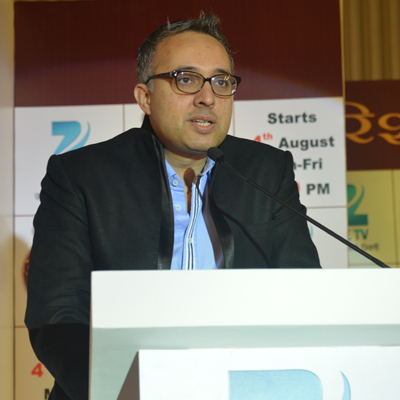
    NEW DELHI: Reacting to the Maharashtra government’s directive to all multiplexes in the state to screen at least one Marathi language movie in prime time, media and entertainment veteran Ronnie Screwvala said it was more important for the exhibition sector itself to “open its eyes to regional cinema.”


    “Forcing some regulations on people but not enforcing it only creates problems,” he said.


    Founder of one of India’s largest media and entertainment conglomerates – UTV, Screwvala launched his book with a coffee session with Karan Johar in an event held at the capital on 8 April.


    “Inject humour and laughter and look people in the eye even when you are telling them about failures. Make failures completely acceptable, and it will work,” he voiced.


    Screwvala has clearly learnt from his disruptions, and broke new ground by creating radio and television advertisements for his book Dream with Your Eyes Open, which he claims is not a biography about encouraging entrepreneurship.


    Referring to his weekly television programme on ET Now, he said that was also about entrepreneurship and not about him. Screwvala opined that his own entrepreneurial journey had been filled with innovation and disruption.


    Referring to his career in filmmaking and his 1997 film Dil Ke Jharoke Mein, he said, “Sometimes you are ahead of your times and therefore you fail.”


    The basic thought is about how more people can be encouraged to venture into entrepreneurship of their own. The ambition and aspiration level has to be charged, instead of just providing infrastructure to people, he said.


    Johar added that it is important to dream, but one should dream with one’s eyes open so that one can distinguish between what is right and wrong and rationalise.“Ronnie’s journey is an inspiration, to say the least. His innate ability to merge creativity with commerce is remarkable,” he said.


    Rupa Publications managing director Kapish Mehra added that the publication of the book had in itself been an entrepreneurship and it had done a landmark sale of 50,000 for a first time author within a week of its launch.

  • Varun Mathur quits Nimbus Sports; to partner ITW Sports for new venture

    Varun Mathur quits Nimbus Sports; to partner ITW Sports for new venture

    MUMBAI: After close to two years with Nimbus Sport as its general manager, Varun Mathur has decided to take a big leap but within the confines of his expertise – sports management and marketing.


    Mathur will be partnering with ITW managing director and CEO Vikram Tanwar to lead the new initiative called ITW Sport+. 


    Speaking to Indiantelevision.com about his new venture, Mathur says, “I will be leading the new initiative as a shareholder and director.”


    Mathur will be based out of Delhi NCR.


    The new unit will be focussed on three key areas. The company will be involved with rights management in non-cricket sports like football, Formula 1 and tennis amongst others. It will also look at acquiring and managing digital rights of sports. Additionally, ITW Sport+ will also explore third party right management of athletes and sports celebrities in the sports ecosystem.


    “The focus will be on representation of football teams in the Indian Super League, various Kabaddi teams and sports consulting too,” informs Mathur. 


    Talking about the core thought behind the new initiative, he says, “Currently there is a huge empty space in the sports ecosystem for a large size sports management firm. There are many players who are doing smaller chunks of business but there is no large consolidated player. We want to change that element and are going to occupying that space.”


    As far a cricket is concerned, Mathur informs that ITW already has its presence there as it looks after most of the bilateral cricketing series rights.


    ITW, as a sports management company, specializes in consulting in sports rights acquisition and negotiation, licensing, concept development, in stadia branding among others. It also holds rights for international cricket.


    At Nimbus, Mathur was responsible for several key deals. These include bagging a XOLO (Lava Smartphone) for the EPL club, Liverpool FC and signing of ISL team Atletico De Kolkata with the telco as Aircel as its first principle sponsor.

  • Focus News managing editor – regional Shailesh Kumar quits

    Focus News managing editor – regional Shailesh Kumar quits

    MUMBAI: News veteran Shailesh Kumar, who had joined Focus News as its managing editor-regional news channels in December last year, has decided to make an exit from the firm.


    Kumar put in his papers on 1 April and will be serving his notice period at Focus News till April- end.  


    Confirming the news to Indiantelevision.com, he said, “It was a personal decision to quit the company. I have not yet decided anything about my next move.”


    At Focus TV, Kumar was handling the five regional channels – Focus Odisha, Focus Bangla, Focus NE, Focus Haryana and Focus Hi Fi.


    Industry sources also hint at the exit of the channel’s group CEO Neeraj Sanan. However, at the time of filing this report, this website could not confirm Sanan’s exit from the company.


  • Zeel appoints Piyush Sharma as CEO – new initiatives, India & APAC

    Zeel appoints Piyush Sharma as CEO – new initiatives, India & APAC

    MUMBAI: Zee Entertainment Enterprises Limited (Zeel) has appointed Piyush Sharma in its leadership team as CEO – new initiatives, India & APAC. 


    Sharma will be responsible for leading Zee’s new initiatives, which will showcase programming and content across multiple media platforms including TV, web, mobile and an on-demand streaming service.


    Zeel MD and CEO Punit Goenka said, “Strengthening and bringing focus through deployment of right resources in businesses is a part of our organisation’s aspiration to achieve continued growth. Over the last two decades, Zee has been strengthening its position in the global markets. Piyush is known in the industry for his ability to reimagine businesses and build innovative business models. We have been laying special focus on content in the emerging markets and we are confident that Piyush’s talent and experience will help us in attaining our goal. We welcome Piyush to the Zee family and wish him success.”


    Sharma is known to be a start-up enthusiast with a proven reputation for value creation and growth. In his most recent stint, he has been credited with creating successful case studies, while bringing the licensed editions of some of the world’s most powerful international media brands into the country. He helped launch and build brands like Sports Illustrated, Travel + Leisure, Better Homes & Gardens and Maxim.


    Sharma added, “I am very excited about landing this tremendous opportunity at Zee. Both India and APAC are thriving markets and with the talented teams at Zee, I am confident that we would be able to create a profitable and large opportunity canvass while nurturing and strengthening the businesses in these markets.”


    Sharma last served as CEO for India operations of the $4 billion German MNC Burda International – operating in 18 markets with more than 300 consumer magazine brands.