Category: People

  • Miramax appoints ‘Black Swan’ EP David Thwaites as VP film

    Miramax appoints ‘Black Swan’ EP David Thwaites as VP film

    MUMBAI: Miramax has appointed independent producer David Thwaites in the newly-created position of vice president, film, effectively immediately.


    Reporting to Miramax executive vice president of film & TV Zanne Devine, Thwaites will head Miramax’s film production and development activities, as the studio continues its push into all new content areas, including film, television, acquisitions and co-productions.


    “I’m thrilled to be joining the fantastic team at Miramax. I can’t wait to begin working on Miramax’s rich and diverse development slate, and I look forward to bringing in new projects for all of us to dive into,” Thwaites said.


    Devine added, “We are very excited to boost our growing production and development activities with an industry executive of David’s caliber. David has great network reach, creative intuition and production savvy.”


    Thwaites most recently produced Crouching Tiger II: The Green Destiny. He also served as co-president of production at Phoenix Pictures, where he led the development of many projects like Black Swan, What To Expect When You’re Expecting, Shanghai, License To Wed, Miss Potter and All The King’s Men.


    Miramax’s next film is Mr. Holmes, which is directed by Academy Award winner Bill Condon and starring Academy Award nominees Ian McKellen and Laura Linney. The movie is set to release on 17 July, 2015. The 9th Life of Louis Drax with Jamie Dornan, Aaron Paul and Sarah Gadon is also in the release pipeline.

  • CNN-IBN appoints Anuradha Mathu Agrawal as national revenue head

    CNN-IBN appoints Anuradha Mathu Agrawal as national revenue head

    MUMBAI: CNN-IBN has appointed Anuradha Mathu Agrawal as national revenue head. In this role, Agrawal will be responsible for the overall sales and revenue generation of the channel.


    She will work closely on creating new revenue streams and opportunities to drive growth and further consolidate the channel’s leadership position.


    IBN Network CEO Avinash Kaul said, “Anuradha comes with rich experience across multiple media brands. We are confident given her background that Anuradha will play a stellar leadership role in breaking new ground as we embark upon the next phase of growth.”


    She comes with 17 years of experience in sales, strategy and senior leadership. She started her career with The Times of India and subsequently worked with India Today, Star India, NDTV and Turner India.

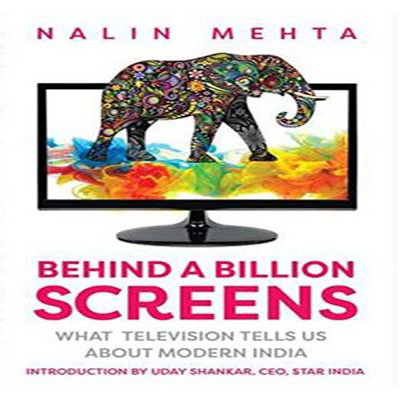
  • Nalin Mehta’s ‘Behind a Billion Screens’ examines Indian TV industry

    Nalin Mehta’s ‘Behind a Billion Screens’ examines Indian TV industry

    MUMBAI: India is a country where television forms the most important part of one’s life. Everybody watches television, everybody has an opinion on it and everybody thinks they know exactly what is wrong with it. 


    It’s a topic that often raises a lot of heat and smoke but too little light. Throwing some light on this trend of television is author and journalist Nalin Mehta’s new book ‘Behind a Billion Screens.’


    The book closely examines how television works in India, how TV channels make their money or not, how this is changing and what this means for the cacophony that appears on our screens.


    The book, which was initially going to be a joint effort by Star India CEO Uday Shankar and Mehta, was later written independently by the latter.
    The book answers key questions like:


    • Who owns Indian television? Just how much is it controlled by politicians, corporations and real estate companies? What are the patterns of control nationally and across regional languages? How does India compare with other countries and why does this matter?


    • What explains television’s terrible crisis of content? Is there really no market for intelligence in India and is dumped down content the only thing that audiences want? Why do channels keep behaving like Bollywood producers of the 1980s who kept churning out the same old tired formula films till a new multiplex-savvy breed of film-makers started challenging old orthodoxies? Is there a talent problem or management problem or a crisis of business models?


    • What is wrong with current government controlling system on television and why this ‘terrible-backend’ needs to change? Indian television continues to be controlled by outdated regulations, even as it is mired in public battles for greater regulation, as called for by Justice Katju. Studying the role of the Ministry of Information and Broadcasting, Telecom Regulatory Authority of India (TRAI), state governments and the judiciary, this book answers just how much control the state still has on broadcasting, why its jugaad nature of regulation is now unsustainable and why a major change is needed.


    • Does self-regulation work? How did self-regulatory bodies governing television come into being and what has been their factual record? Has self-regulation made any difference to programming or is it simply a chimera only designed to keep government out?How does India compare to other countries?
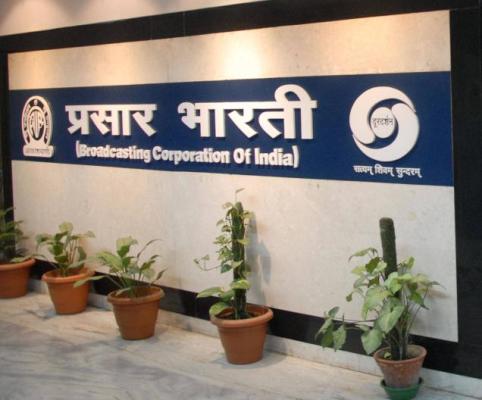
    • Does public broadcasting still matter, what exactly is wrong with Prasar Bharti and how can it be fixed?


    • Is television becoming irrelevant in the digital age? How is television shape-shifting in response to mobiles and the net, how are companies changing their businesses and programming, where is India going and how different is India from the rest of the world.


    The book highlights how India’s $15 billion media and entertainment industry – including television, print, radio, digital media – is growing at roughly 14 per cent a year. This, by some accounts, is impressive, benefitting immensely from the tailwinds of GDP growth of the last decade. But the stark fact is that even at $15 billion, India’s entire media taken together is just about one fourth the size of Google ($59 billion in revenues) – a fourteen-year-old company that is younger than most major Indian TV channels.


    “Let us not even go that far. If the entire Indian media was a company, it would rank seventh or eighth in India! Media is a globally growing industry but our participation in that ecosystem is zero and India is hardly factored into the global thought process of technology or content,” the book points out.


    Mehta, in the book, highlights how India is drunk on its own volumes: the largest number of newspapers in circulation, the second largest number of television viewers and millions of digital consumers. Digital, in particular, is an indictment of our creative and strategic limitations.


    “We have over 700 million mobile screens and yet we do not have a relatively unique content proposition for the medium. So, our ability to convert that into corresponding value is disappointing. Both in business and creative terms, the Indian media and entertainment sector still remains much smaller than it should be in a country of 1.2 billion people,” the book says.


    Even at these volumes, the reach as a percentage of population is not spectacular. India has 100 million households with no television, their time spent on it is abysmally low when compared to global standards; some 350 million people read the newspaper – but that tells us how many do not read!


    Mehta points out that in television, India needs a lot more content and this will come not only by scaling up production but through a fundamental transformation of the ecosystem. Resources, talent and every related facet have to evolve dramatically. For example, the production infrastructure in Mumbai, studio space, access to talent is creaking and unable to keep pace with the demand.


    Despite all the gloom and doom, India’s media and entertainment sector has consistently delivered impressive growth rates for the past few years. But, this is not a sector whose value is measured just by the size of its financial contribution. Media and entertainment remains central to defining the direction of India’s social and economic path; its work remains key to the imagination and inspiration of a billion Indians every day; and its health will be central to the ethos and values of the society we collectively shape.


    Mehta, through the book, says that with Narendra Modi’s new government in place, since May 2014, there is a renewed focus on reassessing things and trying to improve them. 

    “We need to make the case, for example, digitisation is not just about putting boxes and laying cables. It entails a fundamental transformation of the way we look at media and there is an opportunity for Indian media and content to move from just being a provider of entertainment content to being a creative industry, like the IT sector, for example, that plays a much larger role in the overall economic vision for the country,” Mehta opines in the book.


    He further writes that the media has been more than just a silent victim. Too often, the news media has focused on what is sensational rather than what is important. Too often, the point of news seems to be to reduce the extraordinary diversity of the country to the most banal, a contest between extremes that canonly be resolved through a shouting match on live television. With singular dominant narratives, the trend seems to be to create heroes on a particular day only to label them as thugs and crooks the next.


    Until recently, for a long time the media–government equation seemed like a broken relationship, and one that has had dire consequences for both the industry as well as the government. The failure to establish credibility and importance meant the industry perennially stayed on the back foot, defending itself against every new wave of regulation aimed only at curtailing its wings further. In return, governments were not able to leverage either the impact that mass media can have in India or harness the power of media as an economic engine that can create jobs and wealth.


    The book, in order to put things in perspective, says, “As a $15 billion industry, we employ over six million people. This can be so much more significant and meaningful. According to official estimates, about fifteen million people are entering the job market every year while the country is generating only about three million new jobs a year. This means that we are adding, as filmmaker Shekhar Kapur eloquently put it, a city of unemployed people as big as Delhi every year. And yet, the lens often used to look at this industry is largely one of glamour and propaganda and the biggest debate is on how to control and contain it.”


    There are 161 million cable and satellite homes but the measured universe so far is much smaller. “I do not know how many subscribers I have with a particular MSO and the MSO doesn’t know how many households his LCO delivers the signals to. The same is true in advertising too. The country’s premier media agencies can’t even seem to agree on a fact as basic as the size of the advertising market. One leading agency recently estimated the total market size to be Rs 35,000 crore, while the other, equally illustrious, estimated it to be Rs 29,000 crore. A variance of no less than 20 per cent! The ambiguity in data for other sectors of the media and entertainment industry is no less. Numbers are supposed to be the foundations of rational business decisions but how can we make decisions when professionals in the business of numbers can’t get their numbers straight?”


    Reacting on the book, Shankar said, “Nalin is probably the best media academic in India…this book is a seminal contribution to the evolving debate about the role of the Indian media.”


    Author and India Today Group consulting editor Rajdeep Sardesai added, “Excellent… an incisive and much needed study of how television is changing in India.”
    Times Now editor in chief Arnab Goswami said, “Fantastic… Nalin has beautifully pieced together the real, untold story behind the sound bytes.


  • Less than half of Group A sanctioned posts filled in AIR & DD

    Less than half of Group A sanctioned posts filled in AIR & DD

    NEW DELHI: Even as it has stressed the need for manpower audit in view of technological upgradation, statistics show that only 30,093 of the 46,756 sanctioned posts have been filled in the cash-strapped Prasar Bharati.


    Of the total, the filled posts in All India Radio (AIR) are 15,538 out of the sanctioned 26,129, while 14,555 posts have been filled out of the 20,627 sanctioned posts in Doordarshan (DD).


    In Group A, AIR has filled just 719 of the 2002 posts and DD has filled just 517 of the 1083 sanctioned strength.


    After rigorous exercise, the Government had identified 3452 posts as essential category posts for filling up in Prasar Bharati. Out of these, 3067 posts were identified by Government as essential category of posts in Prasar Bharati to be filled up through direct recruitment have been revived.


    A special onetime dispensation was obtained to recruit these through Staff Selection Commission.


    Prasar Bharati sources say Staff Selection Commission has already recommended 2367 candidates for appointment. Prasar Bharati is in the process of issue of appointment orders.


    In addition, 38 middle and senior level programme posts have been revived for filling up on deputation basis.

  • CNN International Commercial appoints Rob Bradley as digital ad sales head

    CNN International Commercial appoints Rob Bradley as digital ad sales head

    MUMBAI: CNN International Commercial has appointed Rob Bradley from IDG UK to expand the network’s digital advertising sales and data offering, providing clients worldwide with even greater opportunities around CNN’s premium audience and content.

    Effective May 2015, he will be based at CNN’s London office. 


    In the newly created role of head of digital advertising sales and data, Bradley will oversee the optimisation of CNN International’s audience, the international roll-out of the company’s programmatic strategy and the implementation of more advanced data-led strategies including the integration of social media. Bradley will also lead a new team of specialists that will work with CNN International’s regional sales heads in developing new digital components for integrated advertising and sponsorship solutions.


    “CNN Digital is flying high in terms of audience, editorial product and the solutions we’ve delivered clients to date,” said CNN International chief commercial officer Rani R. Raad.


    “Rob brings to us a unique mix of analytical pure-play digital and data experience combined with a solutions-based approach to complement the bespoke campaigns we deliver to clients all over the world. While multi-platform sales will remain a core part of our digital commercial strategy, it is clear to me that Rob’s expertise and vision can continue to evolve CNN’s leadership in digital with world-class commercial solutions,” added Raad.


    “It’s exciting to be joining CNN International as it combines deep investment into both direct integrated marketing solutions and programmatic with unsurpassed global reach into affluent and several key vertical audience. Using the latest technology, the new digital advertising team will advance CNNI’s integrated solutions and ability to offer truly bespoke, data-driven and impactful campaigns targeted to the right audience at scale. Programmatic will be part of the all-important holistic approach for today’s digital media owner – with a premium-end programmatic offering from CNN attracting brands that want intelligent data-driven private marketplaces and high-impact ad units alongside standard units to gain scale. Be it performance, targeted awareness of brand goals executed via programmatic or direct – CNNI will exceed our clients’ expectations,” said Bradley.

  • Disney Consumer Products names Leslie Ferraro as president

    Disney Consumer Products names Leslie Ferraro as president

    MUMBAI: Disney Consumer Products has named Leslie Ferraro as president. 


    A 16-year Disney veteran, Ferraro most recently served as Walt Disney Parks and Resorts’ executive vice president, global marketing, sales and travel operations, where she was responsible for leading the marketing and sales teams in developing numerous highly successful consumer campaigns worldwide.


    As president of Disney Consumer Products, Ferraro will oversee a global operation that delivers innovative and engaging products, from toys and apparel to books and fine art, through its Licensing, Publishing and Disney Store businesses. Ferraro assumes the role formerly held by Bob Chapek, who became Walt Disney Parks and Resorts chairman in February. 


    She will report directly to both The Walt Disney Company chairman and CEO Robert A. Iger and COO Thomas O. Staggs.


    “Leslie is a highly talented, proven executive with a strong track record of creativity and innovation. Having managed worldwide marketing and sales for one of our largest businesses, she brings a global perspective and deep knowledge of the company and its brands to her new position,” Iger said.


    “During her tenure at Parks and Resorts, Leslie was known for driving results and inspiring her teams to even greater achievements. She has a deep understanding of our brands and franchises, as well as a solid vision for how they fit into the global consumer marketplace, both of which will serve her extremely well as she leads the Disney Consumer Products team into the future,” added Staggs.


    “This is an exciting time at Disney Consumer Products, given the company’s unprecedented array of brands and franchises. I look forward to leading this dynamic business and our incredibly talented team as we continue to launch new products and retail experiences that combine technological innovation and creativity,” Ferraro said.


    Ferraro joined Disney in 1999 as director of marketing for Theme Parks and Resorts and went on to hold a variety of marketing leadership positions. She has also served on the Hong Kong Disneyland Board of Directors.


    Prior to joining Disney, Ferraro held various senior-level marketing positions at McCann-Erickson, Johnson & Johnson and SmithKline Beecham.

  • Reliance Broadcast Network ups executive leadership; Lavneesh Gupta quits

    Reliance Broadcast Network ups executive leadership; Lavneesh Gupta quits

    MUMBAI: Reliance Broadcast Network Ltd (RBNL) has made a series of promotions in its top-level management. The newly appointed executive leadership team will work seamlessly across RBNL’s radio (92.7 Big FM) and television (Big Magic and Big Magic Ganga) businesses.


    The leadership team with Reliance Broadcast Network CEO Tarun Katial at the helm, will comprise Asheesh Chatterjee as the executive vice president and chief financial officer, who will be looking at new opportunities and expansion plans in addition to the finance and regulatory portfolios.


    On the other hand, Ashwin Padmanabhan as executive vice president and business head will oversee the television channels, in addition to his existing role as business head for 92.7 Big FM.


    RBNL chief strategy officer Sunil Kumaran will across handle revenue and product as well as marketing for both the radio and television businesses. The network’s creative director Paritosh Painter will also work across both the mediums.


    Meanwhile, after a stint of almost two years with the organization, RBNL chief operating officer Lavneesh Gupta has decided to move on.


    Katial said, “In order to build a future ready organisation, we want to build a team of lateral leaders. Their focus will be on developing skills of the team in the areas of innovation, creativity, risk taking and adopting an entrepreneurial approach. I am certain that the team will deliver and continue to successfully drive the growth story for the Group.”

  • Shweta Kawatra plays loveguru in #fame Bollywood

    Shweta Kawatra plays loveguru in #fame Bollywood

    Mumbai: Actress Shweta Kawatra of Kahani Ghar Ghar Ki fame makes her digital debut as loveguru with her new show Sawaal-e-ishq on #fame Bollywood. On her first episode, Shweta had a heart-to-heart with her audience, revealing the the magic of love at first sight. Armed with the arrow of cupid, Shweta’s show is already garnering positive reviews, thanks to the traditional nuances she brings in with her modern outlook to relationships.


    When asked about her new venture on digital space, Shweta says, “I am excited to start my digital journey with #fame and Sawaal-e-Ishq. Today, internet is the most influential medium and the idea of becoming a ‘loveguru’ on this space will help me connect with my audience on a mass scale. The show allows me to connect with the youth who are often confused about their love, life and relationships. I am happy to don a new hat and help them crusade through the matters of their heart.”


    Shweta has no qualms about getting up and personal with her audiences over whatsapp chats as well, where she is available from the number 7738376667. Therefore, if you are love sick and beating your head over get the unforgettable love knots, don’t hesitate to ask for Shweta’s advice in  Sawaal-e-Ishq with Shweta on #fame Bollywood.

  • Asianet News Network appoints Sugata Srinivasaraju as editorial director

    Asianet News Network appoints Sugata Srinivasaraju as editorial director

    MUMBAI: Asianet News Network Pvt Ltd (ANNPL) has appointed Sugata Srinivasaraju as editorial director of Asianet News Network Pvt Ltd (ANNPL). He will head editorial functions of the daily Kannada Prabha and its Kannada news channel Suvarna 24X7.


    Srinivasaraju will also lead the future news ventures and forays of the group. Prior to joining ANNPL, he was the chief editor at the Times Group’s Vijay Karnataka in Bangalore.


    Srinivasaraju has more than 18 years of experience, which includes working as a senior associate editor with Outlook, news editor at the Hindustan Times and Deccan Herald. He has also contributed to the Irish Times.


    Srinivasaraju said, “I will harness the opportunity to build one of the finest convergence newsrooms in the country. At a time when the business of news is undergoing a never-seen-before transformation, to ensure that our eyes are not taken off the enshrined values of journalism will be a pristine task for me.”


    A writer in English and Kannada, Srinivasaraju has authored books that include Phoenix and Four other Mines, which won the Karnataka academy of letters translation prize, Keeping Faith with the Mother Tongue – The Anxieties of a local culture and Pickles from Home – The Worlds of a Bilingual among others.

  • Network18 appoints Sanjeev Agrawal as Homeshop18 CEO

    Network18 appoints Sanjeev Agrawal as Homeshop18 CEO

    MUMBAI: In order to strengthen its leadership and business, Network 18 has appointed Sanjeev Agrawal as CEO of Homeshop 18 with effect from 4 May, 2015. 

    He will be based in Noida.

    Homeshop18 founder and CEO Sundeep Malhotra will mentor Agrawal over the next several months while Malhotra transitions to another entrepreneurial opportunity within or outside RIL retail.

    Network18 group CEO AP Parigi said, “On behalf of the Board of the Homeshop18 and our valued partners SAIF, GS Home Shopping and OCP Asia – I wish to place on record the outstanding contributions made by Sundeep in establishing Homeshop18 as one of the India’s premium brands. I am delighted to welcome Sanjeev Agrawal to the Network18 Group. I wish him every success in his new role.”


    Malhotra added, “It’s been an amazing nine year journey and I feel privileged and blessed to have got this opportunity to not just build an outstanding business but to have worked alongside some of the finest colleagues, talent, investors and associates, without whose help this journey would not have been possible. Homeshop18 is today the undisputed market leader in the TV shopping genre and I wish Sanjeev and the entire team all the very best for the future.”

    Agrawal said, “Homeshop18 is a pioneer in its field and has a unique business model. Full credit to Sundeep and team to have built this business. Both the consumer and the industry are evolving at a rapid pace. I see Homeshop18 at the forefront of driving this change and maximising the opportunity. I am excited to be a part of this journey.”

    Agrawal comes with over 26 years of experience across FMCG, fashion and retail sector. He has held senior leadership positions at Future Value retail and Pantaloon Retail besides his FMCG stints at Balsara, Revlon, P&G, Godrej and HLL. In his last assignment he was managing director at Skechers South Asia.