Category: People

  • Maharashtra One names Abhay Ojha as chief biz officer; network to launch movie channel

    Maharashtra One names Abhay Ojha as chief biz officer; network to launch movie channel

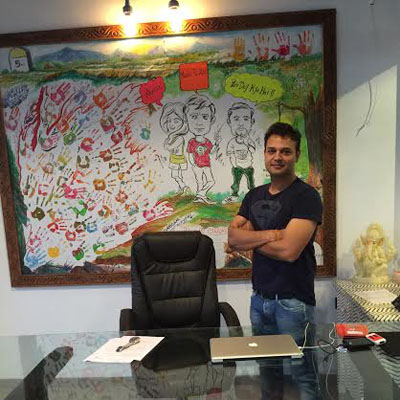
    MUMBAI: Marathi news channel Maharashtra One has roped in Abhay Ojha as chief business officer. 


    According to a source close to the development, Ojha will oversee the distribution of the channel. 


    “His vast experience is widely important for the organisation. He will also play a vital role in the planning and execution of the marketing strategy drawn for the channel,” the source adds.


    Maharashtra One owned by Fearless Media has Nikhil Waghle as the editorial face of the channel. “Besides Waghle, the network has roped in many other fearless journalists to strengthen the team and a good number of them have been recognised by the Ramnath Goenka awards. The company’s motto is simple To stay fearless.” 


    Fearless Media is not only restricting itself to one news channel. The network aspires to emerge as the front runner in the regional space. “Plans are afoot to launch a Marathi movie channel too sometime soon,” informed the source.


    Ojha was previously associated with Star CJ Alive, which was later rebranded as Shop CJ as vice president & head, new business initiatives & special projects. He played a vital role in the setting up of the channel’s India operation. Prior to that he worked with Zee Entertainment Enterprises Ltd as senior manager.

  • Zeel appoints Adesh Kumar Gupta as independent director

    Zeel appoints Adesh Kumar Gupta as independent director

    MUMBAI: Zee Entertainment Enterprises Limited (Zeel) has appointed Adesh Kumar Gupta as an additional director in the category of independent directors with effect from 30 December.

    The company informed the Bombay Stock Exchange (BSE) that the Board of Directors of the company approved Gupta’s appointment.

    With an experience of over 35 years in corporate strategy, M&A, business restructuring, fund raising and taxation, Gupta during his career of over three decades in Aditya Birla Group, held various senior positions in companies like Indian Rayon, Birla Global Finance, Aditya Birla Nuvo Ltd and Grasim Industries Ltd.

    Post his retirement as whole-time director & CFO of Grasim Industries, Gupta ventured into the business finance & corporate service space as designated partner of Progressive Consulting & Business Advisory LLP.

    He had also represented FICCI as a member of NACAS (National Accounting and Auditing Standards) which was instrumental in setting up Accounting Standards in India.

    Additionally, Gupta currently serves on the Boards of Aditya Birla Insurance Brokers and Aditya Birla Trustee Company.

  • &TV’s Rakesh Jain joins Life OK as VP – fiction

    &TV’s Rakesh Jain joins Life OK as VP – fiction

    MUMBAI: &TV associate vice president Rakesh Jain has joined Life OK as vice president – fiction. 


    “In his new role, he will be looking after Life OK’s fiction content. He will also play a vital role in starting new fiction content for the channel,” a source close to the development informed Indiantelevision.com.


    Jain was a part of &TV since inception, and was handling Bhabhi Jhi Ghar Pe Hai.

  • MGM buys out Mark Burnett, names him as president of TV & Digital

    MGM buys out Mark Burnett, names him as president of TV & Digital

    MUMBAI: Metro-Goldwyn-Mayer Inc. (MGM) is acquiring full control of United Artists Media Group (UAMG), in which reality TV producer Mark Burnett owned a 23 per cent interest with his wife Roma Downey.


    Additionally, Burnett has been named president of MGM Television and Digital Group.


    Burnett, who signed a five-year contract, will report directly to MGM CEO Gary Barber. Burnett’s new appointment will occur simultaneously with the closing of MGM’s acquisition of the remaining 45 per cent of Hearst’s, Burnett’s and Downey’s interests in UAMG, which will be absorbed under the MGM Television Group umbrella.


    “Mark Burnett is one of the most successful producers in television and a highly sought-after executive in content creation. His leadership is the next step in our never-ending quest to expand and grow our television and digital businesses,” said Barber. “Combining all of our TV content efforts under the purview of this unparalleled chief is incredibly exciting. Additionally, we believe this synergistic transaction will be very accretive to MGM.”


    Burnett and Downey will exchange their 23 per cent interest in UAMG for 1,337,360 shares of MGM stock valued at $90 per share. Hearst will receive $113.5 million in cash for their 22 per cent interest. This transaction will enable the complete integration of UAMG’s and MGM’s television businesses and the consolidation of their operations. The transaction is expected to close at the beginning of 2016 and was valued based upon the original deal parameters established when MGM acquired the initial 55 per cent of UAMG in 2014, less distributions.  The planned OTT channel will remain a separate entity controlled by its investors, Downey, Burnett, Hearst and MGM.


    “Joining MGM under the incredible leadership of Gary Barber is an exciting new chapter of my television career,” said Burnett. “Demand for quality content is stronger than ever and the opportunities to grow our pipeline and develop projects from the wealth of Intellectual Property in the MGM and United Artists libraries are enormous. There is no better time to be creating premium content for distribution across multiple platforms. “


    Downey added, “We have entered into an era where faith-based and family programming is experiencing a creative renaissance. I am so excited and grateful to head up the team at LightWorkers Media under MGM. This is an enthusiastic marketplace that inspires us every day to create and curate new, thoughtful and dynamic content for all screens in the distribution landscape.”


    In 2016, MGM Television will now have numerous unscripted and scripted television shows airing on network and cable or in production including: The Voice (NBC); Survivor (CBS); Shark Tank (ABC); Beyond the Tank (ABC); Celebrity Apprentice (NBC);Fargo (FX); Vikings (History); Teen Wolf (MTV);  500 Questions (ABC); The People’s Choice Awards (CBS); Lucha Underground (El Rey Network) and America’s Greatest Makers (INTEL/Turner).


    As part of the new structure, Downey will serve as president of LightWorkers Media, which will be the faith and family division of MGM Television, and will report to Burnett.  Downey will also serve as the chief content officer for the planned OTT channel. 


    Additionally, Chris Ottinger has been promoted to president of worldwide television distribution & acquisitions for MGM, reporting directly to Barber. MGM president of television development & production Steve Stark will continue to oversee all scripted content and will report directly to Burnett in an expanded role.


    MGM president of domestic television distribution John Bryan will continue in his role overseeing domestic distribution. Roma Khanna has stepped down from her position as head of television and digital. “Roma has done a terrific job at MGM. We are thankful for her efforts in helping grow MGM and wish her much success in her future endeavours,” said Barber.

  • ‘Television has great competition coming from digital:’ Siddharth Kumar Tewary

    ‘Television has great competition coming from digital:’ Siddharth Kumar Tewary

    The man who has taken the mythological and historical concepts on television a notch higher with his creative innovation, Siddharth Kumar Tewary is known for shows like MahabharatRazia Sultan and Suryaputra Karn. With exquisite images and content creation Tewary has given a new dimension to shows catering to these popular genres on Hindi general entertainment channels (GECs). Tewary’s production house Swastik Production launched its first show Amber Dhara in 2007 and since then there has been no looking back. 


    The production house’s founder and creative director Tewary believes that in the coming times, digital is going to give tough competition to the television broadcast industry.


    In conversation with Indiantelevision’s Sonam Saini, Tewary talks about how 2015 has been for Swastik Production, the mythological genre, OTT platforms and more.


    Read on… 


    How has the year 2015 been for you and your production house?

    It’s been a decent year for us if not a great one. We have done a variety of shows from historical shows like Razia Sultan to dramas like Manmarziyaan. We stretched ourselves to keep us out of the comfort zone. So it’s been a good year for Swastik Production. 


    A few things were appreciated by the masses, some have been appreciated by critics, while some others have been liked by the people from the industry as well. As a company, we have always believed in doing something different.


    What’s your take on the mythological and historical fare on TV this year?

    I genuinely believe that the mythological and historical genre is really cool. It’s time that such legendary stories with today’s technology and superior presentation take off on television. This is premium content, which is being made on a large scale.


    We are making these shows relevant for today’s viewers and it’s really interesting to do mythology. In period dramas, so much needs to be created and you need to transport viewers into that era. And that’s the reason why I am more than happy to do these kinds of shows. 


    In the last two years you have taken mythological and historical concepts on TV to a different level with exquisite images and creative innovations. What drives you to experiment in these genres?

    Thanks to Mahabharat, my belief has always been that I need to better myself with everything I do. From whatever work I have done so far, luckily with mythology I got a chance to recreate a world that has not been seen on Indian television. 


    I also did the same kind of thing with Agle Janam Mohe Bitiya Hi Kijo. People have not seen the village that we created with the story line in the show, which was a different concept altogether. The same goes with Bandhan, which  again had a different concept. So something, which is really interesting and comes with a lot of challenges to recreate is what excites me. 


    I don’t do things for the sake of being different. I do it differently with all my creative efforts. The shows we do should appeal to the masses. 


    Mythological and historical shows almost cost double of a normal fiction show. Is it a profitable proposition for you?

    Of course, it is. I don’t think we can survive without profit in the industry but yes the cost of making these is much higher than normal fiction shows because we spend so much on everything from set decoration to costume to jewellery to locations. So since the production costs are much higher, it takes longer time to recover unlike regular daily soaps.


    Also with such shows the revenue is already fixed in a way, so one needs to keep an eye on expenses, which doesn’t happen initially. Expenses tend to go higher than anticipated and hence it takes time to recover costs.


    With your success in this genre, a firm perception is building that Swastik is for mytho and historical content? Do you see that as a challenge because the fact is that you do create content, which does not belong to this genre?

    As a company we do all kinds of shows. If we have done mythological shows, then we have also done shows likeBegusarai and Manmarziyaan. Though we don’t do typical saas bahu dramas but yes we do differentiated content. So our company is perceived for doing different content. I don’t see that as a problem. We believe in doing creative things and right now people are thinking that we do more of mythological shows but the moment we do something different, this perception will change. 


    OTT is making a lot of noise. What’s your take on the platform.

    I think it’s good and it is a great time for production houses and people who create content. As a production house, we are conceptualisers and we started this company to create content. We will stick to doing that for every platform.


    Netflix is about to set foot in India soon and they have already started talking to production houses. Have you been approached? 

    I don’t want to comment on that. There certain things that makes the digital space very exciting and from a creative point of view, it gives us a platform where we can tell different kind of stories. Initially, the medium will remain niche and by niche I mean it will only cater to the audience, who are online.


    In TV, the IP belongs to channel commissioning the content. If you start creating content for OTT, will you follow the same formula or will you keep the IP with you? 

    We have already started working in that direction. So whether it’s television or digital, we need to create value for the company and I think that is the space content creators should move into. And for creating that value, we need to lessen the number of projects we take on. We have to focus more on the limited content that we create, so the industry needs to change to create that value.


    If bandwidth issues get sorted and digital advertising takes off in a big way, do you think digital can be a good medium or is 20 minutes of content on mobile devices a little too much?

    Mobile devices are the platform to consume content through internet only. The ecosystem is constantly evolving. Earlier we used to have three-hour movies, now they’ve been cut down to two hours. 


    As storytellers and creators, we need to know who we’re talking to. The most important thing is that we are talking to the younger generation today, who want instant gratification. Hence your content cannot be 20 minutes long. Sometimes if your content is that strong and it can hold your viewers’ attention, then it’s absolutely up to the creators.


    Recently the TV industry has seen some negativity and the editors strike was one such example. Do you think it’s getting more and more difficult in Mumbai? Shouldn’t there be more collaboration?

    I will be diplomatic if I say that there is no problem. We are facing some issues. We are currently shooting one of our shows in Gujarat. What’s more, during Mahabharat we were shooting half our shows there because of good infrastructure. So we don’t face any issues on the shows that we are shooting out of Bombay. 


    In Bombay, the issues that are raised by others are not always one sided. From cable and satellite point of view the Indian television industry is 25 years old now. I think very soon things will fall into place. 


    Do you see the quality of content on television getting better?

    It’s already getting better but it needs to raise the bar yet again. I am happy in the way that other channels and producers are investing in content these days. As a team, we need to push the quality of content more. We have great competition coming from digital. Therefore, we need to push more before someone else asks us to improve.


    Indian television content is getting somewhat bold. Don’t you think it can kill the family viewing factor, which has been its strength?

    Television is self regulated currently. It depends on the time in which the bold content is being aired. If makers feel that their audience need that kind of content, they put it because the objective is to keep the audience hooked and not let them go away. People are sensible enough to choose what that want to see and what they don’t want. The choice is always in the hands of viewers.


    Has BARC rural data impacted the dynamics of content creation?

    My understanding is still limited because everybody is still figuring out the trend. It will need a couple of more months to find out the actual trends. At least now we know that what the whole country is watching. The best part is that in rural India, Zee Anmol is doing well. Till now we didn’t know what was happening. Our show Bandhan is the number three show on an all India basis!


    I believe it will have a great impact on content because now we clearly know who we are talking to. So we need sharper content now.


    Where is Swastik going from here? And where would you like to see it by the end of 2016?

    I wish I knew but I can say that Swastik will always be around. If there’s one thing that we always knew, it’s that we have to deliver the best quality of work. Our aim is not to always play safe but to try and do something different. Taking on challenges and not being in our comfort zone is what we do.


    In 2016, we would like to mix two famous television series together, which will be loved by all.

  • Network18 hires Times Network’s Subha Chatterjee as group editor

    Network18 hires Times Network’s Subha Chatterjee as group editor

    MUMBAI: Network18 has poached Times Network senior editor & national head – special projects Subha Chatterjee as group editor – special projects.


    This is Chatterjee’s second stint with the company after a span of seven years.


    In his new role, Chatterjee will drive special interest and customised properties across all platforms, which help organisations connect with their target customers, trade and influencers in an innovative way.


    “I am pleased to welcome Subha to Network18 Group. Not only does he bring with him extensive experience in broadcast media, but he also excels in strategic and creative leadership which I believe will help in steering key projects within the group,” said Network 18 chief human resource officer Girish Naik.


    At Times Network, he played a pivotal role in creating multiple revenue streams across programming genres through unique customised conversations, contributing significant revenue to the network. He has over 15 years of experience in the media industry.


    Chatterjee added, “I am delighted to take on the new role with Network18. The world of branded and new media content will open up a world of exciting opportunities and Network18 with its unique content offerings across platforms will be an exciting hub for new ideas and conversations.”

  • FremantleMedia International names Caroline Kusser as SVP

    FremantleMedia International names Caroline Kusser as SVP

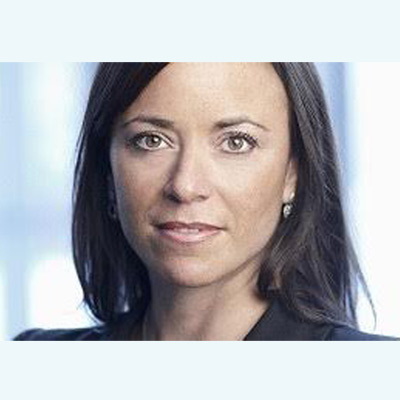
    MUMBAI: FremantleMedia International (FMI) has named Caroline Kusser as SVP – sales and distribution of its US arm.


    The newly created position will be based in LA and report to the SEVP of television & digital distribution for North America, Lisa Honig.


    Kusser will be tasked with further building FMI’s reputation in the region and maximizing opportunities for its 22,000 hours’ worth of content across linear, digital and home entertainment platforms in the highly competitive US market.


    Honig said, “Caroline’s vast experience, pivotal drama distribution knowledge and exceptional relationships in the US will play an important part in FMI’s US expansion strategy and push into high-end drama. With teams in both New York and LA, a well-established history of sales across multiple genres and long-standing client relationships, we’re in a good position to take our business up to the next level and Caroline’s understanding of this key market will help us to achieve further success.”


    Kusser added, “It’s a really exciting time for FMI. I’m looking forward to joining its US team and helping to further enhance its reputation across the region.”


    Previous to joining FMI, Kusser set up Carokusser, a TV content distribution service whose clients included ZDF Enterprises. Kusser was also part of the Red Arrow International team for ten years and in 2011 was relocated to LA as the SVP of North America where she was responsible for establishing and building the group’s US business. Prior to Red Arrow International, Kusser held roles at Bavaria Media Television, peppermint and Beta Film.

  • CASBAA elects Sompan Charumilinda as chairman of board

    CASBAA elects Sompan Charumilinda as chairman of board

    MUMBAI: Asian non-profit media association serving the multi-channel audio-visual content creation and distribution industry CASBAA has elected Sompan Charumilinda as chairman of the board of directors.


    Charumilinda is a pioneer in Thailand’s pay-TV industry and is currently True Visions Group executive vice chairman.


    He has over 20 years of experience in guiding the industry through rapidly changing markets, regulatory regimes and technological developments.


    For the past ten years he has served as a member of CASBAA’s board of directors, actively promoting CASBAA’s members’ interests both in Thailand and across the region.


    “It’s personally exciting for me to be elected chairman of the board at a time of immense technological change in our industry. CASBAA will continue to evolve to meet the changing needs of its members, and together with my fellow Directors, I will strive to ensure the Association maintains its relevance to our industry,” he said.


    The CASBAA Board is composed of 14 directors, including Marcel Fenez, Andrew Jordan (Eutelsat), Janice Lee (PCCW Media), Amit Malhotra (The Walt Disney Company), Todd Miller (Celestial Tiger Entertainment), Alexandre Muller (TV5MONDE), Ricky Ow (Turner Asia Pacific), Mark Patterson (GroupM), Frank Rittman (MPA), Christopher Slaughter (CASBAA), Jonathan Spink (HBO Asia), Bill Wade (AsiaSat), and Joe Welch (21st Century Fox).

  • ‘We have never got the cable television pay model right’: Ronnie Screwvala

    ‘We have never got the cable television pay model right’: Ronnie Screwvala

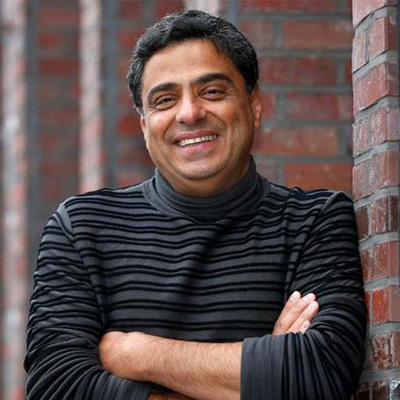
    Despite having a negative connotation more often than not, “disruption” can be a good thing, especially when it’s planned and executed in a strategic manner. And if there’s one person who is known for good disruption time and again in the Indian media and entertainment industry, it’s Rohinton Soli Screwvala or Ronnie, as he is popularly known as.

    With a quest to grow and excel in whatever he undertakes, Screwvala belongs to the rare breed of first generation media entrepreneurs in India. For him, trying is not enough for he believes in achieving all his dreams as he dreams with his eyes open!

    The pioneer of cable television in India, Screwvala has been best known to build brands and enter untapped territories. From a humble beginning in the cable industry, erecting one of India’s well known media company UTV, grabbing The Walt Disney Company’s attention, foraying into Kabbadi – a sport that was never televised robustly to breaking even in the second year, Screwvala has always pushed the boundaries.

    Complacency and failure are two words that don’t exist in his dictionary. In a country where entrepreneurship means legacy business, Screwvala is the flag bearer for first generation entrepreneurs.

    In a conversation with Indiantelevision.com’s Anirban Roy Choudhury, Screwvala goes back in time and shares his views on the Indian cable TV industry, Disney, sports and more.

    Read on for more :-

    The Disney – UTV deal is touted as a landmark deal in the Indian broadcast space. How does it feel when you look back at it today?

    I feel very proud when I look back at Disney India. We have a phenomenal team, which is doing an incredible job across the board. The channel is doing well and the movie studio is doing fantastic. The live show Beauty and the Beast has given live experiences in India a new benchmark. The best part is that they did it with local talent. It was not some imported show that travelled in here and went away.

    So it’s an incredible job done by the Disney team in India and I am proud of them. The easiest thing would have been to get a travelling show in, but they took the difficult route with local talent so it’s a local Disney show. The Disney team makes me feel proud.


    As a pioneer of cable television in India, you played a pivotal role in building it from scratch. What is your view on the evolution?

    When I look at cable, I have to say I have a little bit of regret because we are the only country in the world where we have to explain what cable TV is!

    The concept of local cable operator (LCO), multi system operator (MSO) is not there anywhere in the world other than India. A cable operator means that you need to pay for content. There are cable operators who are actually aggregators of channel. We have never got the pay model right! It started because nobody wanted to pay. Then there was a whole decade of under-declaration and nobody made capital investment.

    There are two things: Firstly, after 25 years of cable we are still not paying for content and secondly, serious investments have not gone into cable. You need billions of dollars……. we are still using the same cable that we were using 25 years back. We are still using the same model that we were using 20 years back. Yes, there have been some improvements, but we cannot call it cable TV. We are not cable TV like the world understands cable TV and that’s my problem.

    On the flip side, I must say it’s an incredible cottage industry. Look at the number of jobs it has created! It’s such a gigantic industry and for that matter if it was not the way it flourished, TV might not have been that popular the way it is. People could still be watching terrestrial TV and there would have been no satellite programming. So the fact that it has spread because of its entrepreneur spirit is a proud moment.

    I am proud of the entrepreneur spirit that has gone in there. However, I am regretful because no serious investment has been made there and we could not manage to get the pay model right.

    Speaking about the pay model, are we getting it right in digital? We are providing content for free and hence making free content consumption a behaviour.

    Let’s be very clear… people think online is free, but we are not doing anything for free. The first entrepreneurship course that we are launching is for Rs 50,000 for three months. Yes, people are skeptical to pay but that’s the way forward.

    The problem with the digital platform is that the biggest player in the ecosystem – YouTube is for free. That becomes habit forming. Things will change on digital once we go to experiential viewing. There has to be something for you other than just watching… I don’t have any idea what that is but we are trying very very hard to figure it out.

    I think the digital paid space will be experiential where you are not paying for watching but for watching plus plus… We are trying to figure out what those plusses are.

    Do we have a content strategy ready for digital? People still consider it to be a platform for 2 to 3 minutes video consumption.

    You will be shocked to hear that since last year, people are watching 30 to 40 minutes of content online even while everyone thought that digital means two to three minutes. 

    There are more people now watching 20 to 30 minutes of content online compared to the ones watching two – three minutes. What’s more, people have been also heard saying that the smaller duration content is snaky. That habit is changing because there are increased offerings. You give people quality content, they will consume it.

    Quality of content and storytelling in digital is changing. People are ready to watch a full movie on digital but they cannot now because of the bandwidth issue. So content size is not an issue, it’s the quality that matters.

    Talking about films on digital, Netflix recently simulcast The Beasts of No Nations. What’s your take on Netflix and what is the revenue model that Indian players should follow?

    Today Netflix’s market cap is as much as 21st Century Fox’s, it is as big as Time Warner and higher than Viacom… with the sole exception of Disney, which is the largest media company in the world.

    The road ahead for digital has to be ad revenue. We cannot fool ourselves on that. But the frustrating part is that we are dealing with people who do not understand digital. So the problem is that when you start a new digital medium, the main constituent – the advertisers – do not understand it at all. They still think it’s niche. They just don’t get it that today movies can be launched on digital.

    There are huge advantages of the platform. Sorry to generalise on the advertisers but the fact is that they do not understand digital and it’s going to take them three to four years to understand it. The big challenge is that while digital players will rely on advertisers, there will be no one available to experiment. So players will have to experiment, prove and only then will advertisers come on board.

    Are you saying that the next few years will be very tough for digital players?

    It will be tough, but it will be tough in a good way. It won’t be scary tough. Only serious players in the ecosystem will stay. The others that are coming with a herd mentality, the MCN players etc… I have no idea what they are up to.

    You cannot wake up to 20 different channels. What is the need? What is the model? Where will it go? What will happen to it? And the worst part is, you got investors backing those models. I fail to understand what they are up to. But yes, serious players who want to be in the ecosystem for good will be there.

    After your successful stint with Kabaddi, are you eyeing any other sport?

    We are investing in football. We are doing global grass root training programmes but it’s not the training that everyone is doing here. The training that we are giving is very different wherein we will take 60 kids to Germany for six years of training.

    Since the cost of something like this is very high, the expenses will be shared by us and the candidates. The will pay for the lodging and boarding, whereas we will pay for the training. We will manage their careers for the next 10 years. The age group that we are looking at is under 12, under 14, and under 16. We have to catch them really young and that’s the challenge.

    There are people who do three months training and summer courses, but you cannot become football stars by that. In our initiative, the kids will have to be away from home for six years. The peer pressure to meet global standards, the environment, discipline and the commitment is what we plan to offer them.

    So is this a business proposition of USports or are you doing this to uplift the sport?

    (Laughs). Of course it is a business proposition! Swades is the only social initiative that I am in for non-profit. Everything else is pure business. I think we are in the process of developing 300 future football stars. Then we will manage their careers for 10 years, that’s our business model.

    What is the progress of your motor-sport innovation?

    My motor-sport venture is an attempt to start a destination sport in India involving two-wheelers. Lakshadweep, Daman and Diu, Leh and Ladakh and Puducherry are the locations that we have in mind. The infrastructure has to step up to it, and the most important part is not the track but safety.

    This year India will be number one in terms of bike consumption, larger than China. The two-wheeler population is massive in India. Therefore, sports is an interesting way to go forward with that. But to us, the most important part is safety. It’s not a rally that we are planning so we cannot do it on a muddy paddy field. The infrastructure will take time to grow. There will be one domestic team and one international. The domestic riders will go abroad and train for six months.

    How much more time do you think it will take to match the quality you need? Are there any other investors involved?

    I would have liked to start it in next six months but the safety level that we are targeting will take at least 18 months more.

    I am doing it on my own and there is no partner involved to start the league. Here, we are going to be a league owner and our partners will be the ones we sell our franchises to.

    You have entered into online education with UpGrad. What are your plans with the venture?

    UpGrad is in the education space for post-grads. We are eyeing 14 to 16 completely different online courses, which will all be post-grad and specialised courses.

    We kicked off on 25 November with our entrepreneurship course. UpGrad received 2000 applications and then eventually we shortlisted 600 participants for the first cohort that started on 25 November. This would be the first time someone is doing a course of such high scale on entrepreneurship. The number that we roped in is huge. For every hundred students, there will be a teacher associate, who will interact with them at regular intervals. There will be a continuous process of mentorship. The course on entrepreneurship is of three months. After that the next one on Big Data will be of nine months to a year. We are launching three new courses, which will be out between March and May.


    You recently wrote a book and that inspired many igniting minds. Are you planning a second one too?

    I am not an author for sure! A book takes a lot of effort, I am happy being a business man. I am not even thinking about one more book at this stage.


    What are your plans with Swades? How much do you invest in it both in terms of money and time?

    Swades to me is not an investment. We are putting our heart and soul in it. Zarina, my wife, is working full time for that. We are not cutting cheques. Philanthropy is when you cut a few cheques and give it to an NGO. We are building a foundation from ground up. Yes, we are putting our own money but we are also putting our sweat and toil. We have 1200 people working for Swades, which is also quite big. It is a life-long commitment for us and there is no running away from it.


    You are too much of a TV person to not be in TV. When are you going back? What’s next?

    I don’t feel I am being left alone. Look at the things we are doing with Football, UpGrad and with Kabaddi. If because of Filmfare, five people used to come for selfies, now at least 50 of them come because of Kabaddi. It’s the same in rural areas too. When we travel for Swades related work, we get to know the popularity and the craze of the sport.

    I am happy with what we are doing and have no plans of going back. Swades is a key focus for me and Zarina both and we will continue to do what we are doing.
  • Spoment Media names Deepika Das as CEO

    Spoment Media names Deepika Das as CEO

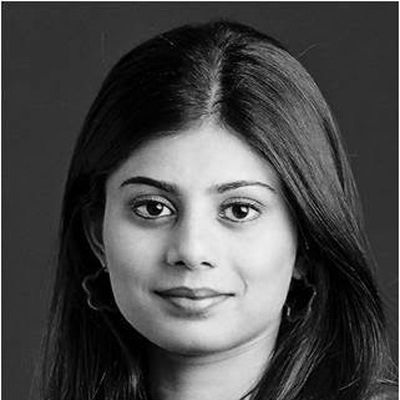
    MUMBAI: Sports marketing firm Spoment Media has appointed Deepika Das as its new CEO.


    Prior to joining Spoment, Das was with Frontiers Group and has worked on various cricket properties including Bilateral India Home Series (Test, ODI & T20) to Karnataka Premier League.


    Das, an MBA from Ohio University and a corporate lawyer, was also a national level champion in Taekwondo and swimming before moving to a career in sports marketing.