Category: People

  • ZMCL appoints WION’s Rohit Gandhi as editor-in-chief for its English daily

    ZMCL appoints WION’s Rohit Gandhi as editor-in-chief for its English daily

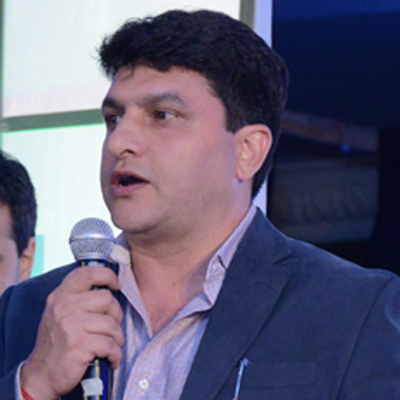
    MUMBAI: : Zee Media Corporation Limited (ZMCL) announced that its English news channel WION head Rohit Gandhi will take on additional responsibility as editor-in-chief of its English daily DNA. The new appointments will come into effect today,7 April. All editorial functions will henceforth report to Rohit Gandhi.

    Additionally, Shreyasi Goenka, who has been mentoring the content at DNA for a while, will now take the responsibility of content advisor and will guide all functions of DNA. Uday Nirgudkar who has been heading DNA along with Zee 24 Taas, will now continue to lead Zee 24 Taas as its business head.

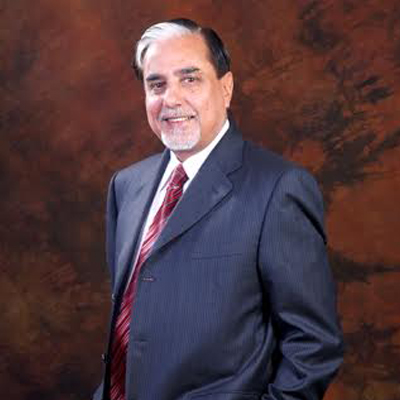
    Commenting on the new leadership, Essel Group & Zee Media Corporation Limited (ZMCL) chairman Subhash Chandra said, “One of our Vision 2020 goals is to become a leading global media conglomerate which is hugely dependent on our ability to create an organization that has the capacity to achieve its desired aspirations. We believe that the convergence of our media businesses i.e. television news and print platforms is an opportunity that will help us to achieve this organizational aspiration. With Zee Media’s ambition to get into English News broadcasting, both the brands put together give the organization an opportunity to serve our audiences better.”

    Shreyasi Goenka said, “Since its launch in 2005, DNA has become the preferred choice for India’s young and dynamic readers. We have been continuously innovating with offerings like ‘I Am IN – dna of India’, a technology enabled initiative, that promises to enlighten, engage and empower citizens of India in getting involved in the cause for better governance.We are confident that this new seamless organizational structure will bring in fresh insights and views, thus helping us to leverage resources more effectively and in maximizing our market potential.”

    Speaking on his new appointment, Rohit Gandhi said, “We are moving to expand our coverage and the editions of DNA. It is a great opportunity for us to bring more textured content from all parts of India to give our readers a far deeper understanding of India and the world. I look forward to working with Shreyasi in building an insightful newspaper.”


  • ZMCL appoints WION’s Rohit Gandhi as editor-in-chief for its English daily

    ZMCL appoints WION’s Rohit Gandhi as editor-in-chief for its English daily

    MUMBAI: : Zee Media Corporation Limited (ZMCL) announced that its English news channel WION head Rohit Gandhi will take on additional responsibility as editor-in-chief of its English daily DNA. The new appointments will come into effect today,7 April. All editorial functions will henceforth report to Rohit Gandhi.

    Additionally, Shreyasi Goenka, who has been mentoring the content at DNA for a while, will now take the responsibility of content advisor and will guide all functions of DNA. Uday Nirgudkar who has been heading DNA along with Zee 24 Taas, will now continue to lead Zee 24 Taas as its business head.

    Commenting on the new leadership, Essel Group & Zee Media Corporation Limited (ZMCL) chairman Subhash Chandra said, “One of our Vision 2020 goals is to become a leading global media conglomerate which is hugely dependent on our ability to create an organization that has the capacity to achieve its desired aspirations. We believe that the convergence of our media businesses i.e. television news and print platforms is an opportunity that will help us to achieve this organizational aspiration. With Zee Media’s ambition to get into English News broadcasting, both the brands put together give the organization an opportunity to serve our audiences better.”

    Shreyasi Goenka said, “Since its launch in 2005, DNA has become the preferred choice for India’s young and dynamic readers. We have been continuously innovating with offerings like ‘I Am IN – dna of India’, a technology enabled initiative, that promises to enlighten, engage and empower citizens of India in getting involved in the cause for better governance.We are confident that this new seamless organizational structure will bring in fresh insights and views, thus helping us to leverage resources more effectively and in maximizing our market potential.”

    Speaking on his new appointment, Rohit Gandhi said, “We are moving to expand our coverage and the editions of DNA. It is a great opportunity for us to bring more textured content from all parts of India to give our readers a far deeper understanding of India and the world. I look forward to working with Shreyasi in building an insightful newspaper.”


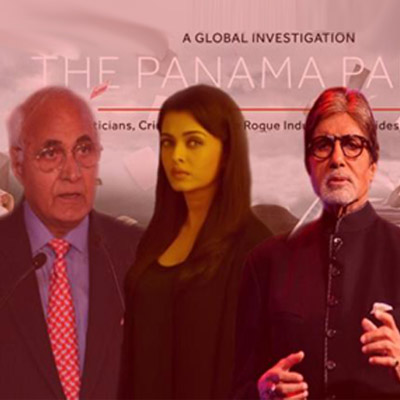
  • Aishwarya Rai, Amitabh Bachchan amongst 500 Indians named in Panama Papers; Modi calls for a multi- agency probe

    Aishwarya Rai, Amitabh Bachchan amongst 500 Indians named in Panama Papers; Modi calls for a multi- agency probe

    MUMBAI: In a shocking revelation, popular Bollywood icon Amitabh Bachchan and his daughter-in-law Aishwarya Rai Bachchan have been identified amongst 500 Indians with secret offshore accounts.

    Apart from the Bachchans, several business tycoons and industrialists’ names have also come up in the list including DLF promoter K P Singh and Indiabulls promoter Sameer Gehlaut, family members of the promoters of Apollo Tyres and a number of politicians.

    Two politicians who figure on the list are Shishir Bajoria from West Bengal and Anurag Kejriwal, the former chief of the Delhi unit of Loksatta Party, an Indian Express report read.

    According to latest update on the development, PM Modi has welcomed this investigation that is being termed by the media as the ‘greatest leak’ so far. Taking matters into hand, the government has  ordered a multi-agency team to investigate the 500 Indians, who were named in the Panama Paper.

    The team comprising of experts on tax and foreign exchange transactions, will work with financial crime-fighting agencies to investigate ‘the flow of information in each one of the cases.’

    This revelation comes as part of a new data leak  from an anonymous source through German daily Sueddeutsche Zeitung which was later shared globally by the International Consortium of Investigative Journalists (ICIJ). In India, one of the leading dailies, The Indian Express was a part of the investigation. Together the media groups have investigated a massive leak of 11.5 million documents from Mossack Fonseca, a Panama based law firm.    According to the records, the listed individuals who have paid the firm for a secretive, lax regulatory system that helped them to set up offshore entities in tax havens around the world.

    ‘Amitabh Bachchan was appointed director in at least four offshore shipping companies set up in 1993. Similarly, Aishwarya Rai and her family members were registered in 2005 as directors of Amic Partners Limited. Her status was later changed to share holder before the company was dissolved in 2008. DLF promoters KP Singh acquired a company registered in British Virgin Islands in 2010. His family’s three offshore entities hold almost $10 million,’ the report further stated.

    While owning offshore funds by itself isn’t illegal, as per the Reserve Bank of India guidelines, citizens were not allowed to possess an overseas entity before 2003. The central bank allowed individuals to remit funds of up to $25,000 a year under the Liberalised Remittance Scheme (LRS) a year later I 2004.

    In 2013, individuals were allowed to set up subsidiaries or invest in joint ventures abroad under the Overseas Direct Investment window. But the newspaper’s investigation claims that most of the offshore accounts set up by Indians identified in the list were done before 2013, which could render them illegal.

    Not just individuals, a close scrutiny of The Panama Papers also reveals details of hitherto unknown deals, in some cases involving the government, too,” Indian Express further revealed in its investigative report.

    Note: The information in this report has been sourced from The Indian Express, The Times of India, The Wire, and NDTV


  • Aishwarya Rai, Amitabh Bachchan amongst 500 Indians named in Panama Papers; Modi calls for a multi- agency probe

    Aishwarya Rai, Amitabh Bachchan amongst 500 Indians named in Panama Papers; Modi calls for a multi- agency probe

    MUMBAI: In a shocking revelation, popular Bollywood icon Amitabh Bachchan and his daughter-in-law Aishwarya Rai Bachchan have been identified amongst 500 Indians with secret offshore accounts.

    Apart from the Bachchans, several business tycoons and industrialists’ names have also come up in the list including DLF promoter K P Singh and Indiabulls promoter Sameer Gehlaut, family members of the promoters of Apollo Tyres and a number of politicians.

    Two politicians who figure on the list are Shishir Bajoria from West Bengal and Anurag Kejriwal, the former chief of the Delhi unit of Loksatta Party, an Indian Express report read.

    According to latest update on the development, PM Modi has welcomed this investigation that is being termed by the media as the ‘greatest leak’ so far. Taking matters into hand, the government has  ordered a multi-agency team to investigate the 500 Indians, who were named in the Panama Paper.

    The team comprising of experts on tax and foreign exchange transactions, will work with financial crime-fighting agencies to investigate ‘the flow of information in each one of the cases.’

    This revelation comes as part of a new data leak  from an anonymous source through German daily Sueddeutsche Zeitung which was later shared globally by the International Consortium of Investigative Journalists (ICIJ). In India, one of the leading dailies, The Indian Express was a part of the investigation. Together the media groups have investigated a massive leak of 11.5 million documents from Mossack Fonseca, a Panama based law firm.    According to the records, the listed individuals who have paid the firm for a secretive, lax regulatory system that helped them to set up offshore entities in tax havens around the world.

    ‘Amitabh Bachchan was appointed director in at least four offshore shipping companies set up in 1993. Similarly, Aishwarya Rai and her family members were registered in 2005 as directors of Amic Partners Limited. Her status was later changed to share holder before the company was dissolved in 2008. DLF promoters KP Singh acquired a company registered in British Virgin Islands in 2010. His family’s three offshore entities hold almost $10 million,’ the report further stated.

    While owning offshore funds by itself isn’t illegal, as per the Reserve Bank of India guidelines, citizens were not allowed to possess an overseas entity before 2003. The central bank allowed individuals to remit funds of up to $25,000 a year under the Liberalised Remittance Scheme (LRS) a year later I 2004.

    In 2013, individuals were allowed to set up subsidiaries or invest in joint ventures abroad under the Overseas Direct Investment window. But the newspaper’s investigation claims that most of the offshore accounts set up by Indians identified in the list were done before 2013, which could render them illegal.

    Not just individuals, a close scrutiny of The Panama Papers also reveals details of hitherto unknown deals, in some cases involving the government, too,” Indian Express further revealed in its investigative report.

    Note: The information in this report has been sourced from The Indian Express, The Times of India, The Wire, and NDTV


  • The key is to consolidate Zeel, ZMCL, Zee Digital and DNA business: Ashish Sehgal

    The key is to consolidate Zeel, ZMCL, Zee Digital and DNA business: Ashish Sehgal

    MUMBAI: Zee Entertainment Enterprises Limited (Zeel) had earlier informed BSE that the board of directors of the company at its meeting held on March 29, 2016, inter alia, have approved in-principle the proposal for re-organising advertisement sales and channel distribution functions in the business operations of the company.

    With a view to provide media planners with multiple options across genres and platforms, the Zeel board has approved re-organisation of advertisement sales function under a separate entity formed for the purpose on March 23, 2016 in the name of Zee Unimedia Limited. Zeel Chief Sales Officer Ashish Sehgal will be in charge of the new entity as COO. Speaking to Indiantelevision.com Sehgal said, “The key is to consolidate, Zeel, ZMCL, Zee Digital and DNA business in the first phase and then later on focus on Dish TV too.”

    Sehgal has his eyes on the digital wave, “Digital is growing fast and we will monetise it to the most,” he added.

    On the other hand, ZMCL CEO Bhaskar Das will now serve Zee Unimedia Limited as president and chief growth and innovation officer, “He will be reporting to me” confirmed Sehgal

    To facilitate such reorganisation, the Zeel board has approved acquisition of 100 per cent equity stake comprising of 700 Equity Shares of Rs .10 each of Zee Unimedia Ltd, at par, from the subscribers viz certain employees and key managerial personnel of the company.


  • The key is to consolidate Zeel, ZMCL, Zee Digital and DNA business: Ashish Sehgal

    The key is to consolidate Zeel, ZMCL, Zee Digital and DNA business: Ashish Sehgal

    MUMBAI: Zee Entertainment Enterprises Limited (Zeel) had earlier informed BSE that the board of directors of the company at its meeting held on March 29, 2016, inter alia, have approved in-principle the proposal for re-organising advertisement sales and channel distribution functions in the business operations of the company.

    With a view to provide media planners with multiple options across genres and platforms, the Zeel board has approved re-organisation of advertisement sales function under a separate entity formed for the purpose on March 23, 2016 in the name of Zee Unimedia Limited. Zeel Chief Sales Officer Ashish Sehgal will be in charge of the new entity as COO. Speaking to Indiantelevision.com Sehgal said, “The key is to consolidate, Zeel, ZMCL, Zee Digital and DNA business in the first phase and then later on focus on Dish TV too.”

    Sehgal has his eyes on the digital wave, “Digital is growing fast and we will monetise it to the most,” he added.

    On the other hand, ZMCL CEO Bhaskar Das will now serve Zee Unimedia Limited as president and chief growth and innovation officer, “He will be reporting to me” confirmed Sehgal

    To facilitate such reorganisation, the Zeel board has approved acquisition of 100 per cent equity stake comprising of 700 Equity Shares of Rs .10 each of Zee Unimedia Ltd, at par, from the subscribers viz certain employees and key managerial personnel of the company.


  • Aidem restructures as Co-founder & Director, Vikas Khanchandani takes on a mentor’s role

    Aidem restructures as Co-founder & Director, Vikas Khanchandani takes on a mentor’s role

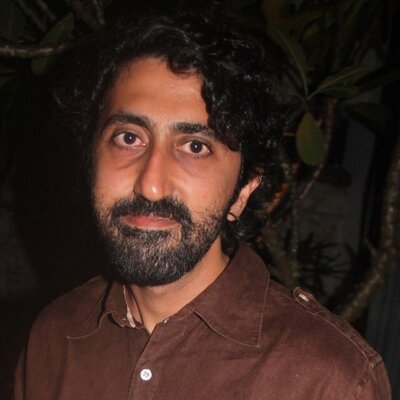
    MUMBAI Aidem Ventures & Zirca Digital Solutions co-founder and director Vikas Khanchandani has decided to pursue other interests while he continues to mentor across the group’s investments in the media space.

    Moving forward, Alok Rakshit and Nikhil Sheth will take on the responsibility for the TV monetisation services and Joydeep Ghosh will spearhead IMD Cloud (eBus) business. 

    Sheth and  Rakshit are integral members spearheading the TV verticals at Aidem. Ghosh has been instrumental in growing the IMD Cloud (eBus) digital delivery service – a pioneer and leader in its space with its self-serve capabilities. The company’s digital business had been spun out into a separate entity viz. Zirca Digital Solutions and has Neena Dasgupta heading the business. ZDS represents some of the largest global publishers and technology firms in the digital media space viz. MSN, Skype, Economist and Outbrain amongst others. 

    The management team has been strengthened with active participation of Karan Gupta, director at Aidem and MD at Zirca over the last couple of years. Gupta has been working closely with the entire management team charting the growth for the group making significant investments in India as well as South East Asia.

    “While Vikas steps away from his day-to-day role, he will continue to stay involved with the company as a mentor. He will be actively involved with the media technology projects that Aidem is already invested in. Having been part of the organisation since its inception, Vikas has been responsible for driving phenomenal growth for the company and has successfully navigated the business through challenging times” said  Aidem Ventures & Zirca Digital Solutions chairman Ashok Gupta .


  • Aidem restructures as Co-founder & Director, Vikas Khanchandani takes on a mentor’s role

    Aidem restructures as Co-founder & Director, Vikas Khanchandani takes on a mentor’s role

    MUMBAI Aidem Ventures & Zirca Digital Solutions co-founder and director Vikas Khanchandani has decided to pursue other interests while he continues to mentor across the group’s investments in the media space.

    Moving forward, Alok Rakshit and Nikhil Sheth will take on the responsibility for the TV monetisation services and Joydeep Ghosh will spearhead IMD Cloud (eBus) business. 

    Sheth and  Rakshit are integral members spearheading the TV verticals at Aidem. Ghosh has been instrumental in growing the IMD Cloud (eBus) digital delivery service – a pioneer and leader in its space with its self-serve capabilities. The company’s digital business had been spun out into a separate entity viz. Zirca Digital Solutions and has Neena Dasgupta heading the business. ZDS represents some of the largest global publishers and technology firms in the digital media space viz. MSN, Skype, Economist and Outbrain amongst others. 

    The management team has been strengthened with active participation of Karan Gupta, director at Aidem and MD at Zirca over the last couple of years. Gupta has been working closely with the entire management team charting the growth for the group making significant investments in India as well as South East Asia.

    “While Vikas steps away from his day-to-day role, he will continue to stay involved with the company as a mentor. He will be actively involved with the media technology projects that Aidem is already invested in. Having been part of the organisation since its inception, Vikas has been responsible for driving phenomenal growth for the company and has successfully navigated the business through challenging times” said  Aidem Ventures & Zirca Digital Solutions chairman Ashok Gupta .


  • “Our carriage bill is down 30-35%; subscription up 14-15%”: Nikhil Gandhi

    “Our carriage bill is down 30-35%; subscription up 14-15%”: Nikhil Gandhi

    2015 will be remembered as a memorable year for Disney India’s TV biz. The mouse house took its TV channel distribution in its own hands when it terminated its joint venture with the Viacom outfit Indiacast.  For several years it had experimented with other distribution partners like Sun Distribution Services to Star Den, both of which are non-existent now.

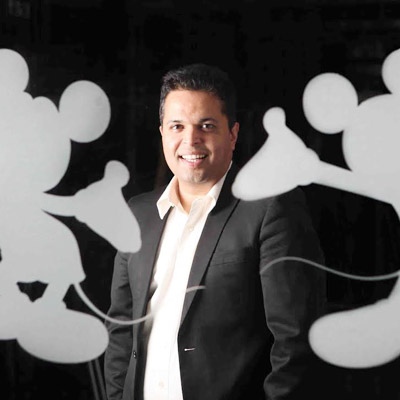
    A new venture Disney Media Networks was set up and media vet Nikhil Gandhi – who was responsibile for revenue and profitability across Disney India media channels comprising of youth channels – Bindass and kids channels – Disney Channel, Disney Junior, Disney XD and Hungama TV, movies channels – UTV Movies and UTV Action –  was given its charge.

    His challenge: to jiggle out distribution and subscription  revenues from India’s fragmented cable TV ecosystem, while keeping affiliate fees under control even as he ensured carriage of Disney India’s eight channel bouquet.

    Six months down the line, Gandhi seems to have done well, if one goes by this exclusive interview to indiantelevision.com’s Anirban Roy Choudhury.  He speaks about the challenges he has and continues to face, and why he is still optimistic.

    Excerpts:

    How has the journey been so far? What made Disney decide to distribute its TV channels on its own?

    It has been a fabulous six months. The market has been receptive to whatever we are doing, which has been a major boost for us. We have been in the business for over 10 years now and we have been distributing through different partners. We started with Star, then we went to Sun and then to IndiaCast, following which we were on an agency relationship with them. Therefore we needed to take a call on what we really wanted to do.

    I think our network is one to reckon with. We have six per cent viewership share which is probably five or six times compared to the one following us. So we are the fifth largest broadcast network. That’s why we thought we could go out and take the business in our hands and see what we could do at the distribution level.

    One, it was also important to get our carriage fee bill down, which each  broadcaster is trying his level best to do. Two and the most important one was to get the subscription business in order. 

    What are the challenges that you faced and how did you counter them?

    We had to inform the ecosystem – the MSOs’ and the DTH players about Disney Media Networks, that we have eigh channels, we have very high premium brands. We had to tell them what we are and what value we could add to them. I think that at certain point after our initial efforts, they did realise that they had never seen Disney as an entity in its own right. They began to understand the value that we brought to the table in terms of packaging. They realised we were the leaders in kids and youth channels and we had a sizeable movie business. We were not just another bouquet, we were leaders of sorts. The challenge was to communicate that and the team did a fantastic job.

    I think that the deals that we have struck are our biggest achievement. We have reached very big milestones in the first year itself. To begin with we have got our carriage bill down by 30 to 35 per cent and at the same time we have taken our subscription revenue up 14 to 15 per cent and it happened after rounds of negotiations and discussions with our carriage partners.

    When you talk about distribution success, do you mean a pan India success or is it a particular market?

    It is a pan India success for us. We are distributed nationally. Our channels reach east, west, north and south. And that is because of the fantastic work done by our teams on ground. We got a fantastic bunch of talented people from across different fields. They have successfully communicated what really Disney Media Networks stands for, and most of the negotiations are done by them. So whenever we talk about success or numbers, it is pan India that we are talking about, and not a particular market.

    What is your opinion about the CPS model? If rolled out properly, will it enhance your subscription revenue?

    CPS is there…and yet it’s not there as a whole. In phases I and II, we know what is going on. Phases III and IV will take shape with time. It’s good that we’ve digitized, now what really matters is how it is being addressed, how the CAF is filled up and how it is packaged. 

    It is a great move forward, and as a broadcaster and content provider, we can only add value to the process by giving superior content and a brand which will enhance ARPUs.

    CPS will happen as the progression of packaging happens and the progression of addressability happens.

    The MSO-LCO equation needs to change and become more mature. Yes, the moves are very positive, but we are still not there, there are areas where we need some amount of investor players to come and change the game at least from a mind-set point of view. CPS will go up with ARPU going up.  And when there is a transparent system in place that enables addressability, subscription revenue will move up in the right direction.

    What is your opinion on the regulators stand so far?

    The regulators have been very pro industry, which is a great thing. We have seen how there was a hard stance when it came to the phase III deadline. So I think it’s a very bold move, because for them also, it’s about getting the industry which is so big in size organised and deriving the maximum out of it in terms of entertainment tax and other revenue generating propositions. And an organised platform is always more transparent, and transparency is the need of the hour for the industry. So I think the regulator’s stand so far has been immensely pro industry.

    Do you think content, if paid for in India, will grow?

    ARPUs’ have been flat for last 10 years. So obviously India is not paying for content, but the moot point is that India is capable of paying more. We, at Disney, are manufacturers; we are content providers. There are platforms and there are wholesalers and retailers involved.  It is the retailers and the wholesalers who need to drive the ARPU and there are many elements on which it all depends.

    At a pricing level we are restricted by the RIO model, and then on the ground level there is the LCO who by no means is interested as it might hurt him. I think to drive payment for content, the LCO – MSO equation needs to change, DTH needs to play its role and it all needs to happen in a collaborated manner.

    I think there is a need for standard pricing similar to any other industry. You buy toothpaste the price is the same everywhere.  In India there is a legacy involved in the way it has been run. The legacy needs to change. It is changing, we expected it to change fast, but it’s actually changing at a snail’s pace.

    Can the broadcasters not play a role in ensuring higher ARPU?

    Look at what the broadcasters are offering these days. Look at the quality of the content. It’s premium content created with superior sophistication. There are HD channels offering HD content. A few of them have rolled out 4K channels.

     So while ARPU has remained same over the last 10 years, the investment on content did not stop. It kept on going. New formats, acquisitions, new and bold ways of storytelling have been explored, and then there are the additions in the number of channels every year.

    Rs 300 for 50 channels 10 years ago, has now become 250 channels of superior quality for the same old price. We have witnessed a few ARPU movements at least in the metros with DTH and a few MSOs, but these are minuscule movements. The movements need to happen much faster because that’s where the motivation is. From a broadcaster’s point of view, there is nothing that we can do but play the game as per the nature of the business.

    You spoke about collaboration, recently we witnessed switching off of signals, what is your opinion on such acts?  

    Firstly, the switching off of services and disturbing the consumer at a fundamental level is very unfair, it should not happen. There could be differences on the negotiation table, but that by no means should disturb the end consumer. 

    The fact that the consumer is deprived of a service in itself is very sad.  I don’t subscribe to such negotiations. We have also gone through highs and lows in our negotiation process but, at the end of the day, you cannot starve your consumer of superior content, or any content for that matter, because the consumer has subscribed for it. The ecosystem is such that the business is dependent on ad sales, and that is why the switch offs’ happen.

    What should lead the business, subscription or ad revenue?

    Ad sales should be an icing on the cake, subscription revenue should steer the business. Look at the mature markets – subscription revenue is leading the business, the negotiations that happen there are at a different level.

    Fundamentally the broadcast business has to be a subscription led business. You can have an advertising-based play that we are seeing with the FTA’s and that’s majorly because of the huge population of our country and the market size and the reach that TV offers. But a premium pay channel creating original superior content needs to be pay first.

    What is your take on the growing OTT business?

    At the heart of the OTT ecosystem is bandwidth and the bandwidth needs to improve.  What will be interesting to see is if it becomes subscription based (SVOD) or advertising based video on demand (AVOD). 

    Now if you are providing superior content for an AVOD model you are not creating a great environment as such. It’s all about how you form the habit. Consumers who consume OTT content are paying about Rs 1,000 for data, and we tend to think that the same consumer will not pay for  content. This mentality is not a long term one, we need to think 10 years ahead and then take steps.

    Smart TVs are in place; people are talking about 8K.  There are great leaps in terms of technology, but if we don’t take the correct steps, we won’t be able to get value out of the OTT business.

    Will you make yourself available on OTT platforms? Star has Hotstar, SPN has Sony Liv, ZEE has a couple of them and Viacom is launching VOOT. Is Disney also looking towards launching an OTT platform?

    Anywhere where consumption is there, we will make ourselves present. That’s the way forward for us. We do have plans, but we are at a very nascent stage as far as OTT is concerned. As a linear service we will be available on all OTT platforms, but when it comes to launching our own venture we will evaluate when the time is right.

    Where are you generating more subscription revenue from, DTH or cable?

    DTH has a slight edge over cable when it comes to our subscription revenue. We are gradually moving towards level contributions from both the platforms. Now with DAS phase III, I think the headroom for growth is massive in the case of cable. At this stage I think that DTH, given its organised and transparent nature, has the edge.

    Is it the bouquet mode of distribution that you are looking at, at this stage?

    Most of our deals are all bouquet offerings, if there is any platform that requires a youth offering or kids offering or a movie offering, such deals happen at a very high CPS price and we create those packages. We are there on a la carte as an offering, but there is a very small set of consumers who subscribe to the service. So it’s largely all bouquet.

    What is it that Disney Media Networks is looking for in the foreseeable future?

    I have mandated the team in Disney that the subscription business needs to overtake the ad sales business over the next three years’  and that will change the entire ecosystem. An MSO cannot then threaten me with a switch off and that’s what we are targeting. We were at about 65:35 ratio, now we have become 60:40 so we are moving towards that direction. Over time the target is to make it 40:60 or 30:70 for that matter.
     

  • “Our carriage bill is down 30-35%; subscription up 14-15%”: Nikhil Gandhi

    “Our carriage bill is down 30-35%; subscription up 14-15%”: Nikhil Gandhi

    2015 will be remembered as a memorable year for Disney India’s TV biz. The mouse house took its TV channel distribution in its own hands when it terminated its joint venture with the Viacom outfit Indiacast.  For several years it had experimented with other distribution partners like Sun Distribution Services to Star Den, both of which are non-existent now.

    A new venture Disney Media Networks was set up and media vet Nikhil Gandhi – who was responsibile for revenue and profitability across Disney India media channels comprising of youth channels – Bindass and kids channels – Disney Channel, Disney Junior, Disney XD and Hungama TV, movies channels – UTV Movies and UTV Action –  was given its charge.

    His challenge: to jiggle out distribution and subscription  revenues from India’s fragmented cable TV ecosystem, while keeping affiliate fees under control even as he ensured carriage of Disney India’s eight channel bouquet.

    Six months down the line, Gandhi seems to have done well, if one goes by this exclusive interview to indiantelevision.com’s Anirban Roy Choudhury.  He speaks about the challenges he has and continues to face, and why he is still optimistic.

    Excerpts:

    How has the journey been so far? What made Disney decide to distribute its TV channels on its own?

    It has been a fabulous six months. The market has been receptive to whatever we are doing, which has been a major boost for us. We have been in the business for over 10 years now and we have been distributing through different partners. We started with Star, then we went to Sun and then to IndiaCast, following which we were on an agency relationship with them. Therefore we needed to take a call on what we really wanted to do.

    I think our network is one to reckon with. We have six per cent viewership share which is probably five or six times compared to the one following us. So we are the fifth largest broadcast network. That’s why we thought we could go out and take the business in our hands and see what we could do at the distribution level.

    One, it was also important to get our carriage fee bill down, which each  broadcaster is trying his level best to do. Two and the most important one was to get the subscription business in order. 

    What are the challenges that you faced and how did you counter them?

    We had to inform the ecosystem – the MSOs’ and the DTH players about Disney Media Networks, that we have eigh channels, we have very high premium brands. We had to tell them what we are and what value we could add to them. I think that at certain point after our initial efforts, they did realise that they had never seen Disney as an entity in its own right. They began to understand the value that we brought to the table in terms of packaging. They realised we were the leaders in kids and youth channels and we had a sizeable movie business. We were not just another bouquet, we were leaders of sorts. The challenge was to communicate that and the team did a fantastic job.

    I think that the deals that we have struck are our biggest achievement. We have reached very big milestones in the first year itself. To begin with we have got our carriage bill down by 30 to 35 per cent and at the same time we have taken our subscription revenue up 14 to 15 per cent and it happened after rounds of negotiations and discussions with our carriage partners.

    When you talk about distribution success, do you mean a pan India success or is it a particular market?

    It is a pan India success for us. We are distributed nationally. Our channels reach east, west, north and south. And that is because of the fantastic work done by our teams on ground. We got a fantastic bunch of talented people from across different fields. They have successfully communicated what really Disney Media Networks stands for, and most of the negotiations are done by them. So whenever we talk about success or numbers, it is pan India that we are talking about, and not a particular market.

    What is your opinion about the CPS model? If rolled out properly, will it enhance your subscription revenue?

    CPS is there…and yet it’s not there as a whole. In phases I and II, we know what is going on. Phases III and IV will take shape with time. It’s good that we’ve digitized, now what really matters is how it is being addressed, how the CAF is filled up and how it is packaged. 

    It is a great move forward, and as a broadcaster and content provider, we can only add value to the process by giving superior content and a brand which will enhance ARPUs.

    CPS will happen as the progression of packaging happens and the progression of addressability happens.

    The MSO-LCO equation needs to change and become more mature. Yes, the moves are very positive, but we are still not there, there are areas where we need some amount of investor players to come and change the game at least from a mind-set point of view. CPS will go up with ARPU going up.  And when there is a transparent system in place that enables addressability, subscription revenue will move up in the right direction.

    What is your opinion on the regulators stand so far?

    The regulators have been very pro industry, which is a great thing. We have seen how there was a hard stance when it came to the phase III deadline. So I think it’s a very bold move, because for them also, it’s about getting the industry which is so big in size organised and deriving the maximum out of it in terms of entertainment tax and other revenue generating propositions. And an organised platform is always more transparent, and transparency is the need of the hour for the industry. So I think the regulator’s stand so far has been immensely pro industry.

    Do you think content, if paid for in India, will grow?

    ARPUs’ have been flat for last 10 years. So obviously India is not paying for content, but the moot point is that India is capable of paying more. We, at Disney, are manufacturers; we are content providers. There are platforms and there are wholesalers and retailers involved.  It is the retailers and the wholesalers who need to drive the ARPU and there are many elements on which it all depends.

    At a pricing level we are restricted by the RIO model, and then on the ground level there is the LCO who by no means is interested as it might hurt him. I think to drive payment for content, the LCO – MSO equation needs to change, DTH needs to play its role and it all needs to happen in a collaborated manner.

    I think there is a need for standard pricing similar to any other industry. You buy toothpaste the price is the same everywhere.  In India there is a legacy involved in the way it has been run. The legacy needs to change. It is changing, we expected it to change fast, but it’s actually changing at a snail’s pace.

    Can the broadcasters not play a role in ensuring higher ARPU?

    Look at what the broadcasters are offering these days. Look at the quality of the content. It’s premium content created with superior sophistication. There are HD channels offering HD content. A few of them have rolled out 4K channels.

     So while ARPU has remained same over the last 10 years, the investment on content did not stop. It kept on going. New formats, acquisitions, new and bold ways of storytelling have been explored, and then there are the additions in the number of channels every year.

    Rs 300 for 50 channels 10 years ago, has now become 250 channels of superior quality for the same old price. We have witnessed a few ARPU movements at least in the metros with DTH and a few MSOs, but these are minuscule movements. The movements need to happen much faster because that’s where the motivation is. From a broadcaster’s point of view, there is nothing that we can do but play the game as per the nature of the business.

    You spoke about collaboration, recently we witnessed switching off of signals, what is your opinion on such acts?  

    Firstly, the switching off of services and disturbing the consumer at a fundamental level is very unfair, it should not happen. There could be differences on the negotiation table, but that by no means should disturb the end consumer. 

    The fact that the consumer is deprived of a service in itself is very sad.  I don’t subscribe to such negotiations. We have also gone through highs and lows in our negotiation process but, at the end of the day, you cannot starve your consumer of superior content, or any content for that matter, because the consumer has subscribed for it. The ecosystem is such that the business is dependent on ad sales, and that is why the switch offs’ happen.

    What should lead the business, subscription or ad revenue?

    Ad sales should be an icing on the cake, subscription revenue should steer the business. Look at the mature markets – subscription revenue is leading the business, the negotiations that happen there are at a different level.

    Fundamentally the broadcast business has to be a subscription led business. You can have an advertising-based play that we are seeing with the FTA’s and that’s majorly because of the huge population of our country and the market size and the reach that TV offers. But a premium pay channel creating original superior content needs to be pay first.

    What is your take on the growing OTT business?

    At the heart of the OTT ecosystem is bandwidth and the bandwidth needs to improve.  What will be interesting to see is if it becomes subscription based (SVOD) or advertising based video on demand (AVOD). 

    Now if you are providing superior content for an AVOD model you are not creating a great environment as such. It’s all about how you form the habit. Consumers who consume OTT content are paying about Rs 1,000 for data, and we tend to think that the same consumer will not pay for  content. This mentality is not a long term one, we need to think 10 years ahead and then take steps.

    Smart TVs are in place; people are talking about 8K.  There are great leaps in terms of technology, but if we don’t take the correct steps, we won’t be able to get value out of the OTT business.

    Will you make yourself available on OTT platforms? Star has Hotstar, SPN has Sony Liv, ZEE has a couple of them and Viacom is launching VOOT. Is Disney also looking towards launching an OTT platform?

    Anywhere where consumption is there, we will make ourselves present. That’s the way forward for us. We do have plans, but we are at a very nascent stage as far as OTT is concerned. As a linear service we will be available on all OTT platforms, but when it comes to launching our own venture we will evaluate when the time is right.

    Where are you generating more subscription revenue from, DTH or cable?

    DTH has a slight edge over cable when it comes to our subscription revenue. We are gradually moving towards level contributions from both the platforms. Now with DAS phase III, I think the headroom for growth is massive in the case of cable. At this stage I think that DTH, given its organised and transparent nature, has the edge.

    Is it the bouquet mode of distribution that you are looking at, at this stage?

    Most of our deals are all bouquet offerings, if there is any platform that requires a youth offering or kids offering or a movie offering, such deals happen at a very high CPS price and we create those packages. We are there on a la carte as an offering, but there is a very small set of consumers who subscribe to the service. So it’s largely all bouquet.

    What is it that Disney Media Networks is looking for in the foreseeable future?

    I have mandated the team in Disney that the subscription business needs to overtake the ad sales business over the next three years’  and that will change the entire ecosystem. An MSO cannot then threaten me with a switch off and that’s what we are targeting. We were at about 65:35 ratio, now we have become 60:40 so we are moving towards that direction. Over time the target is to make it 40:60 or 30:70 for that matter.