Category: People

  • B4U Network hires new  revenue chief

    B4U Network hires new revenue chief

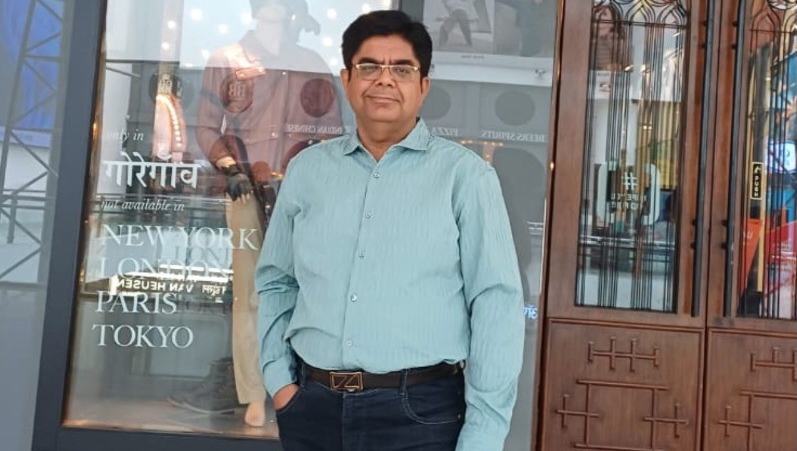
    MUMBAI: Hemlata Yederi has moved to B4U Network as chief revenue officer after spending 14 years building the sales operation at rival broadcaster Sri Adhikari Brothers group. The move, effective September, hands her control of revenue strategy and partnership deals across B4U’s entertainment channels.

    Yederi spent over a decade as national head of sales and latterly chief revenue officer at Sri Adhikari Brothers, where she managed advertising revenue for channels including Mastiii, the country’s leading music channel, Hindi film channels Dabangg and Dhamaal, Marathi regional channel Maiboli, and general entertainment channel Dillagi. That she’s now steering B4U’s monetisation efforts marks a significant coup for the network—and an uncomfortable loss for her former employer.

    With three decades in media sales under her belt, Yederi’s career spans stints at NDTV, where she ran advertising sales for the west, and an 11-year run at Mid Day as associate vice president of sales. She cut her teeth in yellow pages sales at Getit Infomediary in the early 1990s, managing field and telesales teams before the digital revolution upended directory advertising.

    At B4U, Yederi now oversees brand monetisation, media sales and cross-platform expansion for the Mumbai-based broadcaster. Her LinkedIn announcement, posted five days ago, came wrapped in the obligatory corporate sentiment about “people and purpose” and “balancing strategy with heart”—the sort of language that sounds earnest but means little.

    What matters is execution. B4U has hired someone who knows how to extract revenue from India’s advertising market and has spent years doing precisely that for a competitor. Whether Yederi can replicate that success in new colours remains the only question worth asking. In media sales, loyalty lasts only as long as the next quarterly target.

  • Paramount’s Pam Kaufman calls it a day

    Paramount’s Pam Kaufman calls it a day

    MUMBAI: Pam Kaufman, the executive who turned a “yellow sea sponge” into a global merchandising juggernaut, has announced her departure from Paramount after more than two decades with the entertainment giant.

     Kaufman, who served as chief executive of international markets and global consumer products, will leave at the end of the year, though she plans to stay on as a consultant. Her exit comes as David Ellison and Jeff Shell take the reins of the newly restructured media company.

    During her tenure,  Kaufman transformed Paramount’s consumer products division into a $7bn retail business. She oversaw the expansion of iconic franchises including SpongeBob SquarePants, Teenage Mutant Ninja Turtles, and Paw Patrol across more than 170 international markets. Under her watch, the company struck lucrative partnerships with brands from Stella McCartney to Supreme, many of which sold out within minutes of launch.

    The executive, who began her career at Nickelodeon in the 1990s, became the network’s first chief marketing officer in 2008. She launched over 20 television programmes and helped the company achieve $1bn in revenue. Her marketing prowess was perhaps best demonstrated with the Kids’ Choice Awards, where she nearly tripled voter participation.

    Kaufman’s international expansion efforts included launching Nickelodeon-themed resorts in Mexico and the United States, whilst the gaming division she oversaw produced hits like Star Trek Fleet Command, which has racked up 20m downloads.

    “We built billion-dollar franchises,” Kaufman wrote in her farewell post on LinkedIn. “We turned a yellow sea sponge into a global icon.”

    The departure marks the end of an era for Paramount, which has been grappling with the rapid shift to streaming whilst trying to maintain its traditional television and film businesses. Kaufman played a crucial role in supporting the international rollout of Paramount+ and Pluto TV.

    Beyond Paramount, Kaufman sits on the boards of Lindblad Expeditions, Stella McCartney, and the Rock & Roll Hall of Fame Foundation. She will remain in these roles.

    “I’ve truly had the slime of my life,” she quipped, referencing Nickelodeon’s trademark green goo, “in the ‘in between’ with all of you.”


  • Sony Pictures Networks India brings in BCG to slash costs

    Sony Pictures Networks India brings in BCG to slash costs

    MUMBAI: Sony Pictures Networks India (SPNI) has hired Boston Consulting Group to conduct a comprehensive audit of its operations, according to media reports. The review, ordered by new chief executive Gaurav Banerjee (GB to his associates), aims to cut costs and boost efficiency across the broadcaster’s television and digital arms.

    GB, who took the helm in 2024 after the departure of long-serving chief N.P. Singh, is driving the strategic overhaul as India’s broadcast sector grapples with spiralling content costs, fierce competition from digital rivals, regulatory interference and volatile advertising revenues.

    The audit will scrutinise both SPNI’s 28 television channels and SonyLiv, its streaming platform, hunting for redundancies and wasteful spending on programming, marketing and content rights. BCG has been tasked with creating “a roadmap for sharper efficiency”, a senior executive told media outlets.

    The consultancy’s mandate spans linear television and digital operations, with particular focus on aligning content investments with revenue reality. The exercise seeks to eliminate structural inefficiencies and streamline overlapping processes without disrupting core operations.

    Industry analysts say GB’s decision to deploy BCG signals a new era of financial discipline. The timing is critical. SPNI reported revenues of Rs 651.1bn and net profit of Rs 84bn in the financial year ending March 2024. Subscription income reached Rs 320.6bn whilst advertising contributed Rs 282.5bn. Yet content costs are climbing faster than revenue growth, forcing a fundamental reassessment of the business model.

    “The era of unchecked spending is over,” said an industry veteran. “This audit is about building a leaner, sharper SPNI that can weather current pressures and thrive in the next phase of media growth.”

    The BCG review carries symbolic weight beyond operational fixes. For employees, partners and investors, it signals that GB intends to apply rigorous financial scrutiny to SPNI’s expansion plans. For rivals, it demonstrates that whilst SPNI will compete aggressively, it will avoid ruinous spending wars.

  • Sony Pictures locks in media veteran for five-year run

    Sony Pictures locks in media veteran for five-year run

    MUMBAI: Sony Pictures Networks India has secured Gaurav Banerjee as managing director and chief executive officer until August 2029, cementing a five-year tenure that shareholders rubber-stamped at the company’s annual general meeting on 25 August.

    The appointment, effective since August 2024, regularises Banerjee’s position after he joined as an additional director the same month. He stepped into the hot seat last year, replacing NP Singh in a changing of the guard at India’s entertainment behemoth.

    Shareholders also waved through the elevation of general counsel Ritesh Khosla and chief financial officer Sibaji Biswas to whole-time director roles, with five-year terms kicking in from December 2024 and February 2025 respectively. The trio’s appointments follow the Companies Act’s stringent governance requirements, with statutory filings confirming none hold shares in the company or maintain family ties with existing board members.

    The moves come as Sony Pictures Networks India, which trades under the Culver Max Entertainment banner, seeks to fortify its leadership team amid intensifying competition in India’s Rs 1.8 trillion media and entertainment sector. The company operates a stable of 28 television channels spanning genres from news to entertainment, alongside its streaming platform SonyLiv.

    Financial results for FY24 underscore the scale of Banerjee’s mandate: the company clocked revenues of Rs 6,511 crore with net profit hitting Rs 840 crore. Subscription income of Rs 3,206 crore marginally outpaced advertising revenues of Rs 2,825 crore, reflecting the industry’s ongoing pivot towards direct-pay models as traditional advertising faces headwinds.  For Banerjee, the extended tenure offers breathing room to execute long-term strategy in a market where rivals are splashing billions on content and technology.

  • Lachlan Murdoch crowned as siblings take billion-dollar bow

    Lachlan Murdoch crowned as siblings take billion-dollar bow

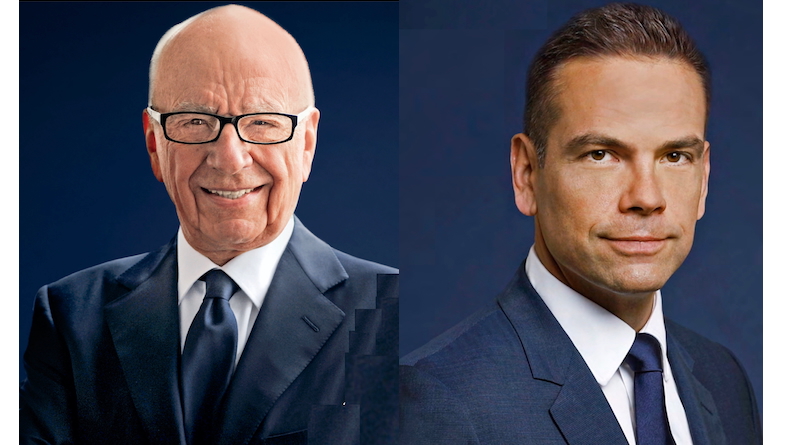
    MUMBAI: The Murdoch family succession drama has finally reached its climax. Lachlan Murdoch, Rupert’s favoured son and ideological ally, has emerged with undisputed control of Fox Corp and News Corp after a protracted courtroom battle in Nevada. The denouement sees three siblings—Prudence MacLeod, Elisabeth Murdoch and James Murdoch—cut out of the empire altogether, each walking away with a billion-dollar payday.

    The companies announced on Monday that all litigation over the Murdoch Family Trust had been terminated. New trusts will be created for Lachlan and his half-sisters Grace and Chloe, with their combined holdings pooled into a new vehicle, LGC Holdco. That entity will command about 36.2 per cent of Fox’s Class B voting shares and 33.1 per cent of News Corp’s Class B stock. Crucially, sole voting power sits with Lachlan as managing director. The arrangement runs until 2050, effectively locking in his control for a generation. Rupert, 94, retains the honorary role of chairman emeritus.

    The three departing heirs are not just sidelined—they are barred from returning. Their buyouts, partly funded by the sale of 16.9 million Fox and 14.2 million News Corp shares previously held by the trust, will be followed by the disposal of their remaining token stakes. A long-term standstill agreement ensures they, or their affiliates, cannot repurchase stock or interfere with the companies. Within six months, they will be gone in every sense: no shares, no votes, no say.

    The outcome caps years of intrigue. James Murdoch, increasingly estranged from the empire, has openly backed Democrats and liberal causes. Elisabeth, once seen as a rival for the top job, nurtured her own ambitions in television. Prudence, though less visible, was part of the bloc resisting Rupert’s 2023 bid to rewrite the trust in Lachlan’s favour. That manoeuvre was struck down by a Nevada court last winter, which found Rupert, Lachlan and their advisers had acted in “bad faith.” The ruling forced negotiations that culminated in this week’s truce.

    For Rupert, the settlement is as much about politics as power. By engineering billion-dollar exits for his dissenting heirs, he has secured not only Lachlan’s throne but also the conservative orientation of his media empire, anchored by Fox News. The prospect of a posthumous coup—James and Elisabeth uniting to steer the company leftward—has been neutralised.

    Fox’s board endorsed the outcome, calling Lachlan’s leadership “important to guiding the company’s strategy and success.” Investors may also breathe easier: the messy trust fight, which threatened to destabilise one of the world’s most influential media conglomerates, has been neatly resolved.

    It is an ending with all the hallmarks of the Murdoch mythos: courtroom secrecy in Reno, billion-dollar pay-offs, siblings sidelined, and one heir enthroned. Rupert, the ultimate showman, has once again scripted the finale to his family saga—leaving Lachlan in command until mid-century.

  • Revolving doors keep spinning in television as executives flee for calmer pastures

    Revolving doors keep spinning in television as executives flee for calmer pastures

    MUMBAI: The Indian media and entertainment business is experiencing something of a convulsion. At the heart of the storm sits television, a medium once considered impregnable, now rattled by both economic pressures and shifting consumption patterns. Senior and mid-level executives are walking out of plush offices at an unprecedented rate, turning resignation letters into the industry’s hottest commodity. The revolving doors at general entertainment channels, factual broadcasters and news networks have scarcely stopped spinning.

    Take the case of Rahul Kanwal, who after more than 16 years of high-profile editorial leadership quit India Today TV to join NDTV, in a move that shocked newsroom insiders. Or Ajit Varghese, the revenue chief at JioStar, who traded the corporate heft of a giant for partnership status at Madison, Sam Balsara’s three-and-a-half-decade-old agency. Meanwhile, Ashish Sehgal, a towering presence at Zee Entertainment for two decades and long seen as a confidant of Subhash Chandra and Punit Goenka bowed out just last week, a departure many in the industry still consider unimaginable.

    The Indian entertainment industry has been undergoing a leadership shake-up, particularly at Sony Pictures Networks India (SPNI). Veteran executive Neeraj Vyas exited after decades with the broadcaster to pursue entrepreneurial ambitions, signalling a personal pivot. Leena Lele Dutta, who oversaw the Kids and Animation business, is also stepping down, with Ambesh Tiwari set to replace her—a move that reflects SPNI’s portfolio restructuring. At the same time, the network bolstered its programming muscle by onboarding Nimisha Pandey as Programming Head at Sony SAB, underlining a renewed focus on fresh content creation.

    At Zee Media, a similar churn has unfolded. Manish Kalra and Archana Anand departed from Zee5 amid the platform’s ongoing strategy reset, while Mona Jain, Chief Revenue Officer, stepped down in August, citing industry-wide advertising pressures. Leadership realignment continued with Karan Abhishek Singh taking over as CEO, succeeding Abhay Ojha. These shifts highlight both the turbulence caused by stalled merger talks and the urgent need for sharper digital and ad revenue strategies.

    The news broadcasting sector has also witnessed high-profile exits. Avinash Pandey, CEO of ABP Network, resigned after more than two decades, stating personal reasons and the desire for a new professional chapter, with Sumanta Datta stepping in as his successor. MK Anand, CEO of Times Network, retired after leading the group through market headwinds, paving the way for Varun Kohli, who joined as COO to drive growth. Meanwhile, industry veteran Bobby Pawar shifted gears by joining News18 Studio as a creative consultant, reflecting the increasing importance of branded storytelling and creative content partnerships in newsrooms.

    The exits stretch beyond individual cases. Varun Kohli, who lasted barely a year as chief executive of Times Now, is gone. Aditya Raj Kaul, a stalwart of TV9, has crossed over to NDTV. At Warner Bros Discovery, Uttam Pal Singh, who spearheaded kids’ programming, resigned suddenly earlier this year, followed by Azmat Jagmat, another senior name. And in a particularly symbolic shift, Sanjog Gupta, head of sports at JioStar, has left to take up what one insider calls “a less bruising role” at the International Cricket Conference.

    What explains this exodus? A cocktail of pressures, say industry watchers. “Some of the folks are being let go on account of job redundancies,” observes one long-time media consultant. The wave of mergers and acquisitions JioStar’s consolidation, Zee’s attempted tie-ups, and the global reorganisations at Warner Bros Discovery has created overlapping functions. Where there are two people for one chair, one has to go.

    But redundancies only partly explain the malaise. The sharper truth, argue observers, lies in economics. Television revenues are under siege. Ad growth has slowed dramatically, with TAM Media data showing a 10 per cent decline in the first half of the year. Broadcasters, desperate to offset the slide, are demanding steeper targets from revenue heads and programming chiefs. “The expectations are unreasonable,” says another insider. “Advertisers are spoiled for choice, streaming platforms are eating into budgets, and yet top managements are chasing revenue hikes that are simply not possible. The stress is unbearable.”

    Increments, too, have dried up. Senior executives accustomed to annual rises and bonuses now find themselves fighting merely to hold ground. Worse still, broadcasters have been launching streaming services of their own almost all advertising-driven which has only spread resources thinner and pushed teams into even more brutal competition for a shrinking pool of ad dollars.

    Not all departures are sackings; some are voluntary retreats. As one industry observer puts it: “Executives are not just quitting jobs, they’re choosing health over hypertension. The rat race is too costly.” Indeed, several departures from Sanjog Gupta’s exit to ICC, to executives slipping into agencies or advisory roles bear the hallmark of a search for relative calm.

    Macro forces are compounding the gloom. With Russia’s war in Ukraine dragging on, Israel and Palestine locked in fresh conflict, and US president Donald Trump slapping stiff tariffs on Indian goods, global instability is feeding into local advertising budgets. Brands, particularly multinationals, are cautious, trimming campaigns and deferring big spends. “Belt-tightening will only intensify in the second half of the year,” warns a veteran media planner. “Blood baths are going to continue. Expect more resignations, more forced exits. The churn is far from over.”

    For now, television in India is still a business of scale: hundreds of millions watch every day, advertising still contributes the lion’s share of broadcaster revenues, and regional channels continue to proliferate. But for the men and women running the show, the glamour has dimmed. The executive suite, once the ultimate perch, has become a revolving door. And the more it spins, the less likely it seems to stop anytime soon.


     

  • Ashish Sehgal quits Zee, replaced by old hand Laxmi Shetty

    Ashish Sehgal quits Zee, replaced by old hand Laxmi Shetty

    MUMBAI: Old Zee timer Ashish Sehgal is moving on. Sehgal who was with the Zee group for nearly 20 years was designated as the chief growth officer, advertisement revenue and was known to be very close to promoter Subhash Chandra.

    It was just last month that he had been inducted into the Indian Telly Awards hall of fame for his contribution to the entertainment behemoth. He was also on the board of directors of The Indian Broadcasting & Digital Foundation.

    The company made the announcement through a regulatory filing with the Bombay stock exchange. It said that Sehgal was moving out for personal reasons and the parting was mutual.

    In his resignation note Ashish Sehgal said: “After much reflection, I have decided to step down from my role at Zee Entertainment Enterprise Ltd, marking the end of a truly enriching chapter in my professional journey. It has been an incredible experience spanning almost 20 years, during which I’ve had the privilege to learn every nuance of the trade, grow through challenges, and contribute meaningfully to our shared goals.”

    “Working under your leadership and alongside such talented colleagues has been both an honour and a learning experience. The culture of excellence, collaboration, and innovation here has shaped me in ways I will always carry forward. As I move on to explore new horizons, I do so with immense respect and appreciation for everything this organisation has given me.” 

    The company also announced the elevation of Laxmi Shetty as the head of advertisement revenue, broadcast & digital. Shetty has been part of the leadership team for 20 years, the company said.

    In a press note, Zee highlighted that Laxmi will lead the company’s efforts to enhance monetisation across the linear and digital businesses, further strengthening its financial foundation by maximising revenue generation. In this role, Laxmi will report directly to the CEO, Punit Goenka.

    “Laxmi has been an integral part of the leadership team and a strong pillar of the revenue vertical for over 20 years and has rich experience in the overall advertising landscape. She has been recognized for successfully implementing sustainable creative solutions, enhancing revenue generation opportunities. Her expertise lies in driving strategic excellence across the sales ecosystem through innovative cross-platform solutions, capitalising on newer opportunities, leading to enhanced value delivery to advertisers. In this new role, Laxmi would be responsible for driving a holistic monetization strategy across the business by tapping into newer revenue streams and enhancing the advertiser base by delivering unique solutions at the intersection of content and technology.”

  • Azmat Jagmag exits Warner Bros. Discovery

    Azmat Jagmag exits Warner Bros. Discovery

    MUMBAI: After nearly three years shaping pop culture moments at Warner Bros Discovery, Azmat Jagmag has called time on her stint at the media giant.

    Jagmag, who joined in 2021 as head of marketing for south Asia before taking over as partnerships and solutions marketing head for INSEAK, led some of the company’s most ambitious regional pushes. She oversaw the India launch of discovery+, spearheaded the scale-up of Max across South East Asia, Hong Kong and Taiwan with over 15 telecom and MVPD partners, and drove social and marketing campaigns that turned viral from Mumbai to Los Angeles.

    Before WBD, Jagmag founded Masala Chai, a content-marketing outfit that launched indie music label Jjust Music and helped reposition Puja Entertainment as a modern studio. Earlier, at Zee Entertainment, she spent over a decade leading brand and marketing strategy, pushing Zee TV and Zee Anmol to leadership positions and driving campaigns that bagged multiple industry awards.

    Across her 18-year career, she has launched and scaled some of India’s most recognisable media brands, from SonyLiv to Cartoon Network. Recognised by Google as a leading woman in new-age media, she also co-authored a brand case study for IIM Ahmedabad.

    As she signs off from WBD, Jagmag says the journey has been about turning “logic to magic”—a mantra that has defined her career across broadcast, DTC, movies and music. The next chapter, she teases, is already in the works.

  • Zee Entertainment bets big on micro-dramas and streaming distribution

    Zee Entertainment bets big on micro-dramas and streaming distribution

    MUMBAI: Zee Entertainment Enterprises is placing a Rs 90 crore wager on the future of India’s fragmented media landscape, betting that micro-dramas and consolidated distribution will unlock new revenue streams as audiences scatter across platforms.

    The company’s board approved investments in optionally convertible debentures of two recently incorporated subsidiaries on 14 August. The bigger bet—Rs 50 crore—goes to ZBullet Enterprises, launched just two months ago to develop “Bullet,” a micro-drama application targeting younger viewers with bite-sized series. The remaining Rs 40 crore will flow to Advance Media Distribution Ltd (AMDL), a wholly owned subsidiary designed to consolidate Zee’s entire content distribution empire.

    AMDL represents the more strategic play. The new entity will handle distribution for all Zee Entertainment and Zee Media channels, plus the company’s streaming platform Zee5. It will also take over distribution of Watcho, an over-the-top platform owned by DTH operator Dish TV that Zee currently distributes. Beyond its parent company’s assets, AMDL plans to distribute third-party television channels and streaming services on a commission basis.

    The consolidation strategy follows a well-trodden path in Indian broadcasting. Zee previously shifted its television distribution to Taj TV before bringing it back in-house. Viacom18, now merged with Star India, operated through IndiaCast, while Sony Pictures Networks manages distribution through its own subsidiary.
    The logic is compelling: as audiences consume content across both traditional television and digital platforms simultaneously, a unified distribution approach promises to unlock subscription revenue from both streams. The move also positions Zee to serve smaller channels and streaming platforms that lack the resources and expertise to manage complex distribution arrangements themselves.

    ZBullet’s micro-drama focus, meanwhile, mirrors successful platforms in China where ultra-short episodic content has captivated mobile-first audiences. For a company built on Bollywood films and Hindi soap operas, the shift towards smartphone-friendly formats represents a significant strategic pivot.

    Neither venture has generated revenue yet, with both still preparing to commence operations. The investments will be made in tranches as business plans are finalised. But the timing suggests Zee recognises that India’s entertainment future belongs to companies that can master both content creation and distribution across every conceivable platform.

  • Siddarth Shahani joins IN10 Media Network as head of finance

    Siddarth Shahani joins IN10 Media Network as head of finance

    MUMBAI: IN10 Media Network has appointed Siddarth Shahani as head of finance. A chartered accountant with more than 24 years in the trade, Shahani will take charge of the network’s holding company and five subsidiaries.

    He moves from Barc India, where as financial controller he ran a 15-member team overseeing billing, treasury, taxation and payables. There, he drove compliance, streamlined processes, secured better foreign exchange rates and steered a Big Four audit.

    His earlier stints include senior finance roles at Daymon, Laqshya Media Group, Tops Security, Landor and Siemens, along with audit tenures at EY, KPMG and PwC.

    Shahani, known for his hands-on style and process rigour, is expected to bring tighter controls and sharper strategy to IN10 Media’s expanding portfolio.