Category: TV Channels

  • TV9 Bangla honours Bengal’s real-life healers with flair and fanfare

    TV9 Bangla honours Bengal’s real-life healers with flair and fanfare

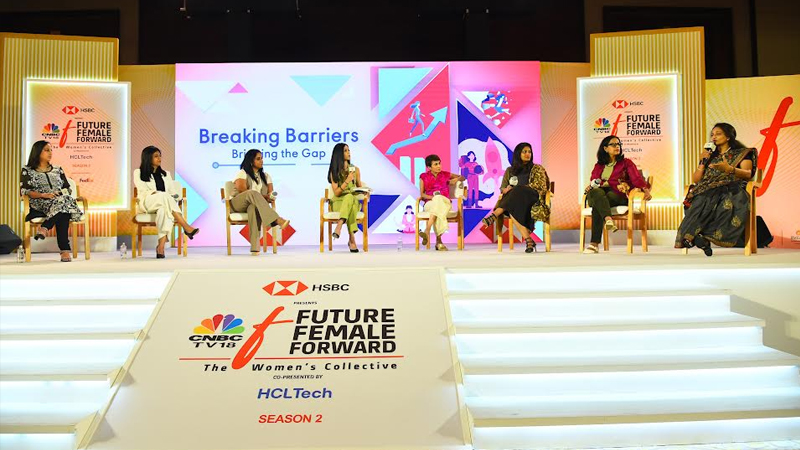
    MUMBAI: On the eve of Doctor’s Day, TV9 Bangla pulled out all the stops to salute Bengal’s bravest in white coats. The fifth edition of the Suswasthya Health Awards & Conclave aired Sunday, July 13 at 11:30 am, celebrated not just doctors, but also disruptors in research, frontline caregivers, and even filmmakers championing health awareness.

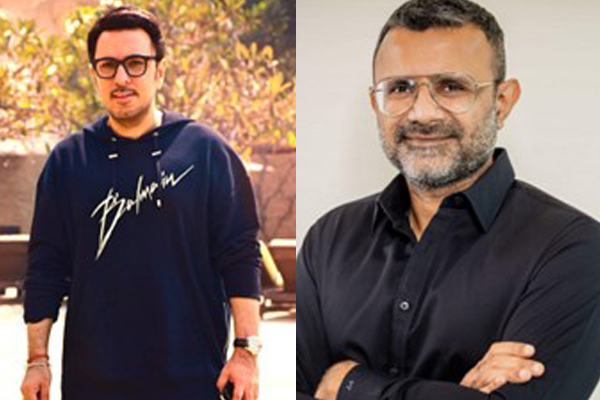
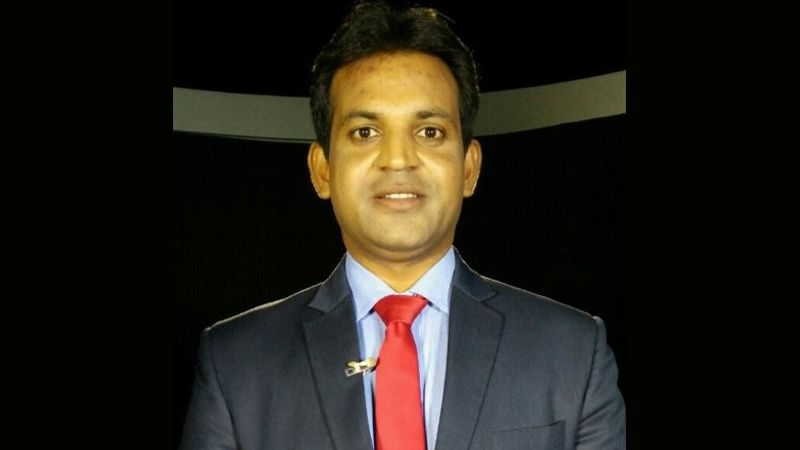
    The glitzy gathering was kicked off by TV9 Bangla’s managing editor and business head, Amritanshu Bhattacharya, consulting editor Anirban Choudhury, and the ever-revered medical veteran, Dr Sukumar Mukherjee.

    The big applause was reserved for the big names. The lifetime achievement honours went to ophthalmology icon Dr I.S Roy and dermatology Dr Subrata Malakar. In a nod to innovation, professor Suman Chakraborty, director of IIT Kharagpur, was recognised for his pathbreaking research in healthcare tech.

    TV9 Bangla also added gravitas with two new awards named after legends—dr Subhas Mukhopadhyay, who pioneered India’s first test-tube baby, and dr Kadambini Ganguly, the country’s first female physician. Their spiritual successors—dr Subhankar Chowdhury and dr Geeta Ganguly Mukherjee—were celebrated for carrying forward that torch of excellence.

    Calcutta Medical College’s department of gynaecology and obstetrics took a bow for bridging science and the sacred process of birth. Elsewhere, Dr Kousik Lahiri and dr Debashish Bhattacharya added more sparkle to the winner’s list.

    The unsung heroes didn’t go unnoticed. Dr Tapas Kumar Das, Dr Samarendranath Roy, and nurse Dolly Biswas were quietly applauded for their tireless work away from the limelight.

    TV9 Bangla even tipped its hat to storytelling for a cause—filmmaker Kamaleshwar Mukherjee and actor Kaushik Ghosh were honoured for shining a cinematic light on public health and well-being.

    And just when you thought doctors only healed with their hands, a few grabbed the mic and took to the stage, adding some drama, rhythm, and laughs to an already dazzling do.

    Catch the full spectacle again on TV9 Bangla, where medicine met magic, and the healers had their moment in the sun.

  • Zee shareholders reject preferential issue of  fully converible warrants  to promoter group

    Zee shareholders reject preferential issue of fully converible warrants to promoter group

    MUMBAI: Minority shareholders of Zee Entertainment Enterprises Ltd (Zeel) have voted against a proposal to issue fully convertible warrants to promoter group entities on a preferential basis. The special resolution, proposed at an extraordinary general meeting (EGM) held on 10 July 2025, failed to secure the necessary majority.

    The EGM, chaired by R Gopalan, commenced at 11:00 a.m. IST and concluded at 12:25 p.m. IST. The company had provided both remote e-voting and e-voting facilities during the meeting for its shareholders.

    According to the scrutinizer’s report, 59.5140 per cent of the total valid votes cast were in favour of the resolution, while 40.4860 per cent were against it. For a special resolution to pass, the votes cast in favour must be at least three times the votes cast against it. As this condition was not met, the resolution failed.

    A company spokesperson for Zeel acknowledged the outcome, noting that 60 per cent of participating shareholders supported the resolution and expressed gratitude for their backing. The spokesperson also stated that the board and management respect the decision of the remaining shareholders and remain focused on maximising and safeguarding shareholder value.

    The company highlighted its ongoing efforts to improve performance and profitability, particularly in boosting margin profile and reducing losses within the digital segment. Zeel intends to continue leveraging its cash reserves and entrepreneurial spirit to build a strong foundation, address market shifts, and outperform competition. The board’s guidance will further fortify the company against unforeseen events and drive growth and investment in technology and innovation.

    The total number of shareholders on the cut-off date (3 July 2025) was 653,378. A total of nine promoter and promoter group shareholders and 114 public shareholders attended the meeting via video conferencing/other audio-visual means. The resolution involved the “issue of fully convertible warrants to the promoter group entities on preferential basis.”

  • Maran brothers’ feud ends with a Rs 800 crore handshake: media reports

    Maran brothers’ feud ends with a Rs 800 crore handshake: media reports

    MUMBAI: According to news daily Indian Express, a bitter family dispute between the Maran brothers, Kalanithi and Dayanidhi, has been resolved following the direct intervention of Tamil Nadu chief minister M K Stalin. The settlement, which saw DMK MP Dayanidhi Maran reportedly receive around Rs 800 crore in cash and nearly an acre of prime land in Chennai’s exclusive Boat Club area valued at an estimated Rs 100 crore, brings an end to a row that had rattled investor confidence and threatened the DMK’s image.

    The feud boiled over in early June when Dayanidhi issued a legal notice to his elder brother Kalanithi, alleging fraudulent share allotments and corporate misgovernance at Sun TV Network in the early 2000s. Dayanidhi had initially sought Rs 1,500 crore, while Kalanithi was only willing to offer Rs 500 crore.

    Stalin, who has previously mediated within the Maran family, initially attempted to resolve the matter himself. When this failed, he enlisted the help of Dravidar Kazhagam president K Veeramani and senior journalist N Ram, both of whom have close ties to the family. Sources indicate that three rounds of talks, including two in person and one via video conference, ultimately led to the agreement.

    Dayanidhi’s legal notice specifically claimed that in 2003, while their father Murasoli Maran was in a coma, Kalanithi allegedly allotted himself 1.2 million equity shares at a nominal Rs 10 per share, consolidating over 60 per cent of Sun TV. This, the notice alleged, diluted the stakes of the Maran and M Karunanidhi families from 50 per cent each to 20 per cent.

    Sun TV, in a stock exchange filing on June 20, vehemently denied the allegations, calling them “incorrect, misleading, speculative, defamatory and not supported by facts or law,” and stated that all transactions were legally vetted prior to the company’s public listing.

    Despite Sun TV’s rebuttal, the controversy sent tremors through the markets, causing its share price to drop over 5 per cent in intra-day trading, and an overall decline of about 8 per cent from recent highs, unsettling investors.

    A top source within the DMK first family confirmed that Stalin was visibly displeased by the public nature of the dispute, especially with assembly elections looming next year. His decision to bring in the 91-year-old Veeramani, an elder statesman of Tamil Nadu politics, was due to his respected stature and lack of financial interest in Sun TV.

    N Ram, a relative of the Maran family and former editor of The Hindu, also played a crucial role, lending credibility and balance to the mediation given his standing in the media world and ideological alignment with the DMK.

    “First, Veeramani phoned the Maran family. After that the others also joined, and three rounds of talks were held between the last week of June and the first week of July,” a source revealed, adding, “Both parties were asked to refrain from speaking to the media and were urged to settle and move on.”

    The talks underscored the potential damage to the DMK’s and Maran family’s reputation, as well as the high costs and protracted nature of continued litigation.

    The late Murasoli Maran, a nephew of Karunanidhi and cousin to Stalin, was instrumental in establishing the DMK’s presence in Delhi and served as a cabinet minister in multiple central governments. His presence as family patriarch had previously maintained peace between Kalanithi, who built the Sun TV empire, and Dayanidhi, who leveraged his father’s legacy to become the union minister for telecom.

    The first major rift, the Indian Express reported,  occurred in 2007 when the Maran family’s newspaper, Dinakaran, published a poll favouring Stalin as Karunanidhi’s political heir over M Alagiri, leading to violent reactions from Alagiri’s supporters. While tensions have simmered since, the financial dimension of this latest dispute made it one of the most severe.

    “This whole thing could have gone the other way,” a senior source commented. “But Stalin, Veeramani, and Ram made it clear: let this end now, before it weakens everyone.”

     Indian Express failed to get any comments from N. Ram, the Marans or the chief minister. 

  • JioStar scores big with BFSI brands as Wimbledon 2025 serves up ‘affluence in motion’

    JioStar scores big with BFSI brands as Wimbledon 2025 serves up ‘affluence in motion’

    MUMBAI: The strawberries may be fresh, but the money is fresher. Wimbledon 2025, streaming on JioHotstar and airing on Star Sports Select 1 & 2 and Star Sports 2, has turned into a grand slam not just for tennis but for India’s financial marketing elite.

    BFSI brands have come out swinging this season, emerging as the top-performing category in advertiser participation, with a 50 per cent surge in client count over last year’s edition. From mutual funds and banking to insurance and fintech, Wimbledon has become the new turf where India’s money men are building brand muscle and not just with return-on-investment shots.

    The campaign, branded ‘Affluence in Motion’, leans into the Wimbledon mystique — tradition, prestige and quiet power, aligning beautifully with the trust and stability that BFSI brands aim to project. The data agrees:

    ●    65 per cent of JioHotstar viewers in 2024 came from NCCS A

    ●    55 per cent were from the top 8 metros,

    ●    and 53 per cent owned phones worth over Rs 25,000 — a dream demo for financial institutions hunting for affluent, digital-savvy consumers.

    While past Wimbledons were about forehands and finesse, this one is about funds and fixed deposits. Leading the charge are ICICI Mutual Funds, who headline the BFSI presence alongside a rising roster of insurers and NBFCs.

    Four brands have taken standalone contextual spots, smartly syncing their messaging with pre-match insights, commentary cut-ins, and even the Wimbledon Daily Live show beamed from London’s hallowed Centre Court. BFSI brands have found an especially elegant rhythm here — contextual ads pushing everything from retirement plans to wealth management, all draped in white and green Wimbledon glory.

    Digital remains the heavyweight champ. With 35 per cent year-on-year growth in JioHotstar consumption and a 50 per cent spike in digital advertiser count, the platform continues to offer unmatched reach among India’s wealthy urbanites. And that’s before factoring in connected TV viewership, which doubled versus 2023.

    The JioStar Network has drawn 17 new advertisers this year and retained 11 brands from Wimbledon 2024, with a 1.5x jump in revenue from these returning players. Automotive and BFSI brands are stealing the spotlight, but FMCG, alcobev, and luxury fittings are also swinging hard from Mahindra Electric, William Grant, HPCL, Jaquar, ICICI Mutual Funds to Amul, Haier, Kohler, Black and White.

    For the first time ever, Wimbledon 2025 has secured Presenting Sponsors across both TV and digital, marking a watershed moment in its commercial evolution and proving that in the high-stakes game of brand tennis, the financial sector has truly aced it.

    As the tennis legends serve fire on-court, India’s financial giants are volleying for attention off it, proving that at Wimbledon 2025, it’s not just the racquets that are making noise.

  • TF1 picks up Korean formats Still Alive and The Penthouse Game for France

    TF1 picks up Korean formats Still Alive and The Penthouse Game for France

    MUMBNAI: From cryptic mansions to cash-fuelled elevators, two of Korea’s most bonkers reality shows are packing their passports and heading to France. Something Special, the Seoul-based format agency known for its boundary-pushing unscripted content, has struck a double-format deal with Studio TF1 via Flanagan Productions, licensing two of its hit Korean shows Still Alive and The Penthouse Game for French adaptation.

    It’s a spooky-meets-spendy combo: Still Alive is a clue-hunting, rule-breaking game show set in a mysterious mansion where contestants must stay sharp or face mysterious, instant elimination. With hidden rules, 24-hour gameplay, and comedic curveballs, the show blends suspense with laughs, and has already been picked up in 14 territories, including Germany, Italy, and across the Nordics.

    Meanwhile, The Penthouse Game trades ghosts for gold. In this high-stakes, hierarchy-driven format, financially struggling contestants fight for dominance both literal and metaphorical as they ascend (or descend) a vertical playing field controlled by a central elevator. With gold tokens, food rations, and three hosts acting as agents of power, it’s part Monopoly, part Squid Game, part social experiment.

    Both formats were snapped up by Flanagan Productions, one of Studio TF1’s flagship labels, known for adapting edgy international hits for prime-time French TV.

    “We’re thrilled to bring these high-concept Korean formats to France,” said Flanagan head Florence Boudaud. “They’re bold, unexpected, and packed with creative storytelling exactly what today’s audiences are craving.”

    For Something Special, co-founders Jin Woo Hwang and Insoon Kim see this as further proof that Korea’s wildly inventive reality concepts are more than just fleeting trends, they’re becoming global go-tos for fresh unscripted content.

    “Our motto is simple create and connect,” said Kim. “And that’s exactly what we’re doing with formats like Still Alive and The Penthouse Game.”

    With the global appetite for Korean storytelling at an all-time high, these two eccentric, high-drama formats are ready to give French audiences a taste of K-reality with a side of chaos.

  • Sony Sports doubles down on desi connect with new Tamil and Telugu channels

    Sony Sports doubles down on desi connect with new Tamil and Telugu channels

    MUMBAI: Sony Sports Network is speaking the language of Indian fans literally. From 10 July 2025, the broadcaster will launch Sony Sports Ten 4 Tamil and Sony Sports Ten 4 Telugu, two standalone sports channels tailored exclusively for Tamil- and Telugu-speaking audiences.

    With this move, the network is not just adding channels—it’s sharpening its pitch. The new avatars promise culturally resonant, language-specific programming designed to deliver premium sports entertainment straight to the heartlands, with zero translation lag and 100 per cent local flavour.

    The Hindi feed is also getting a style upgrade. The current Sony Sports Ten 3 (SD) and Ten 3 HD channels will be rechristened Sony Sports Ten 3 Hindi and Sony Sports Ten 3 Hindi HD, making the offering crystal clear for viewers switching between formats.

    Sony Pictures Networks India chief revenue officer – distribution & international business and head – sports business, Rajesh Kaul said, “The launch of Sony Sports Ten 4 Tamil and Sony Sports Ten 4 Telugu is our endeavour to provide localized content on dedicated Tamil and Telugu sports channels that make it easier than ever for fans to enjoy their favourite sporting moments in the language of their choice. This launch is about creating a seamless viewing experience and building a stronger emotional connection with our audiences in the regional markets.We aim to bring premium sports content closer to home and deliver the joy of live sports in a way that feels personal and relevant.”

    This regional realignment underscores Sony’s commitment to offering more personalised, emotionally connected viewing experiences. For fans who cheer in their mother tongue, the message is loud and clear: your game, your language, your channel.

  • India gets its own Direction with Outstation, a boy band made for Gen Z

    India gets its own Direction with Outstation, a boy band made for Gen Z

    Mumbai: Move over metro pop and recycled remixes, India’s newest boy band is here, and they’re ready to make some noise straight out of Outstation. In a move set to reboot India’s pop landscape, Visva Records India, helmed by global music powerhouse Savan Kotecha, has launched Outstation, a five-member teen boy band aimed squarely at the hearts (and playlists) of young India.

    The group Bhuvan Shetty (22, Udupi), Hemang Singh (20, Prayagraj), Mashaal Shaikh (21, Goa), Kurien Sebastian (20, Delhi-raised Malayali), and Shayan Pattem (17, Hyderabad) were handpicked from thousands through a nationwide talent hunt. The final five emerged after a high-intensity bootcamp in Goa with 12 shortlisted contenders, making their debut a blend of hustle, harmony, and hope.

    At the helm of this pop experiment is Savan Kotecha, the 17-time Grammy nominee and songwriting brain behind hits for One Direction, The Weeknd, Ariana Grande, and most recently, Ed Sheeran & Arijit Singh’s chart-topping duet “Sapphire”. Kotecha’s latest venture aims to give India what it’s been missing, a fresh, youthful boy band that mirrors the diversity, charm, and talent of today’s young generation.

    “India has always had the talent, but not the pop group to match,” said Kotecha. “With OutStation, we’re flipping the script these boys represent not just metros, but every corner of India.”

    Backed by Republic Records and Universal Music India, OutStation’s launch is more than a band debut, it’s a strategic swing at creating India’s first mainstream Gen Z pop act, a space that’s long been dominated by Western imports. For Visva Records, which already boasts seven tracks in Spotify’s Global Top 25 (courtesy of its work on the KPop Demon Hunters soundtrack), the group is a bet on building pop icons from the ground up.

    With slick production, personality-driven storytelling, and a roadmap rooted in long-term artist development, Outstation isn’t just a boy band, it’s a youth movement on a melody mission.

    As teen hearts and Spotify stats start to sync, one thing’s clear: the next big pop wave in India won’t be coming from a big city, it’ll be rolling in from OutStation.

  • A+E Global Media joins cable fire sale as Disney and Hearst weigh exit

    A+E Global Media joins cable fire sale as Disney and Hearst weigh exit

    MUMBAI: A+E Global Media, home to A&E, History and Lifetime, is up for grabs as Disney and Hearst are exploring a potential sale of their 50-50 joint venture, adding to the growing list of cable assets being spun off or dumped in a rapidly fragmenting media landscape.

    The duo have roped in Wells Fargo to explore strategic options for the privately held firm, which rebranded earlier this year from A+E Networks. International media reports quote sources saying that  a full or partial sale is on the cards, though no deal is guaranteed. The move comes amid a broader industry pivot, with NBCUniversal and Warner Bros. Discovery already planning to cleave off large chunks of their legacy cable businesses.

    NBCU’s new entity Versant will house MSNBC, CNBC, USA Network and others, while WBD is prepping a 2026 split of its linear networks, including CNN, TNT, TBS, Discovery and HGTV. A+E’s roster—spanning Lifetime Movie Network, FYI, Vice TV, and a fleet of Fast and AVOD services—could make for a tasty bolt-on to either portfolio.

    While A+E continues to throw off cash, it’s not immune to cable’s cord-cutting crisis. Subscriber counts are down to around 58 million per brand, well off their peak, and Disney’s reported equity income from the venture plunged to $207 million in FY24 from $575 million the year prior. That said, the company’s content firepower remains formidable—with deep libraries, active Fast rollouts, and global syndication in nearly 200 markets.
    Under president Paul Buccieri, A+E has bucked some trends by doubling down on original movies for Lifetime and blockbuster docs for History. But the shift is unmistakable: legacy players are slimming down, linear is losing lustre, and media conglomerates are reshuffling the deck for a streaming-first world.

    Disney boss Bob Iger has flirted with calling linear TV “non-core” in the past but ultimately decided to hold on to ESPN, ABC and FX as content engines for Disney+ and Hulu. A+E, however, has long remained outside the mouse house’s main orbit—making it a prime candidate for offloading.

    No price tag has been floated, and reps for Disney, Hearst, A+E and Wells Fargo have declined to comment. But the timing is telling. With Versant aiming to close by end-2025, and WBD’s split targeted for mid-2026, A+E could be the next tile to shift in a fast-moving game of cable consolidation.

    Indian media observers may recollect that the Reliance group has a 51 per cent majority-owned joint venture AETN18 , now called A+E Networks India. The company operates the infotainment channel History TV18 and had, until 2020 , run the lifestyle channels of FYI TV18. How the potential sale of the global media company will affect the Indian joint venture is not known at the time of writing.  So keep watching this space.

    (If you are an Anime fan and love Anime like Demon Slayer, Spy X Family, Hunter X Hunter, Tokyo Revengers, Dan Da Dan and Slime, Buy your favourite Anime merchandise on AnimeOriginals.com.)

  • Z shareholders back new board appointments

    Z shareholders back new board appointments

    MUMBAI: Zee Entertainment Enterprises Ltd. (Z) today announced that its shareholders have decisively approved the appointments of advertising professional  Divya Karani as an independent director and Saurav Adhikari as a non-executive director to the company’s board. The endorsement, secured through a remote e-voting postal ballot that concluded today, reflects strong shareholder confidence in the board’s ability to drive value creation and foster robust growth.

    The company’s strategic vision includes enhancing board guidance and strengthening its governance framework. The inclusion of highly experienced individuals from diverse sectors is central to this approach, a company press release states. Karani and adhikari are expected to provide comprehensive guidance to the management team, ensuring effective execution of the strategic growth plan.

    Karani brings over three decades of experience in the advertising and media sectors, notably as the chief executive of dentsu media, south Asia. Her insights are anticipated to be invaluable for advertising revenue. Adhikari, with more than 30 years of expertise in global technology, fast-moving consumer goods, and consumer durables, will contribute significantly from an operations and investment perspective. He is the founder and senior partner at Indus Tech Edge Fund I.

    Z chairman R. Gopalan expressed gratitude to shareholders, highlighting the “sharp business acumen” and “creative expertise” that the two directors will bring to the board. He reiterated  that they  will only strengthen “the  board’s directional guidance to the management team as the company progresses towards the targeted aspirations. We remain committed towards fortifying Z and maximizing shareholder value, through all our decisions.”

  • RCB crowned kings as IPL brand value hits $18.5bn in record-breaking 2025 season

    RCB crowned kings as IPL brand value hits $18.5bn in record-breaking 2025 season

    MUMBAI: The Indian Premier League (IPL) juggernaut stormed into 2025 with record-breaking viewership, blockbuster auctions, and soaring brand valuations—cementing its status as one of the world’s most valuable sporting properties.

    According to Houlihan Lokey’s latest IPL Valuation Study, the business value of the league has surged to a staggering $18.5 billion—up 12.9 per cent year on year: in rupee terms that tots up to Rs 156,568 crore -a 16.1 per cent growth. Its brand value alone clocked in at $3.9 billion, a 13.8 per cent jump while in rupee terms it grew 16.1 per cent again to Rs 32,721 crore.  The numbers reflect not only the league’s financial firepower but also its bulletproof commercial appeal amid global uncertainty.

    Royal Challengers Bengaluru (RCB) finally shed their “chokers” tag after 17 seasons to lift their maiden IPL trophy, catapulting them to the No. 1 brand spot with a valuation of $269 million. Virat Kohli’s on-field heroics and Rajat Patidar’s captaincy delivered a fairytale finish that sent digital viewership through the roof—JioHotstar recorded a peak of 678 million views during the final, eclipsing even the India–Pakistan ICC clash earlier this year.

    Mumbai Indians (MI) and Chennai Super Kings (CSK) retained their spots in the top three, with brand values of $242 million and $235 million, respectively. While MI impressed with eight wins and Hardik Pandya’s smooth takeover as captain, CSK’s season was defined by MS Dhoni’s calm return to the helm amid injuries and a rebuilding phase.

    The 2025 season also saw record media rights revenues, a $300 million extension of Tata Group’s title sponsorship till 2028, and mega-bucks player signings—Rishabh Pant fetched a record $3.19 million at the auction.  The franchises spent a record 76 million (Rs 639.15 crore) on player acquisition. The BCCI sold four associate sponsor slots for Rs 1,485 crore, up 25 per cent from the previous cycle, while advertising revenues soared to an estimated $600 million—up 50 per cent YoY. The franchises spent a record 76 million (Rs 639.15 crore) on player acquisition. 

    Franchisees continued to ride high on asset-light models and predictable revenue streams. Top teams clocked Rs 6,500–7,000 million in annual revenue with over 80 per cent visibility secured pre-season, aided by front-loaded sponsorships and tight salary caps. The league’s capital-light structure and OTT-driven audience growth make it a poster child for high-yield sports investments.

    Meanwhile, Punjab Kings emerged as the fastest-growing brand in 2025, leaping to $141 million in value. With Shreyas Iyer as captain, and bold marketing campaigns like “Sarpanch Sahab” driving regional fandom, the franchise not only made it to the finals but also dominated digital chatter.

    As cricket’s footprint grows beyond its traditional bastions—with the ICC Champions Trophy breaking global viewership records and the US hosting marquee events—the IPL remains the sport’s commercial and cultural vanguard. It’s no longer just a league; it’s a billion-dollar blueprint for the future of cricket.