
Category: TV Channels

  • ‘Clients want better research insights, high quality data and speed’ : Tim Balbirnie – Synovate Asia Pacific CEO

    ‘Clients want better research insights, high quality data and speed’ : Tim Balbirnie – Synovate Asia Pacific CEO

    The world of market research in India is growing. Both channels and advertisers are seeking more clearer understanding of the consumer and his/her evolving media behaviour.

    One firm that helps in this regard in market research firm Synovate. Indiantelevision.com’s Ashwin Pinto caught up with Synovate Asia Pacific CEO Tim Balbirnie for a lowdown on the company’s activities and how it adds value for clients.

    What are the ways in which Synovate is helping add value to your offerings?

    We are finding an increasing number of clients are looking towards our online capabilities. We are expanding our global panel, ViewsNet, to facilitate the increasing demand for online research. More and more, we find clients appreciate our assistance with brainstorming workshops as a complement to the report.

    How much does the media and entertainment sector contribute to your revenue stream?


    Our media division makes a significant contribution to our revenue. However, we do not break up our revenues by division or indeed, area of specialisation.

    The media sector is important because it is very high profile within the overall research industry. It is also challenging work to conduct from a sampling and analysis perspective.

    Could you give me an idea about the time and effort involved in conducting major studies like Synovate Pax?

    It is significant. It is an ongoing effort to continue enhancing a media currency survey like Synovate Pax. Synovate has invested 10 years; a lot of time and energy; and intellectual rigour in ensuring the survey delivers accuracy, representativeness and meets the needs of major media owners, specialists and agencies across the Asia Pacific.


    We are using sophisticated data collection techniques to collect information from the most affluent segments of the population in Asia. In less developed markets this has its own challenges.

    How is Synovate able to work within tight deadlines without compromising on quality?

    As with all service industries, clients are – quite rightly – demanding more. They want better insights, high quality data and speed. Synovate is putting a great deal of emphasis on technology to help us deliver high quality work with faster and faster turnaround times.


    We now have a global chief information officer who is seizing this opportunity to drive the group forward from a technical perspective. Synovate is focussing on support services which had previously been regarded as back office functions and utilising those services as a way to deliver all the benefits of our global scope, reach and scale to clients.


    One of the things we will not do, regardless of deadlines, is compromise on quality. All Synovate offices have implemented quality control standards of the highest degree. Nothing we do will negate the need for maintaining these standards.

    ‘Moving customer loyalty to the centre of your business strategy requires a well thought-out plan. Our customer relationship architecture provides that guidance’

    What recent additions have been made to your product portfolio as far as the media and entertainment sector is concerned?

    Over the past 12 months we have added the ‘Media Atlas’ survey in Hong Kong, Malaysia and Bangkok. This study shines the spotlight on local media consumption and is being welcomed as a valuable alternative to information that has been in the marketplace for decades.


    This is also being introduced in the Philippines. Over the coming months further markets will be added. We have also introduced ‘Media Brand Values. This measures the relationship between C level executives and their media of choice.


    In addition, our ‘Young Asians’ survey looks at the media consumption as well as attitudes, brands of choice etc for eight to 24 year olds across the region, including India, and kicks off its second year later this month. This survey, given the importance of youth across Asia, is attracting much interest among clients.

    Have you acquired any research firms in Asia recently to add to your repertoire?

    Less than six months ago, we acquired Market Equity in Australia, a large independent firm. That acquisition, coupled with Aztec Information Services which was acquired in March 2005, has made Synovate a top five player in the Australian market. Australia is an important market to many of our regional clients. So it is a real benefit to now have a seamless Synovate regional operation throughout the major markets.


    Market Equity re-branded to become Synovate in December 2005. We also completed the purchase of the Filter Group, a youth marketing research company late last year.

    Could you talk about the kind of out of the box solutions that Synovate’s customer Loyalty practice division offers clients?

    Moving customer loyalty to the centre of your business strategy requires a well thought-out plan. Our customer relationship architecture provides that guidance. This blueprint is customised for each client, and built from a solid, proven framework.


    We work with every business in a different way. How we work with a company depends on its goals and where it is in building its own customer relationship architecture. We have some solutions that are starting points addressing aspects of loyalty such as customer, organisation, event, brand, market, employee and reputation.

    Could you give me an idea of what advertising development research entails? How does Synovate work with media planners and FMCGs in this regard?

    At Synovate our philosophy is to integrate media measurement into brand and advertising tracking. This allows our media expertise to be of direct value to major advertisers.

    In what way have clients’ needs and expectations from Synovate grown in the past couple of years?

    Not too long ago, research companies were just producing data. Now we are doing so much more for clients – analysing, consulting and so on. I believe that we are an increasingly vital part of marketing.


    The research industry needs to move towards this model across the world. The way we are approaching this at Synovate is to work harder and better at understanding our clients’ needs and the analytics before we start a project. This understanding then carries all the way through the project and beyond.


    We are building our consultancy skills – investing in people that have both marketing and research backgrounds to drive this throughout the organisation.

    ‘We understand that everything revolves around business. Pretty graphs are not worth it unless they can be translated into actions – actions that improve business’

    How does Synovate move beyond just providing reports that contain lots of data?

    To move beyond just the data, Synovate is working more and more on client workshops, brainstorming and consulting. We are working to make our service more than a report. We want to help clients make their reports meaningful and help improve their marketing and business strategies. The bottom line is – well – the bottom line!


    We understand that everything revolves around business. Pretty graphs are not worth it unless they can be translated into actions – actions that improve business. We are all about applying the theory of research to real life in the business world.

    Often marketers tend to not define precisely what they require when they buy research. Also they have unrealistic expectations at times. How does Synovate cope with this difficulty?

    Again, we are working harder and better at understanding our clients’ needs and the analytics before we start a project. This is a two-way process.


    We understand clients better and they understand us. This understanding then carries all the way through the project and beyond. Our clients in general tend to have a clear understanding of what it is they need to know or find out.

    As per Synovate findings what role will new media play in the media consumption landscape?

    New media is without doubt influencing the decisions of advertisers who are seeking additional methods of communicating with their target audiences in an era where the consumer is increasingly in charge of media choices.

    Speaking of which, one issue that is coming up more and more is that of media clutter. With the multiplying of media options, the efficacy of research activity in tracking ever-more complex variables are being put under the scanner. Your comment?

    We have several tools which allow us to track consumer media pathways in real time. Mobile phones provide an excellent method because they are the one device which people carry with them day and night, and which allow us to interact with respondents to find out their media and advertising exposure across the day.

    Market research industry across all of Asia Pac is still growing quickly. Growth in some markets is running at 15-20 % & most markets are above market predictions. A lot of this growth is linked to China, but more & more India is gaining sway’

    What kind of growth can we expect in the market research business in India and Asia?

    Historically, we have always achieved double-digit growth in the Asia Pacific region. I am confident we will maintain these levels of growth for the foreseeable future.


    Indeed, the market research industry across all of Asia Pacific is still growing quickly. Growth in some markets is running at 15-20 per cent and most markets are above market predictions.


    A lot of this growth is linked to China, but more and more India is gaining sway. I was at a seminar on regional forecasts the other day and the talk was of ‘China plus One’. Companies and investors don’t want to put all their eggs in the one basket.


    So they are investing in China and somewhere else in the region. Increasingly that ‘somewhere else’ is India. So as foreign investment increases in India, marketers will invest more and more there too. I see the country as a growth engine for Synovate – not our only one, but a significant one.

    What are the plans as far as India is concerned? How important a market is it as far as Asia is concerned?

    India is very important to us. We will continue to develop and grow our business there. As I mentioned India is becoming a significant market and a major consideration for most MNCs.

    Have you signed any recent deals with any Indian television channels to do research on their behalf?

    We work with several large media players in India. Synovate has a fully-fledged team in India to service media clients covering the entire genre of print, television, magazines and of course internet.


    Since its inception, the media research division has done a lot of work in the areas of image and brand tracking studies, positioning studies, and of course on Synovate Pax. This study is the barometer to measure the media consumption habits of the affluent in India.

    There have been reports that WPP is looking to acquire Synovate. Has anything progressed in this area? Is consolidation in the market research arena something that you expect to see this year?

    It is certainly flattering to be the object of our competitors’ attentions.


    But, despite some discussion last autumn, the fact is that no one has made a serious offer to buy us and that continues to be the case.

    Finally what does the future hold for Synovate?

    It’s a very bright future. Certainly, there are challenges from other industries which see research as a good thing to be in, but the demand is increasing significantly year on year. The nature of research is also changing.


    So while the core people skills will always be in demand, the focus will shift to more technologically based solutions such as online surveys, which are already with us.


    Our belief has always been to stay one step ahead of the competition – we believe this has helped drive our success in the past and will continue to do so in the future.

  • Disney Channel to air ‘Finding Nemo’ this summer

    Disney Channel to air ‘Finding Nemo’ this summer

    MUMBAI: Disney Channel will be airing Finding Nemo in summer. The movie will premier on the channel as a special treat comprising the summer programming lineup.

    Finding Nemo is an Academy Award winner global box office hit and has been regarded as a timeless classic complete with imaginative, visually appealing and excellent storytelling.

    Walt Disney Television International (India) director programming and production Nachiket Pantvaidya said, “Creativity in content and presentation is paramount in Disney’s philosophy to reach out to kids and families. We, at Disney, love to tell stories that touch people’s hearts while presenting positive values that are relevant across generations and geographies. Finding Nemo has a brilliant story line – a splendid tale of family and friendship. I am certain this blockbuster title will take Disney Channel viewers on an under-water adventure to cool off the summer heat.”

    Last week Disney also announced that it has acquired the telecast rights to Sahara One Motion Pictures’ animated film Hanuman. Disney Channel wll also air the movie this summer as an eight part series.

  • TV18 Group creates new division TV18 Media Networks, names Saikumar CEO

    MUMBAI: Raghav Bahl’s Television Eighteen Group has fused all its marketing and sales operations under a new division TV18 Media Networks. The group has promoted its VP sales and marketing B Saikumar as CEO of the division.

    Speaking on the rationale behind the move, TV18 CEO Haresh Chawla said, “TV18, today stands as the largest news network with four news channels. It is merely to consolidate all the sales and marketing activities.”

    When quizzed if the group was adopting a similar model to that of NDTV Ltd’s subsidiary NDTV Media (which manages the company’s ad sales and marketing), Saikumar said, “This is a division and very much part of the group. We are involved in activities of designing promos besides sales and marketing.” He declined to comment any further on the matter.

    As CEO of TV18 Media Networks, Saikumar will have all the heads of sales and marketing from various channels of the news network – English business news channel CNBC TV18, Hindi consumer channel Awaaz, English news channel CNN-IBN and Hindi news channel Channel7 (soon to be re-named as IBN7) reporting in to him. Saikumar, meanwhile, continues to report in to Chawla.

  • Hungama TV to launch new season of ‘Doraemon’ on Holi

    Hungama TV to launch new season of ‘Doraemon’ on Holi

    MUMBAI: Hungama TV is launching a new season of Doraemon on 15 March (Holi). The series will be aired from 10 am to 4:30 pm.

    Doraemon comes from 22nd century to help a boy called Nobita – a perennial underdog and an all-time looser. Nobita’s great great grandson from future has sent Doraemon to save Nobita and in turn his future generations with his futuristic gadgets and powers in this sci-fi comedy.

  • VH1 announces online pop culture exam

    VH1 announces online pop culture exam

    MUMBAI: On 29 March, pop culture fans throughout the US will have a chance to test their talents online and qualify for VH1 and Entertainment Weekly’s upcoming televised
    competition The World Series of Pop Culture.

    The PCIQ exam is a standardized test designed to measure pop culture knowledge in the areas of television, movies, music, and pop culture news. Three of the top scorers from the online exam will join forces and become the 16th and final ‘wildcard’ team in the tournament. The ‘wildcard’ team will join the 15 other teams cast during in-person regional qualifiers.

    The exam will consist of six sections including pop culture analogies, quote identification, lyric identification, and actor/actress body of work identification. Each section will contain ten questions. Contestants will be given six minutes to complete each section.

    For instance one question could be to identify this quote from a film. “You know how they say we only use 10 per cent of our brains? I think we only use 10 per cent of our hearts.”
    The choices are Wedding Crashers, Hitch, 50 First Dates and The 40-Year-Old Virgin.

  • AXN’s Calcutta switchoff: Sony’s viewpoint

    AXN’s Calcutta switchoff: Sony’s viewpoint

    Sony Entertainment Television (SET) has denied that Calcutta-based cable TV operator RPG Netcom has switched off AXN, a channel it distributes in India, a claim the MSO had made a couple of days ago. RPG had claimed that it had pulled the plug on AXN because SET was asking it to pay higher subscription fees to continue re-transmitting the service to its sub-operators. SET COO Rajesh Pant says this is untrue and that it was actually Sony, which had switched off the cable operator’s signal and not the other way around. Says Pant: “There isn’t even a price hike for AXN. What we are asking them to do is pay us for a higher subscriber base than they have been doing so up to now. We are asking for higher subscriber counts. We had given them some notice but they were not interested so we switched them off.”

    He however is quick to add. “We are not in a fighting situation with them as of now. I expect the entire situation to get resolved very amicably across the table. Give it time.”

    Pant says the channel is doing fine having achieved a penetration of 2.5 million subscribers. “The actual figure is actually 11-12 million because cable ops actually declare only 20-30 per cent of their subscriber base. We are reasonably happy with out collections from the cable TV trade. I am sure cable operators and consumers see value in the service, hence we are asking them to give us fees for a larger number of subscribers.”

  • Penguin India & CNBC-TV18 present the Business Year book – 2006-07

    Penguin India & CNBC-TV18 present the Business Year book – 2006-07

    MUMBAI : India’s leading publishing house Penguin and leading business news and analysis network CNBC-TV18 have come together to present the first ever Business Yearbook with comprehensive information on India – The Penguin – CNBC-TV18 Business Yearbook 2006-07, compiled and edited by Derek O Brien.

    Speaking on the initiative, Ajay Chacko, Head – Marketing, CNBC-TV18 and CNBC Awaaz said, “The Penguin CNBC-TV18 Business Yearbook 2006-07 is a catalogue of valuable information by established names like Penguin and CNBC-TV18. The Yearbook provides valuable insights and facts and encapsulates all the milestones that made an impact on the economy during the year 2005-06. This first-of-its-kind yearbook is an essential guide for executives, consultants, students and examination candidates as it is a reference on Indian business and economy and incorporates the latest figures. Making this book truly special are the feature contributions on the progress of the Indian economy by leading industry stalwarts like Nobel Laureate Amartya Sen, former RBI Governor Bimal Jalan and many others”


    Thomas Abraham, CEO and President Penguin Books India added, ” The Penguin CNBC Yearbook 2006-07 is a vital extension to our reference list. Filling a gap in the market (it’s the first ever business yearbook in India), the book produced in partnership with India’s premier business channel, will be an invaluable addition to every business executive’s shelf. The key to success today is information and never before has it been so compactly put together for the user. The book will be an annual feature with topical and thematic variations that will always ensure that India’s business community now has a one stop shop for essential reference.”

    Some of the highlights of The Penguin CNBC-TV18 Business Yearbook 2006-07 are:

    Business and Economy Timelines: A brief history of business from 7500 BC to the present.

    The Year in Review: Day-by-day developments in the business world in 2005 and 2006.

    Newsmakers: People from the business world who hit the headlines this year (2005-2006).

    Indian Economy:A complete dossier on Indian business, economy, industry and investments, with the latest figures Highlights on key issues like the rise and fall and rise again of the Sensex, VAT, PSUs and FII In-depth review and current data on key sectors like agriculture, engineering, petroleum, electronics, IT and FMCG Comprehensive coverage of the state economies and the 2006 Union and Railway Budgets.

    World Economies:Key info on the economies of the G8 countries, the EU, and major Asian, African and Gulf economies Plus profiles of the economies of all 193 nations in the world.

    Organizations: Info on the IMF, the World Bank, UNDP, WTO, ILO, FAO, OECD etc.

    Companies: Listings of major companies (both Indian and international) across industries.

    Who’s Who: Thumbnail sketches of the most prominent players in the business world today.

    Career and featured Articles by Amartya Sen, Bimal Jalan, C.K. Prahalad, Gurcharan Das, Nirmalya Kumar, Seetha,Steven D. Levitt, Sumantra Ghoshal, Thomas Friedman, Tim Harford and many more.

  • Winter Olympics exceeds expectations on European broadcaster Globosport

    Winter Olympics exceeds expectations on European broadcaster Globosport

    MUMBAI: The XX Olympic Winter Games in Turin has become the single largest event ever screened on British Eurosport.

    The Games, which were broadcast from 10 to26 February 2006 reached over 8.4 million viewers to out-perform even the Summer Olympics from Athens in 2004 and Sydney in 2000. British Eurosport broadcast over 361 hours of coverage from Italy, with 51 per cent live, over the 17 days of the Games.

    The success of the event was matched across Europe where Turin scored the best Olympic Games’ ratings on Eurosport with 140 million different viewers following the Olympic competition.

    With 367 hours of broadcast, the Olympic Games drew twice as many viewers as the regular average for the channel.

    Figure skating, alpine skiing and biathlon are amongst the best programmes. Exclusive live coverage of the preliminary ski jumping before the main competition broadcast on Eurosport on 12 February peaked at 5.2 million viewers.

    The newly re-launched Eurosport.com website, with its enhanced live scoring and editorial content, also recorded good figures with more than 13 million visits over the 16 days of the Turin Games, double the volume of traffic as registered during the Athens Games.

    Eurosport has attributed its success to its international editorial line. Expert commentaries, with consultants such as Alberto Tomba, and innovative shows such as Daring Girls contributed to reinforce Eurosport as the reference channel for the Games’ coverage.

    Eurosport was also involved on-site in Turin. As Official Olympic Broadcaster and partner of TOROC (Organising Committee of the XX Torino 2006 Olympic Winter Games), Eurosport became the first broadcaster to be present in the Olympic Sponsor Village with the Eurosport Pavilion. Over 400, 000 people visited the Olympic Sponsor Village in Turin and had the opportunity to be entertained in Eurosport’s Multimedia space.

  • Shemaroo releases Lara’s epic 400 innings on DVD, VCD

    Shemaroo releases Lara’s epic 400 innings on DVD, VCD

    MUMBAI: Home video firm Shemaroo has released Brian Lara’s epic innings 400 Not Out.

    West Indian batsman Brian Lara made the highest score in a test innings. The DVD and VCD of the fourth Test innings of West Indies versus England in Antigua 2004 contains the record setting moments and captures history in the making.

    The DVD also includes snapshots of former test players speaking about the epic innings. The digitally mastered all region DVD comes with 5.1 Dolby Digital sound and has interactive menus for easy access to scenes.

    Also.just three weeks after the theatrical release, Shemaroo has released the VCDs and DVDs of the Sushmita Sen and Mithun Chakraborty starrer Chingaari. Director Kalpana Lajmi’s women-oriented films like Daman have made a sound statement in the society and Chingaari too reverberates on a similar theme bringing forth the plight of a prostitute in a distant Indian village.

    Sen plays Basanti, a prostitute, who when mauled, revolts against the evil village priest Bhuvan Panda, played by Chakraborty.

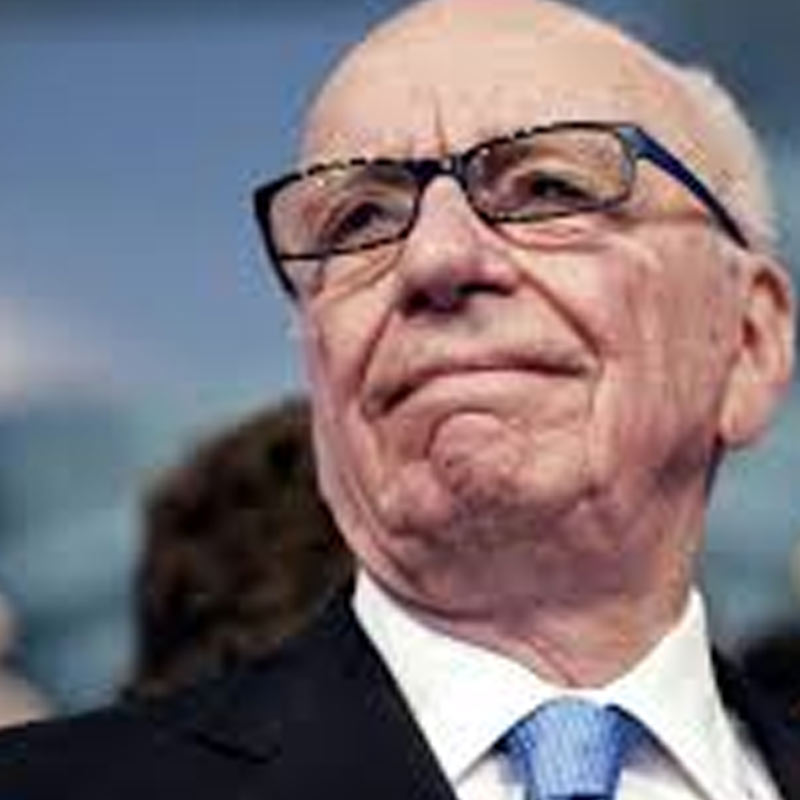
  • Murdoch on India visit this weekend?

    Murdoch on India visit this weekend?

    Is global media baron Rupert Murdoch coming to town? If reports are to be believed a visit is being planned for the News Corp chief to visit Bangalore, Delhi and Mumbai, (if possible) over this weekend. Murdoch last visited India, if reports are to be believed in a hush-hush meeting with the then Congress (I) strongman, Sharad Pawar in 1996 at an army base in Pune.

    His earlier visit to India was in 1993-94 which was much hyped up when he was seen with various politicians, dignitaries and businessmen. He was feted wherever he went. Since 1996 he has been unable to fly into India because of a flimsy obscenity case that was pending against him for the airing of a bit of skin on Star Movies. The case apparently took an ugly turn when summons were sent to his residences/offices in Australia and the US, and an arrest warrant issued against him. The situation was so bad that he was not permitted to enter the country and declared a criminal because he did not attend court when he was summoned. He would have been arrested had he landed in the country. Since then, however, the case has been set aside and Murdoch can visit India.

    During his current visit – if it takes place over the weekend – he is expected to meet the Prime Minister, information technology minister, Pramod Mahajan. His focus is expected to be on the information technology sector, in which he has suddenly begun to see lots of promise. He is also expected to give a direction to Star TV India CEO Peter Mukerjea as to how much he is willing to commit to India and in which areas. And obviously, he is going to be tomtomming Star TV’s forays into the information technology and convergence sector.

    Currently, hectic preparations are on within Star TV and his once Indian partner in Star TV’s Indian DTH project Pramod Mittal who is trying to smoothen his visit out here. Obviously, a meeting with his old mate Zee Telefilms chairman Subhash Chandra is planned. For sure, he is going to thank him, Chandra has helped Murdoch make more money on his investment in Zee Telefilms than he has made through his entire Star TV operations in the past six years, thanks to an appreciation in Zee’s share price over the past six months.

    Meanwhile, the media can expect to have a rollicking time. Murdoch is eminently quotable as we have known him to be.