Category: TV Channels

  • Govt role: CAS’ fate linked to political compulsions

    Govt role: CAS’ fate linked to political compulsions

    The Indian government (read the information and broadcasting ministry) is suddenly finding itself caught between the devil and the deep blue sea, which more often than not takes great pleasure in turning red.


    Sandwiched between a strident judiciary — justifiably so in the present circumstances — and the politics of running a coalition government with vocal allies (who seem to have a view on anything and everything), the Manmohan Singh regime is bound to find it difficult to implement a recent Delhi High Court order that in short says: implement conditional access system in the areas notified earlier by a previous Bharatiya Janata Party-led coalition regime over 18 months ago.


    The I&B ministry hasn’t yet held any talks with the various state governments where CAS is sought to be implemented. Nor have any meetings been held with industry stakeholders
    _____****_____

    State-level elections in April-May would compel the government to give a deep thought to the so-called concerns of regional politicians. And, decision-making gets that much tougher when one of the states going to the polls, West Bengal, is ruled by a Left party, which is also a crucial ally of the federal government in New Delhi.


    Though the Delhi High Court order exhorts the I&B ministry to rise above regional level party politics and not use ‘public interest’ to influence an executive order (the notification related to CAS rollout) passed by the federal government, reticent politicians would definitely try to have their own way. Don’t forget that the I&B minister Priya Ranjan Dasmunsi’s parliamentary constituency lies in West Bengal and the street-smart politician has cut much of his political teeth in Bengal.


    With Kolkata in West Bengal, one of the metros targeted for CAS rollout, already swinging to the election tune, the I&B ministry would have to see how New Delhi’s Left-oriented allies react to the issue of CAS or ‘watching TV channels via a black box that would cost around Rs 3,000 (approximately $ 67),’ as some politicians are explaining addressability to the people.


    It can just be that the ministry goes in for an appeal one day ahead of the month-long court-mandated deadline
    _____****_____

    Though it hasn’t reached a crescendo, already there are murmurs amongst politicians of the Communist Party of India (Marxist), especially the local ones, on how CAS’ introduction around election time can be ‘disruptive’ and have telling effects on the electoral fortunes of the party in West Bengal.


    It is pertinent to note that the I&B ministry hasn’t yet held any talks with the various state governments where CAS is sought to be implemented. Nor have any meetings been held with industry stakeholders to discuss the issue in the light of the court’s observation.


    Apart from the West Bengal politicians, those representing the seven constituencies of Delhi in Parliament have already been petitioned by some cable operators on the ground that implementation of CAS might upset cable TV consumers of the National Capital Territory.


    With Delhi’s aam junta (hoi polloi) totally clueless on what CAS is all about — apart from what has been fed to them by politicians and the media — scepticism is bound to run all across on something new, which is not part of the basic infrastructure that is severely lacking here and making daily life that much more worrisome.


    And, the Congress-led Delhi government, trying to battle its own intra-party differences on demolition of illegal constructions all over Delhi (as directed by Delhi HC) that has left the denizens of the Capital fuming, the will to immediately implement another court order (on CAS) is definitely lacking.


    It would also be interesting to see how New Delhi could read the Delhi court order, which is not as simple as is being made out by many industry stakeholders — the benefits of CAS or addressability, notwithstanding.


    For the I&B ministry to plan a rollout of CAS as per the court order, it has to first revoke an executive order that suspended implementation of CAS.


    Now, here is the piece de resistance: the court order is silent on the fact whether addressability should be introduced, as per the prayer of the petitioners, ONLY in the south zones of the metro cities of Kolkata, Delhi, Chennai in Tamil Nadu and Mumbai in Maharashtra or the whole of the cities.


    After revoking an earlier notification, the federal government can stick to CAS’ introduction only in the south zones of the metros or interpret the court order as rollout in the whole of the cities. A clarification on the interpretation hasn’t been sought yet by the I&B ministry as there is a section that feels an appeal should be made against the present court order.


    If the government goes in for an appeal, which can turn out to be time consuming, then the timing of it would also be important. It can just be that the ministry goes in for an appeal one day ahead of the month-long court-mandated deadline.


    As things stand today, the government is keeping things fluid — deliberately so — to weigh all options, including the biggest challenge: political compulsions.


  • Zee Network launches ‘Zee’ in Indonesia

    Zee Network launches ‘Zee’ in Indonesia

    MUMBAI: Zee Network has launched its channel Zee in Indonesia. The channel will be dubbed in the local language Bahasa.

    The commercial launch of the channel was held on 1 March 2006 on the multi-channel satellite pay-television platform Astro Nusantara as a package.

    Astro Nusantara hopes to reach 3.5 million subscribers in Indonesia in the next three years with the channel in their basic line up. The dubbed channel will be telecast from 13 March.

    Simultaneously, another one hour band will be telecast in Malaysia to 1.7 million households with sub-titles in Bahasa. This will be available on Astro Prima (the local Astro channel) as a band until Measat 3 is launched. On the launch of Measat 3 (tentatively August 2006), the entire channel Zee will be available with sub titles to the Malay audience.

    Indiantelevision.com had first reported Zee Network’s plans to work out an arrangement with Malaysia’s multi-channel pay TV operator Astro to launch a new dedicated channel with Hindi content, for its Indonesian, Malaysian and Brunei audiences, in September 2005.

    Speaking on the launch, Zee International Operations CEO Dheeraj Kapuria said, “We take great pleasure in announcing Zee in Bahasa. We are optimistic about the popularity of this channel, as our viewers in Malaysia and Indonesia will now be able to enjoy the content on Zee in a language they can easily comprehend.”

    The channel’s content will be sourced from the flagship channel Zee TV library, which will be localised with Bahasa Indonesia dubbing and Bahasa Melayu subtitling, to reflect the different language, lifestyle and viewing habits of the audiences in the three countries, Zee Network said in an official release.

    Content from the Indian sub-continent, such as top Bollywood movies, have enjoyed high ratings in this region. The Zee channel promises programmes of various genres which include top Hindi soap operas, drama serials, blockbuster movies, lifestyle, entertainment and musical programmes, the release adds.

  • HBO series Six Feet Under to be aired on Bravo

    MUMBAI: The NBC Universal-owned cable network Bravo has acquired the exclusive rebroadcast rights to 63 one-hour episodes of HBO’s critically acclaimed drama series Six Feet Under for the next four years.

    To be telecast on Bravo in the fall of 2006, Six Feet Under is a darkly comedic series about the trials and tribulations of a family of undertakers, played out against the solemn backdrop of an independent funeral home in Los Angeles. The series ran on HBO for five years.

    Six Feet Under was created by Alan Ball, Oscar-winning writer of the film American Beauty. The acclaimed series ended its run on HBO last year. It received 32 Emmy nominations and won seven times, and was nominated for eight Golden Globes, winning three.

    Bravo’s president Lauren Zalaznick said, “Six Feet Under represents the artistic, creative and critically acclaimed series that defines Bravo’s programming. The phenomenon that hooked so many HBO viewers will be brought back to ‘life’ on our air, now available to more than 80 million households, with its signature dark situational humor and dramatic irony.”

    Earlier, Bravo had acquired the rights to and aired HBO’s The Larry Sanders Show, as well as NBC’s The West Wing.

  • Star News launches ‘Ye Bharat Desh Hai Mera’

    Star News launches ‘Ye Bharat Desh Hai Mera’

    MUMBAI: Star News has launched a reality news show Ye Bharat Desh Hai Mera, starting today. The weekly programme, airing at 6:30 pm, reflects upon social issues, real life incidents and general human-interest stories.

    “The programme will involve itself in the real-time resolution of these issues, often involving an intense debate from conflicting points of views amongst the chief protagonists involved.

    Resolutions in these often-emotional play-outs may or may not always be possible; however there will eventually be a conclusion. The conclusion itself will provide a real-time broad commentary on the ‘state of the nation,” informs an official release.

    Exploring a range of stories from victims of atrocities to drawbacks of the system, Ye Bharat Desh Hai Mera aims to pack in a high voltage of human emotions and fervour. The programme format is structured in a flexible manner to accommodate, whenever required, live audience interactions and suggestions.
    .

  • DD Direct Plus sets to be installed free of cost in low terrestrial density

    DD Direct Plus sets to be installed free of cost in low terrestrial density

    MUMBAI: Targeting the areas wherein the terrestrial coverage is negligible, the free-to-air direct-to-home (DTH) service of Doordarshan — DD Direct Plus will soon be available to states including — Chattisgarh, Gujarat, Himachal Pradesh, Karnataka, Madhya Pradesh, North-East Region, Rajasthan and Uttaranchal.

    The Information & Broadcasting and parliamentary affairs minister P R Das Munshi has announced that 10,000 DTH receive systems including the dish and the set-to-box (STB) will be distributed free-of-cost.

    In an official statement issued, the free distribution of DTH sets is targeted to the states where the terrestrial coverage is lower than national coverage.

    This was done through public institutions viz. Anganwadis, Schools, Public Health Centres, Panchayats, Youth Clubs, Cooperative Societies, etc. The free distribution of DTH sets is targeted to the States where the terrestrial coverage is lower than national coverage.

    So far, 8,465 DTH receive units have been installed in the uncovered villages of above States and North-East Region.

    The DD Direct Plus platform includes the Doordarshan channels, private TV channels and audio channels of All India Radio. Prasar Bharati will provide 100 television channels and 50 radio channels by the end of this year (2006). The service is available on the high power transponders of NSS-6 satellite.

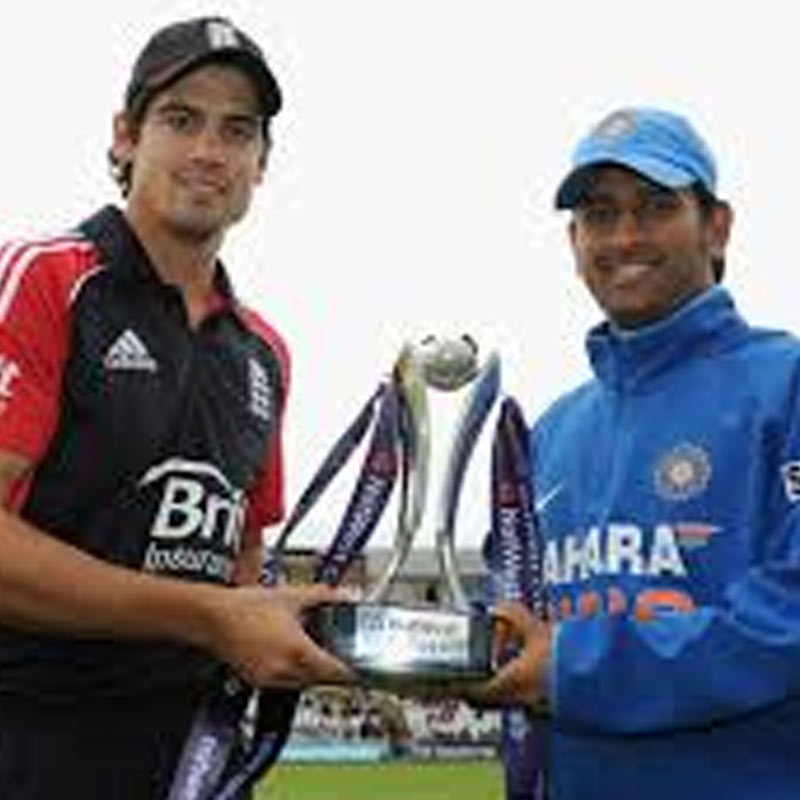
  • India England series holds on to ratings

    India England series holds on to ratings

    MUMBAI: Holding on to the cricket loving audience. That is what the first test match in the India England series has managed to do. Tam figures indicate that the ratings achieved were similar to what had been done when India played Sri Lanka last year and only slightly less than what was achieved when India toured pakistan..

    Tam data c&s 4+ shows that for the first test match DD had a rating of 1.6 while Sahara One managed a rating of 0.9. This is similar to the ratings that the India Sri Lanka test series got last year.

    DD had a rating of 1.6 while Zee Sports had a rating of 0.8. Of course one must consider the fact that Sahara One has better connectivity than Zee Sports. Where Sahara One fared better was in the Hindi Speaking Markets. It managed a rating of 1.3 compared to the 0.9 that Zee Sports managed during the India Sri Lanka test matches.

    The good news is that the test ratings for the India England series was only slightly less than what Ten Sports managed for the India Pakistan tests which was 2.9 c&s4+. The India England series delivered 86 per cent of the audience for the India Pakistan series c&s4+.

    Test cricket rates better among men. For males c&s ABC 15+ DD managed a rating of 2.2 while Sahara One managed a rating of 1.2. The India Sri Lanka test series managed a rating of 2.3 on DD and 1.2 on Zee Sports. Ten Sports got a rating for 4.3 for the India Pakistan test matches.

  • IPL’s Bangalore Royal Challengers unveils logo

    IPL’s Bangalore Royal Challengers unveils logo

    BANGALORE: Vijay Mallaya’s UB group which won the Indian Premier League (IPL) franchise for Bangalore unveiled its team logo late last night. The team has been named Royal Challengers (RC).

    As has been reported earlier, the team has Charu Sharma as the CEO and Rahul Dravid as the team captain. Martin Crowe, whose role is to focus on the strategic aspects, is the Chief Cricket Officer. Venkatesh Prasad is the team coach and Evans Speachley of South Africa is the physiotherapist with Muthu Kumar of Bangalore as assistant.

    The RC team has tied up with Reebok for the sporting uniforms and Louis Phillippe for formals. Monoviraj Khosla has designed the special uniforms for the cheer leaders.

    During the second round of the IPL player auction, RC netted Pakistan batsman Misbah-ul-Haq and India under-19 captain Virat Kohli. New Zealand batsman Ross Taylor, Bangladesh left-arm spinner Abdur Razzaq and India U-19 wicket-keeper batsman Shreevats Goswami were the others who came to Bangalore.

    The team has a blend of batsmen, bowlers and all rounders. The batsmen are: Rahul Dravid; Shivnarine Chanderpaul; Misbah-ul-Haq; Ross Taylor, Wasim Jaffer; Virat Kohli; Jadessh Arunkumar; Bharat Chipli. The bowlers are: Dale Steyn (reportedly the fastest bowler in world cricket at present); Zaheer Khan; Nathan Bracken; Balachandra Akhil; Anil Kumble; Sunil Joshi; Abdur Razzak; KP Appanna; Praveen Kumar. The all rounders are: Jacques Kallis; Cameron White; Vinay Kumar. The wicketkeepers are Mark Boucher; Shreevats Goswami; Devraj Patil.

    An official statement indicates that the UB group is in talks with several partners in the online space to tap young fans, create virtual clubs, explore mobile space and leverage new media potential for marketing the team. Sale of merchandise and on ground activations will be used to reach out to the Royal Challengers fan flowing.

  • Panamsat reports four per cent revenue growth

    Panamsat reports four per cent revenue growth

    MUMBAI: Global satellite service provider Panamsat has reported financial results for the fourth quarter and year ended 31 December, 2005

    For the year, total consolidated revenues of $861. million increased by 4.1 per cent from 2004 while video services revenues grew by 7.3 per cent over 2004. This year was significant as the company was acquired by Intelsat for $3.2 billion.

    The company paid down $676 million of long-term debt and paid out $300.3 million of dividends to shareholders as a result of strong financial results and a successful IPO. The company also achieved a year end 2005 cash balance of $126.3 million compared to $39 million at year end 2004.

    Total revenues for the fourth quarter of 2005 were $229.2 million, compared to revenues of $207.7 million for the same quarter last year, an increase of 10.4 per cent.

    Panamsat CEO Joe Wright said, “Panamsat finished the year in an extremely strong position as we completed one of the most successful years in the company’s history. Our management team has now met or exceeded guidance for four years in a row while also continuing to increase our revenues and profitability. The utilisation on our satellite

    fleet increased to 73 per cent compared to an industry average of less than 60 per cent, while our fleet reliability remained at an industry high of 99.9 per cent.

    “Equally as important as our strong financial results, we made real progress in the three major strategic areas that we identified early last year for future growth: 1) High Definition video in North America and expansion of Direct-to-Home (DTH) video services in international markets. 2) satellite-based connectivity in rural America and remote regions of the world and 3) servicing the U.S. Government. We capped off the year with an agreement to merge with Intelsat.
    “In the first strategic area of video expansion, we expanded our industry leading HD

    neighborhood in the U.S. on Galaxy 13 by signing a multiple year, multiple transponder contract with HDNet as well as by adding new channels to the platform including the Outdoor Channel. In addition, to meet strong demand for Ku-band capacity in North America, we signed an agreement with JSat to co-develop the Ku-band Horizons-2 satellite for the US market, which will support expanded HDTV, digital video, and IP-based content distribution

    networks to broadband Internet and satellite news gathering (SNG) services.

    “We also launched Vis-a-TV, an ethnic programming service for the U.S. marketplace. Vis-a-TV represents a milestone for the industry as it is the first time an operator will partner with its customers to bring the world’s programming to the U.S. Internationally, we developed the PanGlobal TV DTH

    platform in Australia, which currently offers 25 different channels of ethnic programming content and will be duplicated in additional international markets, including New Zealand, this year.

    “In our second strategic area, providing satellite-based connectivity to developing markets, several of our initiatives have already developed into real growth opportunities. In South Africa, we joined the Liberty Foundation and are providing over 1,000 schools with general curriculum and other teaching aids from Johannesburg. We are also using our satellites to provide health education to citizens across the country via a network of government healthcare clinics. In Mexico, we have joined with our partner Grupo Pegaso to expand satellite-based broadband services to government, enterprises and consumers.

    “Our G2 Satellite Solutions unit, formed several years ago, also made significant progress during the year. This Panamsat subsidiary now accounts for nearly $90 million in annual revenues and is recognised as one of the

    premier full-service total solutions providers to the U.S. Government. In 2005, the G2 team created a managed network solution specifically for the US government and its various agencies.

    “The network uses high-powered Ku-band beams around the globe to deliver voice, data, video and Internet connectivity. At the end of 2005, this service was installed in over 300
    locations and is projected to be the fastest growing part of the business. And, equally important, we were able to clearly demonstrate the value of our satellites in the case of emergencies such as Hurricanes Katrina, Rita and Wilma. We were ready then and will be in the future to provide communications services in the event of an emergency, either natural or man-made,” adds Wright.

  • CAS Rollout: Three Months a More Comfortable Time Frame

    CAS Rollout: Three Months a More Comfortable Time Frame

    One after another, the complaints are gathering. Not enough set-top boxes (STBs); insufficient time to effectively and smoothly roll out conditional access system (CAS); and no marketing at all to generate a consumer pull.

    The pay TV broadcasters are at it again. Back in 2004, the government decided to withdraw CAS based on the backlash faced from broadcasters and consumers. Will history get repeated this time around?

    Looks unlikely. If the government decides to move the Supreme Court, it can at best get the implementation of CAS delayed by a few months. But the industry today is more or less settled to the fact that CAS is here to stay, sooner than later.

    A stockpile of STBs, imported in 2003 during the time government had mandated CAS, is waiting to enter into consumer homes. Unlike in the past, MSOs also have the support of their franchisee operators to push digital boxes
    _____****_____

    Valid, though, is the question thrown at the multi-system operators (MSOs): Can they implement CAS in the next four weeks?

    The MSOs say they can. There are several factors working for them this time. They have already deployed digital cable TV in small patches. A stockpile of STBs, imported in 2003 during the time government had mandated CAS, is waiting to enter into consumer homes and can by and large take care of at least the first phase of implementation (zone one) in the three metros.

    The MSOs also have the support of their franchisee operators to push forward the digital boxes. Unlike in the past, last mile operators have swung in favour of CAS for fear of losing subscribers to the direct-to-home (DTH) service providers. Concern over thrust of second and third bouquets by broadcasters has also brought them into the side of the MSOs in pushing for CAS.

    Still, a month’s time seems an impossible deadline to meet. MSOs will have to work out commercial agreements with broadcasters. In all fairness, this will take time as broadcasters have to negotiate and chalk out long term deals in an addressable system. Several considerations will have to be weighed in before arriving at a retail price structure of their TV channels. In the new era, discounts on volumes will also become an important part of the matrix.

    MSOs will have to work out commercial agreements with broadcasters. In all fairness, this will take time as broadcasters have to negotiate and chalk out long term deals in an addressable system
    _____****_____

    Though operators are in favour of CAS, there are several issues on the ground that have to still be sorted out. Flowing down the chain margins will have to be fixed for distributors and last mile operators. Commissions on sale and rental of STBs will also have to be worked out. MSOs, however, are confident that such agreements can be done in quick time. The problem is that everything can be “set into motion” once the commercial terms are settled with the broadcasters.

    A lot of ground has to be covered including launching promotional campaigns. Just looking at the logistics, one realises how Herculean the task is. A more comfortable time zone would be three months. But the ball game can change if support is extended by everybody including the government and a tough regulator to cut the errant stakeholders into size. Support from the broadcasters will also help in making CAS possible in quick time.

  • DD calls for producers to bid

    DD calls for producers to bid

    It’s show time folks. Doordarshan has called for bids from television producers for three time slots on DD- Metro (DD-2): 7:55 am, 5:25 pm, and 6:55 pm. The time slots are of five minutes duration each and involve the creation of film trailer based shows. Producers can pick up the application forms between 6 and 13 March (11 am to 1 pm) from the respective Metro stations.

    Bids are to be submitted between 13 and 15 March between 11 am and 2 pm along with an earnest money deposit of Rs 50,000 and a non-refundable processing fee of Rs 5,000. The bids will be opened on 15 March at 3:30 pm. DD officials have fixed the minimum guarantee at Rs 50,000 per weekday.