Category: TV Channels

  • Frames debates the merits of the studio versus the independent filmmaker

    MUMBAI: The relationship between studios and independent filmmakers was a subject discussed at an afternoon session of Frames, the convention for the business of entertainment. The speakers were Sahara One CEO Shantonu Aditya, filmmakers Mahesh Bhatt,Govind Nihalani and Bobby Bedi and Adlabs Films chairman Manmohan Shetty.

    Nihalani pointed out that studios and independent filmmakers have their strengths and both parties should look to work with each other. “Artistically released commercially successful films can be made.
    Corporates should realize that creativity is equity. The independents should realize that money is as important as creativity. Studios should know that sometimes small risks pay off big time. That is because audiences like to be surprised.

    “A studio basically operates on calculated budgets and big stars to secure an ROI. Scripts are chosen if a star is attached. This ensures a long run. An independent filmmaker, on the other hand, feels that an idea and a directors treatment of that idea is what creates value. Lavish sets, big stars add value. However, they do not create value. There is a way to bridge the two and both should realize that they need each other.”

    This point was echoed by Shetty who noted that in the West independent filmmakers go the studio route to release their films. In India, there are studios like Yash Raj Films. However, important directors like Karan Johar still call the shots and studios chase them for the rights to distribute their films. “Reliance buying Adlabs means that more films will be made. Fortunately we have not suffered any losses till now.”

    Bhatt spoke on the benefits and challenges of being an independent filmmaker. “Movies that do not have personal supervision of an idea are doomed to fail. One does not only make movies. You need passion and religious fervour. There is talk of delivery systems but you need to invest in ideas. Otherwise these systems will be parched of good content. It is important for a filmmaker to keep himself lean and thin. A studio executive unfortunately only understands a Shah Rukh Khan. He does not understand the value of an idea. I would argue that studios are victims of hype. An independent filmmaker, though, has to pay off any debts incurred. He cannot hide behind abstractions.”

    Bedi said that indepdents are better incubators of ideas. “In the West studios do not incubate ideas as it is too expensive. An independent filmmaker approaches a studio with an idea. The studio then works that idea to a maturity level where one is able to confidently approach exhibitors.”

    Aditya says that Sahara One has had success as it concentrates on its strengths of marketing and distribution. “We have made 14 films as projects. There have been start dates and finish dates. We have also spent quite a bit on marketing. We have worked in different genres. We picked up Page Three when nobody wanted to touch that film. At the same time, it is difficult to know which idea will work. We get 70 ideas a week. Of course, each presenter of the idea is confident in it. Once an idea is given the go ahead, we do not interfere with the creative process other than keeping a check on how the work is progressing. The writer is given freedom.”


  • BBC Japan to go off air from 30 April

    BBC Japan to go off air from 30 April

    MUMBAI: BBC Japan will cease transmission from 30 April. The reason for the channel’s shutdown, barely two years after launch is because local distribution partner Japan MediArk Co (JMC), has declared its inability to financially support the channel any longer.

    Launched in 2004, BBC Japan was the second channel designed exclusively for one country. Prior to this, BCC Worldwide had launched BBC America in 1997.

    According to information posted on www.bbcjapan.tv, BBC Worldwide has received a notification from JMC that it no longer has the financial means to honour its contractual commitments to distribute BBC Japan.

    The JMC’s shareholders will not be providing any further financial support. This decision results in JMC no longer being able to continue distribution of the channel after 30 April.

    The statement posted on the website also stated that this decision has been taken without any consultation with BBC Worldwide and is beyond the corporation’s control. The corporation is actively seeking alternative ways to continue to provide the service in Japan.

    BBC Worldwide managing director Darren Childs said, “We are extremely disappointed to announce that, due to the apparent decision of the JMC shareholders to no longer support JMC, BBC Japan may have to end transmission.”

    “We are looking to replace the channel in the market as soon as possible, and hope to announce shortly how BBC Japan’s loyal customers will be able to receive the channel in the future. In the meantime, we extend our sincere apologies to subscribers of the channel who have been inconvenienced by the decision of JMC,” he adds.

  • FremantleMedia’s Carter to give keynote at MipTV

    FremantleMedia’s Carter to give keynote at MipTV

    MUMBAI: MipTV will kick off in Cannes on 3 April. Day one will see sessions on interactive TV, the future of branding and product integration in a changing world, strategies for digital media in the world of television. The keynote speech will be delivered by FremantleMedia chief creative officer new platforms Gary Carter.

    In this age of increased democratisation of media, where consumers are getting their hands on both the tools of production and distribution, what does the “digital future” actually mean for content creators and active audiences? Carter, in his keynote address titled ‘Whose TV is it anyway?’ will provide a vision about creating collaborative creative relationships between the consumers and professional producers around content.

    The Digital Media Strategies Workshop, organised with Interactive Rights Management will be held on 3 April and will highlight strategies for digital media in the television arena. The workshop will aim to demonstrate to broadcasters and producers how to embrace digital platforms and interactivity. It will also delve on areas such as the role interactivity and new digital platforms play in programme development, the kind programmes that lend themselves to interactivity and how can one take advantage of them for generating new revenue streams?

    This will be followed by the Digital Distribution Showcase keynote by Microsoft senior director Erik Huggers, who will throw light on how digital media technologies can create new business opportunities for the media industry.

    Post this, World Screen editor Anna Carugati is slated to moderate The Future of Branding and Product Integration in a Changing World. This has been organised with Reveille and the Branded Content Marketing Association. The speakers include ProSiebenSat 1 Media – Germany director corporate development Jan David Frouman, FremantleMedia Licensing Worldwide, Americas – USA executive vice president Olivier Gers, Cisco Systems – UK head of media partnerships Simon Jacobson, Two Degrees Ventures LLC. – USA principal Mitch Kanner, Freud Communications – UK vice chairman Kris Thykier and Ford Motor Company – USA senior advisor – global brand entertainment – Al Uzielli.

    The panel will look at how advertising, product placement and branding must adapt to the world of DVRs.

    Another session titled strategies for digital media in the world of television… or is it the other way around?, will have case studies and audience participation. The speakers include Interactive Rights Management Limited – UK creative and commercial director Valérie Bozzetto, Interactive Rights Management Limited – UK business development director Megan Goodwin-Patel and Interactive Rights Management Limited – UK managing director Bruce Vandenberg.

  • Galaxy Multimedia to tap capital market

    Galaxy Multimedia to tap capital market

    Here’s another player leaping into the television universe. Galaxy Multimedia Ltd, a multimedia and entertainment company, is coming out with an initial public offering (IPO) of Rs 25 million at par to part finance its 5,000 square feet high-tech studio that is currently being set up at Andheri in Mumbai. The studio, offering high-end fully digital post production facilities, is scheduled to commence operations from April. The total project cost to set up the studio is estimated at Rs 120.5 million.

    The company, promoted by Vipin Rai Bhayana, has its main focus on multimedia which includes computer based tutorials (CBTs) for schools and colleges, production of TV software.

    “We intend to provide a one-stop shop for all production, post-production and multimedia requirements ensuring convenience and constant value-addition to customers. The studio we are setting up is totally integrated – both video and audio,” said Galaxy chairman and managing director Vipin Bhayana.

    The company will finance the studio project through an initial equity infusion of Rs 100 million and Rs 25 million through rupee term loans. Out of the Rs 100 million equity, the promoters have already invested Rs 51 million and Rs 24 million has been raised from FIIs (DSP Merill Lynch and Alliance Capital) and associates. The company will raise the further Rs 25 million from the public. The five-year rupee term loan of Rs 25 million has been raised from Bank of India (BoI). The lead manager to the issue is UTI Securities.

    Describing the share holding pattern of the company, Mr Bhayana said that the management (including promoter and board of directors) holds 51 per cent, associates hold 14 per cent, NRIs and OCBs hold six per cent, FIIs hold four per cent and the public will hold 25 per cent.

    The company has pre-empted its present multimedia installed capacity for 18 months. It has entered into a tie-up with Schoolnet India, a company formed by IL&FS, for 18 months and will be providing it with 10 CBT titles for K-10 programmes.

    Galaxy Multimedia is currently working on the development of education aids. The MoU with Schoolnet India was signed in October 1999.

    Galaxy has also entered into a joint venture with another media company for producing the television serial Hotel Hindustani for Zee TV that has been sold to Zee TV through an associate company Buddha Films. The serial is scheduled to be on air from February-end. The company is currently working on four more teleserials slated to be shown on ther channels.

  • VOOM HD Networks unveils high-definition gaming channel

    VOOM HD Networks unveils high-definition gaming channel

    MUMBAI: A subsidiary of Rainbow Media Holdings LLC, VOOM HD Networks announced the launch of Gameplay HD, the first high-definition channel solely dedicated to the world of video gaming.

    VOOM HD Networks is the provider of the largest suite of high-definition channels nationwide in the U.S. and are available nationally on Echostar’s Dish Network. The channel will offer televised tournaments and programming for gamers across the nation.

    The channel also announced its first deal with CNET Networks’
    Gamespot, one of the leading sources for gaming information, to produce two new series for the channel: GameSpotting, a half-hour series of news, reviews and previews, and CinemAddicts, an hourly series featuring video games in a cohesive cinematic story.

    VOOM HD Networks general manager Greg Moyer said, “VOOM provides a platform for viewers who are looking to maximize the power of HD, and in the gaming category Gameplay HD is the leader in this next generation of channels. The channel takes advantage of the growing demand for global entertainment and video gaming and now, with new advancements, the manufacturing of games in high definition. Working with CNET affords us the ability to collaborate with an authoritative voice as we delve into this gaming revolution.”

    “With HD playing a leading role in next generation game content, we’re excited to be working with a partner who shares our belief in developing authentic brand experiences around points of passion to bring the GameSpot name and programming to this platform in a way that celebrates games and gamers in true high-def format,” for “This also underscores how far the production values of broadband video have come and how well Internet-native content can translate to the most demanding of broadcast mediums,” said CNET’s Games & Entertainment division’s vice president of strategy and development Keith Bencher.

    Mark DeAngelis serves as vice president of programming for Gameplay HD. Earlier, DeAngelis was VP of Creative Services for Rainbow Media, and an independent producer for 15 years, where he collaborated on projects for Madonna and The Rolling Stones, Times, Rolex, and Hearst Entertainment.

    “Gameplay HD offers the most comprehensive content dedicated to the video game industry, and delivers it in hi-definition and 5.1 surround sound. Gameplay HD also offers the most worldwide tournament coverage, bringing together gamers from across the globe. We look forward to working with Gamespot to create great originals for the channel that will continue to add to our already growing library of visually stunning HD programming, states DeAngelis.

    As gaming becomes more mainstream, it has slowly invaded movies, television, and other forms of mass media. The channel features three tiers of entertainment including news and information from the industry, original series & specials, and tournaments and competitions from around the world. Within each tier of entertainment Gameplay HD will feature games from publishers such as Ubisoft, NCsoft, SEGA and Blizzard Entertainment.

    The programming includes:

    Original Series & Specials:

    The original programming block includes the co-created CinemAddicts with GameSpot, where viewers are presented a cinematic video game experience through some of the best next generation games out there. It brings the stories inside the game to life, in an entertaining way, by bridging actual gameplay with cinematics to deliver a cohesive storyline. Among the games featured are Condemned: Criminal Origins and Prince of Persia:The Two Thrones.

    Advanced Training turns the average gamer into an amazing gamer. This innovative series brings the top pro gamers and developers to assist in making you a pro by giving game exclusives, key strategic insights into how to play the game and hidden secrets and tips to give you that definitive edge.

    Tournaments:

    This month, the channel covers the 2005 digital life Global Gaming League (GGL) Tournament, the leading competitive video gaming league for gamers of every skill level as video gamers compete for their share of $100,000 in prizes.

    The Blizzard Worldwide Invitational Tournament event is also covered from Seoul, Korea where the world’s best gamers of Warcraft and Starcraft converge at the Coex Center for the finals.

    Building on the popularity of gaming in the Asian market, Gameplay HD covers the Guild Wars World Championship in Taipei, Taiwan. Throughout the three months of qualifications and after a fiercely competitive Regional Playoff, six teams have proved their mettle and will be representing their guilds and their regions at the Taipei Game Show. Team members from Brazil, Alaska, Finland and Korea, among other countries, will take the stage to determine who will be the 2006 Guild Wars World Champion.

    News & Information:

    CNET Networks’ Gamespot produces a half-hour series called GameSpotting that features interviews with video game editors, designers and publishers. Games featured include the Xbox 360 high definition games, like Amped 3, and Peter Jackson’s King Kong: The Official Game of the Movie.

    The Art of Play show gives viewers a full access pass inside next generation games through stunning gameplay footage, in-game cinematics, and voice-over that take viewers on a visceral tour through each game’s highlights. Games featured include: Peter Jackson’s King Kong and Beyond Good & Evil.

    Price Waterhouse Coopers forecasted video games to eclipse music as the second most popular form of entertainment by 2008 with worldwide consumer spending on video games estimated to hit $55 billion compared to $34 billion for recorded music. According to the Entertainment Software Association (ESA), U.S. computer and video game software sales grew four percent in 2005 to $7 billion, a more than doubling of industry software sales since 1996. In 2005, the ESA also reported more than 228 million computer and video games were sold, almost two games for every household in America. The worldwide market for video games and interactive entertainment will grow 44% from $23.2 billion in 2003 to $33.4 billion in 2008, according to DFC Intelligence.

  • Endemol India upbeat as ‘Fear Factor’ opens well for Sony

    Endemol India upbeat as ‘Fear Factor’ opens well for Sony

    MUMBAI: Endemol India is upbeat as the opening numbers of Fear Factor India have come in. The show opened with TVRs of 4.6 in the C&S 4+ Hindi speaking markets (HSM), whereas it garnered TVRs of 3.2 in the C&S 4+ all India markets.

    Fear Factor, which airs on Sony Entertainment India’s flagship channel SET, has opened as the channel’s top rated show.

    And it’s not just Fear Factor India that the production company is buoyant about. At present Endemol has three shows on two channels in the 8 pm – 11 pm band. On Sony it has Deal Ya No Deal from 8 – 9 pm and Fear Factor from 9 – 10 pm. On Star One, Endemol has The Great Indian Laughter Challenge Dwitiya (TGILCD), which airs from 10 – 11 pm.

    Speaking to Indiantelevision.com on Fear Factor India, an elated Endemol India managing director Rajesh Kamat said, “We are very happy with the opening numbers of Fear Factor and they have met our expectations. We are confident that the numbers from here on will only be on the rise as word of mouth is sure to bring in new viewers to the show.”
    Dwelling on the factor that worked for the show, Kamat said, “Fear Factor has a novelty aspect, which has a potential of clicking with the audience. Apart from that, the chance of seeing celebrities in real life situations that involve thrill and drama has also worked for the show.”

    Kamat is of the opinion that even without the celebrity factor, the show will continue to deliver numbers because of its freshness.

    Now moving on to TGILC Dwitiya on Star One, which opened at a TVR of 5.06 in the C&S 4+ HSM. This was the first major project Endemol started work on after setting shop in India. If one had to compare the opening ratings of the first season, TGILC has surely seen a considerable increase in ratings. The first season opened with TVRs of 2.3.

    Kamat said, “This is surely a good sign for us as the show has opened at 5 TVRs. One must keep in mind the fact that Star One is having connectivity problems in Mumbai and despite that the ratings is good. If we had had no problems in Mumbai, I’m sure the show would have opened at a TVRs of 7, because at the end of the day Mumbai is an important for any channel.”

    The format of Deal Ya No Deal underwent a revamp when the anchor R Madhavan called it quits. Post his departure, in came the suave Mandira Bedi who has kept the show going. However, on the numbers front, Deal Ya No Deal hasn’t managed to deliver much.

    But there’s more to come from Endemol India’s kitty. The high-tension game show Heartbeat will soon be launching on Star One. So one can expect a lot of activity from Endemol in terms of new programming and also good ratings.

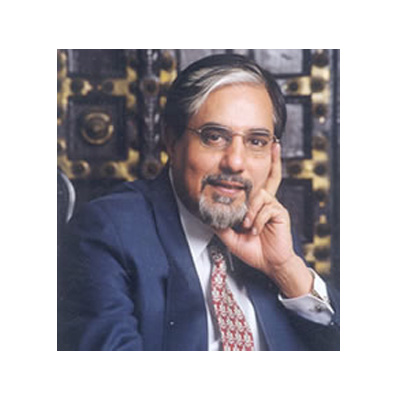
  • ‘I never lose sight of topline, bottomline growth’ : Subhash Chandra – Zee Telefilms Chairman ( Gave the interview to Awaaz )

    ‘I never lose sight of topline, bottomline growth’ : Subhash Chandra – Zee Telefilms Chairman ( Gave the interview to Awaaz )

    It’s been a long haul back on the upward curve for Subhash Chandra’s Zee Telefilms but things are certainly moving north for his network (including the Zee scrip which is currently quoting at Rs 250). With flagship channel Zee TV firmly ensconced in the number two slot in the Hindi entertainment stakes, Chandra’s has a lot to say on the heightened action in the media and entertainment.

    Given below is an interview the media baron gave to Sanjay Pugalia, editor of CNBC TV 18’s Hindi news channel sibling Awaaz, which aired on 17 March. Indiantelevision.com has excerpted it with due permission:

    There is a perception about you that you start something and then forget about it. You move on and start a new project. Whatever you do is known for its novelty. There are reports that you are planning a mega entertainment city. We want to know more about that.
    Our newspaper friends broke the news before time. Still I will say that we are planning an entertainment, health and sports SEZ. Several SEZs have been planned in the country but none in the field of entertainment, health and sports. I clearly see an opportunity in these areas. As you know getting treatment is very costly abroad. Several insurance companies are thriving on this. I have heard insurance companies abroad asking its customers to go to India and get themselves treated. They are even willing pay for airline ticket. Such is the cost advantage in India.
    Similarly, so many people in Hollywood are interested in shooting their films in India. But the process is so complicated. They need 70-80 clearances to shoot their films here. With such SEZ in place, they can come and shoot their films without any hassle.

    How hopeful are you of getting clearance and tax concessions for such SEZ?
    We had applied for it when the SEZ policy was being formulated. We have been planning such a venture for almost five years now. This is not an overnight affair. I am not asking for any extra favour. We are hopeful of getting what is due.

    What is the kind of investment do you see and when do you expect to complete the project?
    What we will do is to build the infrastructure so that others can come and make use of that. We have some land and have asked for some more from the Maharashtra government.

    After such hard work, Zee Telefilms has finally become number number two. When you look back what do you think went wrong?
    Let me correct you. Zee Telefilms has always been number one. It is Zee TV that had slipped. Now Zee TV has reached number two position. However, with the kind of effort that has been put in now I am confident that it will soon regain number one position.

    Suddenly we see Zee stepping up its expenditure on marketing, new shows and new channels. What will be its impact on the revenue side of the company?
    Once you slip you need to put that extra bit to regain the top slot. We are doing exactly that. But this is an investment which will pay rich dividends. As far as new channels are concerned, I am of the opinion that entertainment space is going to expand further and you need to be present in all the segments. While existing players can afford that, it is going to be pretty tough for the new players.

    One of the criticisms against you has been that you spread yourself too thin. That you lose focus. That you are present everywhere even if that means some compromise on quality. Can you recall how many channels the group has at the moment?
    Yes I can. There are nearly 25 channels. I don’t need to personally focus on all the channels. There are good people in our group. Four of my brothers and five people from the next generation are involved with various projects. Then there are capable people who are almost like my family. They are capable enough to handle things on their own. At the level of perception, though, we are seen to be compromising with quality. But that is only at the level of perception. I am confident that this will also change soon.

    What are you focusing on currently? There’s the sports channel about which there is a view that it will take some time before making its presence felt as it didn’t get cricket telecast rights?
    Those who follow the beaten track think that sports channel cannot survive without cricket. I am not one of those. It is a different matter that we could have got a head start if we had cricket. But there are other areas to be explored. India is a cricketing nation. I want it to be a sporting nation. We have got telecast rights for football for ten years. In association with the Indian Football Federation we want to establish many football clubs across the country. I believe that in the next five years, football will be bigger than cricket in the country. As per my own focus, I look after the sports channel and with my colleagues I look after the launch of new channels in South India.

    As you said you are focusing on sports and regional channels. What are the other new initiatives?
    We are doing so many things in the existing ventures. As per new initiatives, we have just launched channels in Indonesia and Malaysia. What we are doing is dubbing Indian content in their local languages. Soon we are going to launch a similar channel in Afghanistan. Efforts are on to dub Indian content in four foreign languages. This will be over and above what we have been doing so far. Zee network is already present in 120-125 countries.

    There are reports that you are planning a channel with international content. Maybe a news channel?
    Now you are forcing me to say things. It is true that we are planning a channel for more than two years. The work on content has already begun and I can assure you that it will be quite unique. Now I will tell you why we slipped. As long as we tried out new and innovative ideas we had no competitor. We launched a show on extra-marital affair theme way back in 1994-95. The launch of Sa Ra Ga Ma was equally unique. We slipped because we started imitating others. Now this is going to change. We have started doing new things. We have realized that the spirit of entrepreneurship is quite strong among Indians. So many people want to do things on their own. To catch that spirit we have planned a new show called Business Bazigar. The contest is open to all. We invite ideas, scrutinize them and if they are worthwhile, arrange for funding.

    Maybe this programme is a reflection of your business journey. Will you please elaborate on this? How will it help people with ideas?
    We invite entries. So far we have received 1.2 lakh (120,000) entries. Our experts scrutinize those ideas. If they feel that ideas are good we invite people to explain their plan. When we realize that they have a sound plan to execute their ideas we make them go through difficult tasks like setting up office in four hours, surviving in Mumbai on a rupee and a glass of bottle for 24 hours. Once through this also, we arrange for funding those projects. It could be five lakhs or ten crore rupees (Rs 100 million). We arrange funds.
    From a shareholders’ perspective, when they see you going for so much investment they often wonder what will be the value of their investment?
    I never lose sight of topline, bottomline growth. As long as topline is growing bottomline will keep growing. So more investment means more topline growth.
    So many people would have asked you this question before. Do you think Indian television space is crowded? Will so many players survive? Is consolidation bound to happen?
    Consolidation has already begun. Your group has bought over Channel 7. Some more things are happening behind the scenes. So consolidation is bound to happen and it has already started. I believe that it will be tough for independent channels to survive.

    So you mean to say that groups with one, two or three channels will find it tough to survive?
    It will be difficult. But you never know. The country never fails to surprise us. I see so many newspapers coming out from so many towns and cities. I cannot figure out what is their source of revenue. But they are there. Maybe they have some other income.


    I keep telling Mr Murdoch that India is not a soft state. It has certain laws which need to be followed


    Quite a strong view on other income of newspapers. What is your assessment of the journey of DNA so far?
    It started off with two lakh copies and the figure is growing everyday. The circulation has reached 2.3 lakhs. We expect that in the next 12 to 18 months it will be close to The Times of India.

    Planning new editions of DNA?
    Yes.
    I believe the next edition will be from Delhi.
    Not necessarily.
    Your group has presence in whole host of businesses.Will you please list out your businesses- from real estate to wireless radio- for people who are not so familiar with those aspects of your group?
    In real estate we are developing properties in Delhi and other cities in North India under the brand name Sun City. We have a partner in this venture. And our joint venture is doing quite well. In the business of wireless radio, we have 18 operating licenses and 80-85 per cent market share. We are thinking of expanding this business.
    In percentage terms what is the contribution of your different businesses to the entire group?
    In percentage terms, media and entertainment business contributes 20 per cent to the group’s revenue, rest 80 per cent comes from elsewhere. There is a group company called Essel Propack. It has 19 plants in 12 countries. It is truly a multinational company and number one in the world in its area of operation. It manufactures tubes for toothpaste and cosmetic items. It has 40 per cent market share in the world.

    Following the High Court order where do you see the implementation of CAS headed now and how will CAS and DTH impact each other?
    I don’t think CAS is an appropriate name. The name sounds a bit negative. CAS is bound to happen. The toss up is between analog and digital signal and I think it is in viewers’ interests to have digital signal. In this respect CAS is bound to happen. One broadcaster is opposing the implementation of CAS because it wants to roll out its DTH business. But I don’t think that is fair.

    How is your DTH business doing?
    We have got one million subscribers so far.

    DD has more?
    Yes, DD has more. It caters to a different segment. It doesn’t charge anything whereas our subscribers have to pay some amount every month.

    This has happened without Sony or Star?
    Yes. Now Sony, Discovery and some other channels are joining our platform. However, we have proved that one million customers can live without Saas Bahu.

    Now that Star too is gearing up to launch its DTH business what will be its impact on the DTH business? What about must carry clause?
    Must carry clause came into force in December 2004. However, Star group never bothered to comply with the clause. Star Group doesn’t seem to have any respect for the law of the land.

    With recent reorganization and all where do you see Star Group headed now?
    My best wishes for Mr Rupert Murdock. We do talk to each other sometimes. He was my partner earlier. I keep telling him that India is not a soft state. It has certain laws which need to be followed. You cannot keep flouting rules and regulations every now and then. Law of land will catch you in due course. But when you are successful you don’t listen to even sane voices.

    Do you think broadcasting sector should have a separate regulator?
    Definitely. Indian media houses representing print, radio and television businesses came together to form Indian Media Group. We have demanded that broadcasting sector should have an independent regulator.

    Given the favourable response of the present government towards globalisation do you see other media giants freely accessing Indian market, something you may not like?
    India already is the most open country in this respect. Each and every country worth its salt has some restriction in this sector. Almost everywhere preferential treatment is being given to local players. We don’t want preferential treatment. We want level playing field. All businesses that operate in this country have to pay taxes.

    One final question. Are you satisfied with the
    present rating system? Do you think it is authentic?

    Like all areas, competition should be there in the
    rating business also. It is not fair to judge people’s mood on the basis of 4 to 5 thousand meters. I think given India’s size, there should be at least 20,000 meters to gauge people’s perception.

  • Verizon, CBS reach programming deal on FiOS TV

    Verizon, CBS reach programming deal on FiOS TV

    MUMBAI: Verizon and CBS have reached a deal in which Verizon will carry CBS programming on its new television service.

    The companies announced a comprehensive retransmission consent and video-on-demand (VOD) agreement, which includes analog, digital, multicast and HD rights to programming on CBS owned-and-operated television stations; local VOD content from those stations; and CBS Television Network VOD content, including such current popular network series as CSI,NCIS and Survivor.

    Verizon will offer the programming on its new fiber-optic TV service FiOS TV, which is now available in parts of seven states of the U.S. All FiOS TV subscribers with a set-top box will receive the CBS Television Network VOD content at no incremental cost, which will also be true for FiOS TV subscribers in CBS owned-and-operated markets with regard to the local VOD content.

    “With each subscriber that Verizon’s FiOS TV adds, CBS will directly benefit, and therefore, we look forward to our partnership as Verizon showcases our programming both in our (owned-and-operated) markets and across the country,” CBS chief executive Leslie Moonves said in a statement.

    Verizon Chairman and CEO Ivan Seidenberg said the deal expands the market for both companies.”For us, it means we can offer our customers the tremendously valuable content provided by the CBS Television Network and local broadcast stations,” Seidenberg said.

    CBS locally owned-and-operated stations are in all Verizon TV markets except Washington, D.C.Verizon said its retransmission consent agreement with CBS is its largest such deal. Prior to the deal, Verizon provided programming from the CBS owned-and-operated stations under a special agreement with CBS.

  • CNN once again has its ‘Eye on China’

    CNN once again has its ‘Eye on China’

    MUMBAI: News broadcaster CNN will once again dedicate its global resources to China for incisive debate, programming and insights next month. The network will have its second week-long Eye On China. A 20 member newsgathering team offers analysis, documenting the latest cultural, economic, and social developments in a country rapidly emerging as a pre-eminent global force.

    The week begins with CNN Connects – an hour long debate on The Price of Progress and continues with a blend of live reporting and features from Shanghai in the show CNN Today. Two editions of the talk show Talk Asia also go behind the headlines with China ‘s leading newsmakers.

    Following on from debates in Davos, Beirut , Mumbai, Beijing and New York CNN Connects visits Shanghai for an hour-long round table debate evaluating the issues in balancing double-digit economic growth and the environmental challenges this presents.

    Jim Clancy anchors The Price of Progress with a panel of environmental experts including Jim Harkness of the World Wide Fund for Nature, academics and specialists debating in front of a live audience including students from China’s prestigious and internationally respected Fudan University.

    Throughout the week, Kristie Lu Stout reports live from locations around Shanghai for CNN Today. In addition, Kristie and correspondents Stan Grant, Mike Chinoy and Tara Duffy bring a number of reports charting contemporary China in all its fascinating complexity. Topics cover a wide range of issues including Shanghai ‘s rise as a new business Mecca , preparations for the 2008 Beijing Olympics, the nation’s growing environmental challenges, the rise of the blogger and a look at China ‘s new sexual revolution. And, of course, Shanghainese food.

    With the Olympics just two years away, China ‘s political, environmental, and economic outlook is being scrutinised as never before. Eye On China reveals the drive behind modern China, assessing how its inhabitants are adapting to a more affluent economy while also examining efforts to balance modernisation with traditional values.

  • Intelsat appoints Jeffrey P Freimark as CFO

    Intelsat appoints Jeffrey P Freimark as CFO

    MUMBAI: Intelsat, Ltd. has announced the appointment of Jeffrey P Freimark as its executive VP and chief financial officer, effective on the resignation of Robert Medlin.

    Medlin has been serving as acting chief financial officer of Intelsat since June 2005, and is expected to resign from his post in April 2006.

    Jeffrey P Freimark resigned on 15 March as executive vice president, chief financial and information officer of Beverly Enterprises Inc., a provider of healthcare services to the elderly.

    Beverly Enterprises was sold to Pearl Senior Care, Inc. in a transaction that closed on 14 March, 2006. Prior to his role at Beverly, Freimark held senior-level positions at a number of public companies, including serving as chief financial officer of OfficeMax Inc., CEO, president and CFO for Grand Union Company, and chief financial officer of Pueblo International, Inc.

    Freimark, who holds an MBA in accounting and taxation from the Stern School of Business at New York University and a JD degree from New York Law School, is a Certified Public Accountant and a member of the New Jersey Bar.

    Intelsat chief executive officer Dave McGlade says, “Jeff’s experience in working with the capital markets and building strong finance and accounting teams will be very valuable as Intelsat completes the PanAmSat merger. Including his work on integrations, Jeff has successfully implemented significant cost reduction and process improvement programs, demonstrating his strong abilities and effectiveness in driving company value. We know that he will be a major contributor at Intelsat.”

    McGlade also noted the role played by Robert Medlin for Intelsat: “Bob Medlin has been very important to Intelsat over the past several months, and he has assisted in maintaining solid financial controls and processes during this period. All of us at Intelsat are appreciative of the efforts of Bob and his team.”

    Medlin, a senior managing director of FTI Consulting, Inc., will continue to support Intelsat’s financial operations for an interim period on a consulting basis.