Category: TV Channels

  • Sportel Asia attracts 658 participants

    Sportel Asia attracts 658 participants

    MUMBAI: 658 participants, representing 324 companies from 43 countries worldwide, attended the recently concluded sports television market Sportel Asia 2006.

    The event took placeat the Pudong Shangri-La Hotel in Shanghai, China.

    Following on the heels of last year’s inaugural Sportel Asia in Hong Kong, the Shanghai market featured a 60 per cent increase in the number of stands and an increase of almost 25 per cent in terms of participants.

    Sportel executive VP David Tomatis says, “Shanghai and in particular the Pudong Shangri-La Hotel proved to be a wonderful venue for our clients. The decision to move to Mainland China encouraged many Chinese companies to join our ranks for the first time, affording new business opportunities for our clients.”

    “We also wish to extend our special thanks to Shanghai Media Group president LI Ruigang, and his staff for their invaluable partnership and Rai trade president Roberto DI Russo and his team, for sponsoring our opening cocktail.”

    Sportel Asia 2006 brought together executives representing broadcasters, cable and satellite services, new mobile technologies, professional leagues, programme distributors, sports marketing agents, event organisers, satellite services, producers, hardware/software and facilities providers, sponsorship and investment groups, sports federations, new media and international press from around the world.

    Sportel’s next event is Sportel Monaco 2006, which will take place from 16 to 19 October 2006 at the Grimaldi Forum in Monaco. Last year, Sportel Monaco 2005 included a total of 1,884 participants, representing 868 companies from 65 countries worldwide.

  • BBC to show World Cup, Wimbledon in high definition

    BBC to show World Cup, Wimbledon in high definition

    MUMBAI: UK pubcaster The BBC has announced that it will broadcast its 2006 World Cup coverage and major Wimbledon matches in high definition (HD) as part of its pioneering trial.

    The BBC HD trial will kick off with the BBC’s share of World Cup matches up to and including the 9 July 2006 final. World Cup 2006 will be the first major sporting event to be broadcast in HD in the UK. The BBC’s summer of HD sport will continue with Wimbledon matches from Centre Court and Court One.

    The BBC explains that HD is a new kind of television which delivers more detailed pictures and sharper shots of fast-moving action than conventional ‘standard definition’. The HD format will be an extra stream alongside conventional analogue and digital broadcasts.

    It will only be accessible to viewers who have all of the following: HD Ready televisions, HD set top boxes and HD services from satellite or cable providers. News about the World Cup and Wimbledon in HD follows finalisation of the technical and partnership arrangements for the trial.

    The BBC’s HD trial will last for about 12 months. It will enable the BBC to test technical delivery of HD and to understand how the audience values a BBC HD service. Any ongoing BBC HD service will be subject to approval by the BBC Trust.

    BBC director of sport Roger Mosey said, “High definition works particularly well for sport. It gives fantastic picture quality, from the blades of grass that are being played on right to the back of the stands, and although only limited numbers of people will be able to see this trial we hope it will be a glimpse of the future.”

    BBC HD TV head Seetha Kumar said, “We believe that in the long term the BBC can help provide the benefits of HD to everyone, free to air, in the same way that we backed colour, stereo, widescreen and online in the past. With this trial, the BBC is taking the first crucial steps to support the development of HD broadcasting in the UK.”

    BBC HD will start broadcasting on 15 May with a test stream previewing forthcoming programmes. The first live HD programme will be the opening World Cup match Germany Vs Costa Rica on 9 June.

    BBC commentary and studio coverage in HD will wrap up the HD feed from German host broadcasters HBS (Host Broadcaster Services). Standard definition digital and analogue BBC One coverage will also draw on high definition images, both for the World Cup and for Wimbledon where the BBC is the host broadcaster.

    The BBC HD trial will run for about a year. It will feature BBC shows such as natural history series Planet Earth and Galapagos, drama documentary Hannibal and some BBC Proms concerts including the First and Last Nights, in HD quality.

    The amount of new programming each day will vary, averaging between one and two hours. Some programmes will be simulcast with BBC One or, in a few instances, BBC Two.

    Others will be time-shifted or offer another chance to view past highlights such as dramas Bleak House and Hotel Babylon in high definition for the first time.

    The BBC will provide its HD trial stream on all technically capable platforms, including satellite and cable, once available, from commercial providers. It is not currently possible to provide HD transmissions on Freeview because of limited space on the airwaves. The BBC will run a simultaneous technical trial of HD on digital terrestrial television (Freeview). That trial will be confined to few hundred trial households in London, which will be chosen shortly.

    Freeview could accommodate some high definition broadcasting after switchover between 2008 and 2012. Ofcom’s Digital Dividend Review later this year is deciding how that spectrum should be used.

  • BBC’s new campaign features network’s achievements

    MUMBAI: UK pubcaster The BBC is launching a brand new television marketing campaign in the UK. This will demonstrate the extreme lengths its staff experience daily to produce quality programming for its audience.

    The campaign – the first of its kind since 1997’s Perfect Day – will feature real life examples of BBC achievements, large and small. Each trail will feature a different story demonstrating the passion and commitment of individuals working for the organisation – punctuated by the simple endline – This is what we do.

    Four trails will launch tomorrow 25 March. Kabul tells the story of John Simpson and his news team’s struggle to broadcast the fall of the Afghan capital when a lorry carrying satellite equipment broke down in the mountains.

    Instead of assuming defeat the team dismantled the satellites and put them on donkeys – enabling them to arrive in Kabul 20 minutes before they were due to go live on air. The Office asks the audience: “Who would commission a sitcom from someone who had never written, directed or acted in one before?”, before showing a clip from the hit BBC Two sitcom.

    Wall shows a BBC cameraman in action during a conflict between Iraqi and British troops. Snow Leopard tells the story of the search for an animal rarely caught on camera – and the efforts that were made to get it on film for BBC ONE’s Planet Earth.

    BBC head brand and planning Helen Kellie said, “What truly sets the BBC apart is the extraordinary lengths our people go to to get great content for our audience. This campaign shows the public some of that magic.”

    The campaign, which was developed for the BBC by Fallon, uses existing behind-the-scenes footage – no director or production company was required or involved.

  • Mobile phone entertainment is about making dead time alive: Sandip Das

    Mobile phone entertainment is about making dead time alive: Sandip Das

    MUMBAI: One of the special addresses on the final day of Frames – The convention for the business of entertainment was made by Hutchison Essar MD Sandip Das.

    He pointed out that the mobile is an effective entertainment tool as it makes dead time alive. It could be while one is travelling in a bus, car or sitting on a beach watching the waves.

    “The mobile does not compete nor threaten other media.

    It complements them. Its portability and unobtrusiveness provide opportunities for engagement. At the same time it cannot match the scale of Imax. Yet, one cannot carry an Imax or a movie theatre as one does a mobile.”

    He praised Ericsson’s 0,1,2,3 phase of developing the mobile. 0 means that no user manual is needed. It is self explanatory. One means one button to remove the complications of different controls. Two refers to the two seconds it takes for a screen to appear. Three refers to getting to an online destination within three clicks. “It is important that the mobile service providers think in this manner. The mobile is all about customised and personalised entertainment. The more mass it becomes the more important it is for mobile operators to provide distinctive services.”

    He said that for content providers looking to tap the mobile it is important to think of the mobile first and not see it as an appendage. “Unique content needs to be created for the mobile that does not involve merely shortening the length of a film. Mobisodes are a step in the right direction. The good news is that data is getting compressed into smaller formats.”

    He stressed that no other media had as much user capability as the mobile. Location based services will help make the mobile more timely. He quoted Bill Gates who once said that knowledge was more profound than information. The reason why some channels consistently get excellent viewership even though there are more choices available is because those few channels understand their viewers.

    He went on to state that the jury is out on the mobile entertainment eco system. There is land grabbing going on. For instance Apple is selling music, Sony has bought a bank, HP sells TVs. There are also challenges that the mobile entertainment industry is facing. “The first is that we need more data friendly mobile phones. There is no point in buying a Ferrari if you drive it on pot holed roads. More bandwith is necessary for the mobile. It is important for more spectrum to be freed up. There also needs to be a change in terms of how our filmmakers and television serial makers view the mobile. Their antennas go up when the word mobile is mentioned.

    “M Night Shyamalan for one has said that he would not like to make a film which can be viewed by someone in a toilet who has a mobile. I think that with our stories there is scope to make great content for the mobile.”

    He noted that open source software is enabling collaboration and content is increasingly being created by users in the form of blogs and communities. It is becoming less and less the privilege of technology geeks. He mentioned that revenue sharing is one area that needs to be sorted out. That is why Digital Video Broadcast Handheld (DVB-H) is facing a problem. It is not that the technology is not upto speed. He praised Nokia who through the N Series has revolutionised MP3 and e-mail among other functions.

    The consumer experience is key. If one develops services but does not allow the experience to be as good as it should, then one is doomed. In mobile as in other media, content is king. There are four sectors – video, imagery, gaming and music. While music has 70 per cent revenue share this will change in the coming years.

    “The challenge for providers of mobile entertainment will be to bridge the gap between the early adopters who saw the potential in the medium and the huge mainstream market that wants to enjoy its benefits but does not want to get caught up in the gory technological details.

    “Seamlessness in mobile technology will enable us to move seamlessly from one media to another. For instance, you watch a football match at home. In the middle of the match you have to leave for the office.

    When you leave home, the mobile picks up the signal and the match gets switched on the mobile. When you reach the office, the PC has the match on. I got a demonstration of this from Motorola yesterday.”

  • Star pact with Harrah’s, Keppel for Caesars Singapore

    Star pact with Harrah’s, Keppel for Caesars Singapore

    NEW DELHI: Further developing their world-class entertainment vision for Caesars Singapore, Harrah’s Operating Company, Inc (a subsidiary of Harrah’s Entertainment) and Keppel Land today announced they had joined forces with Asia’s leading media and entertainment company Star group.

    Under terms of the agreement, Star will work with Caesars Singapore to create a wide range of entertainment attractions at the Marina Bay integrated resort based on the broadcaster’s popular media brands and assets, according to an official statement.

    Star, a fully-owned subsidiary of News Corporation reaching 300 million people across 53 countries in Asia, will also have access to live entertainment and events hosted by Caesars Singapore on a year-round basis.

    “Our agreement with Star is another significant step toward the creation of an experientially compelling entertainment destination at Singapore’s Marina Bay,” Richard Mirman, senior vice president of business development for Harrah’s, was quoted in the statement.

    “We believe having a powerful media partner will help drive tourism and build awareness for the integrated resort throughout Asia and specifically the countries of China and India,” Mirman added.

    Star, Harrah’s and Keppel will create a state-of-the-art broadcast studio, a Channel [V] club, a Star-branded attraction within the iPort, and will integrate broadcast capabilities into all the live entertainment venues.

    The broadcast studio will be the home of Star in Singapore and will be a high-energy area of the integrated resort with activities throughout the day. Caesars Singapore will also provide viewing space outside of the studio so that visitors will be able to watch their favourite shows being broadcast live.

    Star, Harrah’s and Keppel will also create a Channel [V]-branded club that will feature eye-catching live productions. The partners will work with leading record labels and promoters to source talent for performances at the club.

    Star Entertainment chief operating officer and president Steve Askew said, “The agreement with Caesars Singapore provides us an unique opportunity to extend our popular media brands and assets into a whole different realm, where visitors to Singapore can experience the magic of television productions firsthand.”

    The announcement comes less than two weeks after Harrah’s and Keppel announced that Hollywood icon James Cameron had signed on as executive producer of iPort – a 16-story, one million-square-foot immersive entertainment experience.

    Star plans to create a themed attraction within iPort, giving visitors the opportunity to watch their favourite shows being recorded; to participate in live and taped shows, such as quiz shows or sporting events; and to visit famous sets used in popular shows.

    Entertainment Media Ventures president Sandy Climan represented Harrah’s Entertainment in its discussions with Star. Climan also represented Harrah’s in the James Cameron, iPort experience unveiled at the Colosseum at Caesars Palace in Las Vegas.

    Harrah’s and Keppel have assembled a creative and cutting-edge talent lineup as they pursue this premier project in Asia. Previously announced players include world-famous gallery Centre Pompidou, renowned architect Daniel Libeskind, Anschutz Entertainment Group, Inc.’s AEG Live Division, convention promotion and management specialist SMG, Suntec Singapore International Convention and Exhibition Centre, retail giants Taubman Asia Ltd., Gordon Group Holdings (Taubman/Gordon) and celebrated luxury-retail designer Peter Marino.

    Harrah’s Entertainment, Inc. is the world’s largest provider of branded casino entertainment through operating subsidiaries. Keppel Land is the property arm of the Keppel Group, one of Singapore’s largest multi-national groups with key businesses in offshore and marine, infrastructure and property.

  • Essel, Intel partner on digital content

    Essel, Intel partner on digital content

    NEW DELHI: The Subhash Chandra-promoted Essel Group has launched DMCL (Digital Media Convergence Ltd) as a company that will facilitate the availability of digital content in India.

    Infotech major Intel will partner the Essel Group in this digital venture, according to senior Intel company executives at the ongoing FICCI Frames event in Mumbai.

    DMCL, to be headed by Zee Telefilms president Abhijeet Saxena, will concentrate on acquiring, digitising and making available on various platforms a wide variety of content.

    This content could be special interest content sourced from outside India for the Indian audience as well as Indian/Bollywood content for use in India and outside.

    DMCL will also engage in creating special interest /niche content that will be of immense value to select audiences in India.

    Announcing the initiative, Saxena said, “We have always been very conscious of offering the best in entertainment to our consumers. Keeping our sights on the future of entertainment in the digital new media scenario, we will be at the forefront of providing both new and existing content across various consumer gadgets.”

    Dwelling on shaking hands with Intel, he added, “While selecting the technology and partner for implementation, performance and expertise in successful implementation was given prime consideration. As Intel is a domain specialist, we are very happy to collaborate with them for this effort. We are confident that we will have mutually beneficial partnership with Intel for this gigantic strategic initiative.”

    Intel Corp launched its Intel Viiv technology platform for home entertainment devices at the CES show California in January 2006.

    The Intel Viiv technology is designed to make it easier for people to download, view, manage and share digital entertainment on a variety of viewing screens and networked devices such as portable media players, digital TVs and routers.

    The company is working to bring the Intel Viiv platform to India in the near future.

    DMCL and Intel will work towards offering digital content over the Intel Viiv platform in India. DMCL will offer an agnostic platform, by being an aggregator (including doing re-purposing) for other content owners, starting with Zee Telefilms Ltd.’s content.

    Intel will work with other players in the industry to introduce DMCL as an Intel Viiv content service provider in India. This joint industry supporting effort means that the consumers who procure Intel Viiv will get a ready service available on the platform for them to access information, entertainment and other services.

    Essel Group has diverse national and global business interests, encompassing media programming, broadcast and distribution, specialty packaging, entertainment and trading.

  • Zee to rejig; mulls Siti Cable hive-off

    Zee to rejig; mulls Siti Cable hive-off

    NEW DELHI: The Subhash Chandra-promoted Zee Telefilms, which is planning a restructuring of its businesses, is toying hiving off its distribution activities as a separate company.

    On being specifically asked whether Siti Cable, the distribution arm of the company and the country biggest MSO, would be hived off as a separate company, a senior executive of Zee Telefilms admitted, “There is a possibility.”

    However, the executive was quick to point out that such an initiaive would not be done overnight. “We’ll have to take the shareholders’ nod for any such restructuring,” he added.
    Yesterday, Zee Telefilms Ltd informed the Bombay Stock Exchange (BSE) that its board of directors would meet on 29 March 2006 to consider restructuring the company’s businesses.

    Few days back, Zee Telefilms finalised a deal for distribution of some family channels in Afghanistan where the flagship is now available on cable networks. Applications for landing rights in China too were made, but the chances are slim as China has stringent laws for non-Chinese broadcasting companies.

    According to information available with Indiantelevision.com, Zee Telefilms — India’s largest vertically integrated media company with its flagship Zee TV now inching back to the No. 2 position ahead of Sony — is toying a de-merger of its businesses.

    At the moment, all aspects of the broadcast business like content generation, marketing, distribution and syndication are carried out under the Zee Telefilms umbrella with different divisions.

    The DTH business of Subhash Chandra is carried out by another concern, ASC Enterprise, which has a content supply agreement with Zee Telefilms for country’s first private sector DTH service Dish TV.

    And, on Thursday Zee Telefilms announced at Ficci-Frames in Mumbai that the group’s digital media initiative will be carried out through a separate company called DMCL (Digital Media Convergence Ltd) that will facilitate the availability of digital content in India in association with Intel.

    In the past, Chandra has gone on record saying that the company would explore opportunities of unlocking shareholders’ value by hiving off Siti Cable as a separate company and possibly listing it also.

    Zee Telefilms subscription revenue (mainly garnered through distribution of TV channels; in India, Siti Cable is the vehicle) has been on the upswing with the company clocking Rs 1,751 million for the third quarter ended 31 Dec, 2005, signifying an increase of 7.8 per cent as compared to the corresponding period last fiscal.

    Out of the total subscription revenue, domestic subscription amounted to Rs 716 million for the Q3 2006.

    Meanwhile, the senior executive of Zee Telefilms talking to Indiantelevision.com said that the company in 2006-07 hoped to do better than the annual average advertising industry growth of 9-11 per cent.

    Buoyed by good ad revenue (Q3 revenue: Rs 1,698 million, an increase of 12.3 per cent YoY), Zee Telefilms is set to increase ad rates across all channels by 30-40 per cent from the next financial year starting 1 April 2006.

    In the last one month, shares of Zee Tele have been heading northward rising to over Rs. 250 during the intra-day trading on 23 March from being quoted at Rs 168.15 on 22 February on the BSE.

    On Thursday, the Zee Tele scrip closed at Rs 242.70 after opening the day at Rs. 238.50.

  • Ready for the future or face customer desertion: Chandra

    Ready for the future or face customer desertion: Chandra

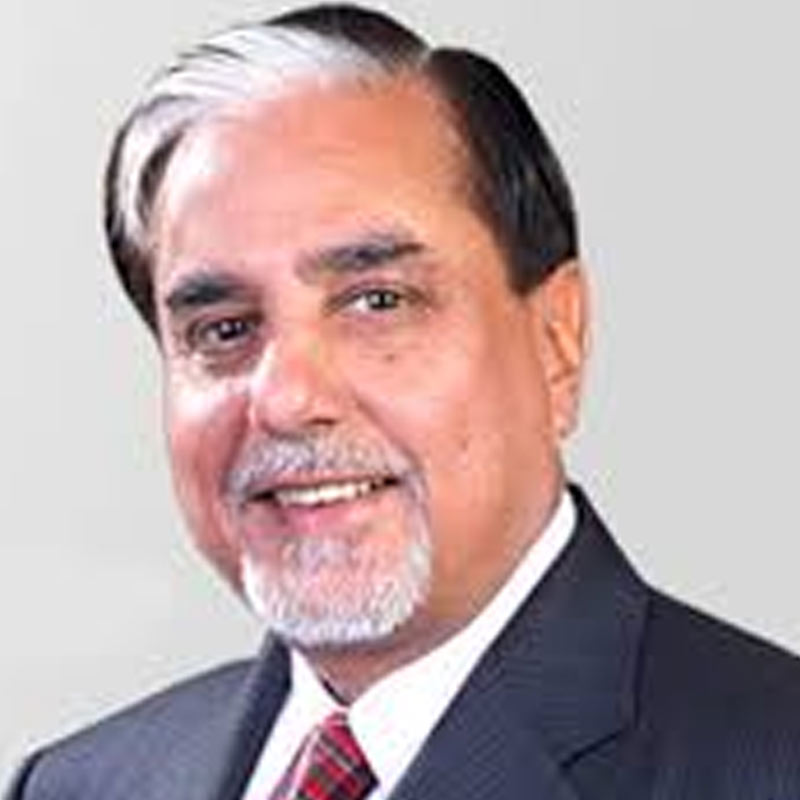
    MUMBAI: “It’s the end of TV, the way we know it.” That was Zee group chairman Subhash Chandra introducing his keynote at the plenary session today – Digital Entertainment Living.

    The thrust of Chandra’s presentation could be said to be the common strand running through most of the sessions on Day 2 of Ficci Frames 2006, which is that the future was the consumption of content would be according to individual requirements and on the go as it were – how you want it, when you want it, where you want it.

    Chandra spoke of a five point agenda that his company had laid out as its course into the digital future.

    These included the need for segmentation of content; innovation in pricing; experimentating with new content ideas; seamless delivery across various platforms; and fourthly, essentially extending the preceding points, the absolute need to prepare for the future if loyalty of consumers was to be preserved.

    Said Chandra, “We have to segment our content. Segmentation will become very important. Content needs to be individualized, personalized.” He also pointed to the possibility that it would not just be programming that was customised but advertising as well. Advertising directed at individuals rather than a mass audience will become possible, the Zee head honcho averred.

    Expanding on the point of seamless delivery across platforms, Chandra made a strong case for the need to move towards opens standards rather than focusing on proprietary control.

    Chandra warned that it was essential that broadcasters “prepare for the future otherwise consumers will desert us.”

    Chandra said that the huge effort that was currently on to digitise Zee’s entire content library (1,500 movies, 50,000 hours of TV) in partnership with IBM was part of that effort. Chandra estimated that it would be another year before the process was complete.

    Another key initiative in that direction, announced earlier in the day in partnership with chip maker Intel, is a separate company Digital Media Convergence Ltd (DMCL) to be headed by Zee Telefilms president Abhijit Saxena, Chandra said. DMCL’s brief was to acquire, digitize and make available on various platforms, a wide variety of content, he pointed out.

    Speaking to Indiantelevision.com on the sidelines of another session, Saxena said that DMCL would become fully functional only after Zee’s content offering had been completely digitised. The interim period (one year) would be spent in acquiring content from a variety of vendors across the globe, Saxena said.

  • Zee looks for a winner in Rs 110 mn ‘Business Baazigar’

    Zee looks for a winner in Rs 110 mn ‘Business Baazigar’

    NEW DELHI: Now Mumbai denizens need not worry about cleaning their countless shoes at home or go looking for the friendly neighbourhood cobbler. A shoe laundry, like a dry cleaner’s shop for clothes, will take care of all the shoe needs.

    The shoe laundry is a dream come true for a young woman entrepreneur who was in need of funding the idea. Zee Telefilms came to her help with the initial money. Though the girl and her idea failed to make it to the last round of Zee TV’s soon-to-start reality show Business Baazigar, she is busy shaping her business venture.

    “The shoe laundry is already operational for about four months and the young woman will be coming back to us with a progress report,” Zee TV business head Punit Goenka told Indiantelevision.com on the sidelines of a press conference here, to announce the launch of Business Baazigar where the underlying theme is: “idea lao, paise le jao” (bring an idea and get funded).

    And, that’s the magic of the reality show, as Zee funds innovative ideas of people who have been eliminated during the show.

    Business Baazigar is a journey of 250 participants who will eventually be scaled down to 50 finalists. Among them, the final 20 will be put through gruelling tasks that will test their business acumen and team spirit.

    After every task, the jury, comprising Zee Telefilms non-executive chairman Subhash Chandra, himself a rags-to-riches success story, will decide the fate of the contestants. Eventually, one participant will emerge triumphant and will have Zee Telefilms funding his/her business venture.

    An expensive show with high-decibel marketing

    Business Baazigar is also one of Zee TV’s costliest shows to be mounted. At Rs 110 million, this 25 FPS-produced 24-episode programme attempts to what other game shows have failed to do for Zee Telefilms’ flagship channel, Zee TV — deliver ratings and viewer ship.

    “This show promises to entertain the audience with its intense reality drama and unique concept. We have given our best and hope the audience likes it,” said Goenka, the eldest son of Chandra.

    While admitting that an ongoing game show Kam Ya Zyada failed to live up to expectations, Goenka added that it’s Zee TV’s endeavour to give the audience what it likes, but “sometimes ideas click, while at other times they don’t.”

    “So, in deference to viewers’ preferences, we take off programmes that fail to tickle the viewers,” he added, hinting that Kam Ya Zyada will be phased out after its present run.

    However, the network is leaving very few stones unturned in promoting Business Baazigar, which is also hopeful of a second season.

    Apart from the traditional cross channel promotions on various Zee channels, which are likely to attract a diverse profile of audience, the new reality show will be promoted via outdoor, print and some innovative initiatives on the Internet. Cellular phones, too, would be extensively used for promotion.

    “We do have some new marketing initiatives (costing a packet) lined up that’ll unfold from Thursday. The aim is to arouse curiosity amongst viewers of all hues,” Goenka said.

    Concurring with Goenka was 25 FPS managing director Alankar Jain who said that marketing is an important tool to write a successful TV show. Especially one like Business Baazigar as the ramp up time is small.

    “We are hoping that the show connects with the people in its early episodes only as the whole series is time bound, ending with the 24th episode,” Jain added.

    Business Baazigar debuts on 31 March, airing one-hour episodes on Fridays and Saturdays at 8 pm.

    Apart from Chandra, the jury consists of Passionfunds CEO Mahesh Murthy and Prof. Anil Gupta of Indian Institute of Management. Cyrus Sahukar will host the series.


  • ESPN denies plans for sports bars

    ESPN denies plans for sports bars

    ESPN-Star Sports has denied that it has any immediate plans to launch sports bars and theme restaurants in India. An ESPN-Star TV spokesperson said that the company was examining ways to move forward in the Indian market. “We have sports bars in other parts of the world,” he said. “But we have no plans of replicating the same model immediately he said. Everything is in the scouting for opportunities phase.”

    A local newspaper has reported that ESPN would be launching sports bars and theme restaurants.