Category: TV Channels

  • Nick News explores the perils, pitfalls and pratfalls of adolescence

    MUMBAI: Who can forget braces, sweaty palms and awkward school dances? Adolescence? Arrrgh! Just as tweens head into a new school year, the next installment of Nick News with Linda Ellerbee: The Worst Years of My Life? Surviving Middle School, on Nickelodeon, delves into all the slings and arrows of Middle School.
     
    Ellerbee listens to kids, and some Middle School survivors including Comedy Central‘s Jon Stewart, Cynthia Nixon (Sex and the City), Megan Mullally (Will & Grace), Taylor Hicks (American Idol), skateboarding star Tony Hawk, and Grammy Award-winning singers Jewel and Nelly Furtado, about that speed bump on the way to adulthood called Middle School, and what it takes to live through it.


    “Whether you call it Middle School or Junior High, it‘s more than a place. It‘s a time, a sometimes hilarious, often painful and always challenging time. You‘re too young to be a grownup but you‘re not quite a kid anymore. In this episode, we give kids on the Middle School frontline, and some well-known ex-kids, an opportunity to speak out, to remind all kids that when it comes to Middle School, you‘re not crazy, you‘re not alone, and this too shall pass,” said Ellerbee.


    Nick News discusses issues that kids encounter during this time: the fluctuating hormones; the realities of puberty (What is it like to be you in a brand new package?); the social insecurities (I must fit in somewhere!); the necessity of keeping up with increasingly harder school work; the pitfalls of renegotiating the relationship with your parents (They used to be so normal. When did they change?); and facing the difficult choices that no one else can make for you. The simple truth is: you‘re too young for this and too old for that.


    Nick News also conducted an online poll on nicknews.com, in which kids were given the opportunity to share what they think is the hardest part of adolescence. For a majority of kids physical changes are the most difficult part of growing up with 19 per cent of respondents listing body changes as the hardest part of adolescence, followed by school work (14 per cent), fitting in (12 per cent) and romance (12 per cent). Other adolescent hardships making the list were feeling embarrassed a lot (10 per cent), peer pressure (nine per cent), parents (seven per cent), pressure to succeed (seven per cent), being comfortable with themselves (six per cent) and temptation to take risks (three per cent).

  • Delhiite Irfan Alam crowned Zee’s ‘Business Baazigar’

    Delhiite Irfan Alam crowned Zee’s ‘Business Baazigar’

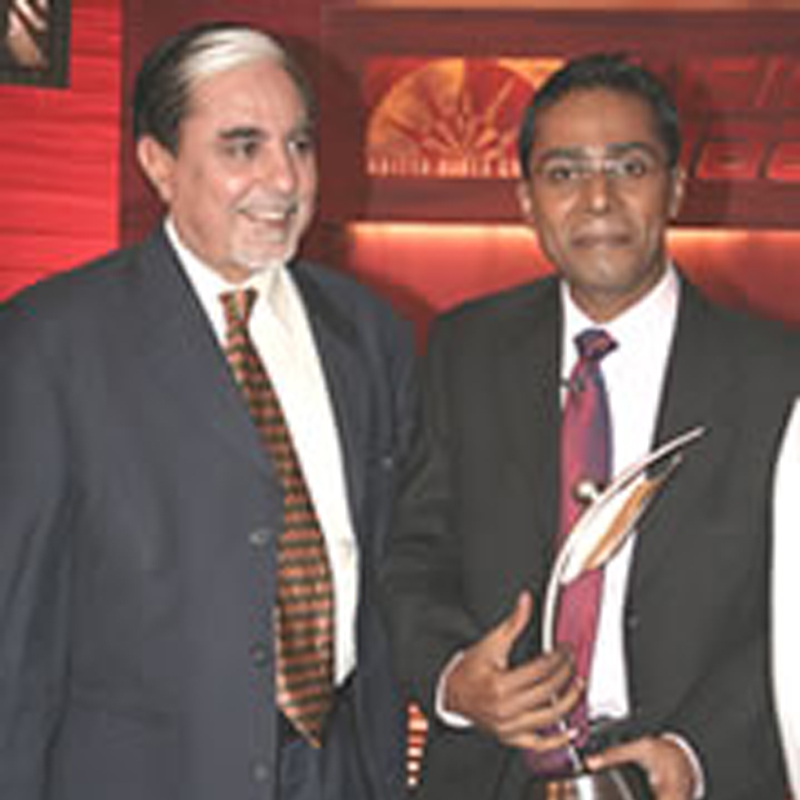
    MUMBAI: “Ali, your worst fears have come true. The dark horse seems to have taken away the top prize,” said Zee Telefilms chairman Subhash Chandra giving his characteristic side glance to Ali Ismail, who was till then a hot favourite for the Business Baazigar title.

    Then, moving on, he dropped the bombshell with his final declaration. “Irfan Alam from Delhi is the Business Baazigar.”

    At a colourful ceremony held at the Taj Presidency, in south Mumbai’s swank Cuffe Parade area, Zee Telefilms thus came up with the winner of the country’s first ever business reality show, Business Baazigar. After more than two hours of intense drama, the reversal of fortunes saw Irfan Alam, the wild card entrant into the finals, stealing the show. Irfan snatched the top prize from the other two finalists Puneet from Chandigarh and Ali Ismail from Mumbai in a closely fought contest marked that road an emotional rollercoaster.

    The jury, in a surprising turn of events, offered one of the Mini Baazigar winners – Irfan Alam, the opportunity to compete for the grand Business Baazigar title and win full funding for his idea. The condition for this entry was that he would forfeit his Mini Baazigar winnings of Rs 2 million. As they say, fortune favours the brave (in this case the one with the most self belief). Irfan took the chance and emerged the winner.

    The dramatic decision of the jury to name Irfan as the Business Baazigar came as a complete surprise to the audience who had voted for Puneet (47 per cent) and Ali (30 per cent) over Irfan (23 per cent).

    According to an official Zee spokesperson, Zee will provide the full funding to the business idea put forth by Irfan. Meanwhile, Puneet and Ali will be receiving partial funding. The finale episode will be telecast on 12 August at 8 pm.

    Irfan, who was earlier voted out of the show, had gone on to win a Mini Baazigar project – which Zee offered to the best ousted contestants – with his idea to systematise the working of cycle rickshaws in Delhi by bringing them under one roof, raise their standards of living and simultaneously provide the public a better, more efficient transport system. He plans to generate revenues from providing value added services and using the rickshaws as mobile advertising media. His innovative project and the confidence he displayed to score an initial victory with the project impressed the judges and got him a wild card entry into the finals.
    Speaking on the culmination of his pet project, Chandra revealed Zee’s plans to launch a second season of Business Baazigar. “We want to make the show even better in our next attempt. This time we received about 200,000 entries and in the next edition we expect about million entries. We want suggestions from all the business leaders to make the show even more vibrant in our next edition.”

    Felicitating the winners on behalf of sponsor Aditya Birla Group, Rajashree Birla pointed out that the show fitted very well with Aditya Birla Group’s vision. “Business Baazigar really went along with our social vision of reaching out to people and tapping their entrepreneurial potential,” said Birla.

    Zee TV business head Punit Goenka said, “We are glad to announce India’s first Business Baazigar, after several months of hard work undergoing gruelling tasks. Irfan has proved worthy to be Business Baazigar. This show is an exceptional one that has intense reality drama, besides the unique concept. Business Baazigar again attempts to bring life to a commendable business idea. We are glad to have Aditya Birla Group as our partners in this noble venture of supporting a deserving business idea.”

    The grand event had as its guest of honour Union minister of commerce & industry Kamal Nath. The event was attended by the who’s who from Mumbai’s business community consisting of names such as aviation minister Prafful Patel, former I&B minister Ravishankar Prasad, Vijaypath Singhania, Mukul Kasliwal, Kishore Biyani, Shashi Ruia, Naresh Goel and Ramesh Agarwal. Among the media bigwigs present were Madison Communications CMD Sam Balsara, Lodestar Universe CEO Shashi Sinha, FCB Ulka MD Anil Kapoor and Euro RSCG CEO Ishaan Raina.

  • ‘Barnyard’ uses Sun Technology for computer-generated animation

    ‘Barnyard’ uses Sun Technology for computer-generated animation

    MUMBAI: Nickelodeon Movies’ computer-animated movie Barnyard, distributed by Paramount Pictures, features complex computer-generated animation that required unique and creative solutions from Sun Microsystems Inc.

    The film is Nickelodeon’s most challenging animated film to date and features vast landscapes with vivid details, realistic shading and lighting, and scenes that incorporate more than 200 characters that move with surprising fluidity.

    Leveraging a rendering farm based on Sun Fire servers and Sun StorageTek data management systems, Barnyard’s artists were able to quickly identify incomplete scenes, make necessary edits, and manage finished shots. The complex scenes were executed using 64-bit computing solutions from Sun that revolutionised how computer-generated imagery (CGI) is created and managed.

    “With a state-of-the-art computer-animated movie like Barnyard, a seamless interaction between the technology and artist is essential to make the characters come to life. Sun raised the bar by providing the only solutions that met this challenge and exceeded business expectations,” said Barnyard executive producer Aaron Parry.

    “We were thrilled that Sun was able to come up with a solution for us. Steve Oedekerk had some very specific and complex ideas that he wanted to see up on the screen, and Sun was integral in helping Steve and his team realize them,” said Barnyard executive producer Julia Pistor.

    Sun provided a 620-node server farm and storage solution that was crucial in the completion of the complex animation required. The solution is based on Sun Fire x64 enterprise servers powered by AMD Opteron processors with Direct Connect Architecture, and 100-terabyte Sun StorageTek 3510 and 3511 FC arrays and a Sun StorageTek tape library for online storage and backup of shot files and other movie assets.

    Sun Customer Ready Systems helped migrate the production from its previous 32-bit render farm, and then configured, assembled and tested the new Sun render farm for the production. In addition, Sun provided continuous on-site consultation and support to the Barnyard production team.

    Barnyard’s producers believe their Sun solution may represent the first time a studio has relied entirely upon 64-bit technology to render a full-length animated movie.

    “Animated movies are evolving rapidly, demanding more and more lifelike characters and scenes that are challenging artists, directors and the technology industry to create better CGI in faster and easier ways. Sun is excited to meet these challenges with our expanded product line and range of service offerings,” said Sun’s x64 product line business driver Pradeep Parmar.

  • Remote Access Solution is imperative for disaster recovery

    If a disaster recovery plan does not include remote access, “business as usual” is virtually impossible, warns business continuity expert Tim Clark, partner with The FactPoint Group in a new white paper on the subject. The goal in disaster recovery is to keep core business functions operating under all circumstances. For this reason, says Clark, remote access is key to disaster recovery, because typical business disruptions keep employees and other users away from the office and the local area network (LAN).

    “The inability to operate normally or provide access to critical resources can hurt revenue, damage a company’s reputation, or mar the corporate brand,” says Clark. “This is why it’s so important for enterprises to anticipate and plan for potential disasters, and why responsibility for disaster planning requires the involvement and commitment of both technology and business sides of an organization.”

    According to the paper, one technology has emerged as the leading solution for remote access: SSL VPNs, because of their inherent security, granular access controls and ease of use. With an SSL VPN, all users can access network resources from any Web-enabled system. The specific benefits of an SSL VPN for disaster recovery outlined in the white paper are:

    · SSL VPNs are clientless
    · They work from any Internet browser
    · They operate at the application layer (not the network layer)
    · SSL VPNs enable fine-grained access controls
    · They have strong end point security

    ·SSL VPNs provide strong encryption

    To meet the requirements of a disaster recovery plan, the SSL VPN must also be able to scale quickly and easily, advises Clark. With a disaster, whether something as critical as the avian flu or something as basic as a snow storm, the number of remote users can instantly spike by the hundreds or thousands. The solution should have adequate capacity plus failover capability to ensure it can handle the increased traffic and have no downtime.

    SSL VPN market leaders, such as Aventail, are making it easier for companies to prepare for such spikes. Earlier this month, Aventail launched its Spike License Pack, which works like an insurance policy toward any future eventuality requiring an instant increase in remote users. In addition to being an ideal part of a company’s overall disaster recovery plan, the Spike License also works for companies that experience seasonal spikes, such as accounting firms during tax season or retailers during the holidays.
    To access a complimentary copy of the white paper, “The Remote Access Imperative in Disaster Recovery” by Tim Clark of the FactPoint Group, go to: www.aventail.com/disasterrecovery.

    About The FactPoint Group

    The FactPoint Group ( www.factpoint.com) is a boutique market research and consulting firm in Silicon Valley specializing in the early adoption of new technologies. The FactPoint Group has been producing world class research, analysis, and consulting since 1993 and continues to help enterprise software vendors and enterprise customers sell and use new technology solutions. Tim Clark is co-founder and partner at FactPoint. Recently, his research has focused on disaster recovery, utility computing, network security, sensor networks, open-source licensing, enterprise blogs and wikis, and Web services. Previously, Clark was senior analyst with Jupiter Media Metrix and Net Market Makers. Before becoming an analyst, Tim was a reporter and editor for 24 years, working as senior editor and columnist for CNET’s News.com, where he covered e-commerce and Internet security.

    About Aventail

    Aventail is the best-of-breed remote-access company. Aventail delivered the first SSL VPN solution in 1997 and today is a market leader, delivering the easiest to use and control remote-access solution. Aventail Smart SSL VPN appliances provide users with transparent, clientless access to more applications from more devices via any network environment. For network managers, Aventail delivers a single secure access gateway for all users, internal and external, to all network resources with complete security. With more than two million end users around the globe, Aventail is the SSL VPN of choice among mid to large-sized organizations worldwide, including AT&T, the Environmental Protection Agency (EPA), Chicago Housing Authority, DuPont, Radiology Ltd, James Richardson International, Organization for Economic Cooperation and Development (OECD), Overlake Hospital, IBM Global Services, and hundreds more. For more information, go to www.aventail.com.

  • ‘Our aim is to give history a more broad based appeal, which is why we are focussing on entertainment’ : Nikhil Mirchandani – The History Channel India MD

    ‘Our aim is to give history a more broad based appeal, which is why we are focussing on entertainment’ : Nikhil Mirchandani – The History Channel India MD

    Live the Story! With the aim of competing better in the English entertainment space The History Channel is pursuing a new strategic direction in India. The aim is to spread the appeal of the channel to more viewers and increase the stickiness level through a variety of shows. These include television movies, documentaries, mini series and long running series.


    Indiantelevision.com’s Ashwin Pinto caught up with The History Channel India MD Nikhil Mirchandani to find out about the plans and what lies in store.


    Excerpts:

    Could you talk about The History Channel’s new direction?

    I would like to point out that we have not changed our positioning. We own the theme of history and will continue to do so. Our aim is to give history a more broad based appeal, which is why we are focussing on entertainment. Over the last three years we did a few things that set the stage for what we are trying to do today.


    We established our positioning of history that no other channel has. History is our middle name so to speak.


    In a scenario of over 300 channels distribution is very important. We are the 16th best distributed channel in the country. We managed to do that since we are a part of the Star family.


    We established a loyal viewer and advertiser base. We have also marketed ourselves well like getting Diana Hayden to host Biography. Moving towards entertainment is the next logical stage of evolution in our product lifecycle. Our aim is to attract more viewers and advertisers.

    In what way has the programming strategy been embellished?

    We begin our primetime with factual content at 8 pm. Then there are drama series at 9 pm There will be classic product from our library at 10 pm. At 11 pm there will be a thriller band. On the weekends you have a television movie on Friday at 9 pm For example Hitler The Rise of Evil.


    There will also be a combination of fact and fiction. For instance you could see a biography of Marilyn Monroe followed by a drama or a television movie. We are also targeting women in the afternoon with programming that we are confident will appeal to them.


    The primetime moves from a youngish factual content to drama to thriller. That evolution of our programming blocks is logical.

    According to research how do viewers perceive the channel?

    Viewers perceive us as a well respected credible authority on the subject of history. They have constantly expected that of us and we will not dilute that offering. They find us interesting as we deal with personalities like Hitler, Helen of Troy.


    The great thing about the History Channel is that it is not restricted by formats. That is not the case with a movie channel that focuses on blockbusters. If they deviate one immediately notices that. Our only concern is whether the story is historically relevant. I would say that English movie channels are undifferentiated from each other.


    We have a wide basket from the lifestyle genre, to thrillers to even perhaps stories on 9/11. It will be in terms of formats. By this I mean documentaries, movies, series, one off biopics, long series. The topics have also grown. We will also showcase concerts like Woodstock. History is never going to be the same again and we take advantage of that.

    ‘The new stories we are telling are universal. Also with our dubbing initiative in Hindi we see the appeal spreading beyond the current TG that we have

    Is it fair to say that the audience has become more sophisticated and demanding in the last three years as their exposure has grown?

    They have more options today. A time will come not far from today when they will have options to choose how they watch content whether it is through cable or IPTV or DTH. He will also have the choice of when he wants to watch it. The environment is also getting more sophisticated in terms of addressability.

    What is the viewer mix like on the channel?

    It is pretty equally distributed between male and female. While our core audience is male-female SEC A, B 25-44 Metros and mini Metros we do realise that there are viewers coming in from other demographics.


    The new stories we are telling are universal. Also with our dubbing initiative in Hindi we see the appeal spreading beyond the current TG that we have. Having said that our acquisition and scheduling strategy is governed by the SEC A,B TG in the Metro cities.

    To what extent have acquisition costs gone up?

    Significantly! The drama content are all epic big budget productions. We will leave no stone unturned.


    Over a million dollars has been invested in the acquisitions and also on dubbing and marketing activities.

    Could you talk about the strategy The History Channel has followed to debunk the theory that history is boring and staid?

    We have done focus groups to find out what our viewers think. We tested the entertainment initiative out. Previously they might think that history is boring and what they remember from school as in being a textbook, black and white.


    However when we shown them our content where history is brought to life then they want to immerse themselves in the story, the cultural setting. Production values also help a lot. One viewer even told us that our television movie Spartacus reminded him of Gladiator. Their minds open up and their imagination works overtime. It becomes a great story that they want to know more about which they may have only read about previously.

    Apart from Biography which of your other shows have proven to be popular?

    Conspiracy, Crusades, Secret Agents, Breaking Vegas were appreciated. The last one was about MIT graduates who cracked the codes in Vegas and made history. They were able to fool the casinos. That is what I mean by becoming more broad based. This is about the glamour of Las Vegas and not dull black and white.

    We think that we should be close to the English movies and English entertainment space. This is between 0.4 – 0.6% of the total C&S viewership

    What are the major property acquisitions that have been made in the past couple of months?

    There are many. There is Marilyn and Me. There is Nero, Augustus, Saint Peter. We have formed alliances with BBC, Disney, Granada, Universal, Warner Bros.

    There are two major media events coming up. One is the release of the film The Da Vinci Code. The other is the Fifa World Cup. Will you be showcasing any specials around these two events?

    In June you will see interstitial on the World Cup. June will a Rome month. We will debut the show Rome: Engineering an Empire. This is to coincide with the film release with Tom Hanks. For Fifa there will be short form programming like biographies.

    What targets have been set in terms of viewership?

    We think that we should be close to the English movies and English entertainment space. This is between 0.4 – 0.6 per cent of the total C&S viewership. Our dubbing will help here.

    Who does the dubbing for you?

    UTV does the work for us. Drama dubbing is more difficult than documentary. There is a lot more dialogue, emotion involved with fiction shows. The drama has to be put forth succinctly.


    When you dub emotions the talent involved needs to be far better We already offer a parallel feed. In the North and West regions we find that a lot of people prefer the Hindi feed. But down South they would rather have English.

    One challenge for the English entertainment genre is to create a 360-degree environment. This means interacting with the consumer through other mediums besides on air. What plans does The History Channel have in this regard?

    As I pointed out earlier when we exposed out content in our focus groups their minds opened up. This showed us that we need to constantly expose our content to viewers at different outlets. They need to sample us more. So we will use the Star network.


    Cinema halls will be important as an audio visual medium best brings out our offerings. We will also use Internet auditoriums. Here you can download links and watch clips, promos. This lets people touch and feel us. This will help us break the myth that history cannot be entertaining.


    We are looking to have a presence in malls as they have high footfalls. We also realise that History Channel aficionados also watch movies and read books. So we are trying to tap into them at bookstores and DVD rental libraries. We are looking to expose our content through them through posters.

    Is The History Channel taking a cue from the success NGC has had with its mission property in terms of on ground initiatives?

    We are exploring available opportunities. It wouldn’t be fair though to compare the History Channel to NGC as the content is different.

    Is The History Channel looking to localise? Kindly elaborate.

    We will shortly be airing a show on the Mughals. Next year is the 150th anniversary of the 1857 uprising. We will be doing something around that. We have in the past aired biographies on Gandhi. We constantly talk to production houses to do work. This will unfold over the next couple of years.

    Are you planning initiatives like maybe school and college contact programmes to create awareness about your product?

    This will depend on the show. Most of our audience as I mentioned earlier is in the 25-44 age bracket. If however there is a property that demands that we go to a school then we will.


    For example if ninth class students are reading about Mein Kamph or are studying about Hitler then it makes sense for us to show themHitler the Rise Of Evil. That will give them a perspective. As Mein Kamph was written by Hitler a complete perspective is not present. This I am sure will make the subject more exciting for them.

    On the advertising front how is The History Channel being sold to clients? What targets have been set?

    We are looking to double our revenues in the next fiscal. We have a transparent rate card. We are looking to allow the advertiser to pick and choose the content he wants to be associated with. This marks a change in how television channels are sold.


    It is not clubbed with NGC. The History Channel has a separate dedicated team and they have their own set of targets. Nokia, L’Oreal, Samsung are some of our major clients. We have received positive feedback from them on our new initiatives.

  • Isro to launch Insat-4C replacement by July 2007

    Isro to launch Insat-4C replacement by July 2007

    MUMBAI: Soon after the failure of the GSLV-F02 launch rocket carrying the Insat-4C communication satellite, the Indian Space Research Organisation (Isro) has decided to act fast to meet the growing need for Ku-band transponders from the direct-to-home (DTH) sector.

    Isro will be replacing Insat-4C, where Kalanithi Maran’s Sun Direct had booked seven high-power Ku-band transponders, with the launch of an identical satellite by July 2007. The satellite, Insat-4C(R), will be launched at the Satish Dhawan Space Centre (SDSC) SHAR, Sriharikota.

    Maran will have the option to take transponder space on that satellite for his DTH venture. But if he decides to launch the service earlier, Isro will make provisions on an alternate satellite which could be foreign or Indian. Insat-4B, which is meant for Doordarshan’s DTH service DD Direct Plus, is being launched early next year.

    “We have the flexibility to accommodate Sun. If there is an early requirement, we can give them space on an Indian or foreign satellite,” says Isro contract management and legal services director SB Iyer. For DTH providers who want to operate from foreign satellites, Isro will have to provide the approval and lease it out for them.

    Will Insat-4C(R) disturb the scheduling of Isro’s other satellite launches? “We plan to launch Insat-4C(R) by July 2007 from Sriharikota. It will have the same number of transponders as Insat-4C. The other satellite launches will be on schedule,” says Iyer.

    Of the 12 Ku-band transponders Insat-4C would have carried, Sun TV had booked six for DTH and one for DSNG (digital satellite news gathering). While Isro plans to launch Insat-4D in 2006-07, Insat-4E is expected to go up by 2007-08.

    Isro had earlier said that the failure of Insat-4C was “a brief setback” which it would correct by recasting its programmes to accelerate the Ku-band capacity growth.

  • Owner’s Emvie, Radio One’s Pride

    Radio One emerges as the Ideas network in the FM space

    Radio One FM92.5 is making a habit of winning its advertisers awards for creatively executed ideas on its radio station. In the recently concluded EMVIES, Radio One FM 92.5 was the hero in the media innovation (radio) category with two of the nominated brands for creatively using radio, being nominated for their work on Radio One. One of them going on to win the EMVIES Gold. Madison was nominated for Saffola for the Jaggu’s Mission 10k, and Mindshare won the gold for the Pepsodent campaign on Radio One.
    “The popularity of Jaggu as an overweight RJ and his intention to get in shape was the starting point of our thought process. The idea was for the brand to partner him in living a healthy life, i.e. the Saffola way of life. The uniqueness of the idea was further enhanced by it being the first ever reality show on radio. The challenge was to convert this idea into memorable radio execution. This execution was driven to excellence because of healthy partnership between Madison, client and Radio One FM 92.5” Says R.Chandraseker Category Head, Marico.
    Interestingly, the Mission 10K was also nominated for the Best Radio Innovation at the Cannes and was the only shortlisted entry from India. There were only 4 shortlisted entries worldwide.
    “In the span of the activity we had listeners so cued in on the weight loss program of Jaggu (our breakfast host) that some went on a diet along with Jaggu and the others were recommending options of diets for him to achieve Mission 10k. Saffola on their part, provided scientific and health monitoring tips to ensure he does achieve it. A simple idea that catches the eyes of everyone only because it’s a larger than life brand integration” says Shariq Patel Vice President Operations, Radio One.


    “The Pepsodent Campaign started with Pepsodent talking about “Bhoot Police” where kids were taking part in a contest to become the Bhoot Police. The campaign got about 12 lakh kids pledging that they will brush their teeth before going to bed. The brand team then wanted to amplify this aspect on radio since the case in point was “to let the world know that 12 lakh kids have taken a pledge to brush at night”. The idea was to basically convey to the consumers that Pepsodent has answered Mothers’ prayers. With Radio One the prayer jingle brief was given, which they willingly agreed to take up as a programme promo for The Mid Day Show. The script and the promo was recorded by GO (now Radio One) and it went on to become so popular that even other radio stations started talking about it” Says Atit Mehta Business Director, Mindshare.


    Incidentally last year too, Go 92.5 FM (now Radio One) had won the best media innovation for Close- up for the programme spot with Jaggu and Tarana, following the earlier EMVIE GOLD win for Scorpio’s launch only on the station. This launch was carried out by a cavalcade, which traveled in various parts of the city and was covered by on-air exclusively.


    “We’re happy to win nominations and awards for our client’s campaigns on our station. It helps to strengthen our position as the only network that gives solutions based on strong ideas and an understanding how this medium works beyond the 30 second spot” says Rajesh Tahil, Chief Executive, Radio One.

  • W3C to hold summit on internationalisation of web

    W3C to hold summit on internationalisation of web

    BANGALORE: The World Wide Web Consortium (W3C) under the aegis of the Indian ministry of communications and IT will be holding a summit on the internationalisation of the web.

    The main objective of the summit is to discuss requirements for representing Indian languages correctly in various web standards developed by W3C under the internationalisation activity and come up with feedback to incorporate the recommendations.

    This summit is being organised to take the W3C initiatives further along with the Manufacturers’ Association for Information Technology (MAIT) – the body representing the interest of IT manufacturing in India from 24 – 25 August in Bangalore.

    W3C International’s Richard Ishida will deliver the keynote address. Several computing experts, academicians and developers are expected to participate in the event. Invitations to participate have also been extended to all State IT Secretaries.

    Cisco Systems India will be the Platinum Sponsor for the event targeted at key influencers such as CIOs, CTOs, business decision makers, researchers, technologists and developers from the institutions and technology-driven businesses.

    The W3C is a vendor-neutral, non-profit international organisation, where its members, staff and invited experts work together to design technologies to ensure that the web will continue to thrive in the face of a growing diversity of people, hardware and software. The mission of W3C is to help the web reach its maximum potential.

  • India-West Indies Tests live on Ten Sports

    India-West Indies Tests live on Ten Sports

    MUMBAI, June 1: Following the shocking 4-1 defeat in the One-Day International series, there is immense interest in how India will now tackle a resurgent West Indies in the four-Test series.

    The much-anticipated Test series starts with the first Test in Antigua on Friday, 2nd June. Ten Sports, the world’s number one sports channel for South Asia, will bring to all cricket lovers ball-by-ball live coverage of the series and more.

    A live telecast of the first three Test matches will start at 7:30 pm IST, while the final Test, to be played in Jamaica from June 30 to July 4, will begin an hour later. The second and third Test will be played at St. Lucia (June 10-14) and St. Kitts (June 22-26). In addition to the detailed coverage of the series, Ten Sports will also telecast its critically-acclaimed studio show, ‘Straight Drive’. Hosted by Sanjay Manjrekar, the other guests who will be invited to the studio during the Test series are veteran cricketers Ian Chappel, Desmond Haynes, Javagal Srinath, Ian Thomson and Arun Lal.

    Cricket fans will be able to feast their eyes on The ‘Straight Drive’ show, considered the finest ever analysis show which will be shown only during the pre-match build-up (for 90 minutes). This will also be shown during the lunch break, and will feature an informative series on the all-time greats of West Indian players as well as ‘Magical Moments’ from the India-West Indies cricket history. featured in this series are Sir Gary Sobers

    Among the great West Indians who have been, the three Ws (Clyde Walcott, Sir Everton Weekes, Frank Worrell), the Fearsome Foursome of Michael Holding, Joel Garner, Andy Roberts and Malcolm Marshal, Sir Vivian Richards, and the pace duo of Charlie Griffith and Wesley Hall. These will be anecdotal in nature, featuring several interviews from the players themselves and their contemporaries, as well as restored archival footage.


    Magical Moments of the Indo-West Indies cricket history captures edge-of-seat matches like the 1983 World Cup final, the Indian heartbreak at Bridgetown in 1997 (when they failed to chase 120), Sunil Gavaskar’s exploits in 1971 and India’s 1971 Test series victory. This is India’s ninth tour to West Indies, and they are hoping to repeat the magic of the history 1-0 win in 1971.

    SCHEDULE OF TEST MATCHES

    June 2-6: 1st Test (Antigua); June 10-14: 2nd Test (St. Lucia); June 22-26: 3rd Test (St Kitts); June 30-July 4: 4th Test (Jamaica)

    ABOUT TEN SPORTS: Only launched in April 2002, Ten Sports is watched by more viewers than any other sports channel in the Sub-continent. Ten Sports is available in over 48 million households via cable and satellite networks across the world. In just a short span of three years, Ten Sports has also become the world’s biggest producers of cricket. The Channel broadcasts cricket from Sharjah, the West Indies, Pakistan, Sri Lanka and Morocco throughout the Indian sub-continent and Asia, as well as in Europe and the Middle East Also, Ten Sports has broadcast cricket from India, the World Cup 2003 and the ICC Champions Trophy 2004 in certain territories.

  • Ten Sports to live telecast Brazil vs Switzerland

    Ten Sports to live telecast Brazil vs Switzerland

    MUMBAI: They may no longer be World Champions but no one will argue that Brazil are still the most exciting team to watch in the World and Ten Sports has live coverage of their friendly match against Switzerland.

    Ronaldinho, Kaka, Oliveira and Gilberto along with the rest of Brazil’s star studded squad will all be in action as they attempt to break down one of Europe’s best defensive sides.

    Since their loss to France in the World Cup Brazil have gone on an unbeaten run consisting of three wins and one draw and still remain the top ranked team in the world.

    Switzerland have also played four matches since their exit from the World Cup, also completing three victories, all with clean sheets, but losing their last game 2-1 to neighbours Austria.

    The match will be a battle of styles with the attractive attacking flare of the Brazilians looking to breaking down the well regimented Swiss team.

    The action gets underway live on Ten Sports at 12:45 am on Wednesday.