Category: TV Channels

  • Animax to air ‘Inu Yasha: ‘The Castle beyond the looking glass’ on 2 September

    Animax to air ‘Inu Yasha: ‘The Castle beyond the looking glass’ on 2 September

    MUMBAI: By popular demand the blockbuster animation movie Inu Yasha: The Castle beyond the looking glass is back on Animax’s Saturday Night movie band Ani-Flix. The movie will air on 2 September at 7 pm.

    The Castle beyond the looking glass commences with Naraku’s defeat while Inu-Yasha and his friends finally get on with their lives. While Inu-Yasha and Shippo continue their search for Shikon shards; Kagome goes back to school when not helping Inu-Yasha out; Miroku visits Mushin back in his village, and Sango goes off travelling with her brother, informs an official release.

    However, this peace does not last too long as another enemy far more dangerous than Naraku emerges. Kaguya, the self-proclaimed ‘Princess of the Heavens’, is freed from the magical mirror imprisoning her, and as she slowly regains her powers, it is only a matter of time before she stops the flow of time, and plunge the world into an eternal night of the full moon.

    Once again, Inu-Yasha, along with Kagome and the others, must come together to fight this new threat. But can they really defeat an enemy who is able to control time itself? And will Inu-Yasha stand a chance against Kaguya when her spells rob him of his humanity? These queries will be answered on Saurday night.

  • HTMT consolidates media subsidiaries, spins off IT/ITES biz

    HTMT consolidates media subsidiaries, spins off IT/ITES biz

    MUMBAI: Hinduja TMT Limited (HTMT) is unifying its media subsidiaries under one umbrella while spinning off its IT/ITES business into a separate entity. The demerger exercise is to bring independent focus to the two lines of activities, a senior company executive said.

    The residual HTMT (without IT/ITES) will house the media business and have a cash of $125 million. This will be used for new business initiatives, acquisitions and funding the expansion of the media and entertainment business.

    As part of the restructuring, In2Cable (subsidiary which is into broadband business) and InNetwork Entertainment (content) are being merged into IndusInd Media & Communications Ltd (cable TV distribution under Incablenet brand).

    “The parent company for the consolidated media business will be HTMT (an existing listed entity),” said HTMT global chief financial officer Yagnesh Sanghrajka. HTMT will have 60.5 per cent equity of the merged media and entertainment entity while Intel and Kudelski will hold 5 per cent.

    The demerged IT/ITES company, HTMT Technologies Ltd, is expected to list in February-March 2007. It will have a cash of $140 million. The funds will be used for acquisition opportunities overseas, particularly the US, as the company plans to add to its geographical reach and domain competencies.

    The IT/ITES business has a strong presence in Healthcare, Telecom, Consumer Electronics and BFSI segment. It is present in 5 different countries and has a successful track record in acquiring and integrating overseas ITES-BPO companies in the past two years. It is now looking for more such acquisitions in the USA-UK-Latin American markets to consolidate its position and expand inorganically as a leading global player in this industry.

    “Both the entities will have enough cash to pursue their independent expansion plans. The money is from the proceeds of the Hutchison Essar stake sale which fetched $450 million. Out of this, $150 million is for debt repayment while payout towards dividend will be around Rs 1.3 billion. The balance will remain with these two entities,” Sanghrajka said.

    Post restructuring, a shareholder of HTMT holding two equity shares of Rs 10 each would receive one equity share of Rs 10 in HTMT Technologies and one equity share of Rs 10 in HTMT.

    “The restructuring of the media business is from April. The demerger would be recorded from 1 October,” Sanghrajka said.

    The merger of media and entertainment is being done to converge video, voice and data services under one entity as a triple play provider. The merger will bring in operational efficiencies, provide sharper focus on the core business of media & entertainment, telecom and content distribution and ensure smooth implementation of conditional access system (CAS) across Indian cities, packaged with value added services, he added.

    The demerger of the IT/ITES business as well as the restructuring of the media and entertainment entities is subject to requisite statutory approvals and sanction of the Mumbai High Court.

    HTMT also announced a special dividend of Rs 20 per share on shares of Rs 10 each to the shareholders out of the proceeds of the Hutchison Essar sale.

  • Animax to air ‘Inu Yasha: ‘The Castle beyond the looking glass’ on 2 September


    MUMBAI: By popular demand the blockbuster animation movie Inu Yasha: The Castle beyond the looking glass is back on Animax‘s Saturday Night movie band Ani-Flix. The movie will air on 2 September at 7 pm.


    The Castle beyond the looking glass commences with Naraku‘s defeat while Inu-Yasha and his friends finally get on with their lives. While Inu-Yasha and Shippo continue their search for Shikon shards; Kagome goes back to school when not helping Inu-Yasha out; Miroku visits Mushin back in his village, and Sango goes off travelling with her brother, informs an official release.


    However, this peace does not last too long as another enemy far more dangerous than Naraku emerges. Kaguya, the self-proclaimed ‘Princess of the Heavens‘, is freed from the magical mirror imprisoning her, and as she slowly regains her powers, it is only a matter of time before she stops the flow of time, and plunge the world into an eternal night of the full moon.


    Once again, Inu-Yasha, along with Kagome and the others, must come together to fight this new threat. But can they really defeat an enemy who is able to control time itself? And will Inu-Yasha stand a chance against Kaguya when her spells rob him of his humanity? These queries will be answered on Saurday night.

  • Demands for channel price ceilings to be extended to non-CAS areas

    Demands for channel price ceilings to be extended to non-CAS areas

    NEW DELHI / MUMBAI: An immediate fallout of the Trai mandated Rs 5 for all pay channels in CAS areas is that demands have started surfacing from various quarters to regulate prices in non-CAS areas as well.

    “CAS should be beneficial for consumers and we hope that it is extended to other parts of the country soon, rather than being restricted to small areas of Kolkata, Mumbai and Delhi. This way, cable TV prices can be regulated,” Col SN Aggarwal, head of the Delhi-based consumer organization Voice, said today, while briefing newspersons.

    Aggarwal told Indiantelevision.com that prices of pay channels should be brought down in non-CAS areas as well since both “broadcasters and cable operators are fleecing consumers.”
    As per a Delhi High Court mandated understanding between the government and broadcast industry, CAS is scheduled to be rolled out in the south zones of Kolkata, Delhi and Mumbai from the midnight of 31 December 2006.

    Voice, which had been an active participant in the CAS debate, has also demanded that the government should make rules that force pay channels either to air programmes without any advertisement or become free to air.

    Aggarwal’s comments were echoed in a “non-CAS city” like Pune as well. Sudhakar Velankar, president of Grahak Panchayat, a Pune-based consumer forum, welcomed the Trai diktat saying, “We are in active negotiation with the MSOs to voluntarily adopt CAS for the consumers’ benefit.”

    Meanwhile, independent cable operators in non-CAS areas have slowly started realizing that low prices in notified areas would result in disparity in pricing, leading to discontent amongst general consumers.

    Cable Operators’ Federation of India president Roop Sharma today said that a meeting has been scheduled next week with Trai chairman Nripendra Misra, wherein a demand for extending the CAS regime to other areas would be made.

    “Prices in non-CAS areas too, need to be regulated and lowered and this would be our agenda at the meeting with the Trai chairperson,” says Sharma, adding that her organization would speak on the behalf of small cable operators in non-CAS areas.

    That independent cable ops in non-CAS areas are making demands for pay channels to lower their prices is evident from what several broadcasters said today.

    “I have got several calls from cable operators saying that we should shed our channel prices to bring them at par with Trai stated prices for CAS areas,” a broadcaster, controlling several pay entertainment channels, said.

    In Mumbai, Cable Operators & Distributors Association (Coda) president Ganesh Naidu says he wants CAS to be pushed not just in Mumbai but also across India. According to Naidu, “The new rates issued by Trai should be awarded to all consumers, rather than just restricting it only to certain sections of society. Unlike in the past, we are fully in support of CAS now that there is à la carte pricing of pay channels (something the cable fraternity has long been asking for).”

    Simultaneously, a divided broadcasting community is trying to come to terms with the “ridiculously low” prices.

    A sports broadcaster admitted that amongst the several options there is also one that envisages non-supply of its channels in CAS areas if the government refuses to budge on the Rs 5 per subscriber for any ay channel diktat.

    “It’s a fundamental decision to be taken. There is certainly an option to let go of the CAS notified areas and suffer the loss rather than bear the ignominy of investing huge amounts of money in programming and getting paid peanuts as subscription, which would upset the whole business model,” the broadcaster said.

    Still, the regulator feels such threats could only be addressed when it finally becomes a reality. “Trai would address the issue (of blackout of pay channels in CAS areas) when it is brought to it. Till now, no broadcaster has told us that it will switch off channels in CAS areas,” a Trai official told Indiantelevision.com.

    There are valid reasons for the Trai official being so sanguine about the “blackout threat”. According to another broadcast executive Indiantelevision.com spoke to, non-supply of channels “is not an option”. The executive pointed out that the new downlink policy allowed the government enough powers to cancel the broadcast licence of anyone it deemed as being out of line.

    So what are the options before the broadcasters? There are only two, he says. “Accept the Trai diktat or else fight it out in court.” No prizes for guessing the course the channels will be taking.

  • Broadcasters look set to move court against pay channel price ceiling in CAS

    Broadcasters look set to move court against pay channel price ceiling in CAS

    MUMBAI / NEW DELHI: The broadcasters knew it was coming, but that in no way lessened their outrage over the CAS pricing broadside delivered by the sector regulator today. The next course of action will in all likelihood be to move the courts.

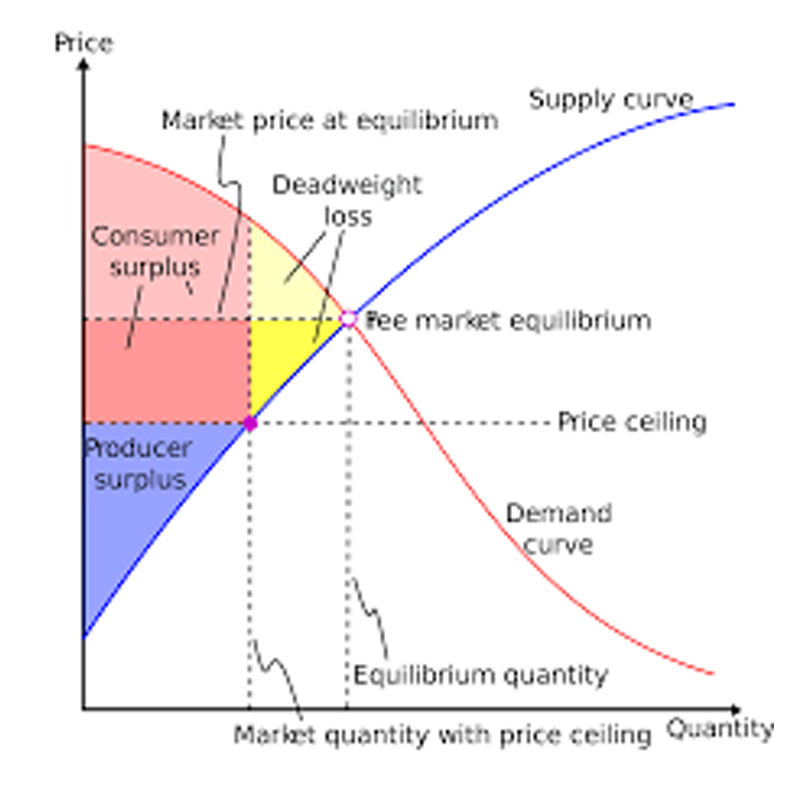
    In a move clearly aimed at “honouring” the pledge given by the government “that television viewers will have to pay less under a CAS regime”, the Telecom Regulatory Authority of India (Trai) today decreed a Rs 5 ceiling on pay channels.

    The broadcast regulator has fixed the price of free-to-air (FTA) channels in the basic tier at RS 77 (exclusive of taxes). The regulator, which oversees the broadcast and telecom sectors, has fixed the costing for pay channels whether new or existing at RS 5 making it mandatory to offer all pay channels on a la carte basis.

    RC Venkateish, ESPN India MD, did not mince his words while stating, “The pricing of pay channels by Trai are totally arbitrary and damaging for all industry stakeholders, including the consumer who might get low grade programming as investments in sports programming, like in entertainment, is high.

    “How can you expect broadcasters to put in money for procuring high-quality programming when the rates realised from the market will go down so much. It will have a dramatic effect on content quality.

    “Broadcasters are bound to seek legal opinion and take legal recourse.”

    That is obviously not how Trai chairman Nripendra Misra sees it. Misra said the prices that Trai had determined were very much in line with market forces. Additionally, Misra was quite categorical that this was “the final order on this subject.”

    In an interview to business channel CNBC TV18, Misra justified the regulator’s diktat by stating: “If you see the features of this policy announcement, the first thing to be appreciated is that there is only a maximum retail price; it does not fix the individual channel price. The second thing is that it does not fix the bouquet price. It also has not fixed the discounts for the bouquets. So everything has been left to the market forces except the maximum retail price ceiling, which has been determined by us.

    “To provide some stability to the revenues of the broadcasters, it has also been provided that the MRPs will apply only where the subscription is for a minimum period of four months.”

    Not surprisingly, the cable service providers are in tune with Misra on the matter. Says K Jayaraman, CEO of the multi-systems operator Hathway Cable and Datacom (in which Star India has a 26 per cent stake), “CAS is the best deal for consumers and the unwanted channels will go. As the fundamental thing in CAS is choice, that gets protected in this pricing structure,”

    That line of argument cut no ice with Arun Poddar, CEO, Zee Turner who said, “The rationale behind the pricing stumps us. If the regulator wants channels to come cheap, then the channels too would be forced to lessen expenditure on programming.

    “I don’t rule out broadcasters taking the regulator to court over the pricing issue.”

    The Indian Broadcasting Foundation, which represents the interests of broadcasters, is meanwhile scheduled to meet on Saturday to thrash out what legal recourse will be taken, as also to evolve a common strategy, senior channel executives tell Indiantelevision.com.

    The mood among cable operators was in stark contrast to that among the broadcasters. Cable Operators Federation of India president Roop Sharma, went so far as to say that Trai should have gone even lower on its pricing. “I think the prices of pay channels should have been even less at RS 3. It would have been better for the consumer then. Like in Pakistan, where each pay channel is priced at Re 1 or RS 2.

    “I feel it’s a win-win situation for everybody, including the broadcasters, who had accused cable operators of under-declaration.”

    “The comparison (with Pakistan) is ridiculous,” an incensed channel executive said. “The whole business model of broadcasting in Pakistan is based on piracy,” he pointed out.

    Commenting on the FTA channels’ pricing, Vikky Chowdhry, president of another cable operator faction NCTA, said, “The price of basic tier of free to air channels should be revisited. Still, at RS 77 (exclusive of taxes), 30 channels are manageable.

    Sameer Manchanda, joint MD, GBN, put the whole scenario in proper perspective when he said, “The prices looks low for sports and entertainment channels as programming investment is higher in these genres. The rationale of the regulator seems incomprehensible. At least some genres of channels could have been separated from the others.”

    Media stocks plunge on Trai’s pricing issue

    The market voted with its feet today on the news of the Trai’s price ceiling ruling with all media stocks sliding southwards. Media stocks showed a steeper fall than the the benchmark Sensex Index, which lost 24.87 points (0.21%), to settle at 11,699.05.

    According to a leading investment banker, “The directive issued by Trai will prove detrimental to broadcasters’ revenue kitty, especially for general and English entertainment channels and sports broadcasters.”

    Media scrips that fell today include Zee Telefilms, Sun TV, NDTV, TV18, TV Today and Sahara One Media and Entertainment.

    Zee Telefilms opened at RS 290 and closed the day at RS 265, down 8.6 per cent. Chennai based broadcaster Sun TV opened at RS 1,224 and ended at RS 1,199.
    NDTV opened at RS 200 and closed at RS 195, while TV18 opened at RS 647.15 and closed the day at RS 599. TV Today opened at RS 77 and closed at RS 76. Sahara One Media and Entertainment opened at RS 346 and closed at RS 339.


  • Pay channels fixed at Rs 5 each in CAS regime

    Pay channels fixed at Rs 5 each in CAS regime

    MUMBAI: The Telecom Regulatory Authority of India (Trai) today set a common price on all pay channels directing that under the conditional access system (CAS) regime they will cost Rs 5 per channel per subscriber per month (excluding taxes).

    The broadcast regulator has fixed the price of free-to-air (FTA) channels in the basic tier at Rs 77 (exclusive of taxes).
    The regulator, which oversees the broadcast and telecom sectors, has fixed the costing for pay channels whether new or existing at Rs 5 making it mandatory to offer all pay channels on a la carte basis.

    However, the broadcasters have been given the option to fix prices of individual pay channels, but within the prescribed ceiling. One of the salient features the regulator has highlighted is that the ‘minimum period of subscription of a pay channel has to be at least four months.

    This tariff will come into effect from 31 December 2006 in Mumbai, Delhi and Kolkata.
    Pertaining to the FTA channels, the price charged will be Rs 77 (exclusive of taxes) per subscriber/ month for a minimum of 30 channels. Additional FTA channels, if provided, also have to be accommodated within the above maximum amount.

    Trai has ensured adequate commercial interoperability, which means that a consumer can easily exit the scheme whenever desired. The regulatory has drawn two schemes for supply of set top boxes by the MSO / cable operators to compulsorily provide as part of a standard tariff package:

    a monthly rental of Rs 30 per digital set top box plus a refundable deposit of Rs 999 per box (refund will be made after deducting Rs 12.50 per month for use of the STB).

    a monthly rental 45 per digital set top box (Rs 23 for analogue set top box) with a refundable deposit of Rs 250 per box (refund will be made after deducting Rs 3 per month for use of the STB).

    The operators can offer alternative tariff packages in addition to the mandated standard tariff package, without any separate charges for installation, activation or reactivation, smart card viewing card and repair and maintenance (for five years) allowed. This salient aspect comes into force from 15 October 2006.

  • MTV Networks launches Viacom Brand Solutions through Xbox 360

    MTV Networks launches Viacom Brand Solutions through Xbox 360

    NEW DELHI: MTV India and Microsoft Entertainment & Devices Division have joined forces to develop unique programming content for Xbox 360, the online gaming service across its three channels – MTV, Vh1 and Nick.

    This tie-up also marks the launch of MTV Networks’ ‘Viacom Brand Solutions’ in India, which offers customized, integrated marketing solutions for brands to connect with their audiences in a manner that’s innovative and relevant, informs an official release.

    Whether its commercials, exclusively developed shows, infomercials or video-mods (to be introduced for the first time in India), gaming enthusiasts as well as those who’ve always wanted to learn more about gaming can look forward to some exciting action on air starting September first week.

    The new programming content on MTV Network channels developed specifically for Xbox 360 will include: a specially developed 105-second thematic spot – Porok (conceptualized, scripted and produced by MTV) to be on MTV.

    The release states that a special genre of programming makes its way onto Vh1 with Video Mods – an absolute treat for diehard gaming enthusiasts. Vh1 will launch a unique infomercial Gamers Grammar.

    Nick will include a special section Jimmy’s Techno Tips on one of its popular shows – Jimmy Neutron. Further, Nick will also launch vignettes on gaming Vox Pops and X Factor.

    And finally, as Microsoft launches Xbox on 23 September, MTV will go live to cover the event.

    Elaborating on the partnership, Microsoft Entertainment and Devices Division India country manager Mohit Anand said “MTV embodies the youthful spirit of Xbox 360 and is uniquely positioned for reaching out to the young gamers across the country. We are delighted with this partnership & look forward to deliver an unmatchable gaming experience to the viewers and program participants.”

    Speaking on the partnership, MTV Networks India MD and TV Networks Asia executive VP Amit Jain said, “This tie-up not only marks the coming together of two brands that play a significant role in youth lives, but also two of their biggest passions – gaming & television entertainment. With the Xbox 360 launch, MTV Networks also launches the ‘Viacom Brand Solutions’ in India, a new approach to offer marketing solutions to brands by leveraging some of the key strengths that already exist within MTV Networks – youth expertise, unparalleled creativity, on-ground event expertise, tie-ups with over 75 colleges and over 300 youth hang-outs and finally a bouquet of 3 channels that’s capable of connecting with kids as well as the youths.”

    Xbox 360(tm) will make its debut in the Indian market in the pre-Diwali season this year. The Xbox 360 system will come fully loaded with a 20GB detachable Xbox 360 Hard Drive for storing music, video and games, an Xbox 360 Wireless Controller, an Xbox 360 Media Remote control and a Component HD-AV Cable for connecting to component and composite television inputs, an Ethernet cable, and batteries, according to the release.

  • Sahara One COO Bose quits; CEO Aditya to take control

    Sahara One COO Bose quits; CEO Aditya to take control

    MUMBAI: Sahara One Television chief operating officer Purnendu Bose has resigned from the post. With Bose moving out, the hunt for the post has begun.

    Meanwhile, Sahara One CEO Shantonu Aditya will assume the charges, until a successor. Bose was reporting into Aditya.

    “I will be directly overseeing Sahara One till such time as a suitable replacement is found. We have interviewed a few people and a decision to the effect will be announced in due course,” Aditya tells Indiantelevision.com.

    Prior to joining Sahara One, Bose was associated with the kids’ channel Hungama TV as the COO. He earlier was associated with Star TV vice president special projects and was also actively associated with the launch of Radio City and Star News.

  • Star India beefs up mobile audio service ‘Voice’

    Star India beefs up mobile audio service ‘Voice’

    MUMBAI: Pushing the ‘digital’ envelope further, Star India has announced the full-fledged launch of its mobile audio entertainment service Voice. The service now offers audio capsules of some of the leading programmes in the Star Network.

    The programmes now available on Voice include prime time soaps Kyunki Saas Bhi…, Kahani Ghar Ghar Ki, Kasauti Zindagi Ke, Viraasat, the afternoon serials Bhabhi and Kumkum. Also in the pipeline is, content based on the upcoming Star One celeb talent hunt show Nach Baliye 2.

    States Star Interactive senior vice president Viren Popli, “There is a ready demand for popular TV content and interactivity on the go. STAR 7827 Voice is a platform for the non-SMS, non English-speaking viewers of our channels to enable them to keep up, and interact with our channels and with their favourite shows.”

    As already reported by indiantelevision.com, Star India debuted Voice on with an audio-episode of Plus’ new prime-time show Karam Apnaa Apnaa 23 August. Now the entry of more shows on the platform has made Voice a full-fledged service, according to Popli.

    “We tested waters with Karam Apnaa Apnaa and got a very encouraging respose. This has inspired us to launch more content on Voice. STAR 7827 Voice will be fully integrated into Star channels, thereby increasing the channels’ interactivity. We are also looking to enter the Tamil Nadu market through Vijay TV,” says Popli.

    The service will be available to BSNL subscribers and Hutch, Spice (Karnataka & Punjab) will follow thereafter. To explore STAR 7827 Voice, mobile subscribers can dial in 127827 from their BSNL and 5057827 from their Hutch mobile phones for the latest in mobile content.

    The BSNL service costs RS 3.50 per minute, while the Hutch/Spice service is charged Rs 6 per minute.

  • CAS: Govt populism may force low prices

    CAS: Govt populism may force low prices

    NEW DELHI: Popular pay TV channels at prices below Rs. 10 (Rs. 47=1US$) each for Indian cable TV subscribers?

    Might be hard to believe, but may become a reality if the Indian broadcast regulator succumbs to pressures from the government to keep cable TV prices at present level in a CAS-enabled regime.

    According to information available, Telecom Regulatory Authority of India (Trai) is likely to announce later today prices of pay channels that may look ridiculously low.

    Sources in the regulatory body indicated that there’s immense pressure from the government (read the information and broadcasting ministry) to keep cable TV subscription at affordable levels when addressability is rolled out from 1 January 2007.

    Presently, an Indian household shells out between Rs. 150 to Rs. 400 on an average per month for cable TV channels ranging between 30 to 100 depending on the locality of residence.

    The present mantra is simple: posh-er the area, higher the subscription fee.

    It is leant that the I&B ministry is in favour of pricing popular pay channels (Star Plus, Zee TV, Sony, HBO, Star Movies, ESPN and Star Sports, for example) at prices that would be affordable and keep the average monthly outflow to around Rs. 170 (exclusive of free to air channels).

    If this formula is taken into account, then most popular TV channels — most of which are pay — have to be priced around Rs. 5 or below Rs. 10 to cater to the varied taste.

    Out of the 265 TV channels that the government recognizes — 65 have applied for landing rights and the rest uplink from India — approximately 70 are pay channels.

    As per a court mandate, agreed upon by the government and industry stakeholders, CAS is to be implemented in the south zones of Kolkata, Delhi and Mumbai from midnight of 31 December 2006.

    Sector regulator, buffeted between demands from the government and the industry, has to announce prices of pay and free-to-air channels (basic tier in an addressable regime) by the evening of 31 August to adhere to a Delhi court-mandated sequencing of CAS rollout.

    It needs to be seen whether Trai will give a go-ahead to the prices submitted by various pay channels (most bouquets have given wholesale prices) or decides to go in for a maximum retail price (MRP) in case it finds them unreasonable.

    According to a report put out by the Press Trust of India (PTI) on 10 August, I&B minister Priya Ranjan Dasmunsi informed Rajya Sabha (Upper House) that television viewers will have to pay less under a CAS regime.

    There would be no charges on free-to air channels, the minister had said, adding the viewers would pay according to pay channels they opt for instead of paying a fixed tariff varying from Rs. 150 to Rs. 300 per month currently.