Category: TV Channels

  • Future looks promising with more linear TV users planning to adopt CTV in the next year: Group M’s Kantar report

    Future looks promising with more linear TV users planning to adopt CTV in the next year: Group M’s Kantar report

    Mumbai: If convenience is driving audiences towards connected TV, addressability is driving advertisers to connected TV. India’s CTV ad spend will touch $395 million by 2027. It will grow at a CAGR (compound annual growth rate) of 47 per cent. CTV adoption has been rapidly evolving in the last two years, and the future looks promising with more linear TV users planning to adopt CTV in the next year.

    GroupM’s division Finecast, which offers addressable TV solutions, and Kantar have released a study on the “Changing Landscape of Indian Television.” This is a study of the addressable TV advertising transformation. The opportunity lies in the fact that today there are 20–22 million addressable TV homes in India. More than 10 per cent of TV homes are addressable today. There will be 40 million addressable TV homes in India by 2025. Growth is being driven by content on OTT apps, smart TV sales, and broadband connections. India’s smart TV shipment volume grew 38 per cent year-on-year (YoY) in Q3 2022.

    Prior to the pandemic, subscriber growth in the broadband space was modest, but the pace has picked up post-pandemic. On OTT, there has been steady growth in the user base and time spent. A 42 per cent increase in OTT users is expected by 2025.

    GroupM CEO South Asia Prasanth Kumar said, “Since its arrival, television advertising has become one of the most popular means of business advertising. It has a unique impact on society that is much stronger than others’. The biggest positive that television currently has in advertising is the creation of a growing number of branding opportunities for brands and businesses of all sizes. It is also important to recall that in the future, TV advertising will permit the viewers to get involved not only by personalising their experience but also by getting involved with the ads.”

    “Given the increased user involvement and the technological shift, it is certain to expect conversion rates to go up as well. The future of TV in terms of advertising looks bright as the emergence of new technologies like CTV creates even more room for customisations. CTV is a big new opportunity in the digital advertising industry and a trending topic on which ad tech companies can seek to capitalise,” he added. Contemporary audiences like to engage in interactive campaigns, so it will be critical to support television as a global marketing tool as it offers unique opportunities and derives trust from the audience.

    “In partnership with Kantar, GroupM Finecast has done in-depth research on what TV viewers consume and what their preferred choices are. The report will be extremely useful to marketers and advertisers in understanding the trends in TV consumption. This would help them to create new and effective campaigns by understanding the behaviour of their audiences,” he elaborated further.

    “Addressable TV strategies can supercharge the marketing mix by using data-driven precision to target households. Messaging can now be bespoke and activated in relevant locations – providing a much better experience for both viewers and advertisers,” said Mindshare CEO South Asia Amin Lakhani.

    There was a study done. The only requirement was that respondents own a television (smart or otherwise). They watch any type of content on TV for a minimum of five hours a week. NCCS A (79 per cent) and B (21 per cent). They are 21–50 years old. There was a mix of joint and nuclear families.

    One in two customers has a dual connection to TV content; multiple connections aid flexibility and choice of content. 61 per cent of respondents said they have multiple connections, and within those connections, 62 per cent have smart TVs. The main benefits of having multiple connections are that it allows consumers to watch content on their preferred connection while also allowing other family members to watch different content.

    Two out of every three households prefer to access TV content via connected TV, with streaming being the most popular method. According to respondents, connected TV (smart TVs, devices such as Firestick, and internet-enabled set-top boxes) is the preferred connection at 65 per cent, compared to 35 per cent for linear (cable + DTH). Even though they have multiple connections for accessing TV, there is a preference for which access point they prefer most.

    78 per cent of LTV respondents intend to switch to CTV in the next year. 2.45 per cent of respondents intend to use CTV in the next six months, despite the fact that the majority of CTV users began using it within the last year. Only six per cent remain undecided. When compared to other zones, the East has a relatively longer time horizon to adopt CTV.

    “The need for reaching out to cord cutters and cord ‘nevers’ is becoming more important as these are hard-to-reach and highly engaging audiences. CTV today can increase brand impact on these audiences by not only measuring results in real time but also optimising the campaigns across various KPIs,” said Mediacom CEO of South Asia Navin Khemka.

    Among the respondents, there is no significant difference in preference for connected TV or linear TV by NCCS A and B categories, or metro vs. non-metro. However, there is a skew in the West towards a preference for connected TV users, whereas the East prefers linear TV. CTV users have more premium lifestyle preferences. CTV households earn 1.2 times more than LTV households and are twice as likely to own smartphones costing more than Rs 40,000.

    As compared to linear TV respondents, connected TV users were more likely to spend time with friends, family, and on social media. They like to go out more frequently and binge-watch TV on weekends when they have time. These users are more brand-conscious too. While CTV users prefer to discover new content by searching manually for it on TV or their phones, they are also likely to take suggestions from ads on social media and recommendations from friends, family, and relatives. In terms of preferred languages, CTV respondents skewed more towards content in Hindi and English.

    CTV users perceive connected TV as more suitable to their needs because it has more content options and is easier to search for content.

    Linear TV users see connected TV as offering uninterrupted content and fewer ads. The probability of ads on connected TV being watched is higher than on linear TV.

    The majority of users of CTV are aware of personalised ads and QR codes. 84 per cent of TV respondents believe that TV ads have a major impact on purchase decisions. 63 per cent of connected TV users think the ads shown to them are more personalised on TV.

    What do advertisers make of CTV? Dell Technologies marketing director Mayuri Saikia said, “100 per cent viewability, non-skip ads, the ability to get incremental reach, precise targeting, and real-time reporting are some of the key reasons why we use connected TV in our media mix.”

    Britannia head of media investment and strategy Riya Joseph said, “TV drives awareness and aids in building a loyal consumer base. Fragmenting TV audiences makes it challenging to build reach. Addressable TV can help bridge this gap by allowing for precision targeting, the use of 1P and 3P data to identify relevant audiences, and real-time measurement.”

    Rebel Foods VP of marketing Pragati Dalal added, “Rebel Foods operates in the cloud kitchen category. We have a host of brands offering a variety of cuisines. We are extremely ROI focused, and we closely monitor incremental orders generated through our TV advertising. With connected TV (CTV), the challenges that linear TV poses can be addressed. With the growth of CTV in metro areas, which is our core market, CTV media is a very lucrative and smarter choice, which we will be experimenting with for some of our brands. There’s also nothing like seeing drool-worthy delicacies on a big screen!”

  • iTV Network onboards Priyanka Datta as chief business officer

    iTV Network onboards Priyanka Datta as chief business officer

    Mumbai: iTV Network has roped in Priyanka Datta as chief business officer. Her previous stint was with Enterr10 Television as the business head of Dangal TV and Enterr10.

    Datta comes in with a rich experience of 27 years spanning across various roles in the TV industry. She has spearheaded multiple functions in various verticals across genres/companies in the broadcasting industry, where business planning/reviewing and relationship management have been her areas of expertise. She has worked with media giants such as Zee Network, Network18, Enterr10, HFCL-Nine Broadcasting India, and Sahara India, to name a few.

    Datta has successfully led sales of the entertainment business at Zee Network for over 14 years. From being at the helm of Zee TV and Zee Cinema channels, she has also spearheaded regional and English channels.

    Datta was behind the successful launch of the Zee Anmol & Zindagi channels. Her vast experience in areas such as sales & marketing, reviewing & selecting content, distribution, etc. fueled a concentrated burst of energy that paid off in a major boost to the brand. At Network18, she has successfully strategised and spearheaded sales of the CNBC Business Network channels and CNN News18.

    In her new role, Datta will be responsible for strengthening the revenue for the entire network. She will also be responsible for incubating new ideas, introducing and delivering breakthrough solutions at the iTV network, creating new IPs, and executing sales strategies aimed at driving growth.

  • Times Now ‘s Rahul Shivshankar happy with current Barc rating process 

    Times Now ‘s Rahul Shivshankar happy with current Barc rating process 

    Mumbai: Times Now editorial director & editor-in-chief Rahul Shivshankar is happy with the current Broadcast Audience Research Council (Barc) ratings process, which he claims is fair and authentic compared to pre-blackout and post-rating resumption data. Rahul Shivshankar shared the current Barc rating and compared it with pre-blackout data, where the Times Now’s rating was allegedly tampered with.

    “Today, you can see the system is clear. It is clean. Now we can have arguments over how many metres there should be and whether the system is representative enough or not. But I’m only talking about the process. The process suggests there is absolute clarity,” said Shivshankar.

    Shivshankar accused rival channel and former Barc CEO Partho Dasgupta of malpractices in 2018, saying, “We were writing a large number of letters constantly to the former CEO of Barc. And we constantly showed and pointed out anomalies even in the raw data; there is something about our numbers that is suddenly weak even in markets where we were very strong.”

    He further added, “So there was obviously a mismatch, anecdotally, between what was happening. We did not know at that time, but there was a mismatch on two accounts. One was due to the alleged manipulations that were taking place on the ground, for which the Mumbai police filed cases, and the other was due to more organised activity at the stakeholder level. At the CEO level, he’s the main stakeholder who really embodies the person who determines the impartiality of the system. So for us, he’s the main stakeholder.”

    Shivshankar is pleased with the current system, noting that the television rating points (TVTs), which were previously 686 and are now 699, have not decreased. “The share, however, has seen a massive change, and the time spent has seen a massive change (from 24 per cent to 40 per cent). We believe that because of the internal manipulations. I am not talking about the parameters here. I’m not talking about the accusations of on-ground fixing that were happening at the barometer level. I’m talking about the manipulation that was alleged to have happened, and there is a post in the audit report.”

    Shivshankar said, “Every time we do a story, it creates ripples. Others would pick it up. Now why would anyone pick up the work of a channel that is not really being watched?”

    He claimed that the figures were being deliberately lowered. And they were only being selectively targeted because they were seen as the market leader, even by a fellow competitor.

    “We have no problem with their methodology. We only realised we had a problem with one individual. And that individual was not executed, according to the police today, according to the cases that have been fought against that person.”

    Shivshankar blasted, “Because of one person in Barc, hundreds of Time Now employees have had to be let go because of this one person’s activity in collusion with a proprietor, etc., which has actually brought darkness to so many homes of so many of our colleagues during that time. There is a very real human cost to this manipulation.”

    Apparently, between 2017 and 2019, Times Now lost ad revenue and took a hit of almost Rs 400 crore.

    Shivshankar believes that Times Now, as the leader in the market, gets twice the amount of ad revenue because of FCT volumes than any other channel in the English news genre. “Our biggest indication is that the people who spend money on English news are still spending with the same vigour on Times Now, for no other channel but for only Times Now. Which tells you that at the end of the day, we are by far the most credible market leader out there,” he said.

    “The quality of the leadership and the data matters to all stakeholders. That’s why we are in the market where it matters in the categories that matter in the genre where we are: English news should be assessed. We are the leaders, and there will be no doubt about my competency, content, and popularity,” he concluded.

  • Customers expect features to be easily accessible: Fastway Transmissions’ S. Gurdeep Singh Jujhar

    Customers expect features to be easily accessible: Fastway Transmissions’ S. Gurdeep Singh Jujhar

    Mumbai: Fastway Transmissions Pvt. Ltd., a part of the Jujhar Group, was founded in 2007. It claims to be the fourth largest multi-system operator (MSO) that transmits entertainment network (broadcaster) signals to various cable operators. The company acts as a go-between for broadcasters and cable providers. The company has developed a robust network and infrastructure for signal carriage by leveraging its optical fibre cable technology, which is spread across the entire length and breadth of Punjab, Uttar Pradesh, Himachal Pradesh, Haryana, Rajasthan, Chandigarh, Uttarakhand, Delhi-NCR, and Jammu & Kashmir. Fastway Transmissions was the first company to successfully install underground infrastructure both in urban and rural areas.

    The management believes in service excellence and achieves near-perfect customer satisfaction. Fastway Transmissions mentions that it has attained a very competitive market position with over five million cable service customers, 2.5 million viewers, uninterrupted coverage of prominent locations in the region, vast underground infrastructure extending over 21000 kilometres, and 10 gigabit network technologies.

    The business, which is located across the whole Punjab region and a big chunk of North India, uses Internet Protocol (IP) technology to provide conventional and digital feeds from over 3,000 channels to various cable operators. Fastway Transmissions also owns the rights to broadcast live from the bulk of religious sites in Punjab, Haryana, and Rajasthan.

    Fastway Transmissions strives to be a well-known firm on several levels. They want to be appreciated for engaging their stakeholders and for being a reliable and trustworthy firm. They also look forward to multifaceted expansion in the future, with increased footprints in numerous fields.

    Indiantelevision.com caught up with Jujhar Group of Companies chairman and managing director S. Gurdeep Singh Jujhar to find out about Fastway Transmissions’ plans going forward. Jujhar is a natural leader, committed to driving growth and change. Having graduated from the Government College in Ludhiana in 1985, he joined his family’s transport business soon after. At a very early stage, he realised the need for a professional logistics service that operated with uncompromised standards and precision, and in 1990, he founded Jujhar Constructions and Travels Pvt. Ltd.

    He recognised the value of high-quality broadcasting and expanded the company into multi-satellite operations by establishing Fastway Transmissions, thereby revolutionising the way Punjab watches TV. He also pioneered the setting up of an expansive optic fibre cable across Punjab and facilitated the explosion of high-speed broadband internet with a multitude of allied smart applications with the introduction of Netplus Broadband.

    He eventually also found his calling in real estate and ventured into Jujhar Group’s large-scale residential and commercial projects.

    Under his leadership, the group has witnessed unprecedented progress and scaled up to expand into a multitude of high-growth industries, with operations across eight states in North India. Currently, he sits on the boards of over 20 companies under the Jujhar Group banner.

    Excerpts:

    On the progress that Fastway has made since launching operations in 2007

    Fastway Transmissions is the largest multiple-system operator (MSO) in North India and a pioneer in digital entertainment services. We serve Punjab as well as other major northern Indian states such as Haryana, Jammu and Kashmir, Rajasthan, Himachal Pradesh, Uttarakhand, Delhi-NCR, and Uttar Pradesh.

    Fastway is a household name in the region and the most preferred brand, having begun operations in 2007. The company has established a strong infrastructure by laying down an extensive network of optical fibre cable, satisfying the entertainment appetite through 400 SD+HD channels.

    Fastway is the largest MSO in North India and the fifth largest MSO in India. It offers 400 SD+HD channels of interactive content, digital entertainment, and next-generation services such as Android TV, broadband, OTT, and voice services. Our prices are affordable, and we provide a variety of bouquet services to our customers at reasonable prices.

    On the goals for the year

    We are committed to service expansion and currently have over six million home passes across eight states. In the current fiscal year, we intend to provide our services across India. We are heavily investing in the development of world-class fibre infrastructure to support future converged services. To maintain this growth trajectory, the journey ahead will include a concentrated expansion of services in rural areas.

    The company’s services are available in over 400 cities thanks to over 14,000 channel partners. NetPlus has over 2,000 enterprise customers and is a recognised organisation directly involved in providing wi-fi solutions under the government’s Smart City Projects in Punjab, Himachal Pradesh, Haryana, Chandigarh, Rajasthan, Uttar Pradesh, Uttarakhand, and Jammu & Kashmir.

    On the challenges that Fastway will face as it scales further

    We aim to reorganise on a national scale as a model ISP offering next-generation services. We have partnered with BBNL for rural expansion and intend to invest Rs 300 crore in capex in 2022.

    We aim to be one of the top five broadband companies in 2022. There are approximately 6.5 million villages in India. This year, we plan to expand through a rural broadband project on which we are all working. We will also invest heavily in technology development and automation to gain a competitive advantage in delivering a next-generation experience. We will continue to grow and develop our service delivery team. We hope to reach a 7.5 lakh base this year with 10 million home passes.

    On the investments being made this year

    We are expanding rapidly to increase coverage and capacity and have access to about 0.5 million households, which is increasing by half a million every month. This year, we intend to reach 3,000 rural villages and increase our subscriber base to 7.5 lakh.

    We are currently present in eight states across North India, including Punjab, Haryana, Rajasthan, Uttar Pradesh, Uttarakhand, Jammu & Kashmir, Chandigarh, and Delhi-NCR.

    On the covid impact on the business

    Following the pandemic, technology has become an increasingly important component of the workforce. Businesses are looking to technology to help them engage with customers, provide some workplace flexibility, and introduce automation and faster processes. However, the spread of the novel coronavirus and the suspension of non-essential business meetings accelerated these adoptions tremendously. It compelled us to consider innovative digital solutions in order to continue operating remotely and serving their client base.

    On the USP when it comes to digital TV services

    Our USP is our local content. We have 100+ local channels, which are the favourites among our customers. We provide them with a 24×7 regional flavour of music, movies, news, etc. across all genres.

    On trends being seen in the cable and DTH industries

    Convergence and Mobility of Networks: Customers expect features to be easily accessible whenever and wherever they need them. Converged connections create interconnection by combining coaxial cable, fiber, WiFi, LTE, and 5G and provide a number of notable benefits.

    Getting closer to the network’s edge: IP connections take the place of analogue fibre at the hub and node. As the PHY moves closer to the customer’s home, companies can promise better network operation: less noise, higher signal processing, more capabilities, and faster service.

    Network virtualisation improves efficiency by moving those with climate change action plans away from the central site and into a centralised data center. Performance in the hub that was previously provided by legacy, hardware-based technology is now provided by multiple virtual machines running on commodity servers.

    While DTH increased its subscription share from 42 per cent in 2019 to 47 per cent in 2021, cable TV fell from 56 per cent to 52 per cent during the same period. According to the report, by the end of 2024, India will have one billion video screens.

    On technology is transforming the cable space, and the adoption of OTT services impacting this space.

    System automation is becoming an essential part of the digitisation process, opening up new possibilities for the cables and connectors used in machinery.

    We see tremendous growth potential in cable and connection technology. Manufacturers must reconsider and redefine their alternatives in order to implement digitisation. The shift from traditional media to OTT technologies has resulted in a consumer battle between traditional media providers.

    The rise of OTT media, which actively provides services to audiences via the internet, has resulted in an increase in the number of broadband connections, better networks, technological advancements, and the ease of access to gadgets.

    On the whitespace for NetPlus in tier II, tier III towns and cities

    We are one of the leading operators in India, focusing on tier II and tier III cities. We provide the same level of FTTH result quality to our urban and rural customers. Our mission is to deliver broadband service to every gram panchayat through strategic collaboration and our mission statement. We have services in nearly 300+ tier II and tier III cities, with systems in place to manage them effectively.

    On Fastway’s Android STB services

    Through direct links and a remote, the Fastway STB provides users with one-click access to Prime Video, YouTube, and Google Play. The STB includes features such as dolby vision, dolby audio, HDMI 2.1, dual band, bluetooth, and USB3.

    On the role that tie-ups with tech partners like Cisco, Synamedia play

    In the future, Fastway will use Synamedia’s virtualised Digital Content Manager (vDCM) to increase the monetization of its content investments and to accelerate the trial and launch of new channels and services. The operator is already using Synamedia solutions for broadcast, security, IP delivery, and STB software.

    Deploying a converged headend solution is an important technological investment as Fastway lays out its ambitious plans for new services and subscriber growth. This is consistent with the company’s ongoing strategy to improve customer service and will serve as a catalyst for increased video and triple play subscribers.

    Aside from the ability to use Cisco Capital’s leasing and finance options, Cisco’s cable digitization solutions provide the massive scaling and operational cost optimisation benefits that cable operators require in order to transition to a digital platform.

    On contributing to the government’s scheme for smart cities

    On 25 June 2015, prime minister Narendra Modi launched India’s “100 Smart Cities Mission,” an urban renewal and renovation initiative aimed at creating smart cities that are both citizen-oriented and sustainable.

    Fastway Group has recently begun contributing to the nation in order to help the PM realise his dreams. In 2017, Fastway Group’s Netplus Broadband and Skayma Infra completed the first project in North India for a public wi-fi system as part of the smart city project at the Heritage Walk Harmandir Sahib Amritsar.

    The company is now actively participating in such projects, having recently won the ‘Connectivity Solutions’ contract for the smart cities of Amritsar, Jalandhar, and Sultanpur Lodhi. Two of these three are well-known religious sites in Punjab. Other upcoming projects include Jammu Smart City, Patiala Safe City, and Mohali Safe City.

    On Netplus Broadband’s strategy to stay ahead in an extremely competitive market

    With the objective of offering broadband to everyone and everywhere, our goal is to be the top supplier of broadband services in the nation.

    The company began operations in 2016 and aggressively rolled out its six million households across eight states through 14K channel partners. It also had strong and aggressive consumer offerings that offered value for the customers’ money. The first service provider to introduce a 1 Gig Plan in the area is Netplus Broadband. The business saw enormous expansion, adding more than five lakh consumers, and is now the clear market leader in the area.

  • Sony launches new show ‘Kathaa Ankahee’

    Sony launches new show ‘Kathaa Ankahee’

    Mumbai: Sony Entertainment Television brings a beguiling story titled Kathaa Ankahee, a Hindi remake of the acclaimed Turkish drama 1001 Nights, delving deep into the feelings of love, repentance, and an unforgivable wound (Binbir Gece).

    After a successful run in over 50 countries, the show will be presented to the Indian audience with an enthralling storyline centred on an unforgettable wound that causes a schism between Katha and Viaan. Aditi Dev Sharma and Adnan Khan will play the beloved characters Sehrazat and Onur in the Indian edition. The show, produced by Sphere Origins, premieres on 5 December and will air every Monday–Friday at 8:30 p.m.

    Katha, an award-winning architect, exudes bravery and optimism. Her enterprising nature is unstoppable, and she never shows her vulnerabilities, even when she is deeply hurt or experiencing emotional turmoil. Viaan, on the other hand, is an alpha male with a skewed belief system against women, viewing them as mere opportunists. However, when Katha and Viaan are confronted with a storm as a result of an irreversible situation.

    Aditi Dev Sharma, who essays the role of Katha, shares, “What makes Katha Ankahee truly special for me is that it gives me the opportunity to bring alive a beguiling narrative for Indian audiences that has been adored globally. My character, Katha, represents a modern-day woman with an indomitable spirit. In the race of life, despite having a 9 to 5 job, Katha continues to hustle with multiple jobs at hand; sometimes she is a broker, a freelancer, or either works as a yoga teacher. Why is Katha juggling with so many jobs? What is the reason behind Katha’s struggle? These questions will pique the viewers’ interest in finding out what the real reason is. Playing Katha gives me a chance to challenge myself and test my mettle as an actor, and I am glad to be doing this. With Katha and Viaan’s journey in the show, viewers will get to experience a myriad of emotions as their story unfolds. I am very excited for this new journey and can’t wait for this captivating story to come alive, as it will be an interesting watch for the viewers.”

    Adnan Khan who plays the character of Viaan, exclaims, “The style of storytelling, the captivating narrative, and the strong characterization got me hooked from the very first go; And, I truly understood the reason behind the popularity of the superhit Turkish series 1001 Nights (Binbir Gece), and I am pleased to be a part of the Hindi remake, Kathaa Ankahee. Viaan’s character is intense, as he has multiple layers to him, which makes it very interesting to play. He is a successful businessman who likes to be in control. Owing to an emotional baggage from the past, Viaan has a belief system that is skewed against women, so he doesn’t trust them at all. Katha Ankahee is a love story that is high on emotions as it dives deep into the feelings of love, repentance, and an unforgiveable wound, and the beauty of the show lies in its characters and the situations they are in. I am glad to be sharing the screen with such a talented actress, i.e., Aditi; she is amazing at what she does, and we are having a wonderful time working on this. I am sure the show will touch the right chords, and I hope the audience showers our show with a lot of love.”

  • Finecast to host India’s First Addressable TV Summit

    Finecast to host India’s First Addressable TV Summit

    Mumbai: On 7 December 2022, GroupM’s addressable TV company Finecast will host India’s first addressable TV summit, “Addressable TV and Beyond,” in Mumbai.

    The event will highlight how the TV industry is undergoing a transformation, with India on track to become the third largest TV market in the next three years. It will aid distributors, advertisers, and broadcasters in comprehending the evolving media landscape.

    At the summit, GroupM’s Finecast, in collaboration with Kantar, will also unveil the report “The Changing Landscape of Indian Television,” which will highlight the rapidly changing media consumption habits that will make it more difficult for broadcasters and brands to accurately predict the future of TV viewing in India.

    The report will highlight TV viewing trends and provide insight into how Indian consumers engage with and consume TV content.

    GroupM South Asia CEO Prasanth Kumar said, “Changing landscape possibilities have opened new possibilities for TV advertisers. Brands need futuristic spaces to reach their target audience as TV consumption patterns continue to evolve. Our report with Kantar is designed to be a guide that will help in exploring what current and new capabilities exist for TV advertisers.”

    GroupM India president of data, performance & digital products Atique Kazi said, “Television advertising in India continues to grow both on linear and even faster on connected TVs. At our inaugural event, “Addressable TV & Beyond,” we are enriching conversations on what holds in the future of TV advertising, the use of data, and technology with the TV ecosystem to make TV advertising more welcomed for brands and viewers.”

    The day-long event will feature multiple sessions that will discuss the changing landscape of television in India and showcase some ground-breaking research to take leaps forward in measurement to what’s next in the Finecast roadmap: Leading the charge in addressable TV.

    The sessions will look at the current and new capabilities available to TV advertisers in India, as well as how a prominent advertiser uses media to drive measurable business growth.

  • Star Sports launches #BlueKnowsNoGender campaign 

    Star Sports launches #BlueKnowsNoGender campaign 

    Mumbai: Indian cricket has written some of the most uplifting tales in the annals of cricketing history. Although history has always favoured “His Story,”  a new generation of fierce, captivating, and dynamic cricketers has emerged.

    The India Women’s Squad, which has achieved incredible gains in their cricketing prowess and transformed history into “Her Story,” is riding this new wave.

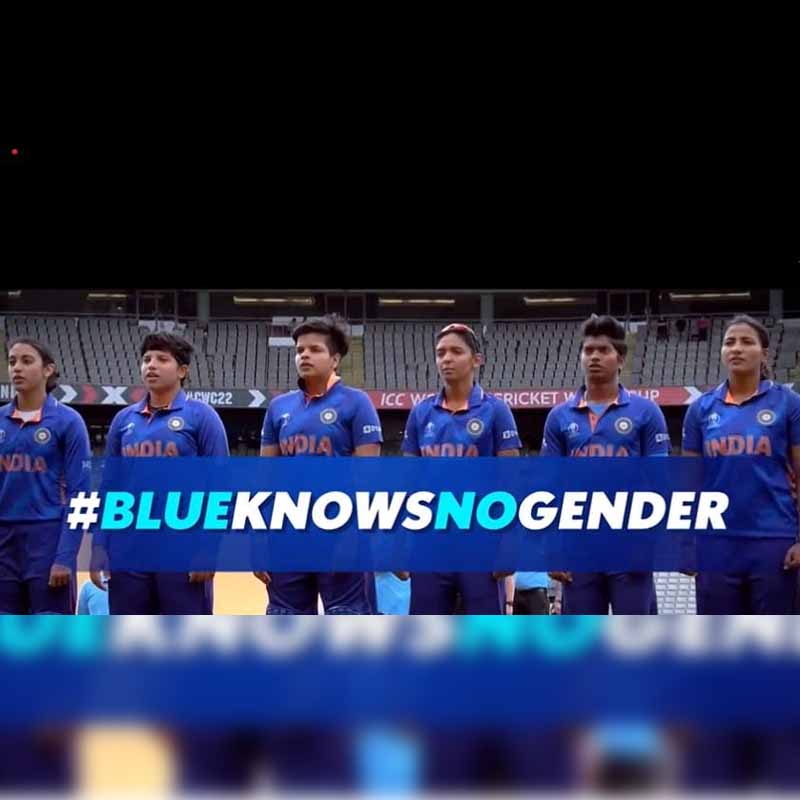
    Star Sports, the official broadcaster of the ICC Women’s T20 World Cup, launched its campaign “#BlueKnowsNoGender” in the run-up to the major event as a clarion appeal to support the women’s squad as they get ready to play archrival Australia.

    The Women in Blue’s journey to the ICC Women’s T20 World Cup, which begins on 10 February 2023, begins in their own backyard on 9 December 2022, when they take on Australia, followed by the India-South Africa-West Indies Tri-Series.

    As they prepare to make a great run for the T20 World Cup, the competition will be important for Harmanpreet and company. When India plays Australia, viewers can anticipate riveting action in Hindi, English, Tamil, and Telugu due to the high stakes.

  • Adani gets 32 per cent subscription for open offer of NDTV shares

    Adani gets 32 per cent subscription for open offer of NDTV shares

    Mumbai: Adani Group has received 32 per cent subscription for its open offer of New Delhi Television (NDTV) shares. The open offer closes on 5 December. This subscription is despite the fact that the discount for the open offer at Rs 294 was over 29 per cent of the share price.

    Vishvapradhan Commercial along with AMG Media Networks and Adani Enterprises launched the open offer to acquire an additional 26 per cent stake in NDTV.

    Adani’s open offer had received nearly 53.28 lakh subscriptions of NDTV shares — 31.79 per cent of the total offered size of over 1.67 crore equity shares.

    Corporate investors have offered the most at 39.34 lakh shares while retail investors have offered a little over seven lakh shares. Qualified institutional buyers (QIBs) have tendered 6.86 lakh shares, according to the NSE data which did not identify either the corporates or QIBs who have offered to sell their shares.

    The shares tendered so far is 8.26 per cent of NDTV. So the Adani group has a 37.44 per cent stake — larger than the 32.26 per cent holding of founders Prannoy Roy and Radhika Roy.

  • 27th Sports signs Toyam Sports as title sponsor of Ind-Ban series

    27th Sports signs Toyam Sports as title sponsor of Ind-Ban series

    Mumbai: Toyam Sports Limited (TSL) has been signed as the title sponsor for the Indian cricket team’s three-match ODI and two-match Test series against Bangladesh, which will begin on 4 December 2022 at the Sher-e-Bangla National Cricket Stadium in Mirpur, Dhaka.  Impress-Mattra Consortium, the on-ground rights holder for all Bangladesh cricket team home series, has granted exclusive marketing rights to Dubai-based 27th Sports.

    Rohit Sharma will captain India in both ODIs and Tests, as the Men in Blue embark on a Test and ODI tour of Bangladesh for the first time since 2015. Team India has selected a full-strength squad led by Sharma and including Cheteshwar Pujara, KL Rahul, and Virat Kohli to face the Bangla Tigers, who are a formidable opponent in their home conditions. Sharma and Kohi will play together in a test match for the first time in Bangladesh.

    Toyam Sports Ltd (TSL) chief managing director Mohamedali Budhwani said, “We at Toyam Sports are extremely proud to come in as the Title Sponsor of the India versus Bangladesh ODI series. We have been a part of international cricket events before, but this ODI series is an added feather in the company’s hat and the happiest and proudest moment for our company. Toyam Sports, one of the fastest growing and BSE-listed sports companies, is always committed to support cricket in its growth and development, and we are very grateful to have this opportunity.”

    Speaking about the association, 27th Sports CEO and co-founder Sangeet Shirodkar said, “It gives me immense pleasure to welcome Tayom Sports Limited (TSL) as the title sponsor of India’s series against Bangladesh and I believe that this series will help the company extend its reach to a new territory and achieve global recognition. In keeping with Toyam’s global outlook and our effort to put up a world class event, we look forward to partner them in many more projects in the future.”

    27th Sports chairman and co-founder Sanjay Bector said, “Toyam Sports coming in as the title sponsor despite the increased global uncertainty and current market conditions rightly show the company’s faith in 27th Sports and its belief in cricket and the country’s cricket-loving people to emerge as a winner.”

    Bangladesh Cricket Board (BCB) president Nazmul Hassan said, “Cricket is very popular in Bangladesh and I am sure, Tayom Sports will be able to achieve their goal by coming on board as the title sponsor of a high-profile series like this one. I wish them all the best.”

    This is the third major signing in cricket for 27th Sports, following the India-Sri Lanka Women’s ODI & T20 Series in Sri Lanka and the high-profile Road Safety World Series T20, where the Sachin Tendulkar-led India Legends team emerged victorious, defeating Sri Lanka Legends for the second consecutive time in the final. 27th Sports recently acquired The Hawks franchisee in the World Tennis League, which will be held in Dubai from 19 to 24 December. Alexander Zverev, Dominic Thiem, Elena Rybakina, and Annett Kontaveit make up the team.

  • 58% prefer to watch the FIFA World Cup on TV: Axis My India CSI report 

    58% prefer to watch the FIFA World Cup on TV: Axis My India CSI report 

    Mumbai: A leading consumer data intelligence company Axis My India, released its latest findings of the India Consumer Sentiment Index (CSI), a monthly analysis of consumer perception on a wide range of issues. 

    The research for December focuses on consumers’ preferred media consumption methods for various needs, including reading and listening to music. 

    Axis My India’s CSI Survey discovered that 17 per cent would be watching some key matches, while 9 per cent would be watching all matches, capturing the excitement surrounding the FIFA World Cup. 

    In terms of viewing medium, the survey found that more than half of those polled (58 per cent) would watch it on TV, while 27 per cent and 12 per cent would watch it on mobile and OTT platforms, respectively.

    YouTube continues to be the most popular option for music, as indicated by 39 per cent of respondents. TV is the second most popular option, as indicated by 18 per cent of respondents, followed by radio at 4 per cent. 

    Commenting on the CSI report, Axis My India, managing director & chairman Pradeep Gupta said, “Media consumption trends in the country is growing and evolving with the changing times. From newspapers to news apps, nowadays consumers have access to information at a jiffy. While age-old newspapers remains to be a reliable source of information for a section of the population, FM radio falls below new age platforms such as YouTube in consumers consideration set when it comes to music. TV however continues to dominate the viewership score for big ticket events such as FIFA Football World Cup aiding to the big screen experience of consumers.”

    He added, “Consumers’ favouritism towards celebrities across profession and states from Amitabh Bachchan, Virat Kohli, PV Sindhu to Allu Arjun reflect on how media consumption has broken barriers in terms of entertainment consumption. This again ties back to the growing digitalisation and availability of varied modes of media consumption.”

    The December net CSI score, calculated by percentage increase minus percentage decrease in sentiment, is at +07, from +09 last month reflecting a decrease by 02 points.

    The sentiment analysis delves into five relevant sub-indices: overall household spending, spending on essential and non-essential items, healthcare spending, media consumption habits, and trends in entertainment and tourism.

    The survey was conducted using computer-aided telephonic interviews on 10454 people from 33 states and UTs. 69 per cent were from rural India, while 31 per cent were from urban India. In terms of regional distribution, 24 per cent are from Northern India, while 27 per cent are from Eastern India. Furthermore, 29 per cent and 20 per cent were from the Western and Southern parts of India, respectively.

    61 per cent of those polled were men, while 39 per cent were women. In terms of the two majority sample groups, 32 per cent are between the ages of 36 and 50, and 29 per cent are between the ages of 26 and 35.

    Key findings:

    ·    Media consumption (TV, Internet, Radio, etc.) has increased for 21 per cent of families, which is the same as last month. The overall net score, which was -4 last month, has dropped to -2 this month. It’s interesting to note that 35 per cent of people still read newspapers daily.

    ·   Overall household spending has increased for 56 per cent of families, a 3 per cent point decrease from the previous month. The net score has dropped from +51 last month to +47 this month.

    ·    Spending on necessities such as personal care and household items has increased for 46 per cent of families, remaining unchanged from the previous month. This month’s net score, which was +27 last month, increased by one.

    ·    Spending on non-essential and discretionary items such as air conditioning, automobiles, and refrigerators has increased for 8 per cent of families, a 3 per cent increase from the previous month. The net score, which was +4 last month, has dropped to -1 this month, indicating a drop in sentiment following the end of the holiday season.

    ·   Expenses for health-related items such as vitamins, tests, and healthy food have increased for 42 per cent of families, the highest in the last three months. This reflects a 3 per cent increase in consumption from the previous month, owing primarily to the start of the winter season. The health score, which has a negative connotation, i.e., the less money spent on health items, the better the sentiments, has a net score value of -27, a -4 decrease from the previous month.

    On national interest topic:

    • The survey also shed light on consumers’ newspaper reading habits and preferred music medium, reflecting on consumers’ personal media engagement habits. According to the survey, 35 per cent of people read the newspaper every day, and 39 per cent prefer to listen to music on YouTube. TV channels are the second most popular medium for music listeners.

    ·  The survey reveals that 34 per cent notice promotional offers running in stores and 50 per cent of those who notice these promotional offers indicated that it would influence their final purchase decisions, demystifying the nature of consumers’ engagement with in-store promotional offers.

    ·   The survey revealed that Amitabh Bachchan (with 15 per cent ) is the most preferred actor, whose movies consumers like to watch the most, followed by Akshay Kumar at 7 per cent , Salman Khan at 6 per cent , Allu Arjun at 5 per cent , and Shah Rukh Khan at 4 per cent .

    ·    The survey revealed that Virat Kohli is India’s favourite male celebrity (in sports/movies/art except politics), with 25 per cent, followed by Bachchan with 21 per cent and Sachin Tendulkar with 17 per cent. Furthermore, the survey discovered that PV Sindhu is the biggest celebrity in the female category, with 11 per cent, followed by Mithali Raj with 10 per cent.

    ·    In an effort to better understand consumer year-end travel plans around holidays, the survey found that 21 per cent would take a domestic vacation this season. In terms of considerations, the survey found that 23 per cent would base their decision on cost, while 17 per cent would base it on season and destination. When planning for holidays, the third set of considerations is family decisions.