Category: TV Channels

  • Kappa TV asks viewers to shoot an idea

    Kappa TV asks viewers to shoot an idea

    MUMBAI: First, it dared to go off the beaten track with a programming mix in four languages including Tamil, Malayalam, Hindi and English. And now, Kerala Mathrubhumi Group’s youth-centric music channel – Kappa TV – will telecast a new contest show for a month starting end-November.  

    The contest is about being creative with your mobile gadgets and though a date and time hasn’t been fixed yet, it will be a half an hour show with 24 minutes of content and 6 minutes of advertising during prime time from Monday to Friday with repeats over the weekend.

    Participants will be required to click/record a short film or photo gallery/music album and submit online to the channel, with entries of not more than 3 minutes’ duration. The second level will see 30 people selected from each category, whittled down to 10 each. Three winners will be chosen from each category in the third and final level, with prizes worth Rs 3.5 lakh distributed among the nine winners, who will be featured on Kappa TV. Of the three levels, the first has no particular theme while the second and third rounds will be more specific.

    “We want to see to what extent people can extend their imagination,” says Mathrubhumi TV CEO Mohan Nair, who is helming the eight-strong in-house team producing the show.

    What about the authenticity of the clips being received? Nair says they won’t know in the first round but for the next two rounds, a separate team will monitor the participants.

    While the show host and three judges are being finalised, it is certain they will be popular local personalities. Each episode, shot in Malayalam at the Mathrubhumi TV Studio, will feature six people demonstrating not only their creativity but also delving into their work, family and aspirations.

    Promotions are on since 22 October, and will go on till 21 November, involving the Mathrubhumi Group’s strong media line up of news and radio channels, newspapers and website, as also outdoor hoardings and college activities in the form of game shows.

    “The contest is open to all but we are getting the youth involved because they are very much in tune with mobile phones and they are also keen to be involved with channels. Our research revealed that not just students but also parents are watching Kappa TV,” says Nair.

    Not surprisingly, Kappa TV has 22,773 subscribers on YouTube while its Facebook page boasts 31, 632 likes. In keeping with the concept of the show, Kappa has roped in Idea Cellular as on-ground and on-air sponsor.

    Hope this ‘idea’ works for Kappa TV gets in youngsters as well as elders to spin their creative ideas.

  • SaharaOne and Filmy accept CAS ceiling price of Rs 5

    SaharaOne and Filmy accept CAS ceiling price of Rs 5

    MUMBAI: Sahara One Media and Entertainment Ltd have let the 15 October deadline pass to inform sector regulator Telecom Regulatory Authority of India (Trai) the channel price fixed for the notified areas under conditional access system (CAS).

    The company, which manages general entertainment channel SaharaOne and movie channel Filmy, has acknowledged the ceiling price of Rs 5. 

    The two channels switched to the pay mode in September. 

    The regulator had set a common price on all pay channels directing that under CAS regime they will cost a maximum Rs 5/- per channel per subscriber per month (excluding taxes).

    Ahead of the deadline, most pay broadcasters including Star India, Set Discovery, ESPN Software, Raj TV Network, Sun TV, Udaya TV, Gemini TV limited, Ushodaya Enterprises Limited, B4U Television Network, Sun TV, Udaya TV and Gemini TV, British Broadcasting Corporation (BBC) and Zee Turner Ltd had agreed to the price and declared the charges of all the channels.

  • E! inks Asiapac mobile deals with Foxtel, Vodafone

    E! inks Asiapac mobile deals with Foxtel, Vodafone

    HONG KONG: E! Network has inked two mobile deals in Asia-Pacific with Foxtel by Mobile and Vodafone in Australia.

    The announcement was made today by E! Networks MD Asia Christine Fellowes.

    According to her, “E! continues to lead the way in digital media, having established a specialized production unit last year named Short Form programming and New Content Unit or Spanc designed to develop short form and new media content.”

    Foxtel by Mobile will offer E! content on its 3G platform beginning this month, offering 90 minutes looped video feed of E1’s content featuring the latest in entertainment news information, celebrity profiles and providing consumers with a linear experience similar to traditional TV.

    E! Network’s present wireless partners in Asia-pacific include Telecom New Zealand, 3 Australia and Starhub Singapore.

    The E! Everywhere initiative, which first launched in early 2006, is designed to empower E! audiences to consume content whenever, wherever and however they choose.

  • Star One banks on new slate of shows

    Star One banks on new slate of shows

    MUMBAI: It’s action stations at Star India’s second Hindi entertainment channel this festive season as it aims for the still far on the horizon number two spot in the GEC space (behind Star Plus).

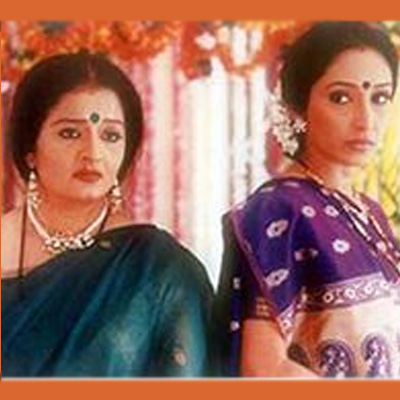
    Monday saw the launch of the weekly ‘dramedy’ Kadvee Khattee Meethi, which, according to Star India senior creative director Shailja Kejriwal, is a humorous look at the relationship between mothers-in-law and daughters-in-law and is an interesting cross between a comedy and a soap. This show will play out at 8 pm on Mondays.

    Right now though (and running through till December), the maximum focus for Star One is on Nach Baliye 2, which is the channel driver. “Already on the week of launch, Star One’s channel share rose to 3.06 per cent. So we expect Nach Baliye 2 to drive Star One for the next three months. We have also launched two new shows – Saathi Re (Tue-Thu, 8:30 pm) and Betiyaan apni yaa…Paraaya Dhan (Tue-Thu, 9:00 pm), Kejriwal offers.

    “Another show coming for a second season is “Ssshhhh…Phir Koi Hai”, a show which promises lots of excitement using the horror genre,” avers Kejriwal.

    Though the thrust is currently on Nach Baliye, we will be deciding on the next big initiative in the next few weeks,” she adds.

    And staying with the humour quotient the channel has become associated with, most of the existing shows like Naya Office Office, Laughter Champions, Kadvee Khatti Meethe will continue to provide the “comedy” touch to Star One.

  • Videocon-led consortium to buy Daewoo Electronics; deal worth $730 million

    Videocon-led consortium to buy Daewoo Electronics; deal worth $730 million

    MUMBAI: A consortium led by India’s largest electronics firm Videocon Industries Ltd have signed a non-binding memorandum of understanding MoU to buy South Korea’s Daewoo Electronics Corp for $ 731 million.

    While Videocon will own 50.1% in the consortium, Brussels-headquartered private equity firm RHJ will own 49.9%. Woori Bank is acting as the principal bank of the creditor financial institutions committee (CFIC) for Daewoo Electronics for the proposed purchase of the equity and debt interest of the CFIC in the company.

    Seoul-based Woori Bank spokesman Jung Hee Kyung has been quoted as saying that the purchase offer is an all cash one.

    For Videocon, the Daewoo acquisition comes with its 25 manufacturing facilities in South Korea, the US and the UK, providing the Indian major with a global presence. Daewoo would not only help Videocon move up the value chain in the colour TV business, but also complement its previous acquisitions. In 2005, it had acquired the picture tube business of France’s Thomson for $291 million. Later, it also bought Electrolux Kelvinator India for $76 million.

    Videocon Industries chairman & managing director VN Dhoot has been quoted as saying that the company would be able to leverage Daewoo’s R&D centres in South Korea for TVs, washing machines and refrigerators.

  • UK Gearhouse Broadcast to supply broadcast facilities for the 15 Asian Games

    UK Gearhouse Broadcast to supply broadcast facilities for the 15 Asian Games

    MUMBAI: UK based broadcast solutions company Gearhouse Broadcast has bagged the contract to supply broadcast facilities for the production coverage of the 15 Asian Games.

    The 15 Asian Games officially commence on 1 December, 2006 with the Opening Ceremony and conclude with the Closing Ceremony on 15 December, 2006. For the first time since 1974, the Games are held in Doha with over 45 countries and regions competing across a record-breaking 39 sports in more than 40 venues.

    Gearhouse Broadcast will supply, install and operate eight complete production flyaway systems which will range from six camera to ten camera and will be used for the production coverage of the host feed at the twelve stadiums where the various sporting contests will take place. The flyaway’s come out of Gearhouse Broadcast’s range of flyway products and systems at their UK offices.

    Gearhouse Broadcast will supply a total of sixty-five operational crew members including engineers, audio engineers, communication engineers, vision controllers, and riggers.

    The Games are demanding logistically due to the events being held across twelve stadiums throughout Doha. Provision of broadcast equipment for the Games involves supplying cameras for the field of play areas including twenty-eight HDC 1500s, twenty-six BVP 950s, and high speed super-motion cameras using the Sony HDC 3300 and Thomson LDK23-HS and also three Panasonic AWE 800 SDI cameras, informs an official release.

    Gearhouse Broadcast MD Eamonn Dowdall said, “The cameras chosen offer the latest technology available and they will provide the host broadcaster with picture quality of the highest standard.”

    The Replay rooms will contain twenty-five EVS XTs. And the twelve production control rooms at each stadium venue will be fitted out with nine production galleries each of which will be installed using sixty-seven LCD Vutrix Series of 23” HD/SD screens. A range of nine vision desks will be supplied from the Sony DVS 7350 to the new MFS 2000, Snell and Wilcox’s Kahuna, Thomson’s DD Series. Controlled via the desks are replay transition devices which will be used to give the mix effect between slo-mo replays and live production.

    The master control Areas for engineering and quality control will comprise of test and measurement equipment from Tektronix utilising the WFM 700 and the 601E series. Routers selected will be the Pro-bel series and the Pro-bel Aurora series HD/SD routing systems. Leitch equipment has been selected for the distribution and glue products. Evertz has been selected for the system sync generation equipment and fibre equipment used.

    The Audio Control Room will comprise of audio desks from Soundcraft Series 5 56-channel, Soundcraft B800 48-channel console, DDA CS-8 32 channel audio console, and Midas Venice 240 24-channel consoles. Audio monitoring and quality control will be carried out on Bel series monitoring equipment. A variety of microphones have been selected to cover the sporting contests being played which comprise of twenty-four Sennheiser MKH- 816, ninety Sennheiser MKH 416, eleven Audio Technica AT 835 ST stereo microphones and various smaller microphones.

    The communications systems provided will be the Clearcom Compact 72 series and new Riedel communications systems. All of the associated broadcast cabling at each of the twelve venues will be supplied and installed by Gearhouse Broadcast. And all of the cabling used will be Belden broadcast series cable, including audio multi ways, triax video and data cabling.

    Gearhouse Broadcast will provide ancillary services for the Games consisting of project and logistics management and technical support. The broadcast solutions provider will handle the procurement of equipment required and co-ordinate the transportation of this equipment to and from the venues in Qatar.

  • India leads in pay TV piracy in Asia-Pac

    India leads in pay TV piracy in Asia-Pac

    HONG KONG: Pay television piracy continues unabated in the Asia-Pacific region, with total loss in revenue estimated to be $1.13 billion in 2006, out of which India’s dubious contribution is a whopping $ 668 million.

    According to study on piracy in Asia-pacific released by Cable and Satellite Broadcasting Association of Asia (Casbaa) here today ahead of their three-day annual convention, for the fourth consecutive year pay TV piracy has shown an increase with illegal pay TV subscription across the region growing by 20 per cent in 2006 to 5.2 million.
    The report, undertaken in association with Standard Chartered bank, also highlights that pay TV piracy will result in net estimated tax revenue loss of $ 158 million to the region’s governments in 2006.

    In particular, the piracy situation in India (considered the biggest accessible market, though), Hong Kong and Vietnam continues to worsen, the report said.

    Asked by Indiantelevision.com whether the Indian and foreign players operating in India have undertaken any concrete anti-piracy initiatives in India instead of just blaming the government, Casbaa CEO Simon Twiston Davies said, “The industry is constantly in talks with the government and the regulator on the issue.”

    He added that Casbaa has also exhorted the government to “review” existing regulations and strengthen digital infrastructure.
    The grey market deficit in India due to under-reporting by cable operators has grown from $ 632 million in 2005 to $ 667 million in 2006.

    Thailand also suffers from rising cost of piracy and at $ 160 million revenue loss has the second highest rate of piracy in the Asia-Pacific region

    Other markets facing an uphill pay TV piracy battle include Vietnam and the Philippines.

    The “Greenfield” market of Vietnam has the worst ratio of piracy in the region with one legal pay TV subscriber for every 15 illegal connections.

    In the Philippines, estimated net piracy costs due to illegal distributors, largely in provinces, has risen by 24 per cent in 2006.

    Indonesia is not far behind with revenue leakage of $ 23.8 million as government and industry insiders indicate a substantive piracy growth.

    Singapore is the only market covered by the report that brings some cheer to the industry reeling under piracy.

    As a result of ongoing digitization of cable networks, the number of pirated pay TV subscriptions remains low with a 15.8 per cent decline in piracy costs.

    Macau, covered in the study for the first time, has the unenviable distinction of having the region’s second highest piracy rate with 10 pirated connections for every one legal subscriber.

    The study notes that the Macau government’ anti-piracy measures announced last year have been inadequate to arrest rising piracy.

    The new study estimates that the cost of piracy in Hong Kong for 2006 will be $ 32.4 million, a hike of 29 per cent over last year.

    “This could have a genuine impact on Hong Kong’s reputation as an intellectual property rights hub,” Davies said.

    Pointing out that pay TV piracy is “corrosive” in nature and undermines investments in various markets of the Asia-Pacific region, Davies, however, said growth prospects remain good in the region.

    Interestingly, piracy also results in huge losses to governments too with the study estimating that at least $ 158 million being annually lost to regional governments. The losses corporate profit tax ($ 127 million) and VAT/GST ($ 31 million).

    The governments in the region taking the maximum hits due to loss in tax revenue include those in Thailand ($ 59 million), the Philippines ($ 38 million), Australia ($ 14 million) and Vietnam ($ 12 million). The India figure for this segment was not available.

    No wonder, Standard Chartered head of media and entertainment Lee Beasley said, “Pay TV piracy should raise an alarm not only in the pay TV industry, but also for a range of Asian governments.”

    Meanwhile, the annual Casbaa convention where industry people from the broadcasting and cable industry, investors and regulatory authorities from round the globe are converging kicks off Wednesday.

    Apart from the usual rounds of seminars and debates on issues of relevance, a tech exhibition too is being organized.

  • Soaps – the violence within

    Soaps – the violence within

    Violence, subtle and physical, has permeated the soaps of the small screen, according to a recent study.

    In a monitoring study that spanned 30 episodes of various soaps on Star Plus, Sony and Zee in June 2002, the Delhi based Centre for Advocacy and Research found that there is a high presence of physical, verbal and psychological violence on screen. Most of this is directed at women. Marital discord, male female conflicts, male aggression and family honour are the reasons for the high quantity of violent acts on television, notes the study.

    During the seven day study, the CFAR viewers‘ panel also looked at regional language channels like Alpha Bengali, Alpha Gujarati, Asianet and Sun TV. In the monitored sample, the panel noted 10 scenes depicting domestic violence in which women were the victims and men the aggressors. The nature/act of violence was physical or verbal. However, the psychological impact of the violence was to a major extent borne by the female victims, the study avers.

    Whether marital discord, anger and frustration of the man in his professional life, a misunderstanding or the honour of the family, the women were always at the receiving end, notes the study. The relationship between the aggressor and the victim is seen as mostly marital or through marriage, but in a few instances, even a brother was an aggressor.

    The study also finds that women are often shown submitting to maltreatment and lacking the conviction to defend themselves. The ‘family court’, found the study, is a common occurrence. The woman is ‘accused’, judged and convicted by this ‘family court’ which consists of the woman’s in-laws. She has no recourse to any other agent, legal or otherwise.

    Although bigamy is illegal in India, it is often depicted – with the onus on the wives. It is dramatised in a sensational and voyeuristic manner, without any respect for or mention of the law.
    In many instances, male and female characters are forced into marriage against their wishes. This results in domestic violence or extra-marital affairs. As upholders of the family honour, women are always expected to place the family ahead of their personal aspirations, claims the study.

    Most of the viewers CFAR spoke to have said that a serial need not be violent in a bloody or in a destructive way without reason. Conflicts should be depicted in a ‘reasonable’ way and appropriate to the situation and not just to heighten the suspense and hook viewers. Violent situations are usually a way of creating excitement and expectations, viewers said.
    Citing examples, the study mentions Kasauti Zindagi Kay (Star Plus), in which Shivani, just married to Anupam, is slapped by him when she discovers a fraud he had committed. The new bride is shown howling when her brother visits her. The brother takes up the matter with her husband and her in-laws. But Shivani‘s in-laws don‘t intervene. Shivani folds her hands and pleads with her brother to leave.

    The CFAR study raises the point that while the wife is mistreated by her husband, she is made to apologise instead of being consoled or the husband being chastised for his behaviour. Such scenes show women as submissive to any maltreatment and lacking in the ability to stand up for their rights, the study says.
    In another episode of Kasauti Zindagi Kay, Kajol is threatened and emotionally blackmailed by her boyfriend as well as her family. The parents and her elder brother are against her alliance with the boy. When the elder brother catches her red-handed with her boy friend, he pulls her away angrily and takes her to home. She is brought to the ‘family court‘ where the brother screams at her and threatens her with dire consequences unless she behaves properly.

    Citing other similar cases, CFAR raises another issue – The ‘family court‘ is used in many serials like a “court martial”. The ‘accused‘ is judged and convicted by this ‘family court‘ which consists of her in-laws, without recourse to any other agent, legal or otherwise. Should such family courts be held and given the authority to judge an individual who has no one to fall back upon?

    In Sanjjhi (Zee TV), Amar Singh uses physical and verbal means to threaten both his wives and their families when the first one files a suit of bigamy against him while the second testifies against him. He taunts and threatens his first wife, Kanak, by reminding her of her inability to bear a child. CFAR in its study asks whether such violations of the law be depicted in such a dramatic, sensational and voyeuristic manner, without any respect or mention of the law, which clearly prohibits bigamy?
    In Hubahu (Sony TV), Aditi‘s husband roughly pushes her towards the door and asks her to leave the house because he feels that she is not allowing him physical intimacy. The study points out that though the serials did not project a lot of physical violence against women, there are many instances of extreme and repeated mental pressure, threats, screaming and shouting and anger directed towards women. Women were shown constantly under a lot of stress and anxiety, the panel felt.

    Tradition and societal pressures act as an aggressor in their own way, points out the study.

    Anamika in Kahaani Ghar Ghar Ki is shown to undergo tremendous mental and societal pressure in trying to decide between her role as a wife (which is to protect her husband at any cost) or to side with the truth (and thereby reveal his crime). At no point does any family member counsel her. In Kkusum, Kasauti Zindagi Kay, Tu Kahe Agar, the three leading women are shown to be under constant stress and mental pressure owing to either their husband‘s affair with other women or due to some familial problem. In Bhabhi, Tilak and Pushpa pretend she is his wife. In one scene, he pushes her towards the wall and warns her never to tease him.

    In Kasauti Zindagi Kay, Kamolika is under constant physiological stress because she suspects that her husband, Anurag, is still in love with the girl he wanted to marry in the first place.

    In all these instances and in other serials, the wife is placed under tremendous mental duress and even abuse because marriage is often founded on a misunderstanding or for some reason that is unacceptable to the man. Often her husband is in love with another woman and marries her under pressure from his family. What is supposed to be one of the happiest milestones in a woman‘s life, becomes a source of unhappiness and uncertainty and of future conflicts between the couple from the very first day of their marriage and justifies the husband‘s ill-treatment of the wife, the study notes.

    In Choti Maa..ek anokha bandhan (Zee Tv), Kasauti Zindagi Kay (Star Plus), the boyfriends of the female characters physically, verbally and psychologically carry out violence against them. Koyna in Choti Maa becomes the victim to physical abuse by her boyfriend who takes her to a pimp.

    In another example, an apparently progressive character who takes up cudgels for his sister in law against his own brother is also shown taking recourse in brute force. In Kahaani Ghar Ghar Ki (Star Plus), Om uses both verbal and psychological pressure along with his tough body language to force Anamika to reveal the truth about her husband raping a blind girl. She is reduced to hysteria in her pregnant state, and finally, breaks down. When she testifies in court, her husband Devan starts screaming at her. She cries and walks out of the courtroom all by herself. The CFAR study raises the pertinent issue of whether a family member be given the license to continuously pressurise or “torture” a woman on the justification that the ‘truth’ has to be established.

    Impacts –
    Several female viewers interviewed by CFAR observed that many of the so-called safe family serials, which hook the viewers with very identifiable situations and characters, have their share of problems. Not only is the depiction of men and women lopsided or one-dimensional, it is highly exaggerated, unrealistic and inconsistent, the study claims. Besides, some female characters are portrayed in an extremely unconvincing manner, especially when portraying a scheming, unscrupulous and dominating character. Men are portrayed in a highly negative manner too and such negative behaviour is often glorified.

    In many of these serials, extramarital affairs, bigamous relationships are shown as a matter of routine, and in some cases extremely casually. This gives children the impression that these are normal, acceptable or even desirable situations and expected adult behaviour, says the study. Mothers also found adverse impact on children’s lifestyles and their quality of life, and felt that children are getting increasingly prone to aggression. They constantly demand attention, exhibit severe mood swings and in some cases are prone to addictive habits. Finally, they behave in a highly precocious fashion, acting and behaving much older than they actually are, adopting adult postures and mannerisms. In most Indian homes, the mothers are at the receiving end of such behaviour.

    This presumes greater importance because research studies show that most of the children are hooked to adult programming. According to CFAR’s recent five-city study on Media Habits of Children, it was found that 50 per cent of the most favourite serials mentioned by the children in the age group of 6-12 years fell in the category of adult programming. Delhi topped the list of children viewing family drama with Shaktimaan (Doordarshan) the only exception.

    The study says that most soaps are exploiting reality to justify domestic violence – not normally condemned. Therefore, shown as ‘normal‘ within a family. The TV family is thus one in which violence is a day to day occurrence. No effort is made to correct this highly offensive and prejudicial behaviour. This justifies violence in real life and desensitises us to it and a future generation who will tend to believe that such personal liberties and violations are permissible in marriage and personal relationships, the study notes.

    Legal steps are seldom shown, the study notes. “Family courts” are held instead, in which might is the norm. Violations of individuals and their legal rights are openly shown. They allow a whole host of individual violations as if it is acceptable behaviour. People, including children, are shown eavesdropping, violating people’s privacy, inflicting physical and verbal violence, taking recourse to hate-filled speeches etc, as if it is their individual prerogative to abuse as long as the person you are abusing is within the family, the study observed.

    Finally, says the study, it gives men the power to resort to violent means to control their wives and teaches wives to submit to the violence in the larger interests of the family, which is at the core of these serials.

    The one week sample included –

    Serial   Number of episodes
       
    Kahaani Ghar Ghar Ki 5
       
    Kasauti Zindagi Kay 4
       
    Bhabhi 3
       
    Kkusum 4
       
    Saanjhi 1
       
    Kitne Kool Hai Hum 1
       
    Choti Maa 4
       
    Tu Kahe Agar 1
       
    Kyunki Saas Bhi Kabhi Bahu Thi 4
       
    Kuntee 2
       
    Hubahu 1
  • ‘Broadcast India 2006’ begins 26 October

    ‘Broadcast India 2006’ begins 26 October

    MUMBAI: The 16th Broadcast India 2006 Exhibition and Symposium will be held from 26-28 October 2006 at the World Trade Centre, Mumbai.

    Broadcast India 2006 will present the latest technology of newsgathering and telecasting of programmes live through a mobile phone.

    From film making to television production and post production, from content creation in all formats to its management and finally to its delivery, the Broadcast India show will cover all the technologies, said an official release.

    More than 400 companies from 31 countries will be at Broadcast India to showcase their latest products and services in Broadcast, Television, Audio, Radio, Film, Computer Graphics, Satellite, Special Effects and Multimedia. This year’s show will throw light on IPTV, Mobile TV, Digital Cinema and High Definition.

    The Broadcast India 2006 Symposium sponsored by Cisco Systems will be held on 25 October 2006 at YB Chavan Centre, Mumbai. The keynote address is by Dan Scheinman, senior VP for corporate development, Cisco Systems.

    Broadcast India Awards for Excellence in Film & Television will also be held at YB Chavan Centre on 25 October 2006 from 7 pm onwards.

  • Vijay TV launches new bouquet of shows starting 30 October

    Vijay TV launches new bouquet of shows starting 30 October

    MUMBAI: Vijay TV is launching a whole new bouquet of shows ranging from music, movies, chat, drama and talent starting 30 October.

    An all-new afternoon band with a bunch of shows targeted mainly at the women audience. Shows that entice with shopping sprees, exciting trips and out of the box opinions interlaced with some of the hottest movie tracks.

    Vijay Television general manager Ravinath Menon said, “After launching format shows like Hutch Kalakkapovathu Yaaru, Airtel Super Singer, EQ and Jodi No.1 and strengthening the weekends, we are now excited to offer a great line-up of shows to make the weekday primetime viewing much more exciting. These shows will definitely attract not just the youngsters but viewers of all ages with its unique and differentiated content.”

    Shopping Sundari at 3 pm, provides the best guidelines of shopping be it annual sales or discount sales, Shopping Sundari Janani knows it all. Ladies Club at 3.30 pm, especially for the women is a platform to voice out their views on anything that matters in an open forum presented by the witty Shailaja. Point to Point at 4 pm, is a travelogue of Priyanka who takes you on a joyride to places never seen before by road. Topped with the best budget stays, food and local flavor. Dum Dum Dum at 4.30 pm, is for those prospective brides and grooms eagerly looking for their perfect match, presented by the popular host Gayathri Priya.

    Going a step further, Vijay is all set to launch three new dailies Amaran, Kana Kaanum Kaalangal, Kanden Seethaiyei and an all new Jillunu oru Jodi for the youth and the women audience alike.

    The new sci-fi series set in outerspace Amaran is a modern adaptation of the Ramayanam with some great special effects. It would be telecasted from monday-thursday at 7.30 pm.Kanaa Kaanum Kaalangal, the first soap on Tamil television focusing on adolescence is the story of friendship, first love, innocence, mischief and all those great memories of school life, telecasted from monday-thursday at 8 pm. Kanden Seethaiyae, a poignant soap opera starring the popular actress Kaushalya is based on the story of Seetha who faces conspiracies from near and dear and struggles to keep the family near. Shot in the exotic locales of Singapore promises to be a visual treat every monday-thursday at 8.30 pm.

    Amidst all the excitement, Vijay’s format shows continue to keep audiences glued. On weekdays, the spooky thrills of Kathu Karuppu at 9 pm; followed by the crime reality show Kuttram at 9.30 pm.

    Saturdays are just as spiced up as ever with Garnier Fructis Jodi No 1 which has been extended to 1 ½ hours. Followed by Alive Koffee with Anu at 9.30 pm and the non-stop action fest on Adhiradhi Thiruvizha at 10.30 pm.

    Sundays starts off with the story of the saint Saibaba at 8 am followed by Sangamam at 9 am in a new format, where budding singers of the current generation get together to pay tribute to the greatest singers of yesteryears. And to top it all off, Vijay presents a palette of Hollywood films both on Saturdays and Sundays at 11 am to cater to the young and the old like.