
Category: News Broadcasting

  • Essel, Intel partner on digital content

    Essel, Intel partner on digital content

    NEW DELHI: The Subhash Chandra-promoted Essel Group has launched DMCL (Digital Media Convergence Ltd) as a company that will facilitate the availability of digital content in India.

    Infotech major Intel will partner the Essel Group in this digital venture, according to senior Intel company executives at the ongoing FICCI Frames event in Mumbai.

    DMCL, to be headed by Zee Telefilms president Abhijeet Saxena, will concentrate on acquiring, digitising and making available on various platforms a wide variety of content.

    This content could be special interest content sourced from outside India for the Indian audience as well as Indian/Bollywood content for use in India and outside.

    DMCL will also engage in creating special interest /niche content that will be of immense value to select audiences in India.

    Announcing the initiative, Saxena said, “We have always been very conscious of offering the best in entertainment to our consumers. Keeping our sights on the future of entertainment in the digital new media scenario, we will be at the forefront of providing both new and existing content across various consumer gadgets.”

    Dwelling on shaking hands with Intel, he added, “While selecting the technology and partner for implementation, performance and expertise in successful implementation was given prime consideration. As Intel is a domain specialist, we are very happy to collaborate with them for this effort. We are confident that we will have mutually beneficial partnership with Intel for this gigantic strategic initiative.”

    Intel Corp launched its Intel Viiv technology platform for home entertainment devices at the CES show California in January 2006.

    The Intel Viiv technology is designed to make it easier for people to download, view, manage and share digital entertainment on a variety of viewing screens and networked devices such as portable media players, digital TVs and routers.

    The company is working to bring the Intel Viiv platform to India in the near future.

    DMCL and Intel will work towards offering digital content over the Intel Viiv platform in India. DMCL will offer an agnostic platform, by being an aggregator (including doing re-purposing) for other content owners, starting with Zee Telefilms Ltd.’s content.

    Intel will work with other players in the industry to introduce DMCL as an Intel Viiv content service provider in India. This joint industry supporting effort means that the consumers who procure Intel Viiv will get a ready service available on the platform for them to access information, entertainment and other services.

    Essel Group has diverse national and global business interests, encompassing media programming, broadcast and distribution, specialty packaging, entertainment and trading.
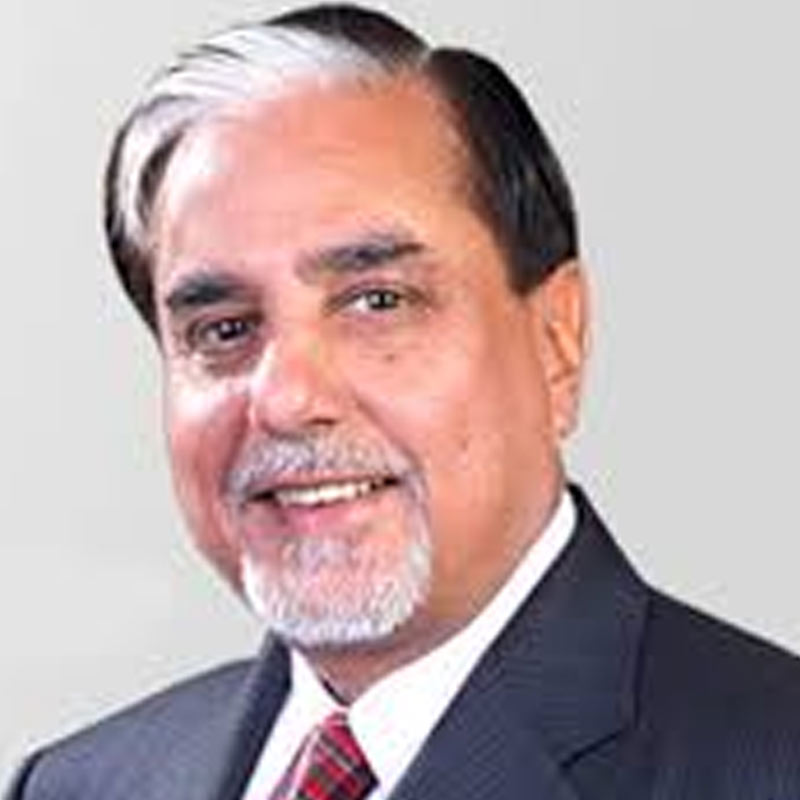

  • Ready for the future or face customer desertion: Chandra

    Ready for the future or face customer desertion: Chandra

    MUMBAI: “It’s the end of TV, the way we know it.” That was Zee group chairman Subhash Chandra introducing his keynote at the plenary session today – Digital Entertainment Living.

    The thrust of Chandra’s presentation could be said to be the common strand running through most of the sessions on Day 2 of Ficci Frames 2006, which is that the future was the consumption of content would be according to individual requirements and on the go as it were – how you want it, when you want it, where you want it.

    Chandra spoke of a five point agenda that his company had laid out as its course into the digital future.

    These included the need for segmentation of content; innovation in pricing; experimentating with new content ideas; seamless delivery across various platforms; and fourthly, essentially extending the preceding points, the absolute need to prepare for the future if loyalty of consumers was to be preserved.

    Said Chandra, “We have to segment our content. Segmentation will become very important. Content needs to be individualized, personalized.” He also pointed to the possibility that it would not just be programming that was customised but advertising as well. Advertising directed at individuals rather than a mass audience will become possible, the Zee head honcho averred.

    Expanding on the point of seamless delivery across platforms, Chandra made a strong case for the need to move towards opens standards rather than focusing on proprietary control.

    Chandra warned that it was essential that broadcasters “prepare for the future otherwise consumers will desert us.”

    Chandra said that the huge effort that was currently on to digitise Zee’s entire content library (1,500 movies, 50,000 hours of TV) in partnership with IBM was part of that effort. Chandra estimated that it would be another year before the process was complete.

    Another key initiative in that direction, announced earlier in the day in partnership with chip maker Intel, is a separate company Digital Media Convergence Ltd (DMCL) to be headed by Zee Telefilms president Abhijit Saxena, Chandra said. DMCL’s brief was to acquire, digitize and make available on various platforms, a wide variety of content, he pointed out.

    Speaking to Indiantelevision.com on the sidelines of another session, Saxena said that DMCL would become fully functional only after Zee’s content offering had been completely digitised. The interim period (one year) would be spent in acquiring content from a variety of vendors across the globe, Saxena said.

  • Zee looks for a winner in Rs 110 mn ‘Business Baazigar’

    Zee looks for a winner in Rs 110 mn ‘Business Baazigar’

    NEW DELHI: Now Mumbai denizens need not worry about cleaning their countless shoes at home or go looking for the friendly neighbourhood cobbler. A shoe laundry, like a dry cleaner’s shop for clothes, will take care of all the shoe needs.

    The shoe laundry is a dream come true for a young woman entrepreneur who was in need of funding the idea. Zee Telefilms came to her help with the initial money. Though the girl and her idea failed to make it to the last round of Zee TV’s soon-to-start reality show Business Baazigar, she is busy shaping her business venture.

    “The shoe laundry is already operational for about four months and the young woman will be coming back to us with a progress report,” Zee TV business head Punit Goenka told Indiantelevision.com on the sidelines of a press conference here, to announce the launch of Business Baazigar where the underlying theme is: “idea lao, paise le jao” (bring an idea and get funded).

    And, that’s the magic of the reality show, as Zee funds innovative ideas of people who have been eliminated during the show.

    Business Baazigar is a journey of 250 participants who will eventually be scaled down to 50 finalists. Among them, the final 20 will be put through gruelling tasks that will test their business acumen and team spirit.

    After every task, the jury, comprising Zee Telefilms non-executive chairman Subhash Chandra, himself a rags-to-riches success story, will decide the fate of the contestants. Eventually, one participant will emerge triumphant and will have Zee Telefilms funding his/her business venture.

    An expensive show with high-decibel marketing

    Business Baazigar is also one of Zee TV’s costliest shows to be mounted. At Rs 110 million, this 25 FPS-produced 24-episode programme attempts to what other game shows have failed to do for Zee Telefilms’ flagship channel, Zee TV — deliver ratings and viewer ship.

    “This show promises to entertain the audience with its intense reality drama and unique concept. We have given our best and hope the audience likes it,” said Goenka, the eldest son of Chandra.

    While admitting that an ongoing game show Kam Ya Zyada failed to live up to expectations, Goenka added that it’s Zee TV’s endeavour to give the audience what it likes, but “sometimes ideas click, while at other times they don’t.”

    “So, in deference to viewers’ preferences, we take off programmes that fail to tickle the viewers,” he added, hinting that Kam Ya Zyada will be phased out after its present run.

    However, the network is leaving very few stones unturned in promoting Business Baazigar, which is also hopeful of a second season.

    Apart from the traditional cross channel promotions on various Zee channels, which are likely to attract a diverse profile of audience, the new reality show will be promoted via outdoor, print and some innovative initiatives on the Internet. Cellular phones, too, would be extensively used for promotion.

    “We do have some new marketing initiatives (costing a packet) lined up that’ll unfold from Thursday. The aim is to arouse curiosity amongst viewers of all hues,” Goenka said.

    Concurring with Goenka was 25 FPS managing director Alankar Jain who said that marketing is an important tool to write a successful TV show. Especially one like Business Baazigar as the ramp up time is small.

    “We are hoping that the show connects with the people in its early episodes only as the whole series is time bound, ending with the 24th episode,” Jain added.

    Business Baazigar debuts on 31 March, airing one-hour episodes on Fridays and Saturdays at 8 pm.

    Apart from Chandra, the jury consists of Passionfunds CEO Mahesh Murthy and Prof. Anil Gupta of Indian Institute of Management. Cyrus Sahukar will host the series.

  • Eric Freeman named Walt Disney Internet Group vice president technology

    Eric Freeman named Walt Disney Internet Group vice president technology

    MUMBAI: The Walt Disney Internet Group (WDIG) has appointed Eric Freeman as vice president, technology, with responsibility for the Walt Disney Parks and Resorts Online.

    Freeman will lead the charge in driving technology development of the web properties and new media activities for The Walt Disney company’s theme parks and resort hotel properties, including information websites, e-commerce and online attractions.

    Freeman returns to the Walt Disney Internet Group after a two-year stint with O’Reilly Media Inc., where he co-directed and co-authored the publishing firm’s “Head First” series of technical reference books, including the award-winning Head First Design Patterns and the bestselling Head First HTML.

    “We’re thrilled to welcome Eric back to our team. There are few people with his level of credentials in theoretical and practical technology, and his forward-thinking abilities will be a valuable asset in helping us stay ahead of the curve in a rapidly growing and changing category,” said Walt Disney Internet Group executive vice president and chief technology officer Douglas Parish.

    Freeman originally joined the Walt Disney Internet Group in 2000, where he initially acted as a director in the company’s portal division. He later served as director of engineering, driving development in the areas of broadband, wireless, media content distribution, wireless technology and content syndication. This includes co-inventing WDIG Motion, a proprietary, patent-pending Internet technology allowing broadband users to view high-quality video, embedded in standard Web pages, without impacting narrowband users’ experiences.

  • Keeping identity a challenge for PSBs

    Keeping identity a challenge for PSBs

    MUMBAI: Maintaining competitiveness and universality will be the key issue for public service broadcasters as terrestrial broadcasting loses its audience share and media influence to emerging media.

    This was the message that Min Eun-Kyung, executive director of international relations for KBS-Korea, had for delegates to the annual Public Broadcasting International which opened in Maputo, Mozambique, on Thursday.

    “Amidst the countless number of channels, platforms and content, keeping the identity of public service broadcasting will become increasingly challenging,” Min has been quoted as saying in a report put out on the Asia-Pacific Broadcasting Union (ABU) website.

    “The digital revolution will create room for critical voices about the function and role of public service broadcasting,” Min added.

    Min said that public service broadcasting was an essential societal institution in the service of cultural diversity and media pluralism. “We must make every possible effort to remind our viewers of the value of public service broadcasting and every possible effort to keep our function and identity in the future,” she explained.

    Finance is another key issue for public service broadcasters, according to Min. She said that having a stable financial structure is necessary to make progress in the multimedia environment, remain competitive, and to gain independence from political and commercial influences.

    “More importantly, a stable financial system is the only way to fulfill public service broadcasting missions in a highly competitive digital media environment,” she added.

    “Expanding services to multiple platforms is a high-cost business and without a desirable financing model, newly launched media services would have to charge a fee.”

  • Another webcasting company knocks WWW doors

    Another webcasting company knocks WWW doors

    Mumbai based broadband company Skynet Web TV Ltd is set to tap the Indian bourses with an Initial Public Offering (IPO) of the size of Rs 21 billion. Each equity share of the face value of Rs 10 would be priced at a premium of Rs 30 each. Aryaman Financial will be the lead manager for the issue.

    The company headquartered in Mulund, the central suburb of Mumbai plans to offer broadband services through its entertainment portal on the Net and software services. The entertainment portal will be designed to supply rich media content (streaming technology) to netizens utilising both narrow and broadband connections. The site contains free and paid services. The free services consist of chat, e-mail, finance, classifieds, shopping & travel and paid service will consist webcasting movies and television serials.

    The company targets the NRI community interested in viewing Indian movies and those who do not have access to cinema houses or other sources to see latest Hindi or other regional Indian language movies. The company will acquire rights for Hindi movies and television serials for webcasting. The streaming content can be viewed through 28.8 kbps and 56.6 kbps dial-up connections, DSL connections and Internet-over-cable TV.

    The revenue model of the company comprises of a mix of ad revenues and subscription fees. The company will use the reputed international payment gateway Cyber Cash for clearing online transactions through credit cards. The company plans to charge an average US $ 5.00 per movie.

    The Net is being slowly flooded with webcasting portals. How many of them will survive? Where will all the content come from? Skynet Web TV Ltd might face a similar problem of acquiring quality content. But the company seems to be determined to make it big.

  • Al Jazeera hosts international television production festival from 27 March

    Al Jazeera hosts international television production festival from 27 March

    MUMBAI: The second Al Jazeera International Television Production Festival, under the patronage of the chairman of the board of directors, Aljazeera Network H E Hamad bin Thamer Al Thani, is to be held from 27 to 30 March at the Doha Sheraton.

    The festival’s aims is to promote better cooperation and understanding among people and cultures, by offering a platform for cross-cultural communication and interaction, as well as bringing the work of independent film makers to the forefront.

    In a press conference Al Jazeera channel’s public relations and media department director Jassim Ibrahim Fakhroo, managing director’s administrative assistant Mohamed B al-Sada, and Al Jazeera Production Centre’s director Abbas Arnaout outlined the networks plans for the festival.

    The competition will cover four categories: Documentaries that portray facts through the use of video tape or cinema technology; Current Affairs including investigative programmes that tackle political or social issues with analysis of their various aspects; and features that convey a clear picture of an event. There is also an opportunity to promote a channel or a programme through promotion category.

    As many as 94 films from various countries will be screened at the festival “This includes 34 films in the competition section, and Chinese, Iranian, French, and Latin American films,” officials told a press conference.

    The competition films are from satellite channels, television stations, production institutions and independent filmmakers. Gold, silver and bronze awards will be provided to the following categories: 3 for non-Arabic documentary films; 3 for non-Arabic investigative reports; 3 for non-Arabic features, 3 for Arabic documentary films; 3 for Arabic investigative reports; 3 for Arabic features and 3 for promotions.

    “A salient feature of the festival is that entry is free to all screenings,” the officials explained. The competition films are being shown in Sheraton’s Majlis hall from 28 to 30 April, whereas others would be screened in Salwa 1, 2 and 3 halls, starting from 10 am and going on up to 10.15 pm.

    Last year’s golden award winning films are to be shown on 28 March. They are ‘Road to a Lesser Sunset,’ ‘El-Tantora,’ and ‘Living Among Us,’ all in Arabic with subtitles in English. There will also be a book fair in which Arabic and non-Arabic books, and documentaries on CDs will be available to the public.

  • Decision on CAS appeal after stakeholders meeting 27 March: Arora

    Decision on CAS appeal after stakeholders meeting 27 March: Arora

    MUMBAI: The uncertainty over the implementation of conditional access system (CAS) is not over yet. The government will take a call on whether it should move the Supreme Court only after a meeting with the broadcasters, multi system operators (MSOs), cable TV operators and consumers on 27 March.

    “We have invited all the stakeholders for a meeting on 27 March. We will take into consideration their views before deciding whether we should approach the court,” I&B secretary S K Arora told Indiantelevision.com.

    Early this month, the Delhi High Court had ordered the government to enforce the rollout of addressability in cable pay television (conditional access system or CAS) in India within four weeks. After reserving the judgement for several months, the court had delivered the verdict on a writ petition filed by a bunch of MSOs.

    On being queried whether one month was too short a time to implement CAS, Arora said the government’s argument in the court was that three months would be needed.

    Was the old notification on CAS good enough? “We will discuss all this in the meeting. Only then can we take a stance on whether modifications are necessary,” Arora said.

    The scheme as it was structured in 2003 ran into rough weather with some of the stakeholders opposing it, Arora added. “We need to resolve these issues. Consumers were opposing it because they felt they were forced to buy the set-top box (STB). Broadcasters came out with a pricing that wasn’t serious in intent.”

    Arora also pointed out that the government was yet to receive the Delhi High court judgment. “We believe the implementation of CAS would come into effect one month from the date of receiving the certified judgment,” he said.

  • BBC outlines online strategy

    BBC outlines online strategy

    MUMBAI: Speaking at the MIX06 conference in Las Vegas, the director of the BBC’s new media and technology division Ashley Highfield, outlined the public broadcaster’s online strategy.

    At the Microsoft-organized event for web developers, designers and business professionals, Highfield stressed that the BBC has to be technologically innovative, and key to that strategy is working with partners like Microsoft.

    Highfield said, “We have a duty of universality. So it’s vital that we innovate through a number of strategic partnerships with technology companies and distributors such as Microsoft, Apple, Sony, Homechoice, NTL and Telewest. Both the BBC and Microsoft are ultimately looking for ways to empower our audiences; to put them in control, and in this we have an alignment of strategic objectives.”

    He added, “The challenge is to create an end-to-end infrastructure for all our programming, to deliver content to all our audiences in the most cost-effective, simple and flexible way possible. The last ten yards of railway track-seamless delivery from the PC to the TV-is still to be built within the home.”

    Highfield also used the keynote to showcase BBC’s iMP (Integrated Media Player), which just completed a five-month trial. The technology allows users to download programs onto their PCs and is “aimed at putting our audience in the driving seat,” he said.

  • BBC Japan to go off air from 30 April

    BBC Japan to go off air from 30 April

    MUMBAI: BBC Japan will cease transmission from 30 April. The reason for the channel’s shutdown, barely two years after launch is because local distribution partner Japan MediArk Co (JMC), has declared its inability to financially support the channel any longer.

    Launched in 2004, BBC Japan was the second channel designed exclusively for one country. Prior to this, BCC Worldwide had launched BBC America in 1997.

    According to information posted on www.bbcjapan.tv, BBC Worldwide has received a notification from JMC that it no longer has the financial means to honour its contractual commitments to distribute BBC Japan.

    The JMC’s shareholders will not be providing any further financial support. This decision results in JMC no longer being able to continue distribution of the channel after 30 April.

    The statement posted on the website also stated that this decision has been taken without any consultation with BBC Worldwide and is beyond the corporation’s control. The corporation is actively seeking alternative ways to continue to provide the service in Japan.

    BBC Worldwide managing director Darren Childs said, “We are extremely disappointed to announce that, due to the apparent decision of the JMC shareholders to no longer support JMC, BBC Japan may have to end transmission.”

    “We are looking to replace the channel in the market as soon as possible, and hope to announce shortly how BBC Japan’s loyal customers will be able to receive the channel in the future. In the meantime, we extend our sincere apologies to subscribers of the channel who have been inconvenienced by the decision of JMC,” he adds.