Category: News Broadcasting

  • Meredith Vieira to replace Katie Couric on NBC’s ‘Today’ show

    Meredith Vieira to replace Katie Couric on NBC’s ‘Today’ show

    MUMBAI: American television personality Meredith Vieira has been named co-anchor of US broadcaster NBC News’ Today,

    This announcement follows the departure of Katie Couric to CBS News.
    NBC Universal Television Group CEO Jeff Zucker says, “”This is an announcement that I couldn’t be happier to be making. Meredith’s vast experience as an award-winning journalist, as well as talk show host, make her the ideal candidate for this job. She joins a distinguished legacy of Today show co-anchors: from Barbara Walters to Jane Pauley to Katie Couric. We are lucky to have her as the newest member of Today and I am thrilled to welcome her to the NBC family.”

    Vieira said, “Before Jeff changes his mind, I am honored to accept this amazing opportunity. Not only is the Today show a great program within a superb news organisation, it’s also where America turns to begin the day. I look forward to joining Matt, Ann and Al in giving America the best each morning.”

    Matt Lauer who co-hosts the Today show says, “Meredith is a real pro, and I think it speaks volumes that NBC has brought her here to Today. I have been her fan for years and I can’t wait to be her partner. She has the perfect background and personality to make a real mark on this show and in morning news in general. I’m thrilled to welcome her aboard.”

    NBC News president Steve Capus says, “It is a tribute to everyone at ‘Today,’ and all of NBC News, that someone of Meredith’s caliber has joined our team. She is an eight-time Emmy award winner, a 60 Minutes veteran and real pro — her skills will be invaluable at ‘Today’ and throughout the division. We can’t wait to get started.”

    Vieira has been moderator of ABC’s The View since the show’s inception in 1997. She has been the host of Who Wants To Be a Millionaire since 2002. She started at the network in 1993 when she joined their news division as chief correspondent of Turning Point which debuted in March 1994 and where she earned her seventh Emmy Award.

    Vieira spent more than a decade at CBS News, where she garnered five Emmy Awards for her work as a correspondent on the top-ranking news magazines 60 Minutes and West 57th.

  • Hanmer & Partners bags a slew of new accounts

    Mumbai, February 9, 2006: Hanmer & Partners Communications Pvt. Ltd. (Hanmer & Partners) has bagged the Public Relations mandates for a slew of top corporate clients over the past three months.

    In all, Hanmer Public Relations has won 40 new mandates in the quarter, which went by. Some of the notable wins including those accounts won in multi-agency pitches include Aviva Offshore Services, Breadtalk Group Ltd., Emirates Airlines, Enam Securities Pvt. Ltd., General Motors India Pvt. Ltd., Global Broadcast News Ltd. (CNN-IBN), Indian Institute of Management (IIM – Lucknow), LG’s IT & GSM Business, LifeCell, Optimix Asset Management Company (An ING Company), Sahara Aamby Valley Lake City & Starcom MediaVest.

    Hanmer & Partners is already working as the public relations agency for prestigious clients such as Nirma, Kinetic Motor Company, CNBC-TV18, LG Electronics, Gujarat Narmada Valley Fertilizers Company Ltd, Gujarat Ambuja Cements Limited, Goodlass Nerolac, Mudra Communications, Western Union Money Transfer, HDFC Mutual Fund, Baume & Mercier, Discovery Network, Star Gold, Star Utsav and SpiceJet Ltd, amongst others.

    Over the part few years, Hanmer & Partners has set up several strategic initiatives thereby bringing together, on a single platter, a range of services being a first in the country for a Public Relations Consultancy. In addition to Hanmer Public Relations which continues to be the core business and will remain so, Hanmer Interactive, the Digital communication division was launched in 2004. Hanmer Reach, India’s first regional PR network (also in 2004), which is now active in 20 cities and adds to the already existing 11-city network. Hanmer Events, which today is a profitable events & promotions division conceptualizing and delivering events across the length and breadth of India and soon overseas, came into existence in 2002. And finally Hanmer Advertising, a full service, fully accredited Advertising Agency which was run under a different name until recently when the Hanmer & Partners Management team decided to “dub” all brands Hanmer and bring them under a common umbrella which finally happened in the autumn of 2005.

    Speaking about this meteoric rise, Sunil Gautam, Managing Director, Hanmer & Partners evinces “Within a short span of six years, we have notched up an impressive list of clients across various practices. Today, we work with some of the world’s best and India’s leading corporate entities. It is to the team’s credit that Hanmer & Partners is among the fastest growing Public Relations Consultancies in India today.”

    Hanmer & Partners, with a presence in 31 cities in India, offers a bouquet of services including strategic counseling, corporate image management, brand support, financial public relations, events and promotions, and crisis communications, apart from media relations.

    The company is also the sole affiliate of Manning, Selvage & Lee, US, (part of the Publicis Group) which is one of the leading global public relation firms, and has an alliance with advertising firms Saatchi & Saatchi, Ambience Publicis, Publicis India, Mudra Communications and Network Advertising.

    For further information on the services offered by Hanmer & Partners Communications Private Limited please log onto www.hanmerpr.com, www.hanmeradvertising.com, www.hanmerevents.com or contact

    Sunil Gautam
    Hanmer & Partners Communications Pvt. Ltd.
    Cell Phone: 098200-33755
    E-mail: sunilgautam@hanmerpr.com

    Jaideep Shergill
    Hanmer & Partners Communications Pvt. Ltd.
    Cell Phone: 098210-42514
    E-mail: jaideep@hanmerpr.com

  • BBC News website wins graphics awards

    BBC News website wins graphics awards

    MUMBAI: The BBC News website in the UK has won prizes at an awards ceremony a few days ago celebrating the world’s best visual journalism. A range of election and politics content was awarded a ‘best in show’ prize and gold medal at the Society for News Design’s annual Malofiej awards.

    BBC News Interactive editor Steve Herrmann said, “The online resources we created for the election coverage were, I believe, second to none. It means a lot to have won against such stiff competition.”

    The winning package of content included the general election results map, swingometer, results index and poll tracker. Also included was the site’s unique Thatcher years in statistics feature and the Born Abroad special on British immigration. Herrmann said that both “showed quite simply that some stories can be told better by graphics than words”.

  • NGC to unveil ‘The Gospel of Judas’ on 9 April

    NGC to unveil ‘The Gospel of Judas’ on 9 April

    MUMBAI: What if an ancient gospel were rediscovered that offered a radically different perspective on a man that history has painted as the ultimate villain? What if this account turned Jesus’ betrayal on its head, and in it the villain became a hero?

    On 9 April, National Geographic Channel (NGC) presents the world premiere of The Gospel of Judas at 8 pm .

    This is a two-hour global event that traces the incredible story of what has happened to the Gospel of Judas since it was found, the recent authentication process and analysis, and key insight gleaned from its laborious translation and interpretation. The ancient document, the only known surviving copy of the Gospel of Judas, was introduced to the public today at a press conference at the National Geographic Society in Washington. The timing is apr what with Holy Week nearly upon us.

    The New Testament says that Judas Iscariot is the disciple who betrayed Jesus. For centuries his name has been synonymous with treachery and deceit. This gospel tells a different story. Discovered by chance in the 1970s, sold twice and stolen once, the gospel’s condition had deteriorated severely. The race is now on to preserve its pages before they turn to dust. But, when was this gospel written, and by whom?

    The research and documentary reveal details contained within the document as well as key sections translated from its ancient Coptic script. A dream team of biblical scholars and scientists verifies its authenticity. The authentication process, involving radiocarbon dating, ink analysis, multispectral imaging, contextual evidence and more – is covered in depth. The special also examines the modern history of the document since it was found, including the exhaustive conservation process.

    The Gospel of Judas presents a lost version of the last days of Jesus, using dramatic recreations to portray and clarify the complex story of intrigue and politics of the earliest days of Christianity and to portray the contents of the gospel itself. The gospel reframes Judas as the disciple closest to Jesus, who committed his act of betrayal at Jesus’ behest.

    The Gospel of Judas turns Judas’s act of betrayal into an act of obedience. And so for that reason, Judas emerges as the champion and he ends up being envied and even cursed and resented by the other disciples.

    This surviving Gospel of Judas manuscript was likely written down sometime around A.D. 300, but the first known reference to a Gospel of Judas was around A.D. 180, when the influential early Christian bishop Irenaeus denounced it as heretical. By then there were many accounts of Jesus’ life and times written by various early Christians in the 150 years after his death, in more than 30 gospels. Irenaeus helped clarify the Christian message by arguing that there should be just four approved Gospels: Matthew, Mark, Luke and John. All others, including the Gospel of Judas, were branded as off-limits by early Church fathers.

    NGC India senior VP programming Joy Bhattacharjya said, “The Gospel of Judas on National Geographic Channel is the television event of the year as it has already created excitement worldwide and brings to light information that will make us rethink our beliefs. The Gospel of Judas along with other films from the Secret Bible Week reveal facts, beliefs, conspiracies, secrecies and a lot more about Christianity, which our viewers will get to witness for the first time.”

    Pages from the document will be exhibited at the National Geographic Museum at Explorers Hall in Washington. Once the conservation process is complete, the document will be delivered to its country of origin, Egypt, and housed in Cairo’s Coptic Museum.

    The Society is sharing information about the Gospel of Judas in a feature article in the May issue of National Geographic magazine, a web site at nationalgeographic.com/lostgospel, a lecture at the Society on April 10, and two books that will be published on 6 April. National Geographic Books also will publish an illustrated, critical edition of the codex in the coming year.

  • David Ellender is FremantleMedia Enterprises CEO

    David Ellender is FremantleMedia Enterprises CEO

    MUMBAI: Television format crestor and distributor Fremantle has announced that David Ellender who is currently Fremantle International Distribution (FID) MD, has been promoted.

    He is now FremantleMedia Enterprises CEO. He also joins the company’s operating board. Ellender will now oversee both FID and FremantleMedia Licensing Worldwide (FLW) – the two commercial divisions that report into FremantleMedia Enterprises. FID has a global network of sales offices and licenses over 19,000 hours of programming including American Idol, The Apprentice: Donald Trump, Project Runway and Jamie Oliver series to 150 countries worldwide as well as handling DVD exploitation through Fremantle Home Entertainment.

    FLW exploits the company’s brands including Idols, The X Factor and The Apprentice across multiple off-screen platforms including merchandising campaigns, interactive and wireless support and music publishing.
    Under Ellender’s leadership FremantleMedia Enterprises will continue to build on its position and its ability to exploit brands in partnership with FremantleMedia’s international network of 25 production companies around the world. FremantleMedia Enterprises is already a substantial contributor to FremantleMedia’s overall profitability.

    FremantleMedia CEO Tony Cohen, said: “David has led FID superbly over the last few years, turning it into a distinctive and very profitable distributor of a huge range of factual, entertainment and scripted programming, representing both leading independent producers as well as our own extensive catalogue. He has been responsible for a great turnaround in the division’s operations and his promotion is highly deserved. FLW has also been one of the great success stories of our company in the last few years, both commercially and in the great scope of its activities, from traditional licensing through to telephony and interactive. FLW has an outstanding management team and is now one of the world leaders in its field.”

    Ellender says, “I am very proud of my achievements strengthening FID’s portfolio of programming over the last few years and building up a superb team of sales executives. We have worked very hard to establish FID as a leading international distribution company. I am grateful for the opportunity to oversee FLW and look forward to increasing Enterprises contribution to the company going forward.”

  • Lintas Media Group director Lynn de Souza

    Lintas Media Group director Lynn de Souza

    Women in television and media… a handful of them but all worth their salt. Most people know them for what they do in their respective fields but there’s much more to them than just their work and the designations that come with it. A mother, a media buyer, a homemaker, a soap maker, a Gucci lover, an animal rights’ activist, a producer, a journalist, a shopoholic, an entrepreneur, an ad sales head, a CEO, an auditor… they’re all there… carving a niche for themselves and making their presence felt in boardrooms and studios, on-screen and off-screen. Whatever said and done, creativity runs in their blood. These Indian media power women have arrived and how.

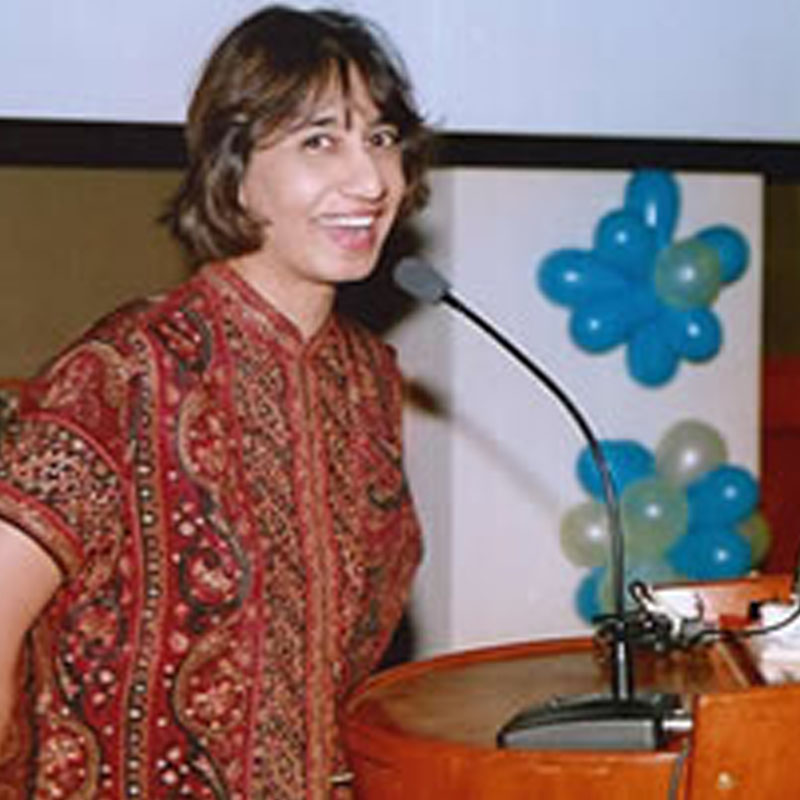
    In the first of the weekly series – Ms Media – 25 Women Who Matter – we have someone who felt she was giving an exam while answering our queries for this column. Hiding behind her serious professional appearance is a lady who is extremely passionate about animals. She’s Lynn de Souza… the multi faceted media professional, author, tennis champ, a trained veterinary nurse and animal rights’ activist… we could go on!

    Lynn-opinion

    Before going on to what the lady is all about… Let’s take a dekkho at what she thinks she’s all about!

    A song by Whitney Houston best describes Lynn’s life mantra

    Well there’s a bridge and there’s a river that I still must cross
    As I’m going on my journey
    Oh, I might be lost

    And there’s a road I have to follow, a place I have to go
    Well no-one told me just how to get there
    But when I get there I’ll know
    Cuz I’m taking it

    Step By Step, Bit by Bit,
    Stone By Stone (Yeah), Brick by Brick (Oh, yeah)
    Step By Step, Day By Day, Mile by Mile (ooh, ooh, ooh)

    “I am a very intelligent person, and also more creative than most. I am also more perceptive than I would like to be. It’s a Scorpio trait and when I was born both the Sun and the Ascendent were in Scorpio. So yes, my weakness is that I do have a nice sharp sting!!! I am an impatient person; impatient with humans, but very patient with animals! In my performance appraisal, I am always told to be less direct and more tactful, but then I don’t know whether being brutally honest is a strength or a weakness! I believe I am also quite a compassionate fool.”

    Not a word more required to know her true mettle. Panache, threat, compassion and an impatience of sorts… it’s all there in those words.

    For the uninitiated, as far as the “designation” bit goes, this Goan heads Lintas Media Group as director and has been in the industry for more than two decades. Lynn is known for her outspoken nature, one who doesn’t hesitate to call a spade, a spade.

    She wishes she were 20 years younger so as to start all over again… but this time on the content side of the business as that’s where all the action is going to be. “For the television and media industry, there are optimistic, positive, exciting, challenging and great times ahead,” says Lynn.

    An alumnus of the Jamnalal Bajaj Institute, she began her career in 1982 with a brief stint at Speer before spending five years at O&M, where she did planning and buying for brands like J&J, Asian Paints, Titan Watches and Unilever. Trikaya Grey (now Grey Worldwide) got added to her resume, where she joined as media director in 1988.

    In this media business, which has become a huge scientific industry in the last few years, Lynn was an early bird entry. She’s been credited with pioneering the concept and openly championing the cause of media buying, as an independent business in India, after training stints with Mediacom at London and Dusseldorf.

    In this male dominated Indian society, women are now making their presence felt and in every walk of life. So how easy or difficult is it for a woman to be a top-notch professional? Lynn believes it’s not that difficult. “This is an equal opportunity industry, much more than most. At one time, there were more women media directors than men, and people used to wonder why!” she says.

    In an industry where there are more men than women, how does she face male dominance (if any)? “I don’t face any challenges that men don’t. As for male dominance, better you ask them how they fight female dominance! (If there is any, and I am sure there isn’t!),” Lynn quips back.

    Lynn-ventory

    So what’s on this versatile lady’s inventory at present? Firstly, she wants to see the Lintas Media brand and its sub-brands “making a positive difference to the market in all aspects – from client service, to new media use, to talent development to rebuilding client respect for the work that media agencies do and the ethics that media professionals employ.”

    Second thing on her agenda arises out of her love for animals. “I am driving expansion of the Goa SPCA’s activities within Goa beyond what we do for ownerless animals – responsible pet ownership is practically non existent in that State and that’s a new thing that we are working on,” says Lynn.

    Another pet peeve of Lynn’s is the current television ratings system. She’s made no bones about the fact in the media that the current ratings system is not up to the mark. And that with new emerging media platforms, the existing ratings system will become redundant. An active member of the Media Research User’s Council (MRUC) Lynn has formed technical and business committees to act on the suggestions made by the industry for improving the TV ratings system. “I am keen on making a real difference to the state of TV audience measurement in this country despite some fairly stiff and below-the-belt opposition in this area,” she stresses.

    When asked about that special quality of hers which brought her to the position she is today, she cheekily replies – “Breathing.”

    Lynn-tertainment

    An avid lover of animals, Lynn took in a pet rat for company when she went to Australia to study for a year.

    She has two homes, one in Mumbai and the other in Goa. In Mumbai, she lives with her parents. “My parents are in thier late seventies but pack in more energy and spirit than 20 of me!” Lynn says. Then she has her pets Gemma and Pixie. Gemma is an Afghan hound who she rescued a few years ago and Pixie is her 13 and a half year old pom.

    Her passion is her pets and her day starts and ends with them. “Apart from my pets, the other thing that makes me tick are all the birds and animals we work with and help. I don’t know how I could ever live without one of these creatures with me. Animals put our lives into perspective, they remind us that we do not own and control the earth, and never will,” she philosophises.

    What’s more, Lynn is also an author and has to her credit a work of fiction – ‘A Dog’s Life’, which was published two years ago. The book is a first person account of a mongrel and his mates, a touching story of friendship that crosses social boundaries. Now she’s working on her second book, which is scheduled for release next year.

    Phi-Lynn-thropist

    On being queried about her philanthropist efforts, she quickly replies that she’s not as much a philanthropist as she would like to be. “I wish I could do more for less fortunate people, but I think there are already too many people doing that. So I choose to give a lot to the world of nature. Indians do very little for the animals, it’s certainly not a popular cause to work for, and that’s our society’s short-sightedness,” she says.

    “Plus I always find that the people who say ‘why do you work for animals when there are so many suffering humans?’ are those who do nothing for humans either, whereas all those who work in human and social upliftment show a lot of compassion towards animals too,” she reminisces.

    On a concluding note, what this tough lady strongly believes in is that the means are always just as important, if not more, than the end. “I like to build rather than raid, to enjoy the fruits of my own efforts than feast on the efforts of others,” she says.




  • Games on demand TV network TVHead looks to gain momentum in the US

    Games on demand TV network TVHead looks to gain momentum in the US

    MUMBAI: Bringing high-quality casual games to broad television audiences, US firm TVHead has announced the details of its premier games-on-demand TV network.

    TVHead says that it opens up new revenue streams for American cable and IPTV operators by offering the nation’s first massively deployable games-on-demand network for cable and IPTV. This news is the culmination of 18 months of stealth development.

    The TVHead Games-On-Demand Network (TVHead) integrates into existing video on demand (Vod) infrastructure providing a uniform high-quality game experience to 100% of Vod-enabled households. The servicve will target nearly 60 million North American households that spent $11 billion last year to play games on consoles, PCs, the internet and wireless handsets.

    TVHead founder, CEO Sangita Verma says, “Casual gaming is a high-growth market that cable and IPTV operators do not adequately address today. TVHead was created to enable cable and IPTV operators to become a major force in the games industry. By offering a rich gaming experience to all of their subscribers today—not just the small percentage with high-end set-top boxes—TVHead allows operators to monetize gamers directly, and keep them in front of their televisions.”

    Operators that affiliate with TVHead have a chance to provide on-demand interactive casual games to their entire subscriber base, leveraging their distribution reach to become major participants in the gaming economy adds the firm.

    With new and updated games added daily, TVHead showcases a multitude of genres, including puzzle, arcade, card games, word, trivia, sports, and kids games that appeal to everyone in the family. The unrivalled programming lineup features blockbuster brands and classic favorites, including Space Invaders, Bejeweled, Diner Dash, Zuma, Texas Hold’Em, Solitaire, Backgammon, and many more.

    TVHead creates a casual gamer community, including high-score leader boards and system-wide multiplayer that allows players to compete with others throughout the country from the comfort of their living rooms. In addition, players may use internet and wireless devices to check their stats, taunt their opponents and compete for high-score bragging rights.

    TVHead’s two-tiered business model includes a free ad-supported offering that encourages subscriber loyalty while creating revenue streams from targeted advertising, and a premium games offering for subscribers who desire multiplayer options, advanced community features and special brand-name games. On-screen impulse subscription allows customers to purchase and play the service using their remote controls.

  • BBC’s broadband learning service for children begins a storytelling trial

    BBC’s broadband learning service for children begins a storytelling trial

    MUMBAI: BBC jam (bbc.co.uk/jam) the UK pubcaster’s new broadband learning service for 5 to 16 year olds, has begun a three-month Augmented Reality (AR) storytelling trial.

    AR is a concept which allows users to interact with virtual 3D objects in real time, by using their own hands, rather than a mouse or a keyboard.

    The trial will enable users to see themselves on a computer screen, holding and moving the 3D characters as they explore the specially-created story (bbc.co.uk/jam/trial/ar).

    AR works by mixing the live video from a digital camera with animated 3D models, which are made to appear in the hands of the user.

    This is achieved by special software which tracks patterns, printed on paper, in each video image. AR technology allows learners to literally pick objects off the page and explore them in a highly rewarding way.

    The animated characters are able to interact with other objects and each other; they are even able to walk off the page.

    Building on technology developments that have led to BBC using AR in the broadcast of BBC News and BBC Sport, the BBC is now able to bring the same technologies to the homes and classrooms of the public.

    To be involved in the first trial all users will need is a standard PC, a webcam and a broadband internet connection. Free software access will be provided and users will be asked to fill in two short feedback forms during the three-month pilot.

    This first trial uses a brand-new story by the award-winning children’s author, Rob Lewis. Written especially for five to seven year olds, it supports shared reading, at home or at school.

    During the trials there will be user guides, teacher notes, tutorials and technical support available and a space to share personal experiences with other participants.

    The BBC has been working with the collaboration of an open source community called AR Toolkit, to explore the use of the technology in broadcasting. They would now like to see it used in classroom and homes.

    The team has recently carried out two projects with teachers and pupils in the BBC’s 21st Century Classroom (21CC) – a digital learning centre in central London, dedicated to exploring creative and cutting-edge uses of technology in teaching and learning; they are now looking to gauge the general public’s reaction.

    If the trial is successful then the BBC hopes to launch further subjects for different ages to explore, learn and create. The pubcaster believes that AR has the potential beyond purely learning as a fun and initiative way of interacting with digital content in collaborative ways for both children and adults.

  • TV over the net could change the face of broadcasting: BBC

    TV over the net could change the face of broadcasting: BBC

    MUMBAI: UK pubcaster The BBC says that the consumer trial of the BBC’s Integrated Media Player (iMP) in the UK reveals that television over the internet could revolutionise broadcasting.

    Research indicates that it increased the viewing of BBC programmes, extended peak-time and built loyalty. BBC director of new media and technology Ashley Highfield revealed key findings from the consumer trial research of iMP in a keynote speech at Milia, the audiovisual and digital content market.

    During the trial, iMP offered downloadable BBC television and radio programmes on a catch-up basis via the PC to a closed panel of 5,000 people for four months between November 2005 and February 2006. Highfield says: “This research gives us the first glimpse into viewing behaviour in the on-demand future. It provides the first significant clues as to how TV programmes over the internet could revolutionise broadcasting, and prompt a wider, cultural shift in television consumption.”

    The panel consistently watched on an average two programmes a week via iMP during the period of the trial, the equivalent of an hour’s viewing per week, despite a limited range of content. “This is equivalent to six per cent of a typical household’s BBC viewing in a week. Consumption was consistent over the period of the trial, and the iMP appealed equally to men and women.”

    While the main reason for usage was to catch up on favourite programmes, iMP also introduced users to new titles and, in doing so, unlocked the ‘long-tail effect.’ “Niche programmes that would have struggled in a mainstream linear schedule performed consistently well throughout the period of the trial.

    “While the top five programmes accounted for a quarter of all the viewing, some niche programming performed disproportionately well. The Amazon ‘long-tail effect’ – seen in the publishing and music industries – indicates that there is significant value in a broadcaster’s archive” he adds.

    Research showed that most viewing took place between 10.00 and 11.00pm, thus potentially extending peak time usage for an hour after the traditional linear peak time of 7.00 to 10.00pm. “This apparent shift in television consumption is consistent with the results of early video-on-demand trials with NTL and Telewest,” added Highfield.

    The results of the research into iMP will underpin the development of the proposed MyBBCPlayer, which “aims to put the audience in the driving seat” by offering users live streamed television and radio as well as a downloadable seven-day catch-up service of TVand radio programmes.

    The launch of MyBBCPlayer will be subject to the necessary public value test and approvals as outlined in the Government’s White Paper on the BBC Charter.

    The BBC says that iMP received a good positive response. 74 per cent of respondents said that they would recommend it to a friend. The key benefits were that it offered genuine flexibility (to watch and to listen to programmes when they wanted), greater control and genuine, added value

    iMP was perceived primarily as a TV service: 92% claimed that they used it most to watch television programmes rather than to listen to radio. This is explained by the established success of Radio Player which leads the charge in the BBC’s on demand offerings, recording over 10 million requests for radio programmes on demand per month (11 million in January) The total number of TV downloads during the trial was 150,000, and the total number of viewings and listenings was 70,000

    The most popular reason for using the iMP was when a favourite programme had been missed and to watch a programme at a more convenient time. 77 per cent of the respondents used it to watch a favourite programme that they had missed, while 64% used it to watch or listen to a programme at a more convenient time; and 32% used it to watch a programme they had never heard of .

    Throughout the trial there was continuous interest in all programmes: more than 85% of titles available were downloaded, with comedy, drama and documentaries being the most popular genres. Programmes from the BBC’s digital channels performed well during the trial – BBC THREE programmes were nearly as popular as those on BBC TWO and BBC 7 programmes performed as well as those on BBC Radio 1 and BBC Radio 2

    The top five TV titles watched by the 5,000 triallists represented a quarter of all iMP TV viewing. The most popular TV programmes (with the total number of viewings) were EastEnders, Little Britain, Two Pints Of Lager And A Packet Of Crisps, Bleak House and Top Gear.

    The average number of TV downloads per active user per month was 13, and the average number of requests-to-view per active user per month was eight. The average number of radio downloads per active user per month was six, and the average number of requests-to-listen per active user per month was three.

    The majority of iMP usage (66 per cent) was for an hour or less at a time; usage mainly took place in the study and living room. 70 per cent of the respondents claimed that one of the reasons for their failure to watch was tied to the seven-day viewing limit. 27% said that the download speed could be improved; 78 per cent of panellists, however, said that they would not compromise on screen size or picture quality for quicker downloads.

    76 per cent said that it was important to be able to view iMP via the television screen, and roughly 30 per cent of panellists said that portability was important (particularly for radio). 94 per cent said that increasing the number of programme titles would improve the iMP.

    The BBC says that the original challenge was to produce a robust media-on-demand internet-based application which offered an entire television and radio schedule on a catch-up, rolling basis. The technical trial of iMP won the RTS Technical Innovation Award and was nominated for an Interactive Bafta.

    iMP was created and developed by the BBC’s New Media & Technology Division in partnership with Siemens, Red Bee Media, Kontiki and Miscrosoft, and Internet Service Providers AOL, Wanadoo, NTL, Tiscali, Telewest and Bulldog.

    Siemens, as lead consultant on the project, were service architects responsible for the delivery of the whole service and for delivery of the Digital Rights Management download system. Siemens managed sub-contractors Red Bee Media and Kontiki; Red Bee Media were responsible for ingesting, encoding and playing out BBC TV content in the Broadcast Centre (and, through their partnership with Autonomy, they were able to provide a search and recommendation facility).

    Red Bee also provided the metadata that drove the Electronic Programme Guide, enabling the user to search content and book downloads. Kontiki developed the peer-to-peer technology and back-end infrastructure.

    The iMP trial panel of 5,000 people represented the full range of all demographics within the UK. Research data was weighted towards the broadband universe, taking into account age, gender and availability of multi-channel TV.

  • Zee wins ‘neutral venue’ media rights for $ 219.15 million

    Zee wins ‘neutral venue’ media rights for $ 219.15 million

    NEW DELHI: The numbers are going beyond believable as far as India cricket is concerned. Subhash Chandra’s Zee Telefilms has secured the rights for the latest money-mopping plan the Board of Control for Cricket in India (BCCI) has pulled out of its cupboard — for matches played by India at neutral venues (non-ICC member countries) over the next five years.

    And the winning bid: a whopping $219.15 million (average of $ 8.77 million per match) for 25 matches spread over the next five years.
    The 25 matches will involve mainly Pakistan as the opposition, but will also include top cricket countries like Australia, England and West Indies. With this, the minimum bid guarantee of the BCCI has crossed the $1 billion mark all told.

    Zee Telefilms also becomes the rights holder for radio and broadband in non ICC member countries where matches may be played. It would also negotiate with pubcaster Doordarshan independently for a terrestrial feed.

    “This cricket property puts us on a strong wicket and would help us in our growth,” Zee Sports business head Himanshu Mody told Indiantelevision.com, adding that “the loss of India cricket rights have been more than made up”.

    The other bidders in the fray for the overseas rights were ESPN Star Sports (disqualified for bidding below the floor price), Nimbus and Sahara One Media & Entertainment.

    The media rights for this latest piece of the India cricket pie will be inaugurated with the two-match Indo-Pakistan limited over series that will be held in Abu Dhabi later this month. The presenting sponsor is Indian real estate major DLF and the ground rights for this series was secured by PDM International for $ 3.61 million.

    Pointing out that Rs 900 million are expected to be generated from these two matches, BCCI vice-president Lalit Modi said 50 per cent of the proceeds will go to Pakistan for earthquake relief fund, while the rest will be donated to the Indian Prime Minister’s relief Fund.

    Pakistan Cricket Board’s director cricket operations Salim Altaf, who was present during the opening of the financial bids as an independent observer, also exchanged documents with BCCI secretary Niranjan Shah, signifying an understanding between the two countries for playing matches under a bi-lateral agreement.

    The 25 matches are to be played in places like Abu Dhabi, Dubai, Sharjah, Holland, Lords, Oval and Birmingham in England, Toronto, New York, Tristate Area, Houston, Chicago, Palo Alto, Singapore, Hong Kong and Kuala Lumpur.

    According to BCCI’s Modi, negotiations are on with the respective countries for venues. All the matches will also be recognized by the International Cricket Council and form part of India’s playing calendar.

    HOW THE DIFFERENT BIDS STACKED UP

    While Zee is likely to end up paying a total of at least $ 219.15 million over a period of five years on an average price of $ 8.77 million per match, the break-up of payment year-wise varies.

    According to documents circulated by the BCCI today at a press conference here, Zee bid $ 5.04 million for the first year, $ 6.03 million for the second year, $ 6.66 million for the third year, $ 8.10 million for the fourth year and $ 18 million for the last year.

    Similarly, the other bidders too had bid separately for every year. ESS had bid $ 2.86 million for each of the five years.

    Nimbus bid $ 5 million for the first year, $ 6 million for the second year, $ 7 million for the third year, $ 8 million for the fourth year and $ 14 million for the fifth year with an average of $ 8 million per match.

    Sahara’s bids were $ 5.32 million, $ 5.41 million, $ 6.40 million, $ 7.21 million and $ 10.90 million for each of the five years where on an average per match was costing $ 7.048 million.

    On being asked how does it feel to be on the losing side, Nimbus’ chairman Harish Thawani shot back, “Seeing the winner’s bids, I feel we got the rights to India cricket cheap. I wish Zee all the best.”

    Nimbus had bagged the four-year rights of Indian cricket for a whopping $ 612 million, beating the likes of Zee Telefilms ($ 513 million and ESS.

    DRAMA BEFORE THE ANNOUNCEMENT

    Can anything related to cricket and BCCI be bereft of drama? Probably not.

    Before the media was apprised of the transparent way in which the BCCI conducts its affairs, especially those relating to bidding, journalists were kept waiting at a five-star hotel here as a closed-door meeting of cricket officials and representatives of bidding companies took place.

    Reportedly, there were two adjournments when frantic calls were made by some of those present in the meeting to their bosses.

    It seems there was some confusion regarding the way prices of every one year of the five-year contract period were to be quoted and calculated.

    When that got sorted out, discussions took place on the formal protests lodged by Zee Telefilms and Nimbus relating to the submission of financial bids by Sahara yesterday in Mumbai.

    While Modi reiterated that there were “no irregularities” in the Sahara bid, Zee Sports’ Mody smiled away questions on yesterday’s protests. “We don¡’t have any issue now,” he said, while sharing the dais with BCCI officials.

    While making a grand exit from the press conference, BCCI’s Modi said, ‘These rights will ensure coverage of matches played by India in non-ICC member countries as well. Professionalizing this aspect of Indian cricket management will make the sport, especially the Indian game, accessible to Indian communities across the globe, including the non ICC member countries.”