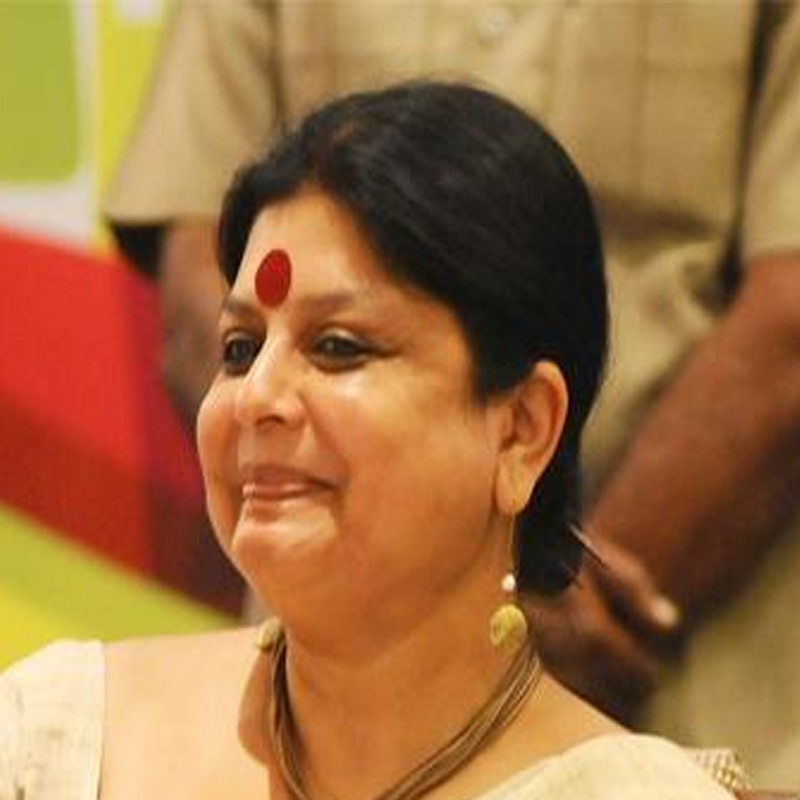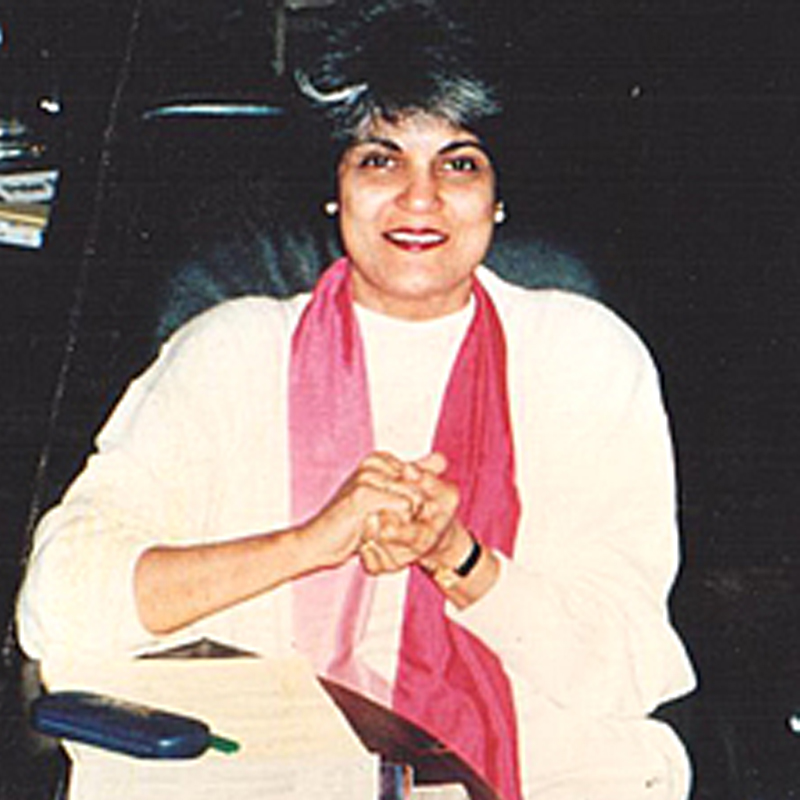
Having media and creative as separate functions is like running a television channel without content or a newspaper without editorial,” says Roda Mehta, ad industry veteran and mentor to many of today’s media hotshots.
In 1971, she stepped into the world of advertising at a time when there were a handful of women in this profession and moreover, she was the first woman in the industry who was on the media side of the business. An MBA from the Jamnalal Bajaj Institute of Management Studies, Roda can well be called the doyenness of Indian media.
Her father, an engineer, used to work for the Indian government. Born in Ferozpur, she spent most of her growing years in Delhi except for two years in Mumbai (then Bombay) owing to her father’s transfer here. But they moved back to Delhi when the Chinese invaded India in 1962. Roda studied in the Convent of Jesus and Mary and did her bachelors with Economic Honours from Miranda House.
While in college, her father was yet again transferred to Allahabad and for Roda this offered her first experience of hostel life and living away from family. Brought up in an all girls’ environment, she decided in her third year of college that she didn’t want to pursue further studies in Economics.
It was during this time that one of her father’s friend’s daughter, who had completed her MBA from IIM-A, had taken up a job with a company in Bombay. “I decided that even I wanted to do the same. And that’s how I started my journey. I came to Bombay in 1969 and joined the Jamnalal Bajaj Institute of Management Studies, which also happened to be my first co-educational experience,” says Roda.
 For her, those two years were the best period of her academic life where she blossomed and thrived. “We were three women in a class of 35 students. The institute opened up a whole new world for me. I was elected by my class to represent the Management Students Association, which also put me in touch with the older batch and others who were doing their course in the institute,” reminisces Roda.
To her full credit, she literally brought life into the dormant students’ association and pepped it up. “I had a ball in getting people involved with the institute and with each other and organizing a whole lot of activities,” she says.
It was here that she realized that she had some inherent skills, which she wasn’t aware of till then. Being chosen as the representative of a body of people who were very intelligent, smart and had a high level of mental activity gave her a high. Her skills of organization, motivation and leadership also blossomed.
Another aspect that made her thrive was the entire teaching process at Bajaj where professors constantly challenged the students in the way they thought and the way they looked at issues. “We had some very talented professors in finance and marketing. Dr Basu who was the director and the head of the organization was also a part of our course. It was a completely different experience in terms of the teaching technique because there was no text book learning and homework but we did have to do a huge amount of reference work. It was just this whole combination of factors that suddenly made me thrive,” says Roda.
While in the first year, they studied all subjects; in the second year the students were supposed to take up a specialization. However, the options to choose from were very limited at that time. There was specialization in personal management, marketing and operations research that one could opt for.
“We didn’t have finance. My strength always lay in mathematics and that is the subject that got me a first class in my school and college. It was not a subject that I wanted to pursue academically but it was a subject for which thinking came to me logically. But since finance was not an option, I decided to take up operations research, which is when I was introduced to the world of computers.”
 Here she learnt to work on huge machines using FORTRAN programming language, which was used to develop mathematical tools for management decision making. A lot of her projects at that time were with banks and she worked with ICICI Ltd, Dena Bank and State Bank of India. When her course was coming to an end and placements began she and Lalita D Gupte (now joint managing director of ICICI Bank) were selected by ICICI LTD in 1971 for a then princely sum of Rs 1,100.
After one year with ICICI, Roda was approached by Hindustan Thompson Associates (now JWT) to join them on the media side. “One of our visiting faculty at Jamnalal Bajaj was the then Glaxo marketing director Tarun Gupta. At that time, HTA had a media director called Suren Chawla and the first National Readership Survey had been released by ORG in Baroda in 1971. HTA was looking for someone with appropriate skills to computerize that large database so that they could do planning with it. Suren and Tarun were good friends and it was Tarun who recommended my name to him,” she says.
Compared to her Rs 1,100 salary at ICICI, the HTA job was offered to her for just Rs 750. So how come she left ICICI for HTA? “See this is what life is all about. I left it for a very simple reason. We were literally the first generation post independence. I was born in 1950, so we knew about our past and it was a part of our history. We still had that fire in our belly to make a contribution and we knew that we were doing a course that gave us the base to be able to make that contribution and also to grow rapidly. We had seen our fathers doing government jobs and we didn’t want to do that but we certainly wanted to do something. One thing that was absolutely certain for me was that I wanted to contribute and grow as growth would automatically come through contribution. For me salary was not critical, it was about how quickly I could grow within an organization. I somehow felt that at ICICI it would be a slow and plodding progress,” she states.
Another thing is that she didn’t know anything about advertising at that time and it was a challenge to take up the job at HTA. “My parents knew no different at that time and it was great that they left it to me to make that decision,” she says.
 Roda also approached the head of her operations research department DR Mrs Patil (who subsequently became the director of IIM Lucknow) and sought her advice on her career move.”She told me that this was the place where I would be able to contribute because banks were only doing what I’d already done in my course. Once I got the stamp of approval from her, I joined HTA,” she says.
HTA came as a shock to her when she joined, more so because she came from a place where she had witnessed high levels of mental activity and was dealing with people of the same caliber. From such an environment, to plunge into a department full of clerical staff was a rude shock for Roda and she felt quite stifled.
Soon after taking up the assignment of the readership survey, she realized that it could not be computerized since the raw data was not available. So she informed her office that it wouldn’t be possible. “But for the very first time what happened was that the agency had graduated from looking at the base figures of circulation, radio sets and cinema halls’ seats to analyzing the area of how circulation was related to readership and whether the reach of radio and cinema was to the extent of which it was being stated,” she says.
As a result of this, for the first time clients too began to see advancement in the dialogue on how their budgets should be spent.
The people who challenged Roda were not within the media but from the accounts servicing department.
Some good minds like Deepak Sen, Ram Ray, Mike Khanna (who was an account supervisor at that time) and Ram Segal constantly challenged her. And it was this that made her continue at HTA despite the fact that she was feeling stifled.
Another reason was that Roda was literally taken under the wing of Usha Shivdesani (now Usha Bhandarkar, who subsequently joined O&M and then Lintas) in the creative department. “My closest ties have always been with creative people. I had found this whole world of the creative thinking process and how ideas and messages got evolved from strategic directions fascinating and also being a Convent school product, I enjoyed the English language,” she says.
 At this time Roda was preparing herself for the profession in a strange sort of way because while she was working at HTA, she took a public speaking course for the simple reason that she lacked the confidence to be able to present. She joined USIS for the course and ended up winning the award at the end of it. “I have always been a dark horse in everything I do because there was no way in hell that I should have won the award in the public speaking course and I did! The ability to stand up and speak in front of a huge audience at the Taj was a delightful experience and it was even better when I won the award,” Roda recalls fondly.
In the meanwhile, at HTA things were not looking so hunky dory and as it often happens, the senior management in Media felt threatened by Roda. “Once that happens, there is always a breakdown in communications and both sides begin to take positions. There was a lot of hierarchy in HTA and I was feeling stifled. I also got the feeling that I was threatening my boss. That’s when I realized that it was not going to serve me or the company any purpose and like is inevitable in every relationship – your boss stays and you have to make that move,” she says.
While this was happening, Usha Shivdesani had moved to Ogilvy as creative director. It was a young agency and had some great minds at its helm. The then managing director Mani Ayer was 34 years of age when he took over as Managing Director of the agency in 1974. Ranjan Kapoor was an account supervisor at that time, Mr V K Trivedi was Finance Director and the legal head was Pervez Balsara. Another talented professional and a wonderful human being was the Media Controller, Praveen Desai. “Sadly enough, Praveen was an alcoholic and things were not moving on the media front. Mani Ayer had realized that to be a good agency they needed not only a strategic account management team but also a good balance between creative and media,” informs Roda.
Her name was amongst the three that were recommended at Ogilvy’s management meeting. The other two people being considered were Deepak Raja and Indrani Sen. Roda was zeroed upon and Usha volunteered to get in touch with her.
By this time, she had already spent four years in HTA and was more than ready to take the plunge.
Speaking on her stint with HTA, Roda says, “Levers & Ponds were very challenging clients. They were the ones who pushed the concept of bringing marketing and advertising in synch with each other. I know I pioneered scientific media planning but to my mind the real contribution I made was in helping the client see the juxtaposition of how advertising spends could actually enhance sales through well-conceived consumer targeting. That came largely from my background in management. Had I done only Economics, I’m not so sure that I could have brought that perspective. At the same time, my Economics background did help me to understand demographics and how to target and analyze population. It was a fantastic combination for what I finally ended up doing.”
 Mani Ayer met her when she was on an assignment in HTA’s Madras office, which was headed by Ram Ray.
In the midst of this, when this writer was enjoying some good home cooked food (something one longs for on account of living sans family in Mumbai) and engrossed in hearing Roda’s life story in her neat Pune home, she suddenly said, “This is a long saga. Do you really want to hear it all?” To which, I eagerly nodded in between spoonfuls of rice and dal. And she kindly obliged…
“I was in Madras for three weeks and Ram Ray used to pick me up from my hotel every morning and take me to office and also drop me back. One day I told him not to fetch me. Now he was a man with his antennas always up and maybe he figured something was cooking. The reason I asked him not to come was because I had insisted on meeting the managing director of Ogilvy Benson & Mather whom I had never ever met even though he had offered me a job,” recalls Roda.
So they met across the table and he gave her the spiel on what they were looking for, which was to make media a robust function within the agency. But Roda put forth two conditions before she accepted. She wanted complete freedom and independence to be able to do the work she wanted to do and she didn’t want to be involved in any corporate politics. “I had seen enough of that in HTA and didn’t want it to happen again,” she says.
And the rest as they say is history. Mani Ayer granted her that and with that began her 23-year long stint at O&M.
From being a media planner at HTA, she went in as Media Group Head in Ogilvy with Pravin Chawla as Media Controller. Mani Ayer had told her upfront that Pravin and she would handle separate set of accounts. “I must say to Pravin’s full credit that neither did he ever interfere nor did he ever feel threatened by me. If anything, he gave me support and for me it was a hugely refreshing change. I think he knew what his problem was but he had the bigness and the graciousness to accept the fact that someone younger could work along with him,” says Roda.
Of course at Ogilvy she once again inherited a clerical team and, at the same time, a client list that had only been planning on the basis of circulation. Her first pitch at Ogilvy’s was for Corn Products for which she had prepared a scientific plan with sales figures, marketing strategy etc.
The client was very complimentary after the presentation and the Ogilvy team followed it with the estimates for campaign release. What happened after that taught Roda her first lesson. “We sent the estimate and it was returned to us with the publications the client had been using in the past! That was my first lesson – that the client was involved with the media and that there was a direct link,” she recalls.
As a professional, there was not much she could do unless she could break that link. “I didn’t realize it initially but that was what set me on the path to break corruption in the business through a syndrome between clients and publishers. The only weapon I had in my hand was scientific media planning. So while I didn’t succeed with Corn Products in the beginning, I decided that I was going to adopt one client and turn it around every year. Another practical factor that made me take this move was that I didn’t have trained planning staff to take on more clients,” she says.
The second realization that struck her was that if she didn’t train people, then there was no way that she could turn this function around for the agency. She had observed how her previous boss had guarded information and she had come to the realization that it was not in the sharing of it but in its application that set a planner apart. So she set herself on the dual task of hiring people and training them.
In those days, when Roda entered the advertising industry as an MBA, the clients’ side was also seeing an influx of MBAs. Hence the old generation was giving way to the new and that’s how things started to look up for her. “We talked the same language and if the brand manager was convinced about something, it was very unlikely that anyone higher up could dispute it as brand responsibilities had been clearly demarcated,” Roda informs.
 With this trend, a new level of marketing professionals was emerging in client organizations with decision making at the brand management level. “Support had to come from the top; otherwise there was no purpose in the brand management position in relation to the earlier sway of sales management. It was the juxtaposition of this and scientific media planning that began to work. It soon became evident when publishers went directly to our clients and brand managers would tell them that their agency made the decision and that they should approach them. That’s how, very gradually, over a period of five to seven years around the late 70s, we began to break the old nexus,” she says.
This was also the beginning of Roda’s reputation with the media because the media suddenly realized that their links with clients had been severed and the doors influencing advertisers in their favor had closed. “That’s when my reputation began to build,” she says.
Interestingly, it was Roda who introduced the system of appointments for media representatives as prior to that everyone would just walk into the office without any notice.
“We had a series of media sales managers who had not evolved since they were still old timers, possibly had not trained in analyzing readership surveys. They would come to me saying, ‘Madam, you know everything there is to know about my publication.’ You can’t have a conversation when a person starts like that. So I would then ask about other things like editorial, geographic distribution, pricing policies etc. I then began to realize that people just dropping into my office like this was becoming a waste of time as I had far too much on my plate already. So that’s when I introduced the system of appointments, which was a new bolt for them,” she informs.
With this, Roda inherited the reputation of being some kind of an ogre, a hard nut to crack. Publishers began to realize that their ability to influence decision making on advertising was not going to be the same anymore… at least for Ogilvy Benson & Mather clients. Not far behind were other clients who through sheer word-of-mouth had come to know of what we were doing in scientific and unbiased media decision-making to maximize brand interest. They began to question their own agencies on want of this service. And that is how her reputation began to build with advertisers and other agencies as well.
During this time the price of newsprint had been going up and it became the focus of frequent rate increases in print. This in turn led to a rapid rise in advertising costs. This was also the time when visionaries like Samir Jain had just taken over the reigns at The Times of India from his father. “He had just returned from the US and his frame of reference for the daily was The New York Times. He wanted to build TOI into a like newspaper with new editorial pages serving many interest groups, offering advertisers opportunities for targeted advertising and thereby providing him new avenues for charging advertising rates. And the reality was that The Times of India did dominate the media scene of Bombay those days,” Roda recalls.
Since her job was to maximize values in media at the lowest possible costs, she started looking at rate cards carefully and began questioning – “Why do we have to pay the rates we were paying?”
Newspapers had two kinds of rate back then – contract rate and casual rate. If an advertiser took less than 251 or 500 column centimeters of space, he would be charged a casual rate and if he used more, the contract rate would apply. Roda questioned “Why do we need to pay two different kinds of rates? Why can’t we just pay the contract rate?”
This was the beginning of the era of negotiation in the media industry.
 It was also around this time that color got introduced in the Sunday edition of the Indian Express and soon other publishers followed suit. The Hindu came out with a rule that you could not take a color ad in the Sunday supplement unless it was a minimum of 150 column centimeters in size. “I again questioned why we had to bind both creative message and the frequency of its appearance just to meet their demand of 150 column centimeters?”
Magazines too began to levy charge extra for bleed and also double spread charges. Roda’s question was – “Why should I pay extra when I’m giving you two pages of advertising? You in fact are benefiting from two pages at a time?” But the argument in return was that because of the double spread, editorial content that generally appeared on the right-hand page had to be taken on another page. This did not make for a well-reasoned argument to Roda.
While some publishers had begun to negotiate on their rate cards in order to get our advertising, some others refused depending upon the strength of their publication in its area of coverage. The Times of India was one such while The Hindu proved to be the last bastion against negotiations.
Roda’s argument was that she wasn’t negotiating unfairly. “I wasn’t asking for a change in the base rate. I was only asking for a removal of the add-ons that they had opportunistically introduced to maximize their revenues without any real rhyme or reason,” she says.
In 1980, Ogilvy won the Cadburys account to grow the chocolate market for which Suresh Mullick had created India’s first really big print color campaign. The tagline of the campaign was ‘Sometime Cadburys can say it better than words.’
“The campaign had close-up shots of families enjoying and bonding. It wasn’t just the size and number of ads in the campaign; it was the sheer look of the advertising that was so refreshing. Every publisher wanted to feature it. The earlier small-size ads had featured a cow for its association with the goodness of milk in the chocolate,” recalls Roda.
Concurrently, the client demanded presence in nearly every single publication across the country as per past practice in order to be seen and noticed. This went against Roda’s advice of delivering optimum reach targets but with high frequency through a mix of sizes and creative treatments. Cadburys nevertheless insisted and released their ads in 101 publications as a result of which they could only afford a couple of ads at a time. “After a while, the client came back to us and said that they were not being noticed. It was only then that I was able to get the client to benefit by taking the agency’s advice. The moment we changed strategy, reduced the number of publications by half and raised the frequency, the campaign began being noticed and the chocolate market began to grow finally,” says Roda.
 “But The Hindu was still resisting us on the minimum size of 150 column centimeters space issue. By which time I had won the client’s confidence as he realized that the agency’s approach had helped him improve his sales,” she adds.
Roda now told the client that they would not give The Hindu any colour ads until they brought the minimum size down. “The client stood by nevertheless and we did not release any advertising in colour. That’s when the shoe really pinched. The Hindu finally brought the minimum size down to 100 column centimeters (which at the time suited us as the minimum size of the ads was of that dimension). Yet even when we gave them the campaign in color, I told them that they needed to remove this rule of dictating the size of ad,” says Roda.
If one looks at it in retrospect, Roda was constantly questioning the status quo and while that, she believes, came from a certain amount of bravado, “it also came from the kind of discipline I had had from management studies, which was to look at issues from various viewpoints and to question underlying premises before taking a decision.”
Nevertheless all was not hunky dory as with this kind of action on negotiating rates, The Times finally took a position in an INS meeting and said, “If Mani Ayer cannot rein her (Roda) in, we will have teach Ogilvy a lesson.”
This led to Ogilvy being slapped with a notice of disaccreditation. “If an agency doesn’t have accreditation, you lose your credit period and that means your clients have to pay upfront,” Roda explains.
When that notice was slapped on Ogilvy, a Board meeting was held. “To the credit of Mani Ayer, the Finance Director and the Legal Director, it was agreed that we would take on the challenge. I have no doubts our MD had many sleepless nights but unless you take a position, you cannot be a leader. Also, Ogilvy by now had seen the huge benefits it was deriving from its strong media function. Around 1986, we were winning clients purely on the basis of Media,” she says.
“Everywhere in the country we were winning accounts thanks to this unbeatable inter-disciplinary combination of Mani Ayer, Suresh Mullick and I. I have to say that whatever I have achieved, I wouldn’t have been able to without the kind of support and the high ethical environment that Ogilvy provided me. When Mani Ayer promised me that there would be no politics and I would be given complete independence, he meant it and for that I owe him a huge debt,” says Roda.
What’s more, fortunately and strangely enough, it was the Managing Director (Mr. Murali) of the very publication that Roda had pushed into reducing their column sizes – The Hindu – who at the next INS meeting questioned those present if they had any idea what they had done? “This was because Mani Ayer’s greatest industry record had been to pay the media on time. There was never a default. We were earning good profits and paying our staff huge dividends. So you cannot take an action like that with a financially strong company! The INS had to withdraw the notice. It takes no rocket science to guess what that meant to the egos of people who had taken the action!” Roda says.
With these sequence of events, Roda’s reputation was growing bigger and bigger.
 Roda was also responsible for launching the rural and outdoor divisions of Ogilvy. “We were at a Board meeting at Jaipur, had crossed the Rs 1 billion mark in turnover. We were now looking to grow our business further. When I looked at the way our clients were spending money, I realized that outdoor was something we had no influence on, largely again because of corruption between regional sales people thanks to the budgets they were given for ‘local’ promotion on outdoor” she says.
At the same time, she also realized that the agency had no expertise in the area and without that there was no way that this business could be won. So in 1989, Roda hired Anjali Kasbekar, who at that time was in account servicing at Lintas and wanted to make a shift into media. “I saw potential and took a chance on her. To her goes the credit of setting up O&M’s outdoor unit with Hindustan Lever as the first client for which she did an admirable job for the launch of Le Sancy soap, winning the client’s confidence in the agency’s ability to service this medium,” says Roda.
Then in 1991, at O&M’s senior manager meeting called Master Class, issues confronting the company across all parts of the agency were discussed. Roda’s close working with client’s marketing departments had revealed O&M’s lack in communication services in rural areas where clients were entering and growing their business. So she posted it as a major thrust area for the agency.
This rural focus was largely begun by Levers. That’s when the germ of the rural unit at O&M was sown. “With the hiring of Dalveer Singh, whose passion for rural advertising only surpassed his faith in my ability to deliver the goods, we were on our way! This unit began as a result of these small initiatives and subsequently grew to be huge money spinners for the agency, particularly after the fall of the commission system. Outdoor and Rural were two areas where we could take our commission without necessarily having to reveal what we were charging. O&M’s capitalized billing grew dramatically on account of these after we won the Hindustan Lever AOR in 1998” informs Roda.
On the other hand, the company that Roda started the rural unit for – Levers – was the one who started looking at Media as a purchase function. They initiated the unbundling of creative and media. This also came about due to the trend with their international parent with whom they had close ties. “I think that was the biggest disservice Levers did to their brands and to the profession of advertising because it created a schism between these 2 fundamentally linked disciplines for effective advertising. With this change, every business within the company began accommodating umbrella media buys (whether appropriate or not for their brand) to ensure margins and bottom lines. Eventually in 1995 we lost the Lever media account when they went in for an AOR. In order to save on media spends, they decided to do what their international counterpart was doing to make media more transparent,” she says.
Lynn de Souza recently sent Roda a speech by the legendary account planner Tim Broadbent, who called the separation of creative and media agencies “a catastrophic mistake” and Roda couldn’t agree with him more. “It was a huge huge mistake and I hope that in the near future we see the two coming back together. Those clients who have done this have done it to their own detriment as well of others. I hope that a new generation of marketing people will emerge who realize the mistake made by their earlier generation. Moreover, this error of judgment was made more often than not by finance and such people who had peripheral knowledge about branding and marketing,” opines Roda.
However the unbundling model seems to be working throughout the world. So is it just a perception that all is hunky dory? “I think that good sense has come a long time ago in Europe but it has yet to get widespread client sanction otherwise it won’t happen. In fact certain media independent agencies are looking at backward integration into creative. So I think that the move will come. It’s like planning and running a television channel without the content or a newspaper without editorial content. It has to be a coherent whole and separation is unthinkable,” she explains.
 Soon enough, fatigue set into Roda’s professional life and she realized that she was going nowhere in Ogilvy. “I was doing much of the same thing. While I was away in Bangalore in 1992-93 as President, South responsible for the advertising agency in Bangalore and Madras, and later Director – Worldwide Client Service in 1994-96, I was asked to concurrently oversee the All India Media function. It wasn’t really possible to do that because both the offices were facing huge manpower problems. Clients were extremely unhappy and I was working 14 hours a day and exhausted by the end of it all. Later, handling multinational clients from the Ogilvy network who were entering India involved a lot of hand holding and strategic planning, often times beyond advertising, which I thoroughly enjoyed. So I was running the Media function by holding quarterly reviews as no one was being hired to take over my function to lead Media,” she explains.
In 1995, Roda got to know that after being in O&M for over 15 years at senior management level, one was entitled to a sabbatical. While no one had offered it to her, she took the initiative to ask. “I asked to be sent to Harvard for three months for the Advanced Management Program. Seeing the way things were going, I knew I didn’t have very much longer in the Indian agency. Apart from that I also realized that I wanted to go beyond advertising and return to larger issues concerning business,” explains Roda.
After Harvard, she visited O&M’s New York office and met up with Shelly Lazarus (Ogilvy & Mather Worldwide Chairman and CEO). “At that time I was involved in Worldwide Client Servicing and she asked me to give her a review of it. I think she had already made a decision to disband it but she wanted more inputs and maybe my appraisal helped her take that decision” Roda recalls.
Back in India, Media was in shambles and one of the things on her agenda when she came back from Harvard was to reenergize it because “it really hurt me to see how low we had gone,” she says. People who she had hired and trained in the agency were leaving and there had been little she could do due to her other responsibilities. So reluctantly she offered to return to Media to resurrect the function and start an independent profit center within the agency.
In 1997, Shelly Lazarus called 25 senior managers across disciplines and countries to propose a future strategic direction for the agency and invited Roda too. “I was with this group with 24 of the agency’s brightest minds and enjoyed it – meeting people and being active in the agency’s larger structure,” she adds.
Seeing that there were no further opportunities for growth within the Indian agency, she gave it till December 1997 and asked for an overseas assignment to be identified in the meantime. However she would be told of overseas options in media only. What came as a wake up call for her was when she learnt that there had been two requests for her by O&M’s worldwide office to be sent to worldwide client servicing. But she was never told about it and the request was turned down twice without her knowledge.
“There could be two reasons for that. It could be because they wanted to retain me here in India or it could be that they didn’t want me to be known internationally beyond media. I don’t know what it was and I didn’t care to ask but I knew I had to get out,” says she.
“When I found nothing happening and raised the question in February 1998, I was told that I should have reminded them. That’s when I knew I had had enough and I put in my papers,” she says.
For a very long time, her decision to quit was not announced internally. The reason was that Levers had put up their entire business for an AOR pitch. This was the same account that Ogilvy had lost three years ago to HTA.
 The Levers pitch was sometime in March – April and she had wanted management to announce her decision to quit. “Since I had already taken a decision, it was only fair that Levers should know about it. But I don’t think they wanted to announce it. I didn’t even want to front the pitch but I was mandated to do it. The outcome of that was that we won the rural and the outdoor business of Levers, which was the most profitable part of the media AOR. The traditional part of the business went to HTA, which was led by Ketaki Gupte, who had done a great job of it in the past,” she says.
Finally Roda decided to send an email to announce her resignation. Of course there was a huge outpouring and a sense of despair that the last bastion of Ogilvy values was leaving the agency but she was clear in her decision. So on the 8th of June 1999, she walked out of O&M and never looked back!
Much as it happened at HTA, the reason for her leaving was again because she was feeling stifled and throttled. “I realized that for me, my independence was very important,” she explains.
By then she also knew that when a person is at a senior level, a lot of games go on between agencies, people, CEOs and international counterparts. “I realized that the games people were playing were not something I wanted to be a part of. The Ogilvy Board had been reduced into a dysfunctional rubber stamp Board from its once vibrant existence. The international company had upped their stake in the Indian company and it was in their interest to take over the company. Ogilvy & Mather India never got any benefit from them. We were a true Ogilvy agency – David Ogilvy style. Now we were reduced to being any other communications agency,” she says.
With her decision to quit O&M also came the decision to quit advertising altogether. “I was with O&M for 23 years and I stayed because I found that I was contributing and making a difference,” she says.
 In 2001, the Advertising Club of Calcutta inducted Roda into the Hall of Fame for making Media what it was and “for creating a generation of media planners”. In 2003, the Advertising Club of Bombay recognized her contribution to the industry with a Lifetime Achievement Award.
Roda feels that her contribution to the industry came not only from improving it but also helping other women in gaining sanction from their parents to work at that time. “I was very visible in the media and media itself was becoming a very dynamic business. It used to get written about in the papers giving this industry some kind of sanctity and credibility in the public eye. Ishaan Raina’s wife who worked with a bank once told me, ‘Thanks to you, our parents allowed us to work’,” Roda says.
Now she lives in her beautifully kept Pune home and the only industry related work she is involved with is that of Media Research Users’ Council (MRUC), where she heads the Technical Committee. She set up her office in Pune, where she could be close to her father (90) and mother (85).
Besides that, she is also involved with a lot of developmental work. “One of the things I found was that there was a lack of corporate skills in the development sector. So I wanted to form a bridge between the two,” she says.
She got her first break in this sector thanks to a contact she had made in 1995-96 when she moved to Delhi to oversee international clients as well as the Delhi Office. “I had got in touch with someone specifically for rural advertising then. In March 1998, he organized a Round Table Conference for one of his clients – International Development Enterprises – who were involved in manual irrigation for small and marginal farmers for which he had asked me to present our experience in rural communication. When they read in the newspapers that I had resigned, they contacted me. That was the first break I got in the development sector. I have since joined their Board in India when they became a Section 25E company. I was also closely involved with Swiss Development Cooperation, the donor agency that funded their project,” Roda says.
She has also worked with ICICI’s Social Initiative Group to develop their web portal for generating worldwide donations for Indian NGOs.
Her view on the current agency culture: I see agencies spend money on training these days and even then end up losing people every two years. The culture has changed rapidly from being a “we” culture to a “me” culture and a “me” culture doesn’t really contribute and grow.
What makes her tick: Strange as it may sound, I have found that while I might have been at the forefront of doing what I did, I now know that I feel more fulfilled when I work with those who serve others. For example I’d rather work with the management of an NGO than work as a member of the NGO.
I feel very strongly about things like corruption. Right now it is my aim to work in any which way to ensure that the Right to Information Act is publicly known by every citizen of this country because it is such an important tool to ensure that their work gets done smoothly.
She is a member of an organization called Open Space that works to strengthen civil society and also of the National Society for Clean Cities. “The Pune Municipal Corporation decided to get budget inputs this year from the local Mohalla Committees for what each ward needed to do to improve the quality of life of its residents. They would use these inputs to finalize their PMC budgets for next year and I was very active in that,” says Roda.
“These things excite me. Anything that requires things to be developed, or requires new ways of looking at issues or anything that is on the path of growth and not stagnation is what excites me,” she adds passionately.