Category: News Broadcasting

  • Animal Planet’s ‘Crocodile Hunter’ Steve Irwin killed while filming documentary

    Animal Planet’s ‘Crocodile Hunter’ Steve Irwin killed while filming documentary

    MUMBAI: One of television’s popular personalities Steve Irwin has passed away. Irwin who is well known to viewers of Animal Planet for Crocodile Hunter died after he was wounded by a stingray barb to his heart. He was filming a sequence on Batt Reef in Australia for his daughter’s new TV series.

    Media reports state that a helicopter rushed paramedics to nearby Low Isles where Irwin was taken for treatment, but he was dead before they arrived. A stingray’s barb is said to be as dangerous as a rifle bayonet.

    He is only the third person in Australia to die from being stabbed by a stingray. Irwin became famious on television for placing himself in precarious situations with animals like snakes and crocodiles. His fascination for animals stemmed from the fact that he grew up near crocodiles, trapping and removing them from populated areas and releasing them in his parent’s park.

  • India TV stands by cricket story; Modi threatens legal action

    India TV stands by cricket story; Modi threatens legal action

    NEW DELHI: Taking umbrage of what it termed “misreporting,” the Lalit Modi-headed Rajasthan Cricket Association (RCA) announced it will file a legal suit against the Rajat Sharma promoted India TV Similar action will also be taken against a widely circulated Hindi daily, Punjab Kesari, an official statement from RCA stated.

    The statement added that Modi, president of RCA and vice-president of the Board for Control of Cricket in India (BCCI), has taken “strong exception to the malicious, fabricated (and) distorted reporting” by a section of print and electronic media, while reporting a survey by income tax authorities on RCA office premises in Jaipur on 1 September.

    When contacted, India TV said it stands by the story and added it was “duty-bound to report facts without fear or favour, howsoever inconvenient” they may be to the parties who are being probed by income tax authorities in Rajasthan and Mumbai.

    RCA has contended that while the aforementioned two media organizations said a raid was conducted in the middle of the night, it was a “routine survey” that did not place in the middle of night.

    Apart from some other ‘disputed’ facts, the regional cricket body, which has been a platform for Modi to contest against some former BCCI officials, also said the visuals telecast were not of the RCA.

    Legal counsel for the RCA Mehmood Abdi, was quoted in the official statement as saying, “RCA and Mr. Lalit Modi have decided to take legal action against all such publishers and broadcasters, particularly India TV of Mr Rajat Sharma and Punjab Kesari, for deliberately twisting facts of an interactive session, which took place between the RCA officials and the income tax authorities.”

    Pointing out that the tax authorities came for “verification of records”, Abdi said media “preferred” to describe it as “raid and seizure of records and recovery of cash from RCA office.”

  • Harris comes out with solutions for mobile TV

    Harris comes out with solutions for mobile TV

    MUMBAI: Harris’ broadcast communications division will showacse solutions for the emerging mobile TV market at IBC2006. The event takes place from 7-12 September in Amsterdam.

    It is participating in early stage trials across Europe and Australia. It is also developing transmitters for Modeo and Qualcomm MediaFLO USA. applications (both scheduled to launch by 2007). At IBC2006, Harris will demonstrate mobile TV broadcasts for the leading standards (DVB-H, FLO and T-DMB) featuring Harris transmitters and infrastructure/networking products, as well as third-party receiving equipment.

    Harris says that a broad range of Harris content delivery solutions for mobile TV will be on display, including platforms for DVB-H, FLO and T-DMB applications. Each standard offers viable benefits for operators. IBC it says is an excellent opportunity to demonstrate these benefits and how it is equipped to offer the most complete, technically sound transmission and infrastructure solutions in the broadcast industry.

    Mobile TV transmission solutions from Harris have been used to develop and prove the effectiveness of the DVB-H, FLO and T-DMB standards for mobile broadcast television. The company will highlight its complete mobile TV product range through four separate demonstrations in the Mobile Zone. A Harris NetVX networking system will deliver content to the Mobile Zone from the main Harris stand in some demonstrations.

    DVB-H over UHF

    The Harris DVB-H UHF solutions work in both high- and low-power applications. The higher-power Atlas liquid-cooled transmitter (offered in versions from 1.25 to 9 kW) is featured in the main Harris booth. In the Mobile Zone, Harris is delivering DVB-H content to a handset via the Atlas DTV-660 air-cooled UHF transmitter, which is offered in power levels up to 1.5 kW.

    DVB-H over L-Band

    The Harris Cool Play Mobile TV transmitter offers a ‘convection-cooled’ architecture for outdoor installations. The 1670 MHz version of the transmitter will transmit video to a handset developed for Modeo, a U.S. DVB-H operator. The Cool Play 1670 transmitter is available at power levels up to 400 watts in L-Band.

    FLO over UHF

    The entire of range of Harris ATSC transmitters are now available for FLO applications, based on the new Harris Apex FLO exciter that Harris is featuring in the Mobile Zone. Harris will receive live transmissions of a multichannel FLO service on a handset. This marks the first Harris display in Europe of FLO transmission products.

    T-DMB over DAB

    Harris has a full line of VHF and L-Band DAB transmitters that can be used to deliver mobile TV over DAB. In the Mobile Zone, Harris will demonstrate the receipt of digital radio channels and multichannel TV on a T-DMB handset from a Harris DAB-660 transmitter. Harris will demonstrate how the standard’s highly efficient audio encoding allows for transmission of multiple digital radio and video channels using the same transmitter.

    The company will display its strengths in terrestrial TV transmission. The Harris Atlas transmitter family will be prominently displayed in the delivery section of the Harris stand. As a global UHF transmitter platform, the Atlas liquid-cooled transmitter family supports analog, digital and mobile television standards. Visitors can see an active demonstration of the Atlas DVB-T/DVB-H platform delivering HDTV and H.264 mobile TV content. A widescreen display will receive and broadcast the HDTV content, with the H.264 mobile content received on a handheld device.

    The terrestrial TV area also will include a demonstration of the Harris/Neural Audio MultiMerge for DTV. MultiMerge uses intelligent detection to blend any audio (mono, stereo, matrix encoded stereo (L/R), and 5.1 discrete content) into a seamless, uninterrupted 5.1 surround sound stream.

    Harris began developing terrestrial transmission platforms for mobile TV in 2004 after participating in early demonstrations and the development of the DVB-H standard. The company’s recent acquisition of Leitch Technology adds a range of servers, routers, switchers and processing equipment to Harris® NetVX video encoding and distribution systems, providing the infrastructure for bringing content into the mobile TV headend. Meanwhile, equipment from the Harris Software Systems business unit adds a complement of broadband software and distribution equipment for network management, traffic scheduling, digital asset management and ad insertion, among other applications.

  • Consumers prefer plasma TV sets to LCD: Synovate

    Consumers prefer plasma TV sets to LCD: Synovate

    MUMBAI: Seeing is believing! While there is debate the world over about which television technology is superior -Plasma or LCD a study by Synovate in Europe has thrown up insights.

    Consumers in Europe significantly prefer plasma TVs over Liquid Crystal Display (LCD) sets after viewing in home conditions.

    The study, conducted by global market research company, Synovate, is the first ever European research into consumer preferences in medium to large-screen television sets.

    The margin was almost two to one in favour of plasma screens, with 73 per cent of respondents who viewed a side by side comparison rating plasmas as providing the ’best image quality’ ahead of LCD (27 per cent).

    The Synovate study, conducted in the UK, France and Germany, asked consumers which screen provided the best overall image quality for the following criteria: sharpness, colour, response speed, contrast, black quality and resolution. The study was commissioned by Panasonic and Pioneer.

    Plasma takes the lead The results reveal a clear favour for plasma. 61 per cent of consumers felt plasma screens provided the best sharpness experience, compared to 21 per cent who preferred LCD.

    When it came to consumer perception of colour, response speed and contrast, 65 per cent of consumers deemed plasma screens to have the best colour quality compared to 24 per cent who favoured LCD.

    Similarly, plasma screens were voted as providing the best quality for response speed by 62 per cent of consumers, with LCD scoring 15 per cent. Nearly a quarter of respondents believed both technologies provided a similar performance.

    Plasma screens once again lead the way with contrast quality. 61 per cent of consumers tested believed plasma had the best contrast performance, compared to 26 per cent for LCD.

    The reproduction of black is of pivotal importance to the overall viewing experience. Before seeing the video sequence, plasma was deemed to have a slight lead (37 per cent to 30 per cent for LCD), while a third of people felt that both formats provide similar black performance. After seeing the comparison, the majority of people who felt that the ’best black quality’ is created by plasma shot up to 72 per cent.

    Synovate research director Yves Robeet says, “We have been watching the television market for some time and there is no doubt that buying a new TV is a confusing decision for consumers. This is partially due to the arrival of new broadcast technologies like HD and digital as well as the heavy promotion of LCD and plasma by manufacturers and the ongoing technical debate between media and analysts about which is the best technology. This research is designed to make the process much easier by asking consumers what they think.”

    Synovate canvassed 603 consumers and executed the study under certified home viewing conditions. Two groups were established. The first, with no prior knowledge of plasma and LCD, were simply asked to express their preferences after watching a 90 second video sequence played side by side on LCD and plasma displays (with their brand names covered) in three presentation suites. All respondents rated the experience using TVs in the 37-inch (XGA PDP and XGA LCD), 42-inch (XGA PDP and 1080p LCD) and 50-inch categories (both 1080p).

    The second group, who claimed to have knowledge of plasma and LCD, were asked before the comparison to reveal which format they believed provided the ’best overall quality’ and to reveal their initial preferences for plasma or LCD in several feature categories, including resolution, image depth, colour and black tone. These benchmarks were used to track changes in perceptions after the video sequence had been viewed.

    Initially, no preference was expressed in either Germany or the UK for overall image quality though French respondents expressed a preference for plasma.

    After watching the content, however, the whole group was asked the same question. Sentiment swung sharply in favour of plasma: 73 per cent of people rated plasma as the superior performer in image quality compared to 27 per cent for LCD.

    Robeet adds, “The research replicated the typical viewing conditions found in the home and produced very clear results. This suggests that retailers might consider researching the conditions in which customers watch their TVs to provide a similar environment in-store to compare performance in a life-like situation; after all, the viewing environment and the type of content people watch should dictate model choice more than any other factor.”

  • NDTV Profit launches three new shows

    NDTV Profit launches three new shows

    MUMBAI: NDTV Profit has introduced three shows Breakfast With Profit, Profit Fundamentals and Profit Newsroom. The three news shows will air between 8 am and 5 pm, wherein the flavour of the market, live reports, views, opinions, movements, buzz and trends of the market will be highlighted.

    Breakfast With Profit anchored by Abha Bakaya and Namrata Brar will air at 8 am on weekdays. This 60 minutes breakfast show will bring to the viewers the top business headlines, stock market expectations, impact of key policy announcements, along with news and current affairs, informs an official release.

    Profit Fundamentals will air at 11 am on weekdays. Anchored by Manvi Dhillon, this 30 minutes show will focus on live market action, breaking news and corporate development just as trading begins to hot up. The show’s USP is spotting the early trends driving the trading calls and influencing the stock markets.

    At 12:30 pm, the channel will air Profit Newsroom. The 30 minutes show will be hosted by Aunindyo Chakraverty, Abheek Burman and Shivnath Thukral. It will broadcast breaking news, live reporter feeds, opinion and discussions with participation of industry leaders and market gurus.

    On the launch of the three new shows on NDTV Profit managing editor Vikram Chandra said, “Our three news shows starting in the morning till midday will cover the market action and provide in-depth analysis of the market and bring to the viewers the day’s ups and lows, trends, policies and breaking news. With reporters across the country giving in live feeds, the three shows will compliment each other in building up to the closure of the market everyday. These shows will link to the pulse of the market as and how it evolves every minute, every day.”

  • HTMT consolidates media subsidiaries, spins off IT/ITES biz

    HTMT consolidates media subsidiaries, spins off IT/ITES biz

    MUMBAI: Hinduja TMT Limited (HTMT) is unifying its media subsidiaries under one umbrella while spinning off its IT/ITES business into a separate entity. The demerger exercise is to bring independent focus to the two lines of activities, a senior company executive said.

    The residual HTMT (without IT/ITES) will house the media business and have a cash of $125 million. This will be used for new business initiatives, acquisitions and funding the expansion of the media and entertainment business.

    As part of the restructuring, In2Cable (subsidiary which is into broadband business) and InNetwork Entertainment (content) are being merged into IndusInd Media & Communications Ltd (cable TV distribution under Incablenet brand).

    “The parent company for the consolidated media business will be HTMT (an existing listed entity),” said HTMT global chief financial officer Yagnesh Sanghrajka. HTMT will have 60.5 per cent equity of the merged media and entertainment entity while Intel and Kudelski will hold 5 per cent.

    The demerged IT/ITES company, HTMT Technologies Ltd, is expected to list in February-March 2007. It will have a cash of $140 million. The funds will be used for acquisition opportunities overseas, particularly the US, as the company plans to add to its geographical reach and domain competencies.

    The IT/ITES business has a strong presence in Healthcare, Telecom, Consumer Electronics and BFSI segment. It is present in 5 different countries and has a successful track record in acquiring and integrating overseas ITES-BPO companies in the past two years. It is now looking for more such acquisitions in the USA-UK-Latin American markets to consolidate its position and expand inorganically as a leading global player in this industry.

    “Both the entities will have enough cash to pursue their independent expansion plans. The money is from the proceeds of the Hutchison Essar stake sale which fetched $450 million. Out of this, $150 million is for debt repayment while payout towards dividend will be around Rs 1.3 billion. The balance will remain with these two entities,” Sanghrajka said.

    Post restructuring, a shareholder of HTMT holding two equity shares of Rs 10 each would receive one equity share of Rs 10 in HTMT Technologies and one equity share of Rs 10 in HTMT.

    “The restructuring of the media business is from April. The demerger would be recorded from 1 October,” Sanghrajka said.

    The merger of media and entertainment is being done to converge video, voice and data services under one entity as a triple play provider. The merger will bring in operational efficiencies, provide sharper focus on the core business of media & entertainment, telecom and content distribution and ensure smooth implementation of conditional access system (CAS) across Indian cities, packaged with value added services, he added.

    The demerger of the IT/ITES business as well as the restructuring of the media and entertainment entities is subject to requisite statutory approvals and sanction of the Mumbai High Court.

    HTMT also announced a special dividend of Rs 20 per share on shares of Rs 10 each to the shareholders out of the proceeds of the Hutchison Essar sale.

  • Demands for channel price ceilings to be extended to non-CAS areas

    Demands for channel price ceilings to be extended to non-CAS areas

    NEW DELHI / MUMBAI: An immediate fallout of the Trai mandated Rs 5 for all pay channels in CAS areas is that demands have started surfacing from various quarters to regulate prices in non-CAS areas as well.

    “CAS should be beneficial for consumers and we hope that it is extended to other parts of the country soon, rather than being restricted to small areas of Kolkata, Mumbai and Delhi. This way, cable TV prices can be regulated,” Col SN Aggarwal, head of the Delhi-based consumer organization Voice, said today, while briefing newspersons.

    Aggarwal told Indiantelevision.com that prices of pay channels should be brought down in non-CAS areas as well since both “broadcasters and cable operators are fleecing consumers.”
    As per a Delhi High Court mandated understanding between the government and broadcast industry, CAS is scheduled to be rolled out in the south zones of Kolkata, Delhi and Mumbai from the midnight of 31 December 2006.

    Voice, which had been an active participant in the CAS debate, has also demanded that the government should make rules that force pay channels either to air programmes without any advertisement or become free to air.

    Aggarwal’s comments were echoed in a “non-CAS city” like Pune as well. Sudhakar Velankar, president of Grahak Panchayat, a Pune-based consumer forum, welcomed the Trai diktat saying, “We are in active negotiation with the MSOs to voluntarily adopt CAS for the consumers’ benefit.”

    Meanwhile, independent cable operators in non-CAS areas have slowly started realizing that low prices in notified areas would result in disparity in pricing, leading to discontent amongst general consumers.

    Cable Operators’ Federation of India president Roop Sharma today said that a meeting has been scheduled next week with Trai chairman Nripendra Misra, wherein a demand for extending the CAS regime to other areas would be made.

    “Prices in non-CAS areas too, need to be regulated and lowered and this would be our agenda at the meeting with the Trai chairperson,” says Sharma, adding that her organization would speak on the behalf of small cable operators in non-CAS areas.

    That independent cable ops in non-CAS areas are making demands for pay channels to lower their prices is evident from what several broadcasters said today.

    “I have got several calls from cable operators saying that we should shed our channel prices to bring them at par with Trai stated prices for CAS areas,” a broadcaster, controlling several pay entertainment channels, said.

    In Mumbai, Cable Operators & Distributors Association (Coda) president Ganesh Naidu says he wants CAS to be pushed not just in Mumbai but also across India. According to Naidu, “The new rates issued by Trai should be awarded to all consumers, rather than just restricting it only to certain sections of society. Unlike in the past, we are fully in support of CAS now that there is à la carte pricing of pay channels (something the cable fraternity has long been asking for).”

    Simultaneously, a divided broadcasting community is trying to come to terms with the “ridiculously low” prices.

    A sports broadcaster admitted that amongst the several options there is also one that envisages non-supply of its channels in CAS areas if the government refuses to budge on the Rs 5 per subscriber for any ay channel diktat.

    “It’s a fundamental decision to be taken. There is certainly an option to let go of the CAS notified areas and suffer the loss rather than bear the ignominy of investing huge amounts of money in programming and getting paid peanuts as subscription, which would upset the whole business model,” the broadcaster said.

    Still, the regulator feels such threats could only be addressed when it finally becomes a reality. “Trai would address the issue (of blackout of pay channels in CAS areas) when it is brought to it. Till now, no broadcaster has told us that it will switch off channels in CAS areas,” a Trai official told Indiantelevision.com.

    There are valid reasons for the Trai official being so sanguine about the “blackout threat”. According to another broadcast executive Indiantelevision.com spoke to, non-supply of channels “is not an option”. The executive pointed out that the new downlink policy allowed the government enough powers to cancel the broadcast licence of anyone it deemed as being out of line.

    So what are the options before the broadcasters? There are only two, he says. “Accept the Trai diktat or else fight it out in court.” No prizes for guessing the course the channels will be taking.

  • Broadcasters look set to move court against pay channel price ceiling in CAS

    Broadcasters look set to move court against pay channel price ceiling in CAS

    MUMBAI / NEW DELHI: The broadcasters knew it was coming, but that in no way lessened their outrage over the CAS pricing broadside delivered by the sector regulator today. The next course of action will in all likelihood be to move the courts.

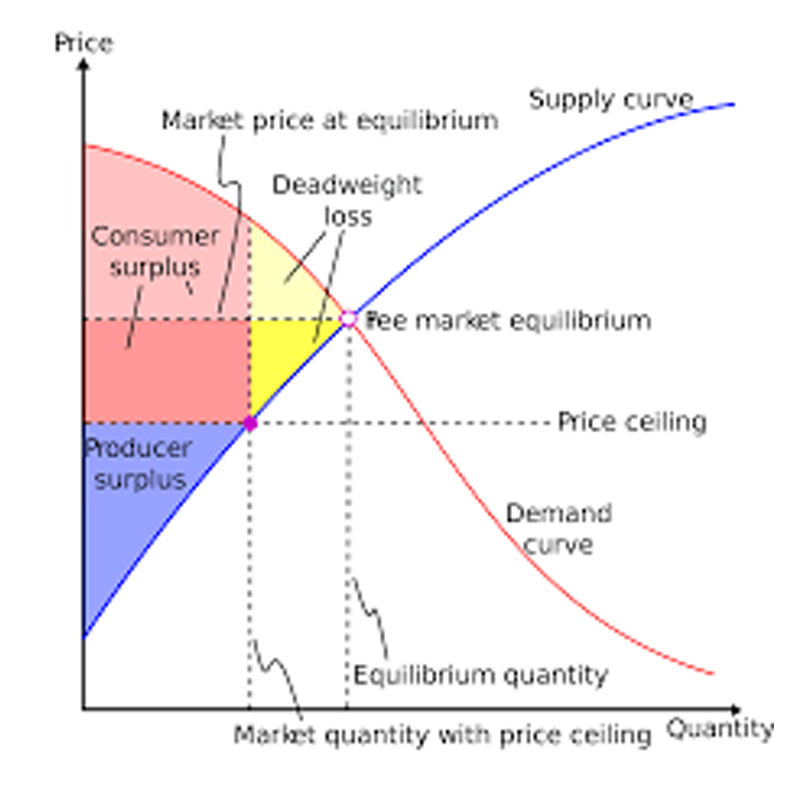
    In a move clearly aimed at “honouring” the pledge given by the government “that television viewers will have to pay less under a CAS regime”, the Telecom Regulatory Authority of India (Trai) today decreed a Rs 5 ceiling on pay channels.

    The broadcast regulator has fixed the price of free-to-air (FTA) channels in the basic tier at RS 77 (exclusive of taxes). The regulator, which oversees the broadcast and telecom sectors, has fixed the costing for pay channels whether new or existing at RS 5 making it mandatory to offer all pay channels on a la carte basis.

    RC Venkateish, ESPN India MD, did not mince his words while stating, “The pricing of pay channels by Trai are totally arbitrary and damaging for all industry stakeholders, including the consumer who might get low grade programming as investments in sports programming, like in entertainment, is high.

    “How can you expect broadcasters to put in money for procuring high-quality programming when the rates realised from the market will go down so much. It will have a dramatic effect on content quality.

    “Broadcasters are bound to seek legal opinion and take legal recourse.”

    That is obviously not how Trai chairman Nripendra Misra sees it. Misra said the prices that Trai had determined were very much in line with market forces. Additionally, Misra was quite categorical that this was “the final order on this subject.”

    In an interview to business channel CNBC TV18, Misra justified the regulator’s diktat by stating: “If you see the features of this policy announcement, the first thing to be appreciated is that there is only a maximum retail price; it does not fix the individual channel price. The second thing is that it does not fix the bouquet price. It also has not fixed the discounts for the bouquets. So everything has been left to the market forces except the maximum retail price ceiling, which has been determined by us.

    “To provide some stability to the revenues of the broadcasters, it has also been provided that the MRPs will apply only where the subscription is for a minimum period of four months.”

    Not surprisingly, the cable service providers are in tune with Misra on the matter. Says K Jayaraman, CEO of the multi-systems operator Hathway Cable and Datacom (in which Star India has a 26 per cent stake), “CAS is the best deal for consumers and the unwanted channels will go. As the fundamental thing in CAS is choice, that gets protected in this pricing structure,”

    That line of argument cut no ice with Arun Poddar, CEO, Zee Turner who said, “The rationale behind the pricing stumps us. If the regulator wants channels to come cheap, then the channels too would be forced to lessen expenditure on programming.

    “I don’t rule out broadcasters taking the regulator to court over the pricing issue.”

    The Indian Broadcasting Foundation, which represents the interests of broadcasters, is meanwhile scheduled to meet on Saturday to thrash out what legal recourse will be taken, as also to evolve a common strategy, senior channel executives tell Indiantelevision.com.

    The mood among cable operators was in stark contrast to that among the broadcasters. Cable Operators Federation of India president Roop Sharma, went so far as to say that Trai should have gone even lower on its pricing. “I think the prices of pay channels should have been even less at RS 3. It would have been better for the consumer then. Like in Pakistan, where each pay channel is priced at Re 1 or RS 2.

    “I feel it’s a win-win situation for everybody, including the broadcasters, who had accused cable operators of under-declaration.”

    “The comparison (with Pakistan) is ridiculous,” an incensed channel executive said. “The whole business model of broadcasting in Pakistan is based on piracy,” he pointed out.

    Commenting on the FTA channels’ pricing, Vikky Chowdhry, president of another cable operator faction NCTA, said, “The price of basic tier of free to air channels should be revisited. Still, at RS 77 (exclusive of taxes), 30 channels are manageable.

    Sameer Manchanda, joint MD, GBN, put the whole scenario in proper perspective when he said, “The prices looks low for sports and entertainment channels as programming investment is higher in these genres. The rationale of the regulator seems incomprehensible. At least some genres of channels could have been separated from the others.”

    Media stocks plunge on Trai’s pricing issue

    The market voted with its feet today on the news of the Trai’s price ceiling ruling with all media stocks sliding southwards. Media stocks showed a steeper fall than the the benchmark Sensex Index, which lost 24.87 points (0.21%), to settle at 11,699.05.

    According to a leading investment banker, “The directive issued by Trai will prove detrimental to broadcasters’ revenue kitty, especially for general and English entertainment channels and sports broadcasters.”

    Media scrips that fell today include Zee Telefilms, Sun TV, NDTV, TV18, TV Today and Sahara One Media and Entertainment.

    Zee Telefilms opened at RS 290 and closed the day at RS 265, down 8.6 per cent. Chennai based broadcaster Sun TV opened at RS 1,224 and ended at RS 1,199.
    NDTV opened at RS 200 and closed at RS 195, while TV18 opened at RS 647.15 and closed the day at RS 599. TV Today opened at RS 77 and closed at RS 76. Sahara One Media and Entertainment opened at RS 346 and closed at RS 339.

  • Pay channels fixed at Rs 5 each in CAS regime

    Pay channels fixed at Rs 5 each in CAS regime

    MUMBAI: The Telecom Regulatory Authority of India (Trai) today set a common price on all pay channels directing that under the conditional access system (CAS) regime they will cost Rs 5 per channel per subscriber per month (excluding taxes).

    The broadcast regulator has fixed the price of free-to-air (FTA) channels in the basic tier at Rs 77 (exclusive of taxes).
    The regulator, which oversees the broadcast and telecom sectors, has fixed the costing for pay channels whether new or existing at Rs 5 making it mandatory to offer all pay channels on a la carte basis.

    However, the broadcasters have been given the option to fix prices of individual pay channels, but within the prescribed ceiling. One of the salient features the regulator has highlighted is that the ‘minimum period of subscription of a pay channel has to be at least four months.

    This tariff will come into effect from 31 December 2006 in Mumbai, Delhi and Kolkata.
    Pertaining to the FTA channels, the price charged will be Rs 77 (exclusive of taxes) per subscriber/ month for a minimum of 30 channels. Additional FTA channels, if provided, also have to be accommodated within the above maximum amount.

    Trai has ensured adequate commercial interoperability, which means that a consumer can easily exit the scheme whenever desired. The regulatory has drawn two schemes for supply of set top boxes by the MSO / cable operators to compulsorily provide as part of a standard tariff package:

    a monthly rental of Rs 30 per digital set top box plus a refundable deposit of Rs 999 per box (refund will be made after deducting Rs 12.50 per month for use of the STB).

    a monthly rental 45 per digital set top box (Rs 23 for analogue set top box) with a refundable deposit of Rs 250 per box (refund will be made after deducting Rs 3 per month for use of the STB).

    The operators can offer alternative tariff packages in addition to the mandated standard tariff package, without any separate charges for installation, activation or reactivation, smart card viewing card and repair and maintenance (for five years) allowed. This salient aspect comes into force from 15 October 2006.

  • MTV Networks launches Viacom Brand Solutions through Xbox 360

    MTV Networks launches Viacom Brand Solutions through Xbox 360

    NEW DELHI: MTV India and Microsoft Entertainment & Devices Division have joined forces to develop unique programming content for Xbox 360, the online gaming service across its three channels – MTV, Vh1 and Nick.

    This tie-up also marks the launch of MTV Networks’ ‘Viacom Brand Solutions’ in India, which offers customized, integrated marketing solutions for brands to connect with their audiences in a manner that’s innovative and relevant, informs an official release.

    Whether its commercials, exclusively developed shows, infomercials or video-mods (to be introduced for the first time in India), gaming enthusiasts as well as those who’ve always wanted to learn more about gaming can look forward to some exciting action on air starting September first week.

    The new programming content on MTV Network channels developed specifically for Xbox 360 will include: a specially developed 105-second thematic spot – Porok (conceptualized, scripted and produced by MTV) to be on MTV.

    The release states that a special genre of programming makes its way onto Vh1 with Video Mods – an absolute treat for diehard gaming enthusiasts. Vh1 will launch a unique infomercial Gamers Grammar.

    Nick will include a special section Jimmy’s Techno Tips on one of its popular shows – Jimmy Neutron. Further, Nick will also launch vignettes on gaming Vox Pops and X Factor.

    And finally, as Microsoft launches Xbox on 23 September, MTV will go live to cover the event.

    Elaborating on the partnership, Microsoft Entertainment and Devices Division India country manager Mohit Anand said “MTV embodies the youthful spirit of Xbox 360 and is uniquely positioned for reaching out to the young gamers across the country. We are delighted with this partnership & look forward to deliver an unmatchable gaming experience to the viewers and program participants.”

    Speaking on the partnership, MTV Networks India MD and TV Networks Asia executive VP Amit Jain said, “This tie-up not only marks the coming together of two brands that play a significant role in youth lives, but also two of their biggest passions – gaming & television entertainment. With the Xbox 360 launch, MTV Networks also launches the ‘Viacom Brand Solutions’ in India, a new approach to offer marketing solutions to brands by leveraging some of the key strengths that already exist within MTV Networks – youth expertise, unparalleled creativity, on-ground event expertise, tie-ups with over 75 colleges and over 300 youth hang-outs and finally a bouquet of 3 channels that’s capable of connecting with kids as well as the youths.”

    Xbox 360(tm) will make its debut in the Indian market in the pre-Diwali season this year. The Xbox 360 system will come fully loaded with a 20GB detachable Xbox 360 Hard Drive for storing music, video and games, an Xbox 360 Wireless Controller, an Xbox 360 Media Remote control and a Component HD-AV Cable for connecting to component and composite television inputs, an Ethernet cable, and batteries, according to the release.