Category: News Broadcasting

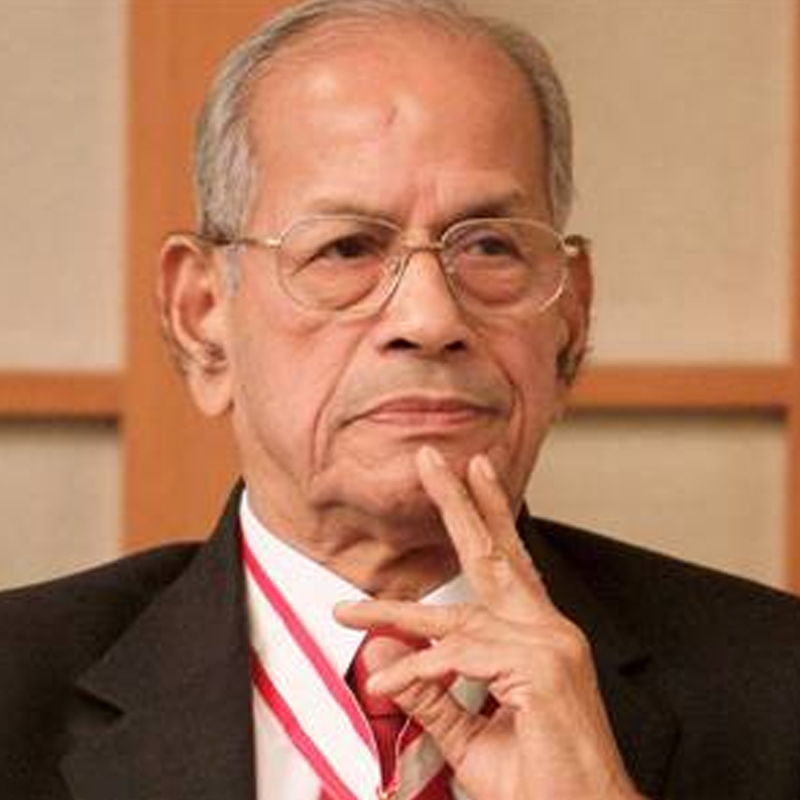
  • Dr E Sreedharan bags Zee Business Pinnacle Lifetime Achievement Award 2006

    Dr E Sreedharan bags Zee Business Pinnacle Lifetime Achievement Award 2006

    MUMBAI: The first Zee Business Pinnacle Awards, instituted by Zee Business, has announced its first recipients amidst the blitz of corporate glitterati of the country.

    Delhi Metro Rail Corporation MD Dr E Sreedharan, MD was presented the ‘ZeeBusiness Pinnacle Lifetime Achievement Award’ for his contributions to growth and development of the transportation system in the capital city.

    Jaipal Reddy, Minister of Urban Development, attended the award presentation ceremony as the Guest of Honour to share the illustrious moment of the real estate industry.
    The ceremnoy was attended by personalities including S K Mitter, CEO, LIC Housing Finance, Ashwani Kumar, minister of State for Industries, Sahib Singh Verma, senior BJP leader and Vaidyanathan V country head ICICI Retail.

    The Pinnacle Awards were given out in 19 categories from the Construction, Building and Allied industries in Real Estate. It acknowledged talents for their contribution in Technical, Creative and Individual achievements. The highlights of the award ceremonies were the announcement of Zee Buisness Pinnacle Lifetime Achievement Award conferred on Dr E. Sreedharan, MD, Delhi Metro Rail Corporation, Pinnacle Paint Award to Asian Paints, Pinnacle Steel Awards to Steel Authority of India Ltd (SAIL), and Pinnacle Bank to HDFC Bank, informs an official release.
    The details of the winners are listed below:

    Technical Awards

    Pinnacle Cement ’06
    J.K Lakshmi

    Pinnacle Paint ’06
    Asian Paints

    Pinnacle Plywood ’06
    Green Ply

    Pinnacle Steel ’06
    Steel Authority Of India Limited

    Pinnacle Tiles ’06
    H&R Johnson

    Pinnacle Bank-Home Loans ’06
    HDFC Bank

    Pinnacle Sanitary Ware ’06
    Parryware

    Pinnacle Electrical ’06 (Cables and switches)
    Havells

    Pinnacle Marble ’06
    R.K Marble

    Creative Awards

    Heritage Buildings ’06
    Taj Colaba

    Pinnacle Awards Commercial building ‘06
    Inorbit Mall

    Pinnacle Residential Building ‘ 06
    K.Raheja Group

    Pinnacle Promotion – Print ’06
    Omaxe Group

    Pinnacle Promotion-TV ’06
    Green Ply

    Pinnacle Special Jury Award
    Godrej Property for Planet Godrej

    Pinnacle Corporate Building
    ICICI Corporate Building Bandra Kurla

    Individual Awards

    Pinnacle Architect ’06
    Sonali Bhagwati Spazzio

    Pinnacle Interior Designer ‘06
    Sanjay Wadhwa, Director SWBI Architects

    Pinnacle Lifetime Achievement Award
    Dr E. Sreedharan, MD, Delhi Metro Rail Corporation

    Speaking on the occasion, Zee News Ltd director Laxmi Goel said, “We are thrilled to have this opportunity to honor individuals and organisations who best reflect their commitment towards the development and growth of the real estate sector in India. We have received an overwhelming response from all participating corporate houses and professionals. The fact that we have received much more entries than what we had expected is a testimony to the fact that these awards were long overdue”

    Goel further added, “We are very pleased to put-together a mix of national and internally acclaimed professionals to select the true winner in each of our award categories. We are really thankful to all our jury members for accepting our request and we are confident that through our full proof judging structure we would come out with the list of most deserving candidates in their respective domain”.

    The Jury: Laxmi Goel, Director News Group, Zee News Ltd, Vahid Mehrinfar, executive Principal & Chief Brand Architech, Vahid Associated, Dubai, Jeffery West, Director, DTZ’s Indian Project Management Services, Subir K. Saha, Director, School of Planning & Architecture, Dr. Darlie Koshy, Executive Director, National Institute of Design, Ranu Das, CEO, Fairwood Consultants for the Technical Awards. The jury for the Creative Awards included Ankur Shrivastava, Managing Director, DTZ India, Anurag Batra, anagind Director & Editor-in-Chief, exchange4media Group, Shashi Sinha, Executive Director, Lodestar Universal, Ravi Deshpande, Chief Creative Officer, Contract, Ravi Kiran, CEO, South East Asia, Starcom, Mukesh Gupta, Managing Director, Graphis ads.

  • BIG 92.7 FM promo budget Rs 400 mn; Bangalore station launch on 9 October

    BIG 92.7 FM promo budget Rs 400 mn; Bangalore station launch on 9 October

    BANGALORE: Adlabs Films (AF) will launch its Big 92.7 FM in Bangalore on 9 October. The city is the fourth station of the company’s proposed 45 (54 co-branded) FM radio stations; the other three being Chennai, Hyderabad and Delhi. Soon to follow are Kolkata and Mumbai.

    Big FM has earmarked about Rs 400 million towards its national promotional campaign. The company plans to kick off the Bangalore marketing and promotional initiatives with a city-wide campaign to get citizens to come together and work towards “Making Bangalore A Safer Place”. The campaign will be driven by brand ambassador Upendra.

    To create awareness among Bangaloreans, the station is exploring the outdoor space also in a big way. According to Big associate VP & station head Farida K. Print, about 40-45 locations have been covered with outdoor hoardings as per the strategy. Another novel initiative would be 92.7 FM only receivers in auto rickshaws. The plans also include various ground events and television commercials.

    Adlabs Films has roped in Kannada film actor Upendra as brand ambassador for Karnataka. The radio station has hired personalities from the Kannada film & television industries as RJ’s. According to Katial, the content would be mainly local with some Hindi and no English at all, which is generally different from the trends set by the other FM stations in Bangalore.

    Unveiling the brand, Big 92.7 FM COO Tarun Katial said, “With this launch, we aim to present innovative radio programming. Not only have we developed fresh and unique content but have also roped in personalities who will connect with the listeners and provide the glamour quotient. Our detailed research on the city’s psychographics will ensure that the station sounds refreshing and unique with a major focus on utilities and entertainment.”

    Rs 4 billion has been invested on transmission equipments, infrastructure and licensing, as per an official release. The IP protocol technology being utilised for Big 92.7 FM is from Axia, USA.

  • PBS Kids to air ‘Franny’s Feet’ with Spanish track in US

    PBS Kids to air ‘Franny’s Feet’ with Spanish track in US

    MUMBAI: Pre-school series Franny’s Feet will now be available on PBS Kids with a Spanish language track beginning 7 October. Thirteen/WNET and Decode Entertainment have brought the weekly series for four- to seven-year-old children to television in markets across the United States. 

    Viewers will also be able to access the Spanish-language track or DVS (descriptive video service for the visually impaired) using the Secondary Audio Program (SAP), informs an official release.

    The PBS Kids broadcast of Franny’s Feet is produced by Decode Entertainment in association with Thirteen/WNET. Decode has also produced additional content to accompany the PBS Kids broadcast. The new segments, in which Franny prompts audience participation, are highly interactive and build young viewers’ understanding of educational content explored in the episode. The PBS Kids version of Franny’s Feet also includes new sing-along music videos. 

    The fun continues online, where kids can join Franny on adventures around the world-from Africa to South America, to the South Pole — and all kinds of places in between at www.pbskids.org, adds the release.

    Franny’s magical adventures transport her to places around the world, where she meets new friends and tries to help them solve problems, sharing her feelings, fears and advice with the audience along the way. In every episode, while helping her grandpa in his shoe repair shop, Franny slips on a pair of shoes and says “Where will my feet take me today…?” From there, the adventures are limitless. Global awareness, science and vocabulary development are woven together with storytelling for a seamless, entertaining and interdisciplinary learning experience. 

  • 3 to distribute Zone Reality’s mobile TV service in the UK

    3 to distribute Zone Reality’s mobile TV service in the UK

    MUMBAI: Zone Mobile, the new mobile division of Zonemedia (formerly known as Zone Vision Networks) has appointed UK mobile media company 3 to distribute Zone Reality’s Mobile TV service.

    Zonemedia will provide a supply of regularly refreshed, looped programming which can be accessed by 3 customers. The high-impact segments are being specially edited for mobile viewing and are created from the best of Zone Reality’s hit shows including Ouch! That Had to Hurt, Moronic 21st Century Idiots, Crash Bang and Beyond Bizarre.

    Via distribution on 3, Zone Reality programmes will be available to 3’s 3.75 million customers through single channel sales where customers pay for each channel that they watch, or in a bundled package with a number of other TV channels.

    Zone Mobile new media officer Tanya Gugenheim says, “3 are at a significant moment in the history of communications and media. They have created a different type of business by defining a new category which fuses together information, communication and entertainment into a single mobile device. We are really excited to be working with them and getting our innovative and in-demand Zone Reality material out to as wide an audience as possible.”

    3 marketing director Graham Oxby says, “We are excited about all of the new developments in the mobile content arena and see the product being offered by Zone Reality as new and appealing for our 3.75 million customers.”

  • France Telecom, Motorola demonstrate a seamless mobility innovation

    France Telecom, Motorola demonstrate a seamless mobility innovation

    MUMBAI: A few days ago France Telecom and Motorola publicly demonstrated an innovative Network Controlled Seamless Mobility. This is one of the results of the companies’ seamless mobility strategic partnership signed in January 2005.

    This collaboration aims at developing and deploying integrated services using a wide range of devices, applications, and wireless access networks and technologies for the enterprise and consumer space.

    Network Controlled Seamless Mobility permits simultaneously to the operator to have a solution that enhances its services quality, optimizes the use of network capacity and achieves a greater end-user experience.

    The result of the development shows that seamless mobility can be experienced with a wide range of applications while the handover is controlled by the operator network with IP protocols. In this solution, the handover decision is managed with centralized information regarding radio link conditions, access networks load, application quality of service (QoS) needs, user preferences, and operator policies.

    The demonstration showcased video streaming from a remote application server to the A910 Motorola handset where a seamless handover between Edge and WiFi occurs at the optimized instant for the network operator and user.

    France Telecom says that its collaboration with Motorola is a success. The technical teams demonstrated complementarities in the study of algorithms designed to be implemented in next generation networks. The obtained results will serve the promotion of new standards.

    For Motorola, this collaboration result is a new step towards the realisation of its vision for Seamless Mobility through current and next generation networks and applications based on extensive R&D investments and understanding of both service provider and end-user needs. The jointly developed technologies have been intensively tested in order to anticipate and set up the next generation of standards.

  • Myspace founder Greenspan alleges defrauding of shareholders in sale to News Corp

    Myspace founder Greenspan alleges defrauding of shareholders in sale to News Corp

    MUMBAI: Brad Greenspan, who is one of the founders of the social networking site Myspace.com, has issued an online report at Freemyspace.com that details how Intermix Media’s sale of Myspace intentionally defrauded shareholders out of tens of millions of dollars.

    Saying that it is “one of the largest merger and acquisition scandals in US history,” Greenspan is calling for further investigation by the Securities and Exchange Commission, the United States Department of Justice and the United States Senate Committee on Finance. Greenspan served as chairman and CEO when Myspace was created by Intermix.

    News Corp had bought MySpace for $580 million last year. Analysts feel that the site could be worth several billion dollars in the next few years. Greenpan, who is Intermix’s largest individual shareholder says, “The answer to how News Corp. was fortunate enough to buy one of the largest and most valuable Internet companies for pennies on the dollar is now clear.

    “I expect as the authorities get their arms around what happened, that this transaction will be unwound and Myspace will be independent. An independent Myspace is significantly better for its users and shareholders.

    “For the first time the public can read what took place behind the scenes and how shareholders were blatantly misled into voting for a quick and unfair sale to News Corp. Deliberate steps were taken to withhold and manipulate information; money was improperly gained and laws were broken. It is my hope that regulatory bodies will begin their investigations quickly before evidence is destroyed.”

     
    Greenspan utilised a variety of sources for The Myspace Report, including the two highest non-director senior executives at Intermix, chief financial officer Lisa Terrill and chief operating officer Sherm Atkinson, financial analysts, and Kroll a golden risk consulting company.

    The report shows that Intermix CEO Richard Rosenblatt knew before the transaction that Myspace was well on its way to becoming worth at least $20 billion.

    “In addition to Rosenblatt’s stunning and incriminating emails, the two highest non-director senior executives, chief financial officer Lisa Terrill and chief operating officer Sherm Atkinson, have come forward through their legal counsel indicating significant breaches of fiduciary duty by Rosenblatt and the directors as part of the News Corp. transaction,” continued Greenspan.

    The report concludes that certain Intermix board members and senior executives, led by Rosenblatt, blatantly deceived shareholders into voting for a quick sale to News Corp in exchange for broad protection from a string of prior corporate misdeeds and Rosenblatt’s understanding that he would share in $20 billion in value post-transaction via his new role at News Corp.

    Rosenblatt’s scheme was helped in large part because Intermix hid Myspace revenue from shareholders in a blatent violation of FAS 131 (segment reporting disclosure). Greenspan says shareholders were not aware that Myspace’s revenue was growing at a 1,200 per cent annualised rate and increasing. Shareholder’s were forced to trust the recommendation of Intermix’s Board and were under the impression Myspace was unable to turn its massive traffic into revenues.

    “A public company that refuses to tell shareholders the revenue of its most valuable asset flies in the face of what it means to be a public company” said Greenspan

    Six months after the deal closed, News Corp. disclosed to analysts that Myspace was tracking at $250 million in revenue in 2006 and announced an advertising deal for MySpace with Google for $900 million dollars. Peter Chernin of News Corp. was quoted by the Financial Times on 7 August, 2006: “In one fell swoop we have paid off two-thirds of our Internet investments. We have gotten a 70 per cent premium on our Myspace investment and are now playing with house money.”

    Says Greenspan, “If Intermix had abided by FAS 131, shareholders would have been able to track the revenue and growth of Myspace and known the property was on pace to hit the eye popping numbers we are now seeing. Myspace didn’t magically start generating revenue after the News Corp. transaction, its revenue and growth were tracking to reach $250 million before the acquisition.”

    In May 2005 Deutsche Bank outlined for Intermix executives that taking Myspace public could provide value in the $1.028 – $1.7 billion range. Greenspan alleges that Rosenblatt knew that Myspace was on track to become a $20 billion property and purposely withheld this information from shareholders to accelerate the transaction as well as 60 per cent of his stock options at closing for a personal gain of $20 million. 

    “News Corp’s valuation has increased by $12 billion since the transaction occurred just one year ago, and there are several independent analysts today that agree that Myspace is worth tens of billions of dollars. It is time everyone knew the truth about the ‘hijacking’ of Myspace and the individuals responsible for this eye popping theft,” concludes Greenspan.

  • News channels – shifting gears, positions

    News channels – shifting gears, positions

    And charging down the back straight is Star News, snapping at the heels of leader Aaj Tak but still not quite there yet. Early pacemaker NDTV India, meanwhile, seems to have run out of steam and has dropped two places down to fourth behind steady stallion Zee News…

    It’s been a topsy-turvy nine months in the Hindi news space as TV channels tried different programming innovations to woo audiences and advertisers and gain market share. What has clearly been demonstrated is that improvements being shown by some news channels and the addition of fresh blood makes the news channel ratings race a roller-coaster one. Media observers term this period of upheaval as a time when the rules of the game are being cast and recast.

    That this upheaval has been more for the positive is indicated by the fact that the news broadcast industry, which two or three years ago was worth just Rs 1 billion, has grown into a Rs 5 billion market with the potential of growing further. However, as a media analyst points out, a shakeout is bound to happen through consolidation. But till that happens, these “frequent ups and downs in the ratings charts will continue” to take place through the ways events are covered or, maybe, just on innovative presentation.

    Revenues in this sector grew 13 per cent, which is about even with the growth rate of the Indian TV industry as a whole, according to the TAM Media Research. Is there room for further growth? It would appear so. A recent study conducted by Synovate, the market research arm of Aegis Group, indicates that a majority of Indians (78 per cent) trust a lot of the news stories they see or hear. It is that trust and appetite for news that the current players and the upcoming wannabes are banking on to sustain growth going forward.

    Entering the last quarter of calendar 2005, it has clearly shaped up into a two-horse race for the numero uno position between long time leader Aaj Tak and the year’s biggest gainer by a mile Star News. A sea change from 2004 when it was NDTV India that was doing all the running to catch up with Aaj Tak.

    According to TAM, the Hindi news segment witnessed a spike with respect to certain channels in viewership during the calamity that hit Mumbai on 26 July and in its aftermath. And if there is one single event that really gave the Mumbai-headquartered Star News its critical forward thrust, it was the manner in which it managed its coverage of the catastrophic Mumbai deluge. Conversely, NDTV India’s dip in channel share is also partly linked to its coverage of the Mumbai floods and serves to highlight that things are still in the evolution phase as far as channel rankings go.

    Consulting firm KPMG’s associate director Anindya Roychowdhury offers what can be taken as both a cautionary note and one of hope to those who have seen a downswing in their fortunes in the recent past. Says Roychowdhury, “Although there has been a shift in (channel) positions, nonetheless it needs noting that news channels have sticky eyeballs, which is unlike entertainment channels.” Roychowdhury’s point is that because news channels extract more loyalty, if a channel manages to get its act together again, viewers that have been long hooked to its offerings earlier would like as not return (or if the rival channel loses some of its sheen on the content and presentation front).

    Adding to what Roychowdhury said, another financial analyst states that the channel which has a grip on robust content will survive in the long run.

    An overview of data for the last nine months (January-September) provided by TAM (C&S, HSM, All Adults, 15+) shows the country’s subse tez (fastest) news channel Aaj Tak continuing to stay ahead of the pack in this space, despite witnessing highs and lows.

    Aaj Tak
    Jan
    Feb
    Mar
    Apr
    May
    June
    July
    Aug
    Sep
    29%
    28%
    25%
    25%
    25%
    26%
    27%
    25%
    25%

    What has Aaj Tak to offer on its position?


    According to Aaj Tak executive news director QA Naqvi, the channel is undoubtedly the market leader and “shall remain so to create history.” Says Naqvi, “Aaj Tak has been able to retain its position as India’s leading news and current affairs channel primarily because it has stayed steadfast with its core principles — credible, authoritative and insightful.”

    Pointing out that viewers have always chosen to watch Aaj Tak during major news events, Naqvi adds, “We recognise that the appetite of the audience for news has changed and we have changed to accommodate these without changing our basic values.”

    So does this mean that the other channels do not bring the same facets on air? Naqvi refuses to take the bait. “I’m here to speak of Aaj Tak and that’s about it,” he counters.

    But the seasoned news manager does admit that with eight Hindi news channels already on air, any further additions – as is being projected by various companies – would further segment the already fragmented news space. “Competition is intense,” he admits.

    Completing five years of a successful run, Aaj Tak is now looking at consolidating its position. “In the first year (2000) Aaj Tak’s share of audience was 55 per cent (Zee 31 per cent and Star News 9 per cent). We were number one then, which was no mean achievement, and we are still at the top. This is an even greater accomplishment,” avers Naqvi, but doesn’t forget to add that these days nothing should be taken for granted.

    That media planners buy into the Aaj Tak story and swear by it is a given, more so since it has proved its efficacy over five years and counting. Says Meenakshi Madhvani, CEO of media audit outfit Spatial Access, “Aaj Tak is a great reach builder and in certain SECs even works as a frequency delivering mechanism that compares with the mass general entertainment channels (Star Plus, Sony, Zee TV).” In terms of comparable value in a targeted media plan, about the only channel that delivers similar results to Aaj Tak is Cartoon Network, points out Madhvani.

    While Aaj Tak has managed to retain its leadership position, it is Star News that has been hogging the headlines. Over the last eight months, Star News has witnessed a phenomenal climb from 18 per cent in January to 24 per cent in September, coming within sniffing distance of Aaj Tak that remains ahead by a nose at 25 per cent channel share.

    Star News
    Jan
    Feb
    Mar
    Apr
    May
    June
    July
    Aug
    Sep
    18%
    17%
    17%
    17%
    16%
    16%
    20%
    24%
    24%

    Explains a justifiably elated Star News CEO Uday Shankar, “Well, it is not a sudden turn around. It is an endeavour that has been going on for a long time, which is now visible. It has been a gradual process.”

    The former Aaj Tak news head does not shy away from admitting that a cloud of uncertainty over its news uplink licence and the row with the government in 2003 over shareholding pattern in Media Content & Communications Services India Pvt Ltd (MCCS), which is the holding company for Star News and its sibling Star Ananda, had “taken a toll” on the performance of the Hindi news channel earlier.

    “At that point, more than the growth, the company’s survival had become the focal point,” Shankar points out.

    But after the running battle with the government — some say instigated by rivals — got sorted out it was time to concentrate afresh on building the channel and making it more responsive to people’s aspiration and needs.

    “Our aim had been to make Star News a channel that sets the agenda of news (for other TV channels as also print),” Shankar says, giving a glimpse behind Star News’ philosophy that revolves round ‘keeping the viewers abreast of news’. To quote Shankar from a recent release. “We strive to give our viewers stories and news that affect their lives, and this has led to Star News’ steady growth throughout the past year. Our success has been built not only on attracting new viewers, but in keeping them interested enough to keep coming back.”

    “That the slow process of building a channel and a relationship with viewers can bear fruit is evident from Star News climbing to the No. 2 spot in the month of August,” asserts Shankar.

    He acknowledges the fact that the Mumbai deluge gave an entirely dimension to disaster coverage and the information imparted by Star News turned out to be remarkable. The visuals put out by Star News, Shankar gushes, “expressed something that words failed to and the coverage simply reflected the true face of the devastation.”

    And what of NDTV India? TAM data shows that Prannoy Roy’s channel has been on a downward spiral ratings-wise. According to media analysts, NDTV India’s loss has been Star News’ and Zee News’ gain.


    NDTV India
    Jan
    Feb
    Mar
    Apr
    May
    June
    July
    Aug
    Sep
    21%
    21%
    21%
    21%
    20%
    19%
    17%
    17%
    16%

    And that’s another tale in itself. Zee News, the first Hindi news channel, has withstood the storm of new players in the space for over a decade, The channel that started 2005 with a 15 per cent channel share has steadily increased it to a high of 19 per cent in the months of June and July, and plateaued out at 18 per cent in August-September. Presently, it occupies the third slot.

    Zee News
    Jan
    Feb
    Mar
    Apr
    May
    June
    July
    Aug
    Sep
    15%
    15%
    16%
    17%
    18%
    19%
    19%
    18%
    18%

    Zee Telefilms news group director Laxmi Goel reiterates, “Zee News has been in this space for over a decade from the time when there was only Doordarshan for news and to the present time when there are eight to 10 news channels. Still, Zee News is going strong and it will continue to run the race with its philosophy — Haqeekat Jaisi Khabar Waisi.”

    How does he view the ratings race? Goel adds, “Zee News has seen growth and consolidation in its viewership numbers this year. We have seen a healthy growth in the cluttered news space despite marginal up and down movements on the ratings chart.”

    Goel, however, pointed out that though the number of players have increased “there is little difference amongst the front runners.” There are the top four and then there are the rest is his contention.

    One of those “fringe players” is Sahara Samay Rashtriya. Despite a number of news channels in its stable — both region-specific and a national channel — Sahara Samay continues to remain on the outside looking in.

    Sahara Samay
    Rashtriya
    Jan
    Feb
    Mar
    Apr
    May
    June
    July
    Aug
    Sep
    6%
    6%
    6%
    6%
    5%
    5%
    5%
    7%
    6%

    Still, Sahara Samay Rashtriya vice-president Prabhat Dabral has a different theory. Sahara had adopted a different strategy altogether, he empahsises, adding, “We have a game plan wherein the media company will first strengthen the regional channels. As this happens, their combined strength will push up the national channel.”

    When his attention is drawn to the numbers, Dabral, however, admits the national news channel is not doing well in the rat race, but is hopeful it will “pick up steam very soon.”

    Another of the also rans is India TV. After completing a year, the Rajat Sharma-promoted India TV is now gearing up for some action. The company has roped in Universal McCan president Chintamani Rao as India TV CEO with an aim to strengthen the channel’s brand equity as it gets ready to launch two regional news channel in the Gujarati and Punjabi markets.

     
    India TV
    Jan
    Feb
    Mar
    Apr
    May
    June
    July
    Aug
    Sep
    5%
    6%
    8%
    7%
    7%
    6%
    6%
    5%
    6%

    And what about India TV’s performance on the ratings meter? The channel really picked up steam in March through a series of steamy sting operations that resulted in its hitting a high eight per cent market share.

    In April and May, India TV maintained a 7 per cent share, which dipped to 5 per cent in August bringing it to a level from here it had started this year in January.

    Yes, casting couch stories did create a buzz and they did reflect on the ratings chart. As per TAM data, on 13 March, India TV mounted right at the top of the heap with a never-before channel share of 22.4 per cent. This was the day when India TV caught on camera film star Shakti Kapoor in a queasy corner that fanned the casting couch issue anew.

    That the expose had the charts rocking could be gauged from the fact that even market leader Aaj Tak on that fateful Sunday (13 March 2005) dropped to 20.2 per cent, while NDTV India stood at 18 per cent, Star News posted 14 per cent and Zee News 13.4 per cent. Sahara Samay and DD News were lower down in the order with shares of 6.2 per cent and 5.9 per cent, respectively.

    Then there is also newer entrant, Channel7, which has managed to emphatically establish one point: it’s no pushover.

    Coming from the Jagran newspaper stable, which has a wide network of newspaper editions, Channel7 is cashing in on its strength in the Hindi speaking belt of North India and the state that it’s headquartered in: Uttar Pradesh.

    But the new kid on the block too is grappling with distribution problems. Though Channel7 is “paying a carriage fee,” some challenges still need to be overcome.

    Channel7 CEO Piyush Jain says, “If you compare week-on-week, then certainly there would be a little volatility. It is always better to look at trends over a three to four-week period. We are very delighted with the overall performance of the channel till date.”

    Distribution Front:
    Distribution still remains an important aspect for all the news networks. Shankar asserts, “Distribution is very important. You may have the best of product, but if viewers or the target audience (TG) do not get to see it, what use is the product.”

    Admitting that Star News did face some hitches in a few pockets of the country that needed fixing, Shankar said, “We first built our content, ramping up the quality and then turned our attention to the distribution side of the channel.”

    Concurring with Shankar, Zee News’ Goel offers a related perspective on the distribution game — that of placement of a channel. “Zee News did not suffer from the malady of low connectivity, but on some cable networks the news channel was not anywhere near tunable bandwidth,” Goel says, adding from the day that problem was fixed, dividends have started accruing.

    With the news market getting more fragmented, Dabral acknowledges the challenge increases. “As a strategy, we have decided to distribute Sahara Samay Rashtriya only in those markets where the reach of the regional channels does not exist.”

    Almost everyone concurrs that carriage fee is an open secret of the industry and news channels do pay up to get carried on cable networks. “It is a two-way process; one pays a carriage fee and the other accepts it,” Goel says candidly.

    Present programming strategy and looking ahead:
    Strong position of a news channel is a comprehensive mix of content, marketing and distribution. All going hand in hand.

    Having gained in ratings, Zee News, a pay channel in sharp contrast to the others that are free, will have to strive harder than the rest to maintain its gains.

    That’s why Zee News is attempting to broadbase its ‘thought’ leadership with out-of-the-box programming strategy. An example is Jinnah vs Jinnah, a documentary on Pakistan’s founding father who is still creating political turbulence in modern India. “A timely film (Bharatiya Janata party president LK Advani came under fire for terming Jinnah a secularist), Jinnah established our editorial maturity and thought leadership further,” Goel claims.

    Quite a few prime time shows too were refurbished on Zee News this year with the discontinuation of News at 9 pm and making the Prime Time 9 as a one-hour definitive news package where the first 30 minutes are dedicated to top stories of the day and the latter half devoted to a special story on weekdays.

    On the other hand, Star News is attempting to create a programming line-up, apart from news bulletins, that is reflective of innovations like developing new time bands. Shankar names shows like Wah Cricket!, Sansani and Insaaf ka Taraazu on different time bands in this regard.

    “None of the news channels associated afternoon viewing with news channels. We were the first to develop this time band by introducing a show like Saas Bahu Aur Saazish to drive traffic during the afternoons,” Shankar explains, adding, “Suddenly afternoons have grown to be a strong time band.”

    Aaj Tak too is giving itself time and options to experiment with news-based programming, though it refuses to spell out the details. “Obviously I would not like to go into the specifics about our strategy, but we will be experimenting with new subjects and fresh treatments of some existing programmes,” Naqvi states.

    In the recent past, Aaj Tak has re-branded news segments such as Dus Tak, the late bulletin at 10 pm and Aaj Subha in the mornings. “Not only have the look and feel of these shows been changed, but the focus too has shifted to give the news coverage more depth,” Naqvi elucidates.

    Pointing out that Aaj Tak’s new programming initiatives have yielded results, Naqvi claims, “The success of newer shows only strengthens our conviction that news has a wide appeal that has to do more with the inclusion of a variety of subjects in news programming, rather than sensationalising or trivialising news.”

    Advertising Income:
    Has the change in channel positions started having its impact on ad revenues on the various players as yet? Not as of now but when rates come up for renegotiation, it likely will. Says Starcom South Asia CEO Ravi Kiran: “Normally we have bulk annual deals done in the industry. So the present turnarounds, basically issue-driven, will not affect the rates. A smart media planner should always be ready to handle such risks. But when the rates come for a revision, such factors may play a role.”

    Concurs the CEO of another big media agency: “It is a supply-on-demand market and such changes wouldn’t have a dynamic impact on the rates. We should wait and watch to know what such changes would do to the rates. Yes, when the rates come for the annual revision, the market positions and rankings would play an important role.”

    Conclusion:
    In a nut shell, it has been largely observed that natural or man-made disasters do help the news channels in attracting newer audiences, but this effect is temporary. The gain in viewership has to be sustained through convincing programming, otherwise stray viewers go back to the channel they are used to viewing.

    (Despite several reminders, NDTV and India TV declined to offer any inputs to this report)
  • Web18 to raise $ 10 million from Tracer Capital

    MUMBAI: In line with the global trend of concentrating on the nternet space, Web18 Caymans, a subsidiary of the TV18 Group, has raised funding of $ 10 million from Tracer Capital.
    The funding will be utilized to acquire a few portals besides building a strong leadership position in the internet space. This will help the group consolidate its focus on the internet business further.

    According to reliable sources close to the developments, Web18 has been valued at slightly over Rs 4 billion. Indiantelevision.com also learns that the company is also proposing to enter the capital market next year (2007).

    With this, the New York based investment fund company, focused on global investment opportunities in the technology, media, telecommunications and business services sectors, will hold a small percentage of stake in Web18 at a later stage.

    Web18 has completed two rounds of acquisitions up till now. The company earlier acquired a significant stake in Yatra.com and Jobstreet.com India. The second round included cricketnext.com, compareindia.com and urbaneye.com. TV18’s internet arm also manages moneycontrol.com, ibnlive.com; commoditiescontrol.com; tech2.com and easymf.com.

    The group had recently, appointed former Sify India Surya Mantha as the chief executive officer for Web18 Caymans.

  • Zee Marathi ‘Sa Re Ga Ma Pa’ records impressive opening numbers

    Zee Marathi ‘Sa Re Ga Ma Pa’ records impressive opening numbers

    MUMBAI: The Marathi version of the Zee music property Sa Re Ga Ma Pa on Zee Marathi has received an encouraging response from the audience, as per the opening week Tam numbers.

    According to the first week ratings, the show recorded an average rating of 4.5 TVR in the CS4+ market (Mumbai, Rest of Maharashtra (ROM) 1 Mn+, ROM 0.1-1m and All Maharashtra).

    In the Mumbai market, the opening day episode as well as the second day episode (19 September) scored 5.2 TVR each, while the ROM 1m+ ratings for the two days stood at 7.8 and 4.6 each. In the ROM 0.1-1m category, the ratings read 2.6 TVR and 3.3 TVR for the two days. In the All Maharashtra market, the 18 September episode recorded 4.9 TVR, while the second day episode scored 4.7 TVR.

    In the CS ABC15+ category, the average rating for the above markets stood at in the range of 6.5 TVR. The detailed ratings for the first two days read: Mumbai (6.6, 7.2), ROM 1m+ (8.9, 8), ROM 0.1-1m (4.3, 4.9), All Mah (6.4, 6.8).

    CS 15+ ABC FEM: Mumbai (5.4, 8.3), ROM 1m+ (10.7, 9.4), ROM 0.1-1m (6, 3.9), All Mah (6.1, 7.6).

    CS 25+ ABC FEM: Mumbai (6.4, 9.1), ROM 1m+ (8.7, 9), ROM 0.1-1m (5.4, 2.1), All Mah (6.5, 7.8).

    CS 25+ ABC MALE: Mumbai (8.5, 6.9), ROM 1m+ (8.4, 9.1), ROM 0.1-1m (1.3, 4.2), All Mah (7.1, 6.7).

    As already reported, the Sa Re Ga Ma Pa property will be taken to Zee Bangla next. The channel targets a November 2006 launch of the programme.

  • Zee DNA unveils Super Sixes Corporate Cricket Challenge

    Zee DNA unveils Super Sixes Corporate Cricket Challenge

    MUMBAI: Zee Network and DNA (Daily News & Analysis) have announced the Zee DNA Super Sixes Corporate Cricket Challenge. Four ex-captains and leading international cricket players will team up with corporate India’s best cricket teams in the Zee DNA Super Sixes.

    The winning team gets an all expenses paid trip to watch India’s first 20-20 match against South Africa in Johannesburg and a Rolling Gold Trophy., according to an official release.

    The tournament will see players from corporate cricket teams playing alongside cricketing stalwarts such as Mohammad Azharuddin, Dilip Vengsarkar, Krishnamachari Srikkanth, Arvinda Desilva, Romesh Kaluwitarna, Venkatesh Prasad and Nayan Mongia, the release adds.

    64 teams comprising six players will participate in this tournament. These 64 teams will be divided into four groups of 16 teams each. Eight teams will qualify for the semi finals. The qualifying matches will be played on 28 – 29 October and the quarter-finals, semi-finals and finals on 12 November in Mumbai. Zee Sports will telecast highlights of the quarter-finals, semi-finals and finals the following weekend.

    Speaking on the tournament, Zee Network CEO Pradeep Guha said, “Zee DNA Super Sixes is different from regular corporate cricket tournaments, both in format as well as composition. Indian & international cricket stars will be playing as part of the final eight teams.”

    Adding further, he said, “All members of the winning team will get an opportunity to travel to South Africa to watch India play South Africa in their first ever 20-20 one day game to be played in Johannesburg on 1 December 2006.”

    One International cricket player will be a part of each of the eight teams from the quarter-final stage onwards (four quarters + two semis + one final). Noted commentator & former cricketer Charu Sharma and Ayaz Memon have been roped in for commentary throughout the tournament. Kapil Dev will be the Chief Guest for the mega finals and will award the Rolling Gold Trophy to the winning team.