Category: News Broadcasting

  • Dreamworks, Nick announce tie-up to bring big screen properties to TV

    Dreamworks, Nick announce tie-up to bring big screen properties to TV

    MUMBAI: US kids brand Nickelodeon, is working with DeamWorks Animation to make television shows based on the films Madagascar and Kung Fu Panda.

    Media reports state that the Madagascar show will chronicle the adventures of its penguin characters — Skipper, Kowalski, Rico and Private.

    Nick will handle the day-to-day development of the series, but plans to outsource the actual CG production. DreamWorks’s Jeffrey Katzenberg was quoted in Variety saying that these two projects are likely just the first of what will be future partnerships between Nickelodeon and Dreamworks, which have been in the works since DreamWorks was acquired by Paramount last December

  • Nick, CBBC competing for channel of the year at the Bafta Awards

    Nick, CBBC competing for channel of the year at the Bafta Awards

    MUMBAI: The British Academy of Film and Television Arts (Bafta) has announced the nominees for the British Academy Children’s Film and Television Awards. The show takes place on 26 November, 2006.

    CBBC, CBeebies, Nickelodeon UK and Nick JR UK are competing for the channel of the year trophy. For film of the year the nominees are The Choronicles Of Narnia: The Lion, The Witch And The Wardrobe, Harry Potter And The Goblet Of Fire, Pirates Of The Carribean: Dead Man’s Chest and Wallace And Gromit: The Curse Of The Were-Rabbit.

    For best entertainment show the nominees are The Basil Brush Show, Raven, Top Of The Pops Reloaded and Tricky TV – Vanessa

    In addition children below the age of 16 can vote for their favourite film. The nominees include Cars,
    Chicken Little and The Chronicles Of Narnia.

  • Viacom launches video sharing site Flux in Japan

    Viacom launches video sharing site Flux in Japan

    MUMBAI: Viacom International Japan has launched the Flux video sharing site for broadband Internet users in Japan.

    Flux is a free, advertiser-supported next-generation entertainment service that combines popular video from Viacom brands such as MTV, Nickelodeon and Bet – Black Entertainment Television, with music videos, Japanese animations, movie previews and content created by users themselves.

    Japan’s 75 million Internet users can now watch pre-programmed channels on Flux and access video-on-demand from a vast library of diverse content. As Flux members, users can also create their own personal channels from the video library and watch channels created by other users.

    MTV chairman and CEO Judy McGrath says, “Flux revolutionises the way audiences view and use video content – putting them in complete control. This innovative service significantly expands MTVN’s digital media presence in Japan, enabling us to deliver our leading MTV, Nickelodeon and BET content to audiences in new ways. Through our global network we are uniquely positioned to share Flux innovations from Japan with more than 150 MTV digital media properties worldwide.”

    Viacom International Japan senior VP and GM digital media Tony Elison commented, “Flux presents an entirely new way of interacting with entertainment – it’s 21st century television on the Web. Placing the consumer at the center of the programming universe, Flux offers endless opportunities for Japanese users to access the content they love, discover new entertainment and share their experiences with others.”

    In addition to video created by users, Flux features content including – Nickelodeon’s SpongeBob SquarePants; MTV’s Europe Music Awards and Jackass and local MTV Japan productions including Trainsurfer and Tempura, among others. Clips range from 3-10 minutes in length.

    Flux will continuously launch new programming to enrich the Japanese online entertainment landscape. Next month, Flux will bring content from Viacom-owned BET Networks to Japanese audiences, including excerpts from the 2006 BET Hip-Hop Awards.

    Bet chairman and CEO Debra L. Lee says, “Our mission is to provide high-quality entertainment to consumers of Black culture on a global basis. The launch of Bet content on FLUX provides access to an enormous audience who has long displayed an appetite for hip hop culture. This partnership allows Bet a chance to reassert our global brand presence while super-serving this passionate audience like never before.”

    Also next month, the first co-production from Flux and MTV Japan called Nigoldeneye will debut simultaneously on both platforms. The docudrama series will follow Nigo, the creator behind the ‘A Bathing Ape’ fashion empire. Content produced exclusively for both Flux and MTV Japan will complement the online and on-air viewing experiences, encouraging audiences to migrate between platforms.

    Flux also features more than 2,000 music videos – one of the largest selections online in Japan – licensed from local and international music companies such as Warner Music Group, Universal Music Group and Toshiba EMI. Artists featured on FLUX include international acts Madonna, Janet Jackson and Red Hot Chili Peppers, along with local acts. Additional licensing agreements with music companies will be announced soon.

    Flux says that it provides this diverse and innovative video programming in a unique environment. The Flux video player displays contextually related clips during video playback, so that the user can easily watch more programming from sources he enjoys, without the need for a specific search. Flux also allows users to programme their own channels and share these channels with friends within a social network. Individual channels created can include anything ranging from self-made content, clips created by others, music videos, animations and more – building bridges between professional, independent, and amateur content providers. In this way, Flux says that it harnesses the power of technology and social networking to facilitate users’ discovery of new entertainment.

  • Online music sales in Europe to help reverse decline in music sales in 2010

    Online music sales in Europe to help reverse decline in music sales in 2010

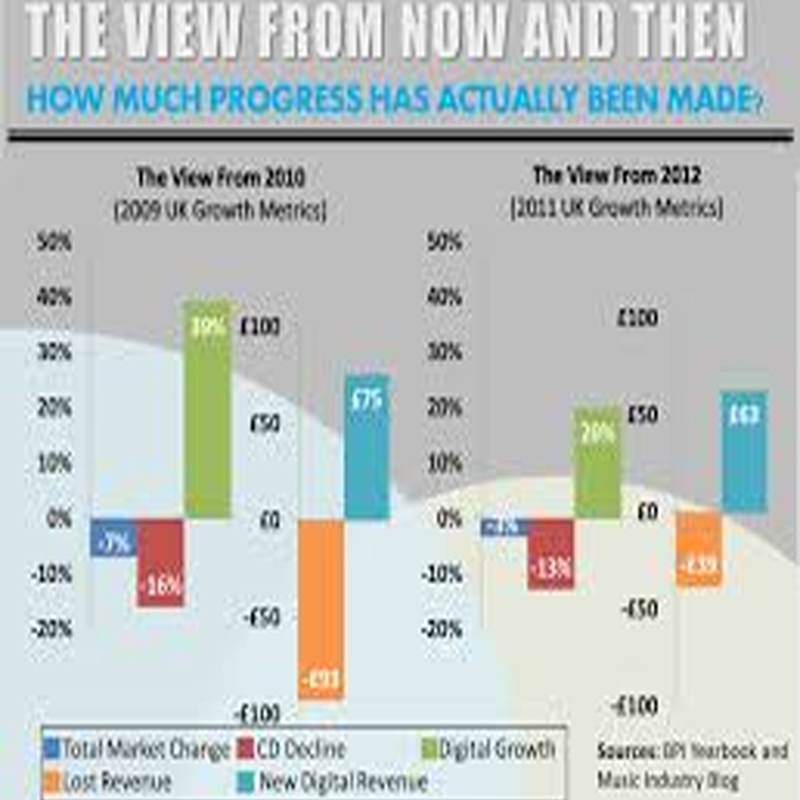
    MUMBAI: A new report by media researchers Screen Digest, Online Music in Europe: Market Assessment and Forecast predicts that rapidly growing online music sales in Europe will start to halt the decline in overall sales of recorded music, but not until 2010.

    The total European market for online music will have more than doubled from Euro 121 million in 2005 to a forecast Euro 280 million by the end of this year. By 2010 consumer spending on online music in Europe will generate more than Euro 1.1 billion.

    This explosive growth is being driven by rapidly growing broadband penetration and the massive increase in portable music player usage. Over seven per cent of Europeans now use one, up from two per cent in 2004. By the end of 2005 there were 29 million portable music players in Europe and this figure will rise to more than 80 million by 2010.

    However, the big picture is not so rosy for the overall European music market, which has been in decline – losing 22 per cent of its total value since 2001. Screen Digest predicts the market will continue to fall until 2010, at which point online music sales of more than Euro 1 billion a year will begin to offset the decline in physical sales.

    Screen Digest analyst and author of the report Dan Cryan comments, “Online music has been booming. However, online sales alone are not going to be enough to halt the decline in music sales. The music industry needs to make the most of new delivery platforms. We believe with the right strategy – including mobile and online – that the worst might be over by 2010. The industry must adopt a broader approach to selling music, looking beyond the traditional single and album.”

    The report analyses the causes of declining revenues for the music industry and shows that a wider view must be taken to understand and address the change in consumer behavior. It is easy to point the finger at piracy but data from music industry body IFPI suggests that piracy is declining. The number of tracks available on illegal file sharing networks declined from 1.1 billion euros in 2003 to 885 million euros in 2005.

    Instead factors like the gradual erosion of music dedicated shelf space in big retailers, like HMV and Virgin and its replacement with DVDs, books and mobile phones cannot be ignored. Seen in this light the fact that the decline in physical music sales corresponds to the boom in DVD sales begins to look less like a coincidence and more like a cause.

  • E! inks Asiapac mobile deals with Foxtel, Vodafone

    E! inks Asiapac mobile deals with Foxtel, Vodafone

    HONG KONG: E! Network has inked two mobile deals in Asia-Pacific with Foxtel by Mobile and Vodafone in Australia.

    The announcement was made today by E! Networks MD Asia Christine Fellowes.

    According to her, “E! continues to lead the way in digital media, having established a specialized production unit last year named Short Form programming and New Content Unit or Spanc designed to develop short form and new media content.”

    Foxtel by Mobile will offer E! content on its 3G platform beginning this month, offering 90 minutes looped video feed of E1’s content featuring the latest in entertainment news information, celebrity profiles and providing consumers with a linear experience similar to traditional TV.

    E! Network’s present wireless partners in Asia-pacific include Telecom New Zealand, 3 Australia and Starhub Singapore.

    The E! Everywhere initiative, which first launched in early 2006, is designed to empower E! audiences to consume content whenever, wherever and however they choose.

  • Star One banks on new slate of shows

    Star One banks on new slate of shows

    MUMBAI: It’s action stations at Star India’s second Hindi entertainment channel this festive season as it aims for the still far on the horizon number two spot in the GEC space (behind Star Plus).

    Monday saw the launch of the weekly ‘dramedy’ Kadvee Khattee Meethi, which, according to Star India senior creative director Shailja Kejriwal, is a humorous look at the relationship between mothers-in-law and daughters-in-law and is an interesting cross between a comedy and a soap. This show will play out at 8 pm on Mondays.

    Right now though (and running through till December), the maximum focus for Star One is on Nach Baliye 2, which is the channel driver. “Already on the week of launch, Star One’s channel share rose to 3.06 per cent. So we expect Nach Baliye 2 to drive Star One for the next three months. We have also launched two new shows – Saathi Re (Tue-Thu, 8:30 pm) and Betiyaan apni yaa…Paraaya Dhan (Tue-Thu, 9:00 pm), Kejriwal offers.

    “Another show coming for a second season is “Ssshhhh…Phir Koi Hai”, a show which promises lots of excitement using the horror genre,” avers Kejriwal.

    Though the thrust is currently on Nach Baliye, we will be deciding on the next big initiative in the next few weeks,” she adds.

    And staying with the humour quotient the channel has become associated with, most of the existing shows like Naya Office Office, Laughter Champions, Kadvee Khatti Meethe will continue to provide the “comedy” touch to Star One.

  • Videocon-led consortium to buy Daewoo Electronics; deal worth $730 million

    Videocon-led consortium to buy Daewoo Electronics; deal worth $730 million

    MUMBAI: A consortium led by India’s largest electronics firm Videocon Industries Ltd have signed a non-binding memorandum of understanding MoU to buy South Korea’s Daewoo Electronics Corp for $ 731 million.

    While Videocon will own 50.1% in the consortium, Brussels-headquartered private equity firm RHJ will own 49.9%. Woori Bank is acting as the principal bank of the creditor financial institutions committee (CFIC) for Daewoo Electronics for the proposed purchase of the equity and debt interest of the CFIC in the company.

    Seoul-based Woori Bank spokesman Jung Hee Kyung has been quoted as saying that the purchase offer is an all cash one.

    For Videocon, the Daewoo acquisition comes with its 25 manufacturing facilities in South Korea, the US and the UK, providing the Indian major with a global presence. Daewoo would not only help Videocon move up the value chain in the colour TV business, but also complement its previous acquisitions. In 2005, it had acquired the picture tube business of France’s Thomson for $291 million. Later, it also bought Electrolux Kelvinator India for $76 million.

    Videocon Industries chairman & managing director VN Dhoot has been quoted as saying that the company would be able to leverage Daewoo’s R&D centres in South Korea for TVs, washing machines and refrigerators.

  • UK Gearhouse Broadcast to supply broadcast facilities for the 15 Asian Games

    UK Gearhouse Broadcast to supply broadcast facilities for the 15 Asian Games

    MUMBAI: UK based broadcast solutions company Gearhouse Broadcast has bagged the contract to supply broadcast facilities for the production coverage of the 15 Asian Games.

    The 15 Asian Games officially commence on 1 December, 2006 with the Opening Ceremony and conclude with the Closing Ceremony on 15 December, 2006. For the first time since 1974, the Games are held in Doha with over 45 countries and regions competing across a record-breaking 39 sports in more than 40 venues.

    Gearhouse Broadcast will supply, install and operate eight complete production flyaway systems which will range from six camera to ten camera and will be used for the production coverage of the host feed at the twelve stadiums where the various sporting contests will take place. The flyaway’s come out of Gearhouse Broadcast’s range of flyway products and systems at their UK offices.

    Gearhouse Broadcast will supply a total of sixty-five operational crew members including engineers, audio engineers, communication engineers, vision controllers, and riggers.

    The Games are demanding logistically due to the events being held across twelve stadiums throughout Doha. Provision of broadcast equipment for the Games involves supplying cameras for the field of play areas including twenty-eight HDC 1500s, twenty-six BVP 950s, and high speed super-motion cameras using the Sony HDC 3300 and Thomson LDK23-HS and also three Panasonic AWE 800 SDI cameras, informs an official release.

    Gearhouse Broadcast MD Eamonn Dowdall said, “The cameras chosen offer the latest technology available and they will provide the host broadcaster with picture quality of the highest standard.”

    The Replay rooms will contain twenty-five EVS XTs. And the twelve production control rooms at each stadium venue will be fitted out with nine production galleries each of which will be installed using sixty-seven LCD Vutrix Series of 23” HD/SD screens. A range of nine vision desks will be supplied from the Sony DVS 7350 to the new MFS 2000, Snell and Wilcox’s Kahuna, Thomson’s DD Series. Controlled via the desks are replay transition devices which will be used to give the mix effect between slo-mo replays and live production.

    The master control Areas for engineering and quality control will comprise of test and measurement equipment from Tektronix utilising the WFM 700 and the 601E series. Routers selected will be the Pro-bel series and the Pro-bel Aurora series HD/SD routing systems. Leitch equipment has been selected for the distribution and glue products. Evertz has been selected for the system sync generation equipment and fibre equipment used.

    The Audio Control Room will comprise of audio desks from Soundcraft Series 5 56-channel, Soundcraft B800 48-channel console, DDA CS-8 32 channel audio console, and Midas Venice 240 24-channel consoles. Audio monitoring and quality control will be carried out on Bel series monitoring equipment. A variety of microphones have been selected to cover the sporting contests being played which comprise of twenty-four Sennheiser MKH- 816, ninety Sennheiser MKH 416, eleven Audio Technica AT 835 ST stereo microphones and various smaller microphones.

    The communications systems provided will be the Clearcom Compact 72 series and new Riedel communications systems. All of the associated broadcast cabling at each of the twelve venues will be supplied and installed by Gearhouse Broadcast. And all of the cabling used will be Belden broadcast series cable, including audio multi ways, triax video and data cabling.

    Gearhouse Broadcast will provide ancillary services for the Games consisting of project and logistics management and technical support. The broadcast solutions provider will handle the procurement of equipment required and co-ordinate the transportation of this equipment to and from the venues in Qatar.

  • India leads in pay TV piracy in Asia-Pac

    India leads in pay TV piracy in Asia-Pac

    HONG KONG: Pay television piracy continues unabated in the Asia-Pacific region, with total loss in revenue estimated to be $1.13 billion in 2006, out of which India’s dubious contribution is a whopping $ 668 million.

    According to study on piracy in Asia-pacific released by Cable and Satellite Broadcasting Association of Asia (Casbaa) here today ahead of their three-day annual convention, for the fourth consecutive year pay TV piracy has shown an increase with illegal pay TV subscription across the region growing by 20 per cent in 2006 to 5.2 million.
    The report, undertaken in association with Standard Chartered bank, also highlights that pay TV piracy will result in net estimated tax revenue loss of $ 158 million to the region’s governments in 2006.

    In particular, the piracy situation in India (considered the biggest accessible market, though), Hong Kong and Vietnam continues to worsen, the report said.

    Asked by Indiantelevision.com whether the Indian and foreign players operating in India have undertaken any concrete anti-piracy initiatives in India instead of just blaming the government, Casbaa CEO Simon Twiston Davies said, “The industry is constantly in talks with the government and the regulator on the issue.”

    He added that Casbaa has also exhorted the government to “review” existing regulations and strengthen digital infrastructure.
    The grey market deficit in India due to under-reporting by cable operators has grown from $ 632 million in 2005 to $ 667 million in 2006.

    Thailand also suffers from rising cost of piracy and at $ 160 million revenue loss has the second highest rate of piracy in the Asia-Pacific region

    Other markets facing an uphill pay TV piracy battle include Vietnam and the Philippines.

    The “Greenfield” market of Vietnam has the worst ratio of piracy in the region with one legal pay TV subscriber for every 15 illegal connections.

    In the Philippines, estimated net piracy costs due to illegal distributors, largely in provinces, has risen by 24 per cent in 2006.

    Indonesia is not far behind with revenue leakage of $ 23.8 million as government and industry insiders indicate a substantive piracy growth.

    Singapore is the only market covered by the report that brings some cheer to the industry reeling under piracy.

    As a result of ongoing digitization of cable networks, the number of pirated pay TV subscriptions remains low with a 15.8 per cent decline in piracy costs.

    Macau, covered in the study for the first time, has the unenviable distinction of having the region’s second highest piracy rate with 10 pirated connections for every one legal subscriber.

    The study notes that the Macau government’ anti-piracy measures announced last year have been inadequate to arrest rising piracy.

    The new study estimates that the cost of piracy in Hong Kong for 2006 will be $ 32.4 million, a hike of 29 per cent over last year.

    “This could have a genuine impact on Hong Kong’s reputation as an intellectual property rights hub,” Davies said.

    Pointing out that pay TV piracy is “corrosive” in nature and undermines investments in various markets of the Asia-Pacific region, Davies, however, said growth prospects remain good in the region.

    Interestingly, piracy also results in huge losses to governments too with the study estimating that at least $ 158 million being annually lost to regional governments. The losses corporate profit tax ($ 127 million) and VAT/GST ($ 31 million).

    The governments in the region taking the maximum hits due to loss in tax revenue include those in Thailand ($ 59 million), the Philippines ($ 38 million), Australia ($ 14 million) and Vietnam ($ 12 million). The India figure for this segment was not available.

    No wonder, Standard Chartered head of media and entertainment Lee Beasley said, “Pay TV piracy should raise an alarm not only in the pay TV industry, but also for a range of Asian governments.”

    Meanwhile, the annual Casbaa convention where industry people from the broadcasting and cable industry, investors and regulatory authorities from round the globe are converging kicks off Wednesday.

    Apart from the usual rounds of seminars and debates on issues of relevance, a tech exhibition too is being organized.


  • ‘Broadcast India 2006’ begins 26 October

    ‘Broadcast India 2006’ begins 26 October

    MUMBAI: The 16th Broadcast India 2006 Exhibition and Symposium will be held from 26-28 October 2006 at the World Trade Centre, Mumbai.

    Broadcast India 2006 will present the latest technology of newsgathering and telecasting of programmes live through a mobile phone.

    From film making to television production and post production, from content creation in all formats to its management and finally to its delivery, the Broadcast India show will cover all the technologies, said an official release.

    More than 400 companies from 31 countries will be at Broadcast India to showcase their latest products and services in Broadcast, Television, Audio, Radio, Film, Computer Graphics, Satellite, Special Effects and Multimedia. This year’s show will throw light on IPTV, Mobile TV, Digital Cinema and High Definition.

    The Broadcast India 2006 Symposium sponsored by Cisco Systems will be held on 25 October 2006 at YB Chavan Centre, Mumbai. The keynote address is by Dan Scheinman, senior VP for corporate development, Cisco Systems.

    Broadcast India Awards for Excellence in Film & Television will also be held at YB Chavan Centre on 25 October 2006 from 7 pm onwards.