Category: News Broadcasting

  • Sahara One breathing down Sony’s neck

    Sahara One breathing down Sony’s neck

    MUMBAI: While Star Plus’ KBC wars engage television audiences, prime time viewership has been undergoing yet another churn. The rejuvenation of Zee TV has seen its ascent as a very strong No 2 while Sony Entertainment is looking increasingly insecure in the third position.

    The channel is now seeing stiff competition and it’s coming from a rather unsuspecting source! Sahara One has sneaked up in the ratings, almost unbalancing the Sony network’s flagship channel Set. The question is, will it manage a complete coup?

    A few numbers to mull over: A look at Sahara One’s channel share shows a gradual increase from 5 per cent in Jul-August ’06 to 9 per cent at year ending. (15 Dec – 30 Dec TG CS 4+ Yrs Market: HSM). Sony, meanwhile, has seen its channel share fluctuate between 12 and 13 per cent in the same period. 

    The latest Tam data for Jan ’07 pegged Sony’s channel share at 11 per cent with a further decline at 9 per cent (1 Feb – 17 Feb) while Sahara One is pegged at 7 per cent, a increase in one per cent over the past month. (1 Feb – 17 Feb TG CS 4+ Yrs Mkt: HSM).

    The consistent feature of Sahara One’s rise has been the prime time show Woh Rehne Wali Mehlon Ki, the channel’s flagship show launched in May 2005. The show took a 20 year leap in mid 2006 and has since seen increasing viewership.

    In fact Tam ratings for Week – 28/01/07 to 03/02/07 saw WRWMK peak with a 2 TVR (TG CS 4+ Yrs) and appear twice in the Top 100 while Sony is nowhere in the picture. The next week (04/02/2007 to 10/02/2007) it fared even better, registering four times in the Top 100 while Sony was again nowhere in the picture. Data for the latest week (11/02/2007 to 17/02/2007) however, sees Sahara’s lead soap dipping to 1.9 TVR and Sony clawing its way back into the Top 100 thanks to old warhorse CID with a 1.8 TVR.

    Says Sahara One programming head Kalyan Sundaram, “If you look at the ratings post the 20 year leap, we have managed a slow and steady rise. What we have also noticed is a spillover from the 9 pm show to the 9:30 pm slot which features Ghar… Ek Sapna.”

    In fact many of the long running shows like Kitu Sab Janti Hai and Sati Satya Ki Shakti, which started out as ‘strong women protagonist’ stories, were also revamped since the channel realized that “once the plot revealed that women were free of troubles and could handle their own life, our target audience seemed to lose interest and we lost our viewer,” says Sundaram.

    Sundaram points out that the moment these shows were infused with conflicts and twists, they started picking up again. He picks the shows that have been gradually picking up in terms of ratings with an average TRP ranging between 1.1 to 1.3 – WRWMK, Solah Singar and Suno… Har Dil Kuch Kehta Hai.

    When asked why these shows which perform well individually are not reflecting in the Tam ratings, Sundaram says, “It has been difficult to wean away audiences from the other channels. We have now managed to do that with our prime time shows and are relooking and re working each show. Sooner or later you are bound to see them doing well.”

    Sony, on the other hand, announced their 10 to 11 pm slot with much fanfare in a bid to stem the Star juggernaut in the same time slot. While the channel insists it’s still early days to measure the response for these shows, the fact is that prime time on Sony isn’t looking very good either.

    Says Sony Entertainment chief creative director Sandiip Sikcand, “We have been concentrating on our two new shows that we launched in February Durgesh Nandini and Jeete Hai Jiske Liye and the initial response has been good. The prime time band has seen a decline in viewership but we are taking a re-look at them and we should be adding some new twists and drama to get the audience engaged once again.”

    The channel had in fact announced a re look at its primetime band once the 10 to 11 pm slot had settled down. In fact, it is only old guard CID that is raking in any worthwhile numbers for the channel. One after the other – soaps such as Kulvadhu, Thodi Khushi Thode Gham, Ek Ladki Anjaani Si have failed to impress the ardent soap watcher.

    Meanwhile, Sahara One, which has recently dabbled in non fiction programming with the launch of Gold Safe in the 7 pm slot and Comedy Champs in the 10:30 pm slot, is also looking at two more non fiction shows, one each in the weekday and weekend category, to be announced in a couple of weeks.

    Adding to its list of drama genre would be the Aruna Irani production Doli Saja Ke again slotted for the prime time band, although the timings haven’t been decided upon as yet.

    Still, Sahara may yet have to watch its back as Sony brings back its mammoth Indian Idol 3 to the screens this season.

    Says Sikcand, “Indian Idol 3 launches in May and we are sure we’ll get a good response, but we are not going to wait until then. In another two weeks you will see a few changes on the channel and hopefully it will reflect in the ratings as well. Besides the more immediate worry is the World Cup, which will affect all general entertainment channels.”

    The ICC World Cup 2007 could sure act as a party spoiler for the GEC. While the channels will still battle it out with each other on non match days, viewership of most shows is likely to be dented, the most harm being done on India match days.

    To sum up, as improbable as it may have sounded just a few short months ago, today the battle lines are drawn between Set and Sahara One.


  • RigNet contracts MEASAT-3 for distn of VSAT services

    RigNet contracts MEASAT-3 for distn of VSAT services

    MUMBAI: MEASAT Satellite Systems Sdn. Bhd. announced that RigNet Pte Ltd global provider of managed communications solutions to the oil and gas industry had signed an agreement contracting capacity on the MEASAT-3 satellite for the distribution of VSAT services.

    MEASAT has been supporting RigNet since 2005 with satellite capacity for the distribution of VSAT services via MEASAT-1.

     
    Said MEASAT senior director sales and marketing Yau Chyong Lim, “We are delighted that RigNet has selected the recently launched MEASAT-3 satellite, which has been designed to be one of Asia-Pacific’s premier satellites with extensive coverage over more than 100 countries, to distribute their services to their upstream oil and gas customers. MEASAT-3 has an excellent footprint that covers Asia Pacific, Middle East and parts of Africa. This increased satellite footprint size is vital to RigNet’s hyper-growth in these regions”.

     
    Said RigNet Vice President for the Asia Pacific region John Troup, “RigNet is extremely pleased that MEASAT-3 was successfully launched and in service. With this new satellite, RigNet will be able to provide coverage for our customers’ drilling rigs seamlessly across regions. MEASAT-3 also complements RigNet’s global satellite coverage across all upstream oil and gas regions.”

    MEASAT-3’s powerful C-Band beams will allow RigNet’s host of VSAT terminals to communicate with multiple offshore locations via high-speed, reliable and secure satellite links. MEASAT-3’s bandwidth will facilitate cost-effective operations and heightened efficiency in RigNet’s global network.

  • NDTV exclusive with Rahul Dravid

    NEW DELHI: In a candid interview with NDTV 24X7, Rahul Dravid, captain of the Indian cricket team, speaks to Dr Prannoy Roy about Saurav Ganguly’s grand come-back and how, in his opinion, Ganguly was the ‘best captain’ for the Indian cricket team. He also talks about his best World Cup team – Australia – and a lot more.

    Watch Rahul Dravid speak to Dr Prannoy Roy in a free-wheeling conversation on ‘India Questions’, on Sunday, March 11 , 2007, at 7.00 pm.

    Asked who he thinks has been the best captain of the Indian cricket team, Rahul Dravid maintained, “Yes, he (Saurav Ganguly) was, if you look at the numbers that were produced during the past five years and the games we played during his captaincy. In that sense he was the best captain and we had the best team….

    “We are happy that he’s come back and that he is playing well…At the end of the day the team wants players who are playing well and performing well,” he adds.

    When asked what his contribution to Sourav’s come-back has been, Dravid was categoric, “The credit for going through it and coming out of it goes to him…he’s worked hard…he’s leaner, meaner and fitter…he’s playing well. He’s been fielding well…and we hope he can repeat that performance in the World Cup…”

    On Australia, Rahul Dravid says, “I think there will be eight teams that will be looking to be in that final…I think Australia will start as favourites but not by much…that gap is closing….It’s going to be a tough World Cup…”

    Dravid is confident that India will win the World Cup this time and that India’s performance in the recent matches bears ample testimony to this fact.

  • Percept, Group M will lock horns in the final

    MUMBAI: The stage was set for the clash of the titans in the semi finals between Vyas Giannetti Creative (VGC) vs. Group M and Percept vs. Adfactors at Bandra Kurla Complex ground & P.J. Hindu Gymkhana respectively.

    In the match between VGC & Group M, the latter won by 47 runs. After winning the toss VGC put Group M in to bat first. It looked like a wise decision initially as VGC snapped up 3 wickets in 5 overs giving away only 34 runs. But what followed was a great performance from the Group M middle order, with Ketan Karnik and Sandeep Bhattacharya remaining unbeaten on 115 and 113 runs respectively. Their partnership of 266 runs took the total score to 300. In reply, VGC did not have the start they wanted. The opening stand between Anand Yalvigi (28 runs) & Niket Karvir (36 runs) lasted only 37 runs. Amit Siddheshwar put up a tough fight, hitting 58 runs off 32 deliveries, but could not see VGC through to victory. For his match-winning innings, Sandeep Bhattacharya was adjudged man of the match.

    In the other semi final, Percept beat Adfactors comprehensively by 157 runs. Batting first, Percept scored 247 runs powered by scores of 73 and 59 from R. Mulam and S. Singh respectively. In reply, Adfactors were bowled out for a mere 90 runs, with P. Chavan top scoring with 36 runs. S. Rikame and R. Mulam of Percept ran through the Ad Factors batting line-up, with spells of 4/23 and 4/18. For his all-round performance with bat and ball, R. Mulam was adjudged man of the match.

    (The CAG Shield Cricket Tournament: Presenting Sponsor- Visage Images, Radio partner- Radio One, Print Partner- Mid Day, Web partner- Exchange4Media)

    Brief Scores

    VGC VS.GROUP M

    GROUP M WON BY 47 RUNS
    GROUP M: 300 FOR 3, K. KARNIK – 115*,
    S. BHATTACHARYA – 113*
    VGC: 253 ALL OUT
    A. SIDDHESHWAR 58 RUNS, N. KARVIR 36 RUNS
    A. YALVIGI 28 RUNS,
    MAN OF THE MATCH: SANDEEP BHATTACHARYA

    FURTHER INFORMATION: OP THOMAS: +91-98213-48253

    OR

    ANAND YALVIGI of VGC :+91-9867106644


    PERCEPT VS.ADFACTORS

    PERCEPT WON BY 157 RUNS
    PERCEPT: 247 FOR 6, R. MULAM – 73 RUNS,
    S. SINGH – 59 RUNS,
    ADFACTORS: 90 ALL OUT, P. CHAVAN – 36 RUNS
    R. MULAM – 4/18, S. RIKAME – 4/23,
    MAN OF THE MATCH: ROOPESH MULAM

    Final match between Percept & GroupM will be played on 10th March 2007 at Police Gymkhana.

  • K Sera Sera promotes Rajesh Pavithran as MD

    K Sera Sera promotes Rajesh Pavithran as MD

    MUMBAI: K Sera Sera is promoting Rajesh Pavithran as the managing director of the company. He was earlier the chief operating officer of Twenty Twenty Television, K Sera Sera’s subsidiary company which is engaged in the television content business.

    K Sera Sera’s chief financial officer Amar Panghal is being elevated to the position of additional director. Meanwhile, Parag Sanghavi, a promoter of the company, has tendered his resignation as MD of K Sera Sera.

    “The whole exercise is to professionalise the company. Pavithran will be made the MD while Panghal is being inducted into the board,” says Sanghavi.

    Kacon Sethi will continue as CEO of K Sera Sera’s television business. “It is a subsidiary company of K Sera Sera and she will continue to head it,” says Sanghavi.

    Pavithran, who was COO in Balaji Telefilms before joining K Sera Sera, will also be handling the music channel Lemon. Eternal Dreams, a media company promoted by ex-Sony executive Sapna Chaturvedi, has ended its association with Lemon. It was entrusted with the task of developing the channel.

    “We will no more be associated with Lemon or K Sera Sera in the capacity of consultants for running, operating or managing the channel,” says Chaturvedi.

  • Tata Indicom launch low cost Motofone F3c having Qualcomm single chip

    Tata Indicom launch low cost Motofone F3c having Qualcomm single chip

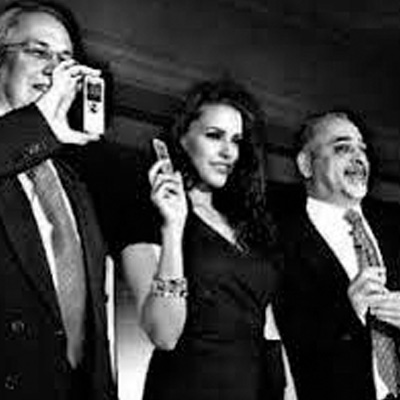
    BANGALORE: Tata Indicom today announced the national launch of the ultra slim Motofone F3c on the CDMA platform in Bangalore today based on Qualcomm’s QSC 6010 chipset. On the anvil are launches of other chipsets – 6020 and 6030 with other handset manufacturers according to Tata Teleservices (TTL) CEO Darryl Green. The Motofone F3 will be exclusive for TTL for the next six months. Bollywood actor Neha Dupia did the honours for TTL.

    TTL plans to target the ordinary man who probably gets a cell phone for the first time with the low cost stylish handset as bait. The Motofone F3c is priced at Rs.1,699/- inclusive of all taxes and charges. TTL plan to combine Motofone F3c with the benefits of their GO XTRA PACK, will enable customers to avail double talk time for the first six months with bonus talk time valid for 1 year from the date of activation. The scheme also offers free incoming calls for the first six months without recharge. Darryl is confident of selling 2 to 3 million of these handsets over the next 12 months.

     
    This was also the first global launch of the single chip by any company globally according to Qualcomm senior vp Kanwalinder Singh who avers that “QUALCOMM is committed to bringing wireless connectivity to emerging markets, and our QSC family of solutions enables compelling, affordable devices for cost-sensitive countries such as India. We are pleased to be working with Motorola and Tata in bringing the Motofone F3c, and look forward to further collaboration with the industry toward the common goal of making connectivity accessible to more people worldwide.”

    “Though many companies have announced single chip solutions, they are so far only there on paper,” added Singh.

     
    The Motofone F3c has features such as voice prompts in six local languages—English, Hindi, Tamil, Telugu, Kannada and Malayalam, the QUALCOMM Single Chip (QSC) enabled device from Motorola, MOTOFONE F3c has been specially designed to suit the needs of Indian consumers. It offers a rich vacuum metallized finish making it extremely sturdy, with polyphonic ringtones including three Indian tones, high audio, office quality speakerphone and ringtone downloads.

    TTL, which recently crossed one million subscribers in Karnataka and two million subscriptions in New Delhi, is looking to close the financial year with 18 million subscribers. They currently have 15 million subscribers.

  • Media stocks under fire as Sensex crashes

    MUMBAI: Finance minister P Chidambaram‘s `no nothing‘ offer to the media sector came as no surprise except in the area of set-top boxes (STBs) where one thought a push would be given in terms of sops to boost the local manufacturing industry. There is very little that the Budget can offer in realistic terms and the past trend continued this time too.


    If the Union Budget 2007-08 hurt the media stocks today, it was more to do with the announcements that were made as part of an overall corporate sector tax policy. There were, in fact, three tax proposals that could pinch the industry but in varying degrees.

    First, and this will particularly hit the news channels, is the employee stock options (ESOPs) which are being brought under the fringe benefit tax (FBT) net. Listed companies like TV18 Group, NDTV and TV Today Network have been planning to use this as a management tool to retain talent in a media business that has recently seen a high attrition rate.

    Already NDTV‘s net profits have been eroded (for a few quarters) by a rise in personnel costs and ESOPs. TV18‘s policy has been to reserve a chunk of holding for the employees while TV Today has taken permission to offer up tp five per cent as stock options.

    The news channels took a beating today with TV18 dropping 4.47 per cent to Rs 578.70 on the BSE while Global Broadcast News slipped 6.08 per cent to Rs 572.80. NDTV, on the other hand, fell 2.26 per cent to Rs 318.50 but TV Today gained 1.7 per cent to Rs 134.85.

    Unlike IT companies which has built stock options into it, the media sector shouldn‘t be unduly alarmed. “There may be some cause for concern but it wouldn‘t have any major impact. Though it is becoming a trend, the media sector doesn‘t integrally have a big component reserved as stock options,” says an analyst at a broking firm.

    The dividend distribution tax, up from 12.5 per cent to 15 per cent, will also impact the sector. But this could only be a minor shock as media companies are not well known for doling out huge dividends.

    The third, and probably most pinching of the lot, is the commercial property rentals that will now fall under the service tax bracket. If this does not exclude the entertainment sector (we are still awaiting clarity on this), multiplexes may find themselves in a spot of trouble. Most of them have ambitious expansion plans to spread across the country and do not see ownership of property as the only route to setting up screens in different locations.

    The multiplex companies went into a free-fall today as the scrip value dipped in the stock exchanges. Adlabs and Shringar ended four per cent down at Rs 423.65 and Rs 52.65 respectively while Cinemax fell 7.29 per cent to Rs 141.25.

    “If the multiplexes fall under the service tax net, it will have a more lasting impact on their bottomlines,” says an analyst.

    Meanwhile, UTV dropped 8.61 per cent to Rs 258.95 while Balaji Telefilms fell 7.58 per cent to Rs 114.05.

    Zee Group‘s Wire & Wireless India Ltd (WWIL) also shed 6.5 per cent to close the day at Rs 102. While Cas (conditional access system) is slow to take off, the industry is still not clear whether there are incentives provided in the Budget for domestic manufacturing of set-top boxes.

    “Media stocks fell today along with the tumbling of scrips in other sectors like cement and IT. Besides, there was a global meltdown which cast its imfluence in India. It remains to be seen how long the Budget will cast its negative impact on the media stocks, but there is nothing that is deeply damaging,” the analyst adds.


  • BBC Trust approves plans to launch Freesat platform

    MUMBAI: The BBC Trust has provisionally approved UK pubcaster the BBC management’s proposal to develop and launch a free-to-view satellite platform, “Freesat”.

    BBC management envisages Freesat being achieved as a joint venture with other public service broadcasters. The Trust believes that the service would create significant public value by offering licence fee payers an additional means to access digital services, including the BBC’s digital television channels and radio services, which is subscription free and guaranteed to stay that way. It would be offered on the basis of a one-off initial payment only, to cover the cost of equipment and installation. The service would be future-proofed, through the designing in of high definition and personal video recorder compatibility, and would be marketed through retail outlets and via the internet. BBC management’s intention is to establish a joint venture company with other public service broadcasters to manage the marketing and technical aspects of the new platform. Set top boxes would be supplied by third parties working with retailers to a specification agreed with the joint venture company.

    The Trust has published its decision, and the evidence and analysis which informed its judgement, and opened a 28 day public consultation prior to making its final decision in April 2007.

    BBC chairman Chitra Bharucha said, “The BBC’s Royal Charter requires the Corporation to take a leading role in digital switchover which begins next year. From 2008 until 2012, as each UK nation and region switches to digital, all households that haven’t done so already will have to choose a new way to access television. One of the benefits arising from digital switchover will be greater choice for viewers. For those seven million homes yet to make the switch, it needs to be clear that the benefits of digital television do not need to equal ‘pay television’.

    “A new, guaranteed subscription-free satellite service would provide the public another option when deciding which platform to choose. Over half of those yet to switch fall outside the Freeview coverage area. For these homes, the new service would mean being able to access BBC digital services they have already paid for via their licence fee but until now have been unable to receive on a guaranteed subscription-free basis.

    “We have considered the market impact and whilst there may be some negative effects, in our view these should be balanced against the potential positive market impact of greater choice. Overall, we believe a “Freesat” service to be in the public interest and we hope that other public service broadcasters would join the BBC in a joint venture. We welcome all responses to our provisional conclusion during the consultation. “

    The BBC Trust has decided that Freesat meets the BBC’s Charter and Agreement definition of a ‘non-service’ activity and does not require a Public Value Test. Nonetheless, in reaching its provisional decision the Trust has considered the potential public value and market implications of launching the service.

    In particular, the Trust examined the proposition in four key areas:

    Whether the proposition would serve the best interests of licence fee payers:
    Of the 7 million homes yet to switch to digital, over half fall outside the Freeview coverage area. Inability to access free-to-view digital is an issue frequently raised by the public in its contacts with the BBC. For some, this would remain an issue until the analogue system is switched off entirely in 2012. The Trust considers failure to address this issue to be inconsistent with its public service duties.

    What public value the new platform might create:
    The Trust has provisionally concluded there is significant public value in the “Freesat” proposition. It believes such a service would have a positive impact by introducing choice to the market and a guaranteed subscription free alternative to Sky’s free satellite option. The costs to the BBC are modest and comparable with those of Freeview. Launching the proposition as a joint venture would further increase value for money.

    How the proposition fits with the BBC’s public service remit:
    The Charter and Agreement set out a number of public service duties for the BBC. The Charter includes a Public Purpose to help deliver the benefits of emerging technologies to the public, and to take a leading role in digital switchover. Meanwhile, the Agreement states that the BBC “must do all that is reasonably practicable to ensure that viewers, listeners and other users are able to access the UK public services that are intended for them”. The Trust has provisionally concluded that the objectives of the proposition are consistent with, and enhance, the BBC’s public service remit.

    The competitive impact of the proposals on the wider market:
    The Trust’s provisional conclusion is that the proposition would have some negative impact on the wider market but increase choice for consumers. The Trust’s view takes account of analysis of the proposition’s potential market implications carried out by its own independent advisers within the Trust Unit and external independent economists.

    Under the terms of the previous Charter the BBC submitted a proposal, approved by the Governors, to the Department for Culture, Media and Sport in June 2006 to launch a free open standard satellite service. However the Charter expired before the Secretary of State reached a decision and, in line with the terms of the new Charter, the decision now rests with the BBC Trust. The Trust received the open file from the Secretary of State in January. Further to detailed scrutiny at its Finance & Strategy Committee and the provision of further independent advice referred to above, the Trust reached its provisional conclusion at its meeting on 21 February.


  • Fremantlemedia makes additions to drama catalogue ahead of MipTV

    Fremantlemedia makes additions to drama catalogue ahead of MipTV

    MUMBAI: Televisioon format owner and distributor FremantleMedia Enterprises (FME) has announced the acquisition of two drama shows which will launch at the television trade event MipTV in April.

    The shows are Love You To Death and The Best Years. They join FME’s expanding drama portfolio.

    The dark, funny Love You To Death stars filmmmaker John Waters Pink Flamingos, Hairspray in his television series debut as the ‘Groom Reaper’. It and tells the twisted, inspired-by-reality tales of spouses who have killed their loved, or not-so-loved ones.

    The series is scheduled later this year in the US on Court TV as ‘Til Death Do Us Part and Global Television in Canada. It will be on offer to buyers worldwide from FME at MipTV for both TV (excluding the US) and DVD (excluding Canada).
    As the ‘Groom Reaper’, Waters guides viewers through bizarre stories and cases of wedded woe, with his trademark wry sense of humour and definite macabre sensibility. Each episode – inspired by true crimes – dramatises the stories of ill-fated husbands and wives and reveals the flaws in what the killers thought was the perfect crime – like in the case of the ‘spend-a-holic’ spouse, who poisoned their other half to claim the life insurance, only to find that the cheque for the poison bounced! In each episode, viewers follow a murderous trail to find out whodunit and will be on the edge of their seats until the very end, as things are not always as they seem.

    The Best Years follows a group of friends through the ups and downs of college life. It’s an insight into the real-life drama that is university – the excitement and pressures that go hand in hand with newfound independence.

    Leaving her foster-home past behind, Samantha Best (Charity Shea) arrives on a scholarship for freshman year at the prestigious Charles University in Boston, MA and sets about finding her feet in the hallowed halls; not to mention finding a whole new set of friends – and ‘frenemies’ – along the way.

    As Samantha learns to juggle academic pressures, the perils of the social scene, friction with roommates and liaisons with lovers, The Best Years will be compulsive viewing as she and this sometimes dysfunctional college family make their way together.

    FME CEO David Ellender says, “We are delighted to add these two unique dramas from Blueprint Entertainment to our burgeoning portfolio of fine scripted entertainment, which we are committed to expanding further throughout 2007. We are thrilled to be launching both Love You To Death and The Best Years at MipTV. This gives broadcasters from around the world the chance to be the first on board with what will be very highly-prized additions to any schedule line-up for 2007.”

  • CBS posts profit of $335 mn in fourth quarter

    CBS posts profit of $335 mn in fourth quarter

    MUMBAI: US media conglomerate CBS has recorded a profit in the fourth quarter from a year ago period.

    This included a major charge to write down the value of its television and radio businesses

    CBS reported net income of $335 million, or 43 cents per share, in the October-December period. A year ago, the company reported a loss of $9.14 billion, or $12 per share. That included a charge of $9.48 billion for the asset impairment.

    Operating income for the quarter is up 14 to per cent to $759.3 million. For the year revenues were $14.3 billion. This marked an increase of one per cent from the prior year, with increases of two per cent at television, eight per cent at outdoor and six per cent at publishing. This was partially offset by a decline of seven per cent at radio.

    For the year, television revenues increased by two per cent to $9.5 billion from 2005 primarily reflecting increases in television license fees and affiliate revenues partially offset by lower home entertainment and advertising revenues. Television license fees increased by 26 per cent primarily due
    to the 2006 availabilities of CSI: Miami, Frasier, Star Trek: Voyager and Without A Trace.

    This was partially offset by the absence of license fees from the prior year second- cycle cable renewal of Everybody Loves Raymond. Affiliate revenues increased eight per cent due to rate increases and subscriber growth at Showtime and the inclusion of the results of CSTV Networks since its acquisition in January 2006. Ad revenues decreased by one per cent from 2005 as higher political ad sales were more than offset by lower revenues from the absence of UPN and decreases at CBS Network.

    Home entertainment revenues decreased by 68 per cent principally due to the switch from self-distribution in 2005 to third party distribution in 2006.

    CBS executive chairman Sumner Redstone says, “CBS’ first year out of the gate was a great one. Our strong performance in the fourth quarter and full year of 2006 is the result of strategic vision and operational excellence. Leslie and his team are building our existing businesses to capitalise on the digital revolution and to position CBS for continued success well into the future.”

    CBS president and CEO Leslie Moonves says, “CBS’ fourth quarter results capped off a strong first year as a stand-alone company, Strong fourth quarter operating results at television, outdoor and publishing helped us surpass our key financial targets for the year.

    “Looking forward, we will continue to focus on running our core operations effectively; reshaping our portfolio into better-margin, higher-growth businesses; using the interactive opportunity to deepen and broaden our relationship with audiences; and receiving compensation for our content through retransmission consent agreements and new interactive platforms.

    ” I am confident that the company is well positioned to deliver long-term growth, strong cash flow, and increased value for our shareholders.”