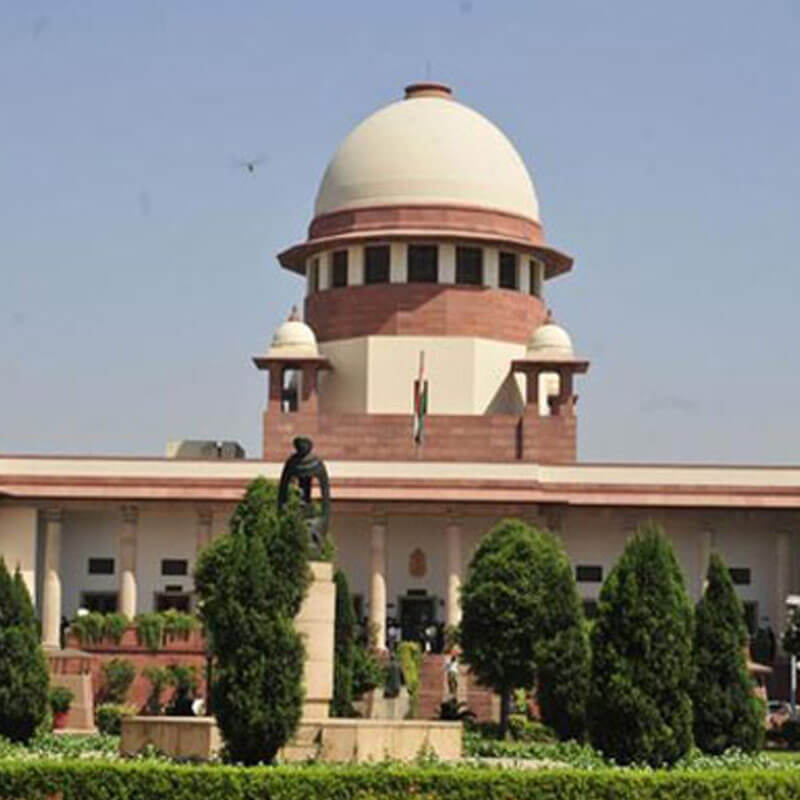
Category: News Broadcasting

  • TV18, Jagran put regional biz newspaper project on hold

    TV18, Jagran put regional biz newspaper project on hold

    MUMBAI: The economic slowdown could well be hitting media companies that have chalked out massive expansion plans. The regional language business newspaper that was to roll out from the 50:50 joint venture between broadcaster TV18 and Jagran Prakashan Ltd. has been put on hold.

    TV18 said on Monday its joint venture, Jagran18 publications Ltd, is deferring the launch of the newspaper.

    In a separate statement, Jagran Prakashan said the project was deferred due to the “prevailing market conditions.”

    Jagran18 board reviewed the project and decided it to be “prudent to defer it.”

    Last year, the JV had announced plans of launching a Hindi business daily in 2008 along with other Indian language dailies focused on financial and economic news.

    Network18 MD Raghav Bahl had mentioned earlier that “business audiences have grown immensely in the Hindi heartland and regional markets” and they will be “combining TV18’s strengths in business content with Jagran’s understanding of print markets.”

  • BBC World Service launches news programme for Afghanistan

    BBC World Service launches news programme for Afghanistan

    MUMBAI: BBC World Service has launched a news and current affairs programme for audiences in the Southern and Eastern regions of Afghanistan.

    Stasu Narray, from the BBC Pashto service, will bring 30 minutes of news and in-depth analysis to Pashto-speakers, including those on the Pakistan border, every day at 9 pm in Afghanistan . Stasu Narray will discuss a range of topics, from politics and economy to health and sports.

    There will also be opportunities for listeners to share their views on key issues affecting their lives in special phone-ins.

    BBC Persian and Pashto service head Andres Ilves says, “The BBC has been broadcasting to Afghanistan for many decades. Nearly two out of three adults listen to our programmes at least once a week, and research shows that the BBC is the international broadcaster most Afghans trust and tune in to.

    “We are delighted to be able to draw on our rich experience and expertise of the region to offer a new bespoke daily programme for southern Afghanistan. I am certain that our listeners will benefit from the BBC’s tradition of impartial journalism and comprehensive on-the-ground coverage.”

  • Stress 24×7?

    On a typical day, you could see Sujay Gupta juggling three phones, hurriedly taking notes and issuing advisories to his team of reporters. The chief of Mumbai bureau’s job in a premier news channel like NDTV 24×7 is much sought after but not so for 38-year-old Gupta. One day, on a drive back home, he took a considered view and gave it all up. He ended the lease of his cosy apartment in Bandra, and took the first flight to Goa.


    “The nature of the news television market in India is such that there is very little scope of decreasing stress levels,” rues Gupta. “Pressures to perform are a part of newsrooms across the globe, but in India it’s different given the number of channels we have. The demand is no more on doing big or better researched stories; it’s all about breaking stories.”


    It is indeed

    There was a time when viewers were left with no choice but to watch national channel Doordarshan. But with Indian television going through a revolution and given the arrival of as many as 80 news channels it’s a very different story now.


    While there are no specific recruitment forecasts available for the sector, global staffing services firm Manpower says the media and entertainment industry has the highest employment potential in the country, with 58 per cent employers intending to hire more people in the third quarter this year.


    So while viewers are flooded with a variety of options when it comes to watching news on the small screen, the rise of so many channels has also given birth to greater stress in the newsrooms.


    Every channel is under pressure to deliver something new, that little extra which is more relevant to its viewers… a story that is perhaps the first of its kind!


    Says Gupta, “We have more news channels than whole of Europe put together. The trouble is that the competition is not just between offerings of the same genre. National channels compete with even regional news channels. For instance, in Mumbai, NDTV not only locks horns with CNN-IBN but also with a Marathi channel like Star Majha.”


    Evidently, the concept of a straightforward story doesn’t exist any more. The objective is to look at every conceivable angle and generate at least three stories from what would be just one. Plus, the pressure to break news.


    Veteran journalist and media educator Paranjoy Guha Thakurta puts the blame on media owners. “These days, proprietors do not want to invest in human resources. Consequently, a person is forced to multitask. The technology too ensures that a person can easily do the tasks that two or three people would do earlier. So with media owners not investing enough in experienced manpower, even though the younger lot of people are intelligent, hardworking and very talented, they do not necessarily have a good judgment of the important news. This leads to an increase in stress levels.”


    Some media professionals who are currently sailing in the same boat too corroborate the view that young journalists are impatient and this attitude also often leads to stress.


    Says CNN-IBN deputy foreign editor Suhasini Haider, “There is no single reason behind the rise in stress levels. One of the major factors is a huge increase in competition. Apart from this, people today have no personal opinion about a particular subject or topic. There are no niches. So journalists are made to do stories on a wide range of issues. Also, newsrooms these days are younger than ever. Young journalists do not prepare themselves mentally before joining. They just want to report as soon as they join.”


    IBN7 executive editor Sanjeev Paliwal believes that the stress is caused by the demands of the job. “We are living in a very competitive and challenging environment and the entire country relies on us to bring news to them in an accurate and timely manner. With expectations soaring, it is obvious that pressure in a newsroom is bound to be high. New channels ask for newer ways of gathering market intelligence being devised. This is good for the industry but is also leading to a lot of extra pressure.”


    What’s more, this greater stress has also at times directed to loss of life. Senior journalists Appan Menon and S P Singh, who were stars in the early days of non-Doordarshan-run news programming, lost their lives at an early age. And one of the reasons cited was mounting newsroom pressure.


    Thakurta, 52, feels that though stress is escalating it also depends on individuals and their way of dealing with stress. “Late S P Singh and Appan Menon were brilliant journalists. Yes, it is true that they died at a young age. Both of them worked at a time when Indian news television industry was at a nascent stage and I presume that both of them faced stress. I too suffered a heart attack last year. Having said this I would like to emphasise that though stress is prevalent in this industry, it’s also a state of mind. And it depends on individuals on how they cope with stress.”


    But there are many in the profession who feel that media is all about stress, and those who do not have the capacity to endure the pressure, should not enter the profession. “I do not agree that stress is increasing,” says Times Now editor-in-chief Arnab Goswami. “In fact it is wrong to use the word stress,’’ he adds. Television newsrooms, says Goswami, are now “buzzing with excitement”. “A newsroom does not operate like a bank… it’s more animated. There is more action, a zeal to do something exciting. Therefore, people who cannot face the heat should not enter the kitchen.”


    According to NewsX newsroom head Arup Ghosh, stress is not a new entrant to the newsroom, “I don’t think that stress is something new for journalists; it was always there. The longer hours of work also impacts personal life. One reason for this is increase in competition because of presence of so many channels. Another fact leading to rise is stress is dearth of talent. The established and the experienced management is under pressure to nurture fresh talent; at the same time retaining talent is also stressful because the moment the young talent pool that comes in learns the technique, the tendency to switch jobs increases.”


    Just chill!

    Some medical practitioners feel that its about time that news channels take the responsibility towards providing an opportunity to destress. Dr Sanjay Pattanayak, a psychiatrist at Delhi’s Vidyasagar Institute of Mental Health and Neuro-Sciences (Vimhans), says work and peer pressure are the two basic reasons for stress levels going north. “Journalists now have less time to relax. Thus, it is important for them to have a good social support, good diet and exercise regularly to unwind.”


    Leading psychiatrist Dr Sanjay Chug explains, “These days’ news channels give greater focus on TRPs than the actual job. Also this has led to much competition which in turn has erased the concept of fixed working hours. Moreover, it should not be forgotten that, the nature of the work in journalism is stressful enough and all these factors have added to increase in stress.”


    And what is the solution to beat stress? Says Dr Chug, “Ideally, there’s need for a change in the work culture of our channels, but since that is a long-term task, there are smaller steps that can be taken to cut down pressures and prevent breakdowns.”


    He advises the mandatory and routine drug tests for all, mandatory and routine psychological assessments covering anxiety like depression levels, suicide risk assessment, adjustment problems. “It would also help if a counseling cell is provided to employees. Also, news channels can have 10 minutes of destressing every few hours which can be applicable uniformly to the entire workforce wherein people can do on-desk exercises, power naps, guided relaxations etc.”


    Even as there are conflicting views from practitioners on stress levels in the profession, many newsroom HR heads seem to be aware of the problems on hand. Says India Today group corporate head – human resource Geetanjali Pandit Gupta, “In this business, the performance is reviewed daily. Hence it increases stress levels. Destressing has to begin with correct manning and solving the external factors.”


    At some organisations, the first step has already been taken towards ensuring employees have few reasons to complain.


    Network 18 Group head – HR Rajneesh Singh elucidates, “At Network18, we understand the pressures. So at the basic level, we provide our employees with facilities like cr?che, shuttle service, cabs and 24-hour availability of food, water and security. At the next level, we have a gym and offer facilities for games so that employees can unwind. We also organise workshops, celebrate birthdays, have monthly parties and off-sites that gives everyone a chance to enjoy together, have fun and relax.”


    But INX media head – human resources Dhruva Sen believes that parties or get togethers need not be the right prescription for bringing down stress levels. “They only divert attention for a bit.” So what’s his solution? “Possibly establish a recreation room where people can enter and read or sit simply loosen up.”


    The onus of destressing employees, India Today’s Gupta hastens to add, should not fall only on the HR of a company as employees are aware of what they are getting into. “There is only one way of getting rid of stress. And that is to provide employees enough resources to do their work,” she says.


    Thakurta says tensions are an inherent part of any news channel as one can never know what is going to happen next. Also the fact that media owners do not wish to invest in experienced people leads to increase in stress as young people might be intelligent, hardworking and talented but they are not better judge of importance of news. Experienced people know which piece of news is more important to cover. This has further lead to dilution of standards including ethical standards.”


    And while some in this profession have learnt to cope with stress, there are others like Gupta who have succumbed to the mounting pressure and have either left or are continuing with much difficulty. Gupta chose to opt out, and is chronicling the Scarlett Keeling saga for a leading London daily, advising a corporate group on starting a local channel and an assorted number of things to achieve nirvana. “It’s important to enjoy what you are doing,” he says while revealing plans to promote the Goan feni. Nirvana, surely.

    The story first appeared in Indiantelevision.com‘s The NT Magazine. The PDF of the magazine can be accessed at http://www.ntawards.tv/y2k8/nt_mag.pdf.


  • CNN-IBN to air show on Olympics gold medalist Bindra

    CNN-IBN to air show on Olympics gold medalist Bindra

    MUMBAI: CNN-IBN is celebrating the victory of India’s first ever individual gold medalist Abhinav Bindra. The English news channel will air an hour-long show Abhinav Bindra-The Goldfinger with Rajdeep Sardesai.

    Airing on 29 August at 8 pm, the show will unfold 13 years of rigorous practice, dedication and never ending hope that went into making Abhinav Bindra the 10 meter air rifle gold medal champion.

    In the show, Sardesai will talk to Bindra’s parents, teachers and coach. The show will engage sports enthusiasts and school children from across the country to ask questions to Bindra. Bindra will speak his heart out with Sardesai sharing his hidden talent of painting and other such facts.

    IBN Network editor-in-chief Rajdeep Sardesai says, “The show Abhinav BIndra -The Goldfinger is a celebration of the moment that Abhinav Bindra brought to the country. The show gives a peek into Abhinav’s life beyond the shooting range from his parents, school teachers and coach”.

  • Content Code: Govt to meet broadcasters next week

    Content Code: Govt to meet broadcasters next week

    NEW DELHI: The much delayed Content Code may get a push with the. government slated to hold a meeting with private broadcasters on this next week.

    “I am holding a meeting next week and then we will decide,” information and broadcasting minister Priyaranjan Dasmunsi said on the sidelines of a book release function.

    Dasmunsi said the government needed to study the proposal by the News Broadcasters Association (NBA) about formation of the ‘News Broadcasting Standards (Disputes Redressal) Authority’ to enforce NBA’s code of ethics and broadcasting standards with effect from 2 October. He refused to make any comment on the proposal aimed at self-regulation.

    Answering a question, Dasmunsi said the recommendations of Trai on self-regulation by television channels of TV viewership ratings were being studied by the government. However, he said ‘no’ when a mediaperson sought to know whether regulation of content would be given to Trai.

    The minister was speaking to the media on the sidelines of a function at which he released two books on revolutionaries and freedom fighters – Khudiram Bose: Revolutionary Extraordinaire (English) written by Dr. Hitendra Patel And Ajeya Krantikari: Rajguru (Hindi) by Anil Verma – which have been published by the Publications Division of the ministry.

    Answering another question after the function, Dasmunsi also turned down any proposal to permit private FM channels to broadcast news bulletins, despite a recommendation to that effect by Trai and Ficci.

    Meanwhile, he said in reply to a question that he would talk to Jammu and Kashmir Governor N N Vohra about the reported attack by Jammu police on two photojournalists of Amar Ujala and JK Channel last night while they were covering the police brutality on Amarnath Sangarsh Samiti activists who were sitting on a dharna along with the body of Kuldeep Dogra who committed suicide yesterday. He said the ministry would make its own inquiry into the incident.

    Apart from the minister, others present included I & B Secretary Sushma Singh, Debasis Roy (grand nephew of Khudiram Bose) and Satyasheel Rajguru (nephew of Rajguru).

    Publications Division Director Veena Jain said that the recently-launched website of Employment News published by the Division was getting around 300,000 hits everyday. In addition, the popular children’s journal ‘Bal Bharati’ had the largest circulation among children’s journal category and the monthly magazine ‘Yojana’ is the only journal to be published in India in 13 languages.

  • NewsX launches Sport Grandstand with Linford Christie

    NewsX launches Sport Grandstand with Linford Christie

    MUMBAI: NewsX has launched a sports show, Sport Grandstand. The hour-long show will air every Saturday at 1 pm.

    The English news channel has roped in 100 metres Olympic champion Linford Christie for the show.

    The sports show will have 80 stories every week interlaced with sports guests, reporters live-ins, sports rankings, factiods and trivia.

    For the channel Vijay Amritraj will analyse Wimbledon and Chima Okerie for Euro 2008.

    Says INX News COO Vynsley Fernandes, ” From regular sports to highly popular but unusual games, Sport Grandstand covers every sporting action of the week from around the world. Our sports programmes have consistently enjoyed high viewership, satisfying the sports aficiondos.”

    Chirstie says, “Sports Grandstand is by far the most comprehensive sport show. It covers every important story every week, no matter where in the world.”

  • BBC Trust begins public value test into local video proposal

    BBC Trust begins public value test into local video proposal

    MUMBAI: The BBC Trust has started its public value test (PVT) of UK pubcaster the BBC’s local video proposal. The Trust has published BBC management’s application as well as supporting documents, a service description and a full timetable for the PVT.

    BBC Trustee and Chair of the Trust’s Public Value and Fair Trading Committee Diane Coyle says, “Last year the Trust challenged BBC management to respond to licence fee payers wanting better local services. We wanted a proposal that would deliver public value with minimum adverse impact on local newspapers and other commercial media services.

    “We have now received the management’s application and are publishing their plans today. BBC management’s proposal for a local video broadband offer to complement existing BBC Local websites supersedes previous plans for a local television service. BBC management believes the proposition will help the BBC meet its public purposes and close the gap between the importance that audiences attach to the BBC’s local role and their view of current performance.

    “The Trust is inviting all interested parties to participate in our consultation on BBC management’s proposals. We want to receive all comments – positive and negative – from the public and the industry before we consider the application in detail. This input from people outside the BBC will be essential to the Trust reaching a decision in the interest of licence fee payers. Once we reach our initial conclusions, the Trust will consult again.”

    The new Charter, which came into effect in January 2007, transferred to the Trust responsibilities previously held by the Secretary of State for deciding major service-related investment proposals. The Trust must carry out a transparent and systematic process of scrutiny and evaluation before reaching its final decision.

    The public value test has three main parts:

    Public value assessment (PVA) by the Trust Unit
    Market impact assessment (MIA) by Ofcom
    The Trust’s decision

    The process includes two periods of public consultation. The first four-week consultation period allows contributions from interested parties about any relevant issue. A further period of consultation takes place after the Trust publishes its provisional conclusions. The Trust is scheduled to reach its provisional conclusion in November 2008 and its final decision in February 2009. Both will be published. This PVT is expected to complete within eight months, rather than the usual six, owing to the time needed to complete the more complex market impact assessment for this service.

    Ofcom is beginning its four-week consultation prior to conducting its market impact assessment of BBC management’s proposals.

  • CNN celebrates second anniversary of iReport

    CNN celebrates second anniversary of iReport

    MUMBAI: Two years after inviting CNN’s global audience to contribute pictures and video of the news of the day, the network’s iReport initiative has brought in more than 175,000 videos and photos in its history, nearly 125,000 coming within the second year alone.

    The untimely death of Bernie Mac, a solar eclipse in Siberia, the conflict between Georgia and Russia conflict and Michael Phelps’ record-breaking eighth Olympic gold medal were among the most recent topics that moved CNN’s viewers to capture their own takes on the news as iReport celebrates its second anniversary.

    CNN News Services executive VP Susan Grant says, “With iReport, CNN wanted to engage viewers who have a desire to follow and participate in the news, and our iReporters have exceeded our expectations in both the quality and quantity of their submissions over the last two years. Sometimes the iReports we receive are first images of breaking news and often exhibit powerful points of view on issues or news events. But every day our iReporters show an enthusiasm for and pride in the community they have created.”

    With a 176 per cent rise in photo and video contributions since the same time last year, CNN’s user-generated content initiative now generates an average of nearly 15,000 iReports each month. iReport has proved to be an exceptionally powerful newsgathering tool for the network and is incorporated into reporting across multiple networks and platforms each day, including CNN/U.S., CNN.com, Headline News, CNN International and CNN en Español.

    The watershed moment for CNN’s iReport occurred on the morning of the Virginia Tech shooting tragedy in April 2007, when graduate student Jamal Albarghouti captured dramatic video on his cell phone. Since then, more and more iReports have been incorporated into the network’s coverage.

  • NBA sets up News Broadcasting Standards Authority to redress disputes

    NBA sets up News Broadcasting Standards Authority to redress disputes

    NEW DELHI: In its effort to self-regulate, the News Broadcasters Association (NBA) has formed the ‘News Broadcasting Standards (Disputes Redressal) Authority’ to enforce NBA’s code of ethics and broadcasting standards.

    The authority will become operational from 2 October.

    Says NBA president and TV Today Network CEO G Krishnan, “Self-regulation is the only and the best way of keeping a check on the content shown by news television channels. We have drafted one of the best self-regulation mechanisms. The government should not intervene in the business of press as it is against the fundamental right of the constitution which grants freedom of speech.”

    Former chief justice and former NHRC chairperson Justice J S Verma will head a nine-member authority which comprises historian Ramachandra Guha, former Nasscom chief Kiran Karnik, JNU doyen Dipankar Gupta and economist and ex-under secretary general of UN, Nitin Desai, as the four members from non-news television background. The panel’s editor-members are: India TV managing editor Vinod Kapri, Zee News group editor B V Rao, Star News managing editor Milind Khandekar and Times Now editor-in-chief Arnab Goswami.

    When asked whether the mechanism is restricted to only English and Hindi news channels, Krishnan said, “The self-regulation mechanism is applicable to all the members of NBA and new members are also welcome to join us.”

    As per the self-regulation mechanism, if any broadcaster, television journalist or news agency is found guilty of showing inappropriate content, the authority can warn, admonish, censure, express disapproval against or impose a fine upon the broadcaster, television journalist or news agency.

    The authority can even recommend to the concerned authority for suspension, revocation of licence, accreditation of a broadcaster, television journalist or news agency.

    “The broadcaster, television journalist or news agency is found showing content which is inappropriate will be asked to pay a fine of Rs 0.1 million. And then further action will be taken if the situation persists,” said Krishnan.

    The summary of every enquiry would be available on NBA’s website, through press release and in the annual report of NBA which will be published in various newspapers.

  • High Court asks private news channels to adhere to Olympic telecast rules

    High Court asks private news channels to adhere to Olympic telecast rules

    NEW DELHI: The Delhi High Court has asked all private television channels not to violate the guidelines relating to the footage of the ongoing Olympics in Beijing for which the International Olympic Association has given exclusive rights to Prasar Bharati.

    Ms Justice Reva Khetrapal noted that the rules were clear that “private channels shall use the footages upto the specified limit of 10 seconds at a time and two minutes per day in their news programmes”. The court said its ruling related to all news channels including those not represented in court.

    The order came yesterday in response to a petition filed by Prasar Bharati against news channels run by TV India Ltd, NDTV, Times Now, and others, particular in view of telecast of the opening ceremony.

    The public broadcaster has now been asked to file details of the loss it has suffered because of violation by various news channels and claim damages if any.

    The Court has listed the matter to come up for further hearing on 26 August by when Prasar Bharati will also file its affidavit as the Olympics are ending on 24 August.

    A senior Doordarshan official linked to sports coverage told indiantelevision.com that DD had been monitoring the telecast being done by various news channels directly and through TAM. The official said while the sports channels had generally worked out agreements with DD about sharing signals, the news channels had failed to do so.

    DD Counsel Dinkar Kalra told indiantelevision.com that he expects to raise the issue of contempt of court order before the court on 24 August since the news channels have continued to violate yesterday’s order.

    The Television News Access Rules framed by the International Olympics Committee say that when exclusive television rights to broadcast the Olympics are granted by the IOC to any organisation for a particular territory, “no other organisation may broadcast sound or images of any Olympic events including sporting action, opening, closing and medal ceremonies, other activities (including training and interviews) which occur at Olympic venues in that territory”.

    However, the rules say that in appropriate cases, the IOC may agree with rights holders in their particular territories to issue supplemental news access rules for such territories