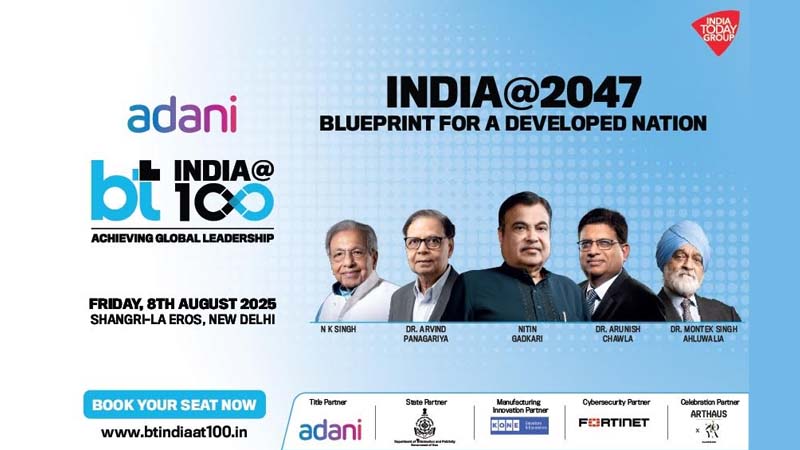
MUMBAI: A century in sight, and India’s got a blueprint to boot. As the nation marches towards its 100th year of independence, Business Today Multiverse is setting the stage for a future-forward conversation. The BT India@100 Summit, to be held on August 8, 2025 in New Delhi, will convene some of India’s sharpest minds from business, policy, and governance under the theme ‘India@2047: Blueprint for a Developed Nation’.
Headlined by union minister Nitin Gadkari, who will deliver the keynote on India’s long-term growth roadmap, the summit aims to decode what it will take for the country to join the ranks of high-income, innovation-led economies.
The speaker line-up reads like a policy powerhouse: Arvind Panagariya, Arunish Chawla, NK Singh, and Montek Singh Ahluwalia, among others, will explore everything from economic resilience and institutional reforms to AI, urbanisation, trade, and sustainability.
But the star of the summit? Business Today’s 100 Ideas for India@100, a curated, deeply researched list of actionable reforms across 10 sectors. Think GST 2.0, land and labour reforms, clean air, safe cities for women, digital infrastructure, and future-ready education. These ideas stem from collaborations with experts like Manish Sabharwal (Teamlease) and Rajesh Shukla (Price), and inputs from think tanks like ICRIER, CSIS, ASER, and former policymakers Anil Swarup and Subhash Chandra Garg.
With just 22 years to go until 2047, the summit isn’t just another talking shop, it’s a call to action. Sessions will challenge government, industry, and civil society to co-create India’s future. As one speaker put it: “It’s not just about growth, it’s about transformation.”
And as the country eyes a 10 trillion dollars economy, Business Today is aiming to shape the national dialogue on how to get there with ambition, equity, and accountability.
Because the journey to 2047 won’t be built on headlines, it’ll be built on hard choices, bold moves, and ideas that stick.
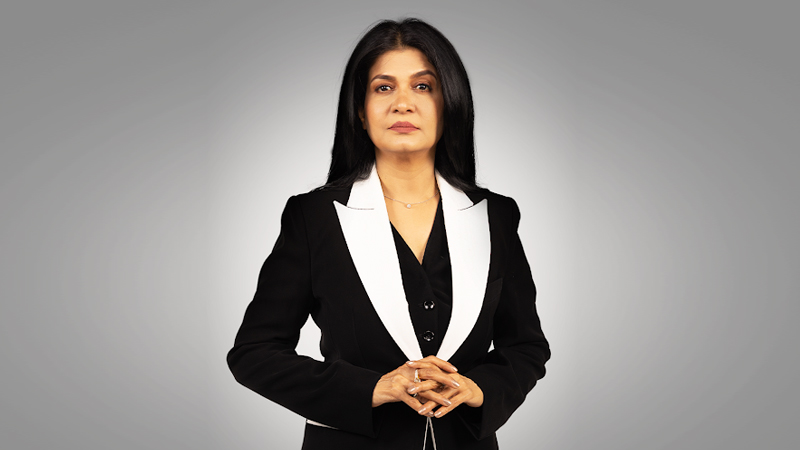
MUMBAI: Anjana Om Kashyap has officially been handed the editorial reins of Aaj Tak HD, in addition to her successful run on digital-first channel Aaj Tak 2 – a move that cements her reputation as one of India’s most dynamic news leaders.
This expanded mandate comes on the back of Anjana’s stellar track record. Her audacious Helicopter Shot coverage carved a new benchmark in election journalism – 100 destinations in 10 days – blending relentless ground reporting with trademark energy. And now both Anjana & Anjana 2.0 are doing the same at 9 PM with Black & White.
As one of the most recognisable faces in Indian news, Anjana now stands poised to turn HD into high definition not just in pixels, but in ambition. For viewers, it promises a sharper, faster, and bolder brand of journalism. For the newsroom, it’s another helicopter shot straight out of Anjana’s playbook.
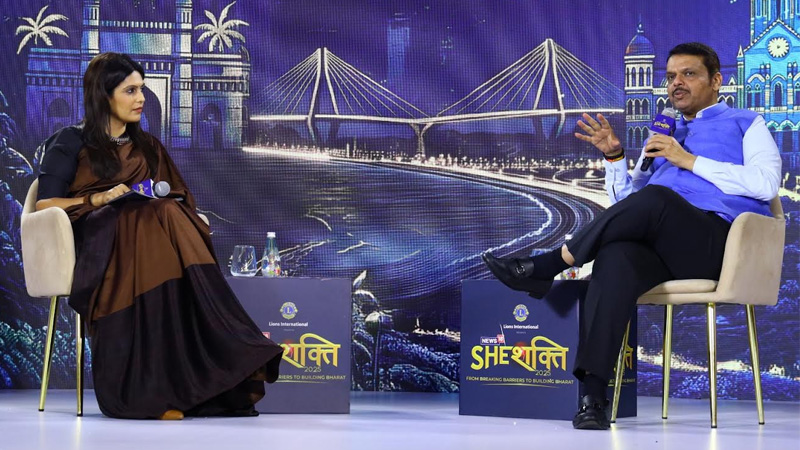
MUMBAI: Mumbai got a power surge and this time, it wasn’t from the grid. News18’s Sheshakti returned with its third and most dynamic edition yet, lighting up Mumbai with stories of women who are not just breaking barriers but blueprinting Bharat’s future. Organised in partnership with Lions International, the 2025 edition marked a first the regional debut of the flagship women’s leadership platform turning the spotlight on Maharashtra’s changemakers.
Titled “From Breaking Barriers to Building Bharat”, the theme underscored a pivotal shift: from metro corridors to grassroots campaigns, from boardrooms to classrooms, the narrative of power is now as plural as it is personal. With over two impactful editions behind it, Sheshakti has evolved into more than a platform, it’s a movement.
The Mumbai edition celebrated a formidable lineup of trailblazers from bureaucrats and bankers to actors and entrepreneurs. Each speaker brought to the stage her truth, grit, and roadmap for India 2.0.
Ashwini Bhide, principal secretary to the Maharashtra chief minister and the woman behind Mumbai’s mega metro projects, reflected on the complexity and scale of city infrastructure: “Working on mega projects in Mumbai is a challenge and an opportunity. Unless we create global-standard public transport, Mumbaikars will continue to struggle,” she said, reinforcing the urgent need for inclusive urban solutions.
Actor Shriya Pilgaonkar gave the inside track on evolving female roles in Indian cinema: “You’ve got to be stubborn about your dreams and flexible about your plan. The industry is quick to box you. Stay in your power and don’t hand it over to others.”
Bajaj Finserv group president designate (investments) Lakshmi Iyer brought finance into focus: “Financial freedom should feel like oxygen for women unseen, constant, and essential.” Her session, titled ‘The ROI of Being She’, highlighted the non-negotiable value of economic independence.
Aditya Birla Education Trust founder Neerja Birla spoke candidly about India’s silent mental health crisis: “We’re conditioned to put ourselves last. But if your own cup is half full, how can you pour into others’ lives?” Her message was clear self-care is the starting point of leadership.
Closing the edition was Maharashtra chief minister Devendra Fadnavis, who made a compelling economic argument for gender parity: “Globally, the nations that recognised the value of women accelerated their growth. If Maharashtra wants to move ahead, we must put women in the front seat.”
Fadnavis reflected on the era of “sarpanch-patis” and “corporator-patis”, when men unofficially held the power behind elected women leaders in local bodies. “That began to change in 1997,” he noted, “and by 2029, when it becomes compulsory to allocate tickets to women, we won’t stop at 33 per cent, we’ll reach 50 per cent.”
From mental health to metro lines, movie roles to money goals, Sheshakti’s Mumbai edition was a full-spectrum showcase of women who aren’t just participating, they’re pioneering.
Because when women lead from every postcode and every profession, the question is no longer if Bharat will change. It’s how soon.
In a landmark moment for Malayalam television news, Reporter Channel has become the first news network in Kerala to cross 218 GRP in the Male 22+ ABC segment — a key demographic that represents Kerala’s most influential, urban, and brand-conscious audience.
This milestone is more than a numerical achievement. It reflects Reporter Channel’s consistent focus on editorial precision, strategic scheduling, and audience alignment. In a market where content choices are abundant, the ability to lead in a premium segment like Male 22+ demonstrates sustained viewer preference and platform trust.
In a noteworthy shift, Reporter Channel has not only outperformed its news competitors but has also surpassed several established general entertainment channels in overall GRP performance.This indicates a broader viewer shift toward content that is not just entertaining but relevant, immediate, and rooted in real-world context. In a GRP-driven market, Reporter’s position above legacy entertainment brands underscores its growing influence in shaping mass viewing behavior across Kerala.
The Male 22+ category includes working professionals, entrepreneurs, and decision-makers — a group closely watched by advertisers for its high media value and purchasing influence. Reporter’s performance in this space signals both content relevance and strong delivery across time bands.
At the helm of this achievement is the channel’s leadership. Mr. Anto Augustine, Managing Editor / Managing Director of Reporter Channel, has led the organisation through a phase of operational clarity and editorial strengthening.
“When content stays sharp and honest, audiences follow — and they stay,” says Mr. Anto Augustine.
Under his direction, the channel has combined a strong newsroom with a clear programming identity, balancing speed with depth, and regional storytelling with journalistic accountability.
The 218 GRP mark in Male 22+ is not just a record; it sets a new benchmark in Kerala’s broadcast news environment. For advertisers, it confirms that Reporter is the most effective platform to reach high-value audiences. For the industry, it underlines the potential of regional brands to shape performance standards traditionally associated with national channels.
This performance milestone reinforces Reporter Channel’s position as a consistent leader in Kerala’s news space. With 218 GRP in the Male 22+ segment, the channel has set a new benchmark for regional news viewership. As audience preferences evolve, Reporter remains focused on delivering reliable, relevant, and data-driven content, backed by strategic leadership and editorial clarity.
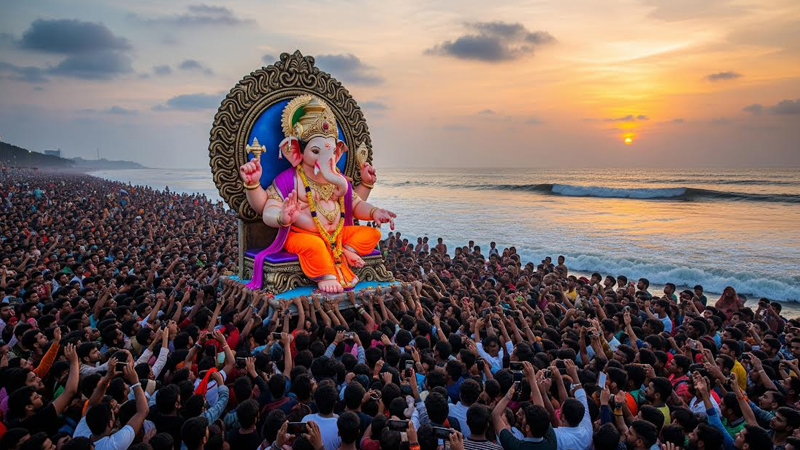
MUMBAI: Ganpati Goes Global, and Zee 24 Taas Is Right at the Heart of It. From Glasgow to Girgaon, Ganpati is no longer just a local celebration, it’s a global phenomenon. And Zee 24 Taas isn’t just covering the news, it’s shaping the narrative. In an engaging conversation with Indian Television Dot Com Zee 24 Taas editor Kamlesh Sutar shared how the channel is reimagining festive programming to reflect both tradition and tech, rural reverence and social media sparkle.
“It starts with Shravan,” Sutar explains, “Dahi Handi and Gokulashtami kick off the season, followed by Ganesh Utsav, Navratri, and Diwali. Our audience spans the globe now diaspora in the US, UK, UAE, even Pakistan tunes in.” Last year, the channel’s Desho Deshi Se Bappa special featured live coverage from Glasgow, where the Grand Maharashtra Mandal’s celebrations lit up screens back home.
Zee 24 Taas plans to go bigger this year, capturing Ganesh festivities in cities with strong Maharashtrian communities Dubai, New York, Spain, and beyond showing how faith travels and festivals follow.
Back home, the strategy is rooted in hyper-local storytelling. “Mumbai isn’t just Mumbai,” Sutar says. “We go down to the mohalla Dadar, Parel, Girgaon. And the same for other cities Ashur in Pune, Hatkanangle in Kolhapur. Hyper-local gives us deeper engagement and a stronger emotional connect.”
The channel’s on-ground teams no longer report from the field they are the field. Anchors now go live from pandals and mandals, turning static coverage into immersive storytelling.
Zee 24 Taas is also speaking the language of Gen Z. “Young people don’t tune into conventional news, they scroll it,” Sutar says. So the team infuses digital-first formats like Instagram Lives, trending reels, and celeb-driven content. A Celebrity Ganpati segment is in the works, roping in well-known faces to boost youth engagement across platforms. “We’re not just live on TV, we’re live on YouTube, Instagram, everywhere.”
To keep audiences plugged into the pulse of the festival, Zee 24 Taas has lined up a comprehensive slate of special programming that blends devotion with entertainment. For television viewers, the schedule includes Shree Ganesh Aarti, a daily broadcast of the morning aarti from 27 August to 6 September at 6:45am, and Zee 24 Taas Sukhkarta, airing twice first as a build-up from 21 to 26 August at 10:30am, and later as a daily festival bulletin from 27 August to 6 September at 7:30am.
Global Bappa, telecast at 12:30pm, brings a glimpse of Ganeshotsav celebrations from across the world, while Bappa Aaj Kai Khanar spices things up with festive recipes during the same afternoon slot. Gharguti Ganesh Spardha, airing from 1:30pm to 2pm, invites viewers to showcase their home celebrations, while Celebrity Ganpati brings star-studded darshans to the screen from 5:30pm. Gavakadcha Bappa, scheduled at 7:30pm, offers local flavours through festival walk-throughs from across Maharashtra. Special aarti broadcasts like Shree Ganeshachi Pran Prathishtha will mark the festival’s start on 26 and 27 August. The finale, Pudhchya Varshi Lavkar Ya, on Anant Chaturdashi (6 September), will run from 7am to 11pm, capturing the immersion-day fervour.
Beyond the box, Zee 24 Taas is equally charged up on digital. Their festival content package includes a mix of festival news, informative stories on Ganesh Chaturthi’s significance and rituals, vibrant photo galleries featuring eco-friendly idols and pandals, and specially curated recipes. The channel’s social feeds will also be abuzz with original and syndicated videos, plus crowd-sourced web stories featuring images sent by enthusiastic devotees. This integrated multi-platform strategy ensures Zee 24 Taas celebrates Ganeshotsav not just as a regional affair, but as a global experience echoing across living rooms in India and beyond.
Sustainability, too, has made its way into editorial choices. The channel spotlights eco-friendly idols, online pujas, and even the rise of online Ganesh shopping. “Modern-day concerns like the environment and accessibility are integrated seamlessly,” Sutar notes.
Zee 24 Taas is mindful of maintaining editorial sanctity while embracing advertiser partnerships. “Brand integration works when it’s organic,” says Sutar. “For instance, a mithai brand during Ganpati feels natural. We steer clear of irrelevant sponsorships. It has to be a win-win for the brand and for our audience.”
The channel’s approach ensures advertisers find a contextual home during peak seasons, and viewers get content that’s immersive, not intrusive. With tailored brand stories, past campaigns have seen solid ROI and lasting recall.
At its heart, Zee 24 Taas’ festive coverage is driven by a simple belief: India’s festivals aren’t bound by state lines or even national ones. They resonate worldwide, evolve with technology, and unite communities through shared celebration.
And as Kamlesh Sutar puts it best, “I may not celebrate Ganpati at home anymore, but with Zee 24 Taas, I get to celebrate it with a million households across the world.”
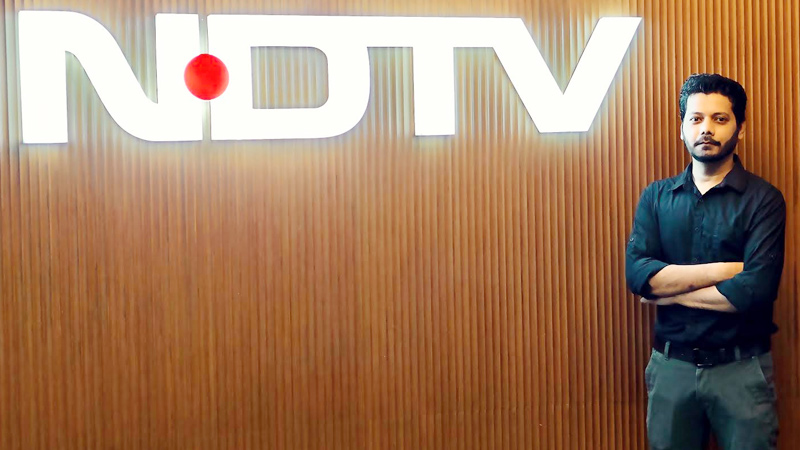
MUMBAI: NDTV has appointed Nazim Khan as Editor, NDTV Profit Digital, as the platform enters a new phase of editorial and digital growth. The appointment underscores NDTV’s commitment to building a sharper, more agile business news offering – rooted in clarity, credibility, and journalistic depth.
Nazim brings over 15 years of experience across India’s most respected financial news platforms, including Moneycontrol, CNBCTV18.com, and Morningstar. His work spans newsroom leadership, content innovation, and digital strategy – shaping coverage that blends market insight with audience intelligence.
In his previous role as Vice President – Business and Content at Quantent, Nazim led digital initiatives for leading financial institutions and fintechs. From investor education platforms to high-performance content formats, he has consistently delivered strategies that are both editorially sound and digitally effective.
‘NDTV Profit Digital is evolving to meet a new kind of business audience – one that is faster and more discerning. Nazim understands the intersection of editorial purpose and execution for a digital platform. He brings both newsroom instinct and strategic clarity’, said Rahul Kanwal, CEO and Editor-in-Chief of NDTV.
At NDTV Profit Digital, Nazim will oversee editorial direction and content strategy, with a focus on deepening market coverage, launching original IPs, and broadening investor engagement across platforms and formats.
‘NDTV has always stood for thoughtful, trustworthy journalism. I am excited to build on that legacy and help shape a platform that is intelligent, accessible, and aligned with the way modern India consumes business news’, said Nazim Khan on his appointment. Nazim’s appointment signals a renewed editorial vision for NDTV Profit Digital – one that meets the demands of today’s audience while anticipating the shifts of the future.
MUMBAI: Loss to gloss? Eros Media scrapes into the black, thanks to a property sale. From a cinematic cliffhanger to a financial plot twist, Eros International Media has posted a modest standalone profit of Rs 13 lakh for the half year ended 30 September 2024 thanks almost entirely to a Rs 2,303 lakh gain from selling office premises. But behind the positive headline figure lies a tangled script of unpaid dues, regulatory heat, and an eroded net worth.
As per the company’s unaudited results approved on 31 July 2025, total income stood at Rs 5,390 lakh for the April–September period, of which only Rs 3,079 lakh came from actual operations. The remaining Rs 2,311 lakh largely stemmed from the one-time property deal, bumping up the bottom line just enough to dodge a red mark. For context, Eros had reported a loss of Rs 9,970 lakh in the same period last year and a full-year loss of Rs 47,973 lakh in FY24.
Despite this slim profit, Eros continues to operate under significant financial strain. Its net worth remains negative at Rs (48,572) lakh, and liabilities exceed assets. The company is staring at long-overdue receivables of Rs 14,893 lakh from Eros Worldwide FZE, its former parent, apart from another Rs 7,303 lakh from Eros UK and Rs 3,183 lakh from Eros USA. A provision of Rs 25,150 lakh has been made towards these in FY24.
Moreover, the company is entangled in a regulatory saga. The Securities and Exchange Board of India (SEBI) issued an ex-parte order in June 2023 and later a confirmatory order in October 2023, citing irregularities including suspect content advances. These advances Rs 5,253 lakh (net of impairment) out of a whopping Rs 1,07,201 lakh remain under SEBI scrutiny. The watchdog has since issued a show-cause notice, and the next Securities Appellate Tribunal (SAT) hearing is slated for 22 September 2025.
Adding to the drama, the Enforcement Directorate conducted a search at Eros’ Mumbai office earlier this year under the Foreign Exchange Management Act, with proceedings still pending.
Eros’ auditors, Haribhakti & Co LLP, have flagged a “material uncertainty” over its ability to continue as a going concern. While the company says it’s pursuing overdue collections, restructuring loans, and exploring long-term monetisation of its film and music library, the road ahead is anything but smooth.
Despite the small profit reprieve, this may not be the interval, let alone the climax. Eros still needs a major plot twist to turn the tide. For now, it’s banking more on nostalgia and asset sales than a strong box office-style comeback.
MUMBAI: Truth takes the witness stand every Saturday night, starting 2 August. ABP News is turning up the heat on investigative journalism with the launch of Special Task, a hard-hitting weekly show that promises to shine an unflinching spotlight on India’s hidden truths. Airing every Saturday at 8 PM, the show is hosted by veteran journalist Jagwinder Patial and kicks off its debut with a compelling three-part series titled Operation Beta.
Special Task takes viewers deep into the country’s underbelly exposing systemic cracks, unheard citizen struggles, and overlooked tragedies. With each one-hour episode, the series will serve raw, on-the-ground narratives that challenge comfort zones and demand accountability.
Jagwinder Patial, a name synonymous with fearless reporting, brings over 27 years of field experience to the show. From conflict zones to calamity-hit areas, his work has consistently championed public interest. Patial has been recognised with the Ram Nath Goenka Award for Excellence in Journalism and the Balraj Sahni National Award, both testaments to his credibility and impact.
The debut series, Operation Beta, promises to be no less than a journalistic raid delving into neglected communities and revealing institutional blind spots. True to its name, Special Task sets out not just to report, but to hold up a mirror to those in power and ask the questions no one else will.
The show is positioned as more than just a programme, it’s a public mission. ABP News has built its editorial reputation on challenging the status quo, and Special Task reinforces that stance by marrying rigorous fieldwork with purpose-driven storytelling.
Whether you’re a news junkie or a casual viewer, this is one assignment you won’t want to skip.
Catch the first episode of Special Task on ABP News at 8 PM on August 2, 2025.
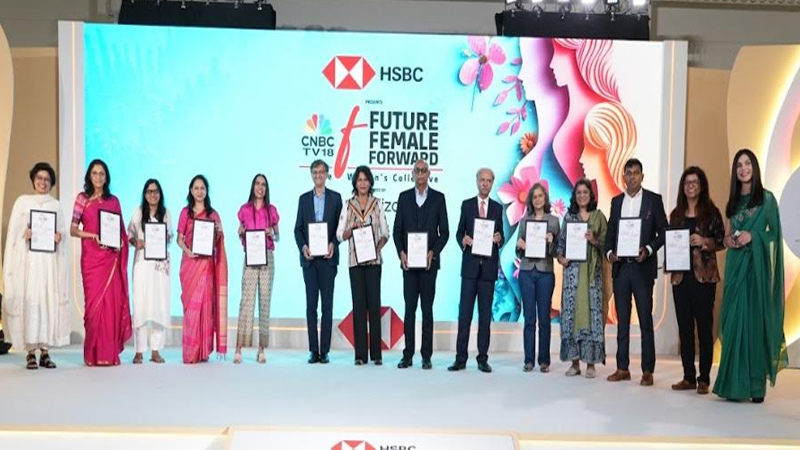
MUMBAI: CNBC-TV18 successfully hosted the Bengaluru edition of HSBC presents Future. Female. Forward. Season 3, co-presented by Cognizant India, to a packed house of policymakers, industry leaders, and DEI advocates. Following its impactful national launch in Mumbai, the Bengaluru chapter zeroed in on a critical, and often under discussed barrier to achieving gender parity: the ‘broken rung’ that can hold women back from progressing into leadership roles.
Opening the evening, CNBC-TV18 managing editor Shereen Bhan, delivered a compelling call to action that set the tone for the discussions ahead. “We created CNBC-TV18 Future. Female. Forward. —to build a space where women in full flow could speak, challenge, and lead. Today, women founders still receive only 2.3 per cent of total capital, globally under three per cent, and in India, just six per cent in H1 2025. That’s not a pipeline problem; that’s a design flaw. From AI to public infrastructure, this city sits at the edge of innovation, yet the blueprint remains exclusionary. Equity must be the earliest principle, not a late-stage correction. And that’s the conversation we’re committed to pushing forward—with facts, with courage, and with community.”
The evening began with HSBC India CEO Hitendra Dave reflecting on Embedding Equity: The HSBC India Inclusion Playbook. He emphasized the need for strong institutional frameworks and measurable outcomes to build truly inclusive cultures.
He said, “Over the last three years, we’ve started a conversation—one that challenges us to rethink how we approach inclusion, not as a multi-decadal aspiration, but as a series of deliberate, incremental actions. Each season, each dialogue, and each story reminds us that looking away is not an option and while the journey is complex and nuanced, what matters is that we are moving in the right direction. At HSBC, we take pride in playing a small but meaningful role in fostering these conversations that bring us closer to a future where equity is not just an ideal, but a reality.”
Taking the stage next, Shobana Kamineni, executive chairperson of Apollo HealthCo, delivered a compelling fireside chat titled Prescription for Disruption: The Kamineni Code.
She shared: “Women aren’t short on ideas, intelligence, or ambition, but they’re funded like they are. Globally, women-led businesses raised just $108 billion last year, and India accounted for a mere ₹25 crore. You can’t talk about scale without real capital. If we want more women in leadership, we need to back them not just with applause, but with board seats, and belief in their ability to lead mainstream, high-impact ventures, not just niche ones.”
The evening also featured a case‑led session by Pooja Sharma Goyal, founding CEO of The Udaiti Foundation, titled Leading with Purpose, Building with Equity. Drawing on lived experience, she outlined practical frameworks that turn inclusive‑growth theory into action.
A high-impact panel discussion titled Purpose, Parity & Performance brought together an esteemed lineup of leaders, including Bhawna Agarwal (SVP & MD, HPE India), Rajesh Varrier (President – global operations and chairman & managing director, Cognizant India), Jaya Jagadish (country head & SVP, AMD India), Meena Ganesh (co-founder & chairperson, Portea; Trustee, Bahaar Foundation), and Sunita Naik (SVP & country lead – India, State Street Investment Management).
During the panel discussion, Rajesh Varrier, president – global operations and chairman & managing director, Cognizant India, offered a large-enterprise perspective on building inclusive workforce strategies.“Inclusion isn’t just about hiring; it’s about building systems and structural interventions that support a woman’s entire career journey. That’s why we created Shakti —a unified framework of programs and policies designed to empower women from college to corporate leadership, enabling them to realise their full potential. Also, we know that progress is most powerful when supported by allies—those who advocate, amplify, and help open doors,” he noted.
From a global capital lens, Sunita Naik, senior managing director & India lead of State Street Investment Management, illustrated how inclusion is being hardwired into investment decisions and organizational culture, moving beyond token gestures to measurable accountability. Sunita said, “At State Street Investment Management, we didn’t just advocate for inclusion; we built it into our leadership. Our CEO is an Asian-American woman, our operating group is majority women, and our board is 50 per cent women. This isn’t about eliminating men; it’s about proving that diverse teams outperform. Real change happens when women lead at every level, not just entry level. From the iconic Fearless Girl to our own boardroom, we’re showing that inclusion drives performance, not just perception.”
The evening saw the signature “FFF ICONS” segment where a remarkable group of individuals whose contributions span sport, science, social change, and national service were honoured. Among the honorees were Shreyasi Joshi and Swarali Joshi – Skater Sisters; Alina Alam – Founder & CEO, Mitti Café; Sonal Holland – Founder & Director, SoHo Wines; Savithri H. S – Former Professor, Department of Biochemistry, Indian Institute of Science, Bengaluru; Lt Commander Roopa Alagirisamy and Lt Commander Dilna K – Indian Navy; India’s first all-women mine rescue unit, SMART-191, Singareni Mahila Active Rescue Team; Sandhya Puchalapalli – Founder & President, Aarti for Girls; Roshni Devi – National-Level Weightlifter; and Meena Ganesh – Co-founder & Chairperson, Portea, and Trustee, Bahaar Foundation.
Lt commander Dilna K, a commissioned officer in the Indian Navy, spoke about her life journey navigating a male-dominated force with resilience and clarity. Reflecting on her partnership with fellow officer Lt Commander Roopa Alagirisamy, she shared: “Roopa and I trained together, went through life and death situations, and spent more time at sea than on land. You get to know everything about the other person; there’s no space to be enemies. When I wasn’t okay, she was there to take over, and when she wasn’t, I stepped in. That teamwork was the real success of this journey.”
The evening closed with a clear message: fixing the broken rung isn’t a side issue, it’s central to building stronger institutions. From rethinking how promotions work to ensuring fairness in performance evaluations, the conversations throughout this pivotal event called on organizations to act with intent, not just awareness. Parity, the room agreed, must be designed into the system, not added as an afterthought.
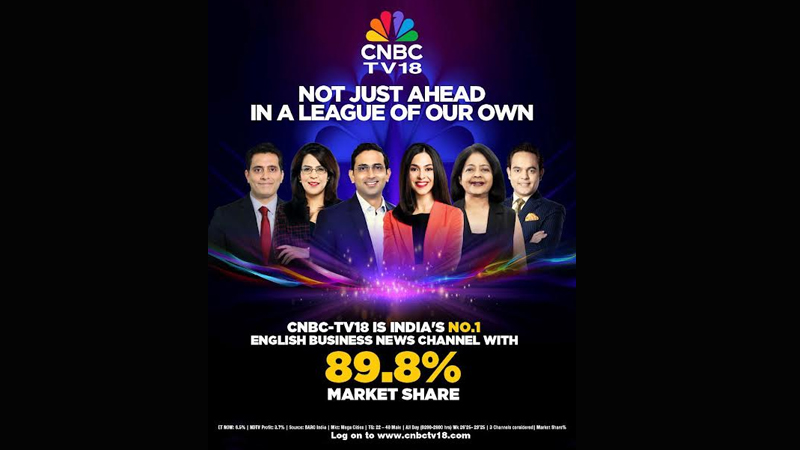
MUMBAI: When it comes to business news, CNBC-TV18 isn’t just reporting the market, it is the market. The channel has pulled in a staggering 89.8 per cent market share in the English Business News segment, according to the latest BARC India data (Week 26’25–29’25 | TG: 22–40 Male | Mega Cities | All Day). That means nearly 9 out of every 10 viewers tuned into English business news are watching CNBC-TV18 leaving its competitors fighting over scraps.
It’s a commanding lead in a genre the channel has owned for 25 years. From the dot-com bubble to the post-COVID recovery, CNBC-TV18 has kept its audience ahead of the curve, and the latest data reaffirms that legacy of dominance.
What’s fuelling this near-monopoly? It’s a steady mix of cutting-edge reportage, market-moving insights, and flagship shows like Bazaar Open Exchange, Bazaar Morning Call, Closing Bell, and India Business Hour. These programmes have become essential viewing for India’s business decision-makers whether they’re behind a Bloomberg terminal or a kirana counter eyeing the Sensex.
Anchored by a seasoned team of journalists and trusted by a who’s who of CEOs, policymakers, and retail investors, CNBC-TV18 is more than a channel, it’s where India’s business day begins and ends. Its influence stretches beyond viewership, shaping investment strategies, boardroom decisions, and the national business narrative.
Even as rivals scramble to differentiate themselves, CNBC-TV18 continues to expand its lead, showing week-on-week growth and innovation. The channel’s commitment to sharp analysis, uncluttered storytelling, and forward-looking coverage has made it the de facto nerve centre for business content in the country.
As India navigates an increasingly volatile economic landscape, CNBC-TV18 remains the one constant distilling complex numbers into actionable insight, with nearly 90 per cent of the business news audience voting with their remotes.
If business news were a stock, CNBC-TV18 would be the bluest of blue chips.