Category: Music and Youth

  • Zetc undergoes revamp, dons new youthful avatar

    Zetc undergoes revamp, dons new youthful avatar

    MUMBAI: Bollywood music channel Zetc has donned a new refreshed look, which reflects the culture of today’s youth. The renewed look of the channel will provide viewers with the latest Bollywood music and shows along with hot trending topics. 


    The new logo of the channel presents a youthful and energetic feel to the channel with a play on vibrant rainbow colors through animation. The tagline ‘Youth Music Cafe’ of the channel, which is an extension of the new brand ideology will help young viewers to identify and relate to the programming on a personal level.


    Zetc head Vishnu Shankar said, “Today’s youth lives in an era of abundance. They have access to the best of the programming content and hence they expect supreme quality from the entertainment providers. The industry has evolved in an interesting way over the period of time and these are the times of transformations. At Zetc, it has been our endeavour to provide our viewers with the best programming content.


    Our channel has grown with the genre and has developed a loyal fan base, which will expand rapidly as we unravel its untapped potential with the new refresh look. In its new manifestation we will leverage the iconicity of Bollywood and transform Zetc into the most preferred Hindi music channel.”


    As a part of the revamp strategy, the channel will see several additions on the programming front. Iconic characters of Hindi cinema will be brought to life in entertaining parody forms along with the music, film reviews and juicy filmy gossip. 


    The channel’s programming highlight will be a talk show hosted by trade analyst Komal Nahta and the Bollywoood Business Awards. The talk show will cover the latest developments in the film industry including new releases, interviews, box-office collections, the emerging trends and future forecasts. 


    Zetc Bollywoood Business Awards identifies and honours winners purely based on their box office success. The award stands for an unbiased and commercial success-oriented metric system without the involvement of a jury. 


    Currently the Indian music channel market pegged at approximately Rs 800-900 crores, which is estimated to grow manifolds with the new BARC metric system. With the new method coming in, the channel has taken this opportunity to enhance the overall channel experience for its audience.

  • Times Network launches zoOm in SriLanka on Dialog TV

    Times Network launches zoOm in SriLanka on Dialog TV

    MUMBAI: Times Networks has launched its Bollywood entertainment channel ZoOm in Sri Lanka.


    The channel will be available on Dialog Television on channel no. 47 on Gold, Emerald, Diamond and Thee packages.


    Bollywood star hailing from Sri Lanka Jacqueline Fernandes, who was at the zoOm studios in Mumbai to be a part of a brief ceremony to celebrate the launch of zoOm in Sri Lanka, said, “I am excited that zoOm is launching in Sri Lanka. My father is a big fan of zoOm and watches it for many hours each day. I’m sure people in Sri Lanka will love zoOm. I wish it all the best.”


    Dialog Television head of businessChirantha De Zoysa, said “Bollywood has a huge following in Sri Lanka, and zoOm will serve as an ideal outlet for the very latest in music, movies and information on the latest action. This is another example of Dialog Television adding significant value to its viewership across all segments via a pioneering partnership, and we look forward to growing this segment in time to come.”


    Times Network international business head Naveen Chandra said, “With this launch Times Network is now present in 78 countries and we are happy to see the initial positive feedback from the market. We have recently launched in Seychelles and Mauritius. Dialog Television is the largest pay direct-to-home satellite service provider in Sri Lanka and with their help; we look forward to growing our audience and market in the time to come.”


    At present, zoOm has a presence in international markets like the US, Canada, Malaysia and Mauritius. 

  • 9XO turns three; launches Awesome Threesome music block

    9XO turns three; launches Awesome Threesome music block

    MUMBAI: 9X Media’s international English music channel 9XO has lined up some new music and initiatives as it turns three on 24 April, 2015.


    The pure play music channel will showcase the best compilation of chart toppers and global artists as the channel’s anniversary offering. The 9XO third anniversary will be promoted across digital and social media platforms.


    As part of its three-year celebrations, the channel has launched a new block called 9XO Awesome Threesome. Speaking on the same, 9XO programming head Clyde D’Souza said, “As part of our three year celebrations we want to give our viewers an overdose of what we do best. While viewers continue to experience great music, we’ve created a block called 9XO Awesome Threesome. Over the next couple of weeks you can enjoy three hits from over 15 awesome artists.”


    9XO channel head Luke Kenny added, “There is a lot of music available on digital platforms, but due to the clutter sometimes good music is lost. We analysed this trend and launched 9XO. The idea is to provide viewers with the best English music in a clutter free environment and we have succeeded at that. Our viewers have appreciated our music innovations and efforts and that is reflected in their feedback across our digital platforms. We also encourage new talent by providing them our platform OmeGrown, which gives them their break in the music space. Our journey did have few obstacles but with the constant support and feedback from our viewers, the journey has been a pleasant one all throughout.”


    Speaking about the promotional activity and advertisers reaction, Kenny said, “The advertisers reaction so far has been really encouraging and fortunately everyone likes what we provide. Our audience is the target audience of many brands and hence through us, a huge segment of 18 – 24 aged population can be reached. Quality music has the potential to breakthrough any blockage and us completing three years is its proof. Our promotional activity reverberates around the social media platform; we run contests throughout the year, which engages the youth. Live events and college fests are the facets that we interactively use for promotions.”


    9XO will celebrate its success till 5 May, 2015 with artists such as Miley Cyrus, Sam Smith, Sia, 1D and Beyonce amongst others.


    Some of the channel’s innovative programming include 9XO Tweetdown, the first ever Twitter based music countdown show and the artists Social Feed (Twitter and Instagram feeds) on the TV screens during the videos on air.  The channel also brought English music fans the most loved moments and events/original and recorded which landmarks in the journey of the channel became.


    “We are looking to involve independent artists more and more, they are yet to be engaged in an optimum way. We want to be the leader when it comes to international interaction, we want to bridge the gap between music lovers and quality performers,” Kenny concludes.

  • Zing set to launch season four of ‘Pyaar Tune Kya Kiya’

    Zing set to launch season four of ‘Pyaar Tune Kya Kiya’

    MUMBAI: Zing is all set to launch the fourth season of its popular show Pyar Tune Kya Kiya (PTKK).


    The new season will go on air from 17 April at 7 pm and will see PTKK in a fresh outlook, be it the content or the talent. Parth Samthaan and Smriti Kalra will be seen in this season of 13 episodes, which is set in a college.


    Zing channel head Vishnu Shankar said, “The journey of PTKK has been exciting for us. We are glad that we have a dedicated audience for the show that connects directly with the youth and their perception. PTKK has maintained a strong top ranking consistently with the viewership multiplying manifolds resulting into the show being the leader in the 7 pm slot. In our endeavour to keep the show real and engaging, all the stories in Season 4 will have certain realism, which will enable our audiences to easily relate to them. With the new season, the quality of the content and performances promises to be more refreshing than ever before.”


    The channel aims to inform and enable viewers to make the right decision instilling strong moral grounds via this show.


  • MTV World to launch second season of ‘Rebel Music’ series

    MTV World to launch second season of ‘Rebel Music’ series

    MUMBAI: MTV World will be launching the second season of its Rebel Music series, the thought provoking documentary project about young musicians and artists overcoming oppression and injustice around the world.


    The series will premiere on 30 April on MTV’s YouTube channel. Additionally, MTV World will partner with Amnesty International to disperse the Rebel Music message and help viewers take action for positive change through the organisation’s Art for Amnesty program.


    One country at a time, Rebel Music shares the untold stories of fearless young artists rising up against social and political barriers to forge a better future. Launched in 2013 and now in its second six part season, Rebel Music shines a light on young people around the globe who are rarely given a chance to speak for themselves, activating the power of music and art to connect, inspire and ignite action. The series will provide young American audiences a rare, unprecedented look into the lives of their counterparts in countries experiencing crises.


    “We live in an increasingly connected global community and young people in America are more interested and engaged in the state of the world than ever before. We are proud to present a fresh new perspective on important regions of the world through compelling stories of their youth – bridging the gap in knowledge and hopefully creating more understanding and compassion,” MTV World general manager and senior vice president and creator and executive producer of the Rebel Music series Nusrat Durrani.


    In season one, Rebel Music journeyed deep into the heart of revolutionary music in Egypt, Afghanistan, Mali, Mexico, and Israel and Palestine. Buoyed by the success of the first Rebel Music: Native America premiere last November, which became one of MTV’s top most viewed and most shared videos of all time, and an invitation to screen at the White House, the series continues to innovate and bring new untold stories to the forefront.


    Season two of Rebel Music is even bolder and more intrepid, venturing into Iran, Myanmar, Turkey, Venezuela, Senegal, and the Native American communities of North America. Season two consists of half hour episodes and an extended Rebel Music: Native America episode, with the stories and conversation continuing online at RebelMusic.com and via social media, as well as in the classroom through the Rebel Music Educators’ Guide.


    The second season of Rebel Music transcends conventional documentary format with its cinematic sweep, pacing and state of the art production values. The executive production team includes Shepard Fairey, legendary artist and activist whose street inspired vision permeates the series’ graphic design; David Sable, humanitarian and global CEO, Y&R, and chairman of the NY Philanthropic Advisory Board of UNICEF; and iconic punk singer songwriter Laura Jane Grace of the band Against Me! as music director.


    Working to further promote the stories of youth driving social change, MTV and Amnesty International will also launch the “Rebel with a Cause” contest to spotlight artists around the world. Set to live on Rebel Music’s Tumblr, the contest will engage the huge online activist community and provide a platform to let their rebel voice shine. For every submission, MTV will donate $1 to Amnesty International. Top submissions will have a chance to be featured on MTV, Rebel Music, and Art for Amnesty’s social media platforms and one lucky winner will win a $1,000 gift certificate to B&H to continue documenting their passion, as well as a co-branded MTV/Art For Amnesty Rebel Music poster signed by Fairey.


    As part of Rebel Music’s RebelED, episodes from the second season will be accompanied by lesson plans with a teacher’s guide and background history to bring these topics into the classroom, available for free download atwww.rebelmusic.com/edu. The curriculum will be distributed to Amnesty International’s 750 high school and college groups in the USA and shared with other Amnesty sections globally and through Viacommunity, the umbrella for Viacom’s social efforts, through the Get Schooled Foundation, a national non-profit dedicated to increasing high school graduation and college attendance rates, founded by Viacom in partnership with the Gates Foundation.

  • Universal Music to cough up $11.5 million to settle digital royalties class action

    Universal Music to cough up $11.5 million to settle digital royalties class action

    MUMBAI: Universal Music Group (UMG) has agreed to cough up $11.5 million as settlement to its artists Rick James and Chuck D of Public Enemy and others. 


    In the lawsuit, the plaintiffs alleged that UMG failed to pay proper royalties to certain artists when consumers bought MP3 files from digital music retailers. 


    In this regard, UMG, on behalf of UMG Recordings Inc. and Capitol Records LLC, and plaintiffs’ attorneys representing clients in class action lawsuits regarding digital download royalties submitted a settlement for preliminary court approval.


    Under the proposed terms, UMG will contribute a maximum of $11.5 million to supplement payments to class members for past digital download activity, cover attorneys’ fees and administrative costs, and also increase digital download royalties by approximately 10 per cent going forward to class members who submit a claim.


    In the settlement agreement, UMG specifically denies the plaintiffs’ claims, and states that it agreed to settle the claims rather than continue to litigate the matter to avoid the associated legal expenses.


    In a statement, UMG said, “Although we are confident we appropriately paid royalties on digital downloads and adhered to the terms of contracts, we are pleased to amicably resolve this matter and avoid continued legal costs.”


    Len Simon, one of the lead plaintiffs’ attorneys, said, “This settlement is a fair resolution of this controversy over how to compensate artists for their valuable work in a new medium which we believe was not contemplated by their contracts, many drafted in the 1970s or 1980s. And it compensates these artists now, rather than after additional years of litigation and uncertainty.”

  • “Make sure that the attitude you wear fits you and is not forced:” Vijay Subramaniam

    “Make sure that the attitude you wear fits you and is not forced:” Vijay Subramaniam

    The youth of India believe in purposive action and are restless for change at all levels, their own lives, society and circumstances. One man, who has studied the young adults very closely is Disney India Media Networks VP – content and communications Vijay Subramaniam.


    Talking about one of the leading youth network in the country, bindass, with his passion and perseverance, the channel has been consistently entertaining young adults with content and campaigns that are purposive and action-oriented, with more than 1000 hours of path-breaking original content.


    He intends to inspire the youth of the country to actively do something about issues that surround them and believes that young people can fight the system and bring in the change. With Subramaniam being at the helm since its inception, the channel has grown in viewership by more than 150 per cent and today reaches out to 1.3 times more young adults since launch.


    In conversation with Indiantelevision.com’s Disha Shah, he talks about bindass’ journey, his views about today’s youth and how different they are from previous generations, the best way of engagement and more.


    Excerpts:


    How has bindass’ performance and journey been since its launch?


    It’s been one of the most interesting journeys for us with the brand. Seven years ago, when we set up bindass, it was exciting for us to be able to create a well defined Indian youth brand. The landscape back then and even now is such that most young adult brands tend to be international. It was an interesting challenge for us to provide the Indian youth with a brand, which they could not only relate to and see the reflections of themselves in, but also a brand that would understand the nuances of everything Indian.


    The journey has been incredible. In terms of viewership alone, in the last seven years, we have grown by over 150 per cent. We have added 90 million viewers, who are tuning in on a weekly basis. The evolution of this brand has seen significant increases in its performance at every step.


    Today as a composite, if we take the other brand that we had launched alongside bindass, i.e bindass play, together they command 19 per cent of the market of young adults, which is essentially the age group of 15-24 Sec AB.


    What do you think about the youth today? How is this generation, as a group, different from the previous generations (both politically and socially)?


    One of the corner stones of our success, both as bindass as well as to tell great stories to this audience, has been our ability to constantly converse with them. Very often people talk about research which is very important but I do believe that continuous dialogue with our audiences is the most important factor.


    Young people are casual, informal and shape the world through that lens. First and foremost I think today’s generation is booming with confidence. Everyone today is hoping to hit the high orbit and want to do well for themselves. There is a lot of optimism there.


    Secondly, they live in a world of abundance. What they see out there is really what we describe as tetras of opportunities. What’s crucial for them is their ability to make sense of it all. The youth today looks for meaningful relationships with brands, such as us, that help them navigate through the tetras of opportunities and help them to get through their desired goals. It’s also a generation that has deep-rooted commitment to things that really matter to them. As we have seen very often, when push comes to shove, this generation rises up and is willing to be scouted.


    Another interesting dimension is their interpretation of freedom. It is very important and matters a lot to them. Here, I am talking about all kinds of freedom, from expression to choosing their own boundaries. Alongside this dimension are achievements and successes and with that comes materialism.


    They live in a world where there are no borders, frankly. Be it social media or the amount of technology available to them… today’s generation is born into it. Their ability to see the world through a global lens is far easier than generations prior to that.


    Overall, it is a very confident, optimistic, positive and energetic generation and we at bindass reflect all of these in everything that we do in our journey with them.


    What according to you is the best way to engage the young? What works with them?

    Engagement is a broad term. For us, we have to choose methods of engagement on the basis of what we mean to them – while we are their friends; we are also responsible for their entertainment. Our focus engagement is through entertainment that is purposeful, enabling, funny as well as empowering. Our aim is to provide content that allows them to lean back and yet the message is the lean forward one.


    Through the themes that I spoke about, comes the ability to engage. However, what makes for fruitful engagement with them is dialogue and not monologue. The dialogue should reflect their attitude and spirit and above all else we should be able to constantly walk in step with them as their attitudes change, are shaped and re-shaped. That’s what creates successful meaningful engagement with young people.


    bindass’ shows like Halla Bol, Yeh Hai Aashiqui and Emotional Atyaachar all cater to the youth. How do you ensure that each show stands different from each other?


    We have a continuous conversation with our TG and that is possible only because of our robust research mechanism. We have tried to focus on different dimensions in the themes that we believe entertain young people in India. From that perspective, we have explored the entire spectrum of the theme of love and relationships. Right from Yeh Hai Aashiqui, which talks about strong love stories and relationships, to the other end of the spectrum – Emotional Atyachaar that talks about what happens when love goes wrong or even Pyaar Ka The End.


    And why this is important to young people? They want a 360 degree view of themes that matter to them because ultimately at some level they relate to it. While they are being entertained by the content, they absorb what is shown and also apply it to their lives.


    Talking about our second theme, empowerment, the first season of Halla Bol narrated stories of women facing harassment and fighting back. The second season took it a few notches higher by showcasing women fighting the system. We are seeing a lot of success in our society on that front. This is yet another reflection of how important empowerment is for young people.


    We also did a show called Change Ayega, Hum Layenge, which was a satire on the fact that if you are just going to indulge in armchair activism, nothing is going to change. Young people have to get up and get going and bring about change.


    The inspiration and source for a lot of differentiation comes in our deep understanding of themes from all dimensions. And that allows us to put our stories and different pieces of content that are both entertaining and engaging and at the same time giving a very holistic view of the themes that matter to the young people.


    Does creative talent understand youth programming today?


    Absolutely for bindass. For us, our success as a brand has been to be able to partner with creators right across the board and help them benefit from our rich understanding of young adults in India. A lot of this knowledge that we have, is transferred within our creative eco-system.


    From an overall industry perspective, creative talent today is progressive and has a good understanding of the target audience. It is ultimately about your focus. If they are focused on the youth, the understanding is very high and if their focus is on other age segments, then their understanding is not necessarily that high.


    What have you learnt about your audience?  


    One is the dialogue, which is a two-way interaction with the audience, regardless of the medium of entertainment. Second is to be able to wear your attitude and make sure that the attitude fits you and is not forced. It’s like a group of friends, each one has a distinct personality but when they come together, they form a nice group. The third lesson is that if you want to win them. you have to walk with them and be one of them. Lastly, this is a restless audience because they have so much to achieve and so we have to reflect those needs.


    What are the platforms on which the youth consumes more content today – television or digital?


    Between the access of technology and that of hardware, the fact remains that they are looking for their source of entertainment at points and devices that are convenient to them at that point in time.


    Keeping this in mind, as a brand that they care about, it is important for us to reflect that moment. This is the relationship that is changing in terms of their traditional consumption and we do believe that we need to be present wherever they want us to be present.


    For example, earlier the youth looked at television as a lead medium, whereas digital was to provide marketing support and extend a bit of the television universe. But at bindass, we have always pioneered our digital first strategy. We have always looked at these two universes as being symbiotic and not one leading and the other following. We have also looked at important philosophies through all these access points for young people and all of these are active and not promotional.


    Besides television, bindass had also launched initiatives like Dreamstart and bforchange. How has the response been for them?


    We were very clear that bindass will play a certain role on television and there are other roles that bindass, as a brand, will play with our other consumer touch points. Both the properties played a very important role on digital as the call to action made way for live conversations, tracking progress, engaging and interacting that are best done using the digital environment.


    Both initiatives had started with driving the brand message of being the enabler of purposive action. Today I am very proud to say that the partnerships Dreamstart did are commendable and we are getting perfect partners for the initiative. We are trying our hands on the music space as well. With the other initiative bforchange, we could bring about 170 NGOs onto a digital platform and make it so easy for people to access and pledge their support to them.


    Nowadays, most of the Hindi general entertainment channels (GECs) are tapping into the youth genre through new shows. Do you feel that going forward they can be your direct competitor?


    We welcome them (laughs). We are not just about the shows that we air but also a state of mind in the lives of our consumers. We are a part of the youth’s group today and in order to stay there, we need to stay relevant.


    Anyone who is willing to entertain will get the attention of the audience if done correctly. Young adults today loves a variety of entertainment. At any point of time, while they will be entertained by many, the fact is that they still prefer a few and those are the ones that they have made an emotional investment in. We believe that bindass is a brand that our audiences will make an emotional investment in.


    On the other hand, the advantage of more variety of programming coming through is that we get to tell even more differentiated stories of high quality. When Hindi GECs also move in these dimensions, it also gives a creative uplift to the entire eco-system and that is a welcome benefit for all of us.
     

  • MTV launches challenge for selfie-obsessed millennials

    MTV launches challenge for selfie-obsessed millennials

    MUMBAI: MTV is giving all selfie enthusiasts a chance to whip out their phones and strike a pose with the MTV The Great Selfie Challenge. A digital show to kill boring and legitimize the unhealthy obsession of taking selfies, MTV The Great Selfie Challenge, is a show where five selfie enthusiasts will get the opportunity to travel across India completing challenges in the quest for the most epic selfie.


    MTV India digital head Ekalavya Bhattacharya said, “While several brands have tried to create a quirky campaign around selfies, none of them have been particularly striking. They have almost always exclusively been contests asking users to send in their photos. How boring! What’s different about this show is that it isn’t just about an epic selfie but also the incredible, crazy and adventurous story that’s behind every great click.”


    MTV is looking for selfie buffs, who are willing to travel thousands of kilometers, go to lengths, doing some of the craziest stuff imaginable – from cliff diving to going underwater to hanging out with ghosts – all in the bid to get that perfect selfie. Participants need to complete three selfie challenges that have been laid out on www.mtvindia.com/selfie in order to partake in this show. The five best entries will be selected to experience the most thrilling and adventurous selfie dares, which forever will leave their mark in selfie history.

  • Govt. defers decision on 9X Jhakaas  merger into INX Music

    Govt. defers decision on 9X Jhakaas merger into INX Music

    NEW DELHI: The Finance Ministry has deferred a decision on a proposal by Insight Media City for uplinking and down linking of general entertainment channel (non-news category) and uplinking and down linking of news and current affairs channel (news category).


    Following the recommendations by the Foreign Investments Promotion Board (FIPB), the Ministry also deferred a decision on the proposal under which the Marathi channel 9X Jhakaas will be merged into INX Music.


    INX Music has 70.85 per cent indirect foreign investment and proposes to undertake the additional activity of broadcasting of a non-news and current affairs channels in various Indian languages.


    Decision was also deferred on a proposal by India Value Fund IV for making downstream investment in companies engaged in ISP and Multi Subscriber Operator (MSO) activities.


    Chorus Call INC, USA will also have to wait as the FIPB deferred its proposal for increase in the foreign equity from 74 per cent to 100 per cent in Chorus Call Conferencing Services India engaged in providing services like transmission of voice, video and data.


    FIPB also deferred a decision on Thaicom Public Company Limited, Thailand, proposal for incorporating a WoS for providing leasing of satellite space for video broadcasting DSNG, VSAT services.


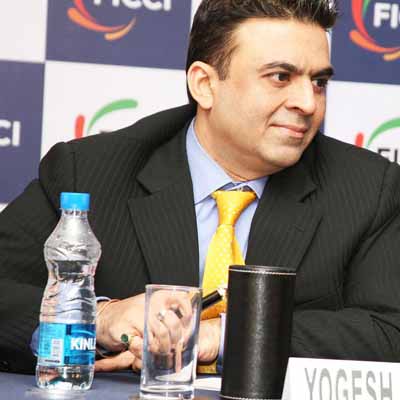
  • “Ad cap should have been restricted to only pay channels”: Yogesh Radhakrishnan

    “Ad cap should have been restricted to only pay channels”: Yogesh Radhakrishnan

    A veteran in the cable TV industry, someone who dabbled in the sector almost three decades back, Yogesh Radhakrishnan, now the MD and CEO of Pioneer Channel Factory, has seen the sector grow from the scratch.


    Known for setting up businesses, Radhakrishnan has been the man behind building IndusInd Media and Communication Limited, ETC and ETC Punjabi, rejuvenating Zee Cinema, setting up Zee Middle East, launching the first HD movies channel with Times Television Network – Movies Now and the first HD music channel – MTunes.


    Radhakrishnan, who has seen the sector emerge from a mere video-tape business to entering the digital era, talks to Indiantelevision.com’s Seema Singh about the emergence of cable TV in India, the first satellite channel, the emerging music sector and more…


    Excerpts:


    How did you get into the cable industry? How was the sector then? Why did you move out of it?


    In an era when the only form of entertainment was Doordarshan, I was fascinated how it could capture loyal viewership despite old, dusted black and white movies they telecast. I sensed that if people were given the option of better quality of movies on their own TV sets without the hassle of VCR or cassette which was prohibitively expensive there would be a huge demand for it. Thus was born the idea of launching cable TV in India. However re distribution of home video cassettes was illegal so in the year 1988, I pioneered the launch of India’s first copyrighted cable content with my three other partners under the brand name Cable Master. This gave the entire cable TV trade a flip and a legal straw to hold on to as the Government was yet to announce licensing policy for cable TV operators.

    In the next stage of evolution from cable to satellite TV, in the year 1992, we were all geared to launch a channel but lost out the lone transponder on Asiasat 1 to Zee. Those were the days  of quotas and licence raj and we had to partner with an established business house to do business in India.


    At that time the Hinduja group was on the verge of launching IndusInd, and so we partnered with them to create a media division and that is how the IndusInd Media Communications was created as a joint venture.

    Incable emerged to be the largest consolidator at that time to bring in the economies of scale in a city like Mumbai which had more than 8000 cable operators. We were the biggest players across most of the states in the country.

    Under IndusInd, we launched India’s first cable channel In Mumbai and a 24 hour movie channel CVO.

    Recognising the strength of ground distribution that our company had, we got many offers for joint ventures from the likes of HBO, Time Warner Cable, TCI etc. A huge multi million dollars offer from Rupert Murdoch didn’t go through due to valuation differences between the Hinduja’s and News Corp.


    In 1997, the cable industry got into a turmoil and that was the day I decided to move out of cable.


    You went on to launching ETC which you later sold to Zee? What’s the story behind that? How did Movies Now and the distribution venture with BCCL happen?

    In the year 1998, the concept of a 24 hour music channel was a need I saw and that is when I launched ETC, a channel focusing on new releases, as has been established nowadays the exposure of songs on TV plays a big role in the box office success of a film. ETC became the number one Hindi music channel followed by MTV, which was then a Hinglish channel.


    ETC was the second listed company after Zee and after the successful launch of the channel, we also pioneered the daily live telecast by securing the rights to the telecast of Gurbani from the Golden temple and thus ETC Punjabi was born which went on to become the No.1 Punjabi channel and continues to be in that position till date in its other avatar PTC Punjabi.


    After music and Punjabi channels, we saw the gap for 24 hour Hindi news channel, and that is how ETC News was conceived even before Aaj Tak was launched. But Technology wasn’t in place at that time a camera cost Rs 20 lakh, which today is close to Rs 50,000. Editing equipment, bandwidth for news feeds had to be sourced from DD, all in all, it was an expensive proposition. Hence, a 24 hour news channel had to be put on hold.


    Subsequently in 2002 when we got a good offer from Subhash Chandra, we sold ETC Networks to Zee.


    And then my association with Zee began, which was also an exciting time. I was a partner with Zee Middle East. Subsequently, I went on to build a strong company in Zee Middle East, which till date is one of the strongest markets for ZEEL.


    In 2008, I sold back my equity to Zee and wanted to return back to India where the action really was. Former Times Television Network CEO English channels Ajay Trigunayat, was in Dubai then. We got together with our project to launch India’s first ever English Movie channel in HD.


    I had discussions with BCCL MD Vineet Jain and a JV was formed in 2010 to launch four channels and then we further got into launching a distribution venture together called Prime Connect.


    Movies Now was one of most successful TV channel launch. It went on to becoming the No. 1 channel in the first week of its launch. Finally, in 2012, I exited the company by selling my equity back to BCCL.


    Then you moved on to setting up Pioneer Channel Factory? How is MTunes doing?
     

    Following the trend of people wanting to go to multiplexes for the pleasure of enjoying quality production of Hindi cinema and their desire to watch songs in its full glory, I set out to launch MTunes, india’s first Bollywood music channel in HD on the premise of Bollywood music like never seen before. Our songs were carefully selected to ensure they lived up to the channel premise.
     

    Acknowledgement from advertisers came as we got many campaigns exclusively on our channel due to its HD premise. Today, MTunes delivers far greater HD audiences than English movie, entertainment or even sports for that matter.


    Our second music channel Music Express resonates well with the industry, we package music with Glamour and Gupshup. Bhakti Sagar is our foray into the spiritual space.


    How will digitisation help the music channel industry?

    In analogue what was important was opportunity to see (OTS). In digital, all the channels are blocked in one category. The advantage for us is that we are in HD and so we got the advantage of the four million eyeballs. Our reach is good in HD and we are also available on SD. So for our advertisers it is a win win situation.


    How big is the music channel industry currently?


    If you take 14 music channels on an average, advertising and promo put together, we would be around Rs 700-Rs 900 crore.


    Unless and until you can differentiate yourself, you will not be able to grow majorly. If you see the broadcast business, be it GEC, sports or music, it’s very unfortunate that you are operating in the world’s cheapest advertising market (CPT) and cheapest pay TV market and this growth is slow.


    What is your take on music channels turning into youth general entertainment channel? Are you looking at foraying in the youth space?
     

    No way. It is a lovely genre to be in and is growing. Youth programming will drive this market to a large extent.


    But I don’t look at great economics that really works in any GEC space, unless and until there is good subscription that one is getting. If you strip off the subscription from all these channels and make them play pure advertising driven GECs I think each of them will lose money.


    Where do you see the music channel industry heading, considering music is easily available, you think there is still a market for music channels?

    Linear television will always have its market. Music will continue to be in a market where there is a television population which is very huge. There are a lot of people who watch content online and for them we are present online. There is still a large market and it will continue to be that way.


    Television is larger than life, especially music channels like MTunes which is very current and new and which plays new music and promos and that is what people look forward to rather than online where you need to make searches for content, while here content just keeps flowing.


    Why did music and news channels not follow 10+2 ad cap?


    US is such a free market and FCC is very strict in terms of regulation, but they do not have an advertising cap. Why should the government intervene on how much of advertising air time one should carry. For a moment Pay channels could be directed but definitely not the FTA channels. And that’s what we argued in the court. In short people will not watch your channel, if you put too much of advertising. So why is it that the government wants to intervene with channels and that too for free to air channels. We are not charging customers any money, its free.


    If we put in excess advertising, anyways our ratings will fall as no one would watch the channel, and that would affect our business.


    Ad cap should have been restricted to only pay channels, as India is the only country, where the pay channels are getting paid from both subscription and advertising.

    Government needs to create level playing field. Currently as independent networks, it is a difficult situation.


    How do you think music channels can start generating more revenue?
     

    Carriage is the biggest drainer. Network channels have the advantage of either not paying carriage or less carriage. Advertising is stuck in the low rate game. Cartelization is a good experiment that we all can get into in order to get decent rates. But, with the plethora of channels available, advertisers have a lot of options.

    It’s not just the music channels, but with new GEC launches, competition is getting tough even in the GEC space.