Category: Movie Channels

  • Despite lower revenues, Eros International delivers blockbuster results for Q1-2014

    Despite lower revenues, Eros International delivers blockbuster results for Q1-2014

    BENGALURU: Last year (FY-2013), the company entered the Rs 1000 crore club with revenue of Rs 1067.75 crore. In Q1-2014, three movies – Raanjhaana, Go Goa Gone (GGG) and Yeh Jawani Hai Diwani (YJHD) raked in the moolah at the box office for Eros International Media Limited (Eros).


    The company says that theatrical revenues during Q1-2014 have showcased the success of global releases of Raanjhaana, GGG and YJHD (Overseas). Raanjhaana achieved an impressive box office collection of Rs 100 crore worldwide; YJHD had an overseas collection of more than Rs 60 crore, while GGG had a worldwide collection of Rs 43 crore.


    Eros announced consolidated income for Q1-2014 at Rs 194.2 crore, 25.1 per cent lower than the Rs 259.3 crore during the corresponding period in 2013 (Q1-2013) and 9.2 per cent lower than the Rs 213.9 crore for Q4-2013 (q-o-q).


    During Q1-2014, Eros released 12 films – (seven Hindi and five Tamil and other regional languages), almost half of the 23 films – (five Hindi and 18 Tamil and other regional films) in Q1-2013 and almost a third less than the 17 films – (four Hindi and 13 Tamil and other regional films) in Q4-2013.


    Eros managing director Sunil Lulla said, “Eros has delivered an encouraging Q1-2014 result in context of the film mix that it released in the Q1-2013. Raanjhaana, YJHD and GGG all delivered at the box office and were subsequently monetised through other revenue streams as well. Relative to their budget, the mix of films performed extremely well and demonstrates our ability to scale and change our mix to take advantage of market trends.


    Let us look at some of Eros’ other figures for Q1-2014


    Expense for Q1-2014 at Rs 148.03 crore was 28.5 per cent lower than the Rs 207 crore for Q1-2013 and 14 per cent lower than the Rs 172.21 crore for Q4-2013.

    Earnings before interest and tax (EBIT) for Q1-2014 at Rs 46.1 crore was 11.9 per cent lower than the Rs 52.3 crore for Q1-2013 and 10.4 per cent more than the Rs 41.75 crore for Q4-2013.


    PAT (after minority) for Q4-2014 at Rs 29.3 crore was 6.7 per cent lower than the Rs 31.4 crore in Q1-2013 and 7.9 per cent lower than the Rs 31.8 crore for Q4-2013.


    Lulla said, “We are really excited about our collaboration with HBO and believe that the two premium channels will gain momentum with subscribers as we launch on further DTH and digital cable platform. The industry trends are testimony that premium content will be an important factor to drive demand and we are proud to be forerunners in that space.”


    “We continue to expand our film content through our diversified approach of acquiring a healthy mix of movies. Our current future slate remains well-funded and we have several high profile movies lined up like Kochadiyan, Ram Leela, Rambo Rajkumar, Happy Ending and a number of high concept movies that are slated to be released in FY-2014. Our business has a natural Q3 skew due to film releases around the festival season and this year is no different and we remain positive on the outlook for FY-2014,” added Lulla.


    Click here for EROS – Financial Report


    Click here for EROS – EROS – Earnings Release

  • Cinemala completes 20 years on air, Asianet honours all participants

    Cinemala completes 20 years on air, Asianet honours all participants

    BENGALURU: Cinemala, a satire programme on contemporary socio-political issues on the Star Network’s Malayalam offering Asianet, completes 20 years on 31 August. The show has been on air on the channelt right since its inception.


    On the occasion of entering into 1000 episodes of Cinemala, Asianet conducted a mega stage show on 31 July 2013, titled Cinemala 1000 at Gokulam Convention Centre, Kochi, to honour all the artistes who were part of the show right from the beginning.


    Malayalam tinsel world’s leading artistes S. Dileep and Salim Kumar were honoured during the occasion. Mementoes were presented to all artistes who were part of Cinemala over the years.


    Asianet will telecast Cinemala 1000, a four hour show directed by Diana Sylvester, from 7.00 pm onwards on Saturday 31 August 2013.


    The event will include comedy skits by Cinemala artistes and a variety of entertainment by Suraj Venjaramoodu, Mamukkoya, Indrans, P.


    Jayachandran, Usha Uthup, Sithara, Shamna Kasim, Subi, Tesni Khan, acrobatic Egyptian dance among others adding glory to the function.


    Prominent personalities from Malayalam film industry such as directors Joshi, Kamal, Sathyan Anthikkad, Sibi Malayil, artistes Manoj K Jayan, Suresh Krishna, Harisree Asokan, Asokan, Devan, KPAC Lalitha, Ranjini, Babu Antony, Nandu, Miya, Tiny Tom, Nadirsha were also present at the ground event.


    The channel has roped in Mini Muthoot as the Cinemala 1000 event sponsor, while Ujala will be the on air sponsor for the show.

  • Celebrate I-Day with special programs on TV

    Celebrate I-Day with special programs on TV

    MUMBAI: Flip through a newspaper or television channels, the flavours and colours of the Independence Day are present everywhere. And to celebrate and cash-in on the occasion, the channels across genres are going all out to surpass each other with special programs.


    The general entrainment channels which are scrapping amongst themselves for eyeballs have redone their programming line to accomodate these speical shwos. . Star India is spearheading an initiative-Saath Hain Hum Uttarakhand — to muster mass support and gather funds for the flood-ravaged Uttarakhand through a live seven-hour fund-raiser.


    The fund raiser that’ll be broadcast on key channels of the Star India network including flagship Star Plus, Life OK, Star Pravah, Star Utsav and Channel V from 12 noon will see participation and performances from Hindi film industry’s stars and television’s most celebrated actors. The network promises it to be the biggest Independence Day spectacle in India.


    To counter it, Zee has a special slot from 2.30pm to 5.30pm wherein it will show the best performances from the already aired Qubool Hai Eid Mubarak special episode and Gold awards 2013. Whereas Sony will be betting on films like Ek Tha Tiger and Aashiqui 2 that will be aired at 9.30 and 12.30 pm and 6.30pm respectively. Colors on the occasion will telecast Policegiri twice in the day.


    Movie channels, both Hindi and English, will be showing patriotic films (old or new) as well as films which focus on ‘Indianness’.


    As for the other genres especially the music channels, nobody wants to miss out on the opportunity as well. Music channels will pay tribute with not only patriotic songs but also through unique programs. For instance, Vh1 has Indian Musical Compass which brings together artists who are divided by states but united by music. The episode which is 12-hour (8am to 8pm) long will feature artists across India representing various regions – Pentagram, Indus Creed, Alobo Naga and the Band, Soulmate, Euphoria, Ska Vengers, A R Rahman, Thermal and a Quarter, Brodha V, Bickram Gosh, Cassini’s Division and many more.


    The oldest music channel – MTV – has announced its new take on freedom through Maa Kasam Hindustan with MTV ACT. The initiative will urge the youth to stop being a fence sitter; but to take a stand and take action against issues that concern them. Leading the campaign are actors John Abraham and Nargis Fakhri who along with MTV VJs will take an oath to bring about a change.


    The channels from the 9X network too will play blockbuster tunes, a special youthful video titled Azadi Ka Tashan and has also created a whistling version of Hum Hindustani, one of the most popular patriotic songs from Bollywood. This unique project will be aired on 9XM all through the Independence week.


    This Independence Day the channels have created a bouquet of colourful programmes to bring out the flavour of India to entertain viewers. So stay tuned!

  • HDIL Ent gets plex urge

    HDIL Ent gets plex urge

    KOLKATA: HDIL Entertainment, the 100 per cent subsidiary of the Mumbai-based real estate company, Housing Development and Infrastructure (HDIL), plans to have 70 multi-screen plexes pan India in the next couple of years. For setting up the cinema screens, the company has earmarked an investment of Rs 55 crore. The company’s multiplexes operate under the brand name – Broadway.

    HDIL Broadway CEO Mukesh Gupta is optimistic that both West Bengal plexes
    will be operational before Durga Puja


    HDIL Entertainment which reported a turnover of Rs 45 crore in the last fiscal of 2012-13, is aiming at notching up Rs 75 crore – Rs 80 crore by the end of the current fiscal 2013-14.

    In West Bengal, the company has signed a deal with mall developers for a four-screen plex Broadway at Asansol and three-screen plex at Durgapur.

    It is learnt that it will go for a lease agreement with Bengal Shristi for the Duragapur screens. Apart from this, it is looking at Burdwan and central Kolkata for expansion and Guwahati would be the preferred next destination in the eastern region. “Both the West Bengal plexes are slated to be operational before Durga Puja,” HDIL Broadway CEO Mukesh Gupta told indiantelevision.com.

    “By the month of October 2013, we plan to start 14 screens pan India and the total number of screens would be 35 by this year end. By the end of next year 2014, we are aiming at 70 multi-screen plexes,” he highlights.

    Of the Rs 55 crore investment needed, Rs 20 crore will be from internal accruals while a bank loan would account for Rs 35 crore, says Gupta.

    Broadway has around 14 operational plexes in Mumbai and four each in Kolkata and Indore. “We plan to open four screens at Kolkata, three in Delhi and two more in Mumbai by the end of the year,” the CEO says.

    It is interesting to note that two years ago the company planned to open around 120 multi-screen plexes by 2016 using the ownership model at an investment of Rs 450-500 crore. “Seeing the slow growth and not so conducive economic sentiment, we are looking at 120 screens in next three years to four years on a lease basis,” explains Gupta.


    HDIL Broadway has a four- screen multiplex, spread over 30,000 square feet and with a sitting capacity of 799 people in the city of Kolkata at present. Tickets are priced between Rs 150-Rs 200.

    Talking about the occupancy rate in Kolkata, he said the average occupancy rate is 48-52 per cent while “there are days like last week when the cinema halls were flooded with good movies, it was around 78 per cent also,” he says.

    “We have capitalised on the Salt Lake late-night movie-watching crowd and also the EM Bypass, Phoolbagan and Kankurgachi cinegoers in Kolkata,” reveals Gupta.

    Without giving much detail, Gupta said Broadway would soon open in central Kolkata.

    HDIL Entertainment is keen to tap the south market also for Broadway expansion, says Gupta.

    HDIL, the parent of HDIL Entertainment, was in the news recently for not paying interest arrears on a loan taken by it from Indiabulls Housing Finance, which it later paid up. Its share price dropped on the bad press.

    After a long consolidation of one and a half years, the HDIL share price broke out of the range, says Dhanpurna Commodities research head Puneet Rathi. “Falling below Rs 100 levels in January 2013, reflect a continuation of down trend in stock. After touching a bottom of Rs 26.1 on 6 August 2013 it bounced back on low volume,” he said.

    It is currently trading in the Rs 30 plus range.

    On Wednesday afternoon, the scrip was trading at Rs 32.85, up 0.61 per cent.

  • UTV Stars’ new show promises to bring the box-office home

    UTV Stars’ new show promises to bring the box-office home

    MUMBAI: UTV Star, a channel from the UTV bouquet, was launched with the promise of being the intimate insider of Bollywood. And keeping to it, the channel has started a new show – Box Office Live.

    The show will catch the pulse of the nation on every new release and promises to be the ‘sensex’ of Indian Cinema by providing its viewers with first-hand information about that day’s release. In addition to viewer’s opinions, the show will also feature a t?te-?-t?te with producers, distributors and studio executives to discuss how the movie is faring at the single and multi-screens across cities.

    Speaking on the show, Disney UTV, UTV Stars media networks director, content & editor Manish Dubey says, “Box Office Live! a yet another significant and path-breaking step fulfilling the long standing commitment of UTV Stars to get Bollywood closer to its audience. As the official channel of Bollywood, it’s our responsibility to give the audiences the real and the big picture of Indian Cinema and this show does exactly that in a format that has not yet been seen on Indian Television.”

    The show premiering with Chennai Express’ release will be bringing all the box office updates in a three-minute segment hitting every top of the hour throughout the film opening day. It will be talking to the audiences from theatres across the country and provide minute by minute reactions on the day of release enabling the viewer to give his or her personal “Hit” or “Miss” verdict.

    The show is hosted by Sunanda Wong, a Bollywood and lifestyle journalist, who has over five years of experience up her sleeves.

  • Cinemax India PAT at Rs 5.19 crore for Q1-2014

    Cinemax India PAT at Rs 5.19 crore for Q1-2014

    BENGALURU: Indian movie exhibition chain Cinemax India Limited (Cinemax) reported a PAT of Rs 5.19 crore for Q1-2014. The exhibitor had reported a loss of Rs 3.56 crore during the preceding quarter (Q4-2013).

    Let us take a look at Cinemax’s other figures for Q1-2014

    Cinemax’s Q1-2014 net consolidated operating income of Rs 108.50 crore showing a 12.1 per cent growth as compared to Q1-2013 net consolidated revenues of Rs 96.76 crore for Q1-2013 and were 30.1 per cent higher than the Rs 85.39 crore reported during Q4-2013.

    The company’s consolidated expenses for Q1-2014 at Rs 91.17 crore were 12.25 per cent higher than the Rs 81.22 crore for Q1-2013 and 9.3 per cent more than the Rs 83.38 crore in Q4-2013.

    A big chunk of the Cinmax’s expenses is the Film Distributor’s share. For Q1-2014, it paid Rs 30.64 crore (28.2 per cent of consolidated revenues for the quarter) as against Rs 26.50 crore (27.2 per cent of consolidated revenues for the quarter) for Q1-2013 and Rs 24.40 crore (29.3 per cent revenues for the quarter).

    Cinemax’s expenses towards rent for Q1-2014 at Rs 17.75 crore, though higher by 10.8 per cent as compared to the Rs 16.02 crore for Q1-2013, were 1.9 per cent lower than the Rs 18.09 crore paid in Q4-2013.

    Also, repairs and maintenance, though a small part of the consolidated expenses, grew by almost 36 per cent in Q1-2014 to Rs 6.74 crore from Rs 4.96 crore in Q1-2013, but were lower by 7.3 per cent as compared to the Rs 7.23 crore in Q4-2013.

    Last November, the promoters of Cinemax sold their entire stake of 69.27 per cent in the company to PVR Ltd for Rs 394.98 crore. The board of directors of PVR Limited, in a meeting held on 7 June 2013 have approved the merger of Cinemax and a wholly owned subsidiary Cine Hospitality Private Ltd., with PVR. Cinemax also said on the same day that its board approved “in-principle” the amalgamation of the company with PVR Ltd, the ultimate holding company.

  • TLC gets Trinny & Susannah to make over India

    TLC gets Trinny & Susannah to make over India

    MUMBAI: They have been making waves with their down under filmed fashion and style makeover show. As they have done in 12 other countries through adaptations of the programming format they share with global format major Zodiak Rights. Now British style gurus Trinny and Susannah are bringing their Makeover Mission series to Indian TV screens daily on Discovery Network’s lifestyle style TLC from 12 August at 9 p.m. 


    Filmed and produced in India by Zodiak Media’s Indian offshoot Sol Productions, Trinny & Susannah’s Makeover Mission India features the two British ladies, roaming the streets of Mumbai, selecting plain-Janes and Johns and whisking them away only to transform them into ultra chic ladies and debonair dudes. And not just that they even end up making them walk the ramp.

    Trinny and Susannah will be at their funny best while dressing up Indian men and women


    Explains Discovery Networks Asia Pacific, Sr. VP & GM, head of revenue, pan-regional ad sales & south asia, Rahul Johri: “We have done a lot of grooming shows over the past one and a half year and the reason behind this is that India is a young country which is oriented towards fashion. We have altered our international formats to suit Indian aspirations.”


    That is indeed true: a few months ago it rolled out the Indian adaptation of What Not to Wear India (hosted by Soha Ali Khan and Aki Narula), and then the Ozzie edition of Trinny & Susannah’s makeover mission is airing on TLC these days.


    For the record, Trinny & Susannah’s Makeover Mission India is an adaptation of the Norwegian format and it is pretty simple: both men and women with different shapes and sizes, fashion backgrounds are scouted by the two and given fashion and grooming advice in a very easy and fun manner. Together the hosts strive to bring a sense of individuality and confidence in them as they encourage and motivate them to accept their unique body shapes and sizes and feel good about themselves.


    In all, the Indian series is slated to run over 16 episodes and will feature 16 participants being transformed into swans. 11 of these were picked up casually from the streets while five were selected through a promotional campaign run on-air and a stringent selection process through TLC’s Facebook community.


    Each half-hour episode has been filmed both outdoors and indoors. For instance, in one of the episodes we will see the Trinny and Susannah walking down Mumbai’s iconic Marine Drive talking about fashion before they approach a couple sitting at the Pizza By the Bay and lastly, in the studio where they will go through the transformation. In Delhi, the studio location where filming took place was BKP Studio, while in Mumbai it was the Mehboob Studio. A high quality production, Trinny & Susannah’s Makeover Mission India required 70 production and technical crew, 13 cameras – two while scouting for the participants, four in the makeover studio and seven on the ramp. Direction is by Akshat Rao.


    However one does wonder how much do Trinny and Susannah know about Indian body shapes and dressing styles? This is where the team of experts comes in. The duo has a professional makeover team – a hairdresser, a make-up artist, seamstresses and a photographer. The styling team is headed by the British stylist Annie Swain. The hair and make-up team is from the Mumbai-based image salon KromaKay.


    The stylists have not restricted themselves to the international standards of dressing and will be dressing the participants in both western as well as Indian outfits. But it wasn’t an easy task for Trinny and Sussanah to make Indian women open up to them.


    “Unlike other countries, Indian women are very conservative when it comes to opening up about the dressing styles. For example, if we asked one what they thought about an outfit, we would get answers in monosyllables. We had to probe them to know why they liked or disliked it,” narrates Sussanah.


    The duo is known to get physical as well as times be rude and upfront about participant’s dressing. However, many viewers internationally, have found this approach funny, which is why the format has travelled to so many countries. But from the promos, one can clearly see that there are going to be a lot of beeps in the Indian version. Maybe that’s because the channel has toned down the way the two will talk to and approach the participants.


    “Of course, you won’t see a very brazen approach in the Indian version.. We had to be very careful while shooting and editing so that no one gets offended,” says SOL Production managing director Fazila Allana.

    Discovery Networks’ Rahul Johri is on a fashion programming binge on lifestyle channel TLC


    On the other hand, Trinny goes on to explain that they feel that more than the people living in the metros (Mumbai and Delhi) it is the people in other smaller cities that are in desperate need of a makeover. She adds “Susannah and I are keen to spread our wings and work with people who have mind blocks about how they dress. The reason could be career, family, household duties etc that they give more importance to than what they wear and how they look.”


    The channel, which is happy to get the well-known stylists to India for the first time says it has no worries about marketing them and the show; the target audience knows them well enough. Says Discovery Networks Asia Pacific VP marketing Rajiv Bakshi: “We didn’t face any challenge on the marketing front. Actually, India is absolutely ready for a show like this.”


    So, is the channel right in hoping that the names will get it more viewers? Those in the media don’t think so. According to Madison Media COO Dnyanada Chaudhari, “TLC is a niche lifestyle channel and has a certain loyal audience. I don’t think that bringing in international hosts will draw in many more eyeballs to the channel, even if the series is localised.”


    Now, it’s over to Indian viewers to prove her wrong.


    Trinny and Susannah’s curriculum vitae


    · The two fashion journalists have been working together for the past 17 years. They met at a party hosted by David Albert Charles Armstrong-Jones, Viscount Linley (the grandson of King George VI). But the stylists didn’t hit-it-off from the beginning.


    · The pair came together in 1994 to write a weekly column Ready to wear for the Daily Telegraph for seven years. It was a hit among readers. But ventures such as a website named Ready2shop.com and a co-authored book Ready to wear which followed later failed to make an impact.


    · In 2000, they were approached by BBC to host a show What Not to Wear. It ran for five years from 2001- 2005 reaching an audience of over 20 million women in 31 countries. In 2006 they moved to ITV where both made three original series: Undress, The Great British Body and Trinny & Susannah Meet. Their current TV show Trinny & Susannah – The Makeover Mission is aired in 12 countries around the world, generating an audience of 15 million viewers.


    · The Trinny & Susannah – The Makeover Mission’s format which the stylists co-own with Zodiak Rights (London) which is the international distribution and rights exploitation arm of Zodiak Media. The rights were acquired in 2010 from Kanakna (part of ZMG).


    · Fans can check more updates from the two Fashion journalists official website http://trinnyandsusannah.net

     

  • ‘Buniyaad’ set to re-create the nostalgia of partition and popularity of old-world charm

    ‘Buniyaad’ set to re-create the nostalgia of partition and popularity of old-world charm

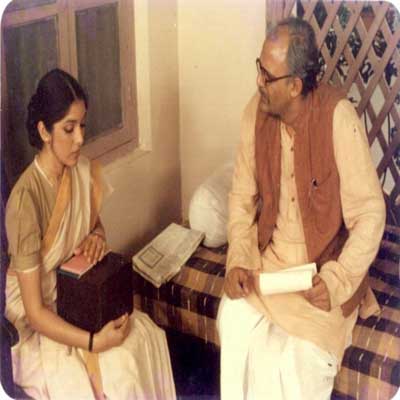
    NEW DELHI: A trend-setter of sorts when it was first aired almost three decades earlier, this series remains a nostalgic reminder of the days of the partition, and will provide much needed insights to the younger generation.

    Buniyaad, the mega-series written by the celebrated Manohar Shyam Joshi and helmed by the stalwart Ramesh Sippy and Jyoti Sarup laid the foundation for the evolution of India’s television entertainment industry and defined the contours of its future.

    Doordarshan, which had aired it in 1986, is all set to revive the epochal series from tonight and it will be telecast every Thursday and Friday at 8.30 pm on DD National.

    Producer-director Ramesh Sippy, actor Kiron Juneja, actor Neena Gupta and DD director-general Tripurari Sharan in a press meet here said the series still had its old-world charm and was being looked forward to.

    At a time when DD was the only channel beaming in the country, Buniyaad saw an entire nation rooting for Master Haveliram (Alok Nath) and his family as they came to terms with their lives in an epic series set in the years preceding and after the partition.

    Apart from Alok Nath, the series stars Anita Kanwal, Kiron Juneja, Asha Sharma, Sudhir Pandey, Mazhar Khan, Kanwaljit, Dalip Tahil, Soni Razdan and Neena Gupta amongst others.

    Sippy said the characters played by these actors are remembered with nostalgia today by millions of viewers.

    Sharan said for many years, these actors were known by the names of the characters they played. Hence for an entire generation Alok Nath was known as Masterji, Anita Kanwal was identified as his wife Laajo Ji and Kiron Juneja as Veeravali, Masterji’s sister in the serial by the viewers.

    The story of Master Haveliram falling in love and eventually marrying Laajo Ji, their family, separation and reunion in the aftermath of India’s partition has as much going for it today as it did in the late eighties.

  • “Bollywood is not making films suited for home viewing on TV today”

    “Bollywood is not making films suited for home viewing on TV today”


    “Bollywood is not making films suited for home viewing on TV today”
    Posted on 24 July 2013
     

    He is a man who is passionate about movies, music and cricket and is lucky enough to be handling all three. Sony Max senior VP and business head Neeraj Vyas is living his passion for all three by handling Set Max and Sony Mix. The man always has work on his mind and cannot disconnect from the office even when on a holiday. And he has been at it for almost 17 years at Sony Entertainment Television (now called Multi Screen Media), first with the main channel, followed by stints at Max before finally heading it. Today, Vyas is looking at maxing Max‘s position in the Sony entertainment channel bouquet. In a t?te-?-t?te with Indiantelevision.com‘s Seema Singh, Vyas shares his thoughts on changing movie trends, the supply and demand chain and the opportunities provided by digital space and digitisation. Excerpts: 


    How do you decide on which movies to acquire? What is the life cycle of these movies? Does Sony buy movies for the entire network? Or does Set Max buy them separately?
    The movie game essentially is a demand supply situation. You can’t buy everything that is available, even if you want to, you have limited money and that money is not growing. On the other hand, acquisitions are also becoming more and more expensive. So you have got to be as prudent as possible when you buy.

    I don’t think anybody can, beyond a point, guarantee if a particular film will work or not on television. There are situations where a film has been a monster hit in the theatre circuit, but has not worked on TV. The reverse of this is also true. So, these are judgement calls that the broadcaster has to take from time to time, even in scenarios of what is available and what is not.

    By seeing the trend (actors, crew, director, past record, genre, production house and marketing), one gets a feel of how the film will perform and based on this one decides to either buy or not buy. I don’t think anybody can predict the success or the failure when he is buying the film. The meter keeps moving as per the demand and supply situation and the price obviously needs to be right to make that final choice.

    We buy a film for the network, it’s not only Max, any network today whether it is us, Star, Zee or Viacom, buys films for the network. No movie channel will be able to sustain the cost that it is bought for. It has to be played across various channels of the network for the cost to be amortised.


    Which are the movies that you have acquired recently?
    Post IPL we have come back very strongly, having four clear weeks of leadership as far as ratings are concerned. And it is a decent leadership of almost eight to ten GRPs from our closest competitions. It’s been a decent comeback from the IPL. Even pre the IPL, that is, in the second half of last year onwards, we have been the leaders.

    We kicked off post IPL with the telecast of Jab Tak Hai Jaan. This was followed by Taalash. We will be telecasting the world TV premier of Aashiqui 2 on 28 July. Among the host of other movies that we added are: Yeh Jawani hai Deewani,Murder 3Shootout at WadalaOnce Upon a time in Mumbaai DobaraEk thi DaayanGippi and Krish3.

     
    We buy a film for the network, it’s not only Max, any network today whether it is us, Star, Zee or Viacom, buys films for the network. No movie channel will be able to sustain the cost that it is bought for. It has to be played across various channels of the network for the cost to be amortised
     

    Does the network set a limit in terms of price it is willing to cough up for movies? Or do you buy movies which you think will click with the public? How big is the Bollywood movie channel industry market in terms of ad sales revenues?
    Of course there is a set limit on price. Paying absurd amount of money for any movie is not possible. Because, even if you amortise the cost over five years in terms of recovery that you make, sometimes it is not possible. The mathematics does not work out, so there is always a cut off.

    With a fair approximation it would be close to Rs 1350 crore to Rs 1400 crore and is growing at about 15 per cent.


    What is the trend in movie acquisition? We have heard that there are networks paying close to Rs 400 or 500 crore to acquire Salman Khan and Ajay Devgan movies?
    Honestly all of us have only heard about it, but there is no clarification by either the actor or his PR firm or even the channel. So nobody knows what the mortalities are and nobody knows what the working is. Frankly, all of us are only speculating and I do not want to add to the speculation. It is just a little grey right now.


    What is the lifecycle of Bollywood blockbuster on TV?
    There is a huge issue that’s coming up as far as the supply chain is concerned. I see it a little differently, simply because of the kind of movies that are being made today. If you look at the trend in the past three to four years, the ratings for the movie channels come from smaller towns. We basically cater to section C D E audiences and C D E male is the core target group for all us.

    Having said that, the films being made today are creatively better, technically sounder, performance wise better and also there is a lot of boldness in the attitude of the films. Movies today are edgier, bolder and racier. So, while all of this is good from a cinematic point of view and from a theatre-going point of view, this does not work on TV.

    For example, even though The Dirty Picture was a nice, bold, raunchy film with bold dialogues and situations one would probably go and watch it in the multiplexes and feel good about it. But the same audience will not watch it with their parents when aired on TV.

    Eight out of ten films made today are from this kind of work zone. Back in the seventies, eighties and nineties, commercial cinema was driven by certain kind of directors and producers. You had the Manmohan Desai, Prakash Mehra, Yash Chopra, and Yash Johar (among others) schools of filmmaking. They made films in a particular genre for a particular kind of wider cinema audience.

    Then you had the art house makers like Shyam Benegal, Govind Nihalani, Ketan Mehta and others who made art house cinema. So there was clear demarcation of people who wanted to watch their kind of films.

    Today, it’s great for the industry to see Vishal Bhardwaj and Ekta Kapoor coming together, with the creative sensibilities of one and commercial sensibility of the other to make Ek thi Daayan.

    Also Yash Raj Films, for example, made certain kind of cinema, but today if you look at the kind of directors that Aditya Chopra is working with like, Manish Sharma and Habib Faizal, are directors who don’t confirm to commercial Hindi cinema. They have a mind of their own, treatment of their own, message to give and language of their own to use in the kind of cinema they believe in and these are the films that are being made now.

    So even though it’s more meaningful and relevant cinema, bringing out the social realities of the country, they don’t work on TV beyond a point.


    Movies today are edgier, bolder and racier. So, while all of this is good from a cinematic point of view and from a theatre-going point of view, this does not work on TV. So even though it’s more meaningful and relevant cinema, they don’t work on TV beyond a point


    If these movies do not work on TV then why are channels spending so much on buying these movies? 
    That is because of the demand and supply game. You‘ve got to run the show. According to me, the supply chain is the larger issue more than anything else. And I think that is something that all channels need to wake up to, and figure out the right price to pay for such films, because none of the films have longevity beyond a point. They don’t have repeat viewing value.

    Movies like Hum Aapke Hai Kaun and Kuch Kuch Hota Hai still get good viewership. This is because most of the audiences are from smaller cities. Also 85 per cent of the country is still a one TV home, which is a big number.

    The supply chain is not producing the kind of content that the movie channels will ideally like and as an industry, this is the biggest challenge we face. And, on the flipside, which is worse is that we have to pay a lot more than we should be paying for those films.


    Does SET have exclusive deals with any distributor or film production houses?
    We are in talks with everybody and we have good relationships with almost all. We have key relationships with Rakesh Roshan, Yashraj Films and Karan Johar, but there is no exclusivity. The industry does not work like that. It finally comes down to who bids the highest price.


    Any plans to convert Set Max into a complete movie channel and taking cricket only on Sony Six now? Will Max telecast the next IPL season?
    That is probably an eventual reality for all us. The objective of launching Sony Six was to make it a full-fledged popular sports channel. And cricket being the biggest sports vehicle in the country, at some point, IPL will have to move onto Six. And as and when it happens, Max will become for 365 days – a full on movie channel.

    Sony Six needs to be distributed well. We are still waiting for the DAS roll out to happen peacefully. From a network point of view, IPL is the biggest thing we do. So only after Six has a bandwidth to reach out to people, the shift can take place. We may take a call on the shift of IPL from Max to Six later in the year.


    How do you ensure that the channel gets good ratings during the IPL? How do you manage it throughout the year?
    IPL ratings are cricket ratings, so the channel takes a very different avtaar during the IPL. IPL rates more than any other channel in any case. And those are very big ratings, so I think that will be very unfair comparison. What we do post IPL is what the real MAX is.

    For the rest of the year, the titles that we buy ensure good ratings. Presentation of films, marketing and packaging of promos, all lead to good ratings.

    For example, the promotion strategy (see story on Set Max goes big on marketing for Aashiqui 2) for the world television premier of Aashiqui 2 is such that we are virtually re-releasing the film. The challenge today is to retain an element of freshness of the movie being telecast on channels. The film is aired on a channel almost after two to three months of its release. By this time either the audience watches it in theatres or at home on pirated CDs. Channels have to get people excited about something they have already seen.


    The promotion strategy for the world television premier of Aashiqui 2 is such that we are virtually re-releasing the film. The challenge today is to retain an element of freshness of the movie being telecast on channels


    How do you programme the channel during the IPL season? Did spot-fixing allegations during the IPL affect the ratings in any way?
    It is very simple. When we have two games a day, we run three films and when we have one game we run four films. For the whole length of IPL (54 days), we avoid all the blockbusters or big films. This is obviously because there are two large games in a day or one in a day.

    Honestly, I don’t think it affected our ratings, because it happened only towards the last games. It surely leaves a bad taste in your mouth.


    Will the 10+2 ad cap have any effect on the channel? Will there be any hike in the ad rate?
    It is the biggest blessing that is going to happen to the genre. The number of people the movie channels reach out to is at par with every Hindi general entertainment channel of the country.

    We have a 48 to 50 per cent reach. So whether it is Max or Zee Cinema or Star Gold, the reach is not very different from Sony‘s, Star Plus‘, Colors‘ or Zee TV‘s reach.

    The ad cap will bring down the advertising time the genre currently has. The biggest problem that the genre faces is the time spent by the viewer on the channel. The current time spent by viewers on movie channels is around 65 to 68 minutes and on GECs it is around 122 to 130 minutes.

    There are clear reasons: 1) GECs air original content everyday; while movie channels air movies that have already been watched.
    2) The number of ads on GECs is limited; while on movie channels it is far more.

    Ad cap will mean a reduction in ad time and this in addition will tempt the viewer to stick on to the movie channel and watch more.

    The ad cap will lead to a hike in the ad rates. Reasons:For one, the time spent by viewers will get better, so we will have a valid reason to ask for a rate hike. Then traditionally, Hindi movie channels have been sold at a very low rate, though the correction should have happened many years back, it has not happened. So probably this is the right time to make that switch.


    With GECs also entering into the world TV premier league, how do you intend to hold on to viewers‘ perception that movie channels also offer them value? Sony has recently launched MSM Motion Pictures. Is that going to help MAX get good deals in world premiers?
    The movies are bought by the network and so in reality it becomes important to launch the world TV premier on a GEC than the movie channel. Networks pay big bucks to buy these movies, and the amount of money that is recovered in the first run on GEC is always going to be far more than what is recovered through a movie channel.

    Set Max will never telecast the world TV premier of a big film, having huge acquisitions (Aashiqui 2 being an exception, since the acquisition rate was not very high). It will always be on Sony.

    MSM Motion Pictures will help us get better deals. That is the main or one of the objectives.


    How do you see the competition in the space? Who amongst the movie channels is the leader?
    It is a very close game between the three of us. So week-on-week you see shifts happening. It will be silly if I or anyone else claims to be the undisputed leader, it is a shifting game. The genre is too small for people to take clear leaderships.


    How do you differentiate between various channels? What are the standout brand characteristics of Max?
    Max as a network is very conscious about the quality. What we air has to be cutting edge in terms of the way we look, package, present, promote and market the product. This is not only for our film, but even the channel. This can be seen in the way we promoted the IPL.


    Set Max telecasts a lot of South movies dubbed in Hindi. Do you get a good viewership for them? What led to this trend of running such movies?
    The trend started close to four years back. Close to 30 per cent of any channels fixed point chart (FPC) is now South Indian cinema, simply because it does well.

    Most of these films have extremely exciting action sequences and are gorgeously and lavishly produced. The themes of these movies are mostly revenge, emotional and social issues. By large it is Indian cinema, so the ethos does not change beyond a point, only the look of the people and the way the films are packaged is different. So that is the only reason that everybody is buying them and telecasting them. Had it not been accepted, it would not have survived for four years.


    What strategies are being used by the channel for marketing itself to increase its viewership?
    We have now decided, as a thumb rule to tie up with production houses for new releases. We are also coming up with innovative marketing strategies. For example, we roped in Ranbir Kapoor and Deepika Padukone to talk about Yeh Jawaani Hai Deewani. We promoted its theatrical release and also got them to do a channel promo talking about new releases on Max.

    We get star faces on the channel to promote the upcoming movies. This helps us further the perception of Max being the big channel with big faces. Max, in return acts as platform for movie promotion for these actors. Today, apart from the GECs, we are the only ones who have this kind of reach. Aashiqui 2 is another movie which is being promoted by the Lootera team.

    We have also tied up with Once Upon a Time in Mumbaai Dobara team for promotions. We keep doing this every month.


    Is the channel using digital space to promote its content? How? And do you have any striking case studies?
    The use of digital space became a kind of case study for us when we did the IPL. Even post the IPL we have some very aggressive plans. We were the first ones to have live tweets during the telecast of Jab Tak Hai Jaan. We got close to 2,500 responses. We also had Twitter contests called #TalaashHunt for Talaash. Through the contest we added around 11,545 followers from 11 July (Thursday) to 14 July (Sunday), the day the movie was telecast.

    We also have mega plans for Aashiqui 2. Digital is a massive reality for all of us.


    What kind of USPs do you offer to advertisers? 
    Reach is the biggest player and it is a dynamic reality. It’s unbelievable to see the amount of people we reach out to as a genre and as a channel- it’s second to nobody. This is our biggest USP. Also we commit at a very affordable price.


    Can Max become a substantial revenue creator for Sony Entertainment in terms of ad revenues and subscription revenues?
    Yes it will, in fact it already does. With the digitised environment that we have got into, we will get more paid subscribers. So, maybe in the next 16 to 24 months, all movie channels including Max will become large players in the scheme of things within the network. Also once the paradigm shifts from CPRP to CPT, the consideration for ad rates will go up, because we will have numbers to prove our reach.

  • ‘There is no major differentiation among the top 3 players’ – Mohan Gopinath

    ‘There is no major differentiation among the top 3 players’ – Mohan Gopinath

    Zee Cinema, the Hindi movie channel from the Zee stable, has seen it all since its inception in 1995. Right from being the uninterrupted ruler to seeing its territory being eaten into by new players like Star Gold and Max, the channel has weathered all kinds of climate. And it continues to be a cash cow within the Zee network of entertainment channels.

    According to Zee Cinema business head Mohan Gopinath, there is no major differentiation among the top three players. “We are all battling for the same share of the slice and there is no huge lead to say that this channel is number one as that keeps oscillating,” he says.

    Gopinath also believes that digitisation would throw open a lot of growth opportunities for the genre. Segmentation of movie channels would be one such area. He also believes that movie acquisitions would have to be in line with the business economics and strategies of the channel. In a conversation with Indiantelevision.com‘s Javed Farooqui, Gopinath talks about how Zee Cinema has managed to remain steady and relevant all these years despite the rise in competition and the changing consumption pattern.Excerpts:


    What are the key takeaways for Zee Cinema from 2012?

    The key takeaways were the premieres that we did. We did a premiere of Agneepath, English Vinglish, Agent Vinod and Joker. So those were the kind of refreshed content that was displayed on Zee Cinema. Then we had ‘Bollywood’s Most Wanted‘ festival during Dussehra which was a take on glorifying the villains. This has been a good year in terms of imagery and mileage that was displayed on Zee Cinema.

    How was the content different from what was offered in 2011?
    Refreshing content, that was the difference. We had heavyweight content which had superstars; and we also had English Vinglish which was so strong on content that people didn’t mind that it lacked a hero. Besides, we had Agent Vinod and Joker which also had stars which we as a channel could boast about.

    Zee Cinema used to rule the roost as numero uno Hindi movie channel but now it is at the second spot on the ratings table?
    In a scenario where you have very little to choose from, it is wrong to say that one is at number one or two because there is no major differentiation among the top three players. We are all battling for the same share of the slice and there is no huge lead to say that this channel is number one as that keeps oscillating. So I would like to believe that all three are on an even par and that is where the content resides at this point of time. The important fact is have you been able to maintain a steady base at the level that you were operating on and are you in the game right now because of so many environmental changes where certain channels have taken a huge lead and certain channels have gone off the boil. So a lot of things have happened in the last 45-50 days. It has been heartening to note that Zee Cinema has been rock steady and continues to do so.

    Have you seen any drastic changes in the ratings post digitisation?
    Not much. In fact competitor channels have fallen by certain points but nothing to suggest that any great upheaval has taken place. So all three are on the same even play. The averages for across the year and the past 13 weeks would seem to suggest so.

    How do you think  digitization will  help Hindi movie channels?

    The opportunity for broadcasters is the level playing field. In fact if I am not seen at all, then what is the incentive for me to say that whether I am good or bad. So I think digital (cable) will help cure that ailment in the sense that I will at least be seen. Then you can shout about the uniqueness that you bring to the table. Secondly, it becomes a completely viewer medium. All this while we were catering to a certain type of viewers who was interested in certain kind of movies but who also wanted to see something different. A case in point being classic: it is a very premium category that watches the the Bharat Bhushan’s and Dilip Kumar’s of the world. The newer generation may not know about them but they have always heard from their parents or grandparents that used to exist. So the quality of song will attract movie watching also. If per se I were to name an Awaara or an Arzoo, it will not ring a bell. But if I sing or hymn a particular song, you will say ‘let’s see that movie’ just to know what is in it that makes my parents rave about them. So that is a huge opportunity of how we can go about things.

    You have already segmented the genre with channels like Premier, Action and Classic. Are these channels getting any traction and how do you see them faring in digital era?

    We have to wait before we pass judgments on these channels because digital offers good scope. We are on the threshold of something that is about to explode, so in three-four months time we will be able to tell what has happened and what hasn’t. We are just waiting on the edge to appreciate it. The availability of these channels have increased. Zee Classic is getting carried across all the DTH operators. So I think that leads to a greater consumption of the channel.

    Zee Cinema was not very aggressive in acquiring big-ticket acquisitions but last year you changed gears?

    See, it depends on where you are and where you want to be in terms of taking the channel forward. Acquisition for the sake of acquisition will never work as you have to take into account the economics, the kind of strategy that the company has in place and the strategy that you (as a channel) have in place. It was a very informed call that this is the year we are going to make our presence felt in the market. You wouldn’t want to be counted out of the race of airing new movies, so that was clear decision and I am happy that it bore fruit.

    But viewers also want more of new content on movie channels?

    New and fresh content always appeals to the viewer but they do not let go the old content. There is this huge fallacy that viewers only like to watch new content. What is also important is do you have enough back-up content and plans in your kitty that once you are done with your premieres and once you are done with three-four telecasts (of new movies) do you have the library to sustain viewership and that is where the history and pedigree of the channel comes and that is where Zee Cinema is on a good footing at this point. We have a huge library to back-up the newer lot. It is so easy to say that I will buy everything in town but it doesn’t work even our competitors would agree it’s just a matter of what you have as a back-up plan.

    What is the brand philosophy of Zee Cinema?

    It carries along the company ethos with it which is that of being a family entertainment channel. We don’t want to be counted as a channel that does bizarre stuff and goes beserk with the kind of movies that we air. We have always been a rock steady channel keeping in mind the consumption pattern of the viewer. We believe that what appeals to us at a certain basic primal level will also appeal to viewers. The numbers (ratings) and the kind of response we have generated seems to suggest so.

    Have movie consumption habits been changing particularly due to the emergence of new platforms?

    It has impacted consumption habits a little bit, but to attribute everything to external factors will also not be right. People initially thought that DVDs would lead to the demise of movie consumption in theatres, but actually you have seen the theatre business grow multi-fold. I think they will co-exist because they are all appealing to a different set of TG.

    How do you decide on the scheduling of content?

    There is a lot of thought that goes into the scheduling because movie consumption can happen at any time. So am I at any given point satisfying the need of my viewer at that particular point in that particular mood? That is the kind of study that goes into deciding the schedule and acquisition of movies for that particular slot. There are lots of packages that are being done.

    Like the branded slots that you have?

    A case in point being ‘Dopahar Zee Cinema Par’ in the month of May. So those kind of things or if there have been new acquisitions that we will have to put into it to give it a different flavour and a different positioning. If I keep on scheduling movies, then not everyone will come to know about it by just running a promo. Here I am giving a different flavour, I am tapping into that aspect of a never before scene or a great content that helps you understand the ethos of the movie or what goes into the making of it.