Category: Kids

  • Electronic Arts shares surge 9 per cent on strong earnings

    Electronic Arts shares surge 9 per cent on strong earnings

    MUMBAI: Electronic Arts beat earnings expectations in the most recent quarter, the first since Larry Probst took over as CEO in March, and an accomplishment that sent its stock nine per cent higher in after-hours trading on Tuesday.


    The maker of video games said digital sales soared as revenue from packaged goods dropped during its fiscal first quarter.


    Still, the company reported a net loss of $121 million in the latest quarter on adjusted revenue that rose by a per cent to $495 million. On a per-share basis, Electronic Arts lost 40 cents while analysts predicted it would lose 60 cents.


    During the regular trading session on Tuesday, the stock fell by a per cent to $23.83. The stock surged more than $2 a share, though, after the closing bell.


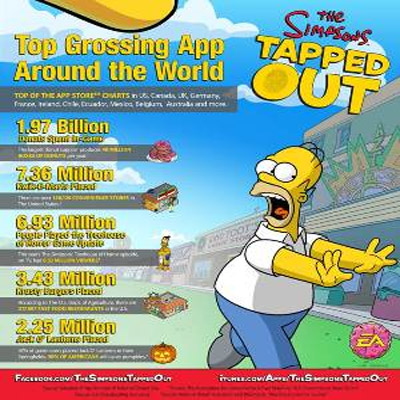
    Among the highlights was a record quarter for sales of The Simpsons: Tapped Out. Also, FIFA 13 digital net revenue surged 92 per cent to top $70 million in the quarter.


    “EA had a solid quarter, driven by continued digital growth and disciplined cost management,” said Probst. “We are also executing on a clear set of goals for leadership on mobile, PC, current and next-generation consoles.”


    Probst was a former CEO who took back the position in March after John Riccitiello stepped down, blaming himself when the company fell short of certain financial goals.

  • Kids TV channels seek to service adults too

    Kids TV channels seek to service adults too

    Krishna Desai speaks on the business, content and digital sides of Turner International India‘s kids forays.

    What is the local content strategy adapted by the channel to attract viewers and more so encourage co-viewing (kids & parents together)?
    Way back at the turn of the century, realised that there was a growing preference of local content in the kids‘ space, resulting in development of our Desi Toons strategy that emphasises on showcasing locally relevant content that resonates with kids. We will continue to deliver local content be it more of international shows in local languages, acquiring and producing content conceived locally and delivering a platter full of hit shows in different formats.

    Although, traditionally, kids‘ channels are perceived to cater to only to children, the latest findings of Cartoon Network New Generations , our proprietary research, shows that a majority of parents (three out of every five parents) watch television with their kids; morevover, cartoons are their most preferred genre after serials. Our strong portfolio of shows such as Tom and JerryBen 10Oggy and the CockroachesChhota Bheem, etc. cross age limits and appeal to parents as well.

    What kind of numbers are you generating in terms of viewership and what kind of audiences and from where?
    Turner‘s kids‘ network is clearly leading the genre on-air as well as online. Key findings are highlighted below:
    POGO at No. 1 (151 GRPs) and Cartoon Network at No. 2 (119 GRPs) – YTD
    Cartoon Network at No. 1 (159 GRPs) and POGO at No. 2 (151 GRPs) – Week 23
    Cartoon Network, at 159 GRPs, is the maximum in last 5 years – Week 23
    At 188 GRPs, Pogo created a new industry record in the genre of the highest GRPs ever for any kids channel in last 7 years – Week 19
    (Source: TAM | All India | YTD: wk 1-23 | 4-14 years | All SEC)

    www.cartoonnetworkindia.com and www.pogo.tv are the top two kids‘ websites in the country with a million unique viewers.

    What is the competitive landscape like? Who are the main viewers (age, urban, non-urban, etc)?
    * Currently, there are 16 national channels in the kids‘ genre. 
    * Cartoon Network and POGO broadly target kids across the country between the age group of 4-14 years, across all SECs.

    What are the initiatives and plans you have to promote merchandise along with highlighting the scope for partnering with a retailer? 
    The advantage for us is that we are part of a media conglomerate with presence across all platforms such as TV, online, on ground and digital. Apart from leveraging the two channels – Cartoon Network and POGO, we also leverage our predominant position in the market in the digital space. With over 375 unique games on CartoonNetworkIndia.com & POGO.tv, we reach out to 500,000 unique visitors monthly. We also have tie-ups with all the major retail chains to provide children with memorable on-ground experience through character meet and greet events and trade activities.

    Cartoon Network Enterprises has licensee partnerships across all key merchandising categories such as toys, games, apparel and accessories, publishing, back to school, gifts and novelties, sporting goods, confectionary and home video amongst others. We also have significant business coming in from promotional licensing where we partner with large FMCG companies to offer free character branded give aways on purchased goods. Today, Ben 10 franchise is the number one boys action property in India that has sold over 950,000 units of toys and counting.

    Apart from these traditional categories, we have successfully leveraged our business by launching innovative products to keep up with the trends in the market. Some of these include, digital video-ebooks based on the popular Ben 10 series and M.A.D. Let‘s Doodle! School graded art and craft books and M.A.D Live classes based on the successful show M.A.D. (Music Art Dance).

    Taking this engagement to a new level, we recently brought an international stage show called ‘Ben 10 Live: Time Machine‘ to India. The show gave kids the opportunity to see their favourite superhero and his aliens live on stage and the audience response was phenomenal.

    As far as partnering with retailers is concerned, currently our products are sold across traditional, modern retail channels as well as through school clubs and fairs. We have excellent relationship with individual retail chains built on a solid win-win philosophy. While the retail chains are able to provide the requisite infrastructure, we have the unique ability to create branded experiences and environments to engage with our consumers. We actively do in-shop promotions, retail activations, and meet and greet events.

    Juhi Ravindranath speaks on brands that advertise on kids channels, emerging spenders and advertising solutions that Turner International India offers.

    How big is the broadcast advertising market and what is the share of the kids‘ genre?
    The advertising spends of the broadcast industry were approximately Rs 125 Billion in 2012 (Source: Ficci-KPMG Report 2013) and the kids‘ genre contributed Rs 3 Billion to this revenue.

    Which categories spend the most on advertising on your channel? Which companies spend the most money? 
    For the kids channels, categories such as chocolates, noodles/pasta and confectionary that primary target kids, are critical for our business. Advertisers such as GSK, HUL, Cadbury, Mattel, Kellogs, Perfetti, ITC are amongst our top spenders.

    Are there any new emerging spenders?
    For kids‘ brands, we expect to see a rise in advertising by non-traditional categories, as more and more advertisers realise the impact kids have on purchase decisions. We expect to see consumer electronics, mobile handsets and automobiles to show increasing interest.

    What does advertising on such channels offer to these advertisers? Any trends and insights you can share for the same?
    Our audience comprises of kids as well as their parents. ‘Cartoon Network New Generations 2012‘ shows a majority of parents watch television with their kids. After serials, cartoons are their most preferred genre. Even amongst adults, Pogo and Cartoon Network would be within the top 15 most watched channels (All India, TAM).

    Kids are the primary decision-makers when it comes to certain categories, like chewing gum, candies etc. Kids form key influencers on other categories. They have a say on almost all household purchase decisions be it televisions, computers, mobiles, automobiles etc. This is apart from regular household consumption items like oral care, ketchup, ready to eat snacks etc.

    As a result, advertisers come to the channel to target kids, both as primary consumers as well as key influencers. Apart from this they can reach the parents. A large number of advertisers like FMCG, durables are coming in to target the parent – FMCG for the mothers, durables for the fathers. This is the area of new growth for the kids genre.

    At Turner, we believe in selling solutions to customers that can be leveraged across multiple media. Our properties work extremely well for clients on TV as well as beyond TV, and clients increasingly see the benefit of the same. For example:

    *With Johnson & Johnson BandAid, we offered a promo licensing deal of Chhota Bheem, the most popular kids‘ character. This deal offered the brand online presence on our websites, sponsorships and was topped off with a school contact program across six cities tapping over 500,000 students.
     
    *HP printers partnered with Rob, the iconic host of POGO‘s M.A.D. show, to conduct customised workshops and an event that was promoted on both kids channel through attractive vignettes.
     
    *GlaxoSmithkline‘s Horlicks continues to partner with Cartoon Network, to create customised exam videos giving children tips on studying for exams. This is the third year in a row that we have been working with them.
  • Why Pogo and CN got a ratings spike in TAM week 18

    Why Pogo and CN got a ratings spike in TAM week 18

    MUMBAI: Week 18 of TAM Media Research’s weekly TV ratings monitor turned up a surprise for Turner International India which runs the kids channels Pogo and Cartoon Network.


    Pogo notched up 183 GRPs (4-14 all C&S homes), the highest GRPs for any kids channels in the past seven years. Cartoon Network (CN) on its part also reported high GRPs of 134 placing it at the number 2 spot. They also grabbed a combined near 50 per cent of the viewership share of the kids channel genre – Pogo had a share of 28.7 per cent and Cartoon Network of 21.1 per cent. This data was provided to indiantelevision.com by a channel.


    What happened? What got it those unexpected numbers at a time of an intense focus on cricket courtesy the IPL and when the GEC genre has been losing ratings and viewer share?


    “The kids genre on the whole did really well in week 18. The summer vacations are on and kids are home from school,” explains Turner senior director & head of kids vertical south Asia Krishna Desai. “Also, Chota Bheem did very well for us on Pogo. We had Chota Bheem’s birthday celebrations in week18 which ran through the week like previous years. On 1 May, we premiered the movie ‘Chota Bheem and The Crown of Valhalla’ which also contributed to the record setting GRPs.”


    “Kids like to watch marathons of two to three of their favourite shows. Increasing the frequency of these shows leads to higher viewership for the channel,” adds Turner vice president ad sales south Asia Juhi Ravindranath.


    Juhi says the high viewership despite, the kids channel genre and pricing for it needs to be looked at with a different set of eyeglasses.


    “The kids channel genre accounts for approximately six per cent of overall viewership (CS 4+ All India). In terms of revenue share, it is around 2.5 to three per cent,” she highlights. “So yes, it is definitely underpriced as a genre. If one looks at the past few weeks’ data, Pogo and CN are ranked at number 11 and number 12 respectively in terms of viewership amongst all channels. Unfortunately the rates commanded by the genre are not at par. However, year on year, there is growth in effective rates for the genre. We are, however, pushing for very aggressive rate hikes this year and are seeing success.”


    She says her team is increasingly getting aggressive on bringing in non-traditional advertisers to hoick revenues. “While kids form the core audience, any household with kids would also see substantial viewership coming from parents. For example, Pogo and Cartoon Network would be ahead of most news channels in the male 15+ target group. Categories like computers, telecom and other durables are forming areas of growth for us. Apart from this, we are actively using non-FCT areas like licensing of our characters, vignettes, on-ground events and our online websites to help us drive revenues.”


    Will week 19 of TAM’s ratings see Pogo and CN maintaining the tempo? Desai says the team is gung-ho about this. “We put in our best, however, we leave to the kids’ audience the rest,” he ends with a smile.

  • Disney kicks-off Jet Set 2 campaign

    Disney kicks-off Jet Set 2 campaign

    MUMBAI: Disney Channel has kicked-off ‘Jet Set 2’ on-air contest in partnership with Jet Airways. The kids broadcaster has roped in Pepsodent as a powered by sponsor.


    The month long campaign will be driven primarily through Disney kid’s network comprising Disney Channel, Disney XD, Hungama and Disney Junior. The campaign will also be promoted on social media through Facebook.


    The contest kicked-off on 13 April and will run for a month till 12 May. It is open to children aged between 4-14 years. The contest will culminate with 30 families being awarded the grand prize of an all-expense paid trip to Hong Kong Disneyland Resort.


    Disney UTV executive director and Disney kids network business head Vijay Subramaniam reckons that the ‘Jet Set 2’ campaign has helped brand Disney to convey its core message of “great storytelling”.


    “The ‘Jet Set 2’ campaign has all the elements that the brand Disney stands for. This year we have added new ingredients like referral bonus and loyalty bonus to add to the excitement,” says Subramaniam.


    In order to participate in the campaign, children will have to spot an animated Jet Airways aircraft with Mickey, Minnie and Pluto’s picture which appears on the Disney Channel throughout the campaign period.


    Children can then accumulate points each time they spot the aircraft by giving a missed call to a toll-free number flashing on the screen, absolutely free of cost. Children spotting the animated plane the maximum number of times will earn maximum points.


    The contest had last year generated a record-breaking six million entries. A special Jet Airways aircraft, branded with Disney’s favorite characters, flew the winners to Disneyland Hong Kong.

  • ‘Segmentation in kids TV genre makes biz sense in digital era’ : Viacom18 EVP & business head – Kids Cluster Nina Elavia Jaipuria

    ‘Segmentation in kids TV genre makes biz sense in digital era’ : Viacom18 EVP & business head – Kids Cluster Nina Elavia Jaipuria

    Kids channels, bogged down in an analogue cable TV environment, suddenly find space to grow. Segmented channels is the new mantra. After launching an action and adventure channel Sonic in 2011, Viacom18 has launched another dedicated offering in the form of Nick Junior, a preschool channel targeted at 2-6 years.


    Nickelodeon‘s move follows Disney‘s foray into the preschool space and Zee‘s entry into the kids broadcasting space with the launch of its edutainment channel ZeeQ. The common thread between the three channels is that they are pay-driven, unlike the earlier ad supported models.


    Nick Jr. makes its arrival at a time when India is moving towards mandatory digitisation of cable networks.


    In an interview with Indiantelevision.com‘s Javed Farooqui, Viacom18 EVP & business head – Kids Cluster Nina Elavia Jaipuria shares her enthusiasm about why she is bullish about the preschool segment and the impact that digitisation will have on the kids TV genre.


    Excerpts:


    Preschool blocks had existed on kids channels. Now we are seeing full-fledged channels being launched targeting preschoolers. How has the business climate changed?
    The biggest change is digitisation. We are seeing that happen now. The segmentation in the kids TV genre makes more business sense now because we will have transparency. Subscription revenues will also increase.


    Does digitisation make more sense for segmentation in the kids TV genre primarily because of carriage being corrected or you see a substantial gain in subscription revenue as well?
    It‘s both. It will allow us to try very focussed segmentation which we could have not done in analogue cable TV environment. Today in digital, we can segment as much as we can. Carriage payouts will no longer be a deterrent and pay revenues can only grow. So we are all riding the wave of digital right now and hoping that while we cater to need gaps, we also make business sense.


    That is not to say the launch of Nick Junior is a sudden development. Since I started working with Nickelodeon, I always wanted to bring Nick Jr. to India. But then it had to make business sense for everyone.


    Are we in a situation where full-run preschool programming on a channel is not yet commercially viable?
    I don‘t think so.


    Why then did BBC shut CBeebies in India despite knowing that digitisation of cable TV networks is happening?
    Actually, I am very suprised that it happened so abruptly. I am sure they have their reasons for moving out of the country.


    Why do you then have this dual slot (Nick Jr. and Teen Nick) on Nick Jr.?
    We could have gone either way — done a 24-hour channel or have the model of preschool content till 7 pm and teenage programming after that. We have the product and the content that is our own, so it‘s just a matter of dishing it out to them.


    But we seriously believe that towards the evening this channel will get switched off as most toddlers and their mothers are winding down for the day. So it‘s a good idea to use a frequency that is going to be switched off and wanting to keep them switched on. We are also assuming that in a one television household you always have younger siblings and older siblings and when the younger siblings go away, the older siblings take care of the remote.


     ‘We will see a lot of localised content as digitisation picks up. In all this, what will continue is animation. No matter how hard you try, live action can never help children to transport to their imaginary world. We will stick to animation‘

    How do you differentiate Teen Nick from Nickelodeon?
    Nick is hardcore animation and will run from 6 am to 7 pm. Teen Nick, on the other hand, is only live action and has all the sitcoms and dramas that are rocking internationally. Most of the kids in India are watching them on YouTube. So you will have Victorious and Unfabulous and those kind of shows which have made it really big in the West but haven‘t really got the chance to come to India. They are very teenager shows because they are based on college, music, internet, digital and a lot of comedy. So there are sitcoms and drama that are very different from Nick.


    Since Nick Jr. is targeting 2-6-year-olds, wouldn‘t the upper end of this age group want to watch television even after seven in the evening?
    We have seen that post 7 pm, kids are winding down; most of the remotes are also not in toddlers hands. Even at dinner time, it‘s not the toddler that has the remote. I don‘t think even the kids category has the remote post 7 because it‘s the GECs and News channels that take over. You have this trend in a single television household. That way the battle for remote will continue across every segment.


    What kind of research went into launching this channel?
    There was no rocket science really about the research. To me every parent would like to do what is best for their child and in today‘s competitive world you want your child to learn and develop fast. Therefore, parents are doing everything they possibly can to ensure that their kids are learning and developing and this (Nick Jr.) is filling that need gap to my mind. There certainly was a gap there and there was no offering. The research to that extent is that there is a need gap and parents are looking for this kind of learning and development. What happens in school is hardcore education. We are only complementing that with edutainment.


    What is researched is the content and we do this internationally. It‘s content that is made worldwide, so the curriculum is set in place. Every show, therefore, teaches a particular skill . So if you look at Team Umizoomi, it‘s really maths.


    And you must remember that we are getting our international content here. There is even research going on there before they produce any preschool content. We are very careful in keeping Nick Jr. a destination for safe viewing with no violent content.


    How important is the preschool segment within the kids genre?
    It‘s very important from perspectives. One is it allows you to cater to the entire range of kids right from zero to teenage which is what we are now looking at. This was the missing gap that we had in Viacom18. But it‘s also important from the consumer products business point of view. We all are trying to create ancillary revenue streams for ourselves outside of ad sales and outside of subscription. Nick Jr. will play a very large role in driving this part of the business.


    Will it be an ad-free channel?
    Currently it is an ad-free channel, but I don‘t think we can continue to be ad-free. Despite everything being said about digitisation, the ratio of subscription-to-ad sales is still skewed. In the Western world, subscription contributes about 65 per cent of the revenues and in India we are not even half of that. However being a responsible broadcaster, we will be very selective of how much and what ads we put.


    How much is the subscription revenue for kids channels?
    It is under-indexed, I don‘t think it will even hit Rs 200 crore (Rs 2 billion).


    What kind of an upside do you see with digitisation?
    Nobody has any answer to this question.


    Why is Nick Jr. only in English?
    It is inherent in India for every parent to learn English. This is an aspirational channel which teaches your child English. If we do this in regional languages, it will defeat the very purpose of being aspirational. The shows are very easy to understand. So when Dora teaches to say A for Apple, that is what causes the child to learn.


    So is Dora the link between Nick and Nick Jr.?
    Dora has been on Nick and we will keep her there as well because that is the driver show. It also help us from the consumer products perspective.


    Will you have local productions for Nick Jr.?
    No, because we believe that for this kind of a product there is no boundary. In fact, even as kids grow older it doesn‘t matter to them whether it‘s a Japanese show or an American show. Therefore you will see a lot of animation featuring on normal kids category. There is no need to create so much desi content and the pipeline we are creating for Nick where we have Keymon Ache and Motu Patlu for this audience is done after a lot of research. It takes a lot of time to make a show.


    Disney also launched its preschool channel. What impact will competition have on the genre?
    It will only grow the category as there will be more choice. It‘s the best thing that can happen to the category. It will only grow the preschool category that was almost non-existent until all of us launched.


    How do you see segmentation within Nick?
    Nick is the mother brand and it delivers a very core need of a child, which is humour. Nick will continue in that space. While we talk about Nickelodeon audience being very universal, I think it‘s 4-14 years, so I never like to box it at any level. I think the core really lies at 6-12 if you really ask me and we will continue to cater to them in humour and comedy.


    Within comedy, you have action comedy, family comedy, silent comedy and slapstick comedy. The character either becomes a role model or a superhero and it‘s the character that takes over after a point. As you move along, you will see newer episodes of Ninja coming in and that‘s how we drive our viewership. You will see the mother brand engaging on the television platform and outside the platform. The Keymon game had 3 million downloads on Nokia Ovi, so we are dealing with what I call the ‘screenagers‘. It‘s all about staying ahead of the curve and engaging with kids across various screens.


    Will Nick have more localised content?
    I see more localisation happening on that front. But that is also a chicken and egg situation and we have to look at the investment-to-revenue ratio. We don‘t know when the subscription revenues will start getting corrected. After that happens, you will see more focus on local content. But having said that, we have two shows and we have a third in the pipeline; you will see a lot more progress on that front. In all this, what will continue is animation. No matter how hard you try, live action can never help children to transport to their imaginary world. We will stick to animation.


    Will we see more movies coming out?
    We had Keymon Ache & Nani in Space Adventure movie
    and you will see movies from Motu Patlu because Bollywood and Hollywood have become not just kids but also family entertainment. As we move from kids to family, you will see more extensions happening.


    But till now Nick has not been airing movies?
    Series is the bread and butter for us. Kids like to watch, as Farah (Khan) was saying, repetitive content. They want to watch more of the same, so that‘s what we give in the weekend as well. We don‘t miss not having movies on the channel.


    Has ad growth stayed flat for the kids genre this year?
    Ad revenue will grow anywhere between 10 to 14 per cent. If you look at the last five years, the CAGR is 14 per cent.


    Isn‘t the space tough as we have 12 channels fighting for Rs 2.5-3 billion ad revenue market?
    It is a hugely under-indexed market. From viewership perspective, we have eight per cent genre share while ad revenue share is just two per cent. Correction is bound to happen. A few years back, this revenue share was just one per cent. So we are growing, although we don‘t get what we deserve.


    Do you see room for local players entering this space?
    We saw UTV launch Hungama years ago. Zee has already made an entry. Let digitisation complete, then only there will be space. In the current scenario, it will be a tough proposition for local players.

  • ZeeQ now available on Dish TV and Videocon d2h

    ZeeQ now available on Dish TV and Videocon d2h

    MUMBAI: ZeeQ, the newly launched edutainment channel from Zee Entertainment Enterprises Ltd, has said it is now available on Dish TV and Videocon d2h direct-to-home platforms.

    Dish TV customers can watch ZeeQ on channel no. 510, while Videocon d2h has put it on channel no. 525 as a paid-for channel.
    The ZeeQ programming slate features programmes like ‘Teenovation’, a show in association with National Innovation Foundation about Children innovators who display brilliance and create utility items for problems they see around them, ‘Wordmatch’, a national Hindi game show, and ‘BrainCafé’, a hang out to learn about science theories, concepts and its applications.

    ZeeQ business head Subhdarshi Tripathy said, “ZeeQ has researched programming content which is produced on the basis of experience of Indian kids. We are committed to provide the unique viewing experience of learning through ZeeQ’s edutainment platform to Indian kids through wider network of Dish TV and Videocon d2h.”

    ZeeQ is the 32nd channel from Zeel, which manages ZeeQ’s broadcast operations, while Zee Learn will look after the content and channel management. Zeel will invest Rs 1 billion in ZeeQ over a period of three years and is eyening a break-even in five years.

    The bi-lingual channel will have 70 per cent content in Hindi and 30 per cent in English. ZeeQ will be a pay channel and have a mix of home produced and acquired content.

  • Cartoon Network to launch in Canada on 4 July

    MUMBAI: Teletoon Canada has informed that Cartoon Network and its late-night block Adult Swim are all set to launch in Canada on 4 July.


    Cartoon Network’s kids and family-friendly programming will run daily from 6 am to 9 pm Canada time with Adult Swim kicking off from 9 pm onwards.


    Teletoon Canada VP programming Carole Bonneau said, “Teletoon Canada has been bringing Canadian audiences the best in animated and animation-related entertainment for 15 years and we’re just about to make that offering for youth, families and young adults in Canada even bigger with Cartoon Network and Adult Swim. Our Cartoon Network and Adult Swim schedules are jam-packed with signature shows that will win the respect of animation and comedy aficionados north of the border.”


    The channel will feature shows like ‘Amazing World of Gumball’, ‘Regular Show’ and ‘Level Up’ as well as Adult Swim shows ‘Tim and Eric Awesome Show’, ‘Great Job!’, ‘The Venture Bros.’ and ‘Aqua Teen Hunger Force’.

  • ‘We will post robust double digit growth’ : Disney UTV executive director and Disney kids network business head Vijay Subramaniam

    ‘We will post robust double digit growth’ : Disney UTV executive director and Disney kids network business head Vijay Subramaniam

    The kids television market in India is a tough nut to crack. Disney UTV executive director and Disney kids network business head Vijay Subramaniam, however, believes that the brand-driven media conglomerate has got the right formula to break the nut.


    Two of the channels have succeeded to penetrate the ratings. Disney Channel houses its global brands like MickeyMouse and is growing these franchises. Hungama is a fun-filled channel and works on Japanese anime content. TheWalt Disney Company India is now pulling its resources behind Disney XD to make the comedic action channel popular in the Hindi speaking markets.


    The company‘s strategy is two-fold: offer a wide spread of content that entertains not just kids but also the family; support this with strong activation to connect directly with the TG through multiple touch points.


    The challenge is to expand the advertising revenue which is pegged at Rs 2.5 billion. The genre is under indexed and the growth in audiences is not translating to a corresponding increase in advertising monies.


    Disney is waiting for digitisation to develop other genres that will yield more subscription revenues. The company is determined to find potential in live action and has three shows in development stage. Local animation is another genre that it wants to explore actively. The superhero genre is also to be exploited as an opportunity.


    In an interview with Indiantelevision.com‘s Javed Farooqui, Subramaniam talks about the potential the kids genre has amid tough revenue challenges.


    Excerpts:

    What is the challenge the kids broadcasting genre faces today?
    Some of the challenges that existed earlier even prevail today. Distribution, for instance, was a hard game to play when we launched in 2007. That situation continues and India is still one of the most expensive markets to procure distribution. So that definitely is a challenge. But we hope things will better with digitisation.


    Another challenge that has stuck around is that the kids market is highly under indexed. You can take a five year trend and you will find it is still under indexed, despite the fact that viewership on kids channels have grown overall. It’s a Rs 2.5-2.7 billion ad market. If you take the viewership, the total number of GRPs in 2007 was about 400-450 and currently it’s at about 700 GRPs. Every year this has been one genre that has added consistent growth, but it stays under indexed.

    Is that because the genre is highly fragmented?
    The question that advertisers need to ask is where the quality of viewership is and are they leveraging it. Going by the science of the marketplace, I don’t think advertisers have still realised the full potential of this audience.

    What could be done to overcome this hurdle?
    There are three things that we consistently do from a Disney kid’s networks standpoint and we believe it’s increasingly giving us returns. One is to have entertainment content that is completely family inclusive with the kid at the centre of it.


    Two, every single marketing activity that we have undertaken as a network has driven a very strong engagement value building loyalty through several intangibles. These become the talking points for advertisers and, more importantly, it deepens the relationship between the consumer and the channel. Take Jet Set Go as an example. We got six million entries from across the country and the best thing is that the contest was completely driven through Disney channels without cricket and Bollywood.


    Thirdly, we are constantly engaged in educating the advertising fraternity of the increase in value that the kids centric family brings. Yes, that’s a long journey to cover still. But the fact is that new categories of advertisers are walking in. Kids channels reach about 85 per cent of the genre’s universe.


    We are the leading kids network with 43 per cent share and we bring the power of terrific story telling through our franchises. The activations that we do are pretty wholesome and these are things that can be easily leveraged for value by brands. Having said that, it is a very competitive marketplace. And I don’t see enough attention being given to this segment when people strategise.

    So in an ideal situation what should be the size of the ad revenue market considering the audience delivery?
    That would be a hard one to say. I am of the view that brands that invest in kids channels should have a long-term view of building partnerships. We in Disney believe in evolving with the consumer and it’s important that brands demonstrate similar partnerships and evolve with us as we evolve with consumers. To illustrate a point, the engagement that we brought with Jet Set Go is something that money can’t possibly buy. Just imagine 33 families coming together and nobody knowing each other as they set out to experience the whole thing together at Disneyland. So these kinds of opportunities can be created by us. It’s more of a strategy that is driving this investment as opposed to asking ‘Can you spend a little more’? It’s not just about how you spend; it’s about how much you are staying invested with this important target audience.

    ‘The segment that we are going to drive as an opportunity as well as a strategy is the superhero genre. We have got the Marvel Universe premiering on Disney XD. That’s our first foray and we have got Marvel as a part of Disney‘

    Disney has been positioning itself as family entertainment channel. Do you think that works when you have to compete in the kids genre?
    The kids channel label is what prevents us from looking at family as a unit. If you look at it from the lens of a television professional, then that’s a limitation. But if you look at consumers in general and brand Disney in particular, we are a family entertainment channel worldwide. There are enough adults who buy Disney merchandise and then there is Disneyland which will give you an indication of just how big the Disney brand is.


    Agreed we are a young brand in India and we have not been here as long as the brand has been in other countries. But that said Disney stands for family entertainment. Secondly, if you look at consumers, they have at least one meal together and even as we live individualistic lives, the meaning of family is still very strong. We believe that Disney is a brand that provides the environment for families to come together. Yes, its kids centric but it’s something that is enjoyed by the family. And we believe that we have some of the best family comedy shows.

    But isn’t it still animation that works for kids channels?
    Agreed that animation is the staple diet for all kids channels. But it does not for a minute mean that the two cannot co-exist. In fact, there should be a healthy balance of the two.


    We will continue to invest on live action and we are very clear that we want to make it work. Ok, let me change the perspective and ask the same question about Satyamev Jayate. When you bring in a new format in a new slot, you will have people who will be very enthusiastic and supportive and there will be people who will be at the fence. As leaders, it is important to bring these new formats to the country. We have to drive it in a manner that Indian audiences find it most entertaining and relevant. We started with live action two years ago with Ishaan and we have three shows under development stage now. We genuinely believe that this is an added dimension for both kids and their families.


    Live action is fun but it is harder to do. We are fortunate that we have the repertoire of successful stories that have been scripted and aired successfully internationally.

    What is the ratio between live action and animation on Disney Channel?
    It’s between 15-19 per cent with just two shows – Suite Life of Karan and Kabir and Best of Luck Nikki.

    What is your content strategy for the three channels? Any specific genres that you are planning to experiment with?
    One segment that we have identified clearly is live action. It’s very rich and is something to which we are committed strategically and financially; we are going to drive that to build significant volume for us.


    We see huge opportunity in preschool content and have ambitious plans for it. Frankly, it’s a function of right timing because it can’t be driven using the ad sales model. This is a far younger audience and requires a lot more responsibility in managing it. This is one genre we would like to explore once we see where this digitisation piece is moving.


    The third genre that we want to play a role in is local animation. Indian animation has come a long way and we believe that there are lots of dimensions that are still to be explored. A day in the life of a kid is also an opportunity to explore much more; it doesn’t necessarily need to be mythology. So that’s the piece we are keen on.


    Musicals is something which is at the heart of everything we do. It is another interesting genre, but the challenge is how do we do so because development in some of these things is very difficult to do in an environment that is not necessarily seen as an opportunity through the eyes of the kid.


    Comedic action and adventure is an interesting genre that we are going to contribute significantly in.


    Lastly, the segment that we are going to drive as an opportunity as well as a strategy is the superhero genre. We have got the Marvel Universe premiering on Disney XD with Spiderman and Iron Man-Armored adventures on Saturday. That’s our first foray and we have got Marvel as a part of Disney. There are interesting stories to be built around them.

    How are Disney Channel, Hungama and Disney XD positioned?
    Disney Channel is the home of Disney brand and everything it stands for. All the Disney franchises are housed under this channel. Micky Mouse Clubhouse, Winny the Pooh and Phineas and Ferbs will be championed by Disney Channel as will the live action production that I spoke of – Suite Life of Karan and Kabir, Best of Luck Nikki and Art Attack (an art and craft show).

    Hungama is a brand aimed at the 4-14-year-olds. It is a total unbridled fun channel, so Japanese anime is the content expression there.

    Disney XD is an action and comedic brand channel targeting boys in the age group of 8-14 years.

    Hasn’t Disney XD been the weak link in your network?
    I would say Disney XD required the maximum amount of work among the three channels that we have in India. We have got Disney Channel and Hungama sitting pretty but our work is not finished yet. We have to stay on top of the live action game, something that I keep emphasising on. It has to be truly entertaining because that is what differentiates Disney from other entertainment products. Hungama is going to stay fun and enjoyable.


    With Disney XD, we are sure we will be able to take it to the position the other two are in. That’s really the game plan.

    What direction are you going to give Disney XD?
    Disney XD is a channel that has traditionally done well in the South and HSM (Hindi Speaking Market) was not a focus area. We are at a stage where we are going to focus a lot of our resources on Disney XD to make it strong in the HSM. We have made encouraging beginnings but we have a long way to go. We are pretty confident of reaching there. Prior to January, we were 30 odd GRPs, which is really nothing. But currently we hold about 60 GRPs on an average and are confident that it will be a 100+ GRP channel in the coming months, given that we have a whole lot of initiatives planned to give it the push.

    What are the growth projections for Disney network?
    I am not at liberty to share financials, but they are robust double digit numbers. The growth will be delivered by consistency of performance due to high quality programming and a discerning advertiser who is placing a premium on both brand value as well as consistency. As far as break-up of revenues is concerned, its 50-50 for us between distribution and ad revenue. Licensing and merchandising is a separate business altogether.

    How important is new media in the scheme of things?
    New media in most media companies is an extension of the linear product. But for us it’s a full-fledged digital universe onto itself. Disney is a unique brand that tells great stories and then disseminates them through as many platforms and environments as possible.


    We have Disney Interactive Media Group. Like DisneyConsumer Products, it is a separate company altogether that works across the length and breadth of the digital universe. When we did the Princess movie festival on the channel, we also built a game on mobile and they then fed it to over 7-8 million consumers. So that’s the scale we can build for our stories across platforms.

  • Power Rangers’ new version to premiere on Nickelodeon in 2013

    MUMBAI: Saban Brands will launch the new version of Power Rangers, a popular kids action series on television, with Power Rangers Megaforce.


    The all new series, which premieres in 2013 on Nickelodeon, will air as Saban Brands celebrates the 20th Anniversary of the Power Rangers franchise.


    “Power Rangers continues to delight fans of all ages, even nearly 20 years after it was first introduced to kids across the world. We are excited to continue the success we‘ve experienced with our partnership with Nickelodeon and introduce fans everywhere to a MEGA- installment in 2013,” said Saban Brand President Elie Dekel.


    The new series features Gosei, a supernatural guardian who for centuries has protected the earth with his robotic aide, Tensou. But when the evil Warstar aliens begin their massive invasion, Gosei calls upon five teenagers with attitude to form the Power Rangers Megaforce.


    When the teens morph into Power Rangers, they gain superhuman strength, agility, and mastery over martial arts. In addition to defending earth against the Warstar aliens, other monstrous factions emerge to challenge the Megaforce Rangers.


    Under the leadership of a malevolent alien, toxic beasts rise from their slimy underground lair to attack the Earth and a ruthless robot army launches an offensive from their deep sea compound. In order to face these new threats, the Power Rangers Megaforce unlock powerful battle modes to fight their adversaries.

  • Disney’s The 7D series to debut globally in 2014

    MUMBAI: Disney Television Animation has begun production on the new animated series The 7D, a comedic take on the world of Seven Dwarfs, this time in a contemporary storybook world designed for viewers age 2-7 and their families.


    The series is slated to debut in 2014 on Disney Junior channels and programming blocks around the world.


    The executive producer is Emmy Award-winning Tom Ruegger while Alfred Gimeno is the director and Sherri Stoner is the story editor. The characters are designed by Noah Z. Jones.


    Disney Junior Worldwide SVP Original Programming and GM Nancy Kanter said, “Our goal for Disney Junior is to engage kids with stories and characters that represent the very best of Disney storytelling. With ‘The 7D,‘ we look to continue Walt Disney‘s legacy of reinterpreting classic folk and fairy tales in ways that delight new audiences. We‘re excited to re-imagine these familiar characters and put them in a new humorous setting that we think will entertain kids and parents alike.”


    The series takes place in the whimsical world of Jollywood, where Queen Delightful relies on the 7D – Happy, Bashful, Sleepy, Sneezy, Dopey, Grumpy and Doc – to keep the kingdom in order.


    Standing in their way are two laughably evil villains, Grim and Hildy Gloom, who plot to take over the kingdom by stealing the magical jewels in the 7D‘s mine. With seven very distinct personalities, the 7D always manage to save the day and send Grim and Hildy running back to their evil lair to try another day.