Category: Kids

  • Disney India acquires rights of ‘Freaktown’

    Disney India acquires rights of ‘Freaktown’

    MUMBAI: Disney India has acquired the Canadian animated comedy series ‘Freaktown’ from Portfolio Entertainment. Broadcasters in the UK and Denmark have also acquired the rights for the same movie.

    Sony Pictures Television-owned UK channel Kix, Disney in India, and DR Ultra in Denmark will air the ’26×30′ series, which premiered on Teletoon in Canada in June. Based on a concept from Peter Ricq and Philippe Ivanusic, the creators of YTV series The League of Super Evil, ‘Freaktown’ is aimed at six- to-11-year-olds and follows a bunch of friendly freaks fighting against the forces of cuteness.

    The deals come after broadcasters including Cartoon Network, The Walt Disney Company and ABC in Australia acquired rights to the show last year.

    The Walt Disney Company started its India operations in 2004 with its head office located in Mumbai and has significantly expanded its footprint in the country. Today, it is one of the leading film studios and film distributors in India; one of the largest TV networks with eight popular channels targeting kids, youth and families; a leading player in the digital, interactive and games segment and the largest licensor in the consumer products space.

  • Disney India acquires rights of ‘Freaktown’

    Disney India acquires rights of ‘Freaktown’

    MUMBAI: Disney India has acquired the Canadian animated comedy series ‘Freaktown’ from Portfolio Entertainment. Broadcasters in the UK and Denmark have also acquired the rights for the same movie.

    Sony Pictures Television-owned UK channel Kix, Disney in India, and DR Ultra in Denmark will air the ’26×30′ series, which premiered on Teletoon in Canada in June. Based on a concept from Peter Ricq and Philippe Ivanusic, the creators of YTV series The League of Super Evil, ‘Freaktown’ is aimed at six- to-11-year-olds and follows a bunch of friendly freaks fighting against the forces of cuteness.

    The deals come after broadcasters including Cartoon Network, The Walt Disney Company and ABC in Australia acquired rights to the show last year.

    The Walt Disney Company started its India operations in 2004 with its head office located in Mumbai and has significantly expanded its footprint in the country. Today, it is one of the leading film studios and film distributors in India; one of the largest TV networks with eight popular channels targeting kids, youth and families; a leading player in the digital, interactive and games segment and the largest licensor in the consumer products space.

  • Maha Cartoon targets 65 per cent rural HSM via DD FreeDish, 2000 LCOs

    Maha Cartoon targets 65 per cent rural HSM via DD FreeDish, 2000 LCOs

    MUMBAI: Who can forget the Charlie Chaplin show which entertained the world audience of all ages. Maha Cartoon, the first free-to-air (FTA) Hindi cartoon channel targeted at the Hindi-speaking markets (HSM), will be launched on India’s largest DTH platform DD FreeDish on 1 November. The new Maha Cartoon channel is owned by DV Group of Companies that also successfully operates the Maha Movie Channel.

    DV Group’s core purpose is to improve the quality of life of the communities it serves globally, through long-term value addition based on leadership with trust. Founded by Darshan Singh and Vishvajeet Sharma in 1998, the DV Group is an Indian enterprise headquartered in Delhi, comprising eight operating companies, with operations across Pan India. The group, whose revenue stands at Rs 150 crore, has varied interest in various business segments which include telemarketing, media and broadcasting real estate, Ayurveda and herbal products, fitness products, courier services to name a few and opportunities for expansion in various spheres of business are endless. 

    In the sector of media and broadcasting, DV Group launched its first venture as Maha Movie – a 24 hour satellite channel which is free to air and is in its third year of operations and going strong. Maha Cartoon TV is its second launch. Maha Cartoon TV channel has now been added in Intelsat20Satellite. This channel will be at place of Teleshop TV. 

    Speaking to indiantelevision.com, DV Group CEO Sanjay Verma said, with the help of BARC’s available data, Maha Cartoon TV is aiming to capture 51 per cent business in the Indian rural market  and 13 per cent market in villages with less than one lakh population. “Children in rural India have negligible option or Hobson’s choice as far as freely available cartoons in Hindi are concerned,” Verma said. “Although there are over 20-plus channels operating in the kids genre, Maha Cartoon will of course have the ‘first mover’ advantage,” Verma said.

    The third most-viewed genre after Hindi GEC and Hindi movie, Indian kids genre is dominated by three leading broadcast networks — Disney India (Hungama, Disney Channel, Disney XD and Disney Junior), Viacom18 (Sonic, Nick and Nick Jr), and Turner India (Pogo, Toonami and Cartoon Network). 

    “Apart from DD FreeDish, Maha Cartoon will almost immediately be aired through 2000 small LCOs (local cable operator) and later through other DTH, and cable operators,” Maha Cartoon business head Amit Dave said.

    DV Group has been in operation for eight years and launched Maha Movie channel around six years ago. “Launching in the kids genre soon, we plan to double our revenues in a year’s time,” Verma said.

    “The space for a Hindi free to air channel was virtually lying idle and nobody had explored this space to give quality entertainment for majority of Indian kids who do not have any ‘free’ option. The market size of the rural and semi-urban areas of kids constitutes about 65 per cent of the audience for which they have no other option but to pay and watch for kids entertainment or else forego the kids requirement due to low paying capacity of the family to afford kids entertainment channels,”  a Maha Cartoon press release earlier stated.

    DV Group founder and managing director Vishvajeet Sharma said, “Today, we have over 20 kids channels in India but none of the channels is free to air. 65% of the kids target audience which reside in rural and semi urban  areas in India is not able to access the kids entertainment space because of high acquisition cost of the content and time taken to prepare this content is also more, as a single episode of 22 minutes takes one and half to two months to complete therefore increasing the cost of acquisition and creation.”

    Group chairman and founder director Darshan Singh said, “I relate to this audience as I come from rural area. Having established ourself in this industry, we felt that it was about time to give something back to the people where we belong.”

    “The channel is aiming at the 4–14 age group kids audience and will feature unique cartoon characters conceived and made by in-house production teams which created Indian characters which instantly appeal to Indian kids audience and have the potential to be popular home-grown characters which Indian kids can easily relate to,” Verma added.

    Mooshak Gungun: It is an Indian adaption of the classical cat and mouse chase show which will have frills and adventure. This show inculcates true value of friendship and compassion.

    Bal Chanakya: An Indian kid with a sharp mind and a strong  ability to overcome various obstacles with ease and composure. “Chankaya Ka Brain Jaise running Bullet Train”

    Panchtantra stories: This series is a compilation of short stories of Panchtantra which gives a message of India’s cultural heritage and respect for wildlife and the ecosystem.

    Ciko: This character and series will tell the kids facts related to various aspects of life which they are unaware of.

    The channel will also air myriad variety of foreign content which will be shown for the first time in the Indian market from various countries. The content will be dubbed in Hindi, and will provide a wholesome entertainment for the Indian audience.

    Apart from cartoon series, Maha Cartoon will also air interactive and educative programming which will help the NexGen to inculcate a healthy mind and healthy body concept. ‘Techno Kids’ as the first techno-commercial show which aims at harnessing kids imagination and making great gizmos from day-to-day items used in Indian homes. This channel will also air kids movies thus giving them total entertainment and educative solutions.

  • Maha Cartoon targets 65 per cent rural HSM via DD FreeDish, 2000 LCOs

    Maha Cartoon targets 65 per cent rural HSM via DD FreeDish, 2000 LCOs

    MUMBAI: Who can forget the Charlie Chaplin show which entertained the world audience of all ages. Maha Cartoon, the first free-to-air (FTA) Hindi cartoon channel targeted at the Hindi-speaking markets (HSM), will be launched on India’s largest DTH platform DD FreeDish on 1 November. The new Maha Cartoon channel is owned by DV Group of Companies that also successfully operates the Maha Movie Channel.

    DV Group’s core purpose is to improve the quality of life of the communities it serves globally, through long-term value addition based on leadership with trust. Founded by Darshan Singh and Vishvajeet Sharma in 1998, the DV Group is an Indian enterprise headquartered in Delhi, comprising eight operating companies, with operations across Pan India. The group, whose revenue stands at Rs 150 crore, has varied interest in various business segments which include telemarketing, media and broadcasting real estate, Ayurveda and herbal products, fitness products, courier services to name a few and opportunities for expansion in various spheres of business are endless. 

    In the sector of media and broadcasting, DV Group launched its first venture as Maha Movie – a 24 hour satellite channel which is free to air and is in its third year of operations and going strong. Maha Cartoon TV is its second launch. Maha Cartoon TV channel has now been added in Intelsat20Satellite. This channel will be at place of Teleshop TV. 

    Speaking to indiantelevision.com, DV Group CEO Sanjay Verma said, with the help of BARC’s available data, Maha Cartoon TV is aiming to capture 51 per cent business in the Indian rural market  and 13 per cent market in villages with less than one lakh population. “Children in rural India have negligible option or Hobson’s choice as far as freely available cartoons in Hindi are concerned,” Verma said. “Although there are over 20-plus channels operating in the kids genre, Maha Cartoon will of course have the ‘first mover’ advantage,” Verma said.

    The third most-viewed genre after Hindi GEC and Hindi movie, Indian kids genre is dominated by three leading broadcast networks — Disney India (Hungama, Disney Channel, Disney XD and Disney Junior), Viacom18 (Sonic, Nick and Nick Jr), and Turner India (Pogo, Toonami and Cartoon Network). 

    “Apart from DD FreeDish, Maha Cartoon will almost immediately be aired through 2000 small LCOs (local cable operator) and later through other DTH, and cable operators,” Maha Cartoon business head Amit Dave said.

    DV Group has been in operation for eight years and launched Maha Movie channel around six years ago. “Launching in the kids genre soon, we plan to double our revenues in a year’s time,” Verma said.

    “The space for a Hindi free to air channel was virtually lying idle and nobody had explored this space to give quality entertainment for majority of Indian kids who do not have any ‘free’ option. The market size of the rural and semi-urban areas of kids constitutes about 65 per cent of the audience for which they have no other option but to pay and watch for kids entertainment or else forego the kids requirement due to low paying capacity of the family to afford kids entertainment channels,”  a Maha Cartoon press release earlier stated.

    DV Group founder and managing director Vishvajeet Sharma said, “Today, we have over 20 kids channels in India but none of the channels is free to air. 65% of the kids target audience which reside in rural and semi urban  areas in India is not able to access the kids entertainment space because of high acquisition cost of the content and time taken to prepare this content is also more, as a single episode of 22 minutes takes one and half to two months to complete therefore increasing the cost of acquisition and creation.”

    Group chairman and founder director Darshan Singh said, “I relate to this audience as I come from rural area. Having established ourself in this industry, we felt that it was about time to give something back to the people where we belong.”

    “The channel is aiming at the 4–14 age group kids audience and will feature unique cartoon characters conceived and made by in-house production teams which created Indian characters which instantly appeal to Indian kids audience and have the potential to be popular home-grown characters which Indian kids can easily relate to,” Verma added.

    Mooshak Gungun: It is an Indian adaption of the classical cat and mouse chase show which will have frills and adventure. This show inculcates true value of friendship and compassion.

    Bal Chanakya: An Indian kid with a sharp mind and a strong  ability to overcome various obstacles with ease and composure. “Chankaya Ka Brain Jaise running Bullet Train”

    Panchtantra stories: This series is a compilation of short stories of Panchtantra which gives a message of India’s cultural heritage and respect for wildlife and the ecosystem.

    Ciko: This character and series will tell the kids facts related to various aspects of life which they are unaware of.

    The channel will also air myriad variety of foreign content which will be shown for the first time in the Indian market from various countries. The content will be dubbed in Hindi, and will provide a wholesome entertainment for the Indian audience.

    Apart from cartoon series, Maha Cartoon will also air interactive and educative programming which will help the NexGen to inculcate a healthy mind and healthy body concept. ‘Techno Kids’ as the first techno-commercial show which aims at harnessing kids imagination and making great gizmos from day-to-day items used in Indian homes. This channel will also air kids movies thus giving them total entertainment and educative solutions.

  • ‘Quality storytelling’ and ‘diversity,’ the key areas channels and platforms look for

    ‘Quality storytelling’ and ‘diversity,’ the key areas channels and platforms look for

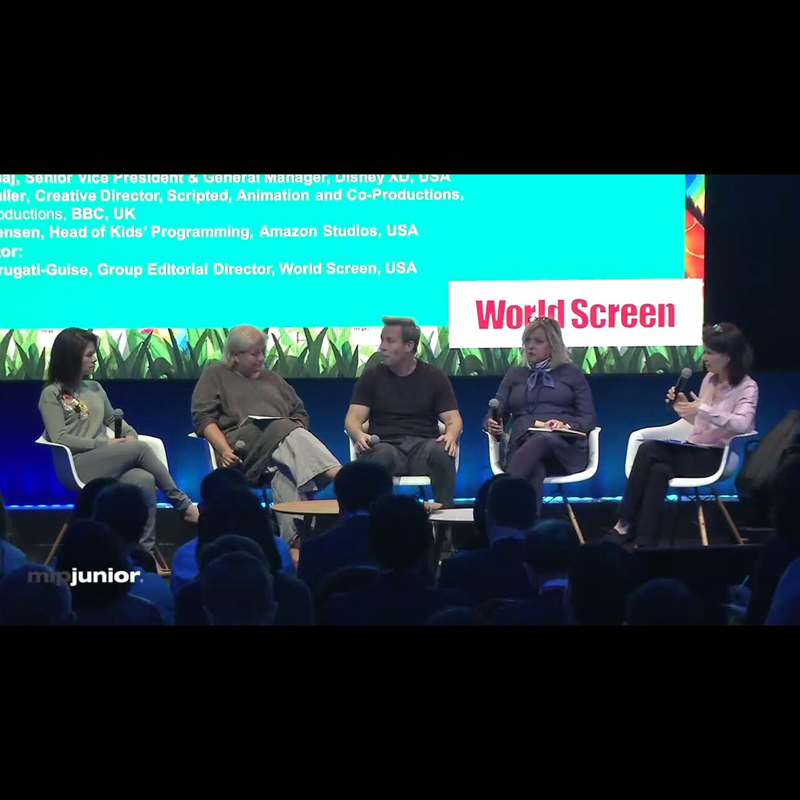
    CANNES: It’s long been a question in the minds of content creators and distributors: “What do channels and platforms want?” With the advent of digital, the confusion has just increased as the content working on linear programming might not be suitable for the non-linear one. To address this was the session at MIPJunior with four programming executives from around the world who in a lively discussion spoke about acquisition trends and offered their perspectives on how to spot hit shows and offer content to young viewers on multiple platforms.

    The speakers included: CANAL+ Group director of Youth unit Laurence Blaevoet, Disney XD SVP and general manager Marc Buhaj, CBBC Productions creative director, scripted, animation and co-productions Sarah Muller and Amazon Studios head of kids’ programming Tara Sorensen.

    With Amazon entering the digital media platform quite late after its competitors it was necessary for it to stand out and to do so, it focused on pre-school curriculum. “On our platform, we encourage kids to stop, reverse programs and keep going back and forth,” said Sorenson. CBBC on the other hand focuses on older children as well. Explained Muller, “We have content right from hard hitting documentaries to sports coverage to original drama and animation series.”

    “If you ask me how different is Disney XD from Disney, let’s start by saying that they are two different names,” laughed Buhaj. “Disney XD is more of a laboratory where we try things out with the content. Primarily it was focused on boys, but now there’s a focus on girls too.”

    All the panelists agreed that while looking for content, quality storytelling is what they search for. CANAL+’s theme is universal and is mostly on love and friendship whereas BBC co-produces shows only for the UK market, which later might become international hits, for instance *Harry Potter. Disney on the other hand finalises the shows after listening to all the ideas from various partners. Any content that has good quality and can be transcended into humour works well. Buhaj accepted that they never thought kids would enjoy *High School Musical* but eventually the key to its success was the way it was executed.

    And the key to have a successful show is “diversity”. Muller said: “At BBC, the success of a show lies in both the front and the centre. Behind the scenes work is equally important as writers from different backgrounds have different set of stories.”

    Buhaj added that they work hard to get variety in their content. It is important to be interesting whereas Sorensen mentioned how the show *American Girl’s is women-led – the director, writer, all are women and though it was the director’s first project, they were ready to take the risk which took off quite well due to the fact that the audience could connect with it.

    And finally the panelists revealed what each of them is looking for at MIP. Amazon Studios is hunting for content with a unique perspective and is also thinking about adult customers. Sorenson is definitely not looking for short form content (more than 11 minutes would do) and reality programming. Blaevoet mentioned that while pitching for your content, one should have creative content and be passionate about it and have fun while pitching. With a great story, Buhaj says he would like if the seller turns the table around by asking them “Why Disney would be good partner for us?” Lastly, Muller goes on to mention that it’s necessary to do your research and understand what you are pitching to whom.

  • ‘Quality storytelling’ and ‘diversity,’ the key areas channels and platforms look for

    ‘Quality storytelling’ and ‘diversity,’ the key areas channels and platforms look for

    CANNES: It’s long been a question in the minds of content creators and distributors: “What do channels and platforms want?” With the advent of digital, the confusion has just increased as the content working on linear programming might not be suitable for the non-linear one. To address this was the session at MIPJunior with four programming executives from around the world who in a lively discussion spoke about acquisition trends and offered their perspectives on how to spot hit shows and offer content to young viewers on multiple platforms.

    The speakers included: CANAL+ Group director of Youth unit Laurence Blaevoet, Disney XD SVP and general manager Marc Buhaj, CBBC Productions creative director, scripted, animation and co-productions Sarah Muller and Amazon Studios head of kids’ programming Tara Sorensen.

    With Amazon entering the digital media platform quite late after its competitors it was necessary for it to stand out and to do so, it focused on pre-school curriculum. “On our platform, we encourage kids to stop, reverse programs and keep going back and forth,” said Sorenson. CBBC on the other hand focuses on older children as well. Explained Muller, “We have content right from hard hitting documentaries to sports coverage to original drama and animation series.”

    “If you ask me how different is Disney XD from Disney, let’s start by saying that they are two different names,” laughed Buhaj. “Disney XD is more of a laboratory where we try things out with the content. Primarily it was focused on boys, but now there’s a focus on girls too.”

    All the panelists agreed that while looking for content, quality storytelling is what they search for. CANAL+’s theme is universal and is mostly on love and friendship whereas BBC co-produces shows only for the UK market, which later might become international hits, for instance *Harry Potter. Disney on the other hand finalises the shows after listening to all the ideas from various partners. Any content that has good quality and can be transcended into humour works well. Buhaj accepted that they never thought kids would enjoy *High School Musical* but eventually the key to its success was the way it was executed.

    And the key to have a successful show is “diversity”. Muller said: “At BBC, the success of a show lies in both the front and the centre. Behind the scenes work is equally important as writers from different backgrounds have different set of stories.”

    Buhaj added that they work hard to get variety in their content. It is important to be interesting whereas Sorensen mentioned how the show *American Girl’s is women-led – the director, writer, all are women and though it was the director’s first project, they were ready to take the risk which took off quite well due to the fact that the audience could connect with it.

    And finally the panelists revealed what each of them is looking for at MIP. Amazon Studios is hunting for content with a unique perspective and is also thinking about adult customers. Sorenson is definitely not looking for short form content (more than 11 minutes would do) and reality programming. Blaevoet mentioned that while pitching for your content, one should have creative content and be passionate about it and have fun while pitching. With a great story, Buhaj says he would like if the seller turns the table around by asking them “Why Disney would be good partner for us?” Lastly, Muller goes on to mention that it’s necessary to do your research and understand what you are pitching to whom.

  • MIPJunior: Can Indian animation make its mark?

    MIPJunior: Can Indian animation make its mark?

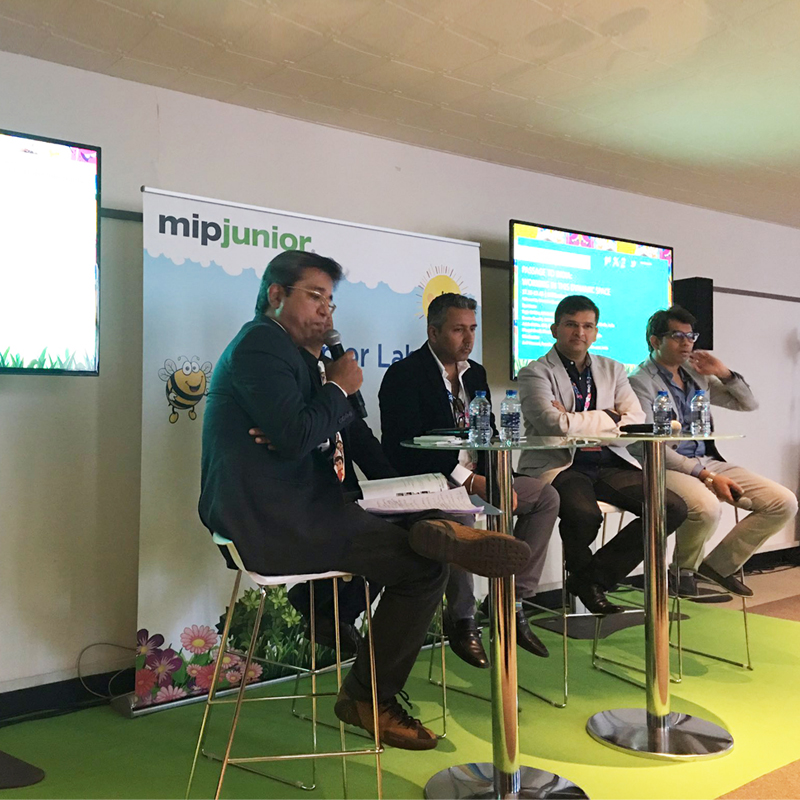
    CANNES: As the MIPJunior Lab got filled with an inquisitive audience, “The Passage to India” session began with the moderator, Indiantelevision.com founder, CEO and editor-in-chief Anil Wanvari, giving facts and figures about the kids broadcasting space in India.

    Wanvari started off by mentioning the humungous size of the 0-14 year population group – at 350 million at last count, which is expected to touch 375 million or so by 2020. Which is why the Indian market is attractive, he pointed out for kids programming and animation. Highlighting statistics from 2015 data, he stated that localization is helping the 20-plus kids channels operating in India up the local-international ratio from 10:90 to 80:20. With that wide a ratio and language dubs of each channel, content from the US dominates the television market with about 44 per cent, Japan 17 per cent, India 16 per cent, the UK and France four per cent, Canada one per cent; and if compared to statistics of 2014, it was 42 per cent, 17 per cent, 13 per cent, seven per cent and four per cent, three per cent, respectively.

    These statistics clearly paint the picture of how locally produced shows are being favoured not just by the audience but also the broadcasters. The top six to eight spots of the kids genre are occupied by locally produced programmes such as Motu-Patlu and Chotta Bheem, among others.

    Wanvari pointed out that kids genre accounts for six minutes per cent of total viewership and most of the kids content is in animation format the production cost of which per 30 minutes is between Rs 1.5 to six million.

    After introducing the panelists – Green Gold Animation founder and CEO, Rajiv Chilaka, Viacom18 Digital Ventures COO Gaurav Gandhi, Cosmos-Maya founder, Anish Mehta, and Graphiti Multimedia director and COO Munjal Shroff, Wanvari threw the question to the panelists asking what makes the prospects of the Indian animation sector so bright this time around; earlier attempts have failed.

    He also queried them about how the Indian animation space has changed over the years, in which areas are the opportunities available for international players, and what content works for broadcasters and digital platform for kids.

    Chilaka mentioned, “Back in 2001, there was only one channel catering to kids segment and now, there are 25-plus channels which showcase content produced locally as well. Over the years, the quality of animation, the technology, the services provided all have improved, and to support that, are the increased budgets.”

    Speaking about the international market, Shroff commented, “Through our show ‘Kulveera’, we did a case study with Cartoon Network UK wherein we produced a pilot episode and gauged the response of the audience and it was interesting to see that kids loved the show.” So, as long as one’s series has a strong storytelling going on, the place from where the content originates hardly matters.

    Mehta’s animation studio Cosmos-Maya has been doing wonders and, at present, has three co-production deals going on. “Our co-production deals are with Italian, French and German companies. We will be launching the French co-produced show ‘Captain Cactus’ which was made in association with Euope’s well-known film maker Olivier Jean-Marie,” expounded Mehta.

    “Over the period of 20 years, our work has evolved from being a service company to IP production, and finally we are at a stage where we can co-produce.”

    With the advent of digital platform, and Voot being probably the biggest kids SVOD service, Gandhi added, “It’s said that, in next three years, more homes will be have the streaming device than television sets. We are an open market, and ready to buy any good content.”

    Mehta also stated that, for co-productions to work, it’s necessary that one needs to understand the demographics. “Personally, after doing research, we follow a mixed model which blends well with both the countries.

    Since ‘Captain Cactus’ is a co-production between India and Europe, the animation style and narrative is set according to the tastes of audience of both the countries.”

    The session was wrapped up with Q&A round wherein many people were interested in learning more about how can they work with not just Indian animation studios but also on how their content can work across the various platforms.


  • MIPJunior: Can Indian animation make its mark?

    MIPJunior: Can Indian animation make its mark?

    CANNES: As the MIPJunior Lab got filled with an inquisitive audience, “The Passage to India” session began with the moderator, Indiantelevision.com founder, CEO and editor-in-chief Anil Wanvari, giving facts and figures about the kids broadcasting space in India.

    Wanvari started off by mentioning the humungous size of the 0-14 year population group – at 350 million at last count, which is expected to touch 375 million or so by 2020. Which is why the Indian market is attractive, he pointed out for kids programming and animation. Highlighting statistics from 2015 data, he stated that localization is helping the 20-plus kids channels operating in India up the local-international ratio from 10:90 to 80:20. With that wide a ratio and language dubs of each channel, content from the US dominates the television market with about 44 per cent, Japan 17 per cent, India 16 per cent, the UK and France four per cent, Canada one per cent; and if compared to statistics of 2014, it was 42 per cent, 17 per cent, 13 per cent, seven per cent and four per cent, three per cent, respectively.

    These statistics clearly paint the picture of how locally produced shows are being favoured not just by the audience but also the broadcasters. The top six to eight spots of the kids genre are occupied by locally produced programmes such as Motu-Patlu and Chotta Bheem, among others.

    Wanvari pointed out that kids genre accounts for six minutes per cent of total viewership and most of the kids content is in animation format the production cost of which per 30 minutes is between Rs 1.5 to six million.

    After introducing the panelists – Green Gold Animation founder and CEO, Rajiv Chilaka, Viacom18 Digital Ventures COO Gaurav Gandhi, Cosmos-Maya founder, Anish Mehta, and Graphiti Multimedia director and COO Munjal Shroff, Wanvari threw the question to the panelists asking what makes the prospects of the Indian animation sector so bright this time around; earlier attempts have failed.

    He also queried them about how the Indian animation space has changed over the years, in which areas are the opportunities available for international players, and what content works for broadcasters and digital platform for kids.

    Chilaka mentioned, “Back in 2001, there was only one channel catering to kids segment and now, there are 25-plus channels which showcase content produced locally as well. Over the years, the quality of animation, the technology, the services provided all have improved, and to support that, are the increased budgets.”

    Speaking about the international market, Shroff commented, “Through our show ‘Kulveera’, we did a case study with Cartoon Network UK wherein we produced a pilot episode and gauged the response of the audience and it was interesting to see that kids loved the show.” So, as long as one’s series has a strong storytelling going on, the place from where the content originates hardly matters.

    Mehta’s animation studio Cosmos-Maya has been doing wonders and, at present, has three co-production deals going on. “Our co-production deals are with Italian, French and German companies. We will be launching the French co-produced show ‘Captain Cactus’ which was made in association with Euope’s well-known film maker Olivier Jean-Marie,” expounded Mehta.

    “Over the period of 20 years, our work has evolved from being a service company to IP production, and finally we are at a stage where we can co-produce.”

    With the advent of digital platform, and Voot being probably the biggest kids SVOD service, Gandhi added, “It’s said that, in next three years, more homes will be have the streaming device than television sets. We are an open market, and ready to buy any good content.”

    Mehta also stated that, for co-productions to work, it’s necessary that one needs to understand the demographics. “Personally, after doing research, we follow a mixed model which blends well with both the countries.

    Since ‘Captain Cactus’ is a co-production between India and Europe, the animation style and narrative is set according to the tastes of audience of both the countries.”

    The session was wrapped up with Q&A round wherein many people were interested in learning more about how can they work with not just Indian animation studios but also on how their content can work across the various platforms.
  • Turner Asia Pacific acquires Oggy and the Cockroaches seasons 6 and 7

    Turner Asia Pacific acquires Oggy and the Cockroaches seasons 6 and 7

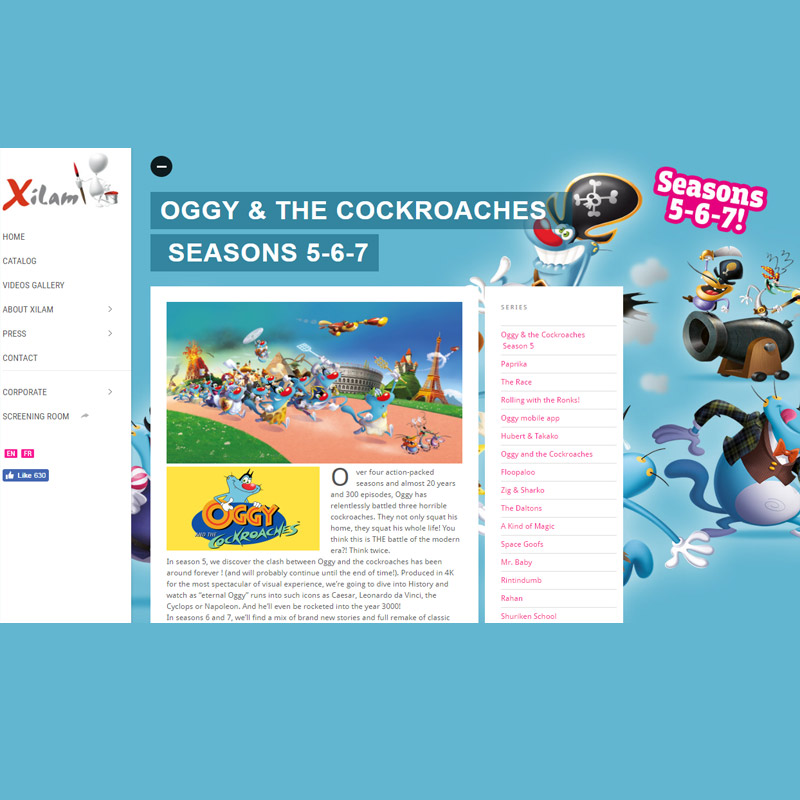
    MUMBAI: Xilam, the award-winning animation production company, today announced that Turner Asia Pacific, one of its key broadcast partners, has acquired two additional seasons for its ratings-winner Oggy and the Cockroaches. The series in 4K will be delivered from 2017 onwards and available across Turner’s channels including Cartoon Network, Boomerang and Pogo.

    Turner’s chief content officer of its kids’ networks in Asia Pacific Mark Eyers said: “We all know that cockroaches have some serious survival skills, and there’s just something about Oggy and his mischievous friends that continues to connect with kids. By extending the relationship with Xilam, Turner has kept hold of a proven hit to further boost its leadership position in the region.”

    Xilam Animation CEO and founder Marc du Pontavice added, “Oggy’s worldwide success continues to hit new highs, and we are thrilled to pursue the partnership with Turner and Cartoon Network that helped build and expand Oggy as a phenomenon throughout Asia.”

    In Season 5 (78 x 7’), the battle goes on between Oggy and the roaches as they travel back in time through the ages and meet icons such as Caesar, Leonardo da Vinci and the Cyclops, as well as rocketing forward into the year 3000. Seasons 6 and 7 (156 x 7’) will comprise a mix of brand new episodes along with full remakes of classic stories from seasons 1 and 2 all produced in 4K. After almost 20 years of success, this spectacular addition of 234 new episodes, all in 4K, will project the brand in the next 15 years, as it will keep entertaining the kids and their parents with them.

  • Turner Asia Pacific acquires Oggy and the Cockroaches seasons 6 and 7

    Turner Asia Pacific acquires Oggy and the Cockroaches seasons 6 and 7

    MUMBAI: Xilam, the award-winning animation production company, today announced that Turner Asia Pacific, one of its key broadcast partners, has acquired two additional seasons for its ratings-winner Oggy and the Cockroaches. The series in 4K will be delivered from 2017 onwards and available across Turner’s channels including Cartoon Network, Boomerang and Pogo.

    Turner’s chief content officer of its kids’ networks in Asia Pacific Mark Eyers said: “We all know that cockroaches have some serious survival skills, and there’s just something about Oggy and his mischievous friends that continues to connect with kids. By extending the relationship with Xilam, Turner has kept hold of a proven hit to further boost its leadership position in the region.”

    Xilam Animation CEO and founder Marc du Pontavice added, “Oggy’s worldwide success continues to hit new highs, and we are thrilled to pursue the partnership with Turner and Cartoon Network that helped build and expand Oggy as a phenomenon throughout Asia.”

    In Season 5 (78 x 7’), the battle goes on between Oggy and the roaches as they travel back in time through the ages and meet icons such as Caesar, Leonardo da Vinci and the Cyclops, as well as rocketing forward into the year 3000. Seasons 6 and 7 (156 x 7’) will comprise a mix of brand new episodes along with full remakes of classic stories from seasons 1 and 2 all produced in 4K. After almost 20 years of success, this spectacular addition of 234 new episodes, all in 4K, will project the brand in the next 15 years, as it will keep entertaining the kids and their parents with them.