Category: Kids

  • Rohit Shetty Picturez and Reliance Animation to launch a new animation series – ‘Little Singham’ with Discovery Communications

    Rohit Shetty Picturez and Reliance Animation to launch a new animation series – ‘Little Singham’ with Discovery Communications

    MUMBAI: India’s most successful super cop franchise, ‘Singham’ directed by Rohit Shetty is all set to go a notch higher with yet another special offering for audiences. Rohit Shetty Picturez, Reliance Animation & Discovery Kids, will be launching a new animation series called ‘Little Singham’ which is inspired by the Ajay Devgn starring superhit franchise ‘Singham’.  ‘Little Singham,’ an original kid’s content series in India will be aired in 4 languages- English, Hindi, Tamil and Telugu.

    Targeted at kids belonging to the age-group of 4-8 years, the intro line of ‘Little Singham’ is – ‘Police ki wardi, Sher ka Damm, Naam hai mera – Little Singham!’ The animated show will make its debut on television in April 2018 on the completely revamped Discovery Kids channel. This is probably one of the largest deals in the animation industry with the first season to go on air with 156 episodes and 5 tele features. When asked about this collaboration, Rohit Shetty said, “Singham was hugely loved by the kids and a show like this will not only take the franchise ahead but will also become a source of entertainment for the kids and audiences who love Singham so dearly.”

    Reliance Entertainment, Shibasish Sarkar said “Little Singham will set a completely new benchmark for animation in India. With Rohit also mentoring the animated series, we are confident of taking the Singham franchise to newer heights.”

    Discovery Communications India, Head – Discovery Kids, Uttam Pal Singh said, “Little Singham, the original make in India super hero series is a very bold and at scale attempt by Discovery Kids. We are delighted that Rohit Shetty is personally involved in promoting Little Singham, this will help us reach out to kids across the country.”

    Rohit Shetty presents in collaboration with Discovery Kids, Reliance Animation & Rohit Shetty Picturez, ‘Little Singham’ will air on television in April 2018.

  • Should junk food ads be banned on kids’ channels?

    Should junk food ads be banned on kids’ channels?

    MUMBAI: Just a few days ago, there were whispers of a possible ban on junk food ads on kids’ channels that were quickly rebutted by information and broadcasting minister Smriti Irani. Though the ministry has clarified that such a stand hasn’t been taken, it would be worthwhile to consider the pros and cons of such a move.

    There’s a need to worry about all kids who watch television frequently are susceptible to bad eating habits. According to studies, teenagers who watch television for more than three hours daily are twice as likely to eat more snacks like crisps, biscuits, fizzy drinks and chocolates thanks to the commercials they watch along the way.

    At present, Britannia’s Treat cream biscuits and Fruity Fun cake, Waffy, Rich Feast Yum Pie, Diamond Rings, McDonald’s Snoopy Meals, ITC’s Bingo No Rulz and Dark Fantasy biscuits are some of the brands that are running campaigns on kids’ channels.

    Looking at the situation from a broadcaster’s point of view, a blanket ban on junk food advertisements will hamper their monetisation ability. These ads, however, are likely affecting the health of children. When Indiantelevision.com reached out to kids’ channels, none of them were willing to speak up on the issue.

    FMCG brands will be the hardest hit since kids these days are the driving force behind the purchase choices of parents. The demand may dwindle if they are asked to put a full stop to the advertisements and the market share of their products may nosedive to a certain extent.

    When asked about the merits and demerits of this proposal, Harish Bijoor Consults Inc brand-expert and founder Harish Bijoor says that kids’ channels are meant for kids. “Any brand that is not considered kid-friendly in terms of health, attitude development, learning or frivolity of use, must not be allowed on such channels. That wouldn’t be responsible advertising.” 

    Stratagem Media director Sundeep Nagpal also has the same view as Bijoor. According to him, such proposals are made keeping in mind the welfare of our country’s future. “The eventual outcome would only benefit the children of this country, several millions of whom are getting progressively affected by the consumption of junk food.”

    A news report in 2017 stated that Britannia had around 35 per cent share in premium cream biscuits and the idea was to build the share to 50 per cent in two years. The company will be investing Rs 50 crore on Treat in the next nine to 12 months while the total investment for the premium cream biscuit category would be Rs 100 crore for the same time frame. The company is planning to achieve this through multiple activities, straddling between Pure Magic, Bourbon and Treat.

    Bijoor says that some of the FMCG brands will get affected whereas others will not. Brands that appeal to children without the harmful effects of junk food will find a platform on such channels to advertise. FMCG players that create such products will, therefore, remain unaffected. Nagpal, however, recommends that one shouldn’t fall for the plight of the manufacturers.

    When asked whether the creative and storytelling need to change, Nagpal says, “The powers that be on issues like these should put a stop to such hypocritical practices. Any change in storytelling for such products would be an attempt to sell something harmful under a guise. So, this should not even be allowed under the garb of surrogate advertising.”

    Bijoor believes that the product must be first analysed as being fit for kids’ consumption and only after that should any other development happen.

    According to another media report, ITC expects the chocolate category to contribute to 10 per cent to its food division revenue in the next five years. The company will extend the Sunfeast brand to all core biscuit segments, like Marie (an English tea biscuit), glucose, milk, and crackers. Dark Fantasy, meanwhile, will span the indulgence space and cover products across biscuits and cakes (including Yumfills). Farmlite, catering to the health space (biscuit segment), and Mom’s Magic, in the cookies segment, will be the other two brands.

    Children today are increasingly susceptible to obesity and the growing trend of unhealthy food habits and lifestyles are major offenders. Going by the current trends, the World Health Organisation contends that nearly 70 million children will be overweight or obese by 2025. That’s a scary prediction considering the serious health risks are associated with obesity. Considering the fact that the government told Parliament that nine major operators in the food-processing business have voluntarily decided not to advertise products with high fat on children’s channels while the Food and Beverage Alliance of India (FBAI) is already instituting mechanisms to restrict advertising of food and beverage items concerning children voluntarily, the tide seems to be turning.

    Another approach to reducing the intake of commodities such as pre-packed foods with high salt and fat content, sweetened beverages, chips and among others maybe to impose additional taxes.

    It is clear that a ban on junk food ads on kids’ channels will have far-reaching ramifications for the advertiser-broadcaster ecosystem. At a time when child obesity rates and lifestyle diseases are on an alarming rise, it would be prudent for FMCG players to take a step back and re-examine their advertising strategy and build goodwill in the long run. 

    Also Read :

    No proposal to ban junk food ads on TV: Smriti Irani

    Kids’ candy segment: Communication sees a shift

  • Catch the Superr Heropanti of bandbudh aur budbak only on Discovery Kids

    Catch the Superr Heropanti of bandbudh aur budbak only on Discovery Kids

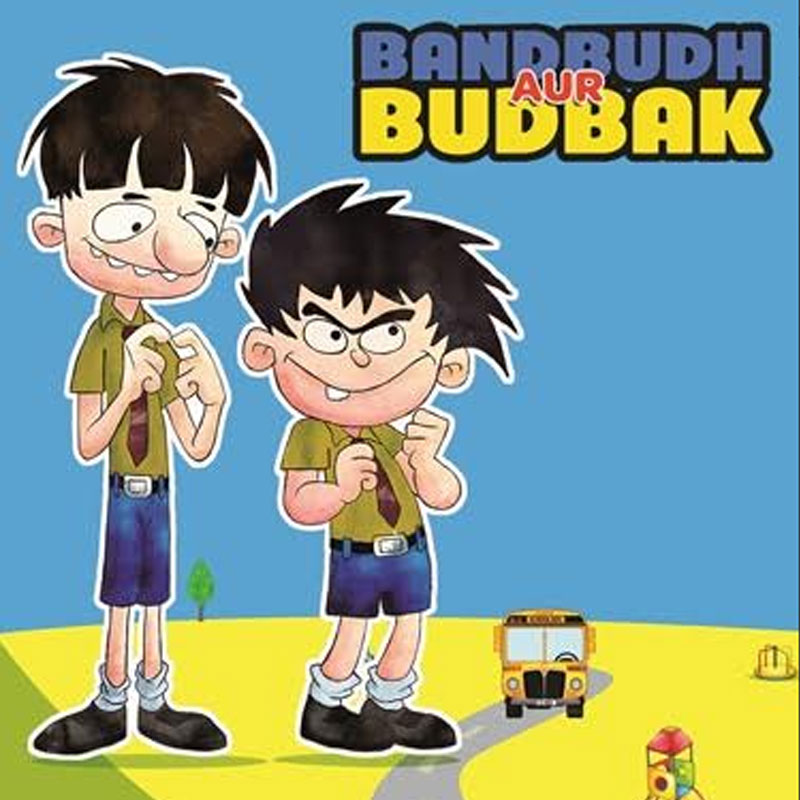
    MUMBAI: Discovery Kids, the leading animation channel from Discovery Communications India, has launched its new series Bandbudh aur Budbak from 12th February. The show follows the fun school life adventures of two best friends, Badrinath and Buddhadeb who often land in trouble because of their antics but luck always seem to be on their side and they manage to escape scot-free.

    Speaking on the occasion, Discovery Communications India, Head – Discovery Kids, Uttam Pal Singh said, “Everyone loves a naughty kid. Our endeavor is to become the home to naughtiest superheroes who will charm the kids across the country with their Supperr Heropanti! The launch of Bandbudh aur Budbak is a crucial first step in this direction; the introduction of Little Singham will complete the revamp of Discovery Kids later this year.”

    Discovery Kids will showcase 156 episodes of Bandbudh aur Budback. The channel recently announced that it has commissioned Reliance Animation to produce a new disruptive original Indian animation series ‘Little Singham’, inspired by ‘Singham’, India’s most successful supercop brand and one of the biggest Bollywood blockbusters of all time. Targeted at kids in the age-group 5-11 years old, ‘Little Singham’ will make its debut on TV in April 2018 on the completely revamped Discovery Kids channel. Little Singham, India’s youngest supercop, will have the intro line – ‘Police ki wardi, Sher ka Damm, Naam hai mera – Little Singham!’

     Catch all the naughtiness and fun with Bandbudh and Budbak only on Discovery Kids from 12th February 2018 onwards.

  • Disney’s Q1 numbers ride on parks and resorts segment

    Disney’s Q1 numbers ride on parks and resorts segment

    BENGALURU: The Walt Disney Company (Disney) reported 3.8 per cent year-on-year (yoy) increase in revenue and 0.5 per cent yoy increase in operating income before taxes for the quarter ended 31 December 2017 (Q1 2018, the quarter under review) as compared with the corresponding year ago quarter (quarter ended 31 December 2016, Q1 2017). Net income attributable to Disney, however, increased by 78.4 per cent yoy. Diluted earnings per share (EPS) for the quarter increased by 88 per cent to USD 2.91 from USD 1.55 in the prior-year quarter. Excluding a USD 1.6 billion one-time net tax benefit associated with new US federal income tax legislation (tax act) and certain other items affecting comparability, EPS for the quarter rose by 22 per cent to USD 1.89 from USD 1.55 in the prior-year quarter.

    Four segments—media networks, parks and resorts, studio entertainment, and consumer products and interactive media—contribute to Disney’s numbers. Except for the parks and entertainment segment, the other three segments reported a decline in segment income. Disney’s total revenue for the quarter under review was USD 15,351 million as compared with USD 14,784 million. Revenue from services increased by 4.7 per cent yoy to USD 12,984 million from USD 12,406 million while revenue from products declined by 0.5 per cent yoy to USD  2,367 million from USD 2,378 million.

    Segment operating income in Q1 2018 was USD 3,745 million as compared to USD 3,725 million in Q1 2017. Net income attributable to Disney in the quarter under review was USD 4,423 million as compared to USD 2,479 million in Q1 2017.

    Media Networks

    Two divisions contribute to Media Networks numbers – cable networks, and broadcasting. Media networks’ revenue for the quarter was flat at USD 6,243 million in Q1 2018 as compared to USD 6,233 million. Segment operating income declined 12.4 per cent yoy in Q1 2018 to USD 1,193 million from USD 1,162 million.

    Cable networks revenue increased 1.5 per cent yoy to USD 4,493 million from USD 4,428 million, while income declined 0.7 per cent yoy to USD 858 million from USD 864 million. The company says that lower operating income was due to a loss at BAMTech and a decline at ESPN, partially offset by growth at the Disney channels and Freeform. The decrease at ESPN was due to lower advertising revenue, partially offset by affiliate revenue growth and lower programming costs. Lower advertising revenue was due to a decrease in impressions and lower rates. Growth at the Disney channels and Freeform was driven by higher affiliate revenue and lower marketing costs. Affiliate revenue growth was due to contractual rate increases, partially offset by a decline in subscribers.

    The broadcasting division’s revenue for the quarter under review declined by 3 per cent yoy to USD 1,750 million in Q1 2018 from USD 1,805 million. Income decreased by 24.8 percent yoy to USD 285 million from USD 379 million. The company said that the decrease in operating income was due to lower advertising revenue, higher production cost write-downs, and a decline in programme sales income. These decreases were partially offset by affiliate revenue growth due to rate increases. Advertising revenue reflected fewer network impressions and lower political advertising at Disney-owned television stations, partially offset by higher network rates.

    Parks and resorts

    Revenue from parks and resorts for the quarter increased by 13.2 per cent yoy in Q1 2018 to USD 5,154 million from USD 4,555 million while segment operating income increased by 21.4 per cent yoy to USD 1,347 million. The company said that operating income growth for the quarter was due to increase at Disney’s domestic parks and resorts, cruise line and vacation club businesses as well as at Disneyland Paris.

    Domestic results benefited from the comparison to the impact of Hurricane Matthew, which occurred in the prior-year quarter. Higher operating income at domestic parks and resorts was driven by guest-spending growth and

    an increase in attendance, partially offset by higher costs. Guest-spending growth was due to higher average ticket prices, food, beverage and merchandise spending and average daily hotel room rates.

    Studio entertainment

    Studio entertainment revenue dipped by 0.6 per cent yoy to USD 2,504 million in Q1 2018 from USD 2,520 million and segment operating income declined 1.5 per cent yoy to USD 829 million from USD 842 million. The company said that an increase in theatrical distribution results was more than offset by decreases in home entertainment and TV/SVOD distribution results as well as lower income from consumer products and interactive media segment revenue share.

    Consumer products and interactive media

    Revenue declined by 1.8 per cent yoy to USD 1,450 million in Q1 2018 from USD 1,456 million and segment operating income declined by 3.9 per cent yoy to USD 617 million from USD 642 million. The company said that operating income reduced due to decreases at Disney’s merchandise licencing and retail businesses, partially offset by an increase at its games business. The decrease in merchandise licencing was due to unfavourable timing of minimum guarantee shortfall recognition and lower licencing revenue from merchandise based on Frozen and Finding Nemo/Dory, partially offset by increases from merchandise based on Cars and Star Wars. Disney’s retail business was affected by unfavourable foreign currency fluctuations. The increase at Disney’s games business was due to licencing revenue from Star Wars Battlefront II, which was released in the current quarter, whereas there was no comparable release in the prior-year quarter.

    Company speak

    “The strategic investments we’ve made have driven meaningful growth over the long term, and we remain confident in our ability to continue to deliver significant shareholder value,” said  Disney’s chairman and CEO Robert A Iger, “We’re excited about what lies ahead, with a robust film slate, the launch of our ESPN direct-to-consumer business, new investments in our theme parks, and our pending acquisition of Twenty-First Century Fox.”

    Also Read:

    Disney to buy 21st Century Fox assets for $52.4 billion

    Disney to launch English GEC HD on 29 Oct

  • Japanese kids’ content going strong despite home-grown onslaught

    Japanese kids’ content going strong despite home-grown onslaught

    MUMBAI: The growth of Japanese anime in children’s television programming in India has been far more rapid and visible than other segments of television. It all started in 1990 when everyone grew up watching Rudyard Kipling’s original collection of series, The Jungle Book, which was a Japanese style animation series that couldn’t be missed on Sundays.

    Since then, there has been no turning back; the fascination for Japanese content in India has grown by leaps and bounds. It didn’t stop with Kipling’s Mowgli series, instead, there was another manga series called Avatar: The Last Airbender. Manga are hand-drawn by artists. Naruto, Naruto: Shippûden were among the known manga series that grabbed more traction from their fans.

    There was a time when Cartoon Network reigned supreme, which, for nine years, maintained its premier position by capitalising on the paucity of television entertainment for children. Animax India, a channel of Sony Entertainment, telecast Japanese anime shows before being shut down.

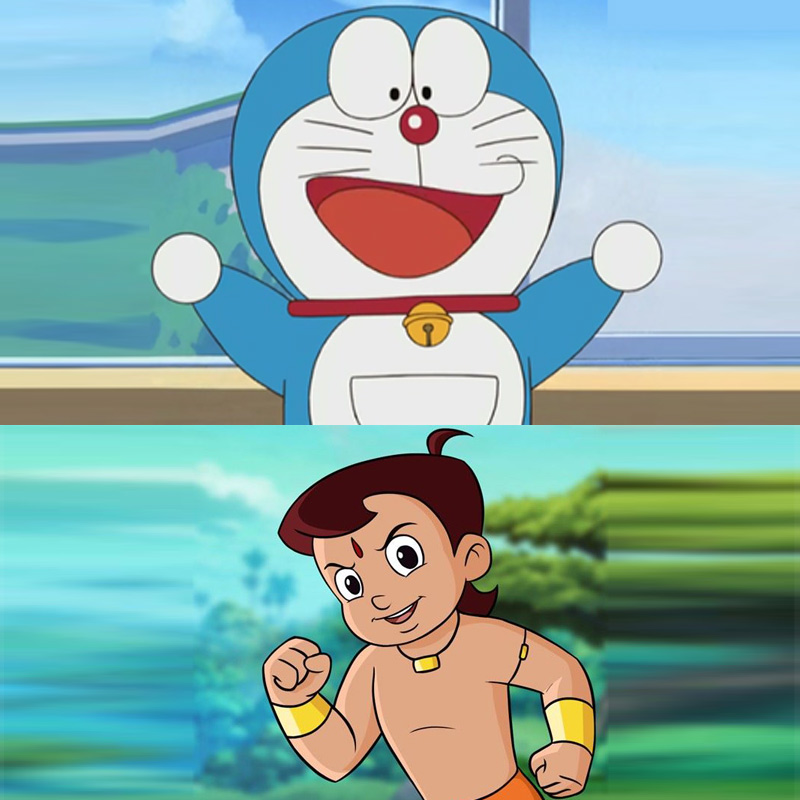
    Shemaroo Entertainment head-animation business Smita Maroo says that even today Japanese shows gets the eyeballs whereas Indian content is still not the order of the day. “The broadcasters still bombard the channels with Doraemon, Shinchan and Ninja Hattori among others. It’s not that they are rushing towards Indian content,” she says.

    Japanese animation made its entry in the programming line-up of channels with animation series such as Doraemon on Hungama, and Ninja Hattori on Nickelodeon. This was followed by a rush of animation series from Japan and the rest of Asia with shows such as Chibi Maruko Chan on Nickelodeon and Anpanman on Pogo (Nandi, 2012). Giving Doraemon a close competition is Crayon Shinchan, another manga-based anime. It’s among the top five shows for kids aged 2-14, competing with the likes of Chhota Bheem.

    According to some media reports, the market for manga has expanded and Japanese publishing houses, which were earlier reluctant fearing piracy, are showing interest to license more titles.

    Green Gold Animation VP-content sales Bharath Laxmipati said that Chhota Bheem, their original home-grown content was the game changer in the Indian industry because it gave confidence to the broadcasters that local shows can have a tremendous response. It broke the fascination for international shows that was also giving a wrong attitude. He says, “The core of a successful Indian show is the ability to tell stories. Japanese content is popular because they shared similar sentiments with Indians. But the difference is that Indian stories are written with the hero in mind but protagonists in Japanese content such as Doraemon, wherein the kid is not a hero but finds help from a robot, so the main character is the robot Doraemon. Oggy and the Cockroaches from France wasn’t famous until Shahrukh Khan, Sunny Deol and other Bollywood actors gave their voices to the show.”

    He further adds that there are two ways of writing styles, where Chhota Bheem is all about courage, bravery, respect for elders, friendship and all the positive cultures that we have in our Indian culture. “Doraemon was created during the 70s and 80s and were picked up by the broadcasters because they had to fill in the programming, so there’s a different approach between theirs and ours,” he says.

    Maroo says that kid’s content syndication is only for topical reasons but beyond that, the channels want to create their own content and focus on their 2-3 properties. She further added, “In terms of Chhota Bheem and Motu Patlu being famous nowadays, both the shows don’t come on the same channel, so the channel’s overall ratings still comes from other shows.

    According to Maroo, acquiring Japanese content is definitely cheaper than production. Agreeing with Maroo, Laxmipati says, “Anything that is made for the own territory is far more expensive than syndicated content.”

    According to the reports, animation production is expensive in comparison to a general entertainment channel show with the former requiring Rs 10-20 lakh an episode against Rs 7-8 lakh for the latter. 

    “Producing episodes for 2D and 3D for 11-22 minutes would cost Rs 10-20 lakh or even above, depending on the number of characters, background and many other factors. The initial episodes are way higher than even Rs 20 lakh,” adds a media professional.

    Another media professional, however, gave a higher estimate. “Any top show’s production value is between Rs 30-50 lakh. Good content has to be produced at such cost. If we talk about producing for outside, the production cost will be up to Rs 1 crore per episode.”

    The trend of today is to produce home-grown content. The concept of producing original content started in 2008 with Chhota Bheem. Later Nickelodeon India produced Motu Patlu as its home-grown IP show in 2012. Not only this, the year 2017 kick-started a new channel called Sony Yay that completely focused on producing its own IP shows.  

    The supply of India-produced shows is very limited compared to the unlimited growth of Japanese content and other foreign language cartoons. Since Japan has 15-20 years of headstart over India, its library is massive. In 2016, Cartoon Network had 91.61 per cent foreign shows; Pogo had 82.67 per cent while Disney had 60.61 per cent shows from abroad. 

    When asked whether it is easier to attract advertisers for syndicated content as opposed to original content, Maroo commented, “If syndicated content has already got a track record, it would be easier to pick advertisers, because new shows will take time to deliver.”

    She further said that kids will like any content that the channels feed them. With the growth of digital, both TV and digital will co-exist and kids will shift their likeness towards a particular medium or content whatever they find interesting.

    Also Read :

    Original Indian kids’ animation content is the need of the hour

    Kids today watch more animated content than ever
     

  • Nickelodeon’s Republic Day campaign teach kids the true meaning of #Being Republic

    Nickelodeon’s Republic Day campaign teach kids the true meaning of #Being Republic

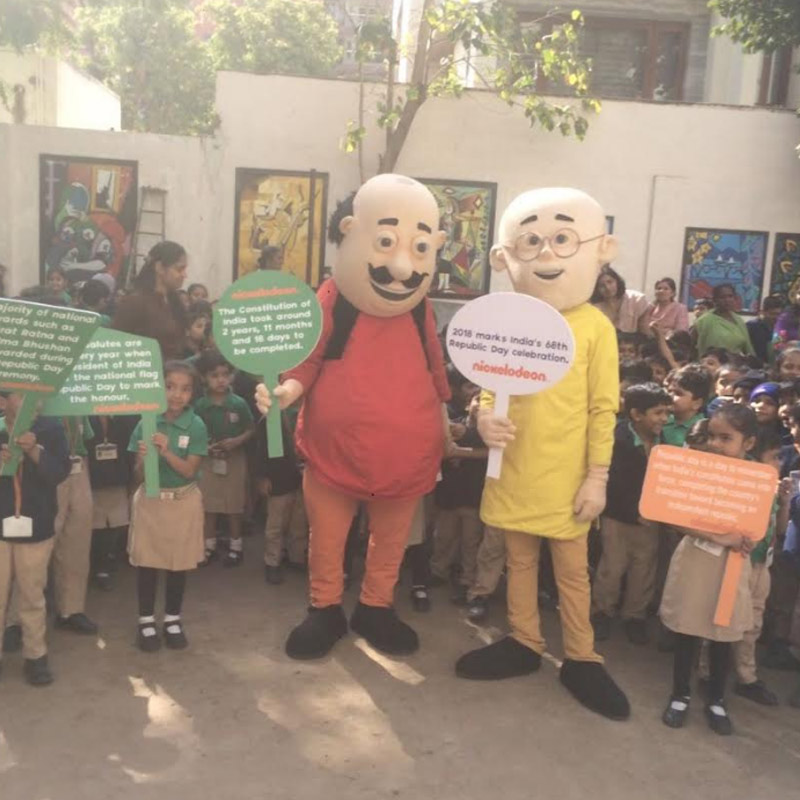
    Republic Day is celebrated in grandeur every year with ceremonious parades in various parts of the country as well as celebrations across schools. India’s leading kid’s entertainment franchise, Nickelodeon has always ensured to celebrate every occasion with a twist reinforcing the significance every festival by reinventing its true meaning. Given that 26th Januray, marks the day when the Constitution of India came into effect takes upon the mission of educating kids and bringing in awareness about the importance of Republic Day through its campaingn – #BeRepublic

    The campaign saw fun videos that captured quick facts about Republic day and enlightened children bout the rich heritage of our country, importance of parade etc. The session was supported by fun gifs and informative posts on social media. The celebrations continued when Nicktoons took charge of the classroom and converted it to a fun-filled yet informative session at schools across various cities. The toons through various placards enlighted children on quirky unknown facts about our constitution making syllabus for the day fun and memorable.

  • Discovery India ties-up with Reliance Animation to produce kids IP

    Discovery India ties-up with Reliance Animation to produce kids IP

    MUMBAI: Discovery Communications India has commissioned Reliance Animation to produce a new disruptive Indian original content series Little Singham, an animation series inspired by the movie Singham. Targeted at kids in the age-group 4-8 years old, Little Singham will make its debut on television in April 2018 on the completely revamped Discovery Kids channel.

    Little Singham will be aired in four languages– English, Hindi, Tamil and Telugu. This is the biggest investment made by Discovery Communications India till date in the kid’s original content segment in India. The official release, however, did not mention the numbers.

    Discovery Communications India SVP and GM-South Asia Karan Bajaj said, “The scale of investment and the efforts behind Little Singham is symbolic of our intent to be the leader in the kids’ genre in India. The Little Singham IP, undoubtedly our biggest bet till date in the kids’ segment in India, has been shortlisted on the basis of positive feedback in the consumer research. We are confident that along with a world-class animation partner like Reliance Animation we will be able to produce masala faceted series rooted in action, adventure and comedy that will attract the attention of kids in India. In addition, concerted efforts are underway to milk the full business potential of the IP in the most impactful manner.”

    Reliance Entertainment COO Shibasish Sarkar said, “Little Singham will set a completely new benchmark for animation in India.  Reliance Animation, led by COO Tejonidhi Bhandare, has currently engaged as many as 250 animation artists on this project and our expectation is that this number will grow further as we get closer to the launch. We are confident about the commitment and approach of our partners, Discovery Communications, and together we will not leave any stone unturned to make this IP successful.”

    Also Read:

    Discovery Jeet signs content deal with Netflix

    Discovery Jeet gears up for Feb 12 launch

  • Nickelodeon kid’s choice awards as it airs on sonic, nick HD +, nickelodeon, colors hindi, colors marathi & voot

    Nickelodeon kid’s choice awards as it airs on sonic, nick HD +, nickelodeon, colors hindi, colors marathi & voot

    MUMBAI: Missed out on the starriest evening of 2018? Don’t worry! The makers of Nickelodeon Kids Choice Awards have decided to give the viewers a chance to relive the magic created by these Bollywood & Television icons & Nick Toons on screen all over again. Nickelodeon Kid’s Choice Awards is the only time of the year when the kids get to choose for their favourites from Bollywood, Television, Music, Games and Cartoons. The third edition of the awards show saw names like Ranveer Singh, Alia Bhatt, Varun Dhawan, Kriti Sanon and Badshah amongst others set the stage on fire with their scintillating performances.

    In case you missed Bharti Singh and Rithvik Dhanjani entertain the audience and the celebrities with their witty and humorous hosting then tune in to Nickelodeon Kids Choice Awards 2017 only on Sonic, Nick HD +, Nickelodeon, Colors Hindi, Colors Marathi & Voot. Watch Bharti shake a leg with handsome hunk Varun Dhawan while Ranveer and Alia get slimed in the true Nickelodeon style. Catch stunning performances by Ranveer Singh, Alia Bhatt, Kriti Sanon, rapper Badshah, Shantanu Maheshwari, Dharmesh and also the Nick toons Motu Patlu, Shiva, Dora, Gattu Battu, Doggy Don amongst others while they shake a leg with these celebrities on the KCA theme song.

    Want to know who was the kid’s choice for the best actor, best movie and best kids show? Then do tune in to Kids Choice Awards, 2017!

  • Guest Column: The scope for home-grown IPs for kids’ broadcasters

    Guest Column: The scope for home-grown IPs for kids’ broadcasters

    In the Indian television space, the specialised genre on kids emerged in 1995 and has only been growing ever since. The kids’ genre is the third largest, nationally, after Hindi GECs and Hindi movies. The category has seen a gradual shift with 4-14 audiences, with the genre being in single digits in 2005-2006, to now. There has been an exponential growth since then, with the age group increasing to 2-14 as well.

    The components of a child’s behaviour are summarised with two very simple attributes – imagination and spontaneity. But the kids’ genre now is a mature genre and more developed than ever before. Over 168 million kids under the age of 14-years are dedicated viewers. They demand variety, new concepts and most importantly connect with endearing characters.  Be it rural or urban, there is curiosity amongst kids to know more. Therefore, we respond to this need with exciting and engaging content in a language they can effortlessly comprehend.

    With kids relating to an immensely appreciating home-grown content, the scope for original content is unbeatable. Today, at least three out of the top five are Indian characters, reflecting the changing viewer preferences. Movie screenings on Indian cartoon characters rank high as well. Even if we bring foreign content to television screens, there always is a necessity to dub and bring in Indian flavours to be able to connect with the audience. Indian characters always get more traction, as they can be given physicality, context and mannerisms that are Indian and hence are more relatable. This is because kids are inclined towards situations and values they are familiar and comfortable with. 

    Other forms of engaging content created from these characters is where the true scope of growth lies – the ability to create a completely different ecosystem out of television, an edge that acquired content cannot offer.

    Broadcasters and producers have the edge as well since it gives them complete creative freedom – to design the content as well as decide the life of the content. And because they own the IP, the numbers of offerings are boundless. They can range from on-ground activations, merchandising, and brand extensions to other marketing activities.

    The scope for reducing the dependence on acquired content is immense and this is what will continue to boost localised, original content, thus fueling the expansion of the creative talent pool. Moreover, the localised content also attracts the right kind of sponsors to look at opportunities to weave in their brand story.

    It’s been two decades since we have realised the true potential of this genre. While we have come a long way, there is still a long way to go. And, launching with four home-grown shows, we at Sony Yay are just delighted to be a part of the growth journey of the category in the country.

    public://leena.jpgThe author is the business head of Sony Yay. The views expressed are personal and Indiantelevision.com may not subscribe to them.
  • Nickelodeon kid’s choice awards 2017

    Nickelodeon kid’s choice awards 2017

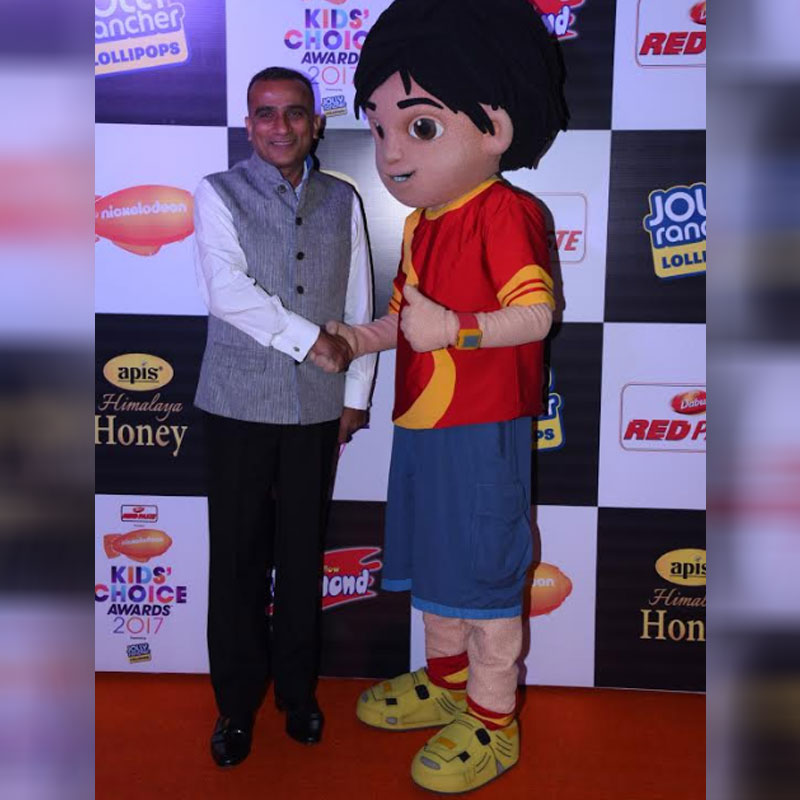
    MUMBAI: Nickelodeon Kid’s Choice Awards (KCA) 2017, presented by Dabur Red Paste, powered by Jolly Rancher in association with Yellow Diamond and Funskool and Apis Honey took place on 15 December 2017.

    The Nickelodeon KCA is the awards show where kids decide on who would win the coveted orange “Nickelodeon Blimp”. With nearly 2.5 lakh votes, the kids have truly chosen their favorites. Golmaal Again won in the best film category while Ranveer Singh won the best actor (male) award. Alia Bhatt won the best actress (female) award and Badri Ki Dulhania, was voted as the best song by kids. They voted for Varun Dhawan as the dancing star and the best entertainer of the year. Motu Patlu received maximum votes and was declared the best show on a kids channel, whereas, Motu won the best Indian cartoon character of the year award.

    Viacom18 kids’ entertainment business head Nina Elavia Jaipuria said, “The Nickelodeon Kids’s Choice Awards is a platform that empowers kids and celebrates their choices. This edition of the awards has once again created many unique, electrifying and fun moments with the kids, toons and stars, all of which will create a memorable experience for all the Nickelodeon fans”

    The awards premiered on Nickelodeon, Sonic, Nick Jr. and Nick HD+. Nickelodeon KCA 2017, and also the entire Viacom18 network came together to telecast the awards across network channels like Colors, Rishtey, Colors Bangla, Colors Marathi, Colors Gujarati and Viacom18’s OTT platform VOOT.

    The evening saw some adrenaline pumping performances by Alia Bhatt who danced to a melody of her biggest dance numbers, while a power packed performance by Ranveer Singh had the little ones jumping out of their seats. Badhshah had everyone grooving to his beats with the rap version of the KCA Anthem.

    Winners list:

    Best Movie Actor (Male) – Ranveer Singh

    Best Movie Actor (Female) – Alia Bhatt

    Best Bollywood Movie – Golmaal Again

    Best Bollywood Movie Song – Badri Ki Dulhania – Badrinath Ki Dulhania

    Best Dancing Star – Varun Dhawan – Tamma Tamma – Badrinath Ki Dulhania

    Best Entertainer (Films) – Varun Dhawan

    Best TV Character (Male) – Dilip Joshi As Jethalal – Taarak Mehta Ka Ooltah Chashmah

    Best TV Character (Female) – Disha Vakani As Daya – Taarak Mehta Ka Ooltah Chashma

    Best TV Show – Taarak Mehta Ka Ooltah Chashma

    Best Child Entertainer on TV – Jayas Kumar – Sa Re Ga Ma Pa Lil Champs

    Best Entertainer (Films) – Varun Dhawan – Badrinath Ki Dulhania/Judwaa 2

    Best Show On Kids Channel – Motu Patlu

    Best Indian Toon Character – Motu

    Favourite Sports Personality – Mithali Raj

    Dabur Best Smile – Neeti Mohan

    Nickelodeon ka Digital Star – Ssumier Pasricha