
Category: GECs

  • CAS Rollout: Three Months a More Comfortable Time Frame

    CAS Rollout: Three Months a More Comfortable Time Frame

    One after another, the complaints are gathering. Not enough set-top boxes (STBs); insufficient time to effectively and smoothly roll out conditional access system (CAS); and no marketing at all to generate a consumer pull.

    The pay TV broadcasters are at it again. Back in 2004, the government decided to withdraw CAS based on the backlash faced from broadcasters and consumers. Will history get repeated this time around?

    Looks unlikely. If the government decides to move the Supreme Court, it can at best get the implementation of CAS delayed by a few months. But the industry today is more or less settled to the fact that CAS is here to stay, sooner than later.

    A stockpile of STBs, imported in 2003 during the time government had mandated CAS, is waiting to enter into consumer homes. Unlike in the past, MSOs also have the support of their franchisee operators to push digital boxes
    _____****_____

    Valid, though, is the question thrown at the multi-system operators (MSOs): Can they implement CAS in the next four weeks?

    The MSOs say they can. There are several factors working for them this time. They have already deployed digital cable TV in small patches. A stockpile of STBs, imported in 2003 during the time government had mandated CAS, is waiting to enter into consumer homes and can by and large take care of at least the first phase of implementation (zone one) in the three metros.

    The MSOs also have the support of their franchisee operators to push forward the digital boxes. Unlike in the past, last mile operators have swung in favour of CAS for fear of losing subscribers to the direct-to-home (DTH) service providers. Concern over thrust of second and third bouquets by broadcasters has also brought them into the side of the MSOs in pushing for CAS.

    Still, a month’s time seems an impossible deadline to meet. MSOs will have to work out commercial agreements with broadcasters. In all fairness, this will take time as broadcasters have to negotiate and chalk out long term deals in an addressable system. Several considerations will have to be weighed in before arriving at a retail price structure of their TV channels. In the new era, discounts on volumes will also become an important part of the matrix.

    MSOs will have to work out commercial agreements with broadcasters. In all fairness, this will take time as broadcasters have to negotiate and chalk out long term deals in an addressable system
    _____****_____

    Though operators are in favour of CAS, there are several issues on the ground that have to still be sorted out. Flowing down the chain margins will have to be fixed for distributors and last mile operators. Commissions on sale and rental of STBs will also have to be worked out. MSOs, however, are confident that such agreements can be done in quick time. The problem is that everything can be “set into motion” once the commercial terms are settled with the broadcasters.

    A lot of ground has to be covered including launching promotional campaigns. Just looking at the logistics, one realises how Herculean the task is. A more comfortable time zone would be three months. But the ball game can change if support is extended by everybody including the government and a tough regulator to cut the errant stakeholders into size. Support from the broadcasters will also help in making CAS possible in quick time.

  • Penguin India & CNBC-TV18 present the Business Year book – 2006-07

    Penguin India & CNBC-TV18 present the Business Year book – 2006-07

    MUMBAI : India’s leading publishing house Penguin and leading business news and analysis network CNBC-TV18 have come together to present the first ever Business Yearbook with comprehensive information on India – The Penguin – CNBC-TV18 Business Yearbook 2006-07, compiled and edited by Derek O Brien.

    Speaking on the initiative, Ajay Chacko, Head – Marketing, CNBC-TV18 and CNBC Awaaz said, “The Penguin CNBC-TV18 Business Yearbook 2006-07 is a catalogue of valuable information by established names like Penguin and CNBC-TV18. The Yearbook provides valuable insights and facts and encapsulates all the milestones that made an impact on the economy during the year 2005-06. This first-of-its-kind yearbook is an essential guide for executives, consultants, students and examination candidates as it is a reference on Indian business and economy and incorporates the latest figures. Making this book truly special are the feature contributions on the progress of the Indian economy by leading industry stalwarts like Nobel Laureate Amartya Sen, former RBI Governor Bimal Jalan and many others”


    Thomas Abraham, CEO and President Penguin Books India added, ” The Penguin CNBC Yearbook 2006-07 is a vital extension to our reference list. Filling a gap in the market (it’s the first ever business yearbook in India), the book produced in partnership with India’s premier business channel, will be an invaluable addition to every business executive’s shelf. The key to success today is information and never before has it been so compactly put together for the user. The book will be an annual feature with topical and thematic variations that will always ensure that India’s business community now has a one stop shop for essential reference.”

    Some of the highlights of The Penguin CNBC-TV18 Business Yearbook 2006-07 are:

    Business and Economy Timelines: A brief history of business from 7500 BC to the present.

    The Year in Review: Day-by-day developments in the business world in 2005 and 2006.

    Newsmakers: People from the business world who hit the headlines this year (2005-2006).

    Indian Economy:A complete dossier on Indian business, economy, industry and investments, with the latest figures Highlights on key issues like the rise and fall and rise again of the Sensex, VAT, PSUs and FII In-depth review and current data on key sectors like agriculture, engineering, petroleum, electronics, IT and FMCG Comprehensive coverage of the state economies and the 2006 Union and Railway Budgets.

    World Economies:Key info on the economies of the G8 countries, the EU, and major Asian, African and Gulf economies Plus profiles of the economies of all 193 nations in the world.

    Organizations: Info on the IMF, the World Bank, UNDP, WTO, ILO, FAO, OECD etc.

    Companies: Listings of major companies (both Indian and international) across industries.

    Who’s Who: Thumbnail sketches of the most prominent players in the business world today.

    Career and featured Articles by Amartya Sen, Bimal Jalan, C.K. Prahalad, Gurcharan Das, Nirmalya Kumar, Seetha,Steven D. Levitt, Sumantra Ghoshal, Thomas Friedman, Tim Harford and many more.

  • Winter Olympics exceeds expectations on European broadcaster Globosport

    MUMBAI: The XX Olympic Winter Games in Turin has become the single largest event ever screened on British Eurosport.

    The Games, which were broadcast from 10 to26 February 2006 reached over 8.4 million viewers to out-perform even the Summer Olympics from Athens in 2004 and Sydney in 2000. British Eurosport broadcast over 361 hours of coverage from Italy, with 51 per cent live, over the 17 days of the Games.

    The success of the event was matched across Europe where Turin scored the best Olympic Games’ ratings on Eurosport with 140 million different viewers following the Olympic competition.
    With 367 hours of broadcast, the Olympic Games drew twice as many viewers as the regular average for the channel.

    Figure skating, alpine skiing and biathlon are amongst the best programmes. Exclusive live coverage of the preliminary ski jumping before the main competition broadcast on Eurosport on 12 February peaked at 5.2 million viewers.

    The newly re-launched Eurosport.com website, with its enhanced live scoring and editorial content, also recorded good figures with more than 13 million visits over the 16 days of the Turin Games, double the volume of traffic as registered during the Athens Games.

    Eurosport has attributed its success to its international editorial line. Expert commentaries, with consultants such as Alberto Tomba, and innovative shows such as Daring Girls contributed to reinforce Eurosport as the reference channel for the Games’ coverage.

    Eurosport was also involved on-site in Turin. As Official Olympic Broadcaster and partner of TOROC (Organising Committee of the XX Torino 2006 Olympic Winter Games), Eurosport became the first broadcaster to be present in the Olympic Sponsor Village with the Eurosport Pavilion. Over 400, 000 people visited the Olympic Sponsor Village in Turin and had the opportunity to be entertained in Eurosport’s Multimedia space.

  • Will the new scripted dramas make an impact?

    Will the new scripted dramas make an impact?

    After two years, finally, some light ahead on the narrative television sightscreen? Hindi entertainment certainly needs it. 24 April will witness the launch of five new scripted dramas across the GEC channels, with three other prime time shows subsequently lining up for launch during this April-May phase.


    The K-shows continue to have a clamp on share of audience, but on share of mind, it has been the reality and gameshow genres that have held sway since 2004
    _____****_____

    One would really hope that some of these offerings hit bulls eye since it’s been a while since scripted drama got front row mindspace on Hindi entertainment television. It was way back then, in September 2003 to be precise, that narrative entertainment made headlines and IMPACT when Star Plus’ Kahiin To Hoga and Sony Entertainment’s Jassi Jaissi Koi Nahin debuted almost simultaneously on the small screen.


    What of Balaji’s K-serials, one might ask? True, the K-shows (let’s not forget Kahiin To Hoga is one as well but it is different) continue to have a clamp on share of audience, but if one were to look at a share of mind + audience combo, it has been the reality and gameshow genres that have held sway since 2004.


    If end-2004 and beginning 2005 belonged to SET’s Indian Idol, the second half of 2005 belonged to Star Plus’ KBC2 and Star One’s Nache Baliye and The Great Indian Laughter Challenge (TGILC), with Zee TV’s Sa Re Ga Ma Pa Challenge also making a year-end splash.


    Barely have the viewers gathered their collective breaths on these shows, we’re already into Star One’s TGILC 2, Sony’s Fear Factor India and Zee’s Sa Re Ga Ma Pa Ek Main Aur Ek Tu.


    It is pertinent to note that even Star, which has had by far the most success on its narrative offerings, would have reported a rather flat year had it not been for the success that KBC2, TGILC and Nache Baliye provided.


    Now coming back to the narrative tale, it has happened abroad, with scripted drama making a grand comeback thanks in particular to extremely strong and successful worldwide successes such as Desperate Housewives, Grey’s Anatomy and Lost.


    Star, which has had by far the most success on its narrative offerings, would have reported a rather flat year had it not been for the success that ‘KBC2’, ‘TGILC’ and ‘Nache Baliye’ provided
    _____****_____

    In India meanwhile, it is refreshing therefore, to know that in the middle of all this format overdose, Zee TV has been able to build a scripted success in Saath Phere – Saloni ka Safar (not your regular saas-bahu weepy) that rode beyond the spike provided by Sa Re Ga Ma Pa Challenge. That is critical if such efforts are to get acceptance. Because while mind share is fine, the brutal truth is that the moolah is in audience share.


    To quote Star Entertainment India CEO Sameer Nair: “Going by the theory, ‘People watch programmes and not channels,’ you require really strong magnetic programming to be successful. TV programmes and channels are going to further focus on the differentiation.”


    More power to the drama is what we say. And since so much of television in India gets its cues from cinema, here’s hoping that the box office success of offerings as different and diverse as Rang De Basanti, Malaamal Weekly and Being Cyrus is reflected on the small screen as well with the new shows that are set to debut. And those which follow.

  • SET targets the serious viewer with ‘ACHANAK’ and ‘PAR IS DIL KO KAISE SAMJAYE’

    SET targets the serious viewer with ‘ACHANAK’ and ‘PAR IS DIL KO KAISE SAMJAYE’

    Sony has set its sights on leading prime time ratings every Friday with innovative fare. To this effect it has announced the launch of two shows aimed at having a dramatic effect on the audience.

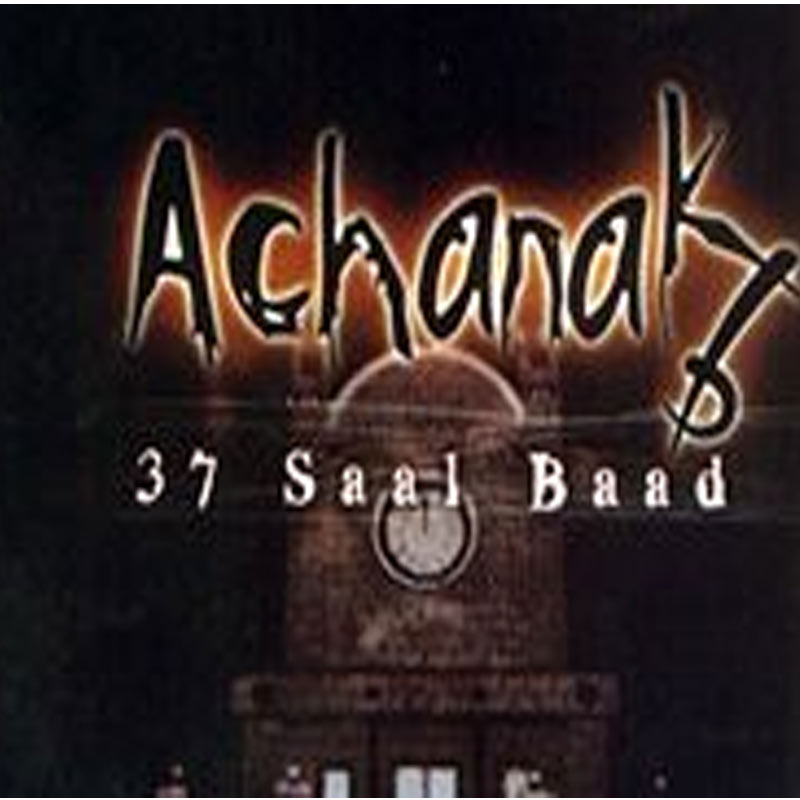
    The first one is a weekly supernatural show with a difference. Achanak the brainchild of writer Shridhar Raghavan will air every Friday at 10:30 pm starting from 22 March. It has the tagline 37 saal baad.

    Speaking on this Director On Air Programming SET Anupama Mandloi said, ” The name grabs your imagination. This is a psychological thriller. It is like reading a novel on television. The show is built on a solid foundation a great script. It is representative of the faith the channel and the producers have in taking this genre a step further. Most importantly it is created by a team which understands this genre and where its appeal lies for the viewer”.

    The producers of the show are Pradeep Uppoor and Neo Films. They together with Sridhar have worked on Aahat and CID for the channel. Like Achanak both of them had a lot of suspense. A serial from Pradeep Uppoor and Neo Films Srikant was shown on Doordarshan and Channel 4.

    Speaking about the project Shridhar Raghavan said, ” Achanak started off a few years ago as a slightly wild outrageous notion, a set of unlinked fragments of ideas. What if you went home and your parents did not know who you were? What if you were happily married and someone from your past told you that it was nothing more than a hallucination?

    Achanak is a battle royal between good and evil. But its a long fight, a tough fight mostly a losing fight for good. Good eventually wins over evil but it gets one hell of a bloody nose before it does. Or does it?”

    Shridhar also envisioned the setting which is the town of Gahota as a twisted version autHor R.K. Narayan’s Malgudi. He sees the project as something unlike anything seen on Indian television. It is weird, bizarre and outrageous with a complex undercurrent running through it.

    In the deceptively calm town of Gahota over the past couple of months something evil has been occuring. Murders, suicides and acts of madness have been taking place. An alchoholic journalist Dipankar travels to Gahota believing that he has the explanation for why crimes are committed in the town once every thirty seven years for a period of three months. Once the turbulent period has passed people cannot recollect what happened.

    The producers built a real town in Panvel not just a TV serial set. a town square, clock tower, residential areas etc were created.

    Regarding casting decisions Shridhar said that some important members do not appear until half the episodes are completed. Also some characters have a touch of eccentricity to them like a professor whose stance shifts with each encounter. There is a hint of Dr. Jekyll and Mr. Hyde waging a war within the characters. He also revealed that one of the central protagonists will appear only in the final act. Cast members include Raj Zutshi, Faraaz Khan and Shishir Sharma.

    He pointed out the differences between Achanak and Aahat. Aahat was episodic involving a single continous story. Aahat dealt with big issues concentrating more on pace as opposed to plot. Achanak on the other hand is about small things. It is about how decption can hide underneath a sea of normality. It also deals with the thin line that separates sanity and insanity, light and dark, good and evil.

    The second new weekly show on SET is called Par Is Dil Ko Kaise Samjaye. It premiers on 29 March at 8:30pm. It deals with how the relationship between two sisters gets affected by a series of accidents brought about through sheer fate.

    A woman loses her sister and husband. For companionship and to support her sisters offspring she marries her brother in law. However later on it turns out that her sister survived the accident. Now both of them are married ot the same man. The show is directed by Imtiyaz Punjabi and stars Raj S Verma, Shweta Salve and Pooja Ghai.

  • Zee brings English fare to viewers

    Zee brings English fare to viewers

    Zee Telefilms’ is set to enter the English movies and English general entertainment segment with its two channels Zee Movies and Zee English which are slated for launch on 15 March, 2000. Both the channels are to be encrypted and will be beamed from AsiaSat-3. “Television for the dot com generation” is the slugline for the two channels.

    The channels are expected to cater the Category “A” audience and claim to have a huge library of popular movies and other software. Zee English which is the general entertainment channel claims to have rights of popular serials like “Friends” and “The Benny Hill Show”. The channel boasts to have the last four year programming of the most popular serial in the US “Friends” while competing channel Star World has only the earlier three years of the popular sitcom.

    Zee Movies has acquired around 700 titles of English films from various houses like CBS, Warner Brothers, Pearsons, Carlton, Freemantle, Diskovery and Passport International. It would telecast five new movies everyday which would then be repeated.

    HBO, which undoubtedly is among the biggest cable movie channels in the world, will enter the Indian skies soon and could be a threat to Zee Movies. It already has drawn a huge line-up of popular Hollywood movies and would begin its test runs from 15 March, 2000 and is slated to be officially launch on 22 March.

    Zee Telefilms apparently has fixed the rates for Zee Movies and Zee English at Rs 5 and Rs 4 per subscriber. HBO’s sticker price is Rs 5.45. The network is slated to price its set-top boxes at around Rs 12,500 each which is way below that of the competing HBO which will price its boxes above Rs 25,000. This is likely to work in favour of Zee Movies in Indian cable TV homes. Zee would stand at an advantage due to the strong distribution network of SitiCable.

    Zee English and Zee Movies are expected to fill in the vacant space in the Zee Telefilms’ bouquet which lacked English programming.