Category: GECs

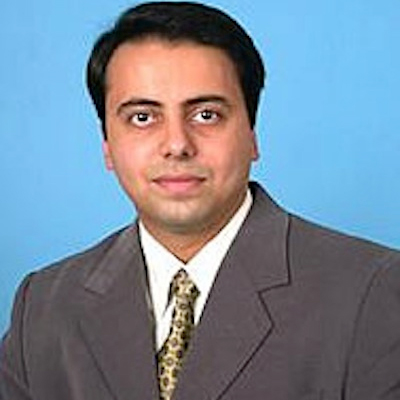
  • Todd Phillips is MTV Asia senior VP communications

    Todd Phillips is MTV Asia senior VP communications

    MUMBAI: MTV Asia has announced that Todd Phillips is its senior VP, communications.

    Phillips will provide leadership and direction to the corporate and regional Asia-Pacific communication teams, manage media relationship with trade and consumer media, support key MTV Networks International communications strategies and manage all internal and external company messaging. Mr. Phillips will be based in Singapore and report directly to MTV Asia Pacific president Nigel Robbins.

    Robbins says, “Todd has been a global pioneer for our brands and an integral part of MTV Networks’ development in Asia and Australia. His passion for our brands, keen knowledge of linear and digital media and experience throughout the region makes him the perfect choice to lead our communications efforts in this exciting time of growth.”

    Phillips has been part of the MTV Networks communications team since 1990. He served as Publicity Manager for MTV on STAR TV in Hong Kong, spearheaded communications efforts for the re-launch of MTV Asia and the launch of MTV Mandarin in Singapore in 1995, and managed public relations around the Australian launches of Nickelodeon, MTV and VH1.

    He served as VP of corporate communications for MTV in Los Angeles until 2001, working across all the brands and businesses under the MTV Networks umbrella including television networks, feature films, online and broadband properties, and consumer products.


  • Inox acquires six new films for distribution

    Inox acquires six new films for distribution

    MUMBAI: The multiplex player Inox Leisure Ltd., has acquired six new films for distribution in the Bengal, Mysore, Rajasthan and Mumbai territories for the next one month.

    The films – Gangster, 36 Chinatown, Ankahee, Tom, Dick & Harry, Killer and Jaaneman will be released in the above territories.

    Inox Leisure Ltd head distribution Aroon Sharma says, “Inox entered the distribution business in September 2005 and since then we have steadily associated ourselves with quality banners in bringing popular content to the theatres. Thanks to our professional approach most film makers prefer to deal with Inox for their distribution requirements. We hope to strengthen our distribution foray in the coming months.”

    The company had earlier acquired exclusive distribution rights to heavyweight titles such as Garam Masala, Rang De Basanti, Apharan, Ek Khiladi, Ek Hasina, Hamko Deewana Kar Gaye, informs an official statement.

  • Animax to launch in Korea on 29 April

    Animax to launch in Korea on 29 April

    MUMBAI: Sony Pictures Television International (SPTI) and Korean satellite TV broadcaster SkyLife will be launching their joint venture channel Animax in Korea on 29 April.

    The announcement was made by SPTI international networks president Andy Kaplan and SkyLife CEO Dong-Koo Surh.

    Animax in Korea will be a 24-hour local program provider focusing on animation programming that will be carried exclusively on SkyLife’s DTH platform, which has a subscriber base of about 1.9 million in Korea.

    Unlike other animation channels in Korea, which focus mainly on programming for young children, Animax will air programs for teens and young adults. With various genres from anime producers, Animax will offer a wide variety of programming choices, including comedies, science fiction, action, dramas and thrillers.

    God Save Our King!, Monkey Typhoon, The Count of Monte Cristo, Otogi Zoshi, The Adventures of Tweeny Witches and Galaxy Angels, are among the first-run programs airing exclusively on Animax in Korea. Additionally, Animax will air popular local Korean animation programs such as Yorang-Ah and Black Rubber Shoes.

    Animax in Korea is part of SPTI’s expansion plans for its international network portfolio which now includes over 40 channels around the world.

    Animax Korea representative director Marty Hong said, “Animax Korea will be differentiated by a line-up of high quality programs and sophisticated graphic design elements. We will lead a new trend among animation channels and we also hope that by leveraging the distribution network of Sony, we will be able to contribute to the local animation industry.”

    “Sony Pictures Television International is committed to growing its international networks group, and Korea figures prominently in our plans. We launched our AXN channel in Korea on SkyLife last year and we’re thrilled to be working with them again on launching Animax in Korea. We now have Animax channels in Japan, South and Southeast Asia and Latin America, and the channels have been embraced by audiences everywhere. The thirst for quality anime programming is apparent and we’ll strive to make sure Animax in Korea offers the best anime shows,” said Kaplan.

    Surh added, “We are pleased to launch such a global channel as Animax, which will create a buzz in the animation industry. We think that the addition of Animax will add great value in terms of content differentiation of SkyLife and we will continue our efforts to secure strong content in various ways in the future.”

  • Sun TV has big bang debut on BSE; closes 68% higher at Rs 1466.05

    Sun TV has big bang debut on BSE; closes 68% higher at Rs 1466.05

    MUMBAI: The Kalanidhi Maran promoted and Chennai-headquartered broadcaster Sun Television Limited got listed on the bourses on Monday with a huge bang. The scrip has been greeted with a lot of excitement and closed the day’s trading 67.55 per cent higher at Rs 1466.05 on the Bombay Stock Exchange (BSE).

    A total of 5,298,695 shares were traded on the opening day.

    At the National Stock Exchange (NSE), the scrip had an overall gain of 67.39 per cent and closed the day at Rs 1464.65. A volume of 11,585,515 shares have been traded on day one.

    Just how bullish the bourses are is about the scrip can be garnered from comments made by market analyst Rajesh Jain of Pranav Securities to CNBC TV18, where he said Sun TV should be part of every investor’s portfolio.

    Said Jain, “I would ride this Sun TV story. I might add on declines, if the strip does give that opportunity. Sun TV is a super pedigree media stock. It has been the leader in the south for almost a decade.

    “I think it would even rate better than some of the older plays available in the media space.”

    The scrip, which was offered through initial public offer (IPO) early this month at a tag price of Rs 875 per share, listed at Rs 1,111 on the BSE and Rs 1,000 on the NSE. Its BSE ID is 532733 and its NSE ID is SUNTV.

    In its IPO, Sun had come out with a fresh equity issue of 68,89,000 equity shares of Rs 10 each for cash, made entirely through the book building route.

    The issue constituted 10 per cent of the fully diluted post issue paid-up capital of the company. Following the issue, the shareholding of Sun TV Ltd principal promoter Kalanithi Maran has reduced to 89.99 per cent from 99.99 per cent (61,999,969 shares).

  • ‘With all the new delivery platforms, we are at the doorstep of a very interesting phase’ : Pradeep Hejmadi – Tam Media Research vice president

    ‘With all the new delivery platforms, we are at the doorstep of a very interesting phase’ : Pradeep Hejmadi – Tam Media Research vice president

    He has been associated with a wide variety of assignments in the domain of media planning and broadcast management. Now he’s buried into hardcore research.


    It’s been just over six months since Tam Media Research vice president Pradeep Hejmadi joined the company and when we mention that to him, he seems shocked at how time has flown.


    His last assignment was with the kids’ channel Nick. His experience traverses through various media organisations like Turner International, Discovery India, HTA and The Times of India.


    Speaking to Indiantelevision.com’s Hetal Adesara Hejmadi dwells on the various issues that concern the television industry today and also on the exciting phase that it entering.


    Excerpts:

    It’s been just over six months since you joined Tam, how has the journey been so far and what was the mandate given to you when you joined?

    The journey has obviously only begun but it’s been good fun. Being on the broadcast side, you see one view of the world. There I was doing a whole host of stuff that is quite different from what I’m doing here. So from that point of view it is a refreshing change to come to audience research and to help people to converse with data.


    In terms of mandate, the idea was simply to focus on two areas: one is on the needs of the broadcasters and to keep the system abreast in terms of the areas that are emerging as interest areas for the industry per se.


    The other mandate is to get people to make decisions on the basis of the information that they have. Some people tend to have a biased approach towards numbers as research sounds like such a difficult animal to manage and tame. Our focus has been to try and make sure that people are able to read audience behaviour and act on it. And hopefully start seeing some response on the basis of what they are doing so that they can get far more structured in the way they go about their businesses.


    The environment is pretty crazy as we are operating in a very heterogeneous market and it is not easy to use any information and just act on it. Many a times the devil is in the details so our focus is really to find that devil and help people tame it.

    Can you throw light on the new initiatives that Tam is or will be undertaking and in which areas?

    Not too much of what we do is an industry secret, so I’m sure that you know pretty much everything. The Elite panel is something that is going to be launched and the current panel expansion is also underway. The panel expansion is a nine month process that we started in the beginning of this year. By the fourth quarter of this financial year, we should be ready. We have consulted the industry and many people have told us not to make a mid-year change in the measurement science. So after consensus from the industry, we are looking at January 2007 to switch to the new universe.

    What about the launch of the Elite panel and what according to you will be the data thrown by it in terms of viewership patterns? How much of importance will it hold in the coming days in terms of tracking viewership?

    The Elite panel will be up by July this year.


    The way that we have crafted the panel has not been to bring out any nuance but to focus on a segment. Everyone wanted to have an audience profile, which is the top end of our entire market structure. So in Mumbai and Delhi, we are now going to have a panel, which will represent the behaviour of the top three or four per cent of the population.


    Our focus has been to use all the quantitative data that we can get and construct that profile in such a manner that it robustly segments the elite from the national panel. Again we have a whole set of variables through which we have been successful in bringing that point out.


    In terms of behaviour, once the panel is up people will see what happens. There are a lot of myths and that is a constant in any industry. But once the panel is up people will be able to see the reality as it is.


    Obviously, given that the elite are the top three or four per cent of the population will have a different lifestyle and it will reflect in their media consumption as well. Right now we don’t have the panel up so I can’t even force a guess as to what the panel will throw up. But it should be very interesting and the industry is very keen on getting that kind of information.

    Which are the broadcasters who are specifically interested in the elite panel?

    Surprisingly, all the broadcasters are interested. For the Hindi general entertainment channels, the aim is to talk to everybody and they don’t want to exclude the elite. English entertainment channels are also very keen because they feel that the core component of their viewership is the elite. But a lot of these feelings and aspirations that broadcasters have at present are driven by perception. But as the data comes out we will be able to find out the reality.


    A few of the things that we have seen is that for the elite the segmenting elements in terms of defining them differ by market. For example, in Delhi, the definition for elite was a much trickier one than it was for Mumbai. But now for both the markets we have been able to arrive at variables that describe that segment very well.

    ‘In the digital age, numbers will keep rapidly changing so we needed to find ways of being able to pull out from a large sample a very robust estimate of DTH penetration as it stands’

    So the elite panel will be only in Delhi and Mumbai?

    Currently we are looking at only these two cities for the elite panel.

    With new delivery platforms like IPTV and mobile TV coming in this year and also keeping in mind the new DTH platforms launching, is Tam undertaking any research in these areas?

    We have just done a penetration study, which has brought out estimates of what the DTH number is for households, the small number of the addressable conditional access boxes that are there and also what the current incumbent players have in terms of market share.


    Those numbers are already in place. The fact is that in the digital age, numbers will keep rapidly changing so we needed to find ways of being able to pull out from a large sample a very robust estimate of DTH penetration as it stands. The large sample needs to be touched, collected and reported in a very short period of time. We were able crack that by using the IMRB household panel, which has shown very interesting numbers. As things pan out, we will be working towards getting the universe estimates updated more frequently. We will also be able to understand the rollout of this phenomenon in different markets in a very different manner.

    Is this a difference of viewership of people watching DTH and those watching C&S?

    At the moment we don’t know because we are not measuring DTH. To us the mandate from the industry was to measure any phenomenon which had a market share of five per cent and above. If any phenomenon was below five per cent of a market then there is no point in measuring that.


    So from our point of view we have been doing establishment surveys to measure a phenomenon. So if CAS or DTH becomes five per cent of the market then we will have to report on it.

    So are you saying that DD Direct and Dish TV DTH subscribers do not add up to five per cent of the market?

    No it is not five per cent of an individual market.

    Once Tata Sky and Reliance launch their DTH, will Tam begin measuring viewership on DTH?

    Once DTH arrives and reaches a five per cent critical mass, we will begin measuring it. Now whether it is pre or post the launch of Tata Sky DTH is immaterial.

    If you get 300 channels as against 100, will you watch three times the TV? It will be interesting to find out

    What will be the difference in the backend infrastructure for measuring DTH?

    There will be a difference because these signals are digital. Currently, primarily because the market is analog is nature, we had meters which worked on analog. Now we’ve brought in state-of-the-art TVM5 meters which can measure DTH and any digital and IPTV signals. These are the meters that we will be deploying for measuring viewership on DTH.


    So the elite panel will be on TVM5 meters and also all the metros will be moving to TVM5 meters.

    What according to you is going to be the impact on programming content after the launch of these new platforms?

    This is a very interesting question you raised. There is one aspect of what DTH providers will do to justify a person to shift from cable to DTH. And there is another part of the picture, which is what the consumer will do once the new DTH platforms are launched.


    DTH platform players have already realized that to drive people to take a box or dish and to go through the motion of having a one on one relationship with the service provider, they will have to add some value over the basic tier. So from their point of view, they are trying to build and aggregate as much content and provide as much variety as possible. Whether consumers will watch or not, we will know once we know what content has been aggregated.


    It will be a game of wait and watch to find out whether tastes will change. But the fact is that tastes changed when we shifted from terrestrial to cable and satellite. So going by that, tastes should change with DTH coming in but how much and by what measure will have to be seen.


    Obviously some rules of the game will change. For instance, currently distribution does play a very critical role. At that time, the kind of TV sets will not matter because all these households will be remote households by default because they will switch channels off the set top box (STB). All of these households will get all the channels on the STBs provided they pay for them. So it will become television neutral and also cable bandwidth neutral.


    In one sense it becomes a level playing field across consumers. Now if you get 300 channels as against 100, will you watch three times the TV? It will be interesting to find out. I have a feeling that over a period of time people and their tastes change. So you will see a change in behaviour but over what period of time and will it be an easy or painful switch-over will be ascertained by various constituents.


    From our perspective, we need to have measurement that is representative and precise. We need to have people understanding what is coming out of this system so that they can then funnel it back.


    We are actually at the doorstep of a very interesting phase. In six to eight months’ time we will start seeing some things changing.

    What are your views on conditional access system (CAS)? How is it going to impact the industry if and when it comes into place?

    From a long term perspective it is obviously good for the industry. Nothing happens very easily. We know the resistance to change that we as human being have. On CAS it has got into a kind of a mess and has had a bad history. It also got much politicized and hence because of that and a whole host of things, it has made life difficult for CAS.


    But I think once DTH rolls out and channels announce their pricing for DTH, it will help CAS. It is very good that we have a body like the Telecom Regulatory Authority of India (Trai), which has put in certain norms to help platforms iron themselves out. So in their regulation the ‘must provide’ clause has been put in and pricing parity has been brought in so that channels can’t have different pricing for different platforms. This will help CAS and DTH.


    Intrinsically there are some issues with CAS. One of them is inter-operatibility. As far as CAS is concerned, if you stay in Chembur and then move to Churchgate, you might not be able to use the same box. Whereas this problem does not arise in DTH.


    In Chennai, for example CAS did not fly because the tastes of that market is very different. Also the popular regional channels are all free to air. So the number of people who were ready to pay for that box was very small. But in a lot of other markets, most of the Hindi entertainment channels are all pay. As long as they don’t buckle because of advertising revenue pressures and stay pay, they could fuel growth of CAS.

    Tam has been tracking viewership in Chennai, where CAS has been implemented. What have been the learnings from there?

    CAS penetration is very low in Chennai. The pricing is very exorbitant. For instance, initially, the channels that were on STBs and were of interest to the mass population were kids channels and English entertainment channels. If you added up all those channels on an a la carte rate, the cost of the box was four times the cost of annual subscription for these channels. Now that’s prohibitively expensive.


    In that market, it was a first launch, so it is understandable if Sumangali might have adopted the strategy of not wanting to price it down that much. But obviously the value proposition was not that compelling. This is not the case with a lot of northern and western markets. In these markets a lot of Hindi content is pay, which has appeal. Therefore it might drive the box much faster than it did in Chennai. So Chennai is really an exception.

    Going forward, what according to you are the issues that broadcasters will face in the coming years with new technologies launching? Do you have any words of caution for them?

    I don’t have any word of caution for them mainly because of one reason – I don’t see any threat, I only see an opportunity in the way things are happening. Consumers have consumed channels for a while and they like the programming they watch. The positive thing that is happening now is that a broadcaster is seeing an opportunity in a disguised form of various distribution routes.


    If broadcasters see that as an opportunity and seize it, it might be a lot more good news for them than what it seems to be, with certain reservations. If you get your pricing right; if you make sure that as a broadcaster you are not biased towards a distribution platform, it is only going to be better because there are issues with the kind of TVs in a household and in what kind of analog frequency band is there with cable. Plus there are issues with the number of people you can serve with one cable system. All of these will cease to exist with DTH.


    A consumer will start making a choice and give their preferences, whereas broadcasters will be able to solidify the product over a period of time. So that revenue line will become a far more solid line.


    Obviously, there will be a painful and uncertain phase but that is there everywhere. People will have to learn to deal with it but it will take a slightly longer time. Consultation can work much better than confrontation in many a situation. At this stage people in the industry need to communicate more effectively… forget strategy and that’s what will help them.

    Do you see any other major event impacting the television industry this year?

    If I say yes, I might be wrong. If I say no, I might be wrong too. I really don’t know. I think the days ahead are going to be fun as all the different genres are reinventing themselves in order to get a lion’s share, whether it is music, kids, regional or Hindi general entertainment channels, all of them are rethinking their approach.


    I don’t know what else will be big this year, but religious channels are catching up big time. Sports is going through the roof in terms of the number of events. With so much of cricket, I’m not sure whether it will have that novelty value. It will have mass appeal but whether all masses will run for it will be worth watching.

    What are the genres that will work this year? Will reality shows still rule the roost?

    Reality is a very broad term, it’s like saying – serials, which brings everything under one category. But within reality we have seen only a few things happening. Reality has its pluses and minuses, you can’t overdo reality and start running it like a soap as it tends to become boring. It needs to have that ‘Wow’ factor.


    Also notable is the fact that unfortunately all the sequels of reality have not done that well. So it also tells you something about such programming. But there is a growing appetite for it from the consumers’ side. So from that point of view it will stay… in what form and format, we will have to see.


    If you see the number of people going to Mipcom from India, you know that reality is not going anywhere. Over a period of time things will start ironing out in the reality genre.


    In reality a unique concept, which is executed well gets you walk-ins faster than a soap. For anybody who wants a shot in the arm, reality is the quick fix solution. But then, they need to have a solid strategy to retain that new audience and capitalise on it.

  • Asian VOD broadcaster Anytime signs distribution deal in Taiwan

    Asian VOD broadcaster Anytime signs distribution deal in Taiwan

    MUMBAI: The Asian video on demand (VOD) channel Anytime has reached a distribution deal in Taiwan with the interactive broadband platform TDMC.

    TDMC TV chairman Zhong Zhen says, “The deal gives TDMC TV customers a variety of content from the Hollywood studios over a secure ADSL broadband connection to a set-top box. The channel launches in Taiwan this month.

    “Anytime has output deals with more Hollywood studios and Asian content creators than any other video on-demand channel. The new Anytime channel on TDMC TV will give viewers in Taiwan easy access to the most popular, up-to-date entertainment, when they want it.”

    The Singapore-based Anytime has existing carriage deals in Australia, Hong Kong, Taiwan and Thailand, and the rights to license into 14 territories in Asia Pacific. Shareholders include CPE Holdings (Sony), Fox Media Services, Warner Bros. Entertainment, YTC Group, the Macquarie Bank Group and US based Coote/Hayes Productions.

  • Discovery US, Google Earth in content alliance

    Discovery US, Google Earth in content alliance

    MUMBAI: Discovery US has announced the availability of its video content on Google Earth.

    This is a satellite imagery-based mapping product that combines 3D buildings and terrain with mapping capability and Google search.

    For the first time, Discovery will provide streaming video on Google Earth for locations around the world including popular destinations, historic sites and natural wonders, among others.

    Discovery will offer video content showcasing 10 of America’s most popular national parks, including Yellowstone, Mount Rushmore and Dinosaur National Park. By clicking on Discovery’s globe icon shown at destination sites at which Discovery video content is available, Google Earth users will launch an interactive broadband player hosted by Discovery that will enable them to select from several two-to four-minute videos from Discovery’s rich archive at each target destination.

    Discovery senior executive VP for strategy and development Don Baer says, “By combining Discovery’s wealth of knowledge-based content with Google Earth’s innovative platform and technology, consumers have an unparalleled opportunity to explore our world as never before. With the worldwide appeal and utility of Discovery’s programming, the possibilities for exploration are endless.”

    Google Maps/Local/Earth director John Hanke says, “Google Earth users worldwide can now access enriching and educational videos that capture the breadth and detail of popular destinations and national landmarks. Discovery’s video content complements the immersive experience of Google Earth and aligns well with our company mission to deliver the world’s information directly to users.”

    Among Discovery’s core content genres of History, Science, the Natural World, Travel and Adventure and Animals, users will find:

    – Video content for 10 destinations available beginning today: Glacier National Park, Yellowstone, The Everglades, Point Reyes National Seashore, Mt. Rushmore, Alaska National Parks, Arches and Canyonlands National Parks, Santa Monica Mountains National Park, Carlsbad Caverns and Dinosaur National Park.

    – Ongoing content updates and additions, including videos for nearly 50 new locations spanning the globe in the coming months.

    – Special features on Discovery’s specials such as the upcoming global series Discovery Atlas, an ambitious HD project, offering both video and companion content for 30 countries included in a multi-year programming franchise beginning with China, Brazil, Italy and Australia later this year.

  • Radio Mirchi turnover rises 58 per cent in FY06, net profit at Rs 295 million

    Radio Mirchi turnover rises 58 per cent in FY06, net profit at Rs 295 million

    MUMBAI: Entertainment Network India Limited (ENIL) has posted a 57.69 per cent rise in gross turnover to Rs 1.2 billion for the fiscal ended 31 March 2006, as against Rs 762.2 million a year ago.

    Net profit stood at Rs 294.6 million as compared to a net loss of Rs 179.2 million in FY 2004-05.

    The earning before interest, depreciation, tax and amortisation excluding license fee for the year was Rs 445.7 million, a rise of 61.5 per cent over the previous year.

    For the last quarter of FY 06 fiscal, net profit was at Rs 54.9 million. ENIL, the company which operates FM broadcasting under the brand name of radio Mirchi, has announced its results for the first time since its initial public offering (IPO) in February 2006. Comparative fourth quarter figures for the previous year are, thus, not available.

    ENIL’s consolidated net profit stood at Rs 310.5 million for FY 06 while total income was at Rs 1.4 billion. Earning before interest, depreciation, tax and amortisation was Rs 407.6 million.

    Under the consolidated results fall the wholly owned subsidiary company Times Innovative Media Private Limited (TIMPL) for a period of five months. TIMPL was incorporated on October 26, 2005 and it acquired Event Management (3600) and Out of Home Media (Times OOH) business from Time Innovative Media Limited (TIML).

    ENIL has set its sights on increasing its turnover from the additional radio stations to be set up this year. The company has already launched its radio stations in Hyderabad, Jaipur and Bangalore.

    Times OOH won advertising rights of Delhi Metro – Connaught Place and Dwarka (13 stations), Kolkata Metro (80 hoardings spread across the city) amd Delhi-Noida toll bridge for a license fee of Rs.340 million payable over two to five years.

  • ITV launches gaming network on Freeview

    ITV launches gaming network on Freeview

    MUMBAI: UK terrestrial ITV launched its newest digital channel, the interactive gaming network ITV Play, on Freeview, with programming to include the first show spawned from the broadcaster’s purchase of the Friends Reunited website.

    The channel airs daily from noon to 4 a.m. on Freeview, and is also available to be streamed live on itv.com. ITV Play launched at the end of March in the after-midnight slots on ITV1 and ITV2. The channel will be ITV’s first non-advertising-funded channel.

    Programming in the channel line-up includes The Mint, currently also airing on ITV1, which offers up cash prizes for a range of challenges; and This Morning Puzzle Book, produced by the This Morning team from Manchester.

    Friends Reunited – The School Run builds on the interest in nostalgia that is at the heart of the Friends Reunited website, which ITV bought last December. Based on a huge interactive board game, the show brings classmates together to test their knowledge of facts and trivia from a particular year.

    Also, all interactive programming, games and quizzes on ITV’s family of conventional TV channels, online and mobile will fall under the ITV Play banner, including the new Bullseye game, only available on ITV.com.

    The venture is part of ITV’s larger strategy to create new revenue streams and become a viable multi-channel offering. It aims to invest more in the participation TV sector to help build a long-term sustainable business by using its programme brands to create interactive formats.

    ITV Play controller William van Rest said, “ITV has a great heritage in producing the biggest and best live, interactive programmes and this is exactly what we want to do with ITV Play.”

  • Tandberg Television appoints Emmanuel Boureau as sales VP, EMEA

    Tandberg Television appoints Emmanuel Boureau as sales VP, EMEA

    MUMBAI: In a move designed to further strengthen and expand its leadership position in Europe, the Middle East amd Africa (EMEA), Tandberg Television has appointed Emmanuel Boureau as VP of Sales for the region.

    Reporting to Eric Baron, Tandberg Television’s EMEA president, Boureau will be responsible for managing and growing the company’s direct and indirect sales channels in EMEA. He will lead the introduction of advanced compression, on-demand and interactive content solutions to cable, satellite, terrestrial and telco operators across the region, states an official release.

    Boureau joins Tandberg Television having spent the past eight years at Harmonic, most recently as European director of sales and pre-sales. Prior to his time at Harmonic, Boureau had a distinguished sales career within the computer industry where he held senior positions at the Digital Equipment Corporation and sales engineering positions at ITT Data Systems.

    “Tandberg Television is the clear leader in the European video compression space and continues to make first-to-market moves that strengthen and secure its pole position. With a best-in-class combination of solutions for IP, HD, on-demand and interactive television, Tandberg Television is in a unique position to help content owners, programmers and network operators leverage new digital media opportunities. Joining Tandberg Television provides me with a senior management role in which I can use my digital television experience as part of a dynamic, winning team,” says Boureau.

    “Emmanuel is an impressive operator with a strong sales track record and exceptional experience of driving a multicultural dispersed sales team. He has a solid understanding of the technology and commercial drivers in the digital television industry that will be of great benefit to Tandberg Television customers. I am delighted that he is joining to lead our EMEA sales team and looking forward to working closely with him as we continue to accelerate our leadership position in the region,” says Baron.