Category: GECs

  • A Kidzee School near you

    Zee Interactive Learning Systems Ltd. (ZILS), the education arm of Zee Network, Asia’s undisputed leader in pre-school education with Kidzee, has grown to a network of 400+ schools across India and abroad in a short span of 36 months. Kidzee employs the concept of ‘learning by playing’. The personalized tender care in a Kidzee school stimulates the budding mind to understand and handle day-to-day situations.


    The renowned Indian Film actor Anil Kapoor on 5 June inaugurated the new Kidzee School, in Walkeshwar, Mumbai.

    Anil Kapoor addressed the media and appreciated ZILS for its efforts in providing quality education in the pre school segment. Zee Interactive Learning Systems AVP Prem Jain, gave a keynote address on behalf of ZILS, “Kidzee provides, comprehensive age appropriate learner centric programme at par with international standards, it ensures holistic development enabling the child to face the challenges of the modern world.”

  • Amrita TV had an eventful May 2006

    Amrita TV had an eventful May 2006

    The second issue of Amrita TV’s monthly e-bulletin, Amrita TV Glimpses, May ’06, encapsules a snapshot of major happenings at the channel:

    1. Amrita TV on Dish TV Platform: To cater to the growing demands of viewers nationwide, Amrita TV has partnered with Dish TV, India’s first Direct to Home entertainment service, to make Amrita TV’s programmes available more widely across the country. Amrita TV is available on Dish TV Channel number 933.

    2. Super Star Screen Test : Amrita TV is launching “Super Star”, a mega talent hunt to showcase the best Malayalam music performer in the 15-28 age group. Nearly 3500 participants from Kerala and outside the State registered for the screen tests conducted by renowned music celebrities at Hotel Taj, Kochi/Kozhikode and Hotel Mascot. Branded the Brooke Bond Super Star, this 90-episode reality show which has been shot in specially erected sets and in locales like The Leela Kempinski Kovalam Beach will be telecast from June 12 (8.30 pm).

    3. Amrita TV Wins 15 Kerala State TV Awards: Amrita TV bagged 15 of the 29 Kerala State Awards for excellence in television–perhaps the highest number by a one-year old channel.Some of the Awards are –Best Telefilm, 2nd Best Telefilm, Best Script, Best Story, Best Actor, Best Actress, Best Photography, Best Editing, Best Music Direction, Best Art Direction, Best Compere, Best Commentator.

    4. Live Election Coverage in 140 Constituencies: Amrita TV’s multi-location live coverage, reporting and analysis of Kerala elections, especially on the day of the results, won accolades for its professionalism and finesse, and was rated at par with the best news channels in the country. From April’06, Amrita TV has been on the election trail covering the Kerala elections in 140 constituencies with OB van/ news team traversing all the districts of Kerala, to capture the voice of the people — alongwith hard-hitting exclusive features with political leaders, analysts and experts.

    5. World Cup Coverage : On the eve of the World Cup, Amrita TV is running a Fifa segment in its News bulletins highlighting various perspectives of the World Cup with profile of teams, star players, goal of the day, predictions, snippets, sidelights, et al. A ready reckoner leaflet indicating the complete World Cup Matches Schedule was printed and distributed across the country by Amrita TV.

    6. National Brands on Amrita TV : Besides Kerala companies and government institutions who patronise Amrita TV, leading national and global brands are advertising on Amrita TV, e.g. IOC, BSNL, Bru, Brookebond, Annapurna, Parachute, Kissan, Rexona, Hamam, Lux, Sunlight, Lifebuoy, Surf Excel, Pepsodent, Hewlett-Packard, Smyle, Moods, Charagh Din etc.

  • Mothers Special on Boogie Woogie

    MUMBAI: Exchanging aprons for dancing shoes these mothers have done women proud. Stepping out of the comfort zone of their homes these mothers joined the Boogie Woogie All India Mother’s Dance Championship a month back.


    And what a journey it has been for these mothers and the viewers too. Heart-breaking eliminations over, these brave hearts have now reached the final round and all set to put their best foot forward to win the coveted title of “All India Boogie Woogie Mother’s Dance Champion”.

    The countdown has begun. The pressure is mounting. The winner of the title will walk away with the prize money of Rs. Four lakh in her kitty while the runner up bags a cool one lakh! The other two contestants don’t go empty handed — they go home with Rs. 25000 too!

    The last four super moms will set the stage on fire with their electrifying numbers. Don’t miss the finals of this very special episode of Boogie Woogie these moms teach you how to have your cake and eat it too!

    Stay tuned to Boogie Woogie on Saturday, December 23, 2006 at 8 p.m only on Sony Entertainment Television.

  • Disney Asia Pacific holds its first new media showcase

    Disney Asia Pacific holds its first new media showcase

    MUMBAI: Disney’s distribution arm Buena Vista International Television (BVITV) along with Walt Disney Internet Group, Disney Channel, ESPN, ESPN Star Sports, and its US television network ABC hosted its first New Media Showcase in the Asia Pacific region in Singapore.

    Broadcasters, mobile operators, content aggregators, ISPs, and triple-play providers from around the region attended the event at which executives from across the Company showcased how Disney is combining cutting-edge technology with great content to create unique entertainment experiences for audiences allowing them to enjoy content whenever and wherever they want it. 

    Buena Vista International Television (Asia Pacific) senior VP and MD Steve Macallister said, “This is an extremely exciting time to be in the media industry and it’s a particularly exciting time for The Walt Disney Company. We’re buoyed by the rapid developments and change facing the industry and are pleased to be the first US studio to undertake an event of this scale in the region.

    “Disney’s ‘road map to the future’ lay in combining the riches of our entertainment properties with new forms of distribution. Asian consumers have a voracious appetite for both technology and content, and across our businesses we are embracing this sea of change. There really is no other entertainment company better equipped to navigate the changes in our industry than The Walt Disney Company.

    “The New Media Showcase has been a marvellous opportunity for our current and potential clients to view for the first time in one place, the new media content offerings from our many businesses.”
     
    BVITV-AP showcased Desperate Housewives and Lost available for new media platforms such as for mobile, internet and video-on-demand. BVITV-AP says that it was the first studio to launch wireless content in South Korea in October 2005. In this mobile content deal with TU Media, the first-ever with a US studio, over 250 hours of programming including Desperate Housewives and Alias went to air via its linear channel “Blue”.

    In the US Disney-ABC signed a deal with Apple to offer Disney and ABC content on iTunes and ad-supported, full-length episodes of four ABC primetime series on abc.com. Disney is looking after sports fans too. The World Cup soccer tournament currently gripping sports fans everywhere has underscored the international opportunity available in the wireless space.

    ESPN Star Sports’ latest mobile service offering in Asia, includes video, data and WAP services in addition to java games, wallpapers and ringtones. Keeping fans up to date with the action on the pitch is ESPN Here We Go.

    This has the latest match insights, previews, predictions and analysis from the World Cup, and SportsCenter Mobile News, providing the latest in coverage of the top sports stories. Using SMS and Wap services, ESPN Football Live is keeping audiences abreast of the latest breaking news, injury reports, fixtures listings, and half-time and full-time scores.

    ESPN Insider sends fans first hand match development and predictions with expert commentary. ESS recently launched Mobile ESPN. This mobile service brings the best of video, SMS, WAP, games and downloads for sports fans. 

    Younger audiences also have new platforms on which to enjoy and interact with content. Disney Channel’s programming, digital media and marketing teams are working seamlessly to create an engaging experience empowering viewers to connect with the brand across multiple platforms, ultimately reinforcing and supporting the linear Disney Channel.

    Disney Channel’s strategy for creating compelling content for new media channels focuses on providing constant and personalised entertainment at the viewers’ convenience. In June, Disney’s shows That’s So Raven and The Suite Life of Zack & Cody will be available in six different languages, on the re-launched broadband site, DisneyChannel.com. The local language tracks include English, Mandarin Chinese and Hindi. 

    The musical movie High School Musical is doing well among kids, tweens and families in the US. It recently premiered on Disney Channel Australia and New Zealand, followed by international roll-out across over 100 countries this year, and had 1.2 million unique visitors to DisneyChannel.com – the most ever for the site. Distributed by Walt Disney Records, the music album was number one on iTunes Music Store for three weeks and 1.3 million single tracks have been purchased digitally.

  • ‘Key to successful radio programming is to know what territory you can own & defend against predators’ : Steve Martin – BBC World Service on-air editor

    ‘Key to successful radio programming is to know what territory you can own & defend against predators’ : Steve Martin – BBC World Service on-air editor

    BBC World Service on-air editor Steve Martin has been responsible for the present on-air image that BBC’s English Radio Network holds, be it the sound identity of the network or its on-air promotions. Radio, to Martin, is something that establishes a certain personal connection through what it offers.

    According to Martin, content should be strong enough to trigger emotional reactions among consumers. He emphasizes that the players should better know their audience, the better knowledge they have, more acceptable forms of presentation will be created.

    Martin has his own theory on the sales & promotion aspect, which goes beyond the commercial break. He says the content should be creating and raising awareness of the product or the service.

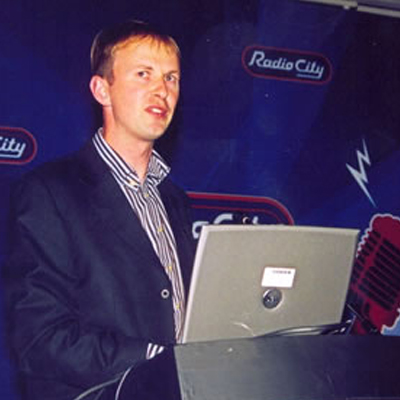
    On his way to London, BBC World Service on-air editor Martin spent two days in Mumbai, attending a seminar organized by FM channel Radio City.

    Indiantelevision.com’s Manisha Bhattacharjee caught up with Martin during his brief stay in the city, to get a perspective on the evolving business.

    Excerpts:

    Could you provide a brief of overview of the current radio status in UK?
    Today, it is an extremely mature and diverse radio market. BBC now operates 10 national networks some of which are only available on the digital platform, the rest of them on FM and AM in the traditional way. And we also operate a network of 38 local radio stations which is centered in all different cities and towns in England. We run two radio stations in Wales, two in Scotland, and two in Northern Ireland. So in any one place in Great Britain you are guaranteed to get at least five to six BBC radio stations. Plus you will get a similar number of commercial services in some places and in some places there are more. It’s a very developed market now.

    Now that is really diverse. Was there any kind of regulatory push, which also enhanced the market?
    In Britain, it is permissible for a radio group to own several radio stations in one market. This isn’t the case in India.

    When this happens you don’t find much similarities between two radio stations, because if you are going to own two radio stations in the same market, the last thing you want to be doing is exactly the same thing and cannibalizing the same audience. So you ensure that the two radio stations are broadly complementary. That makes good business sense and you ensure that on each radio station in a particular territory, which is not only hugely successful but it is also defensible against any other outside broadcaster. The key to successful radio programming is to know what territory you can own and defend against predators.

    That works for the public service as well. In BBC we are publicly funded and do not have a commercial imperative. We are all there to maximize revenues. However, because we are publicly funded, we have a duty to serve absolutely everybody of the UK population. So we have an obligation to ensure that our services are broadly complementary.

    For example: We run a national new music service, which specializes in breaking new music. It is a patronage in the arts in terms of supporting new talents in new music and it plays hits also of the popular culture.

    Please comment on BBC service radio networks’ programming strategy. How different is it from that of commercial radio stations?
    BBC service radio networks are distinctive from the commercial radio stations. It would be wrong to say that we solely do things that the market can’t support. Because we have an obligation to provide something to everybody, the services have to be popular. But these are absolutely distinctive.

    We would take creative risks with our programming such as of BBC Radio 2 – we will do a speech based consumer phone-in and discussion stations are doing that. On Radio 1 we will break great new music and we will take risks with that. We invest in social action programming, investigating issues that young people are facing in Britain today. And on BBC Radio 3 we support orchestras. So our patronage of the hour is not just something having on the plaque on the wall, it is actually real money going into supporting musicians creating music and support the cultural life of Britain today. So that some of the stuff that we do in music, commercial service radio stations don’t indulge in.

    In speech radio, we are the single biggest broadcast news gathering operation anywhere in the world. And in UK specifically, we run an intelligent speech radio station which is not just news and current affairs but includes drama, documentary and cultural programmes.

    Please comment on the competition between BBC and the commercial radio stations. How does it affect the market?
    Commercial radio is first and foremost a business and these radio stations will try to know the most profitable territories in programming terms. I think it is fair to say that because of the pressure of BBC, which is innovating in programming, the commercial radio stations have raised their game and are not going in for cutting the investment in programming and creating the cheapest programming possible.

    Because of the competition from BBC, we have got a healthy creative section within the commercial radio stations in the UK. Commercial radio stations invest heavily in research and keep us on our toes.

    Also, the regulatory framework ensures through the system of licensing that the stations are held to a particular format and have to comply with the terms of format licensing issues by the regulator. This ensures that there is a spread of different formats in any one market. But the commercial stations would want that in any case because they wouldn’t want two stations duplicating the same output.

    In the present scenario, how different is the US radio market from that of the UK radio market?
    They have a public radio network but that is quite different from what BBC is doing and it appeals to a particular niche audience. In recent years, the arrival of satellite radio through XM Satellite and Sirius Satellite Radio, which has made a huge number of formats available from coast to coast, which is great if you are driving. It allows one to listen to the same station through the journey.

    Last year, 25 % of UK radio revenues came from S&P activity

    The evolution of the radio industry, in particular it’s rapidly growing digital uptake, does that signify a threat posed by digital radio to terrestrial radio?
    More radio is good for the industry; it is good for the consumers, because, it gives more choice. You are more likely to hear what you want when you want it. That’s a positive force. BBC has been a pioneer in digital radio in UK, we have strongly welcomed it. It has enabled us to provide new services and are able to reach sections of the community which were otherwise being undeserved.

    It does mean that more communication radio stations will compete against us but that said that adds to the totality of choice available to UK radio listeners and that’s got to be healthy.

    I think where the challenge comes for the commercial stations is to manage the investment. You’ve got to invest in the new technology of rolling out the transmitter networks providing new radio services before getting enough listeners to turn a profit from those. So there is the issue of funding. That’s where the challenges lie from the business point of view.

    BBC has been leading the roll-out of digital radio infrastructure. So we have been an enabler for the commercial. Because every time you buy a digital radio set, not only do you have new BBC radio station but you have access to the new commercial stations as well.

    Radio is probably looking at greater fragmentation of its audience (like any other media). Is this an encouraging sign for the marketers or advertisers?
    If I was an advertiser and I knew there was a radio stations that supports on a functional and emotional level, with a clear voice to my target listeners. I know I will be able to buy just that station and eliminate waste on my ad spend. It is going to be good for advertisers as there is more choice on where to put spends.

    It may mean that in order to reach the audience you need more than one radio station but you can be selective in the stations you buy and eliminate waste.

    If you have only one station in the market, or all the stations sound the same, then you are guaranteeing to be wasting some of your advertisers’ spend. Because you will be talking to people who are not within your target audience or your advertising campaign. So, the more the fragmentation the easier it is to target the specific audience segment you are interested in.

    More relevant, from an advertisers’ point of view, is maximizing reach – the number of different people who listen in a week. But consumers generally hate advertisements as it is an interruption?
    Well, listeners don’t hate radio advertising. They primarily hate bad radio advertising. Secondly, the scene is changing, first there were advertising spots, and then came sponsorship. But now there’s S&P (sales and promotion) and its growing fast. Last year, 25 per cent of UK radio revenues came from S&P activity. It takes the client beyond the commercial break by creating and raising awareness of the product or the service.

    It can exploit the closeness and personal nature of radio for brands. It can also give brand endorsement from popular and trusted RJs and can create great radio entertainment for listeners. It can bring in new listeners for the radio station.

    Today, the Indian radio market is perceived as an industry which is booming. What’s your perception?
    At the moment of course, we have a situation where a lot of radio stations are broadcasting music, of course with a very similar play list. It is yet to be seen, if anybody has the guts or intelligent research in order to tone down or target their music specifically. That’s an inevitability. Whoever does that will be hugely successful in the market.

    Knowing that the radio FM market is at its nascent stage; doesn’t that give even more opportunities for the players to take risks as they are still craving a place for themselves?
    You have to be extremely brave indeed to say good-bye to a certain section of one audience. The industry is booming at the moment people are running successful businesses with this model. I believe the only question is as the radio market matures, how long the situation can continue before the audience will expect a degree of choice? But I think at the same time it would be wrong to suggest that there isn’t some choice there already.

    Though music is largely played, the individual stations have invested in individual personalities who will become listeners’ friends over time and they will be characterizing differently, between station A and station B. So it just doesn’t have to be just about music. It could be emotional qualities, personalities, attitude of the presenters or RJ’s on the air. There are a number of ways you can introduce to a radio station format something that is particular to your radio stations that is owned by you and over time you become famous for and that is about segmentation and building brands.

    Are players reluctant to experiment primarily due to lack of news and current affairs?
    In any market you have to accept the regulatory framework which is in place. And in India, that’s the regulation.

    In markets where it is allowed to broadcast different types of news on radio channels, it is a popular form of radio programming. And you will also find the people will have different news needs as the day continues.

    At breakfast time for example, people tend to want information, the kind of information they need to get into the day and through the day. Then, later in the day, people may want to think a little more about the issues and not just get information but come to their own conclusion about what it means for them. So, we talk about this journey through the day from information in the morning to an understanding in the evening and people have a need for or devote a lot of time to knowing in the morning and thinking in the evening.

    In the markets where we are producing speech programming through the day we produce a range of news programmes. We run a programme called World Today which is a fast moving double headed presentation programme by two presenters. Very high story counts and have live reports from correspondents from across the globe. It is fairly light in tone. Later in the day, News Hour is a longer broadcast with one or two big stories from the day so far with a range of perspectives from the other BBC correspondents and other figures who are involved in the news story.

    We produce news programmes in such a way that they are available to listeners at a time when they better satisfy their news needs.

    What is the strategy to have a successful station format and positioning of the radio channel?
    A key thing about radio is that it is an emotional medium. Radio is company, a complement for life, and so the key thing to be successful in radio, firstly you research in an audience. Know exactly whom you are talking too. What makes them tick. What their interests are. What kind of tone of voice you need to adapt and from there devising a radio format and delivering consistently. So that your audience knows exactly where to find the things that you are offering and you are rendering the whole thing up in a consistent tone of voice which becomes part of your brand identity.

    People around the world say what they love most about their favourite radio stations are personalities, the music, and the local information that helps get them through the day.

  • ETV launches IPTV pilot test in Thailand

    ETV launches IPTV pilot test in Thailand

    MUMBAI: ETV, a global Internet distribution network offering sports and entertainment content over the Internet, has commenced a pilot test of its IPTV service in Thailand

    Through its partnership with Media Partners International, ETV will be deploying the ETV On Demand test system to an initial test market of 1000, growing to 10,000 test users throughout Thailand. The test period will last for up to 90 days, and will aggregate both technical information and customer feedback on the delivery system, the content and ease of use of the system.

    It is expected that the ETV On Demand full service launch will begin by the end of the third quarter in Bangkok. At this point, MPI will market the system throughout Thailand, a country with a growing population of more than 65 million. MPI has projected users to grow by 50,000-100,000 monthly once it rolls out the ETV On Demand system.

    The full ETV On Demand system launch is expected to take place later this year, and through early 2007. Potential viewership in these markets approximates 600 million.

    ETV’s proven broadband delivery technology affords consumers their choice of entertainment and sports programming 24 hours a day over the Internet, with full-screen broadcast resolution on a guaranteed bandwidth backbone. The company’s complete end-to-end solution encompasses the latest Internet television technology, exclusive sports and entertainment content and worldwide broadband distribution.

    MPI is a vertically integrated media company operating in the filmed and recorded entertainment and sports events production, licensing, and distribution industries. MPI’s chairman Sitichai Nuanmanee said, “The Pilot Test with ETV positions our two companies to dominate the broadband viewership market throughout Southeast Asia and India.”

  • Reality TV to be renamed Zone Reality

    Reality TV to be renamed Zone Reality

    MUMBAI: Entertainment firm Zone Vision Networks has announced a new global brand for the company’s corporate identity and its channels.

    The company will introduce an umbrella brand, Zonemedia, on 26 June. New logos and names for the company’s six thematic channels will also be rolled out.

    Reality TV, which is distributed in India by Zee Turner will be renamed Zone Reality. Romantica becomes Zone Romantica, Club becomes Zone Club, The Horror Channel becomes Zone Horror and Europa Europa becomes Zone Europa.

    Zone Vision chairman Chris Wronski says, “Our new look reflects the developments that have taken place in the business in recent years, which encompass the launch of new satellite TV channels, as well as web and Wap sites. Viewers will continue to enjoy the distinctive programming they have come to expect from their favourite Zonemedia channels.”

    Branding and communication agency Kemistry created the network’s new identity. The modern look and feel provides a cohesive identity across Zonemedia’s growing portfolio of thematic channels.

    London-based Fig Jam Marketing provided additional creative and logistical support.

  • Ek Main Aur…ties up with ‘Corporate’; Sa Re Ga Ma Pa L’il Champs set to roll

    Ek Main Aur…ties up with ‘Corporate’; Sa Re Ga Ma Pa L’il Champs set to roll

    MUMBAI: Zee TV’s music talent hunt show Sa Re Ga Ma Pa Ek Main Aur Ek Tu has tied up with Percept Groups P9 Integrated Pvt Ltd. to promote the film, Corporate. Director of the film Madhur Bhandarkar was a guest on the show this week.

    Meanwhile, the auditions for the next series Sa Re Ga Ma Pa L’il Champs will be held tomorrow (17 June) in Lucknow at the Ravindralaya Auditorium and in Delhi at the National Science Centre. The audition in Mumbai will be at the Russian Culture Centre on 18 June. This contest is open to children between the ages 8 to 15 years. The series is expected to go on air next month.

    As a part of the tie up with P9, Corporate will be extensively promoted on the channel. Besides this, the biggest draw of the alliance is that the film’s lead actress Bipasha Basu will be a guest at the grand finale of Ek Main Aur Ek Tu in Dubai. Kay Kay Menon, the lead actor in the film, is also expected to be present. The finale will be held on 24 June.

    Director Gajendrra Siingh said, “All along the series, we have had promotional tie ups with many Hindi films and to be associated with a director like Madhur Bhandarkar, who is known to be a trendsetter in his craft, is a privilege.”

    Zee TV vice president marketing c said, “It is a pleasure to be associated with the movie. Sa Re Ga Ma Pa Ek Main Aur Ek Tu’s performance has surpassed our expectations and at this stage, we are proud to associate ourselves with a promising movie like Corporate.”

    This week, Bhandarkar along with the film’s music director Shamir Tandon, witnessed the two final jodis, Ujjaini and Aishwarya and Banjyotsana and Sharib, perform to a live orchestra. Both left the sets impressed with the young talented jodis sing to the tune of string instruments.Says Bhandarkar, “We had lots of fun during the semi-final in Mumbai, and we look forward to seeing the participants yet again in the finals. We have an interesting surprise in store for the winners.”

    Tandon said, “It is awesome that people as young as them are getting an opportunity to showcase their talent to billions of people via television. I am envious of them.”

    P9 general manager marketing Maneesh Mathur says, “Today, a film has a very short shelf life, so marketing of a film is as important as the content of the film. Corporate will get a lot of visibility because it will be promoted across the Zee Network and Sa Re Ga Ma… will deliver higher ratings because of the celebrities. We are confident that this tie up will benefit both Zee and Sahara One Motion Pictures.”

    The finale of Sa Re Ga Ma Pa Ek Main Aur Ek Tu is expected to have performances by the finalists and the ousted jodis. The winners of the contest will receive a music contract worth Rs 50 lakh, and will also receive a grand surprise from Bipasha Basu and Madhur Bhandarkar at the event.

    Today, the jodis are performing in Delhi at the Talkatora Stadium with Hariharan as the judge. The jodis will perform in Kolkatta on 18 June at the Nazrul Manch with Leslie Lewis and singer Usha Uthup as the judges. Sa Re Ga Ma Pa Challenge 2005 winners Debojit and Vineet are to be the hosts at both these events respectively. The show in Delhi will be aired on 22 June and the Kolkatta show will be aired on 23 June at 10 pm.

    Viewers can watch the finale of Ek Main Aur Ek Tu on Zee TV, on Saturday, 24 June, 8 pm onwards.

  • Ek Main Aur…ties up with ‘Corporate’; Sa Re Ga Ma Pa L’il Champs set to roll

    Ek Main Aur…ties up with ‘Corporate’; Sa Re Ga Ma Pa L’il Champs set to roll

    MUMBAI: Zee TV’s music talent hunt show Sa Re Ga Ma Pa Ek Main Aur Ek Tu has tied up with Percept Groups P9 Integrated Pvt Ltd. to promote the film, Corporate. Director of the film Madhur Bhandarkar was a guest on the show this week.

    Meanwhile, the auditions for the next series Sa Re Ga Ma Pa L’il Champs will be held tomorrow (17 June) in Lucknow at the Ravindralaya Auditorium and in Delhi at the National Science Centre. The audition in Mumbai will be at the Russian Culture Centre on 18 June. This contest is open to children between the ages 8 to 15 years. The series is expected to go on air next month.

    As a part of the tie up with P9, Corporate will be extensively promoted on the channel. Besides this, the biggest draw of the alliance is that the film’s lead actress Bipasha Basu will be a guest at the grand finale of Ek Main Aur Ek Tu in Dubai. Kay Kay Menon, the lead actor in the film, is also expected to be present. The finale will be held on 24 June.

    Director Gajendrra Siingh said, “All along the series, we have had promotional tie ups with many Hindi films and to be associated with a director like Madhur Bhandarkar, who is known to be a trendsetter in his craft, is a privilege.”

    Zee TV vice president marketing Tarun Mehra said, “It is a pleasure to be associated with the movie. Sa Re Ga Ma Pa Ek Main Aur Ek Tu’s performance has surpassed our expectations and at this stage, we are proud to associate ourselves with a promising movie like Corporate.”

    This week, Bhandarkar along with the film’s music director Shamir Tandon, witnessed the two final jodis, Ujjaini and Aishwarya and Banjyotsana and Sharib, perform to a live orchestra. Both left the sets impressed with the young talented jodis sing to the tune of string instruments.Says Bhandarkar, “We had lots of fun during the semi-final in Mumbai, and we look forward to seeing the participants yet again in the finals. We have an interesting surprise in store for the winners.”

    Tandon said, “It is awesome that people as young as them are getting an opportunity to showcase their talent to billions of people via television. I am envious of them.”

    P9 general manager marketing Maneesh Mathur says, “Today, a film has a very short shelf life, so marketing of a film is as important as the content of the film. Corporate will get a lot of visibility because it will be promoted across the Zee Network and Sa Re Ga Ma… will deliver higher ratings because of the celebrities. We are confident that this tie up will benefit both Zee and Sahara One Motion Pictures.”

    The finale of Sa Re Ga Ma Pa Ek Main Aur Ek Tu is expected to have performances by the finalists and the ousted jodis. The winners of the contest will receive a music contract worth Rs 50 lakh, and will also receive a grand surprise from Bipasha Basu and Madhur Bhandarkar at the event.

    Today, the jodis are performing in Delhi at the Talkatora Stadium with Hariharan as the judge. The jodis will perform in Kolkatta on 18 June at the Nazrul Manch with Leslie Lewis and singer Usha Uthup as the judges. Sa Re Ga Ma Pa Challenge 2005 winners Debojit and Vineet are to be the hosts at both these events respectively. The show in Delhi will be aired on 22 June and the Kolkatta show will be aired on 23 June at 10 pm.

    Viewers can watch the finale of Ek Main Aur Ek Tu on Zee TV, on Saturday, 24 June, 8 pm onwards.

  • Harris Corporation strikes TV transmission and turnkey services deal with ANTV Indonesia

    Harris Corporation strikes TV transmission and turnkey services deal with ANTV Indonesia

    MUMBAI: Florida-headquartered Harris Broadcast Communications Division has announced that PT Marlin Trisiana has purchased a Harris TV transmission system that will provide over-the-air service to all of Indonesia on behalf of its customer, ANTV, a terrestrial TV network there.

    ANTV is a terrestrial TV station in Indonesia and a joint venture between PT. CMA Indonesia (80 per cent) and Star (20 per cent). First aired in Lampung Province in 1993, ANTV is now a national station with an 85 per cent audience reach in the country.

    Delivery of the $6.9 million system begins this month, with a planned launch in late October. Harris will provide analog transmitters and spare parts, along with turnkey services for commissioning the transmission sites. PT Marlin Trisiana, a broadcast systems integrator based in Jakarta, will deliver the Harris transmission equipment, supply tower and antenna systems and provide civil works.

    As per the official communique, Harris will deliver two 120 kW Sigma analog transmitters, one each to sites in Jakarta and Surabuya where the bulk of the station’s broadcast signals will originate. Eight sets of 20 kW and nine sets of 5 kW Atlas(TM) analogue transmitters will be delivered to other sites in the country.