Category: GECs

  • Digital Music Group announces music content acquisitions

    Digital Music Group announces music content acquisitions

    MUMBAI: Digital Music Group Inc. (DMGI) a content owner and distributor of digital music and video recordings, has announced three long-term and four short-term distribution agreements with a number of independent record labels totaling over 5,000 audio tracks. Under the terms of the agreements signed with each company, DMGI will distribute these music catalogs to online music stores worldwide.

    DMGI chief executive officer Mitchell Koulouris said, “Digital Music Group continues to build its music catalog with world-class content.The transactions that have been announced underscore our continued commitment to expanding our catalog with high-quality repertoire from the world’s best independent labels.”

    The three new music catalogs under long-term distribution agreements include:

    – Music for Little People, which is a children’s music label designed for people turned off by standard commercial kiddie fare, with children’s albums that feature such artists as Taj Mahal, Maria Muldaur, Los Lobos, and many others.

    – DM Records which features the catalog of Ichiban Records, an Atlanta-based label and also includes alternative rock labels Sky and Naked Language, with such acts as Pylon, The Swans, Moe Tucker and whip-hop label WRAP, which features MC Breed, DJ Smurf, Treacherous Three and more.

    – The Cryptic Corporation which contains a number of audio and visual recordings by noted avant-garde band The Residents. It features Residents classics such as Fingerprince, Our Finest Flowers, The King & Eye and Wormwood Live. Also featured in the catalog are numerous music videos including versions of Wormwood Live, Eskimo and dozens of Residents classic tracks, informs an official release.

    DMGI has also announced the signing of four new independent labels to short-term distribution agreements through its subsidiary, Digital Rights Agency (DRA). The labels signed to new short-term distribution agreements include:

    – DRT Entertainment which is an independent record label founded in 2003 by Derek Shulman, Ron Urban and Theodore Green. DRT’s artist roster includes: Artimus Pyledriver, Blindside, Clutch,The Rasmus and many more. The label also re-masters and re-releases older material from their artists. Last year, they re-released 35 Anniversary editions of many albums by Shulman’s former band, Gentle Giant.

    – ProgRock Records roster includes new, developing artists as well as established artists, including Planet P (featuring Tony Carey), Oliver Wakeman (son of Yes’ Rick Wakeman), Ajalon, and Erik Norlander.

    – Takeover Records, formed by the members of the multi-platinum band, Yellowcard, Takeover Records is an alternative/punk rock label based in Long Beach, California. Takeover Records features albums from such alt-rock stalwarts as Yellowcard, Hey Mike and Bracket.

    – FILMguerrero, formed by John Askew in the late 1990’s as a means to release the music of his friends and close associates, adds the release.

  • Sun TV to turn pay from 2 December; priced at Rs 12

    Sun TV to turn pay from 2 December; priced at Rs 12

    MUMBAI: Southern Indian broadcast powerhouse Sun TV Ltd will switch its flagship channel Sun TV to the pay mode starting 2 December.

    The channel has been tagged at a price of Rs 12 per month per subscriber for the cable operators to access the channel.

    The Kalanithi Maran promoted network is also likely to turn its Malayalam language entertainment channel Surya TV pay in the near future.

    At present, it has three pay channels – KTV, Sun News and Sun Music. But in Chennai, which is a conditional access system (CAS) market, the consumers can view the pay channels through a set-top box (STB). But all these pay channels are free-to-air.

    Ahead of the implementation of CAS in the southern zones of the three metros — Delhi, Kolkata and Mumbai — Sun TV accepted the Telecom Regulatory Authority of India (Trai) fixing a common price of Rs 5/- per channel per subscriber per month (excluding taxes).

    However, the pay channel price cap is not applicable in Chennai, which is already a CAS-driven market.

    The Sun TV scrip opened the trading day at Rs 1210.25 and closed at Rs1219.50 and touched a high of Rs 1249.

  • Star launches 5 Indian, 2 international channels in Japan

    Star launches 5 Indian, 2 international channels in Japan

    MUMBAI: Star is setting its sights on the Land of the Rising Sun. But it is not the Japanese populace but expatriate Indians the News Corp network is principally targeting with the launch there of seven of its channels on new IPTV and community platform “World on Demand” (WoD).

    Star today announced it had entered into a deal with Tokyo based The New Media Group (TNMG), which owns and operates WoD, to provide five Indian channels and two international channels in Japan.

    On WoD, Star has launched Star Plus, Star One, Star News, Star Utsav and Vijay, along with Sky News and Fox News.
    According to an official release, through the launch of WoD (www.worldondemand.net), TNMG will provide popular media offerings to targeted user communities, offering them more choice and the freedom to access what they want to see and the opportunity to interact with other WoD users.

    WoD users can watch the Star channels and communicate in real-time with others on the IPTV and community platform.
    Commenting on the launch, Star vice president advertising sales and distribution Japan Deane Sadler said, “We are excited to expand our channel offering to viewers in Japan through TNMG’s World on Demand IPTV platform. By partnering with TNMG, East Asian communities in Japan can now enjoy Star’s innovative and record-breaking Indian programming that their fellow countrymen see everyday back home. They can also catch top-rated news programming from the US and the UK on Fox News and Sky News respectively.”

    “The right formula is to be multiplatform in delivery, and to be community-oriented in marketing,” said TNMG president Randy McGraw. “By delivering recognized brands to users while offering the best interactive tools and most convenient billing options available, users have both flexibility and a true community platform. At World On Demand, users can watch Star News, for example, and chat or IM their groups in real-time while they watch the latest breaking news from India, or send valuable information back to Star about the award-winning dramas on Star Plus. How powerful is that?”

  • Online retail firm Thumbplay partners with Sony Pictures Home Entertainment

    Online retail firm Thumbplay partners with Sony Pictures Home Entertainment

    MUMBAI: Thumbplay an online retailer of mobile entertainment content in the US has announced an agreement with Sony Pictures Home Entertainment (SPHE) to distribute products from Sony’s film and television portfolio.

    Thumbplay is the first direct-to-consumer mobile company to offer SPHE’s premium content. Thumbplay members will now have direct access to content from SPHE’s entire mobile content catalogue, which includes content from feature films like Open Season and Spider-Man 3 to television shows such as Jeopardy, Days of Our Lives and The Boondocks.

    Thumbplay founder and CEO Are Traasdahl says, “Sony Pictures Home Entertainment has been a leader in the arena of digital entertainment. Our partnership with Sony Pictures Home Entertainment allows us to deliver an extensive selection of exciting mobile entertainment to our members, who can now enjoy Sony’s premium catalog of motion pictures and television shows.”

    Thumbplay members will have direct access to games, ringtones and wallpapers from SPHE’s extensive mobile catalog. Highlights include content from upcoming and past releases.

    Thumbplay’s catalogue also includes Sony’s diverse television content such as 80s hits like Different Strokes and What’s Happening; daytime dramas like Days of Our Lives, The Young and the Restless and game shows such as Wheel of Fortune and Jeopardy.

    SPHE president mobile entertainment Eric Berger says, “We are thrilled to bring a personalized mobile experience to wireless consumers of all ages with our diverse content. Thumbplay’s success in the direct-to-consumer mobile market represents an excellent platform to further expand SPHE’s vision of making entertainment accessible to consumers whenever, wherever and however they want.”

    Thumbplay currently offers more than 50,000 pieces of mobile entertainment content, including ringtones, wallpapers, games and text-based services. Members can purchase content as part of the Thumbplay subscription plan or on à la carte basis.

    Movie lovers can enjoy Open Season right on their mobile phone through a large selection of content featuring original voicetones from the cast, ringtones and wallpapers from the first animated film from Sony Pictures Animation.

  • Regional television struggles to find its voice

    Regional television struggles to find its voice

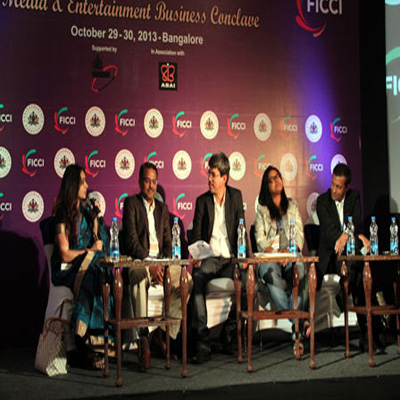
    BENGALURU: What good would a FICCI MEBC event be in Bengaluru without a discussion on the current status of regional TV, ratings, content and formats? The session moderated by indiantelevision.com CEO and editor in chief Anil Wanvari saw four personalities – TAM CEO L V Krishnan, Asianet and Star Suvarna Business Head Anup Chandrashekaran, TV serials director Shruthi Naidu and actress Malavika Avinash – talk about the evolving genres in the south TV market and the tussle that that the industry has with the TAM ratings.


    According to the FICCI Deloitte report, the south Indian TV industry was valued at Rs 13, 470 crore in FY 2013 and is set to grow at an estimated CAGR of 20 per cent over the next four years. TAMs Krishnan added that it also accounts for 20 per cent of national viewership. To top it all, south Indian viewers are glued to their TV sets almost 30 per cent more than their northern cousins. The former spend 150-200 minutes a day watching soaps, series, movies, drama and non-fiction as compared to HSM viewers who spend 100-110 minutes disclosed Krishnan.


    Kannada TV is in a strange predicament and its viewership is eroded because of the fact that the state shares its borders with others such as Tamil Nadu, Andhra Pradesh, Kerala and Maharashtra which means viewers in these regions watch TV shows in the languages prevalent in those states. To make matters worse, only 35-40 per cent of Bengalurus populace speaks Kannada. This despite, Krishnan is optimistic that Kannada TV will do well. It has grown by 25 to 30 per cent in the last five years in terms of engagement and the next four years will see the viewership increase by 20 to 25 per cent, he says.


    Chandrashekaran said that the south TV industry is experiencing changing consumption patterns. Fiction consumption is growing here as compared to HSM where non-fiction is taking over, he said. There has been de-growth of film consumption in the states of Karnataka, Andhra Pradesh and Kerala. Movies are unviable on TV today everywhere else except in Tamil Nadu, he said. We pay Rs 2.5 crore to acquire a title; but we spend around Rs 70,000 to Rs 80,000 an episode for fiction and we get the same or better viewership. Then, big ticket formats are also slowly spreading such as the Kannada and Tamil versions of KBC, he added. Then ETV produced Bigg Boss in Telugu and Kannada.


    Both Avinash and Naidu bemoaned the fact that budget restrictions in Kannada have led to creativity and innovation being stifled in the region. The protagonists in most shows are becoming younger – in their late teens or early twenties, which leaves limited scope for actors like us who have been around for 15 years, wailed Avinash. She, however, added that her Oprah Winfrey-like conflict resolution show has given her a good platform for her to exploit her creativity.


    Chandrashekaran said that the younger protagonist strategy is being resorted to because broadcasters are trying to draw in younger audiences – apart from the plus 45 year olds – to watch television. Krishnan pointed out that the broadcasters strategy is on the button as TAM Media research has shown that boys 14 and above tend to follow what their fathers are watching, mainly sports while girls follow their mothers and watch serials.


    Chandrashekaran said the economics of programming dictate that higher budgets for shows will work in a broadcast network scheme. If we can produce and amortise our costs over various languages like Tamil, Telugu, Malayalam and Kannada it will make our shows viable, he explained.


    Naidu agonised over the fact that Kannada broadcasters are increasingly resorting to making adaptations of successful Hindi shows rather than encouraging and experimenting with original stories from Karnataka. Chandrashekaran said that this was happening because there is a paucity of scriptwriters in the region and the novelists and literature writers from the state tend to look down on TV as below their creative dignity. We do a lot of interactions with our viewers and we only focus on filling whatever our focus group studies throw up as viewing need-gap. Avinash pointed out that emotion and drama work very well with TV audiences which is why adaptations of Hindi shows in the form of soap, drama and series are working on regional television.


    The topic also shifted to the credibility of TAM with her asking whether TAM data is rigged due to inconsistent ratings as compared to the popularity and visibility of shows. To this, Krishnan said that they have checks and balances in place to prevent any penetration or doctoring of the data. Yes, I am honest enough to say, one can reach out to our people meter sample, but we have policing mechanisms in place which will immediately penalise anyone who is trying to do that, he emphasised.


    Niche genres are missing in the south with most of the channels being GECs or film channels. But Chandrashekharan says that the potential to harvest niche genres is there.


    With the 10+2 ad cap coming in, we will see a lot of advertiser funded programs (AFPs) specially in Tamil Nadu because its base is huge, he said. I am very optimistic about our future and I can only see rosy pickings for everyone.

  • Kappa TV asks viewers to shoot an idea

    Kappa TV asks viewers to shoot an idea

    MUMBAI: First, it dared to go off the beaten track with a programming mix in four languages including Tamil, Malayalam, Hindi and English. And now, Kerala Mathrubhumi Group’s youth-centric music channel – Kappa TV – will telecast a new contest show for a month starting end-November.  

    The contest is about being creative with your mobile gadgets and though a date and time hasn’t been fixed yet, it will be a half an hour show with 24 minutes of content and 6 minutes of advertising during prime time from Monday to Friday with repeats over the weekend.

    Participants will be required to click/record a short film or photo gallery/music album and submit online to the channel, with entries of not more than 3 minutes’ duration. The second level will see 30 people selected from each category, whittled down to 10 each. Three winners will be chosen from each category in the third and final level, with prizes worth Rs 3.5 lakh distributed among the nine winners, who will be featured on Kappa TV. Of the three levels, the first has no particular theme while the second and third rounds will be more specific.

    “We want to see to what extent people can extend their imagination,” says Mathrubhumi TV CEO Mohan Nair, who is helming the eight-strong in-house team producing the show.

    What about the authenticity of the clips being received? Nair says they won’t know in the first round but for the next two rounds, a separate team will monitor the participants.

    While the show host and three judges are being finalised, it is certain they will be popular local personalities. Each episode, shot in Malayalam at the Mathrubhumi TV Studio, will feature six people demonstrating not only their creativity but also delving into their work, family and aspirations.

    Promotions are on since 22 October, and will go on till 21 November, involving the Mathrubhumi Group’s strong media line up of news and radio channels, newspapers and website, as also outdoor hoardings and college activities in the form of game shows.

    “The contest is open to all but we are getting the youth involved because they are very much in tune with mobile phones and they are also keen to be involved with channels. Our research revealed that not just students but also parents are watching Kappa TV,” says Nair.

    Not surprisingly, Kappa TV has 22,773 subscribers on YouTube while its Facebook page boasts 31, 632 likes. In keeping with the concept of the show, Kappa has roped in Idea Cellular as on-ground and on-air sponsor.

    Hope this ‘idea’ works for Kappa TV gets in youngsters as well as elders to spin their creative ideas.

  • Soaps – the violence within

    Soaps – the violence within

    Violence, subtle and physical, has permeated the soaps of the small screen, according to a recent study.

    In a monitoring study that spanned 30 episodes of various soaps on Star Plus, Sony and Zee in June 2002, the Delhi based Centre for Advocacy and Research found that there is a high presence of physical, verbal and psychological violence on screen. Most of this is directed at women. Marital discord, male female conflicts, male aggression and family honour are the reasons for the high quantity of violent acts on television, notes the study.

    During the seven day study, the CFAR viewers‘ panel also looked at regional language channels like Alpha Bengali, Alpha Gujarati, Asianet and Sun TV. In the monitored sample, the panel noted 10 scenes depicting domestic violence in which women were the victims and men the aggressors. The nature/act of violence was physical or verbal. However, the psychological impact of the violence was to a major extent borne by the female victims, the study avers.

    Whether marital discord, anger and frustration of the man in his professional life, a misunderstanding or the honour of the family, the women were always at the receiving end, notes the study. The relationship between the aggressor and the victim is seen as mostly marital or through marriage, but in a few instances, even a brother was an aggressor.

    The study also finds that women are often shown submitting to maltreatment and lacking the conviction to defend themselves. The ‘family court’, found the study, is a common occurrence. The woman is ‘accused’, judged and convicted by this ‘family court’ which consists of the woman’s in-laws. She has no recourse to any other agent, legal or otherwise.

    Although bigamy is illegal in India, it is often depicted – with the onus on the wives. It is dramatised in a sensational and voyeuristic manner, without any respect for or mention of the law.
    In many instances, male and female characters are forced into marriage against their wishes. This results in domestic violence or extra-marital affairs. As upholders of the family honour, women are always expected to place the family ahead of their personal aspirations, claims the study.

    Most of the viewers CFAR spoke to have said that a serial need not be violent in a bloody or in a destructive way without reason. Conflicts should be depicted in a ‘reasonable’ way and appropriate to the situation and not just to heighten the suspense and hook viewers. Violent situations are usually a way of creating excitement and expectations, viewers said.
    Citing examples, the study mentions Kasauti Zindagi Kay (Star Plus), in which Shivani, just married to Anupam, is slapped by him when she discovers a fraud he had committed. The new bride is shown howling when her brother visits her. The brother takes up the matter with her husband and her in-laws. But Shivani‘s in-laws don‘t intervene. Shivani folds her hands and pleads with her brother to leave.

    The CFAR study raises the point that while the wife is mistreated by her husband, she is made to apologise instead of being consoled or the husband being chastised for his behaviour. Such scenes show women as submissive to any maltreatment and lacking in the ability to stand up for their rights, the study says.
    In another episode of Kasauti Zindagi Kay, Kajol is threatened and emotionally blackmailed by her boyfriend as well as her family. The parents and her elder brother are against her alliance with the boy. When the elder brother catches her red-handed with her boy friend, he pulls her away angrily and takes her to home. She is brought to the ‘family court‘ where the brother screams at her and threatens her with dire consequences unless she behaves properly.

    Citing other similar cases, CFAR raises another issue – The ‘family court‘ is used in many serials like a “court martial”. The ‘accused‘ is judged and convicted by this ‘family court‘ which consists of her in-laws, without recourse to any other agent, legal or otherwise. Should such family courts be held and given the authority to judge an individual who has no one to fall back upon?

    In Sanjjhi (Zee TV), Amar Singh uses physical and verbal means to threaten both his wives and their families when the first one files a suit of bigamy against him while the second testifies against him. He taunts and threatens his first wife, Kanak, by reminding her of her inability to bear a child. CFAR in its study asks whether such violations of the law be depicted in such a dramatic, sensational and voyeuristic manner, without any respect or mention of the law, which clearly prohibits bigamy?
    In Hubahu (Sony TV), Aditi‘s husband roughly pushes her towards the door and asks her to leave the house because he feels that she is not allowing him physical intimacy. The study points out that though the serials did not project a lot of physical violence against women, there are many instances of extreme and repeated mental pressure, threats, screaming and shouting and anger directed towards women. Women were shown constantly under a lot of stress and anxiety, the panel felt.

    Tradition and societal pressures act as an aggressor in their own way, points out the study.

    Anamika in Kahaani Ghar Ghar Ki is shown to undergo tremendous mental and societal pressure in trying to decide between her role as a wife (which is to protect her husband at any cost) or to side with the truth (and thereby reveal his crime). At no point does any family member counsel her. In Kkusum, Kasauti Zindagi Kay, Tu Kahe Agar, the three leading women are shown to be under constant stress and mental pressure owing to either their husband‘s affair with other women or due to some familial problem. In Bhabhi, Tilak and Pushpa pretend she is his wife. In one scene, he pushes her towards the wall and warns her never to tease him.

    In Kasauti Zindagi Kay, Kamolika is under constant physiological stress because she suspects that her husband, Anurag, is still in love with the girl he wanted to marry in the first place.

    In all these instances and in other serials, the wife is placed under tremendous mental duress and even abuse because marriage is often founded on a misunderstanding or for some reason that is unacceptable to the man. Often her husband is in love with another woman and marries her under pressure from his family. What is supposed to be one of the happiest milestones in a woman‘s life, becomes a source of unhappiness and uncertainty and of future conflicts between the couple from the very first day of their marriage and justifies the husband‘s ill-treatment of the wife, the study notes.

    In Choti Maa..ek anokha bandhan (Zee Tv), Kasauti Zindagi Kay (Star Plus), the boyfriends of the female characters physically, verbally and psychologically carry out violence against them. Koyna in Choti Maa becomes the victim to physical abuse by her boyfriend who takes her to a pimp.

    In another example, an apparently progressive character who takes up cudgels for his sister in law against his own brother is also shown taking recourse in brute force. In Kahaani Ghar Ghar Ki (Star Plus), Om uses both verbal and psychological pressure along with his tough body language to force Anamika to reveal the truth about her husband raping a blind girl. She is reduced to hysteria in her pregnant state, and finally, breaks down. When she testifies in court, her husband Devan starts screaming at her. She cries and walks out of the courtroom all by herself. The CFAR study raises the pertinent issue of whether a family member be given the license to continuously pressurise or “torture” a woman on the justification that the ‘truth’ has to be established.

    Impacts –
    Several female viewers interviewed by CFAR observed that many of the so-called safe family serials, which hook the viewers with very identifiable situations and characters, have their share of problems. Not only is the depiction of men and women lopsided or one-dimensional, it is highly exaggerated, unrealistic and inconsistent, the study claims. Besides, some female characters are portrayed in an extremely unconvincing manner, especially when portraying a scheming, unscrupulous and dominating character. Men are portrayed in a highly negative manner too and such negative behaviour is often glorified.

    In many of these serials, extramarital affairs, bigamous relationships are shown as a matter of routine, and in some cases extremely casually. This gives children the impression that these are normal, acceptable or even desirable situations and expected adult behaviour, says the study. Mothers also found adverse impact on children’s lifestyles and their quality of life, and felt that children are getting increasingly prone to aggression. They constantly demand attention, exhibit severe mood swings and in some cases are prone to addictive habits. Finally, they behave in a highly precocious fashion, acting and behaving much older than they actually are, adopting adult postures and mannerisms. In most Indian homes, the mothers are at the receiving end of such behaviour.

    This presumes greater importance because research studies show that most of the children are hooked to adult programming. According to CFAR’s recent five-city study on Media Habits of Children, it was found that 50 per cent of the most favourite serials mentioned by the children in the age group of 6-12 years fell in the category of adult programming. Delhi topped the list of children viewing family drama with Shaktimaan (Doordarshan) the only exception.

    The study says that most soaps are exploiting reality to justify domestic violence – not normally condemned. Therefore, shown as ‘normal‘ within a family. The TV family is thus one in which violence is a day to day occurrence. No effort is made to correct this highly offensive and prejudicial behaviour. This justifies violence in real life and desensitises us to it and a future generation who will tend to believe that such personal liberties and violations are permissible in marriage and personal relationships, the study notes.

    Legal steps are seldom shown, the study notes. “Family courts” are held instead, in which might is the norm. Violations of individuals and their legal rights are openly shown. They allow a whole host of individual violations as if it is acceptable behaviour. People, including children, are shown eavesdropping, violating people’s privacy, inflicting physical and verbal violence, taking recourse to hate-filled speeches etc, as if it is their individual prerogative to abuse as long as the person you are abusing is within the family, the study observed.

    Finally, says the study, it gives men the power to resort to violent means to control their wives and teaches wives to submit to the violence in the larger interests of the family, which is at the core of these serials.

    The one week sample included –

    Serial   Number of episodes
       
    Kahaani Ghar Ghar Ki 5
       
    Kasauti Zindagi Kay 4
       
    Bhabhi 3
       
    Kkusum 4
       
    Saanjhi 1
       
    Kitne Kool Hai Hum 1
       
    Choti Maa 4
       
    Tu Kahe Agar 1
       
    Kyunki Saas Bhi Kabhi Bahu Thi 4
       
    Kuntee 2
       
    Hubahu 1
  • ‘Sony’s agenda is to focus on prime & then take on the rest’ : Sandiip Sikcand – Sony chief creative director take on the rest’

    ‘Sony’s agenda is to focus on prime & then take on the rest’ : Sandiip Sikcand – Sony chief creative director take on the rest’

    Sony Entertainment Television India’s chief creative director Sandiip Sikcand is the newly appointed man in the newly created position, tasked with the job of scripting a turnaround in the ratings fortunes of the network’s flagship channel Set. And it is a task cut out for the experienced hand from Balaji Telefilms, who has been the creative head for projects such as K Street Pali Hill, Kkusum, Kaisa Ye Pyar Hai and Kahaani Ghar Ghar Kii.

    After a four-year stint with Balaji working under the overarching leadership of Ekta Kapoor, Sikcand is tuning himself to a corporate structure, wherein he will be steering the creative aspects of Sony and also concentrating more on fiction. Geared to making a mark and getting the channel going, Sikcand talks about his plans and the road ahead in a conversation with Indiantelevision.com’sManisha Bhattacharjee.
    Experts:

    You are handling Sony, but the network also has Sab, so how do you differentiate and segregate the shows between the two channels?
    The operations between the two channels are different and very clear. Though part of the same network, the guidelines inscribed for Sab TV is poles apart from Sony. The latter is into hardcore soaps, melodrama, while the former is more youthful, catering to a more niche audience. It will be on Sab where the network can experiment with different kinds of concepts or shows. Sony will continue to offer a hardcore soap diet. It is broadly chalked out and chances of overlap are minimal.

    With Sony now in third position, what is the course of action that the channel is planning?
    Well, we have lined up new shows and are strengthening the 8 pm to 11 pm band. The shows will be rolled out over the next six months. We have tied up with Tony and Diya Singh for Jeetiya Hai Jis Ki Liye, which will star Renuka Shahane. We have Also tied up with the Anuj Saxena’s Maverick productions for a drama titled Akhand Sau Bhagyawati. There is Khamoshi, Durgesh Nandini, Viruddhwith Smriti Irani. A Variety show with Anupam Kher, which is a talk show.

    You are looking at launching only soaps, does that signify that reality will take a back seat?
    No, Sony has always maintained that reality will be an important component. Reality shows are likely to be relegated to Fridays, Saturdays and Sundays, while the rest of the week will see soapy dramas taking centre stage.

    We are presently running Jhalak Dikkhla Jaa. And will be launching Bigg Boss on November 3. In May, we have scheduled the launch of the third season of Indian Idol. We are also devising our own little reality show, which will be aired twice a week, which we are targeting to launch in February or March.

    I do not see Sony coming back to number 2 or number 1 position overnight

    So what is this reality show that is homegrown?
    I can’t speak much at the moment as we are yet to finalise on certain aspects of the show.

    Not being on a strong wicket as of now, and launching so many shows, isn’t it too much too soon?
    No. These will be spread across and launched in a phased manner. The emphasis is on the strengths Sony has already shown. It has been structured accordingly so we are confident we can succeed. The idea is not to shock the audience.

    Likewise, I do not see Sony coming back to number two or number one position overnight. It is process, which we have already started working towards. I am not saying either that all the shows are going to be stupendous successes. Some of the shows might not even work, we might have to pull them off and replace them with some other products. We are all geared for that. But it is a definitive step towards changing the number position of the channel.

    It is a tough battle for Sony, as it has to fight the leader Star Plus and Zee, which has bounced back after a long while?
    I think we have to fight it out with everybody. I have to even fight Sab, Zee Café, Star One, Zee Cinema, Star Plus and Sahara One. Every channel is competition. Sony is not going to be pulled back by its competitors. Sony is first going to stand up on its own feet and in that process if there is competition so be it.

    So what is the strategy you are looking at employing to help the channel stand up?
    There is no strategy. I think in the television and entertainment business, the essential ingredient is just entertainment. As an audience, if I find a show entertaining, whether it may be appearing on ABC or XYZ channel, I will watch it. The endeavour and the aim of Sony is to give wholesome entertainment; that’s the strategy.

    Besides looking at strengthening you prime band. Are you looking at the other bands?
    We will be focusing on the afternoon band and launching a slew of shows there too. As of now, we run movies for Saturday and Sunday, we may look at having movies only on Sunday. But that will be once we get our other line-ups fixed. The agenda really is to focus on prime and then take on the rest.

    What’s this obsession networks in general seem to have with reality shows?
    It is a trend. You can’t discount it. It has always happened in India. For example, in Bollywood, if you have one film of Nagin (snake) succeeding, there will be 10 other films based on the same. As I said earlier, Sony has always maintained that we will be doing reality shows, which we are and will continue doing.

    But, the point being that the ratio with be 80:20 (in favour of soaps). We will have specific reality show making sure that we do not bring in the fatigue factor and also that we do not overkill it.

    The channel will be shortly launching Bigg Boss. There are many who are skeptical about the chances of success in India of a show that is so in your face voyeuristic as Bigg Boss is? What makes you confident the Indian public will like such a concept?
    Well, we all have a peeping-tom somewhere, which we do not accept. But, the reality show Bigg Boss has all the elements that any other soap holds. We are confident that the success Big Brother has enjoyed (elsewhere) will be visible here too.

    I do not believe in bifurcating my programmes into reality or fiction. Eventually, it is all about entertainment. It is important to understand that if soaps give you a certain amount of interest, so does the reality show.

    The fact remains that reality shows are clicking and drawing in viewers and that soaps have always brought in audiences.

    So are you saying it is not reality vs soaps?
    All I am trying to say is that the kind of entertainment a Bigg Boss will provide is not to say that watch Bigg Boss and not Kaajjal. The shows provide you different elements of entertainment. The viewer has to be entertained. I do not think that the audience will say “I will not watch reality show because I never watch a reality show.” For the audience, what matters is entertainment.

    CAS is likely to change the dynamics of the television market? Your thoughts?
    Well, being on the creative seat, what can only be a deterrent for me is if I tell them that you have to pay more to be entertained?

    How do you view the whole general entertainment market?
    The whole television market has a lot to offer and the entertainment business is growing. The audiences will have an amazing offering to chose from in the future. Although we are growing rapidly, but by the time we grow to reach the standards that are followed outside, it will involve a lot of hard work. I believe across the line producers have to realize what television is all about and give a lot of importance to creativity. I think it is happening. Thus there is lots to look forward to.

    You were present at Mipcom. What were the formats that you enjoyed?
    Well, there was this Endemol game show where one can win a fixed amount of money for his entire life span. Another show that I enjoyed was a reality show where a girl has to spot an eligible guy out of three where you have a gay, one already taken and a single guy. It is a show that can never be made in India. But the concept was interesting.

    So have how many formats are you buying?
    We are still in the process of weighing the pros and cons. We have not yet locked any deal.

    Has the tie-up with Smriti Irani affected your channel’s relationship with Balaji?
    Yes, it has already affected it. But, I must say that I am proud to be a product of Balaji. I left the production house for some personal reasons. Reasons I would not like to go into.

    Now that I am with Sony, anything that I have to do, I will do for the betterment of the channel. Smirit had an amazing concept. So I see no reason why I should not do that show.

    In fact, Sony had been approaching Balaji for the last two months even before I joined. Ekta had her own reasons for not doing a show for Sony as she said that she is tied up somewhere else. But she is to do a show for Sab, for which she has time, which is great. That she has no time to do a show for Sony, is absolutely fine and acceptable. As and when she has a concept for Sony, all she has to do is dial my number.

    Today, Sony is third, Zee had been lurking in this position for long. Zee’s soaps have given them a fresh lease of life?
    The journey of Zee is very motivational. After seven years, it is really something to talk about. If Zee can do it, Sony can well do it. Competition keeps you going. I was the creative head on Kasamh Se and my interactions with Ashwini (Zee programming head Ashwini Yardi) have been great. It is very inspirational.

    In the current situation, with your experience is it a tough battle to manage a channel’s programming?
    It is a whole new corporate world. I feel at home. In this world of entertainment it is a combination of competitiveness and fun. I belief I too need my fair chance to prove myself.

    What is the road map for Sony for 2007?
    Well, all efforts will be towards bouncing back.

  • Star Plus seeks its break; Zee improves: Hindi GEC Q3 Study

    The Hindi General Entertainment Channel (GEC) space is back in the spotlight. Strategies, counter strategies, experiments and innovations enchant the market, though audiences remain cautious while deciding their staple programming diet.

    The ongoing churn owes a lot to the manner in which Subhash Chandra‘s Zee TV made its comeback to the reckoning. Because, this turnaround has forced the channel‘s rivals (both leader Star Plus and trailing number three Sony Entertainment) to re-think their strategies and hence, we have a real humdinger of a ratings battle going on these days. This exciting range of happenings has inspired Indiantelevision.com to examine the GEC arena a bit more closely, as it completes its 2006 calendar year‘s third quarter.

    Relative channel share- All Day, CS4+ HSM

    A first look at the data gives an obvious picture. Star Plus leads the tally, followed by Zee TV, Sony, Star One, Sahara One and Sab TV (Average market share data, All Day, CS4+ HSM, 1 July to 30 September, Tam).

    Star Plus, which maintained an above 50 per cent average when we did an April 2006 (All Day Part) analysis, has recorded an average market share of 46.1 per cent for the three month period (Average market share data, All Day, CS4+ 1 July to 30 September, Tam).

    Though the channel made its best efforts to improve its position through various new launches during this period, the market share score missed the 50 per cent mark in this period. In September, it even dropped below the 45 per cent mark for the first time since the KBC phenomenon rewrote Indian television history. From 45.9 per cent of July, the channel improved its position considerably to 47.8 per cent in the month of August. However, in September, the share recorded a slight drop at 44.9 per cent.

    However, Star One has recorded an improvement during this period, as compared to its April 2006 share. The channel, which struggled during the first half of the year due to affairs such as cable blackout in certain parts of the country, has now recorded an average channel share of 6.4 per cent, while the April score stood at 5.38 per cent. The channel is now banking on properties such as Nach Baliye 2, Paraaya Dhan and Kadvee Khatti Meethi to better its position by the end of 2007.

    “We have launched about three to four shows during this period including Nach Baliye 2, Saathi Re & Paraaya Dhan (Star One) and Antariksh, Karam Apnaa Apnaa and Prithviraj Chauhan (Star Plus) and the effort is to take on any kind of competition in any time band. Star Plus is not going to sit pretty on its relatively strong position. Now, the effort will be to constantly improve the performance. There will be no let off from our side on this front”, says Star India EVP content Deepak Segal.

    During this three month period, the number two channel Zee TV has actually improved its position – from an average market share of 19 per cent in April 2006 to an average of 22.9 per cent for the July to September period, according to Tam. The score reads like this: July 23.4 per cent), August (22.1 per cent) and September (23.3 per cent).

    “The turnaround started with Saath Phere and Kassamh Se and the kind of innovations and experiments we employed in our storylines have really contributed to this good performance. This way, we managed to get the audience flow. We have steadied our soaps. The launch of Betiyann has completed our soap range for the year and now the focus is on various other genres. Hence, we will have now programmes such as the mythology Raavan and reality show Cinestars coming up. So, the strategy will revolve around non-soap genres for the next phase,” says Zee TV programming head Ashwini Yardi.

    Sony‘s position hasn‘t undergone any drastic changes as the channel recorded an average market share of 12.5 per cent for the three month period as compared to its April 2006 score of 12.36 per cent.

    Though flagship channel Sony may be still struggling, but sister channel Sab has been making a slow and steady improvement, on the other hand. The channel which scored an average channel share of 3.04 per cent for April in the All Day Part has improved the score significantly to 4.9 per cent for the June to September period.

    Sahara One, which received an April ‘windfall‘ in terms of cricket telecast rights and scored an average market share of 10 per cent during that period, has now gone down in the chart. The channel has scored an average market share of 5.3 per cent for the July to September period in All Day Part.

    Rating Score Card – Prime Time

    Kyunki Saas Bhi… continues to be Star Plus‘ channel driver programme. The long running soap of Hindi television recorded its best rating of 14.17 TVR on 31 July, 14.31 TVR on 29 August and 13 TVR on 4 September. The channel has a fixed line up of shows occupying all the top four positions including Kyunki… and the shows are Kahaani Ghar Ghar Ki, Kasauti Zindagi Kay and Kahiin To Hoga. While in July, the fourth and fifth positions were occupied by Baa Bahoo Aur Baby and Kkavyanjali respectively, in August the positons went to special shows Nach Baliye 2 Muh Dekhai and Shaadi Ke Rang Bhabhi Ke. In September, Prithviraj Chauhan (best TVR 7.38) and Karam Apnaa Apnaa (best: 7.12 TVR) made it to the reckoning.

    Zee TV has three different soaps recording the channel‘s best ratings in the prime time in these three months. In July 2006, Saath Phere recorded the highest 7.32 TVR, while in August it was the Balaji Telefilms soap Kasamh Se (6.16 TVR). The top slot for the month of September escaped both the shows and went to the finals of Saregamapa Lil Champs (6.81 TVR).

    Zee TV‘s good show in the rating chart has a lot to do with the impressive opening week rating its new launches record these days. For example, Banoo Main Teri Dulhann recorded its best launch-month (august) rating of 3.5. TVR. And in September, Dulhann further consolidated its position with a best of the month rating of 4.37 TVR. Ghar Ki Lakshmi Betiyann‘s best of the month (September launch) rating stands at 4.99 TVR.

    For Sony, CID continues to be the channel driver with an average rating of 3.5 TVR for the three month period, according to Tam (HSM CS4+). In September, newly launched reality dance show Jhalakk Dikhla Ja has made its appearance in the top 10 chart for Sony. The show has filled the second slot in Sony‘s line up with its best rating of 2.95 TVR.

    Betiyann Vs Kahaani Ghar Ghar Ki + Naach Baliye 2

    The month of September also witnessed an interesting battle between Zee TV and Star Plus in the coveted 10 pm slot. The story was about how Zee TV unpacked its biggest soap launch of the year — Ghar Ki Lakshmi Betiyann and positioned it against Star Plus‘ unchallenged 10 pm property Kahaani…

    Giving the development to a total new twist was Star One‘s strategy to launch Naach Baliye 2 on the same day that Zee scheduled Betiyann‘s launch – on 25 September. Though Naach Baliye was slotted in the 8 pm post and it looked the launch had nothing to do with Zee‘s 10 pm introduction of Betiyann, Star had different plans in mind. Star One telecast a 2.30 hours special episode of Naach Baliye 2 on 25 September in order to let the celeb dance show‘s launch clash with the launch episode of Betiyann. Then on the other side, Star Plus had a spiced up episode of Kahaani…to counter the Zee TV soap.

    Now, let‘s see how all these three programmes finally delivered as per Tam ratings:

    The Star ploy of countering Betiyann with Naach Baliye 2 special episode worked well for the channel. Betiyann‘s launch ratings stood at 2.58 TVR, while Nach Baliye 2 opening episode recorded a rating of 4.86 TVR (CS4+ HSM). However, it looks like the ploy had backfired in Kahaani…‘s case as the soap could gather only 6.14 TVR for the particular day. (Kahaani… normally records a rating of about 8 TVR on an average).

    However, Betiyann recovered from the initial blow quickly and came up with an improved performance during the rest of the week: 3.24 (26 Sept), 4.18 (27 Sept) and 4.99 TVR (28 Sept). And the Betiyann figures also reveal Zee‘s success in giving a jolt to Kahaani… in the initial week itself. The Star Plus soap had recorded an average rating of 8.75 TVR in week 38 (17 Sept to 23 Sept). And in the week that Betiyann got launched, Kahaani..‘s average rating has slipped to 7.25 TVR, as per Tam.

    Post Script:

    So what is waiting the GEC market in coming months? One genre that is expected to make its presence felt during this period is Reality. Two big ticket reality shows, Sony‘s Bigg Brother and Zee TV‘s Cinestars, will be unveiled in November. Star One has just kicked off its Naach Baliye 2 and the show has competition from Sony‘s celeb dance show Jhalak Dikhla Ja. So the space will have not less than four reality shows engaged in an eyeball war with each other in this quarter.

    Strategy-wise, as Yardi has revealed, Zee TV‘s focus will be now on non-soap programmes such as Raavan and Cinestars. Star Plus is looking at the kids genre in a big way and has even accommodated a kids-oriented superhuman show Antariksh in its weekday 8 pm prime time band. The channel has lined up another kids show Lucky for the same slot on Saturdays. As Segal puts it, “We are looking to develop kids also as a key viewer segment of ours. Star has always been popular for its quality kids shows.” Sahara One‘s October-November plans will mainly revolve around the upcoming soap Solhah Singaar‘.

    As the market leader Star Plus is seeking a good break to go back to its old good days of undisputed leadership and Zee TV uncorking fresh concepts to win back its lost glory, the Hindi GEC space is going through one of its best times. Then we have international players such as BBC and Viacom (reportedly in talks with Sahara One for a stake in the channel) and then our own NDTV gearing up their general entertainment channel plans for the Hindi market.

    So the big question remains: Will all these high profile suitors be able to come up with path breaking concepts and innovative positioning strategies to help the market really expand further?

  • Star Plus announces Two-hour Diwali special programme

    Star Plus announces Two-hour Diwali special programme

    MUMBAI: This Diwali, Star Plus will bring its viewers a two hour episode – ‘Tanishq presents Diwali Dhamaka’ on 14 October Saturday from 7 pm to 9 pm.

    Diwali Dhamaka brings the Viranis, Agarwals, Lambas and all the other family members of the Star Parivaar under one roof, states an official release.

    The release adds that, the channel has also scheduled an Antakshri competiton between a group of boys and girls to spice up the proceedings.