Category: GECs

  • ‘Course correction will happen from a commercial, team management, and player angle’ : Hiren Pandit – GroupM ESP managing partner

    ‘Course correction will happen from a commercial, team management, and player angle’ : Hiren Pandit – GroupM ESP managing partner

    For franchisees the inaugural edition of the IPL has been a learning experience. The Hyderabad franchise is no different. While Deccan Chargers finished at the bottom of the table, the franchisee is confident that the investment will pay of in the long term. At the same time, the event was more difficult logistically and also physically than anybody imagined.


    GroupM ESP acts as a consultant for the Deccan Chronicle, which owns the Deccan chargers. Ashwin Pinto caught up with GroupM ESP managing partner Hiren Pandit to find out his views on the event


    Excerpts:

    How has the IPL experience been for Deccan Chargers?
    It has been a big learning curve. At the same time companies that did not get in will be furious at having missed out. The franchisees have all seen the potential of this event. We now know that this can be built up over the years. The IPL will be of the biggest benefit for those who want long-term gains.

    Overall what have the learnings been?
    There have been many. Sponsorship needs to be approached in a more effective manner. We were not able to do this earlier due to time constraints. Most of these deals have been for one year and so plans can be revised depending on what the team’s standing is. It is still early days. The way television has taken to it has been big. Next year, sponsorship rates will go through the roof.


    I believe that the IPL is looking for $ 7 to 8 million for ground co-sponsorship rights. Pepsi will go in for associate sponsorship as they want to block out Coca Cola. Each franchise and sponsor has had more than his fair share of learnings that will have to be put in place.


    A lot of course correction will happen. This will be from a commercial angle, team management angle, player angle.


    For the next three weeks people will lie low and detox from the IPL frenzy. Then they will start addressing issues. There will be a session with the IPL governing body to do a Swot analysis. Teams will look at their overall structure and check to see if all is right or if it needs to be re-looked at. Some problems may be common.

    What were the logistical challenges?
    The travel schedule was awful. I had no idea about the days. There was no concept of weekdays and weekends. It was just one haze of cricket matches and cities.


    Hats off to the players for performing. We played a match against Chandigarh. The next day we reached Hyderabad at 9:30 at night. The next day there was a match. Where is the time for player recovery? Players luggage also became an issue. It has to be at the airport. These logistics were more complex than had been first imagined.


    Then there is media pressure. Several people want to interview a certain set of players at any given point of time. This needs to be scheduled better.

    The trading window will be key but the guidelines are not clear

    For Hyderabad what have the learnings been?
    There have been many. Right from stadium management, which we managed well. The ticketing part was an experience. We were not sure initially as to whether we would have 46,000 seats or 38,000. The stadium was under construction. We had to keep in mind media sessions.

    Not just us, but everybody will handle this differently next time. We sold out tickets for many matches but we have to still understand the pattern in which ticket sales happen. With sponsors there was confusion due to outfits not being ready on time. For the first week we struggled to get a comprehensive photo of the team. Clothes designs and delivery were a challenge. It took us 15 days to do this. If we had time this would have been planned better.

    Is it fair to say that the ones who did well did not have big stars?
    I don’t think so. The ones who did well played as team. They looked up to one individual. Rajasthan looked up to Shane Warne. The passion with which they played as a unit was terrific. Dhoni inspired Chennai. If a team came together it struck.

    Did attitude play a role?
    Yes! There were some players who acted as though the IPL was a holiday. So the franchise had a problem. Some players who were in a high profile position prior to the event were stripped clean. The trading window will be key but the guidelines are not clear. Franchisees can get rid of some players and acquire others. The support staff structure will also be looked at in terms of coaches, physios etc.

    Why did Hyderabad not fare better?
    We had a weak bowling attack. We went on past performance. Some players let us down here. This put additional pressure on the batsmen to add 20 more runs. A team like Rajasthan had the perfect batting and bowling balance. With Delhi we always felt that if the top three batsmen failed we were in with a chance. However they constantly fired until the semi final. Sehwag and Gambhir got out cheaply and they collapsed against Rajasthan.

  • ‘India is a dynamic and an absolute key market for us’ : Anne Barnard – BBC World Ltd. managing director

    ‘India is a dynamic and an absolute key market for us’ : Anne Barnard – BBC World Ltd. managing director

    BBC World News is positioning itself as a tri-media news service with presence in TV, online and mobile. Editorially, it is looking to deliver more live up-to-the minute news reporting, across a broader news agenda.


    Eyeing India as an important platform, BBC has set up its regional marketing centre in Mumbai to tap into Pakistan, Bangladesh, Sri Lanka and Nepal.


    In an interview with Indiantelevision.com’s Nasrin Sultana, BBC World Ltd. managing director Anne Barnard unveils the changes that news media organisations have to prepare for in the convergence era and talks about the company’s growth plans in India.


    Excerpts:

    In terms of audience reach and viewership, where would you place BBC World News?
    BBC World News has a global weekly television audience of 78 million, up from 76 million in 2006. It reaches 159 million full-time households, up 8 per cent from 2006, and 276 million total households globally. In terms of hotel-rooms, BBC World News has increased from 1.4 million to 1.6 million.


    On the mobile front, the channel is available on 34 platforms. Mobile is the fastest growing out-of-home platform for us. In India, we have inked content deal with six mobile service providers in India. The list includes BPL, MTNL, Airtel, Vodafone, Spice Telecom and Idea Cellular.


    BBC World News is also present in 42 airlines and 57 cruise ships. 29 million unique users (excluding the UK) visit BBC.com every month.

    Where is the audience growth coming from?
    Over the past five years there has been a 50 per cent increase in weekly European audiences and a growth of 25 per cent in Asian viewership.

    Where does BBC World News stand in terms of ad sales revenue?
    In ad sales, we have seen a 20 per cent growth and overall revenue has seen double digit growth.

    In terms of revenue, what kind of growth has Asia seen?
    In Asia, we have achieved a growth of 20 per cent.

    How much does subscription revenue contribute?
    We have recently launched two channels in India. We are in pay mode in India. The subscription revenue has just started to kicking in. Most of the channels in South Asia are largely free. In Southern Europe, we do not get subscription revenue at all.

    What are the key markets in Asia for BBC?
    From our commercial and advertsing point of view our key markets are India, Singapore, Hong Kong, and Japan. We see huge potential in the Korean market, especially with our online product.

    In Asia, we have achieved an ad sales growth of 20 per cent

    Why did you zero in Mumbai as your first regional marketing centre outside the UK?
    BBC World News wants to create a much more definite approach to new online and mobile products of BBC News and its consumers. India is a dynamic and an absolute key market for us. The regional centre in Mumbai will focus on the South Asian market.

    After the launch of the first regional marketing centre outside the UK, will there be any change to operations in South Asia?
    There will be key changes to the operations in South Asia, with a series of appointments for the regional marketing centre in Mumbai.


    BBC Global News will bring together BBC World Service radio, BBC World News television, the BBC’s international facing online news services and BBC Monitoring.


    All South Asian marketing, communications and audience insight (MC&A) activities will be managed from Mumbai. The Mumbai office will continue to service BBC World News’ MC&A needs in India, but will now additionally manage World Service’s extensive activities across the region, including Pakistan, Bangladesh, Sri Lanka, and Nepal.


    Vaishali Sharma has been promoted to head of marketing & communications, BBC Global News, South Asia.


    Dezma De Melo, who was previously head of audience insight for BBC World, has been promoted to head of audience insight, BBC Global News, South Asia.


    De Melo and Sharma will work across consumer and trade activities and will, for the first time, provide in-region support for World Service business development teams.

    Are you making any changes in your programming mix this year?
    BBC World News is now positioned itself as a tri-media news service, delivering international news and information across multiple platforms – TV, online and mobile. Editorially, BBC World News is looking to deliver more live up-to-the minute news reporting, across a broader news agenda. It will also focus on providing more in-depth news and debate, plus global and regional news, business and sports programming including the popular World News Today with Nik Gowing, and India Business Report which target the Indian market.


    We plan to expand our family of World News Today programmes from five hours, to seven hours a day. In July, a new World New Today programme with Mishal Husain will be launched. Our weekends will be focused on delivering topical lifestyle and documentary programming.


    A number of BBC programme seasons are also planned over the course of the year and will be broadcast across TV, radio and online.

    What about ad funded programming?
    It is the advertisers’ creation and ideas that we further push as a funded programming. But in all such cases, the editorial rests with us. Ad sales team does not impose upon any story on the editorial; they only suggest ideas. After we receive all the entries for the ad funded programming, we select only six programmes which suit our programming code.

    Which is your best ad funded programming?
    Our best is World Challenge sponsored by Shell. This year we will be in our fourth season. In the fourth season, we have teamed up with Newsweek and Shell for the World Challenge, to identify and reward people and groups that bring economic and social benefits to their local communities.


    This year each nomination must fall under one of the following categories: community welfare and enterprise; health and education; sustainable farming; energy; water and environment.
    A panel of judges will then shortlist the entries down to the 12 best examples of community-based projects or businesses.


    BBC World News will then produce six 30-minute programmes profiling the 12 finalists showing how their projects and businesses are changing lives. These programmes will be broadcast to the channel’s global audience in October and November, and the channel’s viewers will be invited to vote online for their favourite project or business.


    Last year a record 942 nominations were received from 99 countries worldwide. Winning project T’ikapapa – a Peruvian project set up to bridge the gap between Andean farmers and the potato market – was presented with a $20,000 grant from Shell to further develop their initiative.

    Would such programming have been possible for BBC to undertake without the ad fund support?
    No.

    With pressure coming from commercialisation, what are the changes that BBC News has gone through recently?
    There are no such pressures. Editorial and sales are two different entities.


    How do you position BBC World News in an Indian scenario where there is a mushrooming of popular local news channels?
    Our aim is to present a different and unique point of view. We do not want to put ourselves under pressure of becoming a market leader in India.

  • ‘We are talking with global companies to set up a studio to develop content’ : Rohit Sharma- Zapak Digital Entertainment COO

    ‘We are talking with global companies to set up a studio to develop content’ : Rohit Sharma- Zapak Digital Entertainment COO

    With a war chest of $100 million (Rs 4 billion), Reliance Entertainment’s online gaming portal Zapak is looking to invest in infrastructure and expand even beyond the frontiers of India. The portal is going to launch in China, Pakistan and the UAE.


    In an interview with Indiantelevision.com’s Ashwin Pinto, Zapak Digital Entertainment COO Rohit Sharma talks about the global plans of the gaming portal and the steps that are being taken to reach there.


    Excerpts:

    When George Soros picked up a 3 per cent stake in Reliance Entertainment for $100 million, how big was Zapak as a valuation attraction?
    It was definitely a point of attraction as it is one of our oldest businesses. Since Zapak is one of the most successful internet companies in India, it gives value to investors. However, I cannot talk about valuations. The investment has helped us understand what our value is and how we can scale it up.

    How much is Zapak going to invest and what is the breakeven period?
    Since gaming is still at a nascent stage in this country, the breakeven will not happen before four to five years. We are investing $100 million over the next five years. In terms of operational expenditure, we have to invest in manpower, bandwidth and marketing activities. In terms of capital expenditure, we are investing in infrastructure as well as technology and content. Our costs will go up each year as the business grows.

    What are the lines of synergy Zapak is drawing with the other verticals of Reliance Entertainment?
    We have the movie business with Adlabs. A lot of content alliancing will happen here as we acquire content, produce and co-produce it. Zapak will also develop content based on these movies.


    There are strong synergies between Big Flicks and Zapak as both are located in the internet space. Bigadda is our social networking site and the audience is similar. So we do a lot of cross-promotional activities. And with our FM radio business, we use it as an advertising medium.


    Thus, if we take the gaming piece in the entertainment space, there is a lot of content syndication, retail syndication and advertising opportunities that are possible.

    What are the trends being seen in online gaming in India?
    Zapak is setting the trends here as there is no other online gaming player in India per se. We have a 70-75 per cent market share in terms of revenues and the number of users which is four million right now. We are also attracting good advertising and so we are witnessing an upwards trend.


    The learning for us is that the user wants compelling content. Therefore, publishers/developers like us need to invest in the right kind of content. The content, whether global or local, has to be high-end in terms of graphics, artwork, game play and design.

    The kids genre has done well for us. Zapak Girls also does well as do our action oriented games. But cricket is our biggest property

    Who comprises your TG?
    Surprisingly consumers have an equal ratio between the top cities and B, C towns and cities. Males in the age group 12-25 are the core TG. Having said that, however, youngsters below 12 are increasingly playing on Zapak. They are becoming stickier towards gaming.

    How does the market size for online games compare with mobile gaming?
    If you look at developed gaming markets like China, Korea and Vietnam, online gaming has surpassed mobile gaming. In countries that have a strong PC and online penetration, online gaming offers a better user experience. The best part about online gaming is that you can form communities that you cannot have on the mobile.

    Could you shed light on the strategy being followed to increase the product portfolio?
    When we started, we focused on casual games, which is the low hanging fruit. There is no point getting hardcore games to non-gamers. We brought in world-class casual games into the country. We work with over 50 studios globally.


    Having built a critical mass of gamers, we want to expose them to better content. We are going into the next phase which is to bring in casual hardcore games and hardcore games.


    Hardcore games are played in cafes and most cafes do not have the right PC specifications and infrastructure for this. This is why we started our gameplexes across the country. We will have almost 10,000 seats by the end of this year. We started our gameplex business in the big cities and towns. Now we have expanded to smaller places like Jaipur where we are also getting good traction.

    What have been your top five properties?
    The kids genre has done well for us. Zapak Girls also does well as do our action-oriented games. But cricket is our biggest property. You need to have a hybrid model. Generally, in business it is a 80:20 ratio where 20 per cent of content gives you 80 per cent of traction.


    However, in casual online gaming, the long tail is also important. A lot of people who come back, also want to check out the catalogue in addition to consuming the same content twice or thrice. Therefore, you need to build on your catalogue.

    Zapak has done activities to get women and children involved in gaming. What prompted this?
    The 12-25 male TG is still being built up. It has not been fully tapped. However, we have gone into early segmentation. We want every gamer in this country to relate with Zapak. We want to have a product and a service for everyone including a four-year-old kid. Therefore, we have been broad basing our offerings.

    Does Zapak also focus on game development?
    We have a small in-house team but we don’t do actual game development. We outsource it. We work exclusively with studios both in India and abroad. We drive the game ideation, concept and documentation. Then they do the rest. We work with our sister company Jump Games. We work with a Delhi-based company Saffronage. However, by and large, we work with studios outside India.


    There have been technological advances from a product point of view. Casual games are now incorporating social networking phenomena. Community features which are possible due to technology are growing in importance. The more features you have and the better customer relationship management setup you have, the better is the traction you will get.

    Is Zapak also looking at acquisitions in the gaming space?
    Yes! We will be aggressive in this regard both in India and abroad. Our targets would include game developers. In India, nobody has the competence to develop a game from scratch to finish. Besides acquiring content, we are also talking with global companies to set up a studio which could serve as a factory to develop content.

    What are the different revenue sources for Zapak and how important is advergaming in the mix?
    Advertising is our main revenue stream at the moment. Casual games are a portal business. We also get some revenue from our cafes and our cards business as well as events that we do. Subscription revenue will come in when we get into offering hardcore games. Users either purchase the product or subscribe on a monthly or a weekly basis. Our first product here will be three casual MMOG titles which will be launched in May and June.


    Could you give me examples where Zapak has done innovations for clients?
    With McDonalds, we did a deal where you buy a “Happy Meal” and get a product from Zapak. With Dominos, we did an innovation around a gaming pizza which was accompanied with goodies. We also tied up with MTV for games around their show Roadies.


    There is talk about how gaming is evolving into a social activity with massively multiplayer online games (MMOG). What is your view on this?
    If you look at countries like China and Korea, it is the stickiest social networking opportunity. Other entertainment options do not engage on a social level. In a virtual world, though, you live a virtual life. Already in our cafes, you see thousands of kids who live in a virtual environment.


    The BCCI is kicking off the IPL in April. Are you looking to work with the franchisees to develop properties?
    Yes! We are working with franchisees to develop properties that aim to reflect the sport.


    Does cricket work better than Bollywood for games?
    Yes! This is partly because cricket has gameplay built in. With film, you have to think about a strategy that can fit. We have worked with Bipasha Basu and Salman Khan. We also did successful games around the film Cash. However, even in Hollywood, games out of films are not generally successful. Spiderman was an exception, though. The challenge for us is to tailor Bollywood content so that it is suitable for gameplay.


    Apart from cricket, are you looking at other sports?
    We are looking at tennis and F1. We also feel that table tennis will translate well as an online game. We recently did a successful tennis game that Apollo sponsored. In terms of working with official sports bodies like Fifa, their licence fees are too high to justify a good RoI in India at this point of time.


    What is the way forward to combat the lack of skill sets in game development in India?
    Gaming has to be more widely accepted as an activity and profession. Companies from abroad have to come in and invest. We cannot grow this space all by ourselves.


    How did the concept of “Zapak Corporate Gamer Challenge” come about? Do you foresee a time when gaming will be viewed as a professional sport in India?
    We have a division called Zapak Live. This division organises conferences, events, tournaments, etc. We realised that a lot of casual gaming happens in the office. So it seemed like a good idea to take it to an offline level where corporates can take part. The response was good. I see no reason why gaming cannot be looked at as a sport in India a few years down the line.


    One of your recent marketing innovations revolved around offering people the chance to win cash by constantly playing. How was the response to that?
    It was a loyalty programme for the portal. For each activity done, participants got points. It was a three-week programme. We also do other marketing innovations. We had done a series of short films to create awareness for our e-mail product. We also do a lot of viral activities which have included spoofs on films like Sholay. We also did innovative stuff in loos in multiplexes.


    Finally, is Zapak looking at expanding abroad?
    We are looking to launch our portal in China, Pakistan and the UAE. You will see launches from the next quarter. Our USP is content that is not India-centric; it appeals to a global audience. It is a question of customisation from a language point of view.
  • ‘Challenge is to convert local advertisers’ contribution to 50 per cent from 25 per cent’ : Abraham Thomas – Red FM COO

    ‘Challenge is to convert local advertisers’ contribution to 50 per cent from 25 per cent’ : Abraham Thomas – Red FM COO

     Red FM has gone through a sea change after the Living Media Group sold it to a consortium including Hyderabad-based Value Labs, NDTV and Malaysia-based Astro. Then Sun TV Ltd. acquired a 48.9 per cent stake to build a national footprint, synergising with its South India operations.


    Red FM has grown over the period, claiming to hold top spot in the lucrative market of Mumbai. It has also grown its base in Delhi and Kolkata.


    In an interview with Indiantelevision.coms Nasrin Sultana, Red FM COO Abraham Thomas throws light on some of the pertinent issues that plague the FM radio sector in a Bajate Raho style.


    Excerpts:

    What do advertisers identify with the Red FM ‘Baajate Raho’ brand?
    Advertisers associate Red FM as a young, energetic and pro-active brand. Any product or brand that targets between the 15-35-year-olds likes to get associated with Red FM. Even the local advertisers in each city where we operate – Delhi, Mumbai and Kolkata – are putting money on us as our content is wholly local.

    What about the listenership growth at Red FM in the recent past?
    The Red FM brand has been created with our innovative content and our ‘Bajate Raho’ attitude. We have moved from just being a radio brand to a FM station. Listeners identify Red FM as a station of expression. We have also ventured into TV. Our annual on-ground Bajaate Raho awards is going to air on Sony Entertainment Television.


    In terms of listenership, we have been consistently in the number one spot in Mumbai for the last seven to eight months. In Delhi we were a bit behind. Now we have climbed to the number two spot there. In Kolkata, we are the only station which play only Bollywood superhits unlike other FM stations which have Bengali music too.

    With Sun TV Ltd. picking up a stake in Red FM, what has this meant at the operational level?
    In the operational level, there has not been much change. In the ad sales front, the network is able to sell a national package to any advertiser.

    FM broadcasters are seen complaining about advertisers’ preference of TV and print over FM radio. Has it improved over the years?
    Advertisers have gradually started to realise the potential of the medium. The industry has seen a two-way expansion – growth from existing markets and new geographies with FM phase II expansion. In the last fiscal, the FM industry has expanded to deep pockets of the country. Definitely this attracts advertisers as FM radio is seen as an innovative mode of advertising in the smaller towns.


    In Red FM national advertisers pull 75 per cent revenue while the local advertisers constitute the rest. The big challenge is to convert the 25 per cent into 50 per cent. Only then can the FM radio sector expand its share in the overall ad pie which currently stands at 3.4 per cent.

    Has the launch of Ram (radio audience measurement) made any impact since advertisers can now have data to back up their spend?
    Unlike the TV industry, advertisers and FM broadcasters are not using Ram figures on a week-on-week basis. But a 4-6 week data provides a clear trend which we use to pitch to advertisers. Besides we use the trends which come out of time spend, cumulative and Tarp (target audience rating point) data to design and conceptualise our shows. They indicate content stickiness and the profile of the audience.


    The Ram figures have demystified a myth that we most often had. Pre-Ram, we neglected the weekend slot thinking that listenership is slender. Now we are concentrating on the weekend slot as well. The Ram figures clearly indicate that there is a strong listenership population even on weekends. Earlier when there was no data to refer to, most of the FM stations played back-to-back music with no jock talk.

    What are the other trends that the Ram figures indicate?
    Listeners start stepping in from 7:30-8:30 in the morning. This increases gradually, so much so that it beats TV viewing audience. But after 1:30-2 pm, listenership slides down. The 2-5 pm band faces a tough competition from the TV audience as during this time most of the general entertainment channels (GEC) have original content in the afternoon band. Radio listenership reaches its peak after 5:30 pm.


    There was another believe among us that highest listeners come in from the car listeners. However, Ram data proves this wrong as there are few listeners on the drive. Most of the listeners come in from mobile and personal set listening.

    Are you content with the Ram week-on-week data or you wish for some improvisation?
    Yes, it has been useful. At least something is better than nothing. We were not able to use the data of Indian Listenership Track (ILT) as it was out only on a quarterly basis. It was difficult to use the dated trends. The Ram figure is a good indicator. The best method in this connection is the electronic meter of mapping listeners. Only a few countries use that methodology as it is very expensive.


    The ideal thing to do in India is to have three different methodologies in three different types of market. The small markets can have Day-After-Recall (DAR) methodology, the big markets can use Daily Diary methodology while the metros can depend on Electronic methodology. But the Electronic methodology is not feasible in India as it is very expensive.

    The Indian Premier League (IPL) had its devastating effect on GECs and multiplexes. Has the FM industry felt the heat?
    IPL has been beneficial for us. Red FM is the official radio partner of Mumbai Indians IPL team. To cheer up the team, Red FM turned into Blue FM for one day. Red FM has woven both content and contest around cricket to promote the team. Vinod Kambli is our special cricket expert. He does a cricket review of the last day’s match in a humorous way.


    We also had a contest where the winners were taken to one of the matches when Mumbai Indians was involved. The winners were taken in an open bus to cheer the team with Red FM’s RJs.


    With innovation in content and different contests, there has been a spike in the listeners. But I can’t say for sure if this has been primarily because of IPL because school and colleges are closed for vacation. During this time of the year, we have spikes in listenerships. But we do not have corresponding figures as Ram was not available last year during this time.

    Is the Association of Radio Operators of India (AROI) pressurizing the government to take any decision on the issue of music content pricing?
    AROI is a new body. We have many an issue out of which pricing of music is one of them. I believe through AROI the matter will be sorted out.

    As one of the senior VPs of AROI, what do you think could be the possible solution?
    The FM industry needs a single leadership to sort out things. Large stations can pay more for music. The charge should vary according to category of the stations like A, B, C, D, E.


    The other could be if there is a revenue sharing model between the FM station and the music company.

    What are the other areas that AROI is concentrating on?
    Apart from the music rights issue, AROI is working upon methodology of listenership and finding new talent in the industry. With the expansion of the market, there is talent crunch which every station is finding difficult to address.

    How do you see Trai’s recommendation of allowing 49 per cent foreign equity in FM radio sector?
    It is a welcome move. The FM industry will see a growth with foreign players taking interest in the local medium.

    Do you think that the FM industry will see a change once news is allowed in the FM broadcasting as recommended by Trai?
    Yes, it will bring change to the industry but not to Red FM. Red FM is a total entertainment station for the masses. But there may be some operators who could position themselves as news FM stations to beat the cluttered market.
    How do you see Trai’s recommendation of multiple licensing in the same district?
    It would be a wonderful thing for the FM industry. Differentiation will come in after multiple license is allowed. It will pave way for niche stations. In the present situation very few stations dare to go the niche way as it fears losing a chunk of listeners. But with multiple licensing, stations can experiment a lot adding to the growth of the industry.
    Which are the different platforms you are experimenting with to build brand awareness?
    We have done good work in the brand activation front with our Red Activ team. We have expanded our footprint in the mobile vertical too by our exclusive tie-with Mobile2win. We syndicate our properties like Kamla Ka Hamla and Angry Ganeshan. Mobile2Win has a tie-up with the telcos by which subscribers can download our properties as ring tone, caller tone etc. But good revenue is yet to come from this activity.
  • ‘Asia contributes 25-28 per cent of our ad revenues out of which 10 per cent comes from India’ : Jonathan Davies – CNN International exceutive VP ad sales

    ‘Asia contributes 25-28 per cent of our ad revenues out of which 10 per cent comes from India’ : Jonathan Davies – CNN International exceutive VP ad sales

     As the television landscape in India gets more fragmented, channels try to come up with customised solutions for clients by trying to understand their business requirements better. Such is the case with CNN International.


    CNN says that more revenue is coming out of India, particularly with local companies going global. The tie up with IBN has also been a big help in this regard.


    Indiantelevision.com’s Ashwin Pinto caught up with CNN International executive VP ad sales Jonathan Davies to find out more about the international news network’s prospects in India.


    Excerpts:

    How has CNN International fared over the last couple of years?
    We have fared strongly. In the last five years, we have recorded double digit growth. There aren’t many channels operating in mature markets that have seen this kind of growth level.


    There are three key drivers for us. Our digital businesses have grown rapidly. The website has been able to monetise eyeballs; we are also seeing growth in developing markets like in Asia, Africa and Middle East; the area of sponsored content has also grown in terms of collaborative partnerships.

    In terms of CNN’s overall ad pie how much do Asia and India contribute?
    About 25-28 per cent of our revenue comes from Asia, out of which India contributes 10 per cent. This has seen a huge growth over the last five years. India used to contribute two per cent of the revenue from Asia.


    In the Asian market, CNN International is seeing quick growth in Japan and Korea.

    How has the tie-up with IBN helped CNN in India?
    It increases the profile of the CNN brand among the Indian advertisers. The IBN deal was not designed to be a huge revenue earner but to establish brand saliency. Advertisers in India have become more familiar and comfortable with CNN as a result of our alliance with IBN.


    As more Indian companies want to be present on the world stage, they require a global platform to reach out. We can provide the global platform. Already you have a situation where the Tatas have bought out Jaguar and Land Rover. The more this happens, the more CNN will benefit in the coming years.


    Besides manufacturing and consulting, Indian companies in sectors like BPOs are moving up the value chain globally. We are looking to tap these sectors.

    Which are the key advertiser categories for India?
    Tourism is one of the key categories. We are also looking to tap conglomerates like ABG. Airlines are also important as they are looking to go global. However, India is still an under-developed market for us. But through the CNN IBN tie up, we are laying the foundations for a market that will take off in the coming years.


    India will follow a similar pattern like the Gulf States. Over the five years Abu Dhabi, Dubai, Qatar and Bahrain have seen huge growth in terms of clients.

    Apart from travel and tourism, which are the categories that are emerging in Asia?
    The financial segment, consumer electronics and airlines like Singapore Airlines are growing.

    India is still an under-developed market for us, but through the CNN IBN tie up we are laying the foundations for a market

    The Indian market is getting more fragmented with a plethora of launches in the news space and other genres. How has this impacted CNN?
    Fragmentation works in our favour. With the marketplace getting more confusing, clients tend to go to those places that they know and trust – like CNN. Our levels of churn have gone down. Rolex has been with us for 11 years. Cathay Pacific has been with us for 15 years. We also add new clients in different parts of the world, which is encouraging for the future. Trust is becoming an increasingly valuable commodity for brands. I am not just talking about news channels here. It also applies to governments and the financial sector, among others.

    Besides the ‘Eye On India’ initiative, is CNN International looking at more local Indian content that would allow you to attract more advertisers in the sub-continent?
    It is not necessarily that we will do only those stories that gets revenue for us. We highly place value on interesting stories. India is an interesting country. We have invested in more newsgathering resources in India. We have got people in Chennai. Now that we have more people in India we can generate more stories from this country.


    Currently we are doing an Eye On initiative. This will focus on in-depth stories from India. Investment companies will tie up with us for this initiative.

    One major initiative from CNN International was the launch of the Task Group late last year. What was its purpose?
    The travel and tourism sector is important for us. The aim is to offer expertise to any client in that industry. We give them the tools and ammunition to make their campaigns more effective. We work in a consultancy role so that a travel board can explain to their state about why they are taking marketing steps. They can explain that an ad showing beaches will create economic growth. We help film commercials for tourism organisations.


    We have worked with the Indian ministry of tourism. We helped them expand their business and offerings in other regions. In the latter part of 2006, we had in an initiative to promote India around the world in association with India’s ministry of tourism, produced a series of six advertorials.


    The vignettes aired for several months. We look at a country and understand the dynamics of their business. We then help them market it better.

    From a brand building perspective how important was CNN’s eco-tourism event in India in December?
    The environment has been the key theme in CNN programming for many years. Countries wanted to know more about eco tourism and it’s potential. Our event helped educate state tourism ministers on what eco tourism is all about.


    Horizons 2007 was organised in conjunction with ministry of tourism. We got local and international experts offering their views. Next year we will be doing an initiative around the infrastructure business, which is related to tourism. The event will also be held in India.

    Could you shed light on innovations done with clients that go beyond the 30-second ad spot?
    With Nokia we did an initiative that spanned different platforms. Phones of our journalists had a Nokia widget, which could be tracked on our site as they traveled across the world. Journalists submitted blogs from their locations. This was a marrying of technology with our editorial interests. We have worked with Suzlon to embed their brand in our environmental solutions content. The perception and understanding of this company has gone up as a result.


    We have a show called Principal Voices, which is sponsored by Shell. It looks at developmental issues around the world. We bring experts whether it is education or environment or in other areas from around the world to have a debate.

    How has CNN changed in regards to perception among clients?
    If you go back to a little over a decade, people felt that CNN offered an American view of the world. Research shows that perception about CNN has changed. It is now seen as a channel that offers a global perspective. We offer programming from around the world. While our CNN US network is a strong resource, we use it only when relevant like the US Elections. Clients see that global issues like credit crunch and food crises are tackled in an objective manner with multiple perspectives, which attracts viewers.

    Is CNN packaged with the other Turner channels or is it sold separately?
    No, we work with our sister channels in other areas but not in advertising. That is because the CNN audience is very different from the audience of the other Turner channels. The news audience tends to be more upscale. Other Turner channels get clients who are more mass market focussed.

    Does CNN do roadshows, events for clients?
    Yes, we do. However we try to make it more client-specific as opposed to exposing them to the whole world of CNN. We are introspective. We look at our business offerings and see how clients can benefit from being associated with us. We try to show people what we can do as opposed to telling them about our capabilities.
     

    We did an initiative with the Clinton global Initiative a few years back. We did a film on this and invited clients to watch CNN in action and see the kind of people that the CNN brand can bring together. Clients met Bill Clinton, which was a good endorsement for CNN.

    Now social media sites like Youtube and Facebook are competing with traditional media for eyeballs and ad revenue. How is CNN adapting to this?
    We launched ireport.com earlier this year. It is a separately managed organisation, which allows any viewer from around the world to upload video programming. This is a viewer-moderated initiative. They can discuss key issues. The best ones that are done by citizen journalists are put on CNN.
  • ‘We’re not going in with a pistol, we’re going with a cannon’ : Rajesh Kamat – Colors CEO

    ‘We’re not going in with a pistol, we’re going with a cannon’ : Rajesh Kamat – Colors CEO

     Rajesh Kamat, CEO of Viacom18’s Hindi GEC Colors, has a clear mandate – to ensure his upcoming channel a position amongst the top 3 players in the category within a year of launch.


    In a genre where Colors is the 10th entrant, Kamat has his task cut out and will have to bring to bear all the experience he garnered in earlier stints as MD of Endemol India and senior VP commercial & business planning at Star India.


    Speaking to Indiantelevision.com, Kamat gives his take on the whys and wherefores of the most expensive channel launch activity ever undertaken by a Hindi GEC.


    Excerpts:

    What would you term as the core TG for Colors?
    While we propagate programming that appeals across, if I have to specify a core TG, 15 to 34 is a number I would peg ourselves on.


    In a GEC, the 15 to 34 is what gets you your first one third. The 25 + is where the loyal audience starts. What we’re doing is, we’re getting the early adaptors and the initiators in the first phase. Once we get that, we’ve made our entry into the single TV households. That’s when you start consolidating. And the consolidation phase is actually your 25+ female. Though males would come in, that consolidation phase would focus on the female.

    That aspect of your programming focus is not reflected in either Fear Factor or in Mohe Rang De, the two shows that have been showcased thus far?
    Not right now. What happens is, with these differentiated and disruptive programmes is that you lock in your first eyeballs. With big movies as well.

    So you will have a big band for movies?
    Absolutely.

    But where will they come from? Isn’t the market more or less locked in as far as movie titles are concerned?
    These will be new ones. Now the market is moving towards syndicated movies – first airing, second airing, third airing… So there are quite a few lots floating around.

    Your entry into viewer mind space will therefore be with these tent pole shows and movies?
    I would not say entry into mind space. But the invitation card to viewers, if I can put it this way, would possibly have highlights on these. Because these are the ones that will actually draw the attention of the early adaptors and initiators.


    But while doing this, we will have the conventional shows that we believe will compete in the long running rating game.

    Audience flow at an earlier point used to be from a Kasautti… to a Kahaani… and then on to a Kyunki. Because they (the majority) liked the same kind of shows. Those days are gone

    Will you be putting out your big movie titles in this six month window?
    Absolutely. Be it big ticket reality shows, be it events, be it movies; that’s where you’ll get the sampling. As for differentiated content, it would be a Mohe Rang De, typically.


    We see it that 300 GRPs is the target. But it is all this activity in the initial six months that will give us the 100 GRPs (base to build on).

    How will you crack the balance 200?
    Once you cross 100, it is all about adding 3, 5, 10 GRPs week on week That is what will take time. This is not a T20 game.

    Isn’t that something that all the channels in the chasing pack (to Star Plus and Zee TV) have failed to crack? How to cross the 100 GRP barrier?
    Imagine is three-four months old. I take it as a compliment (to them) when somebody tells them that they can’t go beyond a 90 or a 100. To get to a 90 was not simple. A Star One with all the clout of the Star network behind it opened with a 19 GRP, 9X was 20. Imagine opened at 55, and went to 89 in a short time. But from now on, the growth will be slow.

    Which raises the question for you? These past three months has seen Imagine make a fast take-off and 9X slowly and surely build its story. That means among the new entrants two have already succeeded and are fighting it out for the third position. And way above them we have the strong number 1 and 2. Is that how you’re looking at it in terms of the distance you have to cover?
    Not quite. It is not necessarily going to be a 2 + 2. It could well be a 1 + 3. If that becomes the game, the difference between a 300 and a 150 might grow larger. And Star might gain back whatever its premium was, if at all. That remains to be seen.


    But if we have such a scenario, the balance three, 150 and 300, or 150 and 100 or 150 and 120 there’s a game. Two players at 120 each and one player at 80, is better than one player at 150.


    Again, this whole game is about sustenance. It’s financial investors versus strategic investors. What is the mindset? Are you looking at ‘first year I have to extract this much money’?

    You’ve identified six months as the time frame to embed yourself in viewer mind space. That all three new entrants might succeed is not a scenario that most experts have even considered, let alone thought possible?
    If you take the US as an example, three networks used to account for 90 per cent eyeballs. Today the same three networks get 35 per cent eyeballs.


    Even in India, where people used to talk about 70 per cent of the audiences flowing from one show to another, is a thing of the past. Now, there is nothing like saying I go from this show to this show on the same channel. It doesn’t go vertical. You actually migrate between channels based on the shows you like. That’s how the viewership pattern is going.


    And it’s not also as if the same person in the same household is watching. You’re aggregating different types of eyeballs. There is no linearity in terms of audience flow.


    Audience flow at an earlier point used to be from a Kasautti… to a Kahaani… and then on to a Kyunki. Because they (the majority) liked the same kind of shows. Those days are gone.

    So if we were to draw a one liner on why players like yourself believe you are not too late getting into this game, it would be because linearity in terms of watching schedules are a thing of the past?
    Absolutely. People will watch shows and come in and go out. That’s what it is and that’s what we’re moving into as a market.

  • ‘We’re not going in with a pistol, we’re going with a cannon’

    Indiantelevision.com’s interview with Colors CEO Rajesh Kamat


    We’re not going in with a pistol, we’re going with a cannon

    http://www.indiantelevision.com/images18/rajesh_kamat.jpg

    Posted on 12 May 2008


    Rajesh Kamat, CEO of Viacom18’s Hindi GEC Colors, has a clear mandate – to ensure his upcoming channel a position amongst the top 3 players in the category within a year of launch.

    In a genre where Colors is the 10th entrant, Kamat has his task cut out and will have to bring to bear all the experience he garnered in earlier stints as MD of Endemol India and senior VP commercial & business planning at Star India.

    Speaking to Indiantelevision.com, Kamat gives his take on the whys and wherefores of the most expensive channel launch activity ever undertaken by a Hindi GEC.

    Excerpts:


    What would you term as the core TG for Colors?
    While we propagate programming that appeals across, if I have to specify a core TG, 15 to 34 is a number I would peg ourselves on.

    In a GEC, the 15 to 34 is what gets you your first one third. The 25 + is where the loyal audience starts. What we’re doing is, we’re getting the early adaptors and the initiators in the first phase. Once we get that, we’ve made our entry into the single TV households. That’s when you start consolidating. And the consolidation phase is actually your 25+ female. Though males would come in, that consolidation phase would focus on the female.


    That aspect of your programming focus is not reflected in either Fear Factor or in Mohe Rang De, the two shows that have been showcased thus far?
    Not right now. What happens is, with these differentiated and disruptive programmes is that you lock in your first eyeballs. With big movies as well.


    So you will have a big band for movies?
    Absolutely.


    But where will they come from? Isn’t the market more or less locked in as far as movie titles are concerned?
    These will be new ones. Now the market is moving towards syndicated movies – first airing, second airing, third airing… So there are quite a few lots floating around.


    Your entry into viewer mind space will therefore be with these tent pole shows and movies?
    I would not say entry into mind space. But the invitation card to viewers, if I can put it this way, would possibly have highlights on these. Because these are the ones that will actually draw the attention of the early adaptors and initiators.

    But while doing this, we will have the conventional shows that we believe will compete in the long running rating game.


    Audience flow at an earlier point used to be from a Kasautti… to a Kahaani… and then on to a Kyunki. Because they (the majority) liked the same kind of shows. Those days are gone


    Will you be putting out your big movie titles in this six month window?
    Absolutely. Be it big ticket reality shows, be it events, be it movies; that’s where you’ll get the sampling. As for differentiated content, it would be a Mohe Rang De, typically.

    We see it that 300 GRPs is the target. But it is all this activity in the initial six months that will give us the 100 GRPs (base to build on).


    How will you crack the balance 200?
    Once you cross 100, it is all about adding 3, 5, 10 GRPs week on week That is what will take time. This is not a T20 game.


    Isn’t that something that all the channels in the chasing pack (to Star Plus and Zee TV) have failed to crack? How to cross the 100 GRP barrier?
    Imagine is three-four months old. I take it as a compliment (to them) when somebody tells them that they can’t go beyond a 90 or a 100. To get to a 90 was not simple. A Star One with all the clout of the Star network behind it opened with a 19 GRP, 9X was 20. Imagine opened at 55, and went to 89 in a short time. But from now on, the growth will be slow.


    Which raises the question for you? These past three months has seen Imagine make a fast take-off and 9X slowly and surely build its story. That means among the new entrants two have already succeeded and are fighting it out for the third position. And way above them we have the strong number 1 and 2. Is that how you’re looking at it in terms of the distance you have to cover?
    Not quite. It is not necessarily going to be a 2 + 2. It could well be a 1 + 3. If that becomes the game, the difference between a 300 and a 150 might grow larger. And Star might gain back whatever its premium was, if at all. That remains to be seen.

    But if we have such a scenario, the balance three, 150 and 300, or 150 and 100 or 150 and 120 there’s a game. Two players at 120 each and one player at 80, is better than one player at 150.

    Again, this whole game is about sustenance. It’s financial investors versus strategic investors. What is the mindset? Are you looking at ‘first year I have to extract this much money’?


    You’ve identified six months as the time frame to embed yourself in viewer mind space. That all three new entrants might succeed is not a scenario that most experts have even considered, let alone thought possible?
    If you take the US as an example, three networks used to account for 90 per cent eyeballs. Today the same three networks get 35 per cent eyeballs.

    Even in India, where people used to talk about 70 per cent of the audiences flowing from one show to another, is a thing of the past. Now, there is nothing like saying I go from this show to this show on the same channel. It doesn’t go vertical. You actually migrate between channels based on the shows you like. That’s how the viewership pattern is going.

    And it’s not also as if the same person in the same household is watching. You’re aggregating different types of eyeballs. There is no linearity in terms of audience flow.

    Audience flow at an earlier point used to be from aKasautti… to a Kahaani… and then on to a Kyunki. Because they (the majority) liked the same kind of shows. Those days are gone.


    So if we were to draw a one liner on why players like yourself believe you are not too late getting into this game, it would be because linearity in terms of watching schedules are a thing of the past?
    Absolutely. People will watch shows and come in and go out. That’s what it is and that’s what we’re moving into as a market.


    Therefore, whether addressability kicks in or not to a significant extent in the next two years is not a deterrent to any of you?
    No.

    See, there is no GEC that has shut down. Can you beat that?


    Which brings me to the point that in today’s scenario we have carriage and placement costs as a more than significant overhead, which all of you now club as part of marketing expenditure. There is pure marketing expenditure, ground marketing expenditure…?
    Distributor cost. Technically, if we were an FMCG, it would be the distributors’ charge.


    In today’s market, just for these two elements, we’re talking of a Rs 1.2 billion budget. And it’s even more than that in your case. So let’s say Rs 1.5 billion is set aside for marketing and distribution. Now you have yourFear Factor, which is a 26-episoder, right?
    16.


    Ok, 16 episodes. The cost of which, in that case, would be nearly Rs 400 million; all of which appears to be adding up to the most expensive GEC launch India has ever seen?
    That is with Akshay (Kumar)’s value. And that too, Akshay’s quoted value in Mumbai Mirror. That’s not the real value. What I will say is that it is higher (per episode) than what others in his league are getting but it is not something that we’ve bound ourselves with.

    You must understand that this is not one of those 100 episode deals. We’ve done a clear series deal. So the values are also cost effective. It’s not something that is over the top.

    You talked of a launch cost. I see it a bit differently. How much would you buy a movie for. Typically in today’s market something like a Welcome would cost Rs 7-8 crore (Rs 70-80 million) – for one plus 12 airings. You buy three Welcomes, you air it over three weekends, game over. And you’ve already sunk in Rs 24-25 crore.

    Now let’s examine our investment in Akshay for Fear Factor. Akshay is not just the host of the show, but also the face that will break through the clutter and get viewers to notice our channel when we launch. That is what an Akshay does for us.

    In that sense this is not just a programming investment, but a marketing investment as well. This kind of a launch stunt, actually lasts you and first things first – you’ve entered the house, you’ve entered the mind space.

    Akshay’s coming on TV was the first one. He’s coming on Colors is the second one. These are overlaps. Distribution overlapping with marketing; marketing overlapping with content.


    Speaking of programming, when will your bread and butter offerings roll out?
    That will start from Day 1. We’re giving enough time for the consumer to latch on to our offerings.

    Of course, we’ll be adding on a few shows as we go on.


    If you are the tenth player and you have to make a mark and you have a parentage of a Network 18 and a Viacom, will the extra Rs 500 million as launch costs hurt you? I don’t think so


    When you launch in July, how many hours of prime time programming will you have?
    Three-and-a-half to four hours is what we’ll be having.


    So you’re launching with a four hour prime time weekday strip, a solid weekend line-up and a strong movie slate. That’s really big bang.
    Weekend would not be out and out blast but more in a phased manner. But yes we would have weekend offerings.


    Which means you will more or less have a complete menu offering from Day 1?
    Correct. We’re not going in with a pistol, we’re going with a cannon.


    Doesn’t an all or nothing approach leave you that much more vulnerable? A phased build up does allow more room for manoeuvre one would think.
    Let me flip that at you. A typical investment plan for a Hindi GEC launch would be what? Some Rs 4-5 billion? A tighten the belt, so-called smart investing plan versus a lavish, exorbitant entry would be what? A Rs 250-300 million gap, or a Rs 500 million gap, broadly?


    More like a Rs 1 billion gap.
    Not that much. Because you’d have phased up investment later on rather than in the six-month time frame that we’re looking at for Colors. Now let’s take a perspective of a typical business. It looks at a three to five year break even. Over a five year period, will that Rs 500 million hurt you? That’s where the strategic investor comes in.

    And if you are the tenth player and you have to make a mark and you have a parentage of a Network 18 and a Viacom, will it hurt you? I don’t think so. That’s the mindset.

    What we’re saying is that I don’t push my (operational) breakeven, I don’t push my cumulative breakeven. I smartly manage the phasing (of investments).

    You must understand that we’re in this for the long haul. This is our bread and butter, so the extra Rs 500 million should be viewed keeping that perspective in mind.


    Does that imply your medium term target would be to aim for the number 2?
    A formidable player among the Top 3 is what we’re aiming for within 12 months of launch. That’s our target.


  • ‘Online consumption of content in India is more pervasive than we think it is’ : Kamal Gianchandani – BigFlicks COO

    ‘Online consumption of content in India is more pervasive than we think it is’ : Kamal Gianchandani – BigFlicks COO

     BigFlicks, Reliance Entertainment’s online film rental service, plans to invest $100 million over three years. The plan includes a strong offline presence as well. With 50 offline rental stores already dotting the landscape, the ramp up agenda includes 200 stores by the end of this year.


    In an interview with Indiantelevision.com’s Ashwin Pinto, BigFlicks COO Kamal Gianchandani talks about the company’s growth plans.


    Excerpts:

    What progress has BigFlicks made so far?
    We have over 1000 films on our online library. We have acquired TV content that runs into thousands of hours. We also have short form content. So the content part has grown exponentially. In terms of registrations which are free, we have 400,000 customers.


    We have done lakhs of streams. In terms of the rental business in India, we have reached 50 stores. We operate in 10 cities spread across Bangalore, Hyderabad, Indore, Ahmedabad and Pune.

    BigFlicks is investing $100 million over three years. Where will this mostly go?
    The key areas would be our rental service, followed by Video-on-Demand (VoD). We would also add community features as we go along. This will also take investments.

    What is the revenue model for BigFlicks?
    The model for the rental business is subscription. In VoD the model is two-fold. One can download films for a fee ranging from $2-$10. As we go along we will have ad revenue from free streaming. But it is too early to speak about revenue targets.

    What is BigFlicks’ USP vis-a-vis other film rental companies?
    We offer convenience, multiple access points. We offer stores in combination with an online service. Most competitors offer either online or offline. We offer both as an integrated service. Our presence is more pervasive. We have a call centre with a common number. Customers can also reach us through SMS. Typical mom and pop stores do not offer these multiple access points.

    What are the synergies that exist between Big Flicks and Reliance Entertainment’s other verticals?
    Some synergies are apparent. There is direct synergy with Big TV for instance. It offers VoD of limited titles. We have a broad spectrum of titles for VoD.


    Then there are synergies that are not so apparent and which are diverse. For instance in Delhi and Mumbai, Reliance Energy has a huge base of consumers who use the power that they supply. This offers us bundling opportunities.


    Which company in Reliance Entertainment acquires films for various platforms?
    We have a central acquisition team. They acquire films for all platforms and also make sure that each department’s interests are looked after. If, however, a title’s rights are broken up, then we will acquire it for VoD directly from the producer.

    Who are the major content owners that Big Flicks has deals with?
    We have deals with several parties. Shemaroo is one of them. We also have deals with smaller players. On the television side, we have deals with the likes of NDTV, Raj Television, Zoom. Most of them are revenue sharing deals. Some of them are also fixed amount deals. In our VoD business, we have over a thousand titles. For rental we have 15,000 titles.

    What strategy has BigFlicks followed to create awareness?
    In India we will be doing a 360 degree marketing campaign. This will encompass television, print, online, radio, outdoor. We will also look at alliances as we move forward.


    For the overseas markets, we have done a lot of search related marketing. We have done things like banner displays. We have also done alliances with services that target the same audience. We have tied up with Reliance India Calling Cards. They are big in the US which is also our main market abroad. We do a lot of marketing and promotional activities with them. On television, we have a tie up with below.tv. They are a broadband site that offers cricket subscription.


    We recently did a deal with Willow TV for the IPL. We also have a deal with Remit2India which is a Times of India Group company. They target NRIs who send money to India.

    When you talk about the online space, piracy is a big headache. How is Big Flicks approaching this challenge?
    We monitor this actively. We keep a track of the rights we have and we are vigilant. If a site is offering downloads of a film illegally, then we inform the producers and right owners. We let them take action against the concerned parties. BigFlicks also has DRM software to prevent illegal downloads.

    What trends have been noticed in terms of how films are consumed online?
    Films are the dominant form of online media consumption. They also offer repeat value. While we offer new titles that are popular, the older titles like Golmaal also get consumed a lot.


    What we are also seeing is that there is preference in consuming short form content which could be three minutes in duration. This is consumed when people are on the move or when they are in the home and wish to break the monotony. We have music videos and other kinds of short form content.

    Is the TG mainly the net savvy youth or do older people also go online?
    Our main TG is in the 18-35 year age bracket. People who are on the older side also visit, but they are a small portion.

    Could you give me examples of unique promotions that BigFlicks does?
    When we launched Jab We Met we had free streaming for 24 hours. We advertised this move. The reception was positive. We also did a Laughter Riot Week where comedies were showcased.


    We have weeks where we focus on an actor and we pull out all his films and put it for our users. Going forward, we will be doing interactive initiatives involving film stars. This could be in the form of contests.

    If you want to have business of a certain scale in India, then you need to be offline as well

    How is BigFlicks leveraging the online social networking phenomenon?
    We will be adding community features. The idea is to create more stickiness on the site. While consumers come to rent or watch streaming movies, they also have their need to express opinions.


    Some elements like reviews and ratings given to movies are already present. But web 2.0 features like having a forum, tagging are being introduced so that consumers will not feel the urge to jump onto another site to express their viewpoints.

    In terms of allowing people to transfer downloaded content to the mobile, what arrangement has been made to facilitate this?
    We already have the backend to support this. We are looking at doing this in the next three months.
    Why did Big Flicks feel the need for an offline presence in India?
    At the current level if you want to have business of a certain scale in India, then you need to be offline. If you are only an online player, then you will target a smaller segment.

    What were the logistical challenges faced in setting up stores?
    The biggest challenge is the lack of an organised delivery mechanism. The postal service and courier companies deliver goods one way. The return path, though, is complicated for them. We have had to hire delivery boys on our own. They have to be trained. Inventory has to be managed. We do not have an efficient third party solution yet in the country.


    We also have a customer relationship management (CRM) team that focusses on the consumer. They look at feedback, complaints and issues that customers raise. Our call centre is a part of it. In any case training is in the DNA of Reliance Entertainment. We constantly train our people and ensure that their skills get upgraded. This is an on-going process.

    How many stores will there be by the end of the year?
    We will have 200 stores by the end of the year. The first 50 stores are our own. The next 75 will be with Reliance World. We will do a shop-in-shop model.


    The remaining 75 will come through franchisees. We have received a lot of queries in this regard but we have not formulated a franchise plan as of now.

    The dynamics of the home video market are changing due to aggressive pricing. What is the strategy of BigFlicks in this regard?
    Aggressive pricing is good for the market as it encourages consumers to buy DVD players and consume more content at home. It also fights piracy. We focus on our quality of service.


    We want to aggregate as much content as possible. People want access to a huge catalogue in one place. Our monthly charge schemes are Rs 250, Rs 399 and Rs 499. There is no restriction on the number of DVDs one can take in a month and there is no time limit to return a DVD.

    What would be more popular in India – downloads or rentals?
    In the near to mid term, monthly rentals would be more popular. But the future lies in digital copies being downloaded.

    Will offline or online be more important down the line?
    Our main business will be online. The broadband bottleneck will have been broken by then. Already companies like Reliance and Tatas are working to achieve this goal.


    The offline space will become more of a customer acquisition point and more about customer relationship management. But servicing and watching films will happen more online.

    What have the learnings been from servicing consumers?
    Indian consumers want a dependable service. They do not just want a cheap service. At the same time, price elasticity is less in our business. Online consumption of content in India is more pervasive than we think it is. Eighty per cent of our members use the online service.


    Overseas, the phenomenon of the long tail is visible. People consume content that has been seen repeatedly. Niche content also has a lot of takers overseas.

    What kind of tie ups and alliances are you looking at in India?
    We are talking with DVD manufacturers. We are also talking with retail outlets for cross promotional tie ups. We will offer subscription as a bundle like when somebody buys DVDs or say a data card for the laptop which has a net connection, they get a monthly subscription. For a retail store if the customer’s billing reaches a certain amount, then he/she gets a monthly subscription from BigFlicks.
    Are you looking at acquiring companies operating in the home video space?
    At the moment we have nothing on the table. But if a suitable opportunity comes, we will look at it. It would depend on the strategic value that the other company brings to the table.

    In the US a film that does not fare too well in cinema halls, can recover the rest through home video, PPV and even make a profit. How far away are we from seeing this happen in India?
    In developed markets like the US, the home video business is bigger than theatrical. The cinema route is used to set up a film and build a brand. The money comes from other avenues like VoD, television rights, etc.


    In India we still depend heavily on theatrical revenues. I don’t see the situation changing drastically in the near term. But the home video segment is growing. The amount of revenue a film gets from theatres has come down to around 60 per cent from 80 per cent earlier.


    As entertainment economies get more mature, the trend globally is that people increasingly watch movies at home. A similar trend will happen in India.

  • Hindi GECs take a beating from IPL

    The Indian Premier League onslaught is beginning to hurt Hindi general entertainment channels.  With an average TVR of 5 (Tam data for week ended 26 April, All India, C&S 4 +), the heat is now on for the GECs to retain its prime time viewership.

    Star Plus and Sony have lost a chunk of their audiences, while Zee TV has made up with a focus on afternoon programming. NDTV Imagine is looking more battered at this stage while 9X has marched ahead to occupy the third spot.

    Sample this: Kyunki … which was enjoying a TVR of 5.3 in week 15 (week ended 12 April) fell to 4.18 TRP on week ended 26 April (when IPL was on for the whole week).

    Kahani… slipped from 4.36 TVR (week 15) to below 3 in week 17. And when Star Plus launched its high voltage Shah Rukh Khan show Kya Aap Paanchvi Pass Se Tez Hain? on 25 April, it fetched a TVR 4.61 which could, perhaps, have soared higher.

    Star‘s Bidaai, one of the top five shows in the Hindi GEC, has lost considerable TVRs to fall on 4.41 (week 17) from a high of 5.5 (week 15).

    Zee‘s Saath Phere fell from 4.76 (week 15) to 3.96 (week 17) while Kasam Se touched 3.3 (week 17) from 3.92 (week 15).

    Zee TV business head Tarun Mehra says, “All the GECs have lost viewers to the IPL matches. However, all the channels were prepared for a general beating on the score card”.

    Market leader Star Plus with 345 GRPs in week 15, fell to 297 GRPs in week 16. In week 17, Star Plus managed 300 GRPs (even after the launch of Panchvi…).

    Star Plus VP marketing and communication Prem Kamath says, “Definitely IPL has had its effect on GECs. However, the space is very unpredictable. So you might see a different story next week. A week or two‘s data does not give the full picture.”

    Despite IPL matches, Zee TV has grown in terms of GRPs. From 212 GRPs in week 15, it has increased to 218 GRPs (week 16). And in week 17, it finished with a high of 220 GRPs, standing second to Star Plus.

    HSM GRPs
    Channel WK 15 Wk 16 Wk 17
    Star Plus 345 297 300
    Zee TV 212 218 220
    9X 77 72 80
    NDTV Imagine 88 92 79
    Sony Entertainment TV 84 79 68
    Sahara One 68 63 63
    Star One 66 54 60
    DD1 40 34 34
    Star Utsav 36 35 32
    SAB 35 32 31
    Zee Next 10 9 10
    Source: TAM Peoplemeter System TG: CS 4+

    So how has Zee TV managed to weather the storm? Says Mehra, “No doubt IPL has eaten GECs viewers in the prime time slot. But instead of concentrating on the prime time, we are focusing on the afternoon programming and movies.”

    To combat IPL match ratings, Zee TV has pumped up its weekends with a special attention on the afternoon programming. During the week ended 26 April, Zee TV has shown the movie Vivaah which fetched a TVR of 3.29. It has also launched a TV series Vivaah at 7 pm and 11 pm (week days), besides an hour-long episode of Nagiin… and a special episode of Banoo Main Tere Dulhann.

    Zee TV is also planning to strengthen its line up. The channel will launch a new crime series Hadsaa on weekends. Besides it is pumping up the weekends with special events like Zee Cine Awards and Idea Rocks.

    A few rungs down the line, NDTV Imagine (79 GRPs) lost its third spot to 9X with 80 GRPs.

    While sibling channel Max has hogged all the limelight with the telecast of the IPL matches, Sony has plunged from 84 GRPs in week 15 to only 68 GRPs in week 17.

    “We have got affected marginally but as a network we have grown phenomenally,” says Sony Entertainment television creative head Sanjay Upadhyay.

    Sony, in fact, is trying to use the IPL hype to promote its new show launches. Reality shows like Waar Pariwaar, Naye Roop Nayi Zindagi and Yeh Shaam Mastaani were unveiled during the IPL time.

    Explains Upadhyay, “We are building up these shows around IPL. One should also not forget that IPL is a short term event and after it is over we expect our shows to pick up. Apart from that a lot of cross channel promotions are happening on both Max and Sony.”

    Soon after IPL gets over, Sony will place its big ticket reality show Dus Ka Dum with Salman Khan as host at prime time to mop up audiences that have deserted the channel.

    A similar tale follows the other GECs. From 68 GRPs (week 15), Sahara One fell to 63 GRPs (week17) while Star One dipped from 66 GRPs (week 15) to 60 GRPs (week17).

    A micro look into the IPL ratings on weekdays

    The IPL is holding firm in terms of viewership even on weekdays.

    Tam data C&S 4+ shows that matches played from Sunday 20 April to Saturday 26 April have managed an average TVR of 5.

    In fact the match between Chennai Super Kings and Mumbai Indians which took place on 23 April and went down to the wire nearly touched a TVR of 6.

    The contest between Chennai Super Kings and Kolkata Knight Riders on 26 April fetched the lowest ratings during the week with a TVR of 3.6.

    Not surprisingly the crucial match between Mumbai and Bangalore on 20 April touched a TVR of 5.9. The match between Rajasthan Royals and Deccan Chargers that took place on Thursday had a TVR of 5.5.

    In Gujarat where IPL has fared the best, the matches averaged a TVR of 7.14 while in Andhra Pradesh where IPL has not done well the matches managed a TVR of 2.77.

    Tam also did an analysis on the visibility that the teams got through their TV promos in the month before the IPL kicked off.

    From 18 March to 17 April the Kolkata Knight Riders had 46 per cent of promo time and got 41 per cent of GRPs. The Mumbai Indians had 33 per cent of promo time but their GRP contribution was only 19 per cent.

    The Decan Chargers, on the other hand, had only 10 per cent of promo time but GRPs delivered were 22 per cent.

    Women continue to be interested in big cricket but their share has come down slightly. During the 2003 World Cup women contributed 41 per cent of viewership. This came down to 38 per cent for last year‘s World Cup. For IPL, women contribute 36 per cent of viewership.

    The audience age profile has been consistent over the years. For the 2003 World Cup, the 35+ age group contributed 39 per cent to viewership. For the IPL it has contributed 38 per cent.

    Growth, however, has come for the 15-24-year-olds. Their share in viewership has grown from 21 per cent for the 2003 World Cup to 27 per cent for the IPL. Observers attribute this to the fast-paced nature of T20.

    Tam data also shows that city loyalty has already set in. During the first match, Kolkata viewers increased their interest in the match right till the end of the contest despite knowing in the early stages that their team was going to win.

    Bangalore, on the other hand, started losing interest as the match proceeded towards the finish line. The other four metros, more or less, maintained the same amount of interest in the match right till the end.

    Tam also explains that matches that feature top quality sides will always draw the most viewership. Fans will watch their side more when they play a top side.
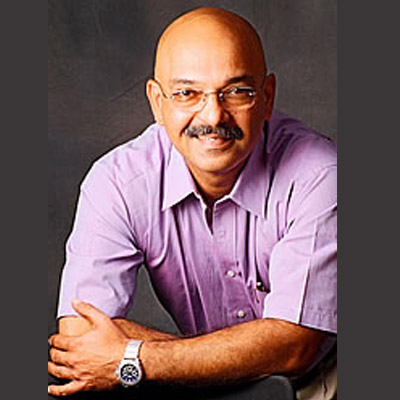
  • ‘With IPL you have the power of 10’ : Kunal Dasgupta – Set India CEO

    ‘With IPL you have the power of 10’ : Kunal Dasgupta – Set India CEO

    The Indian Premier League (IPL) has got off to a solid start. The ratings have been positive and crowds have thronged the stadiums. For Sony the IPL marks their return to cricket. Set India CEO Kunal Dasgupta offers Thomas Abraham and Ashwin Pinto his views on what he expects IPL to do for the game, telecast channel Max, as well as the importance of sustaining the brand.

    Excerpts:

    As a broadcaster what do you expect?
    T20 is a made for television format. When India played a T20 match against Australia at the Wankhede stadium, ratings touched 20. I am looking for a rating of 4 or 5, which is possible, given that ICL, which has retired players, got 2.5. This is a good base for us to take off from.

    The format will mean that besides country against country, one will also view it as being team versus team. This is what exists in other sports like soccer, hockey, and baseball.

    IPL is being pushed as being the ultimate in reality television. In that case how do you get that competitive environment?
    The prize money (Rs 48 million goes to the winner) will ensure this. This is much more than you get for playing for the country and so the players will go all out. The matches will be hard fought. Here all the teams are evenly balanced and so you do not know the result. It will be unpredictable and matches will go down the wire. All teams have a good mix of batsmen, bowlers and youth.

    What are you hoping for in the first year as the telecast partner?
    Ideally I would want the IPL to be a successful brand that has a long term play. After June, I will continue to do promotions to keep the team brands alive. This was one of the conditions on which we bid.

    We will do shows around the IPL. You could see teams (franchises) practicing and discussing strategies for the next season.

    The trick for us is not getting ratings for the first season. The challenge is to sustain the excitement after that

    But wouldn’t an ideal situation be for a franchise to build a brand without the big names who might be on national duty?
    This might happen. Apart from April-May, you cannot have another period where all the stars are available. What will happen is that once the league is built the new players who are playing will become the core. You can then have matches in different parts of the world to popularise the game there using these new players.

    The trick for us is not getting ratings for the first season. This will happen as a matter of course because of the way the IPL has been hyped. The challenge is to sustain the excitement after that and it is here where we will have to take a leaf out of the book of the EPL. Teams have marketed themselves and have thus become iconic brands.


    So Mallya for instance, will use the Royal Challenger brand name to go out there and create opportunities for exhibition matches. They can do charity work in Bangalore and build a fan base. Each franchise will have its own website where clips will be available. They can create merchandise.

    Sony will pitch in through magazine shows. Otherwise it will just be a flash in the pan. As we come closer to the next season you will see transfers and there will be speculation.

    New heroes will be born. It is possible that the likes of current heroes like Glenn McGrath, Kumble, and Saurav will not play beyond two seasons. Once that happens, then the brand will live outside the big names.

    One of the aims is to broaden the viewer base is to get in more children, women, But for that you have to create marketing that speaks to those demographics. What is Sony planning?
    One of the major attractions will be the presence of big Bollywood stars. Akshay Kumar will perform for Delhi. SRK will perform for Kolkata You will see proper Bollywood entertainment.

    We have even tweaked the timings of some of the matches to accommodate our entertainment specials. One match was supposed to start at 4 pm but we have pushed it back to 5:30 pm. We will even have stand up comedy for Extraaa Innings. On air we have gone in for fresh faces. We did not want Mandira (Bedi) for this. She is more suited for ODI cricket. I want 20-year-olds in T20. We also did not want Kapil Dev, Gavaskar. We wanted anchors who represent today’s kids. With the ICC World Cup we broke the mould and brought in females. Now we are breaking the mould back

    What is the distribution upside from IPL?
    This is a question mark. We are supposed to have a dip but we will retain the same level. There is no minimum guarantee now. Had Ten Sports still been present it would have been difficult to determine the value of IPL. Our team is happy as they are closing deals for the year and it is one of the distribution cornerstones.

    At $ 59 million in Year 1 and an average of $ 61 million over five years, IPL was literally sold at floor price. Wasn’t that a great deal?
    It was. Most of the payout ($ 612 million) is from the next five years. ESPN’s bid was $150 million for the first five years. They had put in conditions that the top players should be there. We did not put in any conditions.

    Anyway, the way it has turned out, all the top players are taking part.