Category: GECs

  • Miditech’s Shaitaan unveils a story on the vicious circle of superstitions

    Miditech’s Shaitaan unveils a story on the vicious circle of superstitions

    NEW DELHI: Miditech’s crime series on Colors, Shaitaan – A criminal mind, is now coming up with a special episode on the vicious circle of superstitions, where a man’s belief drives him to an extent of murdering an innocent girl.


    Hosted by the popular TV actor Sharad Khelkar the episode will be telecast on 22 June.


    Miditech CEO Nikhil Alva said, “Every weekend we try to bring forward the kind of crime cropping in our country and what people are facing or are the victim of. This week we are showcasing another frightening episode on superstitious belief. One very important reason, why individuals turn out to be a victim of superstition is the fear of failure or the anxiety about the outcome. Our upcoming episode on 22 June would telecast one such heinous crime.”


    TV Actor and the Show Host Sharad Khelkar, said on his association with Shaitaan, “With every episode, I come closer to the realities of life which most of the people are not aware of. Shaitaan captures people’s attention by making them aware of the harsh realities of life and how one should be a responsible citizen. While shooting for this episode, it was shocking to believe that even in the 21st century, there are people who believe in a number of omens, perform a number of ceremonies to achieve their ends.”


    The episode that will be showcased this weekend 22 June portrays the story of a superstitious man, who blindly follows a Swamiji. Advised by him, the man forces the girl, who is almost his daughter’s age, to marry him. The story revolves around how desperately the man tries to convince the innocent girl that leads to a murder.

  • Stars light up Star Parivaar Awards 2013

    Stars light up Star Parivaar Awards 2013

    Star India’s much-appreciated Star Parivaar Awards is getting glitzier and glamorous. As the actors walked the red carpet, dressed in their best attires, unlimited fun and entertainment was guaranteed. Yash Raj Studio became a witness again to a bigger and better Star Parivaar Awards 2013, which was held on 15 June. The channel has roped in Oral-B as the main sponsor and Amway as the associate sponsor for the grand event.

    The initiative marks the success and recognition of TV characters on Star Plus by the audiences who monitor them closely and daily on their favourite soaps. The function was a limitless package of path-breaking performances, glamour, humour and not to forget the gorgeous television stars.

    Sooraj (Anas Rashid)-Sandhya (Deepika Singh ) from Diya aur Baati Hum, Aaditya (Nakuul Mehta)-Pankhuri (Disha Parmar) from Pyaar Ka Dard Hain, Gopi (Giaa Manek) – Ahem (Mohammad Nazim) and Rashi (Rucha Hasabnis)-Jigar (Vishal Singh) fromSaath Nibhana Saathiya, Aakash (Rahul Sharma)- Poonam (Ishita Dutta) from Ek Ghar Banauga,Nach Baliye-5 winners Jay and Mahi, Ranvijay (Bhavesh Balchandani) -Veera (Harshita Ojha) with Ratan (Sneha Wagh) from Veera were some of the popular Parivaar faces who walked the red carpet.

    Masterchef Fame Sanjeev Kapoor, Vikas Khanna and Kunal Kapur also did the honours along with Masterchef India season 3winner Ripu Daman Handa.

    The evening could not have ended without the doffing of the collective cap to the power of Bollywood. Celebrities like Shilpa Shetty Kundra, Riteish Deshmukh, Sonakshi Sinha and Imraan Khan added some spice to the event.

    Star Parivaar Awards’ unique theme ‘Yeh Prem Kahaani Hai…Parivaar Ki’, brought out the best from the members of the family, who enthused the audience with their breathtaking acts. Be it young or old, all the popular Star Plus actors burned the dance floor with some mesmerising performances.

    With Parivaar Awards roping in Shiamak Davar to choreograph the entire show, the musical theme adopted for this year, was an add-on to entertainment. As the biggest Parivaar of the country came together to celebrate love and togetherness, the evening had its moments of pathos, joy and tongue-in-cheek humour. Present at the occasion also were quite a few TV producers who have contributed to Star Plus success: Rajan Shahi, SLB’s Arvind Babbal , Tony and Deeya Singh, Shashi and Sumeet Mittal, Rakesh Paswan, Yash and Mamta Patanaik, Kavita Barjatyya, and Rashmi Sharma. Star India’s CEO Uday Shankar, COO Sanjay Gupta, content engine head Gaurav Banerjee, Star Plus business head Nachiket Pantvaidya, non-fiction head Ashish Golwalakr were all there to cheer their actors on.

    Also on hand were Star Parivaar Awards jury members Indiantelevision.com and The Indian Telly Awards CEO Anil Wanvari, producer J.D. Majethia, and veteran journalist and writer Bhawana Somaiyya.

    This apart, the 3D mapping projection and three-sided Varsha Desai-designed stage at YRF were a revelation. While SOL Productions was responsible for the creative and the TV production of the event, Frames handled production on the red carpet and the curtain raiser.

    The highlight of the show was the group performance by Shagufta Ali (Moti Chaiji from Veera), Hina Khan (Akshara from Yeh Rishta Kya Kehlata Hai), Disha Sharma (Pankhudi from Pyaar ka Dard) and Neelu Vaghela (Bhabho from Diya aur Baati Hum) who made the audiences go ga-ga with their mind-blowing moves and grooves.

    While most of the stars burned the dance floor with their high on energy performances, the rest of the members were seen humming the new STAR Parivaar song 2013 – ‘Tum Jo Milgaye ho’ sung by Sunidhi Chauhan and Ankit Tiwari.

    Well onto the show, the event started with an electrifying prayer dance by the team of Shiamak Davar along with Bhabho, Naitik, and other popular faces of Star welcoming guests to a memorable evening. This was followed by a comic act put together by the cast of Diya aur Baati Hum and other famous actors from the show Yeh Rishta and Veera and Rahul Mahajan.

    The very dashing television chocolate boy Karan Wahi and Ek Hazaaron me Meri Behna hai fame Jeevika left the viewers in splits with their quick drollness and rocking stage presence as they co-hosted the evening for the first category of awards. Helping them with the awards segments were the lively co-hosts Jay Bhanushali, Karan Mehra, Neelu Vaghela and Ashok Lokhande.

    Star India CEO Uday Shankar gave away the ‘Har Ghar ka Pasand Sadasya’ Award.

    While on the one hand, the gorgeous Monica Bedi, who shook the audience with her exotic performance on the popular number Lat Lag gayee from Race 2, provided an oomph factor, Akshara, Sandhya and Pankhudi made the audiences go ga-ga with their thumkas and latkas.

    All through the fun and entertainment, the Star Parivaar Awards did not forget to highlight the plight of women and the injustice faced by them. The spectacular performance by Ratan from Veera and Pankhudi from surely was a highlight of the star-studded evening.

    The rope walking act with no support by Anas Rashid (Diya aur Baati hum fame Sooraj) surely made everyone skip a heartbeat.

    All in all, Star Parivaar Awards was a magnificent evening to remember with fabulous performances, surprising acts and the shinning television industry at its glamorous and entertaining best.

    Click here for photos of the Star Parivaar Awards Red Carpet

  • “Sab will be among the Top Three Hindi GECs”

    “Sab will be among the Top Three Hindi GECs”

    From being a copywriter, director to business head, the soft-spoken Anooj Kapoor has worn various hats. But what makes him different from others is the way he manages the work-life balance. He proudly claims that in his more than 20 years of career there has rarely been a day when he has been in office later than 6 pm. Even today, he leaves office at six in the evening and on weekends he switches off from work, unless required. Someone who believes in working hard hasn’t forgotten to live to the fullest too…

    Indiantelevision.com’s Meghna Sharma spoke to the executive EVP and business head of Sab Anooj Kapoor about the channel’s current plans,the reason for there being no other channel like Sab and the channel’s future plan. Excerpts:

     
    The channel underwent a revamp recently, was it really needed? 

    Nothing we do here is what everybody else does, starting from our programming which is totally differentiated from the rest in the GEC space. So, this revamp is not because others have done it too. All we have done is revamped the packaging of the channel. The last revamp was done almost six years ago, and we thought we have had a wonderful growth in the past five years. So we wanted the packaging to be more colourful. We have retained the old colours and added more colours to our package to convey freshness, more audience on the channel as well as more people sitting together to watch our shows. It can convey a lot of things, but essentially, we wanted a fresh look.


    You said you are adding more people who are watching your channel. So through the revamp and apps are you targeting youth now? 

    Asli maaza sab ke saath aata hai… has stood true for us. The entire family comes together and watches TV. We have a mix of audience, from males, females to kids. We also have a healthy mix of Sec A, B and C. So we are not trying to broad base our TG, it is already 4+.

    However, we cannot deny that new things always appeals to people. In the age-group of 4-14, we are the number one channel. In the last TAM rating, we were ahead of Star Plus. In the higher age-group, 15-24, we are fairly strong but we realised there is a need to engage audience on fresher platforms – facebook, comics, SABurbia and other apps. And the age-group after that, we keep appealing through our ads where the whole family comes together.


    Our other initiative ‘Sab ki Saafari’, is also first of its kind. The idea was to get people from smaller towns meet their favourite characters or watch a shoot. Through this initiative we get our loyal audiences to meet their favourite characters and also show them what goes on behind the camera. We have another loyalty program called SABprise wherein the more you watch the channel the more you get rewarded for it. We feel that today it has to be a two-way communication. If they have given us so much and helped us grow 600 per cent in five years then we should also give them something in return.


    With the awards season on, when can we get to see Sab ke anokhe awards? 

    We are coming back with Sab ke anokhe awards in August. The first round did well for us as we got a rating of 2.8 which I’m not going to compare with other award shows, but for a channel like ours which has a limited reach it is a very healthy rating. It was purely because of the uniqueness of the show. We came up with categories which went beyond the clichéd categories. This time we are going to add even more categories and try to be as anokha as possible. We will be sticking to our strategy of being different and innovative.


    What kind of weekend programming does the channel currently have? Any plans to introduce new shows?

    Currently, we have two silent comedies on Saturday – Guttur Gu and Malegoan ka Chintu. Guttur Gu has been recognised as the longest running silent show in the world by the Limca Books of Records, and then we have Waah Waah Kya Baat Hai which consistently rates among the top five shows in the non-fictional category on the weekend. So, we have fresh weekend programming. We might add new programs in the future wherein we will look at reality or mix of unique concepts like silent comedy but nothing is crystallised yet.

    “We touched our highest rating of 159 in February this year and now with digitisation when we are far better placed”

     
    SAB is the only comedy-centric Hindi GEC, wherein other networks have second GEC channels, why do you think there aren’t many players in this genre? 

    We are the number one comedy channel in the world. We are the only channel in the world which does daily comedy shows. If you will look at channels like Zee Café or Star World, the sitcoms they have are weekly and have seasons. We have Tarak Mehta Ka Ooltah Chashmah which has done 1200 episodes now, Lapataganj in its first avatar had done 850 episodes and FIR will be touching 1000 soon (in September). So while we have been able to be innovative, we have also done successful programming. All this while we know that there is a limited pool of comedy actors, writer, directors and producers.

    Also, before SAB, comedy wasn’t seen as an important genre by GECs. We have been able to reign in that limited talent and try to cultivate a few more. With the limited pool I don’t think there is enough talent for more than one channel to survive. And secondly, we have a DNA which has gotten us consistent success. There is no doubt that other channels have dabbled into comedy especially after seeing SAB’s success, but all the top three or four GECs have not been able to succeed. And, therefore they are apprehensive.

     
    Do you work with a certain set of production houses or open to others as well?
     
    We have always encouraged new producers, but at the same time we have certain set of producers that have consistently worked for us. We also have people who have never done comedy before and doing it successfully for us. For instance, Malegaon ka Chintu is produced by Deepti Bhatnagar Production which hasn’t done comedy in the past, Gutur Gu is done by Fireworks who have in the past done CID and Aahat. And of course, we have Asit Modi, JD Majathia, Vipul Shah and Ashwini Dheer. So, we have been able to mix both.

     
    You are also available in the US, UK and Europe, what has been the response there? 

    We are extremely popular abroad. In the UK we are the fastest growing channel.

    It is a fact that we have created almost 7,000 hours of original programming and when we compare data with other channels dedicated to comedy we are miles ahead of them. From the 70s, since DD started, no channel has claimed or can claim to be the number one channel based out of India but we can!

     
    It’s going to be a year now since digitisation took place. How has it helped the channel? 

    We have a business model which by definition doesn’t afford us very high rates and because we also have to keep our profits in mind, we couldn’t place ourselves where top three or four GECs could. This meant, we could not be well placed in the analog. However, with digitisation, we now fall in the GEC cluster. Now our sampling will soar up. We also strongly feel that our trial retention rate is high.

     
    Currently, which are the weak slots that you would like to strengthen?

    The difference between manufacturing and television is – that in manufacturing you can perfect a formula whereas in our industry, the same raw material will go to the same factory but the end product sometime works and sometime fails.

     
    Lastly, when do you see Sab among the top three? 

    We are well on our way. We have never stopped growing. We touched our highest rating of 159 in February, this year and now with digitisation when we are far better placed, I hope we will one day be among the top three.

  • Indian TV B’casters: ‘TAM’ing TV ratings

    Indian TV B’casters: ‘TAM’ing TV ratings

     Does the Indian TV broadcast industry want TAM? In one word, the answer is No. Definitely not in the form and manner it is monitoring TV viewership in India. Definitely not the kind of viewership numbers it has been spewing out for them week by week. The major Indian TV broadcast networks have already shown their utter disgust and disregard for its TV ratings by closing their checkbooks on TAM.

    On almost every front, the Indian TV broadcasters – through the IBF – have been flexing their muscles and showing that they mean business. And they have been sorting out troublesome issues: like striking a wage accord with TV industry technicians; setting set up a self-regulatory mechanism when government wanted to muzzle the media; getting the advertising industry to agree to net billing after the government demanded taxes for the gross advertising agency bills it used to make payments on.

    But one of the most vexatious issues it has been grappling with is the TV rating‘s one. And now that the lights have been put out on TAM, what now for the broadcast industry? What are the options before it? Let us take a look at a couple of them:

    *For one they can continue with TAM Media. However, they can give TV ratings a hiatus for a couple of months. It‘s quite possible the chaos that is happening on account of analogue shutoffs and digital set top box switch-ons, will settle down and the ratings will stabilise in that period. They can also dialogue with TAM and ask it to get back to basics and do an establishment survey once again (if possible), represent the peoplemeters appropriately in power-lit areas in LC1, rather than in power-dark areas. And finally, take a closer look at the entire process of churning out ratings that happens every week, through a committee constituted for the very purpose.

    There is a possibility that we could end up with a period of no TV ratings in India if issues are not sorted out by all concerned. How long that period will be is not clear (some say it could be until BARC comes up), but broadcasters will need to get advertisers and agencies’ support for their decision. So far, both have said they are not comfortable with ratings going away, and have spoken up for TAM.
    _____****_____


    With all major B‘casters unsubscribing from TAM TV ratings, only time will tell if the viewers‘ true choice can be reflected with the emergence of BARC

    * Or if this is not working out forget that TAM exists, cut off its blood supply, and watch it gradually bleed and die. Come up with a viewership metric that works in the interim for all concerned – broadcasters, advertisers and agencies – and allows the business of communicating brand messages through television for a fee to continue.

    The broadcast industry is torn between the two options. The first has been done before between October and December 2012 and it was painless for all concerned and allowed TAM to continue its existence in a profitable manner. 

    The second option, while it appears the easier one to see through, comes with its set of challenges.

    The Broadcast Audience Research Council (BARC)‘s TV ratings system seems nearly a year away and could take longer to get to the levels of coverage TAM is providing now. Unless, under the leadership of Puneet Goenka and Partho Dasgupta, BARC manages to do an Ambani on the system and get the establishment survey, the constitution of the sample, the installation of the meters, the development of the software, the stabilisation of the findings and everything down stream thereof completed in super record time. Most advertisers and agencies have been optimistic about BARC.

    Industry can learn some lessons from the experience of Turkey in 2011. Turkey‘s broadcasters and the industry shut down the ratings service run there by AGB Nielsen in late December 2011, amidst allegations of corruption, which were denied by the ratings service provider. The industry body – The Television Audience Research Committee (TIAK) – prematurely severed its contract with AGB and urged TNS – part of the WPP Group‘s Kantar Research – to set up an alternative ratings system which finally got going in May 2012 with a 1000 peoplemeter panel, as against 2,500 people meters earlier.

    Industry can learn some lessons from the experience of Turkey which faced a ratings blackout in 2011. During the blackout TV ad rates and prices were determined by using average ratings from the month before the shutdown, combined with monthly share performance from the whole of the year.
    _____****_____

    In the interim, adage.com reported in March 2012 that life went on for Turkish advertisers, agencies and broadcasters though the “TV-buying system has since been in shambles. Without reliable new-audience measurement data, prices have been determined by using average ratings from the month before the scandal erupted, combined with monthly share performance from the whole of 2011. The industry is working to regain media agencies‘ and advertisers‘ trust.”

    Agreed, we are not questioning the ethics of TAM in India, though many have hurled allegations against it. There is a possibility that we could end up with a period of no TV ratings in India if issues are not sorted out by all concerned.

    How long that period will be is not clear (some say it could be until BARC comes up), but broadcasters will need to get advertisers and agencies‘ support for their decision. So far, both have said they are not comfortable with ratings going away, and have spoken up for TAM.

    With reason. Two or three months without TAM mean they will have little data to support a TV advertising expenditure between Rs 3,600-4,200 crore. That‘s not an amount you can sniff away.

    Hence, all three will have to come to the table and agree on a performance metric to justify the expenditure and offer some accountability. Could the Turkish media industry‘s interim solution during the TV ratings shutdown there be adapted to work in India?

    Broadcasters are slated to huddle very soon (either this week or next) to get some consensus on which route they will take. Some broadcast CEOs have been travelling and hence have not been able to get together.


  • “How is a bad TV rating better than no rating?”: IBF secretary general Shailesh Shah

    “How is a bad TV rating better than no rating?”: IBF secretary general Shailesh Shah

    The Indian Broadcasting Foundation (IBF) got a new president in the form of MSM (Sony Entertainment Network) CEO Man Jit Singh last year. It also got a new secretary general in Shailesh Shah who last was CEO of a Singapore based venture a few months ago.

    Both got their positions when the Indian television industry is going through its toughest transition in known memory.

    India’ cable TV landscape is being rejigged through a government mandated digitisation drive. The government is constantly playing big brother on the content front, threatening to switch off channels on the slightest excuse.

    Advertising revenues for the most part have been growing marginally even as carriage fees have been battering the broadcasters’ bottom lines. And, of course, there has been an explosion with channels popping up almost every second week. This has led to fragmented audiences.

    For more than half a decade since it was set up in 1999, the IBF was a weak agglomeration, set up with the intent of representing the broadcasting community. But it did not seem to go anywhere, until Essel Group managing director Jawahar Goel became its president and it really took off under the leadership of Star India CEO Uday Shankar who invested time to get the government and other partners and affiliates to understand the industry’s point of view and react favourably towards it.

    Shah’s job is not easy: he has many masters as he leads an organisation, which has some of the most influential Indian executives on its board. But he has been running it quite deftly, absorbing and implementing their advice and inputs. Over the past three months, the IBF successfully got agencies to agree to net billings, and it is now working on getting ratings agency TAM Media to take a fresh look at how it conducts its ratings service.

    We spoke to Shah on the IBF‘s strengths, accomplishments, stance on TAM, ad cap and much more…

    Excerpts:

    How does the IBF work?

    IBF is an Association that represents television broadcasters.

    Its sole goal is to collectively improve the governance-bound economic growth prospects of television broadcasters by helping open gateways of access to revenue opportunities that matter. In doing so, the Foundation collectively a) identifies issues of import, b) researches these issues deeply, c) builds consensus around these issues , d) agrees to a strategy and execution plan on resolving issues, and most important, e) stays focused on execution until the issues are resolved.

    Simple. No rocket science. Nose to the grind kind of stuff.

    Like all such sector or industry associations, IBF works through a board.

    Members of the board and/or the foundation office bring issues to the fore, and then follow the process above to figure out if the issue is important enough, the issue is researched sufficiently to arrive at root-causes, precedent, best-practices. The issue can be addressed with a strategy that will deliver a solution effectively, and the strategy and consequent execution plan is enabled by the board to deliver.

    Every issue is dealt with through a working team, a committee, a task force or by the all important team of office bearers to arrive at conclusions and take them forward

    The foundation office ensures that when an issue is important, consensus can be arrived at and discussions, dialogue, research presentations, white papers and the like are used to help arrive at a consensus.

    So what has changed at the IBF that has brought issues like ad-slots, net billing, audience measurement, digitisation and content-complaints to the fore?

    Honestly, nothing. IBF just became a teenager. In the grand scheme of organisational dynamics, the association, I believe is maturing to collectively take on issues more holistically.

    The effort behind issues that bring researched solutions to the fore, make systematic effort to build consensus, ensure issues are genuinely industry-wide, and use the bright wisdom of its board effectively where a multiplicity of strengths lie is what IBF is doing more consistently.

    IBF also is very clear about being governance bound. As a board, it has never attempted to do anything that attempts to lead toward incorrect, monopolistic or oligopolistic practices. Ever so often, emerging sectors face flack on collusion. IBF is extremely clear on this topic – if an issue has any bell or whistle around governance, the foundation will not allow it to be dealt with.

    IBF’s ability to create teams from within its board and membership to address issues is also maturing well. The Foundation is able to consistently bring abroad representation on sensitive issues so that the resulting consensus is real, has stickiness, and will work. Similarly, teams that execute on issues or individuals that participate in committees are much more aligned to getting things done.

    There are instances where slippages do happen, not differently from any other organisation. However, the collective efforts of the board ensure these are being improved upon. More important, the Foundation has every intention of becoming the best representative of its members, ever!

    Who calls the shots at IBF?

    The board, through its president calls the shots at IBF.

    Over the years, IBF has become significantly more aligned on a bunch of topics that have come to either hurt them, or will help them.

    If such topics pass the muster on governance, and will stay governance-bound, IBF’s board will work towards a resolution, plan and focused execution.

    The big change is, there is real impetus over the last two years to not sweep topics under the carpet and the Foundation Office is playing a more active role in ensuring this remains steadfast.

    I am so green behind my ears, it would be audacious for me to claim I have driven any change. I am fortunate to have come in at a time when I am being baptised by fire

     What issues is IBF focused on resolving?

    The key priorities for IBF are digitisation, freedom of expression and a level playing field to bring every local and national channel being broadcast and distributed under the same purview of the MIB as its members and the 828 licensed channels are.

    To address these key priorities, the foundation needs to be strong. Weaning away niggling problems is part of that.

    How is IBF structured to address the issues and concerns of its members?

    IBF forms committees to address issues that will take a while to resolve, or where recurring issues need to be addressed. On point issues, it will form task forces. These get agreed to after a debate at the board.

    What have been the achievements and milestones so far?

    Credit between agencies and broadcasters, has almost become a science. An exceedingly well-established complaints council manages issues related to content. Taxation resulting from the way broadcasters invoice agencies is being resolved. With the help of advertisers and agencies, a next-in-class audience measurement system is on its way. I think the real achievement is, broadcasters are able to see several issues in the same light much more today than ever before.

    The media industry needs to dig deeply into understanding what is necessary to capture, measure and rate this vast linguistic diversity, geographic-cultural-social-economic-not-so-urbanised diversity notwithstanding

    What changes have been brought in the IBF over the past years?

    One of the biggest changes is, the tenure of leadership positions is clearly stated and accordingly, going forward, each leadership position will have limited “reign”. This is welcome because it provides opportunity and creates greater stickiness.

    What changes have you driven?

    I am so green behind my ears, it would be audacious for me to claim I have driven any change. The truth is, today is my hundreth day at IBF. I am fortunate to have come in at a time when I am being baptised by fire.

    What is your vision for it?

    Enable television broadcasters with the economic growth canvas that provides governance-bound access to multiple revenue streams and ensures collective progress through effective advocacy and interventions on issues such as digitisation, copacetic relationships with advertisers, agencies and the government, and most important, the right to express oneself with complete freedom, and the responsibility to do it correctly.

    Tell us how Man Jit Singh came to be elected as the president? How was the election? Isn‘t it true that Uday Shankar wanted another term?
    As I clearly said, the term for leadership positions is now pre-defined. The board follows due process in electing members into leadership positions and this is today followed stringently.

    The Indian Broadcasting Foundation, today, is very much a cheetah in a hurry. The past few months have seen IBF take a united and strong stance on matters like Net Billing, Ad cap and the latest TAM rating issue. What will you accredit this newfound aggression to?

    Firstly, IBF has not come together on all these issues. While we have definitely worked on net billing together with the agencies, and worked with TRAI on trying to resolve advertising minutes, TAM is a problem some broadcasters are working on. We are working with the ministry on several components of digitisation. And we are working to ensure we have the right to genuine freedom of expression as we demonstrate commensurate responsibility in using that right.


    Broadcasters are unhappy with what they are getting. So are the agencies. We have a road map for TV ratings in mind, but the industry will have to go through its recognition pains

     How has your journey as the secretary general been so far? Tell us about the highlights and accomplishments according to you?

    When one gets to work with smart do-gooders who are intent on getting things done, helping drive that intent strategically, building relationships in places that matter, driving priorities to conclusion and being impactful, the journey becomes fun. The sector is in its infancy and I get to partake as it matures. What could be more satisfying.

    Tell us what roles do the sub committees play in the over-all brand building and administration of IBF.

    As you have seen from NASSCOM, CII and FICCI, the value of any industry or sector association is directly proportional to the work it does. We are becoming a cheetah in a hurry. Time will tell.

    The Broadcast Content Complaints Council (BCCC), today has become the ultimate self regulatory benchmark for the industry. Elaborate on its strength, accomplishments, decisions and scope for improvement.

    10 per cent of our work got done when IBF worked arduously to select a pre-eminent council, which includes socially responsible celebrities and several national commissions. They have executed exceedingly well giving us a rating exceeding 80 per cent. BCCC is evolving and as you shall see in the near term, it will show value from continuous improvement. Secretary general of the BCCC Ashish Sinha has provided yeoman stewardship to ensuring the foundation for self-regulation is well in its place.

    Where do you see the on-going TAM fallout going at? What does the IBF exactly want? Do you think, an interim blackout until the establishment of BARC, is ideal for the industry?

    80+ million Telugu speaking Indians and about 60 per cent of them watching television get compared on the same canvas as 600 million cricket viewers, one million CSI New York viewers and less than 20 million Punjabi television viewers. The media industry needs to dig deeply into understanding what is necessary to capture, measure and rate this vast linguistic diversity, geographic-cultural-social-economic-not-so-urbanised diversity notwithstanding. Simplistic, superficial answers will neither solve the problem nor satisfy ratings watchers who feel like they are at a discotheque. This is a serious problem and it requires serious thinking. To repeat, TAM is not the problem. Its ineffectiveness is viewed as one. I believe a solution will emerge and I request the industry to watch this space.

    We have a road map in mind, but the industry will have to go through its recognition pains.

    In the case of no ratings for the coming month, do you agree that historical benchmarks should be the guide for advertisers? There seems to be a conflicting support on the TAM issue with broadcasters vehemently against continuing ratings, whereas, advertisers are willing to give TAM a chance to solve its issues. What do you have to say about that?

    Let me say this very, very simply – broadcasters are unhappy with what they are getting. So are the agencies. Please help me understand how a bad rating can be better than no rating?

  • Star Plus believes digital is the way forward

    Star Plus believes digital is the way forward

    (Hindi GEC Star Plus features in this the second of our series on what TV channels are doing in the digital and social media space)

    It’s the leader in the Hindi general entertainment space in India and has been so for the most part of the previous decade, and even this one. The Star India network, has been gung-ho on the online space, ever since one can remember like its owner Rupert Murdoch, who has had a fascination for it but confesses he does not know how to deal with it.

    Star India took a big punt when it acquired the much-touted indya.com way back in 2001, coughing up a hefty $50 million in buying it. It has since not known what to do with it. Just like Murdoch failed to fathom what the group could do with myspace.com, finally selling it out cheap.

    Star India‘s Indya.com fiasco looks unlikely to be repeated today. CEO Uday Shankar is quite clear on that and a crack team at the media giant has been working overtime to engage with its viewers.

    “We have leveraged the platform of digital, our various digital assets and the power of broadcast integration to drive deeper multi-screen engagement and conversations,” says Star India marketing & communications executive vice president Gayatri Yadav.

    “Having an engaged audience that can interact with the brand is a very meaningful goal. This helps us build loyalty for the characters and the brand, develop interest in new launches and of course acts as a great influencer for new audiences to sample the on air content. The engaged audience base also acts as a great feedback mechanism for our content.”

    Star India marketing & communications executive vice president Gayatri Yadav

    Star has been innovative in actively energising, featuring and interacting with audiences with powerful integration of online with on-screen content. All the key show launches and events now have at least one element of live engagement with the viewers. Auditions, which were earlier only limited to on-ground activities, have further been extended to the digital platform, reveals Yadav.

    In terms of video content that it uploads, Star Plus broadly classifies it into long form and short form, catch-up content, web exclusives, promos and legacy. For platforms like YouTube the channel‘s approach has been to upload short form catch-up content, which it says has been very well received. Its own video platforms have long form catch up content, along with some marquee legacy shows.

    Starplus.in and Star Player (www.startv.in) are among the two-owned platforms that it uses to encourage users to engage with the channel and download content. Data on how many downloads the Star Player app has achieved was not available at the time of writing but its Facebook page had received 93,000 likes or so.

    Star Plus constantly keeps on updating pictures and videos of its shows on their website

    Star Plus constantly keeps on updating pictures and videos of its shows on these websites. Star, however, does not upload an episode within a couple of hours of its telecast. Besides, it uses textual and image content like daily recaps, show highlights, trivia and polls to interact with and engage the visitor.

    Apart from internet based platforms, Star Plus also leverages the reach of the voice platform through SPOM (Star Plus on Mobile – 5057827). Through its voice portal Star Plus on Mobile, the channel runs audio recaps of the daily shows, daily diaries, and voice blogs of popular characters and also title tracks of the shows.

    Star Plus uses the mobile platform to leverage it‘s content

    With live engagement being one of the significant elements, Star has Plus has created applications for Apple, Blackberry, Android and Nokia through which people could interact, chat with the judges and read blogs while watching shows such as ‘MasterChef India‘.

    For some of its marquee shows like ‘Nach Baliye‘ and ‘MasterChef India‘, Star Plus has leveraged the transmedia storytelling route – where the main show has a strong storytelling leg running exclusively on digital platforms which link back meaningfully to the main show.

    Apart from this, the channel has showcased its content on the digital platform through initiatives like the web premiere of ‘Saraswatichandra‘ exclusively for digital audiences.

    Star Plus has an official Facebook page with around 2.80 million likes and hundreds of thousands of visitors talking about the channel and its programmes at any point in time. On Twitter, another vital ingredient of the social media mix, the channel has around 88,250 active followers. @StarPlus is buzzing with tweets and re-tweets every couple of hours. The numerous fan-driven handles of their popular shows are busy re-tweeting and sharing every Star update, making for a huge cacophony of views across the digital world.

    YouTube also plays an integral part in Star’s digital strategy with close to 2.50 million subscribers

    YouTube also plays an integral part in Star’s digital strategy with close to 2.50 million subscribers. Drama series and reality shows are attracting a good number of page views, say channel executives. Star uploads day-to-day activities, episodes that viewers may missed, comparatively, among on-air shows, fiction has an upper-hand over non -fiction shows.

    The channel’s official Facebook pages for some of its TV shows have received commendable responses from nitizens/viewers. The Facebook page of its leading fiction series ‘Diya Aur Baati Hum’ has 2.34 million likes with 2,485 active followers on Twitter. ‘Diya Aur Baati Hum’ also leads the drama genre with more than 32,304 video views on YouTube in just two days. Another fiction show ‘Yeh Rishta Kya Kehlata Hai’ bagged 20,529 video views for one of its episodes. Reality shows such as ‘India’s Dancing SuperStar’ lead with 1,18,222 video views.

    Star Plus marketing vice-president Nikhil Madhok

    Star Plus marketing vice-president Nikhil Madhok states, “We are producing a lot of content exclusively for our digital assets, be it in the form of behind-the-scenes clips, rehearsal footage, bloopers, interviews and much more. We have even made special edits of the episode acts just for digital. For example, Chaavat Boys, which is a group of engineering students from a Mumbai college, have already become a rage online, and all their dance acts have gone viral. In fact, people have been uploading videos of their own version of Chaavatgiri.”

    Star Plus claims that ‘Nach Baliye’ generated one billion impressions online during the course of its telecast. Of these, a 100 million happened on the final episode itself, which not only trended at no 1 in India but also worldwide, it says.

    ‘Satyamev Jayate’, (SMJ) the first talk show produced by Aamir Khan Productions created a lot of buzz on social media platforms. It became the most searched query on Google immediately after its first episode. SMJ has 93,929 followers on Twitter and its official Facebook page has 1.69 million likes.

    SMJ has 93,929 followers on Twitter and its official Facebook page has 1.69 million likes

    Official pages of SMJ were launched on the big three of social media – Facebook, Twitter and YouTube, to provide a platform for fans to share their views and interact. Updates were posted at regular intervals. Video snippets and full episodes were uploaded on YouTube for fans to watch the show or a favourite segment at their convenience.

    Reports suggest that though initial conversations around SMJ were triggered by Aamir Khan’s popularity, conversations around the causes he espoused on the show took centre stage later. The reason for this trend can be assumed to be the content fed into social media platforms. The fever of the show became strong on digital as the show only aired once in a week for 1 hour on Sunday. For the rest days, they storm the viewers by different social messages by constantly updating videos and statuses and also by tweeting.

    “We at Star deeply cherish our relationship with consumers. Giving consumers a chance to engage and interact deeply with our brands and characters is no longer an option, but a necessity. It is something we value deeply and have set up a team, infrastructure and partners to enable us to interact meaningfully with consumers across the network,” concludes Yadav.

  • Against all odds, Prasar Bharati continues to swim upstream : Brigadier V A M Hussain Member (Personnel) Prasar Bharati

    Against all odds, Prasar Bharati continues to swim upstream : Brigadier V A M Hussain Member (Personnel) Prasar Bharati

    An institution that has been the chronicler and mirror of India‘s history is feeling crippled. With a tenacious CEO under a dynamic Minister of Information & Broadcasting, it is striving to reinvent itself to meet the challenges of contemporary media scenario. Many new experiments are on to change the behemoth called Prasar Bharati that cost the exchequer a whopping Rs 150 crore every month. This public service media organisation is one of the oldest statutory bodies with a hoary past. It is under siege and calls for expeditious intervention to revive the glory of the old faithful that is All India Radio. Doordarshan, the audio-visual arm of Prasar Bharati is always in the public eye with viewers asking for more sumptuous and scintillating fare.

    The Organisation is saddled with a disgruntled work force of about 50,000 who did not get a promotion for decades. To make matters worse, there was no attempt to infuse new blood in the system, either. An out-of-the-box solution is inescapable to break shackles of archaic regulation. The definition of autonomy needs to be revisited to meet the upheavals on the audio- visual landscape, in recent years. Section 33 of the Prasar Bharati Act directs prior government approval for all regulations governing conditions of service. Every employee appointed before October 2007 is considered a government servant on deemed deputation and their promotion is in government ambit. Instead of being a nimble, vibrant media organisation driven by merit, seniority and ‘babudom’ rule the roost. Proposal for a Prasar Bharati Recruitment Board as mandated by the Act of Parliament vide Sections 9 and 10 of The Prasar Bharati Act 1990 is gathering dust in files while government persisted in stalling promotions and new recruitments for two decades now. In effect, Prasar Bharati is like a ship caught in the turbulent waters in the mid sea with none to care on the shore for the SOS of the ship-wrecked crew. Merit and flexible structures are essential for a dynamic and extremely competitive media sector. Meeting the content needs of 750 million people through regional and national infra structure and boosting DTH and terrestrial audience are complex challenges, CEO Jawhar Sircar faces, along with ‘Sarkar‘, the real power.

    A recent experiment showed how independence in Prasar Bharati can make an impact. A truly independent team with young professionals in DD News prime time has rattled the industry with ratings showing an upswing.
    _____****_____

    A recent experiment showed how independence in Prasar Bharati can make an impact. A truly independent team with young professionals in DD News prime time has rattled the industry with ratings showing an upswing. Doordarshan launched a big advertising campaign for the revamped time bands of DD News, DD National and DD Urdu. This was the first such campaign in decades. A little more attention and circumspection are needed at AIR too which got maligned unfortunately by recent media reports of alleged harassment of its women Radio Jockeys. It is staring at a PIL now. FM Gold channel, with practically no permanent staff, earns substantial revenue for the entire AIR network while private FM channels are yearning for popularity with smart young professionals even in small towns and villages. The recently appointed Sam Pitroda Committee has set itself tasks suggesting visible changes for reviving Prasar Bharati. There is a wealth of data and content in archives that can propel AIR to the top of the charts. The expert groups are offering many practical suggestions and initiatives on many fronts including technology, content management, financial independence, government relations and human resources. Dr. Pitroda believes that generational change can be brought about by radical thinking instead of mere cosmetic changes.


    The financial situation continues to be precarious for Prasar Bharati with complex legacies. An unprepared bureaucracy opted for accrual system of accounting and enforced income tax while loans in perpetuity and penal interests soared.The government rescued Prasar Bharati by writing off large sums due as segment hiring and space spectrum charges incurred in the course of broadcasting mandated content, non commercial in nature. Income tax claims stand withdrawn while local bodies continue levying the public broadcaster with huge taxes on property of Union of India but Prasar Bharati has just been permitted use of the government emblem. This is a paradox since 50,000 salaried employees of government are using these assets for functions statutorily assigned by an Act of Parliament. Welcome initiatives of the GOM relieved Prasar Bharati from its financial crystal maze for now by converting loans in perpetuity as grants.

    The need of the hour is to professionalise Prasar Bharati with content-driven channels and professional-driven management owing total allegiance to Prasar Bharati to meaningfully accomplish objectives that were originally dreamt and scripted by the authors of an autonomous public service broadcaster. The dream is worth realising.
    _____****_____

    Apprehensions often raised on the need for a government-funded national public broadcaster are ill-founded. We need an unbiased institution to bench mark initiatives on information, education and entertainment. At the same time, the government needs a media window to show case its policies, initiatives and views by running its own video and audio channels. Government staffing of DD News and AIR News Service Division through Indian Information Service is controlled by the Ministry. The easiest course would be to sever the current nebulous association with Prasar Bharati and declare them government channels on the lines of Lok Sabha and Rajya Sabha TVs and leave Prasar Bharati to professionalise with autonomy.

    The efforts of the government to empower through The Sports Broadcasting Signals (Mandatory Sharing with Prasar Bharati) Act 2007 get breached frequently. Private business houses that own broadcasting rights of World Cricket tours use pre-embedded feeds of commercials and cause losses in hundreds of crore to Doordarshan. Expeditious amendments would help Prasar Bharati and the government. Despite its huge work force, Prasar Bharati has inadequate structure of professionals managing its own security, assets, property, content, new media, revenue and marketing at the highest levels. The need of the hour is to professionalise Prasar Bharati with content-driven channels and professional-driven management owing total allegiance to Prasar Bharati to meaningfully accomplish objectives that were originally dreamt and scripted by the authors of an autonomous public service broadcaster. The dream is worth realising.

    Will the Committee of Sam Pitroda be able to persuade the government to truly empower Prasar Bharati? On thoughts like this, we often remember Baba Amte’s saying “Faith is the promise of tomorrow” while the swimming upstream by Prasar Bharati continues.

  • Raj TV: commendable FY 2013 results; in investment mode

    Raj TV: commendable FY 2013 results; in investment mode

    MUMBAI: Higher ad rates and subscription revenues helped give a leg up to southern broadcaster Raj Television Network in FY 2013 ended 31 March 2013, even though its performance in Q4 2013 was relatively disappointing. Net profit for FY 2013 rose marginally to Rs 9.28 crore as against Rs 9.21 crore. However, net profit in Q4 2013 took a nosedive to Rs 53.28 lakh as against Rs 4.65 crore in the previous corresponding year’s quarter.

    Let us look at the Q4-2013 financials as against Q4-2012

    Revenue for Q4-2013 at Rs 17.47 crore, has risen 9.7 per cent as against Rs 15.92 crore in Q4-2012. Expenses have however increased significantly by 42 cent to Rs 15.22 crore in Q4-2013 as against Rs 10.73 crore in Q4-2012. Finance costs have more than doubled from Rs 66.66 lakh in Q4-2012 to Rs 1.51 crore in Q4 2013. The company says this happened on account of its launching new regional language channels, the fruits of which will accrue to its balance-sheet in the coming year.

    As mentioned above the net profit for Q4-2013 is down to a dismal figure of Rs 53.28 lacs as against a strong Rs 4.65 crore reported in the corresponding last quarter.

    Let us look at the FY-2013 results as against FY-2012

    Annual revenues at Rs 67.53 crore for FY-2013 have significantly climbed up by over 24 per cent as against Rs 54.06 crore in FY-2012. Advertisement and subscription and DTH revenues too are up 13 per cent and by 32.5 per cent respectively.

    Expenses have surged 26 plus per cent to Rs 54.74 crore in FY-2013 as against Rs 43.01 crores in FY-2012. The sharp rise is accounted for a spike in the cost of revenues to Rs 28.3 crore as against Rs 18.23 crore in FY-2012. The company says its production costs skyrocketed because its shifted its telecasts from Insat to a Asiasat 5. This resulted in its overall satellite rent bumping up to Rs 4.3 crore in FY 2013.

    PAT in FY-2013 as mentioned above stand at Rs 9.28 crore as against Rs 9.21 crore in FY-2012. For the full year, its foray into new regional channels, saw its financial costs ballooning by Rs 2 crore which dented its bottomline.

    The board has recommended a final dividend of Rs 1 per share on the face value of Rs 10 per share. Investors obviously seem bullish on the stock, despite its relatively poor Q4 performance. The Raj TV stock closed at an all time high of Rs 301.85 on 28 May.

  • Balaji Telefilms’ financials: an improving picture in Q4 2013

    Balaji Telefilms’ financials: an improving picture in Q4 2013

    MUMBAI: Television production powerhouse Balaji Telefilms, which has recently made successful forays into the movie business, has posted an impressive 235 per cent jump in net profit to Rs 5.17 crore in the latest quarter ended 31 March 2013 as against Rs 1.5 crore in Q4-2012. It has done well even when one compares its performance against the previous preceding quarter ended 31 December 2012 when it recorded a net profit of Rs 4.94 crore. However, what looks disappointing is the 28 per cent dip in its net profit in FY 2013 to Rs 14.58 crore as against Rs 20.44 crore in FY 2012.

    The company recently ran into accounting troubles with the I-T Department, resulting in a dip of around 20 percent in its share price and it hit an all-time low of Rs 35.25 on 27 May.

    However, it has been moving northward since this morning’s announcement of its financials and it closed at Rs 37.80.

    Let us look at the Q4-2013 financials as against Q4- 2012

    Q4-2013 financials report a healthy growth in its net profits at Rs 5.17 crore as against Rs 1.54 crore in the corresponding last year’s Q4-2012. The massive surge is attributed to reduction in expenses especially if one looks at the staff costs which have halved in Q4-2013 at Rs 1.57 crore as against Rs 3.44 crore (Q4-2012).

    Expenses fell 13.5 per cent in Q4-2013 at Rs 34.72 crore as compared to Rs 40.16 crore in Q4-2012. The investments of the company have paid off well in the quarter with a reported Rs 7.05 crore pouring in as other income. (Through its other non-core operations considering its non current investments for the year FY-2013 have nearly doubled at Rs 31.72 crore (Rs 17.60 crore in FY-2012)).

    While net sales revenue has increased to Rs 31.77 crore in Q4-2013 as against Rs 27.88 crore in Q4-2012, the total revenue for the quarter has shrunk by 8 per cent to Rs 34.09 crore in Q4-2013 as against Rs 36.92 crore. Its major revenue source continues to be from commissioned programs amounting to Rs 32.7 crore, a rise from last corresponding quarter’s Rs 25.88 crore.

    Let us look at the Q4-2013 financials as against Q3-2013

    When it reported Q4-2013 revenues of Rs 34.09 crore as against Rs 33.32 crore in Q3-2013, it was the first time in three quarters that it registered a positive uptick in revenues. Its Q4-2013 net profit at Rs 5.17 crore is an improvement over Q3-2013’s Rs 4.94 crore.

    Let us now look at the consolidated year ending results of FY-2013

    Even after a euphoric performance maintained during Q4 and Q3 quarters, the financials for FY-2013 fail to show an impressive growth YoY. The consolidated revenues for FY-2013 at Rs 204.36 crore report a decrease as compared to Rs 221.66 crore in FY-2012, which also included Rs 6.62 crore from its discontinuing operations.

    Better and efficient production in FY-2013 saw its expenses fall to Rs 186.05 crore as against Rs 202.13 crore in FY-2012.

    PAT for the year ending 31 March 2013 stood at Rs 14.58 crore, as against Rs 20.44 crore in FY-2012, a disappointing 28.6 per cent drop YoY.

    In spite of the drop in profits, the Board has recommended a dividend of Rs 0.40 per equity share, considering a healthy growth momentum sustained in its last couple of quarters.

  • “Indian TV programmes have widespread reach and appeal”: Zee TV’s global head syndication Sunita Uchil

    “Indian TV programmes have widespread reach and appeal”: Zee TV’s global head syndication Sunita Uchil

    For the worldwide television industry, Paris-based Reed Midem‘s MipCom and MipTV are akin to what the Festival de Cannes is for global cinema. Both MipTV and Mipcom attract more than 11,000 participants. Each sees the coming together of the world‘s brightest television, animation, format, and audiovisual content creators, buyers and sellers. An estimated one billion euro in transactions – in terms of sales and acquisition of TV shows, formats, feature film and documentary – is estimated to emanate from MipTV which is held in April and MipCom (held in October every year).

    While China, south Korea, Russia and Latin America have been growing by leaps and bounds in terms of programme syndication worldwide and their presence in Cannes‘ Palais des Festivals, India has been moving at a steady pace. At this year‘s MipTV close to 100 participants from India made their presence felt. Some exhibited, some came as buyers to pick up shows and formats, some did co-production deals and some came as sellers to hawk their TV shows and feature films. Viacom18, DQ Entertainment, Shemaroo, Eros, Verria, Maximus Multimedia, were among the big-name players who exhibited. But there were scores of others who came in as participants and bought and sold TV programmes, formats, films, and documentaries.

    The most prominent of the Indian exhibitors has been Zee TV. With an impressive location and display, the company has been a regular exhibitor at Mipcom and MipTV for the most part of this decade; and has been reaping the fruits of its continued participation in terms of growing syndication sales and building its brand globally.

    Indiantelevision.com spoke to Zee TV‘s global head syndication Sunita Uchil to know more about Indian programme syndication worldwide, India‘s presence at Mip, and the benefits that accrue to her company courtesy its Mip outings.

    Excerpts:

    Has demand for Indian content picked up? And what kind of content is attracting maximum attention?

    There definitely is an increasing demand for Indian ‘entertainment‘ content, especially genres such as family dramas, romance and non-fiction. Our syndication strategy (under the Zee Bollyworld umbrella) for the new show launches (Badalte Rishton Ki Dastaan, India‘s Best Dramebaaz, and now more recently DID Supermoms), has been developed keeping in mind the rapidly evolving industry where viewers can access content directly.

    How large is the Indian TV programme and film syndication market internationally? Can you give an estimate on its size? Is this growing and in which markets?

    I cannot comment on the film bit as of now, but Indian TV programs have a widespread reach and appeal. Currently it could be anywhere between US$25-$30mn. Yes, this figure is growing continuously. The recognition that Indian content receives at international markets such as MipTV and MipCom only shows that the demand is increasing globally. Content aggregators and distributors (Americas, Europe) have realised that their audiences are excited to understand more about Indian culture, cuisines, lifestyles etc; and will turn to other platforms like PPV, VOD to access this; with a shift from traditional viewing.

    Can Indian and international co-productions work? Which area – TV, cinema or animation?

    Definitely and in all three forms, Indian technology and skill are on a par with the western markets. We have seen the successful collaborations in the past few years. Growing trends like social media are bringing the world closer. Consumers are getting influenced and watching whatever their friends are watching rather than what the broadcasting networks are promoting.

    Zee Bollyworld itself is offering better customised services like dubbing and subtitling in foreign languages (in order to deliver a superior product) that truly makes it a one-stop shop for Indian entertainment the world over.

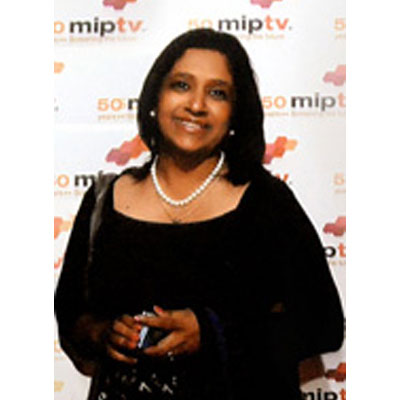
    MipTV & Mipcom India rep & indiantelevision.com‘s CEO Anil Wanvari alongside Zee TV‘s global syndication head Sunita Uchil

    How large was your delegation to MipTV this year? 

    We had representation from Europe, Africa, Asia Pacific and the Middle East region this year. Our teams are located in all these regions as well as in the USA now. Our strategy for gaining market intelligence has considerably improved. This has benefited in having a direct resource in the market with better client interaction taking place.

    ‘We are noticing a shift from consumption patterns- from traditional, DTH platforms to VOD, PPV mediums. The increasing importance of social media in influencing consumer tastes and the exposure of international lifestyles is creating a shift towards foreign content with the idea being to ‘try out new things’

    What was your objective from MipTV this year? How did you position yourself differently? Did you introduce any new products or offerings? How was the receptivity to it?

    Zee is the first to create a separate brand umbrella for trading and syndication. In 2012, we had mandated Mumbai based creative agency Young which had created the distinct Zee Bollyworld identity and this concept was well received within trade circles and has been a discernible differentiator for Zee at international content markets. At MipTV 2013, our objective was to leverage and build on this differentiator and to reinforce our positioning – ‘one stop shop for Indian entertainment content‘. We showcased our most successful properties and highlighted our dubbed content to clients.

    Any new ideas of trends you picked up this year from MipTV?

    We are noticing a shift from consumption patterns- from traditional, DTH platforms to VOD, PPV mediums. The increasing importance of social media in influencing consumer tastes and the exposure of international lifestyles is creating a shift towards foreign content with the idea being to ‘try out new things.’