Category: GECs

  • Gujarati film ‘The Good Road’ is Indian nomination for Oscars

    Gujarati film ‘The Good Road’ is Indian nomination for Oscars

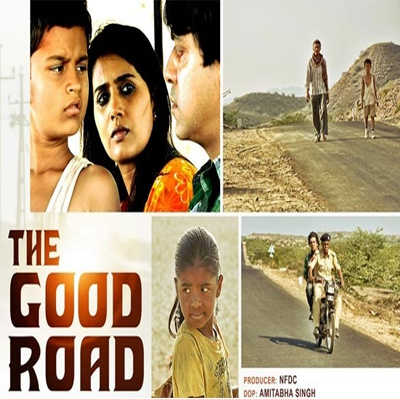
    New Delhi: Debut feature filmmaker Gyan Correa’s Gujarati film ‘The Good Road’ will represent India at the Oscars 2013 in the Foreign Language Film category.

    The film was picked by a 16-member committee headed by eminent Bengali filmmaker Goutam Ghose appointed by the Film Federation of India.

    Ritesh Batra’s Irrfan Khan starrer ‘The Lunchbox’, which has been a front runner for India’s entry to the Oscars, was the closest contender.

    However, ‘The Good Road’ was unanimously picked by the committee which comprised of eminent film professions representing different regions and languages from all over the country.

    Others in the running included ‘Bhaag Milkha Bhaag’, ‘Ship of Theseus’, ‘English Vinglish’ and ‘Shabdo’.

    ‘The Good Road’ had bagged the National Award for Best Feature Film (Gujarati) earlier this year.

    The National Film Development Corporation-produced film stars Sonali Kulkarni, Ajay Gehi, Keval Katrodia, Shamji Dhana Kerasia, Priyank Upadhyay, and Poonam Kesarsingh Rajput.

    Rajat Dholakia who has composed music for ‘Delhi 6’ and ‘Mirch Masala’ among others gave the music for this film.

    Based in Kachchh, Gujarat, the film revolves around a journey of three sets of people who travel on a highway, traveling across Banni, which borders the Rann. They are all on a journey to achieve their respective pursuits but over the next 24 hours, they discover something altogether different, something new and unexpected about their lives.

  • ‘Zoom Review Show’ completes 200 episodes

    ‘Zoom Review Show’ completes 200 episodes

    MUMBAI: Zoom, the Indian glamour and entertainment channel is high on the heels again. The channel which recently, crossed an unprecedented five million likes on Facebook has added one more success to its tale. The channels’ ‘Zoom Review Show’ crossed the 200 episode milestone on 20 September.

    Hosted by journalist and noted Bollywood expert Omar Qureshi, the show was launched in 2009. This most viewed movie review show on TV now has also become the longest running one.

    Talking about the success, Zoom TV editor-in-chief Omar Qureshi said: “It’s gratifying to reach the daunting milestone of 200 episodes of a weekly show. But all thanks to an amazing audience and a supportive industry who’ve been open to sometime not-so-flattering reviews, since fairness has been the benchmark set. We have always endeavored to give the first complete review and keep the viewing public in mind. And it’s gratifying that the people have given a ‘thumbs up’ to a continually top rated show. Here’s thanking all and cheers to another double century.”

    The show focuses on the regular movie-goer, who is keen on knowing if a movie is value for money or not. The star-cast of the movie, their performances, its musical score, item numbers, most impactful scenes, interesting or funny screenplay, the quality of its visuals – are some of the many factors that come together in determining the movie’s entertainment value. Rather than just giving a critical discourse about a movie, the show sets things into perspective by breaking down the movie for the audience around these aspects and gives a very relatable and believable analysis.

    The programme looks beyond Bollywood releases and also reviews the big Hollywood releases of the week. Acknowledging the importance of music in a Bollywood flick, it also features a dedicated section where the music of upcoming releases is reviewed.

    The completion of 200 episodes got the Bollywood fraternity congratulating the team on its success. Actor Ileana D’cruz said, “I congratulate Omar Qureshi and ‘The Zoom Review Show’ on its 200 episode.”

    Sonakshi Sinha in a message sent to all Zoom viewers said, “It is the one show where I get my reviews and the honest ones, so keep watching!”

    Ajay Devgn in his signature light-hearted style quipped to Omar, “It’s been 200 episodes of ‘Zoom Review Show’ and nobody’s killed you yet. So you’re living through it and I hope you keep surviving. You do a great job; just give a few more stars to my films.”

  • Jury for Jagran Film Festival Mumbai 2013 announced

    Jury for Jagran Film Festival Mumbai 2013 announced

    MUMBAI: Ahead of the fourth edition of Jagran Film Festival Mumbai 2013, the jury for the event has been announced. For the film festival which commences from 24 September, the jury members for the ‘Indian Showcase’ (feature in competition) section include film maker Basu Chatterjee, actress, film director and producer Aditi Ninad Deshpande, cinematographer Raamachandraah, film editor Suresh Pai and the current commander-in-chief of Indian theatre Feroz Abbas Khan.

    The event which will be held at Fun Republic cinema in Andheri west, Mumbai, will see more than 20 feature films, made in Indian regional languages, including Hindi blockbusters compete with each other in this category. The section also encourages debut directors to showcase their work in front of a global audience and compete with some of the bests, at both national and international level, in the industry.

    Apart from Indian showcase section, where India’s best feature films are competing with each other, the festival has also organised a competition for short films. Under the section ‘Jagran Shorts’ more than 35 short films made in various Indian regional as well as international languages are going to compete with each other. These short films will be judged by a panel of eminent jury including French actress Dorothy Briere, film director N Chandra and Rajshri Media managing director and CEO Rajjat A Barjatya.

  • Cutthroat sets new crowdfunding record

    Cutthroat sets new crowdfunding record

    MUMBAI: Adding an important landmark to the ever-evolving crowdfunding potential in India towards supporting independent films, Cutthroat – a film to be based on real life in a Business School – announced that it has managed to raise Rs 5.94 lakh in a span of last eight weeks.

    Directed by Sarthak Dasgupta of The Great Indian Butterfly fame, the film was seeking pre-production funds through Catapooolt, an industry-backed crowdfunding platform. The collection makes it the highest ever amount crowdfunded for a film project on any Indian crowdfunding platform.

    The total budget the project is seeking is Rs10 lakh.

    Commenting on this feat, Sarthak Dasgupta who recently received the Sundance Global Filmmaker Reward 2013, said, “I’m really humbled and honored with this extensive support and recognition that my proposed script Cutthroat has received so far. I always believed that this film should be made on basis of community support – and I’m glad that with Catapooolt – I’ve got the right team and platform to take this project to the desired communities. I’m sure that with this continuing momentum and interest in this film, we should be able to achieve the set crowndfunding target.”

    Recognising this step as a key indicator of growing interest and trust in crowdfunding in India, Catapooolt MD Satish Kataria said, “Globally, crowdfunding has been accepted as the new future of funding creativity and independent projects – and through Catapooolt – we continuously endeavour to populate this empowered way to support upcoming talent in India. We are ensuring that we don’t only stop ourselves as a platform, but go beyond and completely work hand-in-hand with project managers to help them achieve their desired targets.”

    So far, more than 50 contributors, from across the world, have come forward and lend their support for the film which is based on how things change during the placement season in a B School and how the peer pressures can play with dreams of the management students.

    Furthermore, as a part of really innovative exercise, Catapooolt along with the Syndenham Institute of Management Studies – has brought together more than 163 teams from leading management institutions to compete and draft the best possible marketing and outreach strategy for this film.

  • Grand Theft Auto V tops $800 million first day

    Grand Theft Auto V tops $800 million first day

    MUMBAI: It had been over five years since the last Grand Theft Auto game hit store shelves, and all that pent-up demand did wonders for sales of the franchise’s fifth installment, which went on sale Tuesday.

    Take-Two Interactive Software announced Wednesday that the first day of “Grand Theft Auto V” sales topped $800 million worldwide (excluding Japan and Brazil, where the launch is still expected).

    At about $60 a pop, that translates to more than 13 million units. It is the highest first-day retail sales in the company’s history and the GTA series, which had sold 125 million units before this release.

    The revenue numbers also make GTAV the biggest video game launch ever, exceeding the record set last November by Activision’s Call of Duty: Black Ops II, which hit $500 million in its first 24 hours and a record $1 billion its first 15 days.

    The question is whether GTAV will be able to maintain its momentum over the next two weeks and beat Activision with its consistently record-setting game. Then next up whether Activision’s next massive release, “Call of Duty: Ghosts,” can match $800 million its first day.

    GTAV’s setting this record speaks of three major trends in the video game industry, which has otherwise been struggling with massive sales declines as consumers shift their spending to digital add-ons, and free or cheap apps.

    First, big brands rule. During the past few years, consumers have bought fewer games, but they’re continuing to spend big on established titles.

    Second, digital content makes games more appealing. GTAV has more digital add-ons than ever, and that makes it a better value proposition to the consumer.

    And third, while people have held off on buying new consoles, with the next Microsoft Xbox and Sony PlayStation coming this fall, every year the user base with consoles grows and enables a bigger game launch.

  • Colors bets big with 24 premier on 4 Oct

    Colors bets big with 24 premier on 4 Oct

    MUMBAI: It’s raining shows on Colors. The channel has ambitions to retain its audiences and lure new ones with its slew of new show launches which it hopes will send its TVTs on an expansion mode. Just as Jhalak Dikhhla Jaa ended, in came Bigg Boss and, on 4 October, the international thriller 24 is set to premier on the Viacom18 general entertainment channel.

    The weekend slot of Friday and Saturday at 10 pm is what it has been given. This means that Uttaran and Bani will now have just 4 episodes a week and Comedy Nights with Kapil will be cut down to just once a week, that is Sunday, which could be disappointing for comedy lovers who have made it a hit. But Colors’ management says they don’t have a choice. “We have a problem of plenty. So shows need to be dropped to accommodate them,” says Colors CEO Raj Nayak.

    Safari Storme is said to have paid around Rs 16-18 crore to be the presenting sponsor. Next – part of the Videocon group – has been signed on as one of the associate sponsors. As per sources, the show has been created at 20 times the cost of a normal fiction show making it Colors’ biggest fiction property.

    Nayak says that the channel has mastered the art of monetizing big properties. That the show may run into losses is also expected but hopes are that it may just click with the audience. They believe it should get TVTs equivalent to TRPs totting between 2.8 to 3.

    The show has big plans on the digital front. Keeping the peg as ‘Race against time’ which is what 24 is all about, all activities undertaken revolve around it ranging from contests which play on the word ’24’. “The concepts will be time-bound,” says Colors digital head Vivek Srivastava.

    On social media, special behind-the-scenes, exclusive pictures, chats and possibly a hangout with Anil Kapoor are all in the line up to build the buzz around the show. Special emphasis is being given to build characters on social media and digital platforms to get fans to continue to stay connected with them. “We don’t have the luxury of 100 episodes to establish a character here,” says Srivastava.

    Although the views that a show gets through digital is much less compared to television, online activity helps generate conversations. The Colors Facebook page annually gets about 150 million views. However, it is very important since it helps them create brand bearers through normal people. An announcement on the application is expected soon, which Srivastava says is going to be very unusual. On the day of launch, a 15-minute preview is expected to be played before the actual telecast of the first episode.

    Made like a movie and treated like one as well. That’s the channel’s mantra to market this big property. The first phase includes visits to HSM (Hindi Speaking Markets) where Kapoor will interact with lay viewers, media and opinion leaders. Visits to Jaipur, Delhi and Patna have already been wrapped up successfully while more are in the pipeline. Integrations on Bigg Boss and Kapil and a few other fiction shows such as Madhubala are also to be expected in the coming days.

    Someone switching on the radio will soon hear something about 24 every 24 minutes on almost all FM channels including the big boys 98.3FM Mirchi and Red FM 93.5. Trailers have been planned to air on over 60 channels including news, regional and music. Print advertisements are planned to appear near the launch date in all leading editions of newspapers such as Times of India, Dainik Jagran.

    Theatres have already started playing promos during Madras Cafe and Grand Masti and the soon-to-premier Besharam is next in line. “We have something innovative planned in the outdoor space,” says Colors marketing director Rajesh Iyer.

    Speaking about the unusual timing for the show weekend programming (nonfiction) head Manisha Sharma says that it cuts out pressure from Comedy Nights with Kapil since comedy writing is not an easy task. 24 will take one episode’s place for three months after which Kapil will be back to two episodes per week. “The time slot is perfect because people who go to office can come home and watch it,” says Nayak.

    Plans are already afoot for the second season, even though the first season is yet to go on air. Now that’s what we call advance booking!

  • Prince William opens up to the world in a docu

    Prince William opens up to the world in a docu

    MUMBAI: The documentary chronicles Prince William’s passion for conservation in Africa, and how as a new father, he finds himself more committed than ever to saving Africa’s endangered species. The documentary will telecast on CNN International on Saturday, 21 September at 1:30 pm and Sunday 22 September at 3:30 pm.

    In the film, Prince William recalls how his love for Africa was born, remembering his late mother Princess Diana when she returned from her trips: “She would come back with all these stories and full of excitement and just passion for what she had been doing and I sort of used to sit there, quite a sort of surprised little boy at the time, taking it all in.”

    In the hour long special, Prince William shares with CNN’s Max Foster the evolution of his passion for conservation. From childhood tales told to him by his parents, to memories of visiting Africa for the first time, to his proposal to the Duchess of Cambridge, Prince William recounts the pivotal role the continent and its endangered species have played in his life. As a new father, what he once “believed,” he says he now “feels” on a much deeper level, and hopes that Prince George can experience the same Africa that he and his brother did as boys.

    Prince William’s Passion: New Father, New Hope will also feature exclusive footage of the Royal couple’s first public appearance together since the birth of their son at the Tusk Conservation Awards. The Duke of Cambridge, as the Royal Patron of Tusk Trust – a dynamic organisation that funds development programs in Africa – will present the Prince William Award for Conservation in Africa.

  • Afternoon slot: Siesta time for GECs?

    Afternoon slot: Siesta time for GECs?

    Back in the nineties, afternoon shows enjoyed their heyday when women, once done with household chores, settled down, lunch in hand, sometimes maid in tow, to watch their favourite serials including Shanti and Itihaas.  

    Two decades later, the once-popular afternoon slot seems to have lost its relevance, with a majority of broadcasters choosing to air re-runs of prime-time shows rather than focus on fresh content.

    The decline of this slot can be attributed to a number of reasons. Firstly, while there’s now a rash of channels, there seems to be precious little to excite a large section of women post their morning routine. Secondly, many more women are now at their workplace at this time of the day. Thirdly, several news channels may be airing more interesting shows at the same time.

    While this is broadly it, indiantelevision.com decided to look closer at the changing trends of the past two decades to get a better idea whether it’s really curtains for the afternoon slot.

    Popularity graph

    It is not that there is no potential in the afternoon slot. But, its about priority. There is more scope for improvement if we try to capture viewers in the prime time slot, says Nikhil

    Madhok

    In 1994, Shanti and Swabhimaan – two serials aired on Doordarshan – captured a nation’s imagination, catapulting the afternoon slot into the limelight. This was when cable television had just arrived on Indian shores and private satellite channels were focused on building their primetime band as also building viewership in the afternoons.

    In 2000, Sony tried to dominate the afternoon turf with Ghar Ek Mandir, which lasted for a good two years. Meanwhile, most other channels stuck to re-runs during that time band.

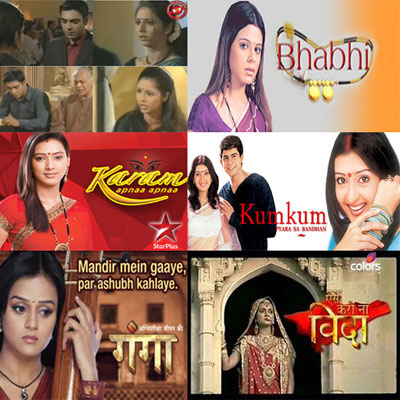
    The channels however soon woke up to the fact that it was the homemaker who had the potential to draw advertisers. With this realisation came the game of one-upmanship among Hindi GECs. Around the same time, a slew of shows mushroomed including Kumkum – Ek pyaara sa bandhan (2002 – 2009), Bhabhi (2002 – 2008), Karam apna apna (2006 – 2009) and Humari Devrani (2008 – 2012). They came to be known as the K shows and saw a long innings with increasing visibility year-on-year.

    Another landmark came in the form of Zee Woman, Zee’s pioneering effort to bring a women’s magazine on television. Launched on 12 July, 2004, Zee Woman revolved around the homemaker and occupied the 12:30 pm to 3:00 pm slot. It offered everything a women’s magazine does – features and tips on beauty, interiors, cookery, good house-keeping and the latest fashion trends.

    We are the service providers. If broadcasters need that service, we will be happy to bring alive that slot, says Sudhir Sharma

    Three years later, Zee Woman suffered a blow from two shows – Meri Doli Tere Angana (2:00 pm) and Rakhi (1:30 pm) – both having fresh content. By contrast, GECs like SAB and Life OK preferred to play re-runs of their most popular shows.

    In February 2010, Colors too jumped onto the bandwagon. The channel produced two shows – Agnipareeksha Jeevan Ki… Ganga (1:30 pm) followed by Aise Na Karo Vida (2:00 pm), packaging the duo as Saanjhi Dopahar. While the shows got a good viewership in the first week, there was a dip in viewership, second week onward.

    All say, the afternoon slot was created mostly for women, especially homemakers. With a majority of soaps revolving around women and their issues, the shows found instant connect. In fact, some of the afternoon shows fared better than their prime-time counterparts. For example, Kumkum which ranked fourth among Star Plus’s top ten shows of all time and was the country’s fourth-longest running serial as well.

    It was sometime after 2010 that Hindi GECs started losing interest in making new shows for the afternoon slot. Television channels including Sab, Sahara One, Life OK and Zee went back to airing re-runs of prime-time soaps in the afternoon.

    Why did the afternoon slot die?

    Today, we dont have enough good writers and ideas for us to put content for the afternoon slot, says Ajit Thakur

    The reason, according to Colors weekday programming head Prashant Bhatt is: “Afternoon slots were extremely popular when there were not many GECs. Fewer channels meant fewer options for people to choose from the available shows aired across channels. This gave channels an opportunity to air fresh content in the afternoon slot. But the scenario has changed now.

    Viewers have an option to watch eight programs during prime time but end up watching only one. So channels telecast re-runs of their prime time shows in the afternoon, so viewers can catch up on them.”

    Examples of this are Balika Vadhu on Colors, which is repeated five times in a day and accounts for 25 per cent of the channel’s viewership and Sony, which aired re-runs of its crime fiction series CID (1998 till the present) for four to five hours in the afternoon slot.

    According to Bhatt, there’s so much original programming in terms of prime time shows that there’s no need for original programs in the afternoon. With re-runs of prime time shows during the afternoon, audiences get to catch up with what they haven’t been able to watch.

    With too many GECs comes growing competition among them. This means they might focus on the marketing and promotion of evening prime time shows that bring more viewership and consequently, more money.

    The afternoon slot should have more dramas that appeal to women. The content should include more of romance and cast eye candy men, says JD Majethia

    So have producers and directors lost interest in producing shows for the afternoon slot?

    “Definitely not,” shoots back Sunshine Productions owner Sudhir Sharma, adding: “If broadcasters see the need, if broadcasters do any business henceforth, then we will be ready to do it. We are the service providers. If they need that service, we will be happy to bring alive that slot.”

    According to Star India vice president marketing Nikhil Madhok, the channel is first trying to strengthen its evening slot rather than bring fresh content in the afternoon. “In Star Plus, we have initiated expansion of our programming time with the launch of Ek Ghar Banaunga during early prime time at 6:30 pm,” he says. : “It is not that there is no potential in the afternoon slot. But, it’s about priority. There is more scope for improvement if we try to capture viewers in the prime time slot. Also, it is more important from a financial perspective and viewership availability,” he adds.

    Afternoon slots still hold promise, but it is a bit risky proposition as the shows need to generate sizably better ratings than the repeat ones, says Navin Khemka

    Madhok is also quick to point out that the channel is open to innovative ideas and experiments with different time slots. “We had filmed Satyamev Jayate at the 11:00 am slot when we found potential in that. It was followed by Lakhon Mein Ek, which ran for certain number of weeks and then we didn’t follow up. We have also opened up the weekend 7:00 pm slot, where we air content related to our reality shows,” he says.

    For a newly launched channel like Life OK however, fresh programming in the afternoon slot does sound interesting. “Yes! Definitely! But, it is about funding.  And if there is already enough good content that can be picked up from the prime time and aired in the afternoon, there is no point in airing fresh content. Also today, we don’t have enough good writers and ideas for us to put content for the afternoon slot,” says Life OK general manager Ajit Thakur.
    Thakur though did say it was an important slot and it was just a matter of time before it would come back.

    What about DD, which in a sense, pioneered the afternoon slot? Says Doordarshan director general (programming) Mukesh Sharma: “In DD National, our afternoon slot is flooded with strong Hindi programming. Though we air repeats, it is doing extremely well for us. To be practical, viewers don’t watch all the shows that are aired on television during prime time. Taking that into consideration during afternoon, mostly women who have missed out on their favourite shows have an option of watching it in the afternoon. And this works perfectly for us.”

    Afternoon slots were extremely popular when there were not many GECs. Fewer channels meant fewer options for people to choose from the available shows aired across channels, says Prashant Bhatt
    Speaking about DD’s big properties like Saraswatichandra, Tum Dena Saath Mera, Aur Ek Kahani and Hari Mirchi Lal Mirchi that are well adapted by the audiences in the afternoon, Sharma says:

    “These soaps are doing well on the track as the target audience is women (housewives).”

    ZenithOptimedia senior vice president Navin Khemka has a different view. “If any Hindi GEC launches afternoon show/s, it will definitely work as there is a good chunk of audience sitting there and FMCG advertisers want to dominate this slot and would like to invest in full force.

    Afternoon space should focus more on family and drama series that adds value to the content.

    Afternoon slots still hold promise, but it is a bit risky proposition as the shows need to generate sizably better ratings than the repeat ones,” he says.

    So if the afternoon slot were to be reconsidered by broadcasters, what kind of content would work? Says Hats Off Productions owner and actor/director JD Majethia: “The show’s topic, subject, and the small aspects should all be women-oriented. The afternoon slot should have more drama that appeals to women. The content should include more of romance and cast eye candy men. These are things women cannot watch during the evening time with their family. The content can also be inspirational and designed differently to attract the audience during the afternoon slot.”

    In most cases women who have missed out on their favourite shows have an option of watching it in the afternoon, says Mukesh Sharma

    Apart from broadcasters not giving enough importance to the afternoon slot, the other reasons for its decline include the rise of shows like Saas Bahu Saazish on news channels. While the then Star News (now ABP News) started the trend of airing ‘behind the screen’ gossip from various shows, other news channels too caught on. Soon enough, women were glued onto these shows, many a times preferring these to daily soaps.

    While there are different views on the relevance of the afternoon slot and whether broadcasters should reconsider fresh content during afternoons, whether channels will ever get back to brand new content in this time slot, only time will tell.

  • Discovery’s Hollinger to step down in June 2014

    Discovery’s Hollinger to step down in June 2014

    MUMBAI: For many broadcast vets in Asia, Mark Hollinger is a familiar face. The president & CEO of Discovery Networks International has pushed growth for the network outside of the US, especially in Europe and Asia in its early days of expansion globally. Come June 2014, Hollinger will no longer be winging it to Asia on Discovery business. The reason: he has decided not to renew his contract with the network when in it expires mid next year.

    The 20 plus year old Discovery veteran informed president and CEO David Zaslav of his decision last week, the network says. What prompted him to do so was the fact that he is tired of the many air miles his job demands in countries in times zones out of kilter with the US (more than 150 days each year for the past several years). Hollinger added that he wants to spend more time staying rooted in Uncle Sam and with family.

    Hollinger joined Discovery in 1991 as Vice-President & Deputy General Counsel. In 1994, he was named Acting General Manager for Discovery Channel Asia. Based in Hong Kong, he was responsible for overseeing and coordinating all activities related to the operation and launch of the flagship network in Asia.

    Hollinger today oversees the strategic development and daily operations for a division that distributes 42 entertainment brands, in 45 languages, to more than 1.6 billion cumulative subscribers in 224 countries and territories across Europe, the Middle East, Africa, Asia-Pacific and Latin America.

    In 2012 and 2013, Hollinger oversaw the expansion Discovery’s international operations with the acquisitions of Takhayal Entertainment and its affiliated companies in Dubai and Egypt, including its flagship TV network, Fatafeat, the No 1 food network in the Middle East; Switchover Media in Italy and its portfolio of four free-to-air channels and one pay-TV channel, making Discovery the third largest broadcaster in the country; and the largest transaction in Discovery’s history with SBS Nordics, a top-three portfolio of television brands across Denmark, Norway, Sweden and Finland that feature leading nonfiction content, locally produced entertainment programs, sports and the best scripted series and movies from major studios. Hollinger also engineered the investment of a 20 per cent stake in TF1’s Eurosport, a top destination for live sporting action for viewers across Europe and Asia-Pacific.

    Said Zaslav: “Mark is a consummate professional and amazing leader who has made a huge impact on all of us at Discovery Communications over the 23 years he has been at the company, and I am so grateful for his contributions, leadership and unwavering integrity.”

    Discovery Communications announced that it would be looking for a successor for Hollinger immediately.

  • Fame is dead, long live Inox

    Fame is dead, long live Inox

    MUMBAI: In 2011, Inox’s takeover of Fame India made for headlines, while giving a fillip to the Anil Ambani-owned Reliance Capital Partners and becoming the country’s biggest multiplex chain in the bargain.

    Two years later, change is finally happening. On Monday, 17 September the Fame website www.famecinemas.com ceased to exist, and is in the process of moving into the Inox website.

    All Fame properties will henceforth be called Inox. Also, a marketing campaign comprising print, outdoor and radio and spanning over two months has been kicked off to communicate the new name to people. As part of the campaign, there will be advertisements and inserts in a range of newspapers across cities that house Fame multiplexes. The value of marketing across 24 cities is pegged at approximately Rs 15-20 crore by industry sources. Similarly, Fame will undergo physical changes where the new logo of Inox will make its presence felt on tickets, popcorn cups and uniforms worn by the staff.

    About the acquisition, Inox Leisure CEO Alok Tandon said: “The good points of Fame and Inox have been put together. The first phase will see Mumbai experiencing the change this week, after which, Kolkata and Bengaluru are next with cities such as Pune, Panchkula and Dhanbad following suit.”

    Asked why it took two years for the renaming, Tandon said: “The acquisition got finalised only this year in May since we had to visit two courts (Baroda and Mumbai) in two states- . Only after that could we start our renaming process.”

    With 73 multiplexes and 284 screens across 40 cities; of which 25 multiplexes with 94 screens belong to Fame India, Inox is in a happy space. Maharashtra boasts the highest number of Inox multiplexes – 19 with 76 screens, followed by West Bengal with 13 multiplexes and 49 screens. Indeed, the last of Inox’s 73 multiplexes was added only yesterday, in Haryana, with nearly Rs 7-10 crore having gone into the setup. As things stand, Inox claims to attract over four crore movie goers annually.

    What’s more, plans are afoot to expand into cities like Greater Noida, Gurgaon, Jalgaon, Madurai, Jamnagar and Manipal as also increase the existing number of multiplexes in places like Lucknow, Raipur and Surat.

    To mark the change from Fame to Inox, a new ‘Feature Presentation Dater’ has been created, with sound designing by Oscar Award winning Resul Pookutty. “Our aim is to make the audience experience high fidelity,” says Pookutty, adding that an atmos version of the same is on the anvil.

    The question now remains whether Inox will continue to retain its Fame?