Category: GECs

  • DD to telecast live launch of Mangalyaan Mission from Sriharikota

    DD to telecast live launch of Mangalyaan Mission from Sriharikota

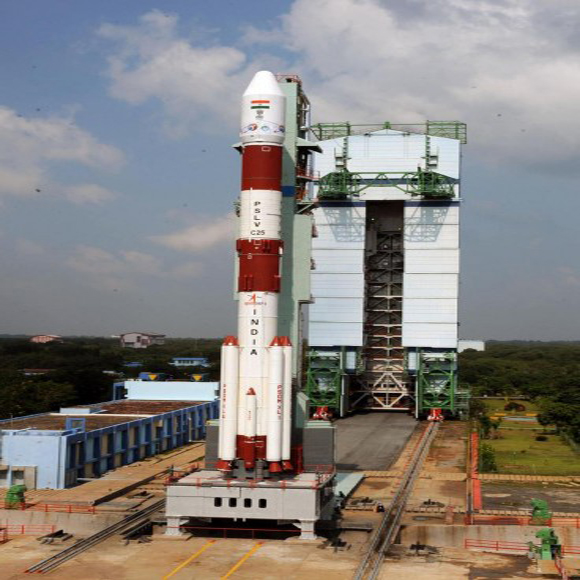
    NEW DELHI: Doordarshan will telecast live the launch of the India’s Mars Orbiter Mission (MOM) – which will conduct a detailed study of the Martian atmosphere and is the nation’s first ever mission to the Red Planet.

    The telecast PSLV – C25/Mars Orbiter Mission will be telecast live on DD National from 1410 hrs from Sriharikota today afternoon. Prior to that, there will be a ten-minute curtain-raiser on the mission.

    The countdown commenced on 3 November in the morning at 6.06 hrs, according to an official statement from the Indian Space Research Organization (ISRO).

    India would become only the fourth nation or entity from Earth to survey Mars up close with spacecraft, following the Soviet Union, the United States and the European Space Agency (ESA). Past attempts to reach the Red Planet from both China and Japan have failed.

    MOM is the first of two new Mars orbiter science probes from Earth set to blast off for the Red Planet this November. Half a globe away, NASA’s MAVEN orbiter remains on target to launch barely two weeks after MOM on 18 November from the Florida Space Coast.


    MOM is on schedule to lift off atop the powerful, extended XL version of India’s highly reliable four stage Polar Satellite Launch Vehicle (PSLV-C25).

    The 44 meter (144 ft) PSLV will launch MOM into an initially elliptical Earth parking orbit of 248 km x 23,500 km. A series of six orbit raising burns will eventually dispatch MOM on a trajectory to Mars around 1 December.

    Following a 300 day interplanetary cruise phase, the do or die Mars orbital insertion engine will fire on 21 September 2014 and place MOM into an 366 km x 80,000 km elliptical orbit.

    MOM arrives about the same time as NASA’s MAVEN orbiter. They will significantly bolster Earth’s armada of five operational orbiters and surface rovers currently investigating the Red Planet.

    MAVEN and MOM will “work together” to help solve the mysteries of Mars atmosphere, the Chief Bruce Jakosky of MAVEN told Universe Today. Although there are no NASA instruments on board MOM, NASA is providing key communications and navigation support to ISRO and MOM through the agency’s trio of huge tracking antennas in the Deep Space Network (DSN).

    The $ 69 million 1,350 kilogram MOM orbiter, also known as ‘Mangalyaan’, is the brainchild of ISRO.

    ‘Mangalyaan’ is outfitted with an array of five indigenous science instruments including a multi colour imager and a methane gas sniffer to study the Red Planet’s atmosphere, morphology, mineralogy and surface features. Methane on Earth originates from both biological and geological sources.

  • Zee 24 Gantalu faces acid test

    Zee 24 Gantalu faces acid test

    MUMBAI: Change is in the air at Zee Media Corp Ltd’s (ZMCL) Telugu news channel Zee 24 Gantalu. Reason: the management has decided to restructure the straggler in the ZMCL portfolio, which has been buffeted by competition in the hyper-news state of Andhra Pradesh.

    ZMCL had set up Zee 24 Gantalu in a 50:50 association with a local politician Satyanarayanan Botsa, whose brother Sateesh Botsa ran the channel.

    “It is not viable for us to run it in its current state. We have invested heavily in Zee 24 Gantalu and have tried many different strategies to make it work. But it has been losing a lot of money,” says ZMCL CEO Alok Agrawal. “We are currently reevaluating the options before us.”

    Among the options before it is shutting down the channel. But Agrawal says no decision has been taken in this direction. “We will know clearly in a couple of weeks what we will do,” he points out.

    What is clear is that the association between Botsa and ZMCL will not continue with Zee 24 Gantalu, if one goes by what Sateesh Botsa has told indiantelevision.com. Quoting him: “It was a management call to stop the channel due to several reasons. Now it is completely a ZMCL property. As a news channel it has stopped but they (Zee) may want to continue it as another channel.”


    Alok Agrawal admits that the channel has been incurring losses and that they are looking at restructuri

    A surf through the Telugu news channels space shows that Zee 24 Gantalu is airing only entertainment video footage and fillers without any ticker as of now. Additionally, rival channels told indiantelevision.com that Zee 24 Gantalu staff has started approaching them for jobs. An employee stated that the management has hammered out a severance package under the direction of ZMCL CFO Dinesh Garg which includes three months pay. Agrawal however stated that this is not true and that it could be possible that employees have chosen to look for jobs, because they know that a major restructuring is planned. Zee 24 Gantalu reportedly has 300 employees working with it.

    The channel has been in the news recently because of the cases which have been filed against it for the stories it has aired – the latest one involving the Andhra Pradesh Police DGP V Dinesh Reddy. According to sources, this was one of the reasons that prompted Botsa to opt out.

    Who chose to opt out is not clear, but clearly a new chapter is about to be written in the Zee 24 Gantalu saga.

  • Six ATN channels launch on Canadas Bell Fibe TV

    Six ATN channels launch on Canadas Bell Fibe TV

    MUMBAI: Asian Television Network (ATN) International has launched six new channels on Bell Fibe TV, an IP based TV service offered by Bell Canada. Four of them are in collaboration with India’s public service and largest terrestrial broadcaster Doordarshan and the other two with SAB TV Network.


    The channels are GEC ATN-DD India, news channel ATN-DD News, cultural and lifestyle channel ATN DD Bharati, Urdu GEC ATN-DD Urdu, comedy channel ATN – Dhammal and music channel ATN- Mastiii. “We have aggressive plans to add substantial value to our Diaspora and enhance our strong Customer base on a Consumer oriented Pick and Pay Model across Canada,” says ATN CEO and president Shan Chandrasekar.


    Earlier this year, ATN collaborated with DD to launch five channels in Canada earlier this year. It had said that it wanted to expand its base through cable, satellite and IPTV platforms across Canada. ATN has 44 channels to its list.


    Bell Fibe TV was launched three years ago and it is expected to be available to about five million households by 2015.


    ATN caters to the Indian population in Canada. It is also a major distributor of cricket programming in the country.

  • Niche channels to dominate TV in future

    Niche channels to dominate TV in future

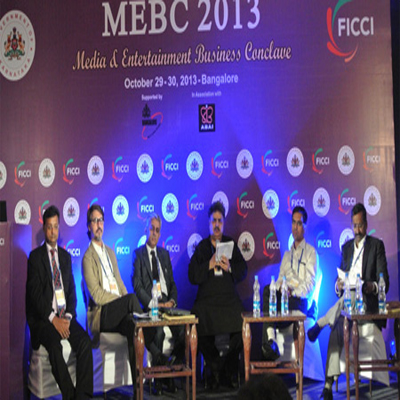
    BENGALURU: At the opening ceremony of the FICCI MEBC (Media and Entertainment Business Conclave) – South, which was held on 29 and 30 October, Ministry of Information and Broadcasting Secretary, Bimal Julka highlighted the fact that digitisation is at a growing trajectory in the country and by the end of the next year we shall all be living in digital homes.


    According to data provided by a FICCI Deloitte report on media and entertainment in south India, television constitutes 56 per cent of the market share with Rs 13,470 crore out of the total of Rs 23,900 crore. Digitisation is going to help the segment grow at a CAGR of 20 per cent in the next four years.


    While the digital world is changing phenomenally, we wonder how the broadcasting industry is adapting to the change. This, and various other points were discussed in a session on “the broadcasting ecosystem in the digital era” which included BECIL chairman K Subramanian, IBM global services head (media and entertainment) and ED Raman Kalra, Deloitte Coimbatore partner-audit C R Rajagopal, Amagi Media Labs co founder Srinivasan K A and Whats on India COO Sugato Banerjee formed the panelists, while MXM India CEO and editor in chief Pradyuman Maheshwari moderated the session.


    The session kick started with Subramaniam highlighting the humongous task that was undertaken in DAS (Digital Addressable System) phase I to install about 75 lakh STBs and led to nearly 95 per cent digitisation in 38 cities. Five out of 38 are in South India, according to the report. He added that in all this DTH had taken a backseat except for Chennai where the DTH penetration is about 40 per cent and digitisation is lagging due to political turmoil.


    Banerjee also supported it by saying that phase I and II saw DTH take a step back and digital penetrate strongly in Mumbai, Delhi and Kolkata.


    Banerjee also highlighted certain issues that popped up during the process of digitisation. “In a city like Mumbai where people live in buildings, having a cable run through the building is easy. With DTH, the dish needs to be facing the satellite. In places where houses are far away from each other, cost of running the cable from home to home is higher and more efforts are needed. If some of these places don’t even get electricity for hours why would they want to pay for STBs?” he remarked.


    There was a time when there was a scarcity of channels but now they are in abundance. According to Banerjee, there are about 700 working channels in the country but it is unrealistic to have so many channels in the digital arena. The rising number of channels has led to narrowing down of viewership. “Five years ago there was no food channel in the country and now there are five. The long tail will give more choice to viewers and fringe channels have benefitted due to digitisation especially in the urban cities,” said Banerjee.


    At the same time, the growing number of channels will put pressure on its visibility. “Now, the issue would be to bring one’s channel to viewers notice,” said Srinivasan.
    Viewership will be segmented leading to an increase in the number of niche channels.  “Broadcast is a term that doesn’t seem to suit the current scenario. Now it is time to ‘narrow-cast’,” said Srinivasan.


    According to Kalra, their IBM global survey on consumer insight has shown that people don’t want to be categorised in demographics. “Consumers want content tailor-made for them. The biggest challenge in the future will be to get direct content for people and then make them spend for it,” he said.


    At the inaugural session of the event, Film Federation of India president Ravi Kottarakara raised the issue of service tax being a big hindrance on the industry. The same was also brought up by Rajagopal at the session. “Not having enough capital is a challenge for the industry to create things. Taxation needs to be looked into as well as interesting financial modules need to open up,” he said.


    At the same time, there is also the issue of paying for individual channels in future as consumers are used to paying a small amount for a big pack of channels. But Kalra pointed out that a person who could pay Rs 300 for a movie now, as compared to Rs 25 a few years ago, will definitely have the capacity to pay more for TV.


    However, Banerjee chose to disagree and said, “There is a difference between making them pay and the willingness to pay.”


    Although carriage fees will disappear in the digitised world, Banerjee said it will reappear in another form of placement fees as to which channel will appear first. According to industry sources, carriage fees range from Rs 3-5 lakhs. The industry also lacks advertising funding as compared to print. “Print has about 2 lakh advertisers but TV has just 12,000,” said Subramaniam.


    TV consumption on multiple screens is also set to grow. As on March 2013, 143 million users in India were mobile internet users (according to the FICCI Deloitte report). Its analysis report also showed that video consumption had increased from two hours to three hours from 2010 to 2012. “There will be monetisation of content as more connected devices emerge. Only then we will know which genre is being seen and its statistics,” said Subramaniam.
  • Airtel to acquire Warids Congo Brazzaville Operations

    Airtel to acquire Warids Congo Brazzaville Operations

    MUMBAI: Bharti Airtel (Airtel), a leading global telecommunications services provider with operations in over 20 countries across Asia and Africa, has entered into a definitive agreement with the Warid Group (Warid) to fully acquire Warid Congo SA. The agreement is subject to regulatory and statutory approvals.


    The agreement marks the second in-country acquisition by Airtel in Africa. It had acquired Warid’s Uganda operations earlier this year. The latest acquisition will make Airtel the largest mobile operator in Congo Brazzaville with around 2.6 million customers. At present, Airtel is the second largest operator in the country with over 1.6 million customers, while Warid is the third largest with around one million customers.


    The agreement looks at bringing together the strengths of Airtel and Warid in Congo Brazzaville and benefit customers in the form of affordable tariffs, superior 2G/3G network, affordable voice and data services and superior customer care. In addition, existing Warid customers in Congo Brazzaville will join Airtel’s global network of over 280 million customers and enjoy the benefits of ‘One Airtel’ network with affordable roaming rates across Africa and South Asia, besides other exciting bouquet of innovative 2G and 3G services.


    Speaking on the agreement, Bharti Airtel MD and CEO (International) Manoj Kohli says: “This acquisition is in line with our stated strategy of strengthening our market position through in-country acquisitions, as and when suitable opportunities come along. We are at an advance stage of successfully integrating Waird’s Uganda operations with that of Airtel and look forward to a similarly swift transition in Congo Brazzaville as well. As already demonstrated in Uganda, the merger will bring more value for the customers in the form of affordable data and roaming tariffs, innovative products, Airtel Money, world-class networks and customer care. We would like to express our deep gratitude to the government and look forward to its support to this deal.”


    Speaking on the agreement Warid, Congo Brazzaville board member Sriram Yarlagadda says: “This agreement creates a win–win situation for the customers and provide them with an opportunity to be part of one of the largest mobile services providers in the world. The customers can look forward to enjoy affordable voice tariffs and 3G data services on the most extensive network. On this occasion, we would also like to express our sincere gratitude to the government for its support and look forward to its continued cooperation towards a successful transaction.”


    With presence across 17 African countries, Airtel is the largest telecom service provider across the continent in terms of geographical reach and had over 66 million customers at the end of quarter ended September, 2013. Globally, Airtel is ranked as the fourth largest mobile operator in terms of subscribers.

  • IIMC and QUT join hands for training and capacity building

    IIMC and QUT join hands for training and capacity building

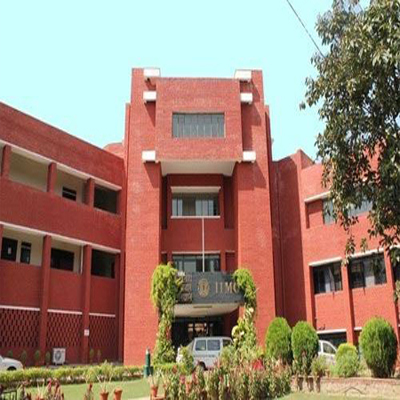
    NEW DELHI: The Indian Institute of Mass Communication (IIMC), New Delhi, and Queensland University of Technology (QUT), Brisbane, Australia have agreed to collaborate in academic programmes and in frontier areas of research in Media and Communication.


    An International Cooperation Agreement to this effect was signed by Information and Broadcasting Ministry Secretary and IIMC chairman Bimal Julka and Professor Peter Coaldrake, Vice Chancellor of the Queensland University of Technology (QUT).


    The agreement envisages bringing ICT in academic programmes in a significant way. Both the institutes have agreed for the development of joint venture projects and also for opening avenues for developing a collaborative doctoral programme to benefit students and faculty. The bilateral cooperation agreement also envisages organization of joint academic and scientific activities, such as courses, conferences, seminars, symposia or lectures, exchange of staff and students and exchange of materials and publications of common interest.

    One of the core areas of the agreement is to facilitate training of senior and mid-level Indian Information Service officers at the QUT, especially in use of modern technology and social media for providing information about government policies to stakeholders. The objective is to ensure skill development of IIS officers in critical areas of the changing media landscape.


    This is the first agreement signed by IIMC seeking international collaboration and partnership with a foreign university. The agreement aims to facilitate a two-way value added training and capacity building programme in the field of Mass Media and Communication.


    This cooperation agreement will be valid for five years and will be reviewed six months prior to expiry and may be renewed for a further term by mutual agreement.


  • Sony gets permission to downlink more channels into India

    Sony gets permission to downlink more channels into India

    NEW DELHI: The government has approved a proposal by Multi Screen Media for increasing the foreign equity participation for production of television programmes in India.


    The approval has also been given to the company for downlinking certain TV channels, following a recommendation by the Foreign Investments Promotion Board.


    However, the Finance Ministry said this will not require any fresh inflow of foreign direct investment.

  • Sony gets permission to downlink more channels into India

    Sony gets permission to downlink more channels into India

    NEW DELHI: The government has approved a proposal by Multi Screen Media for increasing the foreign equity participation for production of television programmes in India.

    The approval has also been given to the company for downlinking certain TV channels, following a recommendation by the Foreign Investments Promotion Board.


    However, the Finance Ministry said this will not require any fresh inflow of foreign direct investment.

  • Films form important component of Festival of India in Peru

    Films form important component of Festival of India in Peru

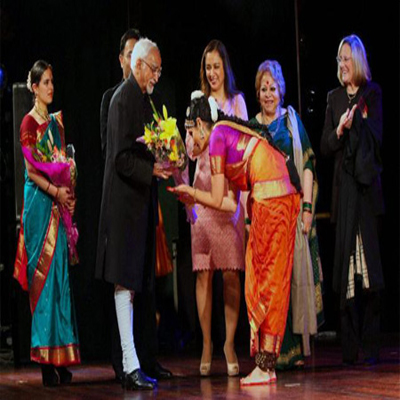
    NEW DELHI: Indian films are making a global presence it seems. At the Festival of India in Peru that was recently inaugurated by vice president Hamid Ansari, few new Indian films and old classics including Raja Harishchandra (silent), Taare Zameen Par (Hindi), Ghare Bhaire (Bengali), Ardh Satya (Hindi), Bobby (Hindi), A Wednesday (Hindi) and Kabhi Haan Kabhi Naa (Hindi) are being screened. The Indian Film Festival is being coordinated by the Information and Broadcasting Ministry.


    An India-Peru Literature Festival and an Indian Classical Dance Festival is also being held as part of the fest.


    Ansari’s visit is the highest ranking bilateral visit since year 1998 from India to Peru. The Festival would manifest many elements of long, rich and diverse Indian cultural heritage and would be the largest Indian cultural festival ever held in Latin America and the Caribbean. This reflects the special place that Peru enjoys among Indians.


    The inaugural function was attended by the Peruvian First Vice President Marisol Espinoza and a number of senior dignitaries from the Indian and Peruvian side.


    Indian Culture Secretary Ravindra Singh who is in Peru to mark the occasion said the Festival is expected to bring the Indian and Peruvian people closer to each other and will enhance people to people contact.


    Highly reputed Indian writers like Arun Kamal, H S Shivaprakash, K Satchidanandan, Purshottam Agarwal, Shyama Prasad Ganguly, and Ms Karabi Deka Hazarika participated in the symposium on India-Latin America: Literary Exchanges and Influences and Contemporary Literary Trends and their Challenges in a Multilingual Society in addition to a session on poetry reading.


    Several noted Peruvian Writers including Jose Leon Herrera, Pablo Carreno Cabrejos, Jose Ignacio Lopez Gaston, Marcel Velaquez Castro, and leading poets Carlos German Belli, Mario Montalbetti, and Marcos Martos would be participating in the Literature Festival. The Literature Festival is being coordinated by the Sahitya Academy.

    The Indian Dance Festival in Peru is titled ‘Nrityarupa’, the mosaic of Indian dance which encapsulates the experience of Indian dance as it has evolved in various parts of the India. It offers a glimpse of the great mosaic of cultures that constitutes the Indian Nation, and demonstrates in a creative, kinetic form their dynamics in relation to each other. Six dance forms representing the diversity of India’s culture have been chosen for this presentation to audiences in Latin America: Bharatanatyam of Tamil Nadu, Kathank which is pre-eminently the dance of northern India; Odissi from Odisha in eastern India; Manipuri from north-eastern State of India; Kathakali of Kerala at Southern tip of the Indian peninsula; and Chhau which covers a wide swathe of territory in eastern States of the Union.


    One seamless presentation of these dances has been visualized by leading to a jubiliant finish. The Indian Dance Festival is being coordinated by the Sangeet Natak Academy.


    The Festival of India in Peru is being coordinated by the Culture Ministry in association with the Sahitya Academy, the Sangeet Natak Academy and the I&B Ministry.


    Meanwhile, India and Peru have signed a Letter of Intent for enhancing cooperation in the fields of dissemination and promotion of cultural heritage of each other´s countries.


    The two sides underscored the importance of further deepening bilateral cultural relations through cultural exchanges and cooperation in diverse art forms such as painting, dance, theatre, literature, craft, etc. as well as holding of cultural festivals in each other´s countries from time to time. 

  • Raj TV reports flat q-o-q revenue for Q2-2013; 26 per cent lower q-o-q PAT

    Raj TV reports flat q-o-q revenue for Q2-2013; 26 per cent lower q-o-q PAT

    BENGALURU: Television network Raj Television Network Limited (Raj TV) reported almost flat revenue for Q2-2014 at Rs18.35 crore as compared to the Rs18.29 crore reported for Q1-2014. Y-o-y revenue was however higher by 12.3 per cent (about Rs 2.01 crore higher) than the Rs 16.34 crore for Q2-2013.

    Raj TV’s PAT for Q2-2014 at Rs 3.46 crore was about 26 per cent lower than the Rs 4.67 crore for Q1-2014, but 50 per cent higher than the Rs 2.31 crore y-o-y (Q2-2013).


    Despite a 23 per cent lower cost of revenues at Rs 5.18 crore for Q2-2014 as compared to the Rs 6.75 crore for Q1-2014 and lower by almost a third (32 per cent) cost of revenue for Q2-2013 at Rs 7.58 crore, higher employee benefits, higher depreciation and amortisation expense and elevated administrative expenses have increased the total expense by about two per cent to Rs 13.09 crore as compared to the Rs 12.85 crore for Q1-2013.  Raj TV’s total expense at Rs 13.55 crore for Q2-2013 was higher by 3.3 per cent as compared to Q2-2014.


    Administrative cost at Rs 3.06 crore for Q2-2014 was a whopping 13.5 per cent more than the Rs 2.69 crore for Q1-2014 and almost 26 per cent more than the Rs 2.43 crore for Q2-2013.


    Further, the network paid almost 17 per cent higher finance cost at Rs 97.15 lakh (Rs 0.9715 crore) as compared to the Rs 83.34 lakh (Rs 0.8334 crore) for Q1-2014 and almost 28 per cent higher finance cost than the Rs 76.02 lakh (Rs 0.7602 crore) for Q2-2013.