Category: GECs

  • IMG Worldwide acquired by WME-Silver Lake for $2.3 bn

    IMG Worldwide acquired by WME-Silver Lake for $2.3 bn

    MUMBAI: The curtains have finally fallen on an acquisition which was in the news for quite some time now. Private investment firm Forstmann Little & Co has agreed to sell global sports, fashion and media business IMG Worldwide to US-based William Morris Endeavour  Entertainment (WME) and its stakeholder Silver Lake Partners at a price tag of around $2.3 billion.


    The final bidders CVC Capital and Chernin Entertainment and a consortium of ICM Partners and the Carlyle Group, bid less than $1.8 billion, thus losing out to WME.


    WME is a leading US-based entertainment and media company with an unparalleled client list of artists and content creators across film, television, music, literature, theatre and digital media and is led by co-CEOs Ari Emanuel and Patrick Whitesell.


    It was formed by the 2009 merger of the William Morris Agency and Endeavor. The company has over 1,000 employees and is headquartered in Beverly Hills, with offices in New York, Nashville, London and Miami. Through its partner companies, including award-winning global creative agency Droga5, WME also provides clients with unique advertising, brand integration and marketing opportunities across traditional, social media, mobile and gaming platforms. Amongst the big names it represents figure: Matt Damon, Ben Affleck, Adam Sandler, Christopher Nolan, Lady Gaga, Oprah Winfrey and Seth MacFarlane.


    IMG on the other hand has 3,500 employees and tremendous strengths in the sports business – representation, marketing, production and distribution – apart from representing 500 athletes, models and entertainers as clients. Among the names figure: Gisele Bundchen, Novak Djokovic, Taylor Swift and Justin Timberlake.


    IMG owns IMG College, the leader in collegiate marketing, licensing and media rights  (it handles marketing and ticketing for 200 collegiate sports properties). It is slated to generate revenue of about $375 million and operating income of $75 million.


    The group has joint ventures like IMG Reliance, IMX, IMG CCTV and IMG Dolu in the emerging markets of India, Brazil, China and Turkey. Additionally, IMG Media is the world’s largest independent producer and distributor of sports programming. Its IMG Reliance joint venture promotes the All-India Football Federation.


    IMG Events and Federations owns and manages some of the most sought after events and includes long standing associations with the world’s most important sports organisations, leagues, and federations. IMG Fashion owns and operates fashion events around the world and IMG Models represents the world’s top models and leading designers. IMG Art+Commerce represents the most influential photographers, art directors and stylists.


    Silver Lake, on the other hand, is a global leader in private investments in technology and technology-enabled industries. The firm has offices in New York, Menlo Park, San Mateo, London, Hong Kong, Shanghai and Tokyo and has approximately $20 billion in combined assets under management. The Silver Lake Partners portfolio includes or has included technology and technology-enabled industry leaders such as Alibaba, Allyes, Ameritrade, Avago, Business Objects, Dell, Flextronics, Gartner, Gerson Lehrman Group, Global Blue, Go Daddy, Instinet, Intelsat, Interactive Data Corporation, MCI, Mercury Payment Systems, MultiPlan, the NASDAQ OMX Group, NetScout, NXP, Sabre, Seagate Technology, Skype, Spreadtrum, SunGard Data Systems, UGS, Vantage Data Centers, Virtu and William Morris Endeavor.


    IMG was created by McCormack and golfer Arnold Palmer in 1960. Forstmann Little purchased it a year after McCormack died in 2003, and then Forstmann Little founder Theodore Forstmann died in 2011.


    With the acquisition of IMG Worlwide, WME has now leaped ahead of its once larger rival the Creative Artistes Agency.

  • DDB MudraMax OOH refreshes brand Star Sports

    DDB MudraMax OOH refreshes brand Star Sports

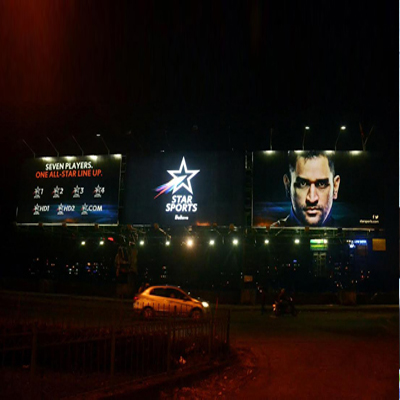
    MUMBAI: STAR India recently revamped the branding of the sports network and unveiled a new brand for Star Sports across six channels — Star Sports 1, 2, 3, 4, HD1 and HD2 and starsports.com.

    To create the awareness and buzz for the new brand identity and to communicate the new brand philosophy – Believe, Star Sports partnered with DDB MudraMax OOH.

    The campaign was rolled out when India tuned in to watch Sachin Tendulkar play the last series of his sports career. The massive OOH campaign was executed in Mumbai, Delhi and Kolkata as well as across major cities in Gujarat and UP. The campaign used multiple visuals of Mahendra Singh Dhoni as well as the brand logo as part of the campaign creative.

    On the campaign, STAR India executive vice president marketing & communications Gayatri Yadav said, “The work done by DDB MudraMax OOH for the brand refresh campaign has been outstanding. The DNA and essence of the brand refresh was well understood and reflected in the manner in which the planning and media selection was done by the agency. Especially the Star Sports zone and roadblocks conceptualized and executed at Mumbai and Delhi airports are noteworthy and have created a great impact and buzz for the refresh. We are very impressed with the positive reviews received for the campaign. DDB MudraMax has delivered on our expectations yet again.”

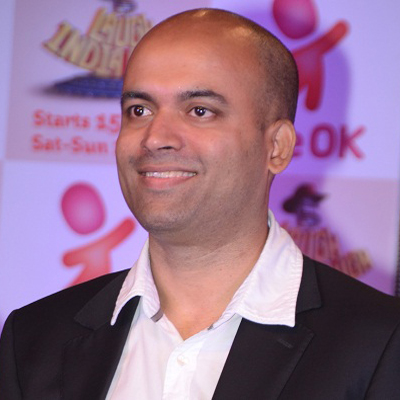
    Commenting on this, DDB MudraMax OOH retail and experiential president Mandeep Malhotra said, “Sport is very close to my heart and when the opportunity to associate with a brand standing tall to the passion came up, was really thrilled to create magic. The team did a wonderful job on picking up unusual formats of advertising. Various touch points were exploited and the new identity made it to top of mind recall with a smooth transition.”

    DDB MudraMax OOH VP Spencer Noronha added, “Star Sports aimed at starting a revolution in sports broadcasting and the media strategy was to amplify this sports revolution through an occasion that is relevant to all and thus inspire every Indian sports fan. This soul of this campaign was “premium and classy” and hence it was crucial that the media selection had to be in line with that imagery. We selected the most impactful, most premium and the largest of available media vehicles in each of the target cities to create a statement in the OOH space. The quality of the selected media reflected class and helped the campaign to quickly get noticed and talked about. The eye catching creatives amplified the impact and recall manifold. It’s definitely one of the most memorable OOH campaigns in 2013”

    DDB MudraMax OOH DGM Anurudha Pawar said, “OOH is a communication platform where the brand is racing against time to grab attention and communicate with the TG while he zooms past the media within a few seconds. This makes it all the more important for the brand to use the right media mix and deploy an optimized communication tailor made for the medium. We exactly did this for the refresh campaign. The media vehicles were meticulously handpicked to project class; and the creatives were kept ultra outdoor friendly to specifically communicate the grandeur of the brand. We took the innovative branding route by creating the Star Sports Zone, Stadium visibility corridors and airport roadblocks, to ensure each and every person exposed to the communication carried a positive image of the brand with him in this mind. I am sure we have succeeded doing that.”

    A multimedia approach was used for the campaign. Large format A+ grade billboards and Unipoles, Backlit Bus Shelters, Backlit Pole Kiosks, 4 Sided Backlit Pillars, Large Backlit Glow signs, Drape, Prominent Mall Facades, Digital Screens at airports and Gantries were meticulously selected at key touch points in each city. The creatives were optimized for each of the media formats used. DDB MudraMax also brought in a couple of significant planning and media innovations to help portray the grandeur of the brand refresh and garner high recall value for the campaign. Visual domination was the key.

  • ‘We want to be number one. Life OK has always grown in leaps’

    ‘We want to be number one. Life OK has always grown in leaps’

    When two years ago Star India decided to “reincarnate” one of its older channels Star One as Life OK and repackage it with new, fresh content, nobody expected that in a short span of time it would offer stiff competition to the other existing general entertainment offerings. For hadn’t the Star India management been at a loss for quite some time as to what it would do with it.


    But with some path breaking content like Saubhagyavati Bhava initially and Savdhaan India and Devon Ke Dev…Mahadev later, not only did the newbie Life OK lure viewers to itself but it also got industry pundits to take notice and nod their heads in appreciation.


    It still describes itself as, “a brand new general entertainment channel (GEC) that turns up the volume on the things that really matter through its unique and poignant stories” on its online homepage. And general manager Ajit Thakur is happy that he “didn’t succumb to the temptation of doing the usual GEC saas-bahu soaps.”


    On the occasion of its second anniversary Thakur had a chat with Indiantelevision.com’s Disha Shah on its journey so far. Excerpts from the conversation:


    Two years for any media entity implies that it is here to stay. Would you say that for your channel?


    Absolutely we are here to stay. But I think two years later there are lots of thoughts – the first thought is that – when we started two years back, we had the backing of Uday Shankar, Sanjay Gupta and the Star Network that this was the channel which was not going to be a flanker to Star Plus but a challenger. It was a promise. 


    Two years later, I think the promise is more than fulfilled and real. And there are many good things about it – the fact that in this year almost all channels have declined, and Life OK is only one of the two channels which have grown through January-December this year.


    We are happy at the fact that we didn’t succumb to the temptation of doing the usual general entertainment channel (GEC) – saas-bahu soaps. We have stayed away from it because we didn’t want to divide the family; we wanted to entertain the entire family. We are not targeting women, men or kids but all of them. We have managed to do it differently and with a lot of conviction, remained profitable, continued to grow, so that is a very happy place to be in, but are we there yet? No, I don’t think so we are there yet. It is a glass half full. We have a lot more shows working but we haven’t had a big impact like Mahadev in the last two years.


    In terms of marketing, we have a long way to go with the brand. Life OK is there in terms of reach and people are talking about us, but we are still not the number one channel in terms of overall numbers. And it is equally important from the perception point of view, we now have to start scaling and telling people that we are amongst the top channel. Thus perception, big shows and somewhat impact has to come through.


    What have been the high and the low points for the channel in the last two years?


    The launch of the channel was itself a high. When Mahadev took off after four months of the launch, it was a high. The fact that on weekends nobody gave us a chance but today we are at number two/three without a single singing, dancing or a big non-fiction show, on the back of alternative content like Savdhaan India and Shapath.


    I think the big high for us is that almost every day I have people calling from other channels and some production houses saying that, “We don’t care if you are at number six or four or number one. There is something working for Life OK and we want to join.” And this call comes to us every single day. That is something about the culture we have created. The young team and everybody doing their job for the first time even at the HOD level – that is the big high.


    We are still not number one, that is the low point for us. We want to be number one. The lows are that for every one hit we had three failures. But we take it in our stride, I think the day we stop failing, we stop learning. Without the low the high is not as enjoyed as when you have a low.


    To what do you attribute the success of Life OK?


    First and foremost, Star Network had the vision to create its own competition for Star Plus. Without the network, we would not have been where we were. Second, it is the sharpness and clarity of the brand vision that we wanted to be the brand for the family, we will not do saas-bahu, we will go beyond entertainment into social media messaging. Third and the most important reason is the kind of people and culture we have attracted. Even though we stay in the same Star Network building, Life OK has its different kind of culture of its own.


    How would you rate Life OK today and before you joined?


    When I came in, the channel’s work was in progress. Since I have been in the Star Network, one thing I have done for Life OK is that I have put people and team together. Most of the people who used to work for Star One are still with Life OK. So it’s about commitment to the new vision rather than different people.


    What is the life-cycle of a programme on Life OK?


    The attrition rate is very high. One, we pick up stories that are more of a finite series. Second is we don’t take regular saas-bahu stories where you know that you cannot keep the story stretching for long. Third, we always take risk in trying something new. Our risk appetite is high and also failure rate is high. But like I said, I have enjoyed. There is so much to learn from each failure. Because if we don’t try the new genre, how will we learn?


    How do you differentiate between Star Plus and Life OK’s target audiences?


    Star Plus is focused on the young new women of new India today. At Life OK, we don’t want to take a TG cut because we don’t think that is important. We want to cater to the entire family. But within that the mindset which Star Plus is targeting is different than Life OK. The difference is very clear when you see the channel – we offer something for the entire family. If you watch the channel at 7 pm and 9 pm, there will be different kind of stories. It will not be the same story set in the same house. And that is what we take pride in.


    What is the channel’s reach as compared to other channels?


    Our reach has been growing. In many weeks, we have been number two or three in the ratings chart. People were not sure what will happen to the channel after LC1 and digitization but we are the ones who have been growing right through because digitisation meant that our platform was available and we got an equal chance. 

    So in LC1, we are always going to be deeper because when we launch, we launch with 100 markets in 100 towns with outdoor and everything. So from that point of view we were fairly clear that we will be able to stick to our strategy and deliver some numbers.

    The highest reach is 55 per cent and we have reached almost to 50-54 per cent. We have hit 54 in some ways depending upon the launches and other activities. Now what we want to add to this reach is impact.


    Has the channel attracted new producers?


    Absolutely. Even when we were at number six, we have had some of the best producers working with us. Today the line-up in the next six months includes productions by Ekta Kapoor and the Barjatyas. We are also working with many Bollywood directors and actors. Whether we are at number six, four or one, the attitude and culture of Life OK has remained unmatched.


    Are you looking at pushing the envelope of storytelling further?


    All the time. It will be edgy and extreme. If you watch Ek Boond Ishq, it is extremely edgy. It is the reflection of what is happening in that household. Dil Se Di Dua… Saubhagyavati Bhavawas extremely edgy, like a thriller, Main Lakshmi Tere Aangan Ki was almost a love story in comic.


    What new genres you plan to get into programming?


    We have done fantasy with Hatim. For me Ringa Ringa Roses is also very interesting – it is not a typical horror, but about paranormal activity. I want to do a family thriller. I also want to do a period drama, which we have not done yet. These are the next two genres I can think off.


    Are you considering adapting international formats?


    That is the big part of our strategy. We will do more formats. First we started with books –Navvidhaan – which is already on-air as Tumahri Paakhi. We are looking at two more books. We are also looking at three-four American series. Also, for the first time a lot of new producers are working for the channel. All this is happening in the next six months.


    How much research work goes into developing the channel? Is it rigorous?


    A lot, because this is something I fundamentally believe in it. Research is not about should we do this or not, our research is primarily focused on what is small town in UP? What is Bombay? What are they thinking? What are the shifting preferences? Most of our research is about understanding aspirations of the audience. What they want to do? How are they reacting to things? What are their views on India or elections and many more? We are trying to understand everything that is happening in their lives. We have a very consumer focused outlook.


    How have the advertisers taken to the channel?


    If you look at the channel a year back, except for Mahadev we did not have sponsors for any show. Today, we have a sponsor for every show. In some shows, we even have two sponsors. We have grown on reach. One year back only Mahadev was delivering on reach, now shows like SavdhaanShapathEk Boond IshqGustakh Dil and even Tumahri Paakhi has good reach. Each one is attracting more advertisers and each is different.


    We have everything from Shakti Bhog to Hindustan Unilever on the channel. They are as different from each other, but they co-exist because the brand delivers reach in different markets and in different TG. And you can slice and cut it in different ways and do that. We have telecom, automobile, all the big FMCG brands and also the local brands which are coming out in a big way to advertise with us.


    What are the cumulative between men and women viewership? How much of it is children?


    It is 52 per cent female and 48 per cent male. Lot of GECs would have 58 per cent women. Within male and female, kids would be 15 per cent.


    Which are your big markets internationally apart from India?


    When Bachelorette India launched, UK and US were big markets for us. We have experimented but some of it has not worked in India. However, in International markets, it has worked well. Other markets like Canada, Middle East is very big for us and I think with Hatim it will become even bigger.


    Life OK is at number four right now, any specific programming strategy?


    Historically when we have grown, we grew to 100 then we have stayed for some time, then we went to 120 and stayed for some time, then 140 and 160. So we launched at eight per cent share, and we have seen a growth of 14 per cent share now. We have always grown in leaps. It is not a trick. What we did with Mahadev, Hatim is one scale above. We are going to take content to the next level.


    What is your plan for the next few years?


    Of course we want to continue to grow. Big plan for next year is that we want to tell people that when Life OK is serious about something, it really makes an impact. And that is what we want to do. We want to create an impact. We want to create three-four shows but all done differently. We want to have some impact properties, some big stars and directors on board.


    But most importantly, we want to break few more norms. We want to create new genres, we want to look at some American content coming to Indian television but done differently, we want to shoot in new light – what we did with mythology, we want to do the same with other shows. So anything to push the content, marketing and people agenda in a different direction.


    On the digital side, how do you keep your viewers engaged?


    I want to build the brand. I just don’t want people to come and see posters. Hatim is very active on digital but we want people to come and see the show. We talk about serious issues through all our shows. We just launched our Savdhaan app which is about when you travel to any city in the country that app can tell you what to watch out for and which streets not to go to. So the brand thought is so powerful that we want to continue to build the brand on digital. Our digital agenda is not going to be only about the show.


    Has the channel achieved a break even? (Estimated 300-350 crore per year)


    We are profitable in our year two. We are very different from the GECs. Shapath being the classic example, at 9 pm, every other GEC on weekend has singing and dancing shows – that cost is 5x and Shapath is x (20 per cent of that cost). Shapath manages 2 TVR, all the other shows get around 2.8. It is working because it is different.


    What was the biggest challenge for you?


    Biggest challenge was to stay quiet and don’t talk too much about it and just deliver results. And why should I talk about it? Viewers are accepting it, advertisers are advertising in it. Trade is interested in it.


    What future do you foresee for the channel in the digitised world?


    I think digitised world is only going to demand more content. Content will be the king. People will demand the kind of content they want. So for me, the fact that we have variety and we are younger, fresher – all of it is keeping us in good place in the digitised world.

  • Movies, celebrities and songs were the top Google searches of the year

    Movies, celebrities and songs were the top Google searches of the year

    MUMBAI: This year, the number of people searching for Sunny Leone was much more than actors like Salman Khan and Katrina Kaif and cricket maestro Sachin Tendulkar, making the adult film star the most searched personality this year, reveals Google India’s annual Zeitgeist.


    Google India today announced its annual Year End Zeitgeist that takes a look at 2013 through the collective eyes of the world on the web. Zeitgeist offers a unique perspective on the year’s major events and hottest trends, based on Google searches conducted in India.


    This year, searches for Bollywood hits and the Indian Premier League topped the trending charts, showing that Indians’ first love, as ever, is for stars, movies, cricket and songs. Actor Shah Rukh Khan was fifth in the list, followed by singer Honey Singh, south Indian film actress Kajal Agarwal, Kareena Kapoor, Sachin Tendulkar and Poonam Pandey.


    SRK starrer-Chennai Express topped the Zeitgeist chart, followed by IPL 2013 and the musical blockbuster Aashiqui 2.


    Narendra Modi, who with his political campaigns made much noise all across in the country also  emerged the leader in the most searched news category. Other popular searches in the news category were Blackberry phones, Rahul Dravid, Saina Nehwal and Vijay Mallya.


    Local entertainment was also popularly searched on mobile this year. Top three searches on mobile were restaurants, bars and movies followed by coffee, cricket score and fast food.


    The report reveals that there was an uptick in searches for e-commerce sites. Flipkart and Olx.com were the most searched as online shopping sites.


    “From a search trends perspective, 2013 was clearly the year of entertainment. Online shopping, banking and e-commerce also continued their upward trend – a clear testimony to Indians embracing online transactions,” said Google India VP and Managing Director (Sales and Operations) Rajan Anandan.

  • Life OK gets a content head in Aniruddh Pathak

    Life OK gets a content head in Aniruddh Pathak

    MUMBAI: Even as the folks at Star India’s second GEC Life OK were popping the champagne on the occasion of its second anniversary, it announced that it had promoted Aniruddh Pathak to the position of content head. Pathak is the man behind the channel’s successful properties like Mahadev and now soon-to-be-launched fantasy series Hatim.


    So what will be his new responsibility as the content head? Answers Pathak: “There will be two major responsibilities. One is to develop new content and second how to make the content which is on-air more engaging and contemporary for the audiences.”


    He further goes on to say that: “If we talk about Mahadev, for the first three months the show was going haywire, but after three months we changed some plots and storyline and now it is the face of the channel.”


    Pathak, a creative professional who has been writing TV for more than 10 years. At Zee, he started in 2000, with shows like Piya Ka Ghar and later Kasamh Se. In 2007 he became the associate creative head at Star India, launching 10 shows including Bidaai and Yeh Rishta Kya Kehlata Hai.

  • Kentaro Kimura joins Adfest 2014

    Kentaro Kimura joins Adfest 2014

    MUMBAI: Japan’s most acclaimed advertising executives, Kentaro Kimura, will head up next year’s direct lotus & promo lotus category as its jury president.


    Hakuhodo Kettle executive creative director and co-CEO Kimura joined the agency he founded in 2006 after joining Hakuhodo in 1992. “The more ways we have to communicate, the more important human nature becomes. What moves people? Why do people take action? It may be an activity for social good, moving content, or a platform for experiences. There are a lot of possibilities for activating people. It is these inventions to move people that make the Direct Lotus and Promo Lotus categories so exciting,” he said.


    Kimura says the theme of Adfest 2014, ‘Co-Create the Future’, gives him a positive, hopeful feeling.


    “In the next 10 years, we will face more change than we did in the last 10 years. Our industry will also change a great deal. We communication professionals will be able to do more than ever before. Today, a truly brilliant campaign can cross borders and influence millions of people. We cannot only adapt ourselves to a given future, but also create our own future,” said Kimura.


    Adfest president Jimmy Lam said, “Many of the campaigns created by Hakuhodo Kettle Inc. have changed the way people think about advertising. Kimura is a visionary when it comes to using technology to forge new ways of communicating with consumers, making him the perfect choice to lead the Direct Lotus and Promo Lotus jury next year.”


    Adfest 2014 will take place on 6-8 March at the Royal Cliff Hotels Group in Pattaya, Thailand.

  • ‘It is in the interest of the Indian content makers if Glow TV works’:KAGISO MEDIA ED AND KAGISO BROADCASTING CEO OMAR ESSACK

    ‘It is in the interest of the Indian content makers if Glow TV works’:KAGISO MEDIA ED AND KAGISO BROADCASTING CEO OMAR ESSACK

    With six radio stations – East Coast Radio, Jarcaranda FM, Heart 104.9, iGagasi, Ofm and Kaya fm – already in its kitty, the South Africa based Kagiso Media Broadcast has ventured into television with the launch of its first free-to-air (FTA) channel, Glow TV, which calls itself ‘eastern inspired’ and has Indian content accumulated from across the globe. Glow TV, a partnership between Kagiso Broadcast and Nolava Television that mainly works as content source provider, is just about a month old and is looking at creating original content in phase two.

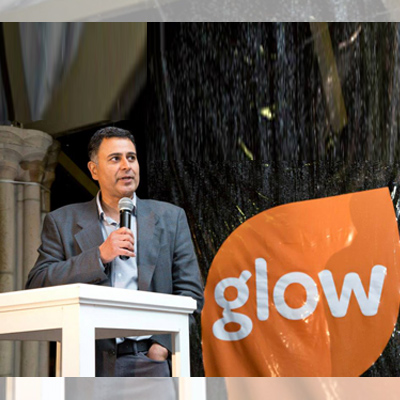
    Kagiso Media ED and Kagiso Broadcasting CEO Omar Essack was in India recently to acquire content for Glow TV, which already boasts of shows such as season one and two of chat show Koffee with Karan and fiction show Bade Achhe Lagte Hain.

    Essack, who is of Gujarati descent, believes Glow TV will appeal not just to Indians but everyone in South Africa. In a conversation with indiantelevision.com’s Vishaka Chakrapani, Essack speaks about Glow TV’s uniqueness, appeal of Indian content in South Africa, Kagiso Media’s future plans and his expectations from the TV and digital mediums after a successful run in radio.

    Excerpts from the interview…

    What was the purpose of your India visit?

    This trip is about building relationships. All the big players in India don’t know who we are and we want to let them know our ambitions. Glow TV is our first channel but the intention is to grow and have more such channels. South Africa’s population is 50 million, out of which there are 1.5 million Indians, but our vision is a cross over. We are cherry-picking Indian content, packaging it and presenting what we think is a uniquely South African proposition – content where Indians make an appearance. This trip was to acquire programming and increase our rights. Helped by our JV with Microsoft; we want to do digital content for online and mobile as well.

    What kind of content are you looking at from India?

    As of now, we have about six hours of content repeated four times a day. We are also scouting good programming in Tamil and Telugu. The first question is whether it will work with black and white audiences; maybe a film like Cocktail would. Our target audience is females between 25 and 35 years and our primary relation for movies in India is Eros Entertainment.

    What are the shows that you currently have?

    We have a telenovela from Brazil called India – a love story that has Brazilian actors and is set in India, Rio de Janeiro and Dubai. Going forward, we are looking at more content from South Africans featuring India. The heart of our channel is to allow people with different cultural experiences to enjoy this eastern experience, which is accessible to them. We have spoken to Star, Zee and a production company that does unique content for YouTube as well as unique content in English that isn’t available on mainstream TV in India in the English language. This will help us connect with our audiences.

    What is the viewership of Glow TV and what marketing initiatives do you have in place for it?

    Glow TV currently has about 5000 STBs through Open View HD that cost about $89 (each). We are looking to find opportunities on digital platforms as well. There’s DSTV that is a big pay TV provider, which has FTA channels only at entry level. The reason we launched now is that in South Africa, it is Christmas, and people have got their bonuses on 13 December. We are assuming if we do a lot of marketing, people will buy more of the boxes.  About $9-10 million is going into marketing for Open View HD, and Glow TV is putting in $ 1.4 million, using its radio stations and websites to advertise. Our stations Jarcaranda and East Coast Radio have two million listeners each. Our primary audience is not Indians, which is why we are stretching the channel so hard.

    Soaps such as Kya Hua Tera Vada and Bade Achhe Lagte Hain are quite popular in India

    Was it easy to convince your board of directors to venture into TV?

    That was our biggest challenge since we are very successful and profitable in radio, when we thought of venturing into TV, our board was nervous. Glow TV is a proof of consent. They told us to show them we could work and bring in revenue and if we could, they would give us more money for Glow and more channels. We don’t have too much for movies but enough for shows but they are older ones that have been seen behind pay walls, which will now be FTA.

    Did you undertake any research before you stepped into TV media?

    An AC-Nielsen survey showed that when a Bollywood movie was shown on our version of Doordarshan i.e. South Africa Broadcast Corporation (SABC), a million people saw it at 2 in the afternoon, out of which 700,000 were blacks. This research convinced us that Glow could work across different ethnicities. They won’t pay to go see it at a movie theatre or for subscription but if it’s free, they will watch it.

    What is your budget for Glow?

    We are working on a lean budget but I am glad that a lot of the content makers here like Sony, Eros, Zee, Star and BBC understand we are a start-up and that we are working on a tight budget. So it is in their interest if this channel succeeds because if we are successful, we can be a big customer tomorrow. By 30 June next year, we will know if we have touched the targets that the board set for us. If we can’t prove ourselves by then, the whole deal is off.


    We are cherry-picking Indian content, packaging it and presenting what we think is a uniquely South African proposition – content where Indians make an appearance.

    What kind of advertisers do you have?

    We are currently looking at increasing viewership but are also offering advertisers a proposition. We are selling ad slots at low rates but we are also giving them our ecosystem to reach out to a large audience. Through radio, TV, digital and Glow TV put together, we are giving a 30 sec slot at a couple of hundred dollars. On our radio stations, the morning show slot is $2500. So, we are giving a radio station at a lower rate. We call this ‘glow watt bundles’. The only disadvantage of launching in October is that most advertisers are already committed. So whoever we spoke to, said they can only commit to us in January. First, National Bank and Nedbank are close to signing but they want exclusive deals from January. A soda company is going to sponsor Kaun Banega Crorepati.

    What are your plans for pay TV?

    Yes, we do not want to restrict ourselves to FTA and are looking at pay TV channels in the future. The licence we are applying for is not specifically for digital, terrestrial or satellite TV. It’s called a technology-neutral licence. We can apply that licence for any technology in the future. We may say the digital, terrestrial space is too crowded, or the pay TV satellite space is too crowded. Some of the future technology we don’t even know yet. A licence is not a guarantee. We then need to apply for spectrum. Any media company needs to be on both free and pay. If we prove ourselves, we can try our limits not just for channels but for future things like VOD.

    What kind of local content are you looking at getting from Urban Brew Studios, your own production house?

    Urban brew will get local content for our channels. We have a group in the company that harvests data and helps us know about consumer consumption patterns. One interesting finding is that we don’t have a lot of sitcoms coming out of South Africa but the US has a lot that are popular here as well. Also, there isn’t a soap opera channel with South Africans made in the country. So these are some ideas.

    Sanjeev Kapoor’s cookery skills is set to charm South African audiences

    Your company has also delisted itself from the Johannesburg Stock Exchange. What led to this decision?

    The company has delisted, we bought out 49 per cent and have made the final payment to shareholders. The main motivation is that we want to invest in new areas and our shareholder (Kagiso Tiso holdings), which bought us out is committed to investing for expansion across Africa and they have the appetite to do that.  Most of our shareholders that owned our stock owned it because we are a productive dividend payer and so, twice a year, they would surely get dividends. Going forward, if we require investment to do the things we are looking to, we may not pay dividends on a regular basis because we are looking at investing as we expand into Africa. And that may not have suited some share holders.

    What was the price paid to shareholders?

    It was a premium of 30 per cent of the price that was listing at that time. There were some who resisted it but in the end, it was an attractive price.

  • Stand-up comedian Kapil Sharma is in Forbes India celebrity 100 list

    Stand-up comedian Kapil Sharma is in Forbes India celebrity 100 list

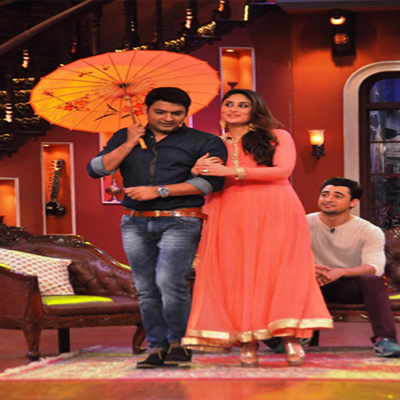
    MUMBAI: In a short span of time, stand-up comedian Kapil Sharma has made a place for himself in the industry and in the hearts of many Indians. Now, it is time for him to celebrate his success as the artiste whose show Comedy Nights With Kapil has kind of become a phenomenon in the country, has been listed in Forbes India’s “celebrity 100” list.


    Sharma has secured the 93rd position in the list while other popular TV stars like Ram Kapoor, Ronit Roy and Sakshi Tanwar have been placed below him, said the magazine’s official website.


    Kapil came in to the limelight after winning season three of the reality show The Great Indian Laughter Challenge. He has also featured in various seasons of Comedy Circus before starting his own production house K9 Productions under which he produces Comedy Nights with Kapil, aired on Colors.


    He has also been nominated alongside Shah Rukh Khan, Hrithik Roshan, Farhan Akhtar and Deepika Padukone for CNN IBN’s Indian of the Year (Entertainment).


    “Thank you god and my fans for making it possible…” Kapil posted on Twitter after the announcement.


    The show is India’s highest rated serial in the non-fiction category garnering viewership rating greater than reality flicks like KBC and Big Boss.

  • Hui Keng Ang becomes the senior VP and GM for SPT Asia

    Hui Keng Ang becomes the senior VP and GM for SPT Asia

    MUMBAI: Sony Pictures Television (SPT) has promoted Hui Keng Ang to the position of senior vice president and general manager, networks, Asia. He would continue to report to SPT executive vice president, networks, Asia-Pacific George Chien.


    Ang will oversee the networks’ robust portfolio of channels across Southeast Asia, including AXN, Sony Entertainment Television, beTV, ONE, Animax and the recently-announced GEM. Ang would be based in Singapore and would also continue to manage the company’s interest in joint-venture networks AXN and Animax in Korea, as well as Televiva in Indonesia.


    Prior to this, Ang was the senior vice president, business operations, where he managed SPT Networks Asia’s channel operations, finance, technology and human resources. However, he had joined SPT Networks, Asia as the financial controller in 1997.


    He has also served as the networks’ growing Asian content portfolio, including Animax, which is currently available in 46 million homes across 17 markets; as well as ONE, which launched in 2010 and under his guidance has grown to be one of the top-rated pay-TV channels in Malaysia and Singapore.

  • Zee TV gains again, escalates to number two in Week 49

    Zee TV gains again, escalates to number two in Week 49

    MUMBAI: In the week 49 of TAM TV ratings, Zee TV has become the gainer for the second time consecutively. While last week, the channel just earned more points, this time it has escalated to the second position from the usual third as well. With the telecast of Zee Rishtey Awards on Sunday, the channel garnered 479,878 GVTs (448,553) of which 8599 TVTs were scored solely by the award show. The channel’s sitcom Bh se Bhade witnessed good traction and reported 2,346 TVTs (2,079). Its popular dance reality show Dance India Dance 4 aired its two-hour maha episode which scored 4,565 TVTs (4,392).

    Another highlight of the week was Boogie Woogie Kids Championship that made a comeback to the TV screens and even to Sony Entertainment Channel after a gap of almost four years. Interestingly, the show which has always attracted audience, did quite well again and scored 4,411 TVTs. While the channel witnessed a rise in the number of GVTs, the show couldn’t change the sixth spot at which it has been on since quite some time. It scored 241,395 GVTs (238,987).

    Second highest gainer of the week was Star Plus which scored 561,197 GVTs (548,331) and continued to be at number one in the ratings chart. The channel’s new series Yeh Hai Mohabbatein grabbed eyeballs and garnered 2,320 TVTs. However, its dance reality show Nach Baliye 6 saw a drop with 3,945 TVTs (4,267). The epic series Mahabharat too lost on its viewership and could just garner 6,689 TVTs (7,170).

    Colors came down to number three this week with 456,302 GVTs (478,534). Unfortunately, the channel has witnessed a drop in almost all its properties. Comedy Night with Kapil reported 7,522 TVTs (7,851), action thriller series 24 scored 2,523 TVTs (2,797). However, Bigg Boss witnessed a marginal increase and scored 5,262 TVTs (5,102).

    Life OK stood at number four with 325,066 GVTs (334,327) followed by Sab with 260,862 GVTs (269,269).

    Sahara One is still lagging behind and is at the bottom of the ratings list with 34,881 GVTs (33,691).

    In the movie channel genre, Zee Cinema reported 211,162 GVTs (253,575); Star Gold registered 180,019 GVTs (181,167) and Movies OK scored 132,377 GVTs (133,805). On the other hand, &pictures notched up and scored 85,302 GVTs (81,291), Zee Anmol saw a growth in its viewership and marked 62,874 GVTs (55,524) and Max scored 141,652 GVTs (129,948).