Category: GECs

  • IPSOS Study: Watching ‘Live TV’ mainstay, but other forms of viewing catching on

    IPSOS Study: Watching ‘Live TV’ mainstay, but other forms of viewing catching on

    BENGALURU: Though a majority of Indians prefer watching ‘live TV’, other forms of content viewing such as streaming or downloading from a computer, internet TV, etc., are catching up reflect a new online poll of 15,551 adults in 20 countries conducted by Ipsos OTX – the global innovation centre for Ipsos, a global market and opinion research firm.


     “With so many new ways to view television programming, it might come as a surprise that 82 per cent of TV watchers in India still watch their shows “live on TV” – that is, on a regular television at the time they are programmed to appear. The indication, then, would be that television is still a prime venue for marketers to advertise,” said Ipsos in India head marketing communication, Biswarup Banerjee.


     “That is, of course, unless those couch-comfortable viewers are attached to their remote control devices and start surfing every time commercials come on or if they reach for their mute buttons when commercials are airing. What is clear is that while new televisions are capability-packed, most people watch TV as they are used to watching it – live,” added Banerjee.


    Most (82 per cent) Indian respondents who watch TV indicate they usually watch TV programming “live”, although other popular modes of watching are catching on like streaming or downloading from a computer (40 per cent), streaming from the internet to TV (23 per cent), using a DVR or other recording device attached to a TV (16 per cent), and on mobile device (21 per cent) says the study.


    Traditional ‘live’ TV watching is significantly more popular among Indian respondent’s ages 50-64 (89 per cent) compared to those 35-49 (88 per cent) and under 35 (76 per cent). Other modes of watching TV programming are more popular among younger respondents: on computer and laptop – under 35 (35 per cent), 35-49 (25 per cent), 50-64 (17 per cent); streaming from the internet – under 35 (20 per cent), 35-49 (16 per cent), 50-64 (11 per cent); on mobile device – under 35 (15 per cent), 35-49 (10 per cent), 50-64 (5 per cent). Using a DVR or other recording device attached to a TV is most popular with those 50-64 (18 per cent) compared to 35-64 (16 per cent) and under 35 (15 per cent).


    TV watching across geographies

    Live TV

    Those most likely to choose watching TV programming on live TV are from France (93 per cent), Spain (93 per cent), Germany (92 per cent), Turkey (90 per cent), Argentina (89 per cent), Sweden (89 per cent), and Australia (89 per cent). Those rounding out the middle of the pack are from: Brazil (89 per cent), Italy (89 per cent), South Korea (87 per cent), Great Britain (83 per cent), Mexico (82 per cent), Poland (82 per cent), and India (82 per cent). Those least likely to watch TV programming live are from: Japan (82 per cent), Russia (81 per cent), South Africa (81 per cent), United States (81 per cent), China (80 per cent), and Canada (77 per cent).


    TV on computer or laptop

    Watching TV on computer or laptop is chosen most often by those from: China (52 per cent), Russia (43 per cent), Turkey (42 per cent), India (40 per cent), Sweden (35 per cent), South Korea (31 per cent), and Great Britain (29 per cent). Those clustering around the center of the list are from: Poland (27 per cent), South Africa (26 per cent), Canada (26 per cent), Germany (24 per cent), Mexico (24 per cent), Spain (23 per cent), and Brazil (21 per cent). Those from Argentina (20 per cent), the United States (20 per cent), Australia (19 per cent), Italy (17 per cent), Japan (14 per cent) and France (12 per cent) are least likely to watch TV on computer or laptop.


    Streaming from the internet

    Streaming from the internet to TV is most popular among those in Turkey (44 per cent), Russia (36 per cent), China (33 per cent), South Korea (25 per cent), India (23 per cent), Sweden (19 per cent), and Great Britain (17 per cent). Those in the middle of the pack are from: Canada (17 per cent), the United States (17 per cent), Brazil (15 per cent), Mexico (13 per cent), Spain (12 per cent), Italy (11 per cent), and Australia (10 per cent). Those from South Africa (9 per cent), Argentina (9 per cent), Poland (7 per cent), Germany (5 per cent), France (5 per cent), and Japan (3 per cent) are least likely to choose streaming from internet to TV.


    DVR or other recording devices attached to a TV

    Those who are most likely to use a DVR or other recording devices attached to a TV are from Japan (45 per cent), the United States (40 per cent), Canada (32 per cent), Great Britain (31 per cent), South Africa (27 per cent), and Australia (25 per cent). Those in the middle of the pack are from Poland (18 per cent), India (16 per cent), Germany (11 per cent), France (11 per cent), China (10 per cent), Mexico (9 per cent), and Sweden (8 per cent). Respondents from Turkey (7 per cent), Brazil (7 per cent), Spain (7 per cent), Italy (7 per cent), Argentina (6 per cent), South Korea (5 per cent), and Russia (4 per cent) are least likely to use a DVR or other recording devices.


    TV on mobile device

    Watching TV programming on mobile device is most popular among respondents who are from South Korea (26 per cent), China (25 per cent), India (21 per cent), Turkey (20 per cent), Mexico (13 per cent), Great Britain (12 per cent), and Sweden (12 per cent). Those in the middle are from the United States (10 per cent), Australia (9 per cent), Spain (9 per cent), Brazil (8 per cent), Canada (7 per cent), South Africa (7 per cent), and Italy (7 per cent). Least likely to watch TV on mobile device are respondents from Argentina (7 per cent), Japan (6 per cent), Poland (5 per cent), Russia (5 per cent), Germany (4 per cent), and France (4 per cent).
  • Zee’s Magic turns Wembley Arena into a dance floor in first event

    Zee’s Magic turns Wembley Arena into a dance floor in first event

    MUMBAI: In one of its biggest endeavour to bring the greatest Bollywood personalities to the UK and offer world class entertainment to the people here, ZEE Network has clearly turned out to be a winner. ZEE recently organised one of the biggest Bollywood musical events at Wembley Arena, with Pritam taking centre stage along with 7 of the most sought after singers from Bollywood. The event was a huge hit and Pritam and his troupe played to an enthusiastic full house. The event was also attended by esteemed personalities such as Mr. G P Hinduja amongst many others.


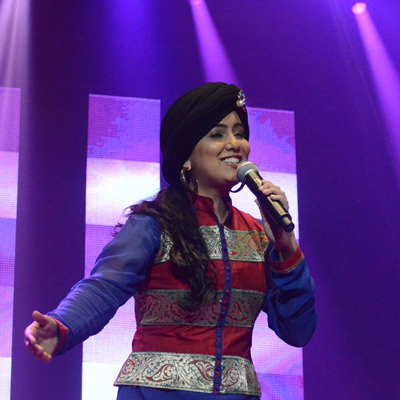
    The event kick-started with ZEE’s very own Sa Re Ga Ma Pa winner, Jasraj Joshi and his rendition of Vande Mataram which left the crowd feeling nostalgic and was the perfect beginning to the Bollywood night. Pritam’s grand entry onto the stage was with his popular chartbuster “Mere Bina”, which made Wembley Arena reverberate with people’s cheers. This was followed by power packed performances from Benny Dayal, Aditi Singh Sharma, Harshdeep Kaur, Sreerama Chandra, Soham Chakraborty and Nikhil George, who sang popular numbers like Badtameez Dil, Dhoom Machale, In Dino, Jugni, Aashiyan amongst many more. Since it was also Vaisakhi, Harshdeep sang Ek Onkar, wishing everyone a happy new year. There was an extraordinary Dhol session, which got the crowd on their feet dancing and Harshdeep gave a powerful act singing popular Punjabi and Sufi numbers. Aditi did a spectacular song and dance act on the Dhoom series which left the crowd whistling. There also was a special unplugged session by Pritam where Soham and Sreerama sang soothing and romantic numbers such as Subhanallah and Tu Jaane Na. Benny’s high energy numbers like Ilahi and Badtameez Dil got the crowd dancing to his tunes. The evening ended with all the performers together on stage and the audience on ground singing the blockbuster song Balam Pichkari. Security tried hard to keep the audience on their seats throughout the show but eventually gave up, as every person in the arena was on their feet dancing. The audience even persuaded Pritam and his gang with a lot of “once mores”, but ZEE had to end the show due to time constraint.


    With a well promoted event, there was a lot of anticipation amongst people. Also, there was immense buzz about the show on social media, a Live interaction throughout the event and innumerable post event tweets and comments congratulating ZEE. People were all praises for ZEE’s initiatives, right from the stage lighting to the line-up of songs and singers.


    ZEE Network Europe CEO, Mr. Neeraj Dhingra said, “We are extremely pleased with the response to the concert. The performances by Pritam and the singers converted the near full house in Wembley into a large dance floor. Never has there been a concert with so many persons dancing and swaying to the popular tunes. Keeping with the premium image of ZEE, we ensured that the production quality (stage and sound) was second to none and surpassed most mainstream concerts held in the UK. A special thanks to Bank of Baroda and other sponsors who helped make this event a memorable affair. This gives us the confidence to arrange several more concerts in the time to come and bring acclaimed artists to London and rest of UK and Europe.”


    ZEE Network Europe Dy. Head & CFO, Mr. Parul Goel said, “We are very happy with the overwhelming response we have received for this concert. We were always confident that this one of a kind event with 1 music composer and 7 singers will be a grand success. ZEE has set a benchmark with this event and we are sure that every event we organise is going to get bigger from here on.”


    Mr. Dhimant Trivedi, Chief Executive Bank Of Baroda said, “We are proud to sponsor the event and thank ZEE for organizing it successfully. We also convey our thanks to Pritam and Company for leaving a memorable experience for music lovers.”


    Pritam himself was impressed with ZEE’s initiatives and humbled by people’s response. He said, “ZEE has done an excellent job and organised the concert extremely well. I was very happy to collaborate with them and give my first performance in the UK. I am now looking forward to visiting the UK and Europe again and having several concerts for my fans.”


    With such a successful event, everyone at ZEE definitely has all the reason to smile, and with a promise to bring on more such events, all of you keep a look out for world class entertainment by ZEE.

  • Tata Motors and COLORS Join Hands for Mission Sapne

    Tata Motors and COLORS Join Hands for Mission Sapne

    MUMBAI: Leading Hindi general entertainment channel, COLORS, today announced its partnership with Tata Motors for the channel’s upcoming show, Mission Sapne. Through this association, both brands will enhance their focus on societal welfare as they strive to present a unique CSR-led initiative that will appeal to viewers to synergize their efforts towards creating a better tomorrow for underprivileged individuals in the country. Mission Sapne is set to hit airwaves on 27th April, 2014, every Sunday at 8.00pm on COLORS.


    Produced by Sobo Films and hosted by Sonali Bendre, Mission Sapne is a pioneering programming initiative from COLORS which brings together celebrities from various walks of life and encourages them to leverage their fame for the benefit of the common man. As a part of the show, audiences will get an opportunity to see their favourite celebrities step into the shoes of the common man for a day and earn their daily wage.


    Season one of the show will see Top celebrities from across Bollywood, television, sports and music will be volunteering in this Mission including actors Salman Khan (Barber), Varun Dhawan (Pattiwala), Harbhajan Singh (Namkeen seller), Mika Singh (Chaiwala), Ronit Roy (Cosmetic Seller), Ranbir Kapoor (Vada-pav seller), Ram Kapoor (Taxi driver), Karan Johar (Photographer), Drashti Dhami (Nimbu-mirchi seller) and Siddharth Malhotra (Vegetable vendor). True to the person he is helping, the celebrity will move away from their comfort zone to drive a taxi, sell vegetables or become a door-to-door salesman and use their talent, wit and star persona to bring a change in their ordinary and tough life.  They will also witness the various difficulties faced by those who bring comfort to our lives.


    Speaking about the partnership, Ankush Arora, SVP – Passenger Vehicles Business Unit (Commercial), Tata Motors, said, “At Tata Motors, we have always believed in putting our customers first and through our association, with COLORS for Mission Sapne, we hope to ingrain this thought further amongst our audiences. The show’s focus on working towards the betterment of the society has struck a chord in our hearts and we look forward to contributing, in our own little way, towards this cause.”


    Speaking about their latest venture, Raj Nayak, CEO – COLORS says, “We’re very thankful to each and every celebrity who voluntarily joined us for this noble cause. They not only took out time from their busy lives but also whole heartedly committed to leading the life of a common man without any remuneration. We are extremely delighted to announce our partnership with a like-minded organization like- Tata Motors through this property.”


    Watch out as your favourite celebrities step into the shoes of the less fortunate and help them fulfill their dreams on Mission Sapne…
    Starting April 27, 2014 at 8:00 p.m. only on COLORS!

  • Colors launches Idea presents ‘Khatron Ke Khiladi – The Game’

    Colors launches Idea presents ‘Khatron Ke Khiladi – The Game’

    MUMBAI: Following the successful launch of Idea presents Khatron Ke Khiladi – Darr Ka Blockbuster, COLORS is all set to enhance audience engagement with the launch of Idea presents Khatron Ke Khiladi – The Game. Through this 3D interactive game, COLORS will recreate the Khatron Ke Khiladi experience for the show’s loyal viewers who have been supporting the show since its on-air launch. Idea presents Khatron Ke Khiladi – The Game will be available for free download on the iOS and Android platforms to Indian audiences.


    Idea presents Khatron Ke Khiladi – The Game is a reflex-testing challenge addressing the fear of heights amongst players as they balance their avatars on a tight rope above the concrete jungles of South Africa, braving tough conditions like wind force and oscillations. To further engage audiences, the game will feature a special contest wherein the highest scorers will compete to win an iPad Mini.


    Speaking about the launch of the game, Vivek Srivastava, Digital Head – COLORS, said, “Digital strategies, today, go beyond the realm of audience outreach through social media platforms and increasingly focus on engaging with them to create a strong brand recall and relationship. We have tasted success when we introduced an interactive 3D mobile game for 24 which was featured as the top game across platforms with over half a million downloads. With the launch of Idea presents Khatron Ke Khiladi – The Game, we are looking forward to bringing the audiences’ biggest fears to their fingertips through a thrilling entertainment experience that is deeply seated in agility and balance.”


    Designed by Gameshastra Solutions Pvt. Ltd, Idea presents Khatron Ke Khiladi – The Game is an adventure-based interactive mobile game which allows a player to raise their scores basis the distance they are able to cover while they balance on a tight rope while facing grave weather conditions. Every stage of the game also enables players to earn varied power-ups such as ‘Super Boost’ and ‘Extra Life’ which allows the player to increase their expertise levels within the game. The Game also features some incredible in-app purchases including merchandise such as shoes and track suits for their avatars with the bonus that they earn. During the course of this highly-addictive game, players will be able to gain multiple levels of achievement starting from Baby Steps for the first-time players to Champion, Unstoppable and even Obsessed for more seasoned players. Users can download the Game by sending an sms KKK to 56882* to get the link to download the game or download it from Google play store or Apple Play store.


    Commenting on their association with Khatron Ke Khiladi – the Game, Mr. Sashi Shankar, Chief Marketing Officer, Idea Cellular said, “Gaming, on the mobile and digital platform is a key focus area for Idea. The show’s on-air success led us to extend our partnership with the property on the digital medium as well. Idea presents Khatron Ke Khiladi – The Game, fits well in our marketing communication strategy as it offers unique brand integration into the property, and being a digital Game, it offers  a thrilling yet entertaining way of reaching out to our online audiences.”


    Idea presents Khatron Ke Khiladi – Darr Ka Blockbuster powered by Gionee Smart Phone is the ultimate stunt-based action reality show which has been entertaining audiences for over 3 weeks. The show features celebrity contestants like Gauahar Khan, Kushal Tandon, Mugdha Godse, Dayanand Shetty, Karanvir Bohra, Teejay Sidhu, Nikitin Dheer, Gurmeet Choudary, Debina Bonnerjee, Rajniesh Duggall, Geeta Tandon, Salman Yusuff Khan and Ranveer Shorey who perform daredevil stunts under the expert guidance of action maestro Rohit Shetty.

  • Overseas market for Indian content and channels is very lucrative: Gaurav Gandhi

    Overseas market for Indian content and channels is very lucrative: Gaurav Gandhi

    MUMBAI: Imagine you’re in a far out place like Serbia and switch on the television to find Anandi of Balika Vadhu emoting in Serbian or in Hindi along with subtitles.  

    It may come as a surprise to viewers but not to broadcasters and producers keen to tap into the nearly three crore and counting Indians settled across the globe. One such being IndiaCast – an alliance forged between TV 18 and Viacom 18 two years ago. Currently present across 90 countries through its channels including Colors, MTV, Nickelodeon, Rishtey, News 18 India and ETV, the broadcaster aims to reach at least 150 countries in future. Some of IndiaCast’s popular shows include Balika Vadhu, Uttaran and Lado

    Indeed, pay-TV is a booming business outside of India with ARPUs at about $16 to $17 as compared to a measly $3 to $4 within the country. The roughly Rs 1,600 crore market has the potential to grow to more than Rs 3,000 crore in the next few years. 

    While the market first opened up in the late 1990s, courtesy Hindi films, of late, television soaps are raking in the moolah for broadcasters.   

    “A lot of markets originally opened up to Indian content through Bollywood such as Poland, Malaysia and Russia. But now these markets and many more in Eastern Europe, Central Asia and Africa are consuming a lot of our television fiction/drama content- in fact much more than Bollywood. One of the key reasons is that in some of these countries their local Television production is not so well established and so they import a lot of content of overseas markets – and sensibilities of Indian dramas work well in this context,” explains IndiaCast group COO Gaurav Gandhi. 

    Broadly speaking, there are three to four large import hubs in the world – Latin America, Turkey and Egypt, Korea and India. Off late, Turkey has picked up the radar with it growing to an approximate Rs 900 crore business with shows such as The End and 1001 Nights. Turkey’s bordering with Asia as well as Europe makes its content click more with the people and next in line is India. However, the amount of content India creates is a lot more than what can be consumed with all the big GEC networks creating about 200 hours of content per week.

    Apart from Indians settled abroad, content syndication now extends to local audiences as well. For instance, Zee Network has launched language – and area – specific channels like Zee Aflam and Zee Alwan in the Middle East and Veria Living in the USA. On the other hand, IndiaCast is building its own brands (more recently, Rishtey and News 18 India) across the world by making south Asian content available to everyone. 

    Potential markets for Indian content include UK, the Middle East, Australia, Singapore and Canada. Canada and UK are home to older Indian migrants while USA is home to recent migrants. There are strict regulations on shows in Canada while USA has affluent people who can pay for high television rates.

    “Distribution in the UK can be a challenge – with one large platform dominating the space. Also income disparities are huge when it comes to south Asians so pay-TV penetration at high rates is a deterrent to reach certain sections of the diaspora. We realised that there is an opportunity in the Free-to-air space and if we can offer a quality entertainment product, we can get a good share of eyeballs. That’s exactly what happened with Rishtey – which became an instant hit first and then we went and converted Colors to FTA. The model has turned out extremely beneficial commercially as we control two of the top three three slots on the Broadcasters’ Audience Research Board (BARB) rating charts for South Asian channels – which in turn have led to a big chunk of mainstream advertisers approaching us. These two along with News 18 India have made us the second largest South Asian network (in terms of advertising revenue) in the UK,” says Gandhi. For the record, BSkyB is the largestpay-TV broadcaster in the UK with News Corp (that also owns Star India) having a majority stake in it of 39.1 per cent.

    Australia is an untapped market but one highly plagued by piracy; he adds. Pakistan too had a lot of piracy till Colors tied-up with Geo TV to air shows at the same time as their telecast in India. The APAC feed for Colors was launched last month. IndiaCast hopes to launch full-blown channels in future in the markets where it syndicates content.

    Close to half of the UAE population is of South Asian origin market. The advantage here is that all the mainstream brands target the South Asian diaspora and IndiaCast has global brands like Pepsi, Jeep, Toyota, Emirates, Kraft, Ford, GM etc advertising with its channels. “It is a buzzing ad market. Our ad portfolio is similar to any Arabic or English channel in the Middle East (ME). The majority brand and media decision making for the ME region happens out of Dubai and Abu Dhabi,” he says. Meanwhile, Singapore is a relatively smaller market but with a good amount of Indian population; thus, leading to launch News 18 India in Singapore and the ME last week. 

    While USA and UK remain conventional markets, there’s an emerging tail of countries hungry for Indian content including Georgia, Croatia, Uzbekistan, Armenia, Azerbaijan, Poland and Greece. 

    Just last year, IndiaCast inked a deal with Tata Communications to simulcast its popular Colors’ shows in Pakistan. Also, reaching out to this growing consumer base is proving to be more cost-effective for the broadcasters. “Cloud delivery systems are providing cheaper transport solutions but many DTH and cable platforms in key markets are still hesitant to accept this as an alternative. IP platforms and OTT services have a far cheaper infrastructural set up compared to a DTH platform. Also there are minimal issues of capacity constraints on them,” he highlights.  

    IndiaCast segments the international markets in three parts. First, are the markets where it can fully reach with its linear full time channels and alongside do marketing, distribution and ad sales. The second set of markets are where it finds it difficult to land full channels for either regulatory (Pakistan) or capacity (Malaysia/South Africa) issues , but these markets have high demand for Hindi content. Here the focus is to do output deals for syndication as well as branded blocks of our content. The third set of markets is where the target is the locals (and not south Asians) with its content by dubbing or subtitling the same. “This third set of markets has been growing extensively for us and includes markets – like Serbia, Bosnia and Herzegovina,  Romania, Macedonia, Kosovo, Georgia, Croatia, Bulgaria, CIS countries (Azerbaijan, Kazakhstan etc), Uganda, Kenya, Senegal, Mali, Togo among others. This third set of markets is growing really fast and can be a big market in the future,” says he optimistically.

    IndiaCast has syndicated shows such as Balika Vadhu, Uttaran, Sasural Simar Ka, Laagi Tujhse Lagan and Madhubala to Eastern Europe while in Pakistan shows such as Bigg Boss, Khatron Ke Khiladi, Comedy Nights with Kapil and Jhalak Dikhhla Jaa have proved to be quite popular. The channels in Pakistan that get IndiaCast channels are Geo TV, Apna TV, Hum TV, ARY Digita, Urdu TV and A Plus TV. In Eastern Europe it reaches to Serbia (Pink TV, Prva Srpska Televizija), Bosnia (OBN, Pink TV), Macedonia (Sitel TV, Alsat, Kanal 5), Montenegro (Pink M), Croatia (Doma TV, RTL Televizija), Bulgaria (Nova TV) and in CIS countries channels such as Kazak TV.

    “If we look at our content sales/syndication revenues outside India, I can say that 50 per cent of that revenue comes from targeting locals/mainstream audiences (not south Asian) – and most of this is from our drama series. That’s a big change over the last two to three years,” Gandhi adds. 

    Market sources peg IndiaCast’s revenue from international distribution and syndication to be approximately Rs 250 to Rs 275 crore. “The overseas market for Indian content and channels is very lucrative – it’s already at Rs 1600 to Rs 1700 crore market and growing steadily. Three crore Indians overseas is a huge number and for them the Indian content is not just about entertainment – it’s an emotional connect with home,” points out Gandhi. 

    IndiaCast’s smaller but most rapidly growing business is its digital distribution through syndication of content to online platforms. Gandhi claims that the broadcaster’s digital business has grown four times in the last year with money made through OTT platforms such as Netflix and iTunes; through VODs such as YouTube; and through telco partnerships.  

    Speaking of competing broadcasters in the pay-TV market outside India, Gandhi says, “There is enough headroom for all four big players to grow and I firmly believe to expand the market we need to work together in certain areas even though we compete amongst us. If a new platform is coming up then it needs to have channels from multiple broadcasting groups and not just one of us.”

    At the same time with digitisation at a steady pace in the country, Gandhi hopes that someday soon, the ARPUs here will be Rs 500 that will bring profit to most in this business.

  • MediaPro breaks up

    MediaPro breaks up

    MUMBAI: In one of the biggest announcements after the Telecom Regulatory Authority of India (TRAI) came out with its regulation, two months ago, that prevented aggregators from bundling channels of different broadcasters, Star Den Media services and Zee Turner have decided to part ways with distribution JV MediaPro coming to an end.


    The networks will be setting up their independent affiliate sales team for their respective channels. The networks are also banking on the recent tariff hike given by TRAI as a positive boost to subscription revenues.


    Zee Entertainment MD Punit Goenka said,  “We  had  created  this  Joint  Venture  to  address  various  anomalies  in  the  analog market, curb  piracy  and introduce  transparency for the benefit  of all stakeholders.  I must say that we have been very satisfied with the outcome  of the partnership.  In the last three years, with  DAS getting  implemented, India  is truly on  the path  to digitization. First  two phases of DAS have already been implemented. Given the new regulation, Uday and I have taken a call to continue the business at an independent  level. I wish our JV partners all the very best in their future endeavors.”


    Star India CEO Uday Shankar  added,  “MediaPro  has been  a truly delightful and path breaking  partnership.   Punit  and I created MediaPro with the objective of accelerating  digitization, promoting transparency and introducing best practices  in distribution.  Thanks to the commitment  of both parties the JV has delivered exceptionally well on each of these.   I am proud  to say that MediaPro also led the industry consensus for the most efficient way of moving to a digital domain.  This in turn allowed  us to offer better content to our viewers.  In the light of new regulation, both partners have decided  to build independent affiliate sales. I take this opportunity to compliment the entire MediaPro team lead by Arun Kapoor for creating  a best-in-class organization  that  helped  pioneer  digital transformation of cable.”

  • Why do we need sub-franchises of popular shows?

    Why do we need sub-franchises of popular shows?

    MUMBAI: Over the years, television has spawned a slew of successful non-fiction franchises which in turn have given birth to a riot of sub-franchises that are equally popular if not more.

    In our quest to find out why sub-franchises have mushroomed when there are enough and more franchises to provide entertainment and whether franchises are mightier than their off-spring, Indiantelevision.com spoke to a cross-section of industry to get to the bottom of the matter.

    Zee TV

    In 1995, Zee TV created a home-grown music-based non-fiction format titled Sa Re Ga Ma Pa that went on to capture a country’s imagination.

    What started back then under the aegis of Gajendra Singh, went on for 16 seasons till 2004 when the brand name was changed to Sa Re Ga Ma Pa Challenge and audience interaction was incorporated through a voting system. It was in 2011 that the channel infused kids’ participation to revisit the show as Sa Re Ga Ma Pa L’il Champs.

    Recalling the journey of the show, it was post 2001 that it became a brand, giving talented, albeit anonymous singers a platform and giving Bollywood much of its current talent including Shreya Ghoshal, Kunal Ganjawala and even Sonu Nigam, who was relatively unknown back then.

    In 2009, Zee created another big non-fiction property, this time in the dancing space, called Dance India Dance (DID). Till date, DID has seen four successful seasons while also giving birth to four sub-brands: DID Super Moms, DID Tashan, DID Doubles and DID Li’l Masters.

    What made Zee launch sub-franchises in the first place? “The key for any broadcaster today is to create for viewers an umbrella brand and then do a lot of exciting things under that,” says Zee TV programming head Namit Sharma. “It was a chance that Zee took and it worked. The audience at Zee is always hungry to watch new and fresh talent. Each of these shows has its own type of audience. There is a core DID audience and additionally, a different audience for each of the sub-franchises.”

    Sharma believes only successful shows make for franchises and franchises work on three things: firstly, how successful the original brand is; secondly, how innovative the creative team is; and thirdly, how receptive the audience is. Speaking of the many seasons of DID, he says the beauty of it is that with every season, the look, feel and talent can be sharpened.

    Explaining the need for sub-brands, he says, “It is fuelled by two things – one is the desire to keep doing well to want more viewership. So you know, if you are doing a DID sub-brand, it might get you more audience than a fresh show. Two – the audience enjoys it, so why not? Three – every sub-brand is actually like a new show under a mother brand. So these are all different shows. They are under one umbrella.”

    Sharma feels Zee is lucky to have two strong franchises that allow the channel to attract very good talent and showcase it in the best possible fashion.

    “There was a desire to fulfill in the singing space with Sa Re… and in the dancing space, DID took over and fulfilled that desire for talent to have a platform and the audience to watch that platform. So DID completed that wish. One of the challenges I have as a new person is to create more such franchises in different spaces,” he says.

    While Nitin Keni of Essel Vision Productions that produces DID feels that offering the same product to viewers back-to-back might erode brand value. “One is not happy about doing it back-to-back, but if audiences are seeing it as a different show altogether, then there we win. But if audiences start feeling a sense of fatigue and see that we are doing the same thing, then it loses value. So far from the ratings, it does not feel so, but yes, as a producer, we should not be repetitive,” he says. Besides, a whole lot of work goes in with every season.

    “Conceptually, every time some new twist is given to the show, we use it as a USP. There are creative people who work on it. Also in terms of finding talent, one has to scout around and find talent across the nation, which is another big task,” he adds.

    Star Plus

    In 2010, Star Plus produced MasterChef India, Colosceum Media’s cooking reality show.

    Star Plus senior vice president – programming (non-fiction) Ashish Golwalkar, who, during his earlier stint with Zee, created sub-franchises like Sa Re Ga… L’il Champs and DID L’il Masters, opines that creating a sub-brand helps a channel to leverage the popularity of the parent brand without killing it unlike adding an indiscriminate number of seasons. “Sub-franchises play a major role if you want to use the strength of the brand without overkill. For viewers also, it is easier. They are watching a bit of the same without over killing the particular kind of content,” he says. “When you go out into the market, if it is a successful sub-brand, advertisers who have earlier had a good experience with us and the brand, will be more than happy to associate with the brand again.”

    Golwalkar gives the example of MasterChef India, where Amul was the title sponsor of both the mother brand and the sub-brand, MasterChef Junior.

    So what distinguishes the sub-brand from the parent brand? “We have to understand the elements wanted in common with the original brand and those that will be brought new to the sub-brand. But there has to be a limit to it. Sometimes, channels just get carried away by doing five versions of the same brand,” says Golwalkar.

    Sony Entertainment Television

    Sony has three non-fiction franchises: Boogie Woogie, Indian Idol and Comedy Circus.

    The channel launched Boogie Woogie in 1995 with Naved Jaffrey, Javed Jaffrey and Ravi Behl. During the time it aired, the show was very well received and provided a platform for unknown talent. Only recently, Sony telecast Boogie Woogie kids’ championship, four years after the last Boogie Woogie was telecast.

    Speaking of the franchise model in general, Fremantle Media India managing director Anupama Mandloi, says: “The franchise model has worked globally and it is that success which encourages other territories including India to invest in the proven blueprint. It is like bringing in any other branded product into the country. There is a surround sound already built around the ‘product’, which enables an effective pre-sell.”

    What about the sub-franchise? “The franchise has been built very effectively over the past 10 years in India. Most television viewers would be familiar with this property today and with the need to innovate and build the brand. A sub-franchise like Idol junior opened a new gateway of contestants, music and content. In fact, we have gone as far as creating another franchise called the Idol Academy, which provides a platform for learning and building music talent,” explains Mandloi.

    The original brand, Indian Idol, launched in 2004, was a channel driver, with its opening episode garnering a TVR of 5.4. This raised expectations from the brand and it became imperative to innovate and introduce visible changes that would keep interest and loyalty alive.

    Idol has made several changes over the years, be it in terms of positioning, scheduling, changing the way the show is consumed, its approach to music, ranging from purist singing to performance and entertainment, different modes of auditioning and creating diverse touch points with the brand and the channel on-ground and various creative innovations in the journey of finding that one ‘Indian Idol’,” reveals Mandloi.

    Season after season, there was a lesson to be learnt by every content creator. “Some of those innovations were received well and some were completely dismissed by the viewer. At the end of the day, the viewer decides and with every show that you put out there for consumption, there is a lesson to be learnt by every content creator,” says she.

    After dancing and singing, it was the turn of comedy and the channel launched non-fiction property Comedy Circus in 2007. Not only did Comedy Circus see 18 successful seasons, the brand gave rise to tons of sub-brands including Comedy Circus -Kaante Ki Takkar, Comedy Circus – Chinchpokli To China, Comedy Circus 3 Ka Tadka, Comedy Circus – Maha Sangram, Jubilee Comedy Circus, Comedy Circus Ke Taansen, Comedy Circus Ke Ajoobe and Comedy Circus Ke Mahabali, among others.

    MediaSpeak

    Big Synergy director Anita Kaul Basu who has given new dimension to Indian television by producing Kaun Banega Crorepati (KBC) on Sony believes one needs to keep re-inventing to bring in the fresh perspective to the show. KBC never had a sub-franchise when it started in the Hindi space, but it brought a lot of changes within the format with each season. Whether it is in terms of format or creative, with every season it has enthralled the audiences with its content.

    Basu explains: “For long running shows like KBC, which is a knowledge-based show, you need to bring in variations so that people don’t get bored of watching the same thing which has happened 10-12 years back. Every time you bring in a new creative, while the main show remains the same in terms of structure, but these are creatives that need to come in to bring in a certain amount of dynamics into the show. In KBC, we have introduced small changes, since it started in 2000, yet its core remains the same, because its format is incredible.”

    According to media professionals, mother brands have worked better than sub-brands; some working wonders for the channel and others not. “Frankly, I don’t think any of the franchise models have worked. Indian Idol Junior didn’t do that well for the channel. Comedy Circus was variation, but more of, it was about making themes out of the show and as a viewer; it looked like a regular show. It wasn’t a separate franchise to that extent in its pure format. Dance India Dance is the only one which has done variations, but it is always the pure form that gets the maximum ratings. From a ratings perspective, I don’t think these shows have stood out like a typical franchise,” says Helios Media managing director Divya Radhakrishnan.

    According to Radhakrishnan, a sub-franchise is just a placeholder so that the channel does not have to do the same thing over and over again. The channels have to keep the interest going for any show as a product. “You cannot run it like a daily soap for years and years. The channel has to keep the brand alive and for that, they have to always keep innovating. Then it makes sense for the channels to make a sub-franchise. The main property within that umbrella will always be an original show.”

    Investment

    Advertisers in India spend around Rs 20,000 crore on TV ads and almost a third of this money goes to Hindi GECs. Reality shows can never go wrong, reveals a TV executive on the condition of anonymity. Moreover, the channels also sell spots; a 10-second one could cost anything between Rs 3.5 lakh and Rs 5 lakh and the production cost of an hour ranges anywhere between Rs 80 lakh to Rs one crore.

  • Star Plus and Zee TV’s election mantra

    Star Plus and Zee TV’s election mantra

    MUMBAI: In today’s time, elections are not limited to open ground speeches. Political parties are finding innovative ways to persuade the voter; from TV to social media, nothing has been spared.


    If one takes the general entertainment channels (GECs) into account, one can see hundreds of ad spots being bought by the political parties to showcase their agenda to the common man.  However, the leaders in the GEC space i.e. Star Plus and Zee TV have taken a step further and have incorporated the message of voting in their programmes.


    The two channels want their viewers to go out and vote for the 16th Lok Sabha elections and in order to spread the word, they have dedicated special tracks on the matter.


    Talking about Zee TV, three of its shows have integrated the ‘Power of 49’ in their storyline. The channel has leveraged some of its protagonists like Shilpa Shirodkar from Ek Mutthi Aasman, Roopal Tyagi from Sapne Suhane Ladakpan Ke and Neha Marda from Doli Armaanon Ki to drive in the message of how precious every woman’s vote is.


    For instance, in Doli Armaanon Ki the lead Urmi drags eve teasers, who were harassing her sister-in-law in a mall, to the jail. Just as Urmi files a FIR against them, a politician walks in commanding the release of the eve teasers since they are related to him. Urmi then drags the politician to the court and gives out the message of ‘Power of 49’.


    “As one of India’s most responsible broadcasters, Zee has constantly mirrored the emerging realities of the society we live in, highlighting a variety of burning issues that merit public mind space,” points out Zee TV programming head Namit Sharma.


    Sharma adds: “Just like our festivals, in today’s time, elections are more of a celebration with all the fanfare around the campaigns. We will also be integrating this aspect of the election campaigns in our shows in the coming episodes.”


    Similarly, in Ek Mutthi Aasman, the track was designed in a way that spreads the message that women play an important role in deciding who will be the next ruling party of India and that they should utilise this power in a right way.


    The plot was altered to convey the message. In the show, Kamla Bai, comes to know that a girl in the neighbourhood has been stopped by her mother to attend school because she thinks that it is not an appropriate place for girls, she immediately makes the mother understand the strength of women in today’s society. She states many examples of how women run the society.


    Similarly, in Sapne Suhane Ladakpan Ke, the protagonist Gunjan was seen giving out the information on ‘Power of 49’ conveying the helpline number and urging women to call and address their grievances to the government through the helpline.


    Chart topper, Star Plus, is also leaving no stone unturned to spread the word. The channel believes in the philosophy – ‘Youth karega apne vote ki value… Tabhi badhegi Desh ki value!’


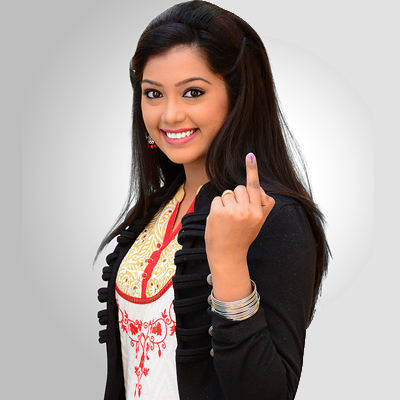
    With the thought of mobilising the youth and taking its Nayi Soch agenda forward, the channel has introduced an initiative to encourage first time voters to register for the upcoming general elections. Led by its popular face and youth icon, Veera, the campaign started in February and has created series of public service messages, prompting young viewers to register, vote and make a difference.


    This year, with the number of potential first time voters being estimated to be 12 crore, the channel wants to spread the awareness about the voting rights through the campaign. 


    “We want to encourage them to exercise their vote and contribute to the country’s progress. However, a lot of them are still not aware that the registration is an important prerequisite to voting. This first phase of our campaign aims to address that,” Star Plus senior vice-president marketing and content strategy Nikhil Madhok.   


    Moreover, Star network, this month also brought back the righteous popular talk show, Satyamev Jayate. It’s no coincidence that the show came back at a time when the country is gearing up for the general election to be held in April-May.


    With passions riding high and everyone out to prove their political credentials and concern for the country, the new season was aptly themed ‘Jinhe desh ki fikr hai’ (those who are concerned about India).


    The channels are doing their bit, now will have to wait and watch how many will go out and vote.

  • BCCC issues two advisories for TV channels

    BCCC issues two advisories for TV channels

    MUMBAI: A fortnight back, Indiantelevision.com had written that the Broadcasting Content Complaints Council (BCCC), a complaint redressal arm of the Indian Broadcasting Foundation (IBF), was going to come out with two more advisories for the broadcasting fraternity.


    The 13 member board, headed by Justice (Retd) Mukul Mudgal, at its 33rd meeting, has approved the issuance of the two advisories for the benefit of television channels.


    The two advisories are:

    1. Advisory on Portrayal of Persons with Disabilities in TV Programmes;

    2. Advisory on Depiction and Use of National Flag, National Emblem, National Anthem and Map of India in TV Programmes.


    For the first advisory on portrayal of persons with disabilities, the BCCC which had received several complaints earlier feels that adequate protection is necessary to avoid content which may be distasteful, harmful and offensive to persons with disabilities.


    The Persons with Disabilities (Equal Opportunities, Protection of Rights and Full Participation) Act, 1995, lays down the law to safeguard the rights and facilities of persons with disabilities. “And keeping this in mind, the Council believes that humour should not be created through any undesirable depiction of persons with disabilities and no derisive and disparaging reference should be made to their disability,” said the BCCC through a statement.


    The Council has advised all IBF member channels to exercise caution and be sensitive in the portrayal of persons with disabilities, to be conscious of their dignity, and to adopt a mature and responsible tone. At the same time, the Council has also advised the channels to look at the inclusion and mainstreaming of persons with disabilities in TV programmes.


    As for the depiction and use of National Flag, National Emblem, National Anthem and Map of India, the BCCC has advised all its IBF member channels to refrain from airing any content that may amount to misuse or wrong depiction of all of these.


    The Prevention of Insults to National Honour Act, 1971, and the Prevention of Insults to National Honour (Amendment) Act, 2005, lay down guidelines for the usage, depiction and portrayal of National Flag, National Emblem and National Anthem. “And hence, if any depiction/usage of the above becomes necessary as part of a programmes storyline, the channel should take necessary precautions so as to abide by the law of the land,” said the advisory.


    The advisories come into effective immediately as all channels have been informed.


    On what will be the penalty, if channels, failed to follow the new guidelines BCCC secretary general Ashish Sinha told indiantelevision.com, “The gravity of it will depend on the kind of violation. As per our guidelines everything is graded. However, this time around it can even go beyond us as if not followed, the channels will be breaking the law of the land because they will be disobeying the laws laid by the Parliament.”

  • Sony’s ‘Encounter’ with Manoj Bajpayee

    Sony’s ‘Encounter’ with Manoj Bajpayee

    MUMBAI: For Endemol India that has established itself as a leader in the reality TV space and has expanded into other strands of content, it has been a roller coaster ride.

    Although crime shows on TV are common with almost every channel, but the way Sony Entertainment Television (SET) has accepted this genre, nobody has, believe the experts of the industry.

    Crime always sells and it is this genre that has worked for the channel which is currently languishing among the bottom three GECs, according to the weekly TAM TV ratings.

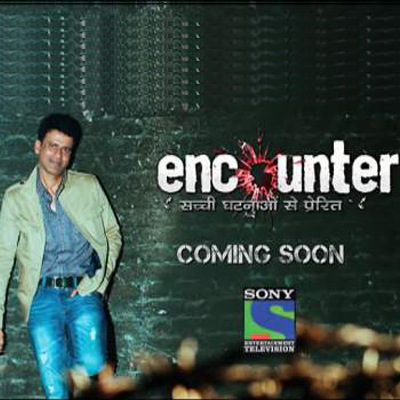
    CID and Crime Patrol has been airing for years and it won’t be wrong to say that the shows belong to the crime space.  To get back its long lost position in the ratings chart, SET is set to launch Encounter on 11 April. Produced by Endemol India, the show will be hosted by Manoj Bajpayee.

    Encounter, as the name suggests, is an account of the dangerous encounters between cops and gangsters. It will bring alive the stories behind the famous encounters of the police and the underworld in India starting from the early nineties. Inspired by real-life incidents, the show aims at redefining the proverbial action series on television.

    The promos of the show that is to air 36 episodes have already hit the television screens and will be telecast every Friday to Sunday at 9 pm. It will replace the channel’s dance reality property Boogie Woogie that is shown on Saturday and Sunday while it will also take away a day’s telecast of Nandini (aired at 9 pm) and Jee Le Zara (aired at 9.30 pm) that airs on Fridays. Sources indicate that the latter will be shutting its shop very soon due to poor ratings.

    Gaurav Seth

    SET senior vice president, head-marketing Gaurav Seth believes that crime shows are the channel’s strength. “There are a lot of crime shows on television but we believe that such shows are our strength. People talk to us in big numbers, watch the crime genre and believe that we do it well. Whether its CID or Crime Patrol, these are the shows which have cult following over a period of time because people think that this is something Sony does best. We want to continue that trend.”

    Spelling out the reason of getting Bajpayee on board Seth avers, “He is going to play a very interesting role of narrating the stories from the inside. He has got most implacable credentials when it comes to this genre and has also played humorous characters that have actually stood out in Indian cinema.”

    SET has rolled out an aggressive marketing campaign for this show. There will be more than 20-25 channels telecasting the promos of Encounter. For the channel that has already bought 8,000 spots, television is going to play a lead medium for communication. The promotional TVC featuring Bajpayee will also be promoted on other mediums like radio, print, digital media, games and apps.

    Ajay Bhalwankar, who has recently joined SET as its chief creative director, believes that the show is going to be a blockbuster. He reveals: “It is going to be very different show and not on the lines of Crime Patrol as people are comparing it with. These are all different cop stories and are not wholly focused on the criminals. You will find a lot of difference from other crime properties which are airing on television today.”

    Ajay Bhalwankar

    A source closely connected with Endemol revealed that the planning for the show started three months ago. “When we started off, we wanted to do a real encounter series, real cases with real people. But it was just not possible. It also needed to have a fictional twist because getting the police on-board was a difficult task. So we decided to make it a fiction series because the channel believes in crime-related shows and that is its audience.”

    The same source further goes on to add: “We shot a small pilot with an actual encounter specialist A Khan and the channel liked the concept so much that they immediately picked it up. The pilot would be of one episode.”

    Moreover, compared to Sony’s other crime properties like CID and Crime Patrol, the production cost of Encounter is much higher per episode. As of now three episodes have been canned and are ready to go on-air.

    Media professionals feel that the channel should concentrate more on its line-up of fiction rather than giving viewers weekend dose of entertainment. “The show is going to compete with one of the best shows other channels have in that time slot. Since Sony already has strong crime properties that are doing well for them, there was no need to create another one. They should come up with innovative content for its daily soaps which are struggling to find its place in the ratings chart,” reasons a prominent media planner who did not wish to be named.

    Encounter is going to compete with Pavitra Rishta (Fri) and DID Lil Masters (Sat-Sun) on Zee TV, Beintehaa (Fri) and Khatron Ke Khiladi five (Sat-Sun) on Colors, Diya Aur Baati Hum on Star Plus (Fri-Sat) and Mad In India (Sun) and Chidiya Ghar on Sab.

    Seth is not worried about the competition. “We are extremely hyper and aggressive about everything that we are doing. Since it’s a very competitive slot, we have to believe in our content. And to ensure that people latch on to this content, we have a very interesting promotional campaign going on and we are very excited about it,” he signs off.