Category: GECs

  • Akash Chawla heads to Essel Vision as business head

    Akash Chawla heads to Essel Vision as business head

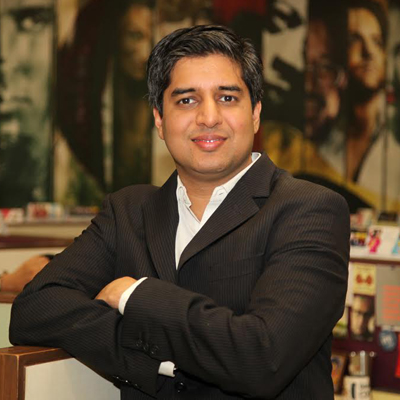
    MUMBAI: To enhance Essel Vision Productions (EVPL) from its current size into a business, which is larger in terms of reach to multiple channels and languages, Zee Entertainment Enterprises (Zeel) has appointed Akash Chawla, who has successfully been heading the marketing function for national channels at Zeel, to now take charge as the EVPL business head.


    Chawla has been given the mandate to head the TV production (all languages), movie production (all languages except Marathi), studio production business, digital and online production, events and IP creation. He will drive the organisational aspiration of EVPL and contribute in multiplying its business from its current business levels. For this role, Chawla will report to EVPL CEO Nittin Keni.


     “Essel Vision is very focused in the film and television production, digital, events and the IP creation business. Having spearheaded marketing for Zee TV, Zee Cinema, Zee Classic and Zee Cine Awards, Akash has worked successfully towards the launch of three of ZEEL’s new brands in the last one year – &pictures, Zee Anmol and Zindagi. He will work towards strengthening our presence in Hindi and other languages movie production & marketing and the digital business to catapult the organization’s ambitions to the next level,” said Keni.


    Keni added, “We will produce content not just for the Indian audiences but also for companies and audiences the world over. While IP rights provide the foundation upon which innovation is shared and creativity is encouraged, the digital age provides many opportunities within the entertainment media industry to improve efficiency, costs and viewer experiences. Everything we do is driven by an unyielding passion for excellence-and an unfaltering commitment to develop the best products. We are in talks with various leading collaborators for the same and will soon announce new initiatives.”


     Essel Vision’s consistency and success are built on its unwavering dedication to setting benchmarks and excellence. It has already made a mark on the map of Television and Feature Films – both in the Hindi and Marathi space.


    With blockbuster films like ‘D-Day’, ‘Gulaal’, ‘Natrang’, ‘Kaaksparsh’, Essel Vision has taken its first steps to another high with its ventures like “Time Pass”, ‘Lai Bhari’ and  ‘Duniyadaari’ which have been the highest grossers in the Marathi film space. Its other creation ‘The Lunchbox’ has already received accolades around the world.


    In the television space, the company has been successful with qualitative programs like ‘Fear Files’, ‘Dance India Dance’ and ‘India’s Best Dramebaaz’, ‘Saregama’, ‘DID L’il Masters’, ‘DID Super Moms’, on Hindi TV, and ‘Eka Peksha Ek’ and ‘Fu Bai Fu’ amongst others on Marathi TV.  The upcoming feature films include ‘Mad About Dance’ which is promoted by Shah Rukh Khan himself and another film called ‘3AM’ (horror film) is on the anvil.


    Just as ZEE is an innovative leader in developing new business models for the evolving television and film landscape, Essel Vision’s objective is to be a one-stop shop for all film, television, digital, events & IP creation related services where it will produce, co-produce, market and distribute.

  • Sahara One Q1-2015 revenue down 87 per cent; company posts higher q-o-q loss

    Sahara One Q1-2015 revenue down 87 per cent; company posts higher q-o-q loss

    BENGALURU: Sahara One Media and Entertainment Limited (Sahara One) posted 87.3 per cent lower revenue (TIO) at Rs 11.19 crore in Q1-3015 as compared to the Rs 20.95 crore in Q4-2014 and less than half (40.75 per cent) of the Rs 27.42 crore the company had posted for the corresponding year ago quarter.


    The company’s q-o-q loss is at Rs 2.31 crore in Q1-2015 was about 15 times more than the Rs. 0.15crore in the immediate trailing quarter. In Q1-2014, Sahara One had reported PAT of Rs 1.21 crore.


    Sahara One’s total expenditure in Q1-2015 at Rs 15.1 crore (135 per cent of TIO) was 35.9 per cent lower than the Rs 23.54 crore (112.4 per cent) reported in the immediate trailing quarter and 47.1 per cent lower than the Rs 28.54 crore (79.2 per cent of TIO) in Q1-2014.


    A major portion of Sahara One’s expenditure is towards purchase of content (Content cost). In Q1-2015, the company spent Rs 9.90 (88.5 per cent of TIO) crore towards this head, which was 42.4 per cent lower than the Rs 17.2 crore in Q4-2014 and 54.4 per cent lower than the Rs 21.73 crore in Q1-2014.


    Click here for the financial

  • STAR Plus launches ‘Nisha Aur Uske Cousins’

    STAR Plus launches ‘Nisha Aur Uske Cousins’

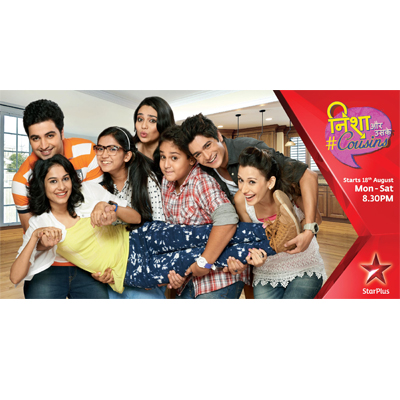
    MUMBAI: With their new offering ‘Nisha Aur Uske Cousins’, Star Plus is bringing a relatable story of young India while showcasing the hitherto unexplored bond between Cousins; a relationship that forms the crux of everyone’s growing up years. Cousins are your blood relations but at the same time they are the friends you keep forever, the ones you share your childhood memories and growing up angst with. It is this very relationship that will be highlighted in the show. Targeted to the youth, the show also effectively captures the differences of opinion and friction caused by the generation gap between the elders of the family and the youngsters, especially when it comes to topics like careers, relationships, lifestyle and fashion choices.

    Based in a joint-family set-up in Jaipur, Nisha Aur Uske Cousins brings to the viewers a bunch of interesting motley characters who are relatable and real – whether it is the shy romantic geeky cousin, the beautiful attention-seeking cousin or the cousin who is the natural leader and who everyone looks up to – each character has been beautifully etched and detailed out. The show has a good mix of both fresh and veteran faces, led by Aneri who plays the role of Nisha and Mr V M Badola who plays the patriarch of the family and the grandfather of the cousins. They are ably supported by the other cousins Suketu (Parv Kaila), Dolly (Purvi Mundana), Kirti (Heli Daruwala), Jwala (Barbie Jain), Umesh (Meherzan Mazda) and Bunty (Nikunj Padaya) and the very talented Vivek Mushran and Pubali Sanyal.

    While none of the cousins’ fear dreaming big, their only terror is the fear of confronting the head of the family, Dadaji. The story revolves around how despite living in a patriarchal system, each one of them wants to break free to achieve what is unconventional and not stereotypical in a traditional family, which should surely resonate with today’s youth.

    Mr. Nikhil Madhok, Sr. VP Marketing & Programming Strategy says, “In many ways Nisha and her cousins represent the Star Plus of today – young, energetic, wanting to break the mold and do something new. They respect Dadaji and their elders but don’t always agree with their stereotypical views. The show not only captures the unexplored but extremely interesting dynamic between cousins, but also deals with issues of today’s youth and their desire to challenge stereotypes”

    Mr. Sukesh Motwani from Bodhi Tree Productions says, “Cousins hold a special place in our lives. They are our first friends, first play buddies, rivals and partners in crime. There are some episodes of our lives that only our cousins can relate to and hence to showcase the bond we’re here with our new show Nisha Aur Uske Cousins. We are very happy to bring forth this unique relationship in everyone’s lives.”


    Pyaar, takraar, masti… Yeh hai Lifetimewali Dosti! Come meet Nisha Aur Uske Cousins starting18th August, 2014, every Monday to Saturday at 8:30 PM!

  • “Reliance’s Big brand is focusing on  the localised content, local IP space:”  Tarun Katial

    “Reliance’s Big brand is focusing on the localised content, local IP space:” Tarun Katial

    He is amongst a select lot of advertising professionals who have pole-vaulted over the fence to the broadcast side – and stayed there. In fact, not many recollect that Tarun Katial began his career at Saatchi & Saatchi as a media trainee. More might remember him from his O&M days when he headed TV media buying for the Mumbai office. The then Star India CEO Peter Mukerjea picked him up to work in programming along with Sameer Nair, and the rest, as they say, is history.  From Star, he moved onto head Sony Entertainment programming, before heeding the call from the Anil Ambani-Amitabh Jhujunwala combine to help take the billionaire businessman’s  entertainment ambitions further under the umbrella of  Reliance Broadcast Network Limited (RBNL). 


    It has been quiet a journey. He heads what is considered as India’s most widely spread private FM radio network – Big FM 92.7 which has a footprint of 45 stations. Katial also handles a clutch of TV channels – Big Magic, Big Magic Bihar and Jharkhand, Big Thrill – the TV production wing Big Productions and the group’s activation arm. 


    Despite arriving late in the broadcast TV game, Katial managed to forge alliances with US major CBS and German media megalith RTL. He launched channels in partnership with them quickly from 2010 onwards with the clear intent of building a strong network. The CBS joint venture unravelled end-2013 while the RTL one got unstuck a couple of months ago. Katial – with a sanguine look in his eye says “things happen, then they don’t and the other way round too. But they are all a part of learning and experiences.”


    A firm believer of differentiation and localisation of content, Katial has been at the helm of one of India’s youngest media houses. It was this approach towards business that got him the ‘NewsCorp Achiever for Asia’ award and later led to him being included among the best in ‘India Today 30 on 30’ list. Katial’s much older today and his hair has greyed in parts, but the man has retained his hankering, his drive for innovation and challenges. He got into a conversation with Indiantelevision.com’s Seema Singh and Meghna Sharma, to talk about his experience, his good moments and not so good ones too, and also about his future…


    Excerpts


    How has the journey been so far? The company has seen a lot of ups and downs, what do you have to say about them?


    It has been an interesting journey. When we launched, all our competitors were at least five to seven years ahead of us, well established brands with not only equity, but also ad-consumer connect and legacy of their media house ownership.


    But, we were neither a media house nor a recognisable brand. To add to that, our parent brand Reliance did not allow us to use its brand name, since that is a part of our branding guidelines. We didn’t have any legacy knowledge in the system either. So it was all done from scratch. 


    The team has almost remained the same, since the time we launched. The executive board of the company is also still intact.  Right from deploying CAPEX to building a brand, an identity to positioning the brand, to winning small victories to larger wars, it has been an interesting journey to say the least. 


    In the last two years, the brand has really come of age, We realised that while we fought the marginal differentiation game, we had to be exponentially different to be able to succeed. 


    So we decided to position our brands to recreate every local market and that’s when we decided to go retro for our radio station in Mumbai and Delhi, regional in Bengaluru, melody in Chennai and largely Bengali with Hindi retro in Kolkata. 


    Today, I am quite proud to say that in most markets that we operate, we are either number one or number two, with a huge gap between us and our competitors. 


    You were a late entrant in the game, have you been able to deliver on the challenges? Which have been the areas that you have succeeded and areas which still remain to be tapped?


    The initial challenges were basic understanding of the business to building a consumer brand to building a differentiated positioning and differentiated offering, then to be able to consolidate and work around it. 


    In the brand’s journey you are sometimes able to take risks and sometimes not, sometimes you are able to expand and sometimes you have to consolidate. And in all of that, I think a new brand is not at the same place as an established brand. 


    Radio lacked measurement and we have worked with the industry to introduce RAM. 70-80 per cent of radio spends, today, are in measured markets and advertisers are able to measure the ROI they get from radio. The coming in of measurement rapidly increased the number of brands that had faith in radio. What it also did was, it helped radio move away from being just a frequency medium to being a rich range medium and classic advertisers like the FMCG category started to rely on radio for their communication needs, which has been very good for the category and very good for us. 


    Again in the television business we were laggards. Every business takes time to find its strategy. We started from the English space and then decided to venture in the local language proprietary content space. What we’ve been able to learn and reconcile with this is that we want to be in the local space like we are in the radio business. 


    Television is a much younger business than radio and I think the success we have seen in the TV space in the past six months has been very good. With our Big Magic Bihar and Jharkhand channel, we are clearly the leaders. Whether it’s Big MemsaabBig Bahuriya or Police Files, we have  great content. 


    Also we are the only ones with local production capabilities in Patna and we have been able to build a new community of technicians, actors and producers there.


    On the national front, while we started with Big Magic in UP, it was in April-May this year, with the launch of Akbar Birbal that we decided to take the channel national. 


    There are obviously challenges and we have a great distance to cover but I think the two month report card has been very healthy and positive. We have been able to launch a whole slew of content like:  Uff Yeh Nadaniyaan with Upasana Singh, Raavi Aur Magic Mobile and Ajab Gajab Ghar Jamai with Himani Shivpuri and Sumit Vats. 


    We are going block by block, building on that channel. While today we have about 2.5 hours of original content, we would probably take it up to 3-3.5 hours by the end of this quarter. 


    We believe that regional content is the way forward. It allows you to connect with the audiences and stay centric to consumer’s needs.  Also when you own the intellectual property, you can take it international, deploy it on digital and on various forms and fashions. So I think that’s really our strategy going forward in the television space.


    Why did you think of starting a production unit in Patna? 


    We started our Patna operations four months back, as we believed that local and regional channels should be run from where they belong and a lot of the Bihar channels tend to run from Delhi or Mumbai. But, according to me, this prevents you from building a local connect or local relevance. So we decided to do shows which are locally relevant. 


    Big Bahuriya is a show which surfaces latent issues between mother-in-laws and daughter-in-laws. It has done very well for us and it has all been shot in Bihar and Jharkhand and in the homes of people. Then, Big Memsaab, a studio based game show for women, is also based out of Patna. We built the studio and shot there, giving opportunity to local contestants, local people to come and take part. Similarly, Police Files is a very gritty, in-your-face crime show, where we work with real footage and real issues and crime scenes in Bihar and Jharkhand. 


    These programmes have been produced by local producers like Abhay Sinha, Amitabh Verma and Kamlesh Guthi Singh.  


    Are you looking at rebranding Big Magic Bihar and Jharkhand?


    Yes. We are looking to rebrand and probably call it Big Magic Ganga.  This should be done by mid August. We have already got the approvals for the same. When we rebrand, we will launch in a fairly big way. 


    Your business model earlier looked very lucrative, with TV, Radio, Production and Activation arm, how do you plan to keep up the whole chain to make it look more lucrative? How do you plan to synergize what is under you? What is your current business model?


    Actually we have strengthened our approach a lot now. We have a strong activation business called ‘Big Rural.’ We probably are the only ones who do intellectual property work in the rural space. We have built some very good brands, like ‘Big Disha’, where we do rural career counseling, partnering with Gillette.


    In fact a number of brands partner with us, through which we do hundreds and thousands of activations across schools and colleges. 


    We have also built a new brand called ‘Mele Ka Big Star’ and ‘Hindustan Ka Big Star’ where we cover large melas across UP, MP, Bihar and Jharkhand. Through this, we do a big talent hunt partnering with successful brands like Horlicks, Hero, Godrej and Emami among others.


    We have built a very big property with on-ground activation called Close Up Antakshari. Also on the production side, we have done a lot of proprietary work. Like the Big Star Entertainment Awards and now the monthly Life OK Now Awards.  We do different kinds of work under Big Productions. 


    So your business model still remains the same?


    Yes it continues to be the same. But one of the differences we brought about in the business model is that instead of focusing on client specific activation, events or productions, we are now doing more branded content activation which has attracted   a lot of clients. Through this, a lot of clients can partner and benefit rather than a single client carrying the cost. We have also built some single client properties. For instance, the Hajmola Chatpata No 1, which has a deep penetration in UP, was a success and we plan to do a follow up this year. In short, we have built some long standing properties rather than just activation.


    Are you creating activations for your television channels as well? When will we see the transformation of Thrill? Also will it continue to being male skewed? Will it be in English? 


    We are in no rush to do more in our television space until we attain a critical mass market for  Big Magic and Big Magic Bihar and Jharkhand. For us, the next big thing will be to Indianise Thrill and add local content on it as it is our second priority in the television space. We are currently in the consolidation space. And we also have the phase III of radio rights on our head. So, I think we need to see how much of bandwidth we have for television.


    Thrill will be rebranded by end of this year and while comedy will be on Magic, Thrill will continue to have action. The content on Thrill will be in Hindi only. The whole point of a buyout from RTL was to start doing local content. We are working with some key producers in the space.


    Are you looking at an English channel?


    We won’t do English for some time now. We believe we want to be in the local IP space. We want to have our own IP.


    Was this the reason that the joint ventures ended?


    Our strategy is to be in the local content, local IP space. We want to be centric to the consumer and move around according to the changing trends and tastes. We want to be able to take the channels to different platforms. But in the English space, you are under the rental model. What we do after the license period gets over? What is your legacy in the space?


    Why did you decide to launch the channel with international partners – CBS and RTL?


    You learn with every category you get into. I think when we got ourselves into the English space, there were fewer partners, less competition, but over the three years the space became fragmented and crazy. 


    What is happening with Big Magic and Big Magic Bihar and Jharkhand and Big Magic International, post the breaking of the JV?


    We now own all the content and that’s the reason we launched Big Magic internationally. We are now available in the US, Australia, Canada and are planning to launch in some countries, this year. UK is one of the targets and the talks are already on. 


    If you see the financial statement of this year, the company has done better as compared to 2013. But the network is still incurring certain losses. How are you looking at improving this – especially on the television side?


    RBNL is in its investment phase on TV and it’s on the return phase on radio and that’s how we are balancing it. You need to have some initial losses for any network to grow. You can’t cut the investment short because there are loses in the business, right?


    I will not define them as loses; they are investments. For any business to grow you need investments and we are happy to make investments in the TV business. We are happy to reap the benefits of the radio business. The radio business is close to Rs 200 crore plus, which is not a small number.


    So, will you be pushing radio more?

    Both are different businesses and have different sets of challenges; and we want to grow in both the businesses. And you have seen what we have done with Big Magic. We have been launching a new show almost every week if not every month and the kind of investment that is going behind content, marketing is quite incredible. Last week, we launched the new season of Uff Yeh Nadaniyaan. We have brought in new faces; we have upgraded the look of the show. So, at every step of the way we are investing in the content of the channel.


    What kind of management reshuffle will we be seeing. Are you getting in  more new people?


    We have brought in more people to strengthen the team. On the sales side, we have created a vertical approach, keeping the customer at the centre of it. So we have done a vertical for single customers, a vertical for government sector customers, a vertical for key accounts, a vertical for corporate accounts and new business developments. So, we have a customer centric approach and we have got sales directors on all these verticals. We have got Gurudutt Jakhmola for the government side, Ajit Singh has been roped in for single accounts, Rajesh Mishra for corporate account side and Vijay Koshy on the key account side.


    So, we have got four vertical heads. On the creative side, we have got Manisha Tripathi as the creative and programming head of radio.


    Are you looking at fresh investments coming in to the company?


    Obviously, we will make investments into our radio business as we go into phase III of licensing; we will definitely make investments in current licenses migrating into 15 years and acquiring new licenses.


    And what about television?


    Television is now at the cusp of breakeven, but we will continue investing in Magic.


    What about the licenses of channels like Love? Will you be giving them away? Can we expect more channels in the future?

    We will keep them. Currently, they are in the hibernation stage.  We will be working with our three channels for now. And as and when opportunities come, we will tap into it. 


    How do you plan to get cash flow in the company? Why did you plan to delist?

    For now, we are a delisted company and so we do not need to worry.


    We didn’t want to live quarter to quarter and the promoter believed that he had great value in the business and so he should go behind it and give it all the investment it requires to give it a long term run. 


    For a business in its early stage it is tough to live in a quarter to quarter manner. I can tell you, I have worked at News Corp in my early days at Star and if we were to live on a quarter to quarter basis, we would have never made the kind of investments we did. 


    Also, we didn’t list because we wanted to. We listed because we have a legacy of Adlabs being listed. Our licenses were in the erstwhile Adlabs which demerged into Reliance Media Works which then became Reliance Broadcast Network. We have actually never done an IPO. 


    According to you, which is the most ad revenue generating channel? 


    Big Magic is actually at a 100 per cent inventory fill and it is doing exceedingly well. But I think the one that has real big potential going forward is our Bihar channel. It’s a media dark region and a lot of advertisers want to penetrate that market. Also, it has one of the fastest GDP growth in India. 


    Are you looking at geo-targeting at any stage?


    We had some options at doing geo-targeting with Big Magic because it’s very big in UP. We keep toying with the idea. With a 50 sales offices in the country for our radio business, it will be an easy task.  But we haven’t really tapped into that yet.


    Is distribution a challenge? Is it getting expensive now?


    It’s not very expensive, it is actually getting cheaper. Digitisation has clearly made distribution democratised. Placement is still expensive but distribution is not. And if you have differentiated content then placement is not a key challenge. 


    In fact, we have had a reduction in our carriage fees dramatically over the years across the network and I can tell you that some of the DTH platforms have been very welcoming for our channels.

    What is your budget for marketing on a yearly basis? Does it keep increasing year on year?


     See, we have priority markets, where we invest heavily. Also, we have great advantage of having cross network between radio and TV. So, what people can’t buy, we can buy very easily. Most networks have to buy on radio networks like us, but for us that’s a very big advantage. So between network media and third party media, I think our budget will be close to 20-25 crore. 


    According to me as the channel gains popularity, its marketing spends reduces. 


    I can tell you, our radio market budget has come down substantially from the years we launched it. It’s a set brand. When we launched the show with Annu Kapoor we did not do any marketing because the content was strong. I think good content markets itself after a point. The word of mouth, the advocacy becomes so strong that you don’t have to knock on any ones door.


    What made you change your whole content from recent Bollywood tracks to retro on Big FM? How big is your research team for both television and radio?


    You have to give yourself some serious delta of differentiation, it can’t be marginal differentiation. And you have to take some risks and risks pay off eventually. 


    We have an intense research team, which comprises music experts and even university graduates who have done a post graduation in music. We won’t take such a risk without understanding the consumer’s likes, dislikes and choices. Even within the retro music we have serious segregation on timeless music and time-bound music. 


    Similarly for television, we work closely with Dragon Fly for a lot of research. 


    There seems to be a sudden rise of in-programme advertising? Do you also use this tool to advertise?


    We do a little bit of it, but more in Bihar and Jharkhand because we have a game show on the channel and also because there is a lot of good opportunity there. But I still believe that you can’t make good content into a teleshopping network.


    I think the consumer is becoming extremely discerning so you need to be smart about the way you do these things. What we did with Clinic All-Clear on one of our shows on Big Magic called Raavi was that we spoke about educating the girl child, while soft branding the product with the message.


    Are you looking at doing more events apart from the current slate? 


    I think they need to make sense from a consumer perspective. You can’t just do them because you want to do them. You have to do them because there’s an insight in them. We currently have a slate of 20-30 events, which I don’t think is little by any standard. 


    Does the network make any content for only digital  consumption?


    We are currently not making content for digital only, but we are re-purposing a lot of content for digital. Like we do short stories of Akbar Birbal, only for digital. We have our own YouTube channel, where we condense interesting episodes and put on that channel. The content is such that it can be watched in about nine minutes. 


    Where do you see the network three years down the line?


    The network will be very consumer centric, adapting to changes in consumer trends, very well differentiated and distinct, whether it’s the TV network or the radio network and building on insights continuously. For us consumer-centricity is the key and that’s what we are working on and that’s why we have done what we have done both in TV and in radio. You can’t win by duplicating anybody.

  • Zindagi: Catering to the progressive woman in you!

    Zindagi: Catering to the progressive woman in you!

    The two countries were divided, thousands were left homeless, and since then many wars have been fought between the two nations as well. But there still remains that minute thread which continues to join the chords amongst us all.

    Border, Veer-Zaara or the latest Google ad plays on those emotions. We might be divided by a line but culturally we still share the same nuances. And taking a cue from this media powerhouse, Zee, which goes by the corporate philosophy of ‘Vasudhaiva Kutumbakam – The world is my family’, recently launched a Hindi general entertainment channel (GEC), Zindagi.

    The channel’s proposition ‘Jodey Dilon Ko’ is based on the fact that even if the people from various parts of the world are culturally different, the stories of their lives are universal. Maybe that is why all women want a husband like Zaroon and men looked for a perfect wife in Zara.

    The channel showcases four shows every night from 8 pm narrating stories of various characters torn between relationships, duties and work. The stories are set in natural locations giving a true-to-life portrayal to not just the characters but also storyline.

    However, one element common between all these shows is that they have strong women characters dealing with issues. Be it a woman hesitant to trust a man after her father left her mother for another woman or two estranged sisters vying for a man’s attention. The portrayals are relatable and tell a story of woman’s struggle.

    Remember Shanti, Rajani or Udaan? The popular shows on Doordrashan in the eighties and nineties before the heavily-makeup saas-bahus took over the entertainment space. The characters in the shows on Zindagi remind of that era where life happened beyond the four walls of a set.

    The channel’s business head Priyanka Datta recalls the strenuous hours spent scrutinising content and then selectively handpicking drama with a lot of care, such that they were relatable to the viewer’s emotions and fulfilled the channel’s proposition.

    She points out that there was no conscious effort in choosing woman-centric shows, but since Pakistani television industry is known to highlight social issues amongst others that are prevalent in their society which are mostly woman centric, it happened naturally.

    Through the pragmatic content, the channel aims to cater to the new-age woman, for whom the primary concern is work-life balance and not solely entertainment. “She is the woman with a progressive mindset. The women in the dramas on Zindagi are regular ordinary women like you and me. Their emotions, feelings and day-to-day issues that they deal with are very similar to what women in our society go through. Unlike serials on other GECs, women on Zindagi’s shows do not wake up in the morning loaded with make-up and jewellery. Their lives do no revolve around conspiring against each other. There are many more relationships explored besides just saas-bahu on Zindagi,” elaborates Datta on the differentiating programming lineup.

    The content on Zindagi which includes storylines, script, language, natural acting, fashion, apart from just the good looks of the actors have become the most talked about in India. The social media is buzzing with millions of impressions online.

    The reason why it is creating a buzz especially among urbanites is the fact that there is a certain section in viewers who desire for something different, something better that could enhance their television-watching experience. Datta points out that through the various researches the network did before launching the channel, it found out that the attention span of viewers has only decreased over the time with the use of multiple screens and it has become a bigger challenge than ever to excite the audience and keep them glued. “We knew that we had to break the monotony-and so attempted to bring – content with depth and reliability. The saas-bahu sagas have been there since years and will continue to coexist parallel. While such shows cater to viewers with traditional mindsets, the likes of dramas that are on Zindagi will cater to viewers with progressive mindsets,” she says.

    If that wasn’t enough, there is stark difference between the longevity of shows as well. In the era when shows are competing with each other to cross 1000 plus episodes, the series on Zindagi lasts only for 20-25 episodes. The dramas aired have finite plots written by reputed authors and literary stalwarts. The numerous researches show that the viewers want to move away from long running shows that air for years at stretch. “However, the early adopters will be the people with progressive mindset followed by others. Viewers will surely take some time to adapt to this kind of format,” believes optimist Datta.

    When asked how are male audiences reacting to the channel? Datta answers, “The content on Zindagi seems to be going down well with the men. Celebrities like Subhash Ghai, Kunal Kohli, Jaaved Jaafferi are amongst the few from the industry who have been very appreciative of the content and it’s encouraging that our dramas are not restricted to any gender in specific. We understood that we had to break the monotony and showcase quality of content that was not similar to that associated to the Hindi GEC industry. The saas-bahu sagas have reigned for years and are mainly targeted towards female audiences. Content is king and all shows that have been shown on Zindagi since its launch have appealed to audiences (males and females) of all ages.”

    Media observers too agree with the fact that though the channel may not have got the ratings it expected, but has surely created enough noise in the market because of its content. “Kitni Girhain Baqi Hain is very popular amongst women in my office as well as outside,” says a woman media planner.

    The strong content has even got insight teams of competition talking. “The washroom talks rotate around the shows and the handsome men,” laughs an insights manager from a top-ranked GEC.

    Most of the shows airing on the GEC were previously broadcast on Hum channel which is run by a woman, Sultana Siddiqui. And what’s interesting to note is that the channel, which is a window to see how life is at the other side of border, creative and business heads too are women. “It’s just a mere coincidence,” laughs Datta. 

  • Mashraque to replace Anjuman in Middle East

    Mashraque to replace Anjuman in Middle East

    Anjuman, the UK-based Reminiscent Television Network’s (RTN) Urdu language entertainment channel, is being phased out in the Middle East due to its poor response.

    Anjuman will be replaced by a new combi channel, Mashraque, having an equal mix of Urdu and Arabic, that will essentially target expatriates from India and Pakistan who need a working knowledge of the two languages in order to be able to work in the region, along with the local populace.

    Mashraque is to be a free to air channel and will be beamed off the Arabsat satellite. The network’s Indian affiliate RITV was supplying 30 per cent of the content for Anjuman.

    It has also entered a deal with entertainment major Viacom, which will promote RITV’s Lashkara and Gurjari channels as part of a pay package ‘Asia Plus’ in the Middle East and North Africa. The package also includes the Sony channels (Sony Entertainment, MAX, AXN and CNBC India), MTV, 24-hour Hindi news channel Aaj Tak and Malayalam language channel Kairali.

    Although channel officials were unable to put a figure on the extent of viewership Mashraque would target, they said the channel’s profile would enable it to compete successfully with other government owned channels in the region, like Dubai TV and Saudi TV. The channel is being projected as an entertainment channel with a judicious mix of songs, soaps and comedy. The channel is, however, reluctant to divulge details about where it would be source content.

    While Asia Plus will be headquartered at the new Dubai Media City enclave, RITV too is planning to set up its offices there to establish its presence in the region, it is learnt. UK-based RTV which has the cutting edge of offering a group of ethnic channels under one umbrella, owns 20 per cent of RITV.

    RITV launched Lashkara and Gurjari in 1998, both 24-hour channels which address the needs of the Punjabi and Gujarati communities respectively. Since their launch, both channels have been telecast in over 30 South Asian contries. Lashkara made its UK launch in May 2000. RTN runs a seven-channel bouquet in the UK.

  • Writ seeks ban on 3 Indian TV channels in Bangladesh

    Writ seeks ban on 3 Indian TV channels in Bangladesh

    KOLKATA: A Supreme Court lawyer has filed a writ petition with the High Court of Bangladesh seeking directives on the government to stop telecasting three Indian TV channels, Star Jalsa, Star Plus and Zee Bangla, in the country.


    The petition comes after  a number of young girls reportedly committed suicide as they failed to purchase “Pakhi” dress, a dress named after the actress of a drama serial– Bojhena Se Bojhena– aired in TV channel Star Jalsa.


    The writ calls for the ban within a week and claims that the channels are leaving an adverse impact on the culture and society as a whole. Information Ministry, Information Secretary and Bangladesh Telecommunication Regulatory Commission were made respondents in the petition.


    The writ petition, filed by Advocate Syeda Sahin Ara Laili, also sought a HC rule upon the government to explain why it should not be directed to stop broadcasting all Indian television channels in Bangladesh.


    The petitioner’s lawyer said India doesn’t allow operation of any Bangladeshi television channels here. But uncontrolled broadcast of Indian television channels in Bangladesh is still prevalent.

  • Sony seeks ‘Pal’ in housewives

    Sony seeks ‘Pal’ in housewives

    MUMBAI: “I will be seeking the moon,” says Multi Screen Media CEO NP Singh, as he announced the launch of the network’s much talked about new Hindi general entertainment channel (GEC), Sony Pal. The network which had conceptualised the new channel last year is very confident about the channel, its offerings and the packaging. “Now we will see how viewers respond to it,” adds the optimistic Singh.


    Targeted at women, mostly housewives, in the age group of 15-34 years, in SEC BCDE, Sony Pal was a dream for Singh, which is now finally taking shape. The target audience was chosen after the result of the research which showed that 88 per cent of viewership for a GEC comes from housewives. “The new channel will complement our other offerings,” he says.    


    “Today’s women have started realising that they can not only contribute to the society, but also augment family income. Through Pal, we will celebrate these women,” says Singh.


    The network did an extensive research before deciding on the content, the channel packaging and the target audience. “Our research showed that there was latent demand for a content which was progressive and positive,” he informs.


    The channel is based on the theme ‘Yeh Pal Humara Hai’. “This is the moment to shine, to evolve, to excel and achieve. This moment belongs to her and her alone,” says Sony Pal and Sab senior EVP and business head Anooj Kapoor while adding that this is not a generic promise, but a personalised one.


    The channel will go live from 1 September, with actor Juhi Chawla as its brand ambassador and with content which is empowering and that showcases positive aspects of modern India, while presenting the traditional aspect. “We will showcase family togetherness and not strife, which is what most channels today showcase,” adds Kapoor.


    When asked the reason for roping in Chawla, the duo say, “She is a person who is empowered, successful and yet approachable. She was the first name that came to us, and we stuck with her.”


    The channel logo, which dons colours pink, purple and yellow and has diamonds, a woman’s best friend, has been designed by an Australian agency.


    Sony Pal for Kapoor is mature and the shows will help connect the audience with a life that is beautiful and not a struggle. The channel will initially go on air with three hours of original content, which will be aired from Monday to Saturday between 7:30 pm-10:30 pm. Also, it will have two hours of original programming on Sunday evening. “After a month, we will launch the Balaji Telefilms’ show at the 7pm slot, thus taking original content to 3.5 hours,” informs Kapoor. The slot for the Sunday programming has not yet been disclosed.


    The channel launches with nine shows, these include: Simply Baatein which is produced by GR8 Entertainment and  anchored by Raveena Tandon, Dil Hain Chotasa Choti Si Asha, produced by SOL Productions and hosted by Ragini Khanna and Jay Soni, Shashi Productions’ Ek Rishta Aisa Bhi, Miloni Films’ Khushiyon Ki Gullakh Aashi¸ Singhasan Battisi by Creative Eye, Pia Basanti Re by Rashmi Sharma and Pawan Kuma, Tum Sath Ho Jab Apne produced by Sphere Origins, Sister Didi by DJ’s Creative Unit and Yeh Dil Sun Raha Hain by Balaji Telefilms.


    All the series are infinite and the channel will take a call on the number of episodes based on its performance. While no advertisers have currently come onboard, the network is positive about its content. “We have showcased our product to them and they have responded positively. They first want to see the shows and the channel and then decide. And we are in no hurry too,” says Singh.


    The channel will look at afternoon slots later. “There is a lot of ground to be covered. This is just the beginning,” adds Kapoor. The shows while initially will be shot at outdoor locations of Patiala, Baroda, Lucknow and other HSM cities, will later move to sets.


    The soon-to-go air channel is not free to air and will be available on all the four major multi system operators, DEN Networks, Hathway Cable & Datacom, Siti Cable, Digicable and Fastway in Punjab and all the direct to home (DTH) operators.


    On the marketing front, a 360 degree campaign has been designed, which will go live from 10 August. “We have designed a five week campaign with a lot of fresh initiative. One of this is forming women’s club, through which women can identify their talent and can celebrate life,” informs Kapoor.


    Manjit Sachdev will be the programming head for the new launch. According to an industry source, the investment in the channel could be anywhere close to Rs 90 crore- Rs 110 crore, including marketing spends. As for the ad rates, a media planner says, “Considering all the shows have been brought in the prime time slot, the ad rate for a 10 second slot could be anywhere close to Rs 10,000 to Rs 15,000.”

  • Sab tells the story of a Firefighter

    Sab tells the story of a Firefighter

    MUMBAI: While general entertainment channels (GECs) are busy solving fights between saas and bahus, one channel has been fighting the constant battle to make the viewer laugh.


    MSM’s family comedy channel, Sab, after its recent back to back launches is once again bringing a unique comedy series revolving around the amusing trials and tales of the neighborhood’s favourite firefighter ‘Chandrakant Chiplunkar Seedi Bambawala’.


    The tongue twister name is the first which has caught everyone’s fancy. According to Sab senior EVP and business head Anooj Kapoor, the main moto of keeping a long name was to grab people’s attention. “We have got tremendous response both in terms of the concept and the name. We got a feedback saying that nobody has been able to get the name at one go, and that is what struck the right chord. We wanted people to think the reason behind the name and ask us, what does it mean?”


    Coming from a theatre background, NamanRaj Production’s Dharmesh Mehta is quite choosy when it comes to titles. He reveals that initially the title of the show was supposed to be Chandrakant Chiplunkar Ki Happy Family Wala. “One fine day when the writer was narrating the script to Anooj Ji, he used a word Seedi Bambawala, which means Fire Brigade in Gujarati, and it caught our attention. That was when, we finalised with the current title.”


    The series is named after the protagonist and features industry veterans Prashant Damle and Kavita Lad as a Marathi – Gujarati couple. The story revolves around a fireman by the same name and how he faces difficulties in balancing between his personal and professional commitments but with a touch of comedy to it.


    Kapoor believes that it is extremely difficult to get comedy storylines on-board. He recalls that last year, at least 20 pilots were made for Sab and he had accepted only one out of them. “It is very difficult to create quality within the genre. As I keep saying that in India we still have a limited talent pool of producers, writers, directors and actors. Sab has taken upon themselves a challenging task of producing six-seven daily comedies which is remarkable.”


    The channel makes sure that the pipeline stays robust and Kapoor is thankful that they have been fortunate enough to regularly keep finding concepts that meet the channel’s stringent requirements.


    It took the production house three months to conceptualise the show. When Mehta approached the channel with the concept, he already had a tentative cast at place.


    Raju and Rajan, who were earlier associated with Taarak Mehta Ka Ooltah Chashma, are the writers of the show. Four episodes have already been canned in the set located at Filmcity.


    The show launching on 10 August will replace Lapataganj which has successfully completed 1500 episodes.


    Kapoor reasons to launch the new show at 10pm slot was that even with Laptaganj doing well, there was a certain fatigue setting in. “We feel that the slot potential is a little more than what LG is doing currently. And the new show will be able to optimise that potential.”


    Right now the channel has planned for 130 episodes. “The channel always starts a show with 130 episodes and then depending on the performance it either gets extended or dies a natural death,” points out Kapoor.


    The show will be facing a tough competition with Pyar Ka Dard Hai Meetha Meetha Pyara Pyara on Star Plus, Laut Aao Trisha on Life OK, Aur…Pyaar Ho Gaya on Zee TV, Meri Aashiqui Tum Se Hi on Colors and Maharana Pratap on Sony.

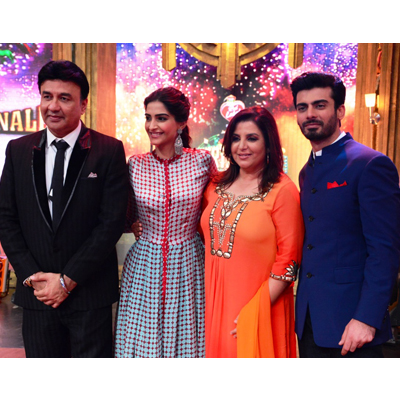
  • Sonam Kapoor and Fawad Khan sizzle on the grand finale of Entertainment Ke Liye Kuch Bhi Karega

    Sonam Kapoor and Fawad Khan sizzle on the grand finale of Entertainment Ke Liye Kuch Bhi Karega

    MUMBAI: Yet another season of the most entertaining reality show Entertainment Ke Liye Kuch Bhi Karega comes to an exciting end. But just as the name of the show goes, the Grand  Finale is going to leave the viewer’s truly spellbound too. To make it more engaging the gorgeous Sonam Kapoor and the dashing Fawad Khan will make an appearance on the show to promote their upcoming flick Khoobsurat.

     
    The opening of the finale episode will witness the sizzling dance performance by Sonam Kapoor on the song Bumb dole which is from her upcoming movie. The duo will not only entertain the viewers with their presence but will also launch the upcoming song of their movie ‘Engine Ki Patri’ on the grand finale episode. To add on more pagalpanti to the finale the talented actress cum host of the show Mona Singh for the first time will showcase her singing skills and hum a few songs with the talented  singer Meiyang Chang which will leave the audience asking for more.

     
    That’s not all, the five finalists of the show FAB group, Infinity, the belly dancer Madhuri Sharma, The rockstar and the amazing Bombfire group will make the evening  memorable with their dhamakedaar performance. Furthermore, making the finale episode more engaging and bringing it to an entertaining end Krushna Abhishek who is well known for his dancing skills will set the stage on fire with his spectacular performance.


    So don’t miss to watch the finale episode of the show Entertainment Ke Liye Kuch Bhi Karega on Thursday Aug 7 at 9 pm only  on Sony entertainment Television.


    The information contained in this communication is confidential and is intended only for use of the addressee. It is the property of ill+Knowlton Strategies and any unauthorized use, disclosure, or copying of this communication is strictly prohibited. If you have received this communication in error, please notify us immediately and destroy this e-mail message, including all attachments.