Category: GECs

  • SAB TV’s ‘Family Funathon’ was a grand success with families

    SAB TV’s ‘Family Funathon’ was a grand success with families

    MUMBAI: India’s first and only family marathon titled ‘SAB Family Funathon’ was successfully flagged off by the country’s leading and light-hearted family entertainment channel SAB TV on Sunday.  This unique and first of its kind fun with fitness initiative has brought together ten thousand families on Sunday and has been considered for the Limca Book of Records as the first family marathon in India. Organized in Ahmedabad, this consumer engagement initiative which celebrated family fun resonates the brand’s promise of ‘Asli Mazaa Sab Ke Saath Aata Hai.’


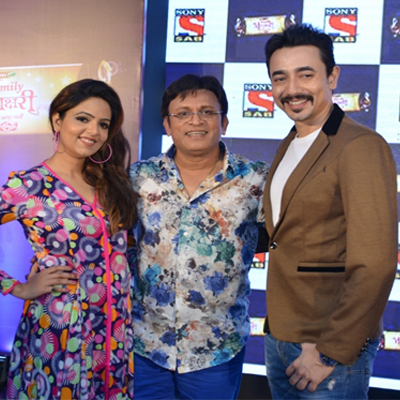
    Wowing the crowds with their presence were SAB TV stars namely Sudeepa Singh, Sharmili Raj and Shreedhar Watsar who were present to propagate the cause of healthy lifestyles whilst encouraging participants at the race. Featuring performances by music bands, stilt walkers and jugglers, the marathon celebrated family fun in a ‘fitting’ manner.  From donning costumes of a ‘fairy godmother’, to a ‘sorceress’ to a two year old dressed as a ‘tree,’ the marathon saw families turn up in unique outfits and participating with enthusiasm to be crowned as winners in the categories of ‘Best Anokhi Costume Family’ and ‘Most Entertaining Family’.   The event even saw the ‘Most Courageous Participant’ being awarded to a physically challenged participant.


    Providing light hearted and entertaining content to its audiences through its shows such as ‘Taarak Mehta Ka Ooltah Chasmah’, ‘Badi Dooooor Se Aaye Hai’ and ‘Baalveer’, the channel which believes in celebrating special moments with one’s family, has decided it was time to take their on-air entertainment and translate it to an on ground event. 


    Commenting on the initiative SAB TV senior EVP and business head Anooj Kapoor said, SAB Family Funathon is our way of bringing to life what we as a channel proudly profess and stand for.   With most people not making that extra effort to stay fit, we decided to provide entertainment around a run. This being a novel concept, we are overwhelmed with the response we have received from the families which is indicative of people prioritising fitness in their lives.”


  • “We have to drive BARC to measure outside of TV, on different screens”: Sudhanshu Vats

    “We have to drive BARC to measure outside of TV, on different screens”: Sudhanshu Vats

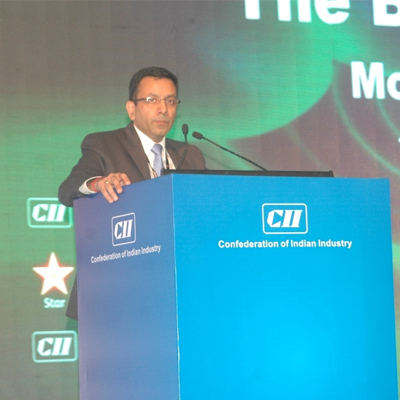
    NEW DELHI: Mobile phones today define the life of the youth. Kids watch all kinds of programmes, sometimes on TV and sometimes not on TV. And this, according to CII chairman national committee on media and entertainment and group CEO Viacom 18 Media Sudhanshu Vats, is not an urban phenomena but an Indian one. The consumers are moving fast, but the question currently is if the regulator and the regulations are moving fast enough?


    Reflecting his thoughts on consumer behavior at the recently concluded CII Big Picture Summit 2014, Vats said that the industry hasn’t made much progress in the area. Talking sector wise in the media and entertainment sector he first spoke of radio. “Today private news is splashed across print, television, internet and then there is news available through tweets and other formats on mobile, but private news is still not available on the radio,” he informed. Through the forum he appealed to the Information and Broadcasting  Minister Prakash Javadekar (I&B) to take this into account during the phase III of FM.


    In the film sector, Vats informed that the number of screens that China has is three times the number that India has. Not only this, while the biggest film in India is close to $50 million, the biggest local Chinese film is close to about $150 dollars today. And Hollywood films tend to be bigger. “There is a need to reduce taxation in ticketing and entertainment. If this happens, we will expand volumes and if volumes expand, we will grow in this country, giving a boost to films which are the best ambassadors of our culture. Both in India and abroad,” he said.


    The third sector he spoke about was events, which currently are not much spoken about. “This can become a hotspot for tourism. Single window clearance is needed,” he added.


    Vats also touched upon the most talked about issue of digitisation. “There is a need to look at digitisation holistically and take strides firmly in one direction. What is happening is that in phase I and phase II, we have done something and not done something. Addressability is still not there. The entire start-stop is not helping,” he opined.


    According to Vats, this new India needs new thinking and it needs new rules and principle. “The time for this is ‘now.’ “We are open to looking at this, but we need to make radical, important strides,” he said while putting forth four new principles to address this new thinking.


    The first is the consumer or viewer. “We need to start the story with the viewer. We need to realise that media and entertainment industry is a consumer industry. The question is:  are our regulations or business models tailored to consumers? The answer is no,” he said.


    The second principle that he stressed upon was on collaboration. “It is extremely important that we start collaborating, both within the industry and by the government with the industry in India and other countries as well.”


    Measurement was the third principle he highlighted. “This aspect is extremely important as audience and viewer is moving very fast. Are we being able to measure it the way we want to, currently the answer is no. But the Broadcast Audience Research Council (BARC) India, which is a joint industry body, is the first step in this area. We have to see how we drive it further so that BARC measures outside of television; on different screens and how it is there for other media as we move forward from the point of view of measurement,” Vats said.


    The final principle that he spoke of was capacity. This refers to human capacity and talent. “Are we recognising media and entertainment as a serious industry? Are we developing it as a curriculum which can be brought about, at least in high schools, so that we start facilitating some of the work which happens. So human capacity building and physical infrastructure capacity building like broadband, digital cable etc needs to be worked upon,” he informed.


    According to Vats, a few years down the line, the distinction between the creator and the consumer will narrow down. Not just this, different sectors of media and entertainment will come together. “Converged India will thrive in a connected world,” he opined.


    India is bubbling with creativity and we can pride ourselves in freedom of thought. “Let’s create in India for the world, make in India, show the world,” concluded Vats.  

  • Star Plus’  ‘Iss Pyaar Ko Kya Naam Doon’ travels to Namibia

    Star Plus’ ‘Iss Pyaar Ko Kya Naam Doon’ travels to Namibia

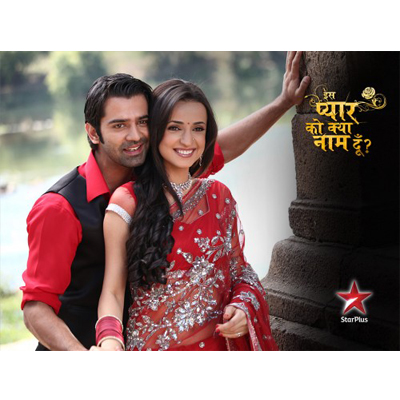
    MUMBAI: Viewers in Namibia will now have a reason to rejoice. Star India in partnership with content sales agency GoQuest Media Ventures has secured a deal with the Namibian Broadcasting Corporation for its popular series – ‘Iss Pyaar Ko Kya Naam Doon’.


    With this development, it makes ‘Iss Pyaar Ko Kya Naam Doon’ the first Indian TV series to reach the country.  The series is a light hearted love story of two individuals with opposite personalities entwined in a relationship swinging between love and hate, which captivated millions of viewers in India and abroad.


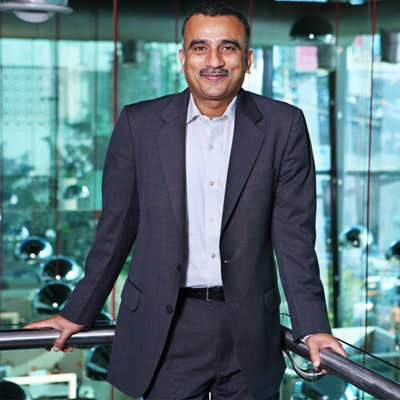
    Commenting on the success of the show across geographies, Star India head – commercial and procurement Sandeep Jain said, “Is Pyaar Ko Kya Naam Doon has been licensed to ten territories in very a short span of time, and we’re humbled with the response that the show has received. We have had a productive and long-standing association with GoQuest Media, and with their support, we have also been able to license this highly popular series to territories like Nigeria and Uganda in Africa.”


    GoQuest MD Vivek Lath believes that there is a tremendous demand for Indian content in Africa as broadcasters in many African countries rely on Indian films and TV series to meet the audiences’ ever-increasing demands.


    The choice of the show comes after a careful selection done by the channel in order to show the Namibian viewers a love story that’s one of the most loved and appealing TV series from India. The series was aired in India on Star Plus.


    As a content sales agency with strong relationships in Africa, MENA, Eastern Europe, the Caribbean and South-East Asia, GoQuest Media contends to reach newer territories this year with the best of Indian content.

  • Media can be the most exciting “Made in India” story of the next decade, says Star India COO Sanjay Gupta

    Media can be the most exciting “Made in India” story of the next decade, says Star India COO Sanjay Gupta

    MUMBAI: Amid India’s steadfast focus on economic growth, the Media & Entertainment has the potential to serve as the country’s key engine of growth, both socially and economically, if the government unlocks its true potential by giving the industry the policy priority it deserves, Mr. Sanjay Gupta, Star India COO, said at the inaugural session of the CII Big Picture Summit 2014.


    The two-day summit will deliberate on this year’s theme “Monetizing Strategies: The Tryst for a USD 100 billion Indian M & E Industry” by the end of this decade.


    Delivering the theme address at the summit, one of the most influential platforms that brings together the industry and policy makers to discuss issues critical to the Industry, Mr. Gupta said that the industry needs some changes in outlook and policy to keep growing and continuing to make a strong social impact.


    “The Indian media industry is the biggest in the world by output — over 500,000 hours of television content, 80,000 newspapers published daily, 1,600 feature films each year,” Mr. Gupta said. “With 98% of this output being conceptualized, shaped and produced in India… and very often exported to various parts of the world, very few industries can claim this extent of indigenous creation,” he said.


    He said the industry has tremendous positive impact on society too. “We all know the impact of the M&E sector is not just economic. Years ago, the University of Chicago did a study across a large number of villages in India. They were trying to understand the impact of satellite television. Their results were startling. Within 2 years of cable TV coming to town, women were less likely to tolerate domestic violence, less likely to prefer sons over daughters, and more inclined to enrol their girls in schools. The power of this sector is in its ability to inspire imaginations.”


    Mr. Gupta said that in spite of such economic impact and positive societal change and growth, the sector is not taken seriously as a growth engine. “Despite growing at 3 times GDP consistently for the last few years, despite employing 6 million people, despite being a 90,000-crore industry… what can be a uniquely ‘Made in India’ story is being ignored,” Mr. Gupta said.


    He felt there are two reasons why the media and entertainment industry is not really seen as a growth engine or as an exciting part of the Made in India story.


    “The biggest reason is that many successive governments have seen it as just a vehicle of glitz and glamour or … through the narrow lens of a very small and hyper-critical news sector,” he said.  Therefore issues that are intrinsic to unlocking growth in this sector are either misunderstood or deprioritized, or both.”


    Examining the case of digitization and pricing, Mr. Gupta felt that the debate around Digitization seems to have come down to issues such as LCO problems in making the shift … or how important it is to get the boxes manufactured in India.  “In reality, the real issue is whether we are serious about creating an enabling framework for delivery of content that will dramatically increase diversity of content and boost creativity.”


    On the second important issue of pricing, Mr. Gupta lamented that the “…price control and regimentation (in the M&E sector)  reminds us of an era that we have put behind us. The biggest victim again is growth because keeping prices controlled in a market where consumers are demanding a lot more and willing to pay a lot more, only means that the sector is starved of the investment resources it needs to fuel growth,” he observed


    Mr. Gupta felt that to continue to script the best ‘Made in India’ story, the M&E industry also needs to look within. “The problem lies with us too.”


    He elaborated that the strong increase in production volumes need to be accompanied by a consistent increase in quality for which “we have always set the bar too low.”


    In his view, “our films need to create a truly global market for our creative work” and that channels and producers should try to be more innovative and original in their dramatic content.  On the digital pipeline of delivery for TV content, Mr. Gupta felt that the industry needs to rise above the myopic view that clips shot by TV will suffice as long as they are made available online. He emphasized that the business of shaping content requires shaping each part of the ecosystem including applications and middleware.


    Mr. Gupta also brought up the “serious issue of talent”, saying there was a “real crisis on both supply and quality,” and the need to recognize the scale of the talent challenge for the sector. Actively finding the right talent and building the right skills, with stronger discipline than seen at present, where “we hide under the pretense of creativity … to be informal and chaotic”, are needs of the hour.  


    “How can we aspire to be a $100 billion industry, if we ourselves have not raised the bar on what we create and how we shape the agenda for this sector?” Mr. Gupta exclaimed.


    “The possibilities are immense. And underlining the opportunity is a uniquely Made in India story – the Indian media and entertainment sector – that can excite and shape the world if we are alive to the possibilities,” he concluded.

  • Annu Kapoor returns to the small screen with ‘Family Antakshri’

    Annu Kapoor returns to the small screen with ‘Family Antakshri’

    NEW DELHI: Sab has become the most profitable channel of the Sony chain with a revenue growth of 900 per cent in the last seven and a half years, according to senior EVP and business head Anooj Kapoor.


    Speaking on the sidelines of a new series being launched by Sab, he said viewership had gone up by 600 per cent in the same period in what he termed as the only channel that telecasts comedy and light-hearted family entertainment in the country.


    While the daily original programming is around three hours, the weekly programming is of twenty hours.


    Renowned character actor Annu Kapoor who is remembered for his ‘Antakshari’ series he launched, said he had always had an interest in music and ran the original series for thirteen years before other channels came up with other ideas for music-filled reality shows.


    Anooj Kapoor accompanied by Annu Kapoor announced the launch of a special Antakshari show on Sab that will involve the entire family from the youngest member to the grandparents in a fun-filled melodic musical game show titled Family Antakshari- Baithe Baithe Kya Kare.


    The show by Gajendra Singh from Saaibaba Productions will have Annu Kapoor seated on the prestigious position of Shri Antakshari, to be hosted by the talented Mantra and multi-faceted Sugandha Mishra.


    The one hour show will be aired on weekends at 8 pm from 27 September. The game will involve multiple interactive rounds with the contestants and the audience.


    Anooj Kapoor said,“At Sab we are always eager to offer innovative content to our loyal viewers. With Family Antakshari, we are presenting the traditional activity in a different style to involve every member of the family in the game.  True to the channel’s brand ideology of ‘Asli Mazaa Sab Ke Saath Aata Hai’, the show will highlight the positives of the joint family system. Participating families will enjoy Antakshari as they will be taken through a joyful ride of symphonies along with Annu Kapoor, Mantra and Sugandha. Gajendra has tasted success with his music shows across different genres and I am positive he shall repeat the same with Sab’s Family Antakshari. ”


    Singh said that the activity is loved by all irrespective of age. Says he, “We have designed innovative rounds to test the knowledge of our participants. Families across the country shall love to watch the show and be a part of the musical fest.”


    Family Antakshari will comprise multiple unique rounds for the contesting families such as the  karaoke round ‘bol ho gaye gol’ where the participants will be shown songs with missing words and they would need to sing the complete version. Another round, ‘Nautanki’, involves anchors enacting a famous scene/dance step from a movie and the participants need to guess and sing any song from that particular movie. A competition is not over without a fast-paced buzzer round, ‘Har Dhun kuchh kehti hai’ where participants need to identify the tune and sing the correct song. Another round would be ‘Aao Twist karein’.


    ‘AnnuJi Ki Googly’, a special round will have the judge fielding different questions and clues about Hindi movies and songs to the participating families and they will have to identify the same and sing the correct song to win points.

  • Star Plus’ ‘Yeh Hai Mohabbatein’ gets dual time slot

    Star Plus’ ‘Yeh Hai Mohabbatein’ gets dual time slot

    MUMBAI: Star Plus and Balaji Telefilms relationship goes way back. The shows from the production house’s banner captured almost all the slots and made the channel flourish on the TAM TV ratings chart.


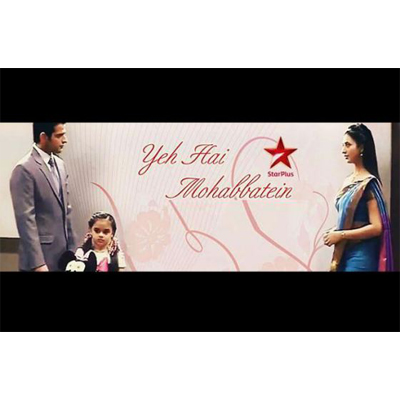
    Currently, Yeh Hai Mohabbatein (YHM), which was launched on 3 December 2013, had hit the television screens at a dead slot (11 pm) where no other broadcaster dared to experiment.  


    But the channel decided to take the bold move and was confident that one day the show will succeed. And today, if one goes as per the ratings, it ranks number four on Star Plus leaving behind even the older shows. In the week 37 of TAM TV ratings, it garnered 5,245 TVTs, down from 5,730 TVTs.


    From 22 September, the show will occupy a dual time slot and will air six days a week at both 7:30 pm and 11:00 pm. The series will replace Saraswatichandra which has been struggling with low numbers at the ratings chart.


    Star Plus SVP marketing Nikhil Madhok explains the reason behind the move. According to him, the move was made after audiences’ feedback that a certain section of viewers found the 11 pm slot too late in night.


    He adds, “It has a very loyal audience with the highest time spent on Hindi general entertainment channel (GEC). The show is really popular but a lot of people kept telling us, especially youngsters, that it was too late for them to stay awake and watch considering they have their schools and colleges the next day.”


    Madhok believes that prior to this, time slot movements were done by GECs usually when it wanted to shift a non-performing show to a competitive big show or early evenings or afternoons. But this is for the first time a top performer show is being shifted primarily to gain more viewership.


    The channel feels that the advantage of doing this is twofold. One, a lot of people who were not able to watch the show at 11 pm can now watch it at 7:30 pm. And secondly, audiences who love YHM get two opportunities to watch the show.


    “This was a show where repeat viewing the next day or viewing on online digital medium is very high. So the dual airing will not only help the existing viewers who love the show to watch it twice but also add a whole new set of viewers,” states Madhok.


    The channel underwent a research where it stated that at 11:00 pm, the number of people available is far lesser than 7:30 pm and contributes only 60 per cent of the overall audience in the community.


    Madhok and the makers are confident that since the content will remain same at both the slots, it will garner good ratings at both time slots. YHM has got India Gate Basmati Rice as its title sponsor.

  • Star Plus to its viewers: ‘What’s your Everest?’

    Star Plus to its viewers: ‘What’s your Everest?’

    MUMBAI: It was in 2012 that Star Plus brought uncomfortable realities to television screens with Satyamev Jayate, then in 2013 the biggest mythological series with Mahabharat and keeping with the trend, the number one rated channel is back in 2014 with Everest.


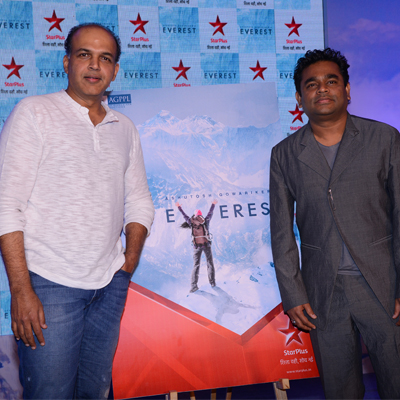
    Bringing to the viewers a great blend of drama, adventure and inspiration, Star Plus and celebrated filmmaker Ashutosh Gowariker have come together to present this finite series. The show is produced under Ashutosh Gowariker Productions (AGPPL) banner and has music by A R Rahman.


    “I wanted to tell a story on television, but films kept me busy,” says Gowariker who previously had made television shows like Fauji, Circus and Kachchi dhoop.  He further goes on to say that the journey with Star Plus began two years back when they first met and started ideating about the project.


    According to Star Plus general manager Gaurav Banerjee the decision was critical to its strategy thought ‘Rishta Wahi Soch Nayi’. “For a channel like ours which is always working on getting new ideas onboard, it takes a lot of time to execute any idea to perfection. One really has to gear up the story telling environment and shape an idea into certain direction.”


    Banerjee adds, “Youth focus is something that we are consciously working on from past one year and Everest was on our horizon.”


    According to the channel’s SVP marketing Nikhil Madhok what appealed to them was Gowariker’s innovative unique ambition and the vision behind the concept. “Two years ago we were toying with the idea of what is going to be the next big thing for us, and then Gowariker came onboard.”


    Madhok believes that this is a show that the youth will relate to and also find resonance in the large population of the country.


    Why Gowariker decided to make television series and not a film? “There are many sides to this story, which I wanted to tell, as each character has its own tale,” he says while adding that if he had to make a film on the subject then it would end up being a 15-hour-long movie.


    The story is about a 21-year old Anjali, who aspires to conquer her own personal Everest. She gets a rude shock when she discovers that her father, who is her hero, never really wanted a daughter. Faced with the biggest conflict of her life, she is forced to question her very own existence. To redeem herself and find a place in her father’s heart she decides to accomplish his unfulfilled dream.


    A project of this magnitude and scale, which demands extreme physical and mental strength, required a world-class crew to do complete justice to the concept. The core team consists of Joh Jeeta Wahi Sikandar and Akele Hum Akele Tum fame directors Glenn Baretto and Ankush Mohla, screenplay for the series (writer) is done by Mitali Mahajan, who was also the assistant art director on films like Swades, Jodhaa Akbar, Munna Bhai MBBS and many more.


    Episodic screenplay has been done by Bhavani Iyer (her first film as a screen writer was Black), dialogues penned by Preeti Mamgain, makeup design by Vikram Gaikwad who has won four national awards for movies like The Dirty Picture, DOP is by Mahesh Aney (he won the national award for best cinematography for Swades), Alphonse Roy (has worked with Oscar winner DOP, Conrad Hall Jr for an American film ‘Oka Amerikee’) and Piyush Shah (worked on films like Salaam-E-Ishq, China Gate and etc), stunt director Amar Shetty who has worked on movies like Om Shanti Om, art director Aparna Raina who has worked on films like Khosla Ka Ghosla , Namesake and etc and costume stylist Preeti Sharma who has done movies like Fashion, Bombay Talkies, Paying Guests and many more.


    For cameramen, shooting was the most crucial part considering unfavourable climatic conditions. Aney says, “The weather was so unfavourable to shoot. We had to test the cameras every now and then. While shooting at the top of 12,000 and 15,000 ft, we had to fight a lot of hurdles like light, batteries draining out etc. However, safety was always a priority for us.”


    “The cold really hampers the number of hours one can shoot. Everybody in the crew lost tons of weight. They have really climbed the Everest,” laughs Banerjee.


    Gowariker further reveals that while shooting a lot of heavy technical equipments were used for the first time like GoPro cameras, 4K technology and a lot more.


    Technology has been a big enabler for the makers. It was there to help and make it easier believes Banerjee. “The show has been masterfully crafted by Gowariker.”


    Madhok further says that if you are able to take out 20 minutes of content in regular studio conditions, one will barely get one minute of content in the mountains considering its climatic conditions.


    As per the nature, usually a show starts three months before the telecast but this is a show that came into being almost two years before. “A show like this requires a completely different financial model where you are committing to a large monetary resources not really knowing when the show will see the light of the day,” says Madhok.  


    With the shoot almost on since last December, almost 90 per cent of the episodes have been canned in locations like Jodhpur, Mount Everest, NIM and Mumbai. For extremely dangerous sequences, the channel had created a set in Naigaon.


    What was the reason behind not signing famous faces for the show? “We wanted to be very real in terms of casting. And we wanted our characters to be 21 years old because young faces brings a lot of energy,” reasons Gowariker.


    Talking about the marketing part, the communication line of the marketing campaign is going to revolve around the thought “‘What’s your Everest’? ‘Hum Sabki life Mein Everest Hota Hai Jisse Hume Jitna Hota Hai’.”


    “We feel that by doing that people will be able to connect with it and make them think, ‘even I have a challenge in life, so let me watch this girl’s story and how she overcomes it’,” states Madhok.


    Though Star officials refused to divulge any financial details regarding the production cost per episode, sources from the industry believe that it ranges anywhere between 30-35 lakhs per episode.


    “If we decide to shoot 90 episodes before the telecast, it is going to be expensive. The fact that we have shot in different locations, none of them is cheap. We have been careful that we have resourced it well,” concludes Banerjee.


    Though the time slot has not been locked, the show is slated to hit the television screens two months down the line and is going to be a weekday property (Monday – Saturday) and will run for less than six months.

  • Zee back with second edition of ‘Zee Leadership series’

    Zee back with second edition of ‘Zee Leadership series’

    MUMBAI: Zee Entertainment Enterprises (Zeel) has announced the second edition of its intellectual property – Zee Leadership series. The event which will be held on 19 September at Sahara Star Hotel in Mumbai will witness attendance from over 400 CXOs heading India’s top companies.


    The thought of Zee leadership series is to have an intellectually stimulating event for cross industry leaders to discuss, debate and reflect on pertinent issues of Global importance. Each year it would have a theme that would reflect the sentiments of the economic world and the speakers are selected accordingly.


    Zeel head – corporate brand Roland Landers believes that Zee considers each one of stakeholders as family and aims at making the entire world a part of this family. “Zee Corporate Brand has not just formed a family of millions of loyal viewers, but has also enriched the lives of its internal and external stakeholders. Inspired with this thought, Zee has incorporated its brand positioning of “Vasudhaiva Kutumbakam – The World is my Family.”


    He further added, “As Zee Corporate Brand marches ahead to achieve its envisioned goals, of being in the top 100 of the Global League table and of establishing itself amongst the top global media brands, it also aims at enhancing value for its business by establishing intellectual properties, based on the network’s core brand value drivers – Pioneering, Prudent and Predictable.”


    This year, the two renowned keynote speakers for the Zee Leadership Series are Alan Krueger and Divya Narendra.


    Alan Krueger is one of the most-respected and thoughtful economists. He served as chairman of President Obama’s Council of Economic Advisers (CEA) and a member of his Cabinet – roles that recruit from the upper echelon of the nation’s best and brightest. From 1994–1995, he also served as the chief economist at the Department of Labour in the US Government. In his session, Krueger will share his insights on world economy with relation to corporate India’s contribution, and will also touch upon the key areas of improvement. 


    In the other session, Divya Narendra, an American businessman, will share his views on the innovation and creativity expected in the current digital era. Narendra is the CEO and co-founder of SumZero along with his Harvard classmate Aalap Mahadevia. He also co-founded HarvardConnection (later renamed ConnectU) with Harvard University classmates Cameron Winklevoss and Tyler Winklevoss.


    Zee Leadership Series 2014 is powered by Chintels. The other event partners are Zee Business – Telecast partner, LiveMedia and Cash ur Drive – OOH Partners, DNA – Print Partner, Business World – Magazine Partner and Business Standard – Business Newspaper Partner.

  • Bombay HC clears Zeel acquisition of DMCL’s media business undertaking

    Bombay HC clears Zeel acquisition of DMCL’s media business undertaking

    MUMBAI: Finally passing all the hurdles, Subhash Chandra-promoted Zee Entertainment Enterprises Limited (Zeel) announced to the BSE that the company has finally got the Bombay High Court nod for the ‘Scheme of Arrangement between Diligent Media Corporation Limited (DMCL) and the Company and their respective shareholders and creditors, for demerger of Media Business Undertaking (MBU) of DMCL’.


    The undertaking comprises media and entertainment business, event management activities, TV channel license and TV reality show formats for game based shows. Through this business, Zeel is planning to give an impetus to its event management capabilities. Planned are events and game shows.


    The scheme looks at the demerger of the MBU from DMCL and then vesting it with Zeel. Equity shareholders of DMCL will be given preference shares by Zeel in the ratio of one preference share of Re 1 of Zeel for every four equity shares of Rs 10 each held in DMCL. The company says that 2.23 crore preference shares shall be issued in all.


    DMCL was formed in 2005 with a 50:50 JV between Essel Group and Dainik Bhaskar Corp (DB). In 2012, Essel Group bought out DB’s 50 per cent.


    The entire DMCL is now under the two arms of Essel – Zee Media with DNA and Zee Entertainment with the MBU.


    Zeel was also recently included in the 50-share CNX Nifty index replacing Diageo-controlled United Spirits. The network has been included in the recently launched CNX Media Index on the NSE and carried the maximum weight of 45.45 per cent in the index that comprises 15 media and entertainment stocks.


    Reacting to the news, the share price of Zeel rose to 285.25 during trading on 12 September and closed on 283.75

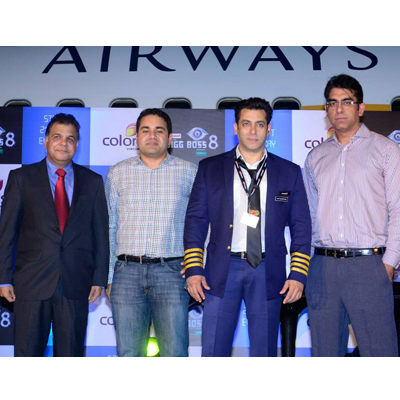
  • ‘Parivarik’ Bigg Boss 8 ready to take off

    ‘Parivarik’ Bigg Boss 8 ready to take off

    MUMBAI: It is that time of the year when everyone will rush back home to switch on their television sets to watch 12 known faces stuck in the house. 

    Yes, one of the biggest non-fiction properties of the Indian television industry – Bigg Boss – is back on Colors. Come 21 September, in its eighth season, the show will have in store a never-seen-before thrilling adventure which promises to be all about bumps, jolts and spilled drinks.

    Pieced together by Endemol India, the bhai of Bollywood, Salman Khan, will host the show which is themed around aviation with the tagline ‘Bigg Boss aath, sabki lagegi vaat’.

    12 first-class passengers and newsmakers from all walks of life, will block their seats in this one of a kind aircraft, forge their own connections and survive in this airspace. So are contestants selected as per the theme? “No,” comes a quick reply from Colors CEO Raj Nayak. “Contestants are not chosen according to the theme. We choose contestants from different walks of life and then map them. There are certain characteristics we are looking for as we don’t want boring people in the house.” Thorough research is conducted to analyse their way of thinking and behaviour.

    He recalls the moment that two years ago after being the victim of too many controversies, the channel had decided to change the theme and go parivarik with the show. Like always, he believes the challenge is to not show content which can be uncomfortable for families. So, the channel takes the decision of editing the content.

    “At the end of the day one must realise that contestants are recorded 24 hour and it is not that things don’t happen in the house. But we will not show such things on-air. Obviously there are dos and don’ts, but on television we are very careful. And ever since we made it parivarik, we have not got a single complain,” says Nayak.

    Nayak further goes on to say that he has received a feedback saying it is an educational programme on human psychology. “For me, we have looked it as an education programme on human psychology and at the same time it is entertaining and see different sides of human beings. It teaches you a lot of things. So, here there is an opportunity for you to sit down and say that I am doing a crash course on human psychology in 100 days,” laughs Nayak.

    He states that the channel does not have any control on how the contestants behave on the show. According to Nayak it is a challenge because it is not scripted and there is no interference from the channel’s side even if things get ugly. The only communication between the channel and the contestants is through the Bigg Boss and the various tasks. “We create some tasks which may create friction, romance, etc. And if it gets little boring, we cover it by doing dance competition. We cannot control how they behave in what they do,” says Nayak.

    Considered to be the most expensive property on TV, the spend goes into the set, contestants, technological equipment, the celebrity host and marketing. According to sources, the production cost per season is around Rs 180 crore.

    Endemol managing director Deepak Dhar believes that the show has won over viewers across age groups. “The audiences revel in the erratic format of Bigg Boss and with every season we reinvent ourselves to make the show as unpredictable and entertaining as ever.” Also the creators have realised that the Khan as host transcends from a seven year old to a 75 year old.

    After five-long years, the channel has got on-board Snapdeal as its new presenting sponsor instead of Vodafone India. In a deal which is speculated to be worth Rs 35 crore, this is a giant leap for the e-commerce site which had previously sponsored reality shows on MTV including MTV Roadies.

    Talking about the partnership, Nayak says that several e-commerce firms wanted to get on board but they snapped the deal. He also added that the Bigg Boss 8 team approached the company for the sponsorship. The deal is currently for only one year and the CEO hopes to continue the association in the future.

    Excited with this new collaboration Snapdeal CEO Kunal Bahl says, “The money is well spent. Hopefully this is the beginning to a long relationship. This is the right show for our young brand to reach the right audience. Sure that we will get a good return for our investment.”

    With the huge competition in the e-commerce space and the stringent government policies, India-based online retailers like Snapdeal have been looking for various new ways for raising funds. This partnership is going to make perfect brand recognition for Snapdeal.

    The channel has also roped in Oppo Mobiles as the powered by sponsor. Moreover, Colors has created a new category called ‘Driven by’ and has roped Maruti Suzuki. Other associate sponsors are Garnier Men, TVS Motors, Cardekho.com, Bisleri Urzza and JK Tyres.

    The channel is not looking at getting more sponsors on-board. “There are lots of people who may not be able to afford the tickets as of Rs 10-12 crore. Plus we have a lot of advertisers who are our regular patrons, so we want to give them an opportunity to also be a part of Bigg Boss,” Nayak reveals that sponsors consume normally 65 per cent of the inventory. As for the ad rates this time, the channel has increased its overall pricing by almost 30 per cent as compared to the previous seasons.

    According to sources, each associate sponsor pays Rs 12-15 crore. Spot rates range from Rs 4.5-5 lakh per 10 seconds in episodes that feature Salman Khan, while other episodes command Rs 3.4-4 lakh per 10 seconds. For the channel to breakeven, ad revenues are pegged around Rs 350 crore.

    On the marketing front, hundred per cent consumer entertainment being the mantra of Airlines #BB8, the marketing strategies will revolve around increasing the market penetration and connecting with new consumers.

    The route will be encompassing all the mediums across 200 cities and towns to encourage repeat flying for the viewers. For a higher resonance radio stations across 30 cities will be tapped. For build-up, promotional content will be plugged in across 30 channels and, for a glaring visibility and tune in, an attractive outdoor campaign will don the high walls at strategic locations in key cities.

    On order for the consumers to get better passenger information an interesting digital plan has been floated. Viewers can source the entire daily dose via Facebook and Twitter. While FB will have a fun Bigg Boss themed app to test the survival strategies of the player, Twitter will leak live information 24*7. The website www.colors.in will have uncensored videos and a Khabri who will blog live updates. Moreover, a mobile app will beam the live feed to keep the viewers tuned in on the go.

    This time Snapdeal is very keen keeping in mind the virtual space. “You will find a lot of engagement activities on the digital space where you will be able to get Snapdeal vouchers, gifts and much more exciting stuff,” adds Nayak.

    Unlike last year, where Bigg Boss videos where also available on YouTube, this year the channel has banned it.

    About the expectations from this season, Nayak believes that he is very superstitious with numbers. “Every time you launch a show you hope that it will be better than the previous season. Previous season had a very good opening, so we think this season should do it even better. The promos we have launched this time and the amount of buzz we have got is the highest we have ever seen either on social media or general feedback.”

    On Twitter, Nayak confidently says that there is no other show in this country that trends as much as Bigg Boss does the moment the show is launched. “I don’t have to spend much money also on marketing because the buzz gets created on its own,” concludes Nayak.