Category: GECs

  • GECs’ new big-ticket offering

    GECs’ new big-ticket offering

    MUMBAI: For couch potatoes, it’s time to rejoice as broadcasters are ready with treats for their viewers as the new year arrives.


    The channel, which has over the years changed the way stories are told and made characters a household name, is once again set for a different take. The channel is back yet again with a detective series Private Investigator (PI). It had first experimented with the genre in 2011 with a show called Arjun which ran for good two years. 


    Produced by Fremantle India, the promos of the show have already hit the television screens. The series is about Raffe Roy Choudhary who is playing the central character, and has special powers like thinking at a lightning speed, with his guesses never going wrong. Choudhary is a 21-year old young college going student who helps the police in several crime cases such as kidnapping, suicide. Moreover, born with natural instincts and sharp problem solving skills to solve crime cases, he has the ability to see things which others cannot see. Vrajesh Hirjee is playing the police inspector, while Choudhary is played by Mrinal Dutt. The channel has roped in Colgate Plax Active Salt as the presenting sponsor and Garnier Black Naturals is the co-powered by sponsor. 


    To give viewers a non-stop dose of entertainment, the series will replace India’s Raw Star from 7 December and will occupy the 8pm slot every Sunday.


    Keeping with the attempt to not single out the youngsters, the channel is breaking away from the saas-bahu dramas and is set to launch a comic love story christened Tu Mera Hero. The channel has teamed up with ace producers Shashi and Sumeet Mittal, who have produced popular shows like Diya Aur Baati Hum (Star Plus) and Punar Vivah (Zee TV).


    The promos, which have been doing the rounds for quite some time now, start with the male lead, Titu, talking about his laziness. He believes that though people think he doesn’t do any work, he has conducted a research on unemployment in India. He reasons that unemployment in the country is existent because everyone wants to work and goes on to say that if more people didn’t want to work then unemployment would be eradicated from the nation.


    It will hit the television screens from 22 December and replace the on-going Cinevistaa’s show Ek Hasina Thi at 8 pm.


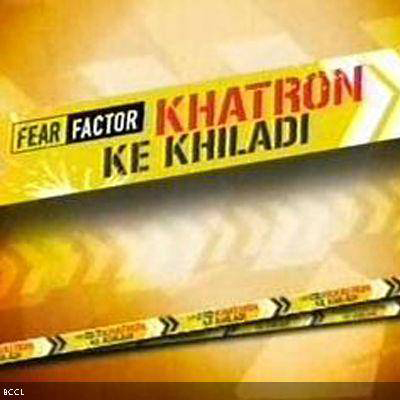
    Similarly, it’s going to be a power-packed start of the year for Colors. From Jhalak Dikhla Jaa to 24 to Bigg Boss to Comedy Nights With Kapil, Colors has consistently showcased path breaking shows that have redefined television. Early this year, after a gap of two years, it brought back adventurous reality show Khatron Ke Khiladi season five in a re-packaged avatar.


    Now the channel is back with the sixth edition of the series that will make for an explosive entertainment viewing with 13 celebrity contestants.


    This season, Khatron Ke Khiladi will transform into a ‘Darr Ka Blockbuster Returns’ where the popular celebrity contestants will endeavor to overcome their deepest phobias. Bollywood’s ace action entertainer Rohit Shetty continues to be the host for the season.


    Produced by Endemol India, it will be shot in locales of Cape Town. Sources close to the development reveal that the shooting has already begun from 24 November and will go on till 20 December 2014. The reality show will start as soon as Bigg Boss eight ends. Pegged for a weekend property, as of now, it has been penned for close to six weeks.


    The 13 celebrities who will fight with their fears are Sana Khan, Sagrika Ghatge, Archana Vijaya, Rashmi Desai, Ridhi Dogra, Asha Negi, Nathalia Kaur, Ashish Chaudhury, Chang, Harshad Arora, Iqbal Khan, Hussain Kuwajerwala, Rakesh Kumar, Siddharth Bharadwaj and Nandish Sandhu entering the show as wildcard entry.


    On the digital front, the celebrities have already started tweeting about their excitement to be on the show with the hash tag #KKKonColors.


    While last season the production of the non-fiction show was pegged at Rs 50-55 crore, this season media planners estimate it to be around Rs 60-65 crore.


    Secondly, the channel is set to launch for the first time a historical period drama Chakravartin Ashoka Samrat. Produced by Contiloe Productions, it will captivatingly showcase the journey and life time of Emperor Ashoka, from his rise to power to his state of penance after the gory blood-bath in the historical battle of Kalinga that made him give up war to embrace Buddhism.


    The compelling story of this Great Emperor has been written by the acclaimed and contemporary author Ashok Banker, who will be making his comeback on television after nearly two decades. Sources from the industry reveal that the production cost of a mythological show per episode is double the amount of what a daily fiction show costs. Thus, the production cost per episode ranges from Rs 13-14 lakh.


    Though the launch date is not yet fixed, sources close to the development believe that it will be a weekday property and will air once Bigg Boss eight sees its curtains down at 9pm.

  • After dominating TV and digital, ZEE Americas to enter radio and event management

    After dominating TV and digital, ZEE Americas to enter radio and event management

    MUMBAI:  In 1998, Zee TV incubated the South Asian TV market in North America. Over the next 17 years the brand has not only become synonymous with entertainment but also an ambassador of Indian culture, abroad. As per Nielsen US, a typical South Asian viewer spends an average of 2 hours 13 minutes per day watching Zee TV, making it one of the most loved channels in the US, including the mainstream ones.


    After being the consistent #1 TV network – ZEE US successfully ventured into the digital space in 2012 with Zee Dil Se, a video-based social media, that allows people to record a ‘Broadcast quality’ personalized video message and push it on TV at a click! The Dil Se platform was later on used to solve the local auditions problem thus allowing thousands of NRIs to participate in reality shows like DID and SRGMP.


    Later in the fall of 2013, ZEE US launched a localized version of www.india.com with a positioning of ‘Proudly Indian’. In a short span of one year the site delivers 7 million unique visitors per month, just from US and Canada alone, thus making it one of the top sites for NRIs in North America. The site already has all the leading advertisers from TV with annual spend commitments. India.com serves as a one-stop destination for news from India, Community News from US and Canada, Bollywood, Cricket, blogs, event ticketing and classifieds.


    Now ZEE is all geared up to get into the Radio and Event management space. Initially the services will be started in the top 5 south Asian DMAs. A respective business head supported by the operations team will head each of these verticals. 


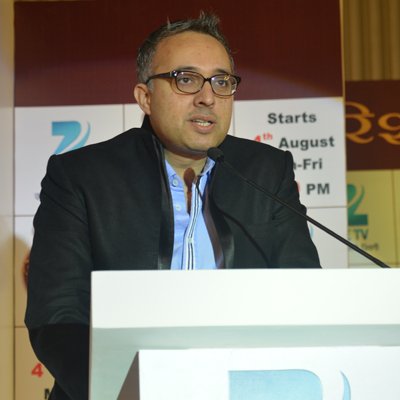
    “As a market leader we have to constantly reinvent and redefine our value proposition to our consumers. We have been looking at need gaps and the two most visible opportunities sprung up that matched our strengths. A strong 55% of South Asians use personal transport 5 times a week for an average of 28 minutes per day, either for work or leisure and a strong 27% of South Asian woman are non-working (Stay at home) at any given point in time but do not have access to good Indian RJs. Of the 600 plus, small & large South Asian events that take place in USA, only a handful manage to put up a good show and attract a couple of blue chip sponsors. The rest all struggle or depend on individual donations/sponsors to make ends meet. The most worrying sign at these events is the declining footfalls of the youth. The mainstream brands completely recognize the arrival of the Indian community in USA but are hesitant to invest their dollars given the unorganized nature. These opportunities will allow us not only to bring companion like RJs or entertain the South Asian community with exciting and enriching events (like an Indian Rock concert or an Asian Indian corporate leadership summit) but also bring bigger and better sponsors to the market thus expanding the total market states Sameer Targe, Business Head – Zee Americas.

  • Rituraj Mohanty wins ‘India’s Raw Star’ title

    Rituraj Mohanty wins ‘India’s Raw Star’ title

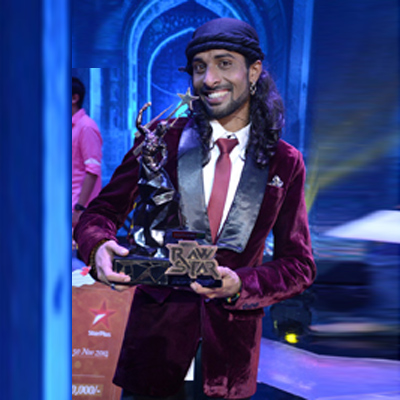
    MUMBAI: After 14 weeks, thirteen concerts and tens and hundreds of songs, the time has finally come for India to choose India’s first Raw Star! Rituraj Mohanty has now been chosen by millions of voters across India to bag the title of ‘India’s Raw Star’. The winner takes home a Maruti Susuzki Swift, a contract with Star Plus and a huge sum on fifty lakhs. The other artists who were in the fight for this title were Darshan Raval from Ahmedabad and Mohit Gaur from Jaipur.


    “It is very difficult for me to sink in the feeling that I have won this show. Firstly I would like to thank Yo Yo Honey Singh and STAR Plus for getting me on the show and for giving me such a huge platform to perform on. Himesh Reshammiya has been such a great mentor and a huge support. I would like to extend my love filled thank you to all my fans as they are responsible for my win! I dedicate this win to all my fans.” said Rituraj Mohanty.


    Himesh who has already promised a song to the artist said, “He has a brilliant voice and a great talent. The show was not just about singing but about outstanding performances and this is the reason why the audience have gone all out to vote for him. We all are very happy with the decision and hope all success comes his way.”


    The grand finale was a grand affair as expected, with some foot tapping performances from the artists. To make the finale look more larger than life Kailash Kher, Mohit Chauhan and Shaan joined the top three. Kailash Kher and mast Malang singer Rituraj Mohanty gave a heartwarming Sufi performance where as Shaan and Mohit Gaur took the crowed for a surprise with their performance. Darshan who was performing with Mohit Chauhan set everyone into a romantic zone with their performance.


    Besides this the voted out artists also came back on the show to for the one last time give their fans a treat and to give them company was the popular and the party started Baadshah and Manoj Tiwari. The gorgeous host of the show Gauahar Khan was also seen shaking-a-leg in the finale along with Jeffrey and Darshan. The talented actor and dancer Rithvik was also seen in the finale doing gags that left the house rolling for more laughter.


    Making their presence felt on India’s Raw Star Finale were Sajid and Wajid along with the lead of Tevar Arjun Kapoor. This is not all, all the artists and the celebrity singers came together to sing a special song on Swach Bharat which was written and composed by talented duo Sachin and Jigar. To join them in this initiative Kailash Kher, Shaan, Mohit Chauhan, Himesh and all the raw stars came together.

  • Yamraj back on being the TV favourite

    Yamraj back on being the TV favourite

    MUMBAI: The god we all dread has been the butt of many jokes on Indian television. The god of death aka Yamraj has appeared on a number of shows and in return has made the audiences laugh.


    Once again, Yamraj is back in the television industry with two shows being aired on him.


    Epic, the latest entrant in the Hindi entertainment space, airs Yam Kissi se Kam Nahi, a sitcom which takes a tongue-in-cheek approach to the life of Yamraj as he tries, often unsuccessfully, to overcome various hurdles in his daily life.


    Produced by David Polycarp and Vasant under the banner Trouble Makers Studios/The Company Productions, Rajesh Kumar plays the role of Yamraj in the sitcom. The channel usually airs weekly, but the sitcom is an exception. The programme, which shows Yamraj leading a life of an aam aadmi with his nagging wife, a troublesome brother-in-law, a disgruntled assistant, jealous neighbours, grumpy in-laws, an over-bearing boss and many other ordinary problems make up the daily life,  is aired Monday-Friday at 8:30 pm.


    Why a channel focusing on mythology and folklore chose to do a comedy revolving around the god of death? Says the channel’s MD Mahesh Samat, “We have an emotional connect with our past which has a spectrum of emotions. We wanted to encompass all aspects of history, including action, drama, romance and even comedy. If we are truly trying to capture Indian history, then we cannot ignore the Navras. ‘Yam Kisi Se Kam Nahin’ is a great example of taking a lighter look at history and mythology. It’s a sit-com that offers us a fictional look at Yamraj, viewed through a very different lens. It aligns with our approach of offering content that is meaningful and engaging.”


    On the similar lines, Sab, a comedy channel from the Multi Screen media (MSM) stable, will soon replace Chandrakant Chiplunkar Seedi Bambawala with Yam Hai Hum. The show produced by Swastik Productions is said to be based on the famous movie Taqdeerwala featuring actors Daggubati Venkatesh, Kader Khan and Asrani.


    The show will see Manav Gohil playing the lead character of Yamraj and air Monday-Friday at 10 pm.


    What is intriguing is that two channels will air shows revolving around the somewhat same characters. One will only have to wait and see which one will be able to make a connect with the viewers.

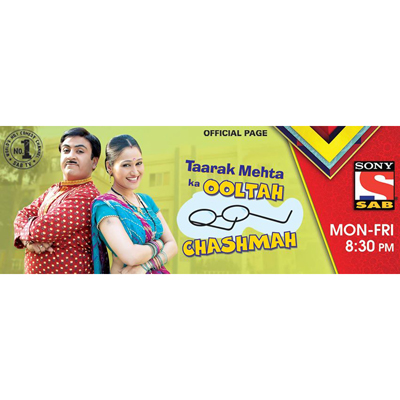
  • ‘Taarak Mehta Ka Ooltah Chashma’ launches digital campaign to promote PM’s Swachh Bharat Abhiyaan

    ‘Taarak Mehta Ka Ooltah Chashma’ launches digital campaign to promote PM’s Swachh Bharat Abhiyaan

    MUMBAI: ‘My Clean India’ campaign is a nationwide initiative launched by Prime Minister Narendra Modi, who selected nine notable public figures to propagate this campaign, including the entire team of Taarak Mehta Ka Ooltah Chashma (TMKOC).

    After inspiring the audience via the show, wherein the characters visited slum areas to teach residents the importance of cleanliness and the process of cleaning, now TMKOC is starting a contest with the aim to involve viewers and fans to take up the initiative for a clean and healthy India.

    To participate, people can log on to the website www.tmkocmycleanindia.com and share images of their contribution to the ‘TMKOC My Clean India’ campaign. In the following manner:

    iSee – iClean – iMakeMyIndiaClean : If your surroundings are unclean, take a picture and upload it to the website’s iSee section. If you choose to clean your surroundings, take a picture during the act and upload it to the iClean section. After your surroundings are clean, take a picture and upload it to the iMakeMyIndiaClean section.

    Winners stand a chance to be felicitated by their favourite TMKOC stars in Gokuldham!

    This is just the beginning of the larger activity planned by Neela Tele Films and the team of TMKOC.

    The show is produced by Neela Tele Films; conceived and designed by Asitkumarr Modi.


  • Epic’s marketing mantra: Digital innovations

    Epic’s marketing mantra: Digital innovations

    MUMBAI: One of the oldest civilisations in the world and thousands of stories to tell; Epic, the latest entrant in the Hindi entertainment channel space, is all about ‘Kahaniyaan Hindustan Ki’.

    Different from the rest, the channel which wants to be categorised as the country’s first genre specific channel, is taking a different approach when it comes to not only content, but marketing as well.

    Imagine a standard bus stop transformed into a royal seating chamber, equipped with fan bearers and thrones. Yes, to give a taste of yesteryears the channel has taken the conventional as well as unconventional ways to create the buzz around it.

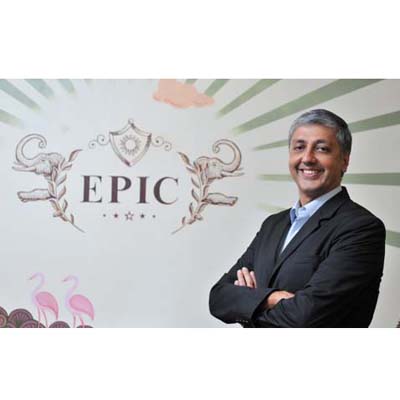
    “We want to create a brand around history and mythology in television and therefore it was very important to have a strategic approach to our marketing efforts,” says Epic Television Networks founder and MD Mahesh Samat.  Apart from focusing on a 360 degree marketing plan, it has put a great deal of focus on digital innovations.

    “Social media is a much underutilised medium which we wanted to explore. We have a three-pronged approach – create relevance, generate meaningful engagement and offer a sense of uniqueness,” says Samat while elaborating on how the channel debuted first on YouTube a month before the launch of the channel and garnered over 1.2 million hits and subsequently, released a promo every week to build some pre-buzz in the market.

    “Our digital initiative, Epicgrams, has been an ongoing property that has helped create the relevant conversations surrounding Indian history, mythology and folklore, before the channel launched,” highlights Samat.

    Other than this, Epic is also being promoted in the traditional ways with radio, print, television and OOH.

    The channel did an in-depth research to create the blueprint of marketing strategy. “Our research suggested that our content appeals more to urban audiences given the contemporary format of storytelling. It also suggested that the content is more gender neutral unlike other entertainment channels. That being said, our content is focused on Indian history and we as Indians have an emotional connection to our past. We have had a longstanding tradition of storytelling that has faded over the last few decades. Urban audiences have turned away from Indian television because there isn’t enough content that caters to their sentimentalities. We felt that this was a space in television that was untapped and we wanted to bring audiences back to Indian television in a way that suits their consumption patterns. We felt that leveraging the digital medium would help us reach the intended audience and be an agent to bring them back to television,” he adds.

    The campaigns are season based wherein once the first season is over, the campaigns for the second season of shows will commence.

    Launched on 19 November, after more than a year’s wait, so far the channel has spent upwards of 50 to 60 per cent of its marketing budget.  As per industry sources, the channel is spending around Rs 20 crore to Rs 25 crore on marketing.

    So far, Epic is focusing on cities that have completed phase I of digitisation and the urban audience across the country, including Mumbai and Delhi and as digitisation takes its course across the country, the campaigns will begin there as well.


  • “Failures can teach you, what success can’t”: Namit Sharma

    “Failures can teach you, what success can’t”: Namit Sharma

    From directing fiction shows at Cinevistaas to film production and script writing at Yash Raj and handling events and non-fiction properties at Wizcraft International Entertainment, he has done it all.


    Namit Sharma, the programming head of Zee TV, has bought to the table years of expertise.


    The channel, which is running strong at number three at the TAM TV ratings chart, currently, has explored new concepts this year. With Zee’s three shows not only being the slot leaders, but also in the top 10 fiction shows category, Sharma feels it is in a happy space to be in but believes that  there should always a hunger for more.


    In his first interview, after taking charge at Zee TV, Sharma chats with indiantelevision.com’s Disha Shah in his office about challenges in churning out newer concepts and how to understand audiences’ likes and dislikes amongst other topics.


    Excerpts…


    It’s been almost nine months since you took charge as the programming head of Zee TV, how satisfied are you with the current positioning of the channel?


    There are two answers to it.


    The idea is to be happy with whatever you do because I think from a product and positioning point of view we have changed in the last nine months. We made a conscious shift about how we look and feel. There is certain uniformity in what we are doing and a certain sense of it coming together. The numbers have been good, so satisfied at that level. We are aligned with the legacy of Zee and yet evolving in a direction that we want to take the channel in.


    But at the same time, we will always be dissatisfied because we are hungry for more.


    From handling events to broadcast, did you face any challenges in the transition? Were you prepared for it?


    When you come from a creative background, the easiest part is always about interacting with the industry and getting the best talent to work with you.


    When you take charge or join a new team then there is always a lot of excitement and energy and people expect you to bring newer ideas to the table. At Zee, I have always been encouraged for bringing in fresh thinking. I am very happy the support I have received from the management and the team.


    The challenge always is to try and get inside the consumers’ mind, create products for them and then wait for their reaction to understand what they like and don’t like. Then, after a few months again one has to figure out a way to surprise with with something new and exciting. It is a vicious cycle.


    How difficult it is to churn out new concepts always? What kind of concepts you are looking out for?


    With general entertainment channels (GECs) widening their scope and a number of GECs being launched, the challenge that all broadcasters will face henceforth is that now everybody will dip into the same research pool or try to align themselves to a very uniform way of working.


    While, the uniform way of working is a good thing, one should never allow oneself to not think out-of-the-box. You work towards your TG, create content for them; you sort of know your audience but at the same time you should have the ability as a creative person to surprise yourself and them. There are some happy surprises and there are some not so happy surprises (laughs) and that’s roughly the unpredictability of what we do, that’s the challenge and excitement.


    Yes, it’s difficult to find clutter-breaking ideas but we have this year we did manage to create some extraordinary concepts. We are now seen as a channel that has clutter-breaking ideas within the traditional format. The classic example is Jamai Raja, within the family drama fun, there is a prime-time daily soap with a male protagonist. KumKum Bhagya is another clutter breaker and Jodha Akbar has been a clutter breaker for over year and a half now. They are also slot leaders. Jodha Akbar and Jamai Raja are consistent slot leaders. KumKum Bhagya is a recent convert and we are hoping to stabilise it as a number one show at 9pm for a very long time with very interesting characters and unpredictable twists and turns in the story.


    I am happy with the fact that Zee is now being identified as a platform, as a destination where you can consume the new traditional form of content and where shows are designed for the entire family and yet they provide newer twists, newer characters and clutter breaking ideas. Each show now comes with a new idea and that’s important to us.


    For a very long time now, Zee has been stuck at number three in the ratings chart, according to you what went wrong and how do you plan to rectify it?


    We sustained the number two position for a very long time; we will be back sooner than later. We don’t analyse this on a weekly basis because it is healthy to work in a scenario where everybody is active and fighting hard to keep their spot and aim higher. The greater satisfaction is not only in the numbers, but in the consumers’ appreciation and good feedback on a daily basis.


    All shows don’t click so according to you, what kind of content works on television today?


    If I knew that, I would have sealed a 20-year deal with Zee TV (laughs). I think there are some thumb rules that we all live by and within that thumb rules we try to find innovation and newness. Everybody talks about new launches, but the greater challenge as a programmer is on-going shows. Once the show is on-air and you have put behind the mad eight months of hard work into the launch and then everyone is scratching their heads saying what should we do next on this show to keep the momentum going. And that’s where the criticism comes in and then you are reacting, you are trying to clear your mind about how the story should go now, so these are bigger challenges.


    Frankly, I love failures because failures can teach you what success can never teach you. Your successes teach you nothing. You just become worse as a person with every success because then you are like “I know everything”. As a creative and a television person, I have to start my day saying, “I don’t know anything”. Sometimes the audience will teach you, sometimes a writer who walks in will teach you something. Every day you can learn so much from different people.


    Today, there is nobody in the world, who has 100 per cent track record of success, there is no creative person or network or programmer or broadcaster who has a 100 per cent success rate.


    From mature markets in the US and UK to slightly less mature markets like us to under developed markets, be it film or television, you will always find that sometimes a product works and sometimes it doesn’t and that’s how the cookie crumbles.


    We always fine tuned the formula a little bit and it is not linked to success but is about coming closer to the audience. For me, as a programmer, the most satisfying moment is when the consumer says “the product is really good”. Numbers is like cash, they come and go. When we meet our consumers, they tell us anything they don’t like about the show, that criticism is well accepted and when they tell us that they like something, that appreciation is also welcomed.


    This year we saw a lot of new shows to the kitty, so what is your strategy in terms of programming? Have you been able to understand your audience and their liking and disliking?


    This is going to be an on-going process for anybody who does this job. There is an audience which changes every day and we will change with the audience. This is an on-going process of understanding the consumer, trying to find the best concepts and trying to make that concept work. This is what we do in the business, seven days a week, be it as broadcasters or writers or producers. And that’s what we live for. That basic essence is never going to change, but yes, in the coming months you would see a certain alignment of the programming within itself. You will see certain kind of alignment in the content within the brand values and a certain coming together of the Fixed Point Chart (FPC) with very exciting new products.


    You tried stand-up comedy through Bh Se Bhade, but didn’t really click with the audience, what new offering are you looking at for the audiences?


    Yes, Bh se Bhade did not survive for very long. Then we had Gangs of Haseepur which ran for six weeks, some weeks did well, some weeks did not do well, fair point. And then we launched Neeli Chatri Waale, which is about 10 weeks old. It’s been delivering decent numbers. More than numbers on Neeli Chatri Wale, we feel pride because in it because it’s a show that is about hopes and aspirations of a middle class family. We are really proud of the show because it is something unique and has the good old formula of good storytelling, good characters, good humour, seek and moral built into every episode. So while it’s delivering in its slot, and is fairly delivering to what we had expected it to deliver but we always see the show from a very different filter. We always protect the show and make sure that we don’t touch the soul of the show.


    How do you see competition coming from other channels?


    Competition is an everyday part of our life. They are competition to us and we are competition to them. Nobody is resting, nobody is sleeping easy, and nobody has a peaceful existence (laughs). We are possibly on one of the hyper dynamic businesses ever. You really have to not love yourself to do this because everybody is firing salvoes from all different corners on an everyday basis and there is really no choice of waking up in the morning and fighting a new battle with a smile on your face and a hope in your heart.


    On the non-fiction space, don’t you feel it’s time that Zee moves forward from the dance reality show regime and brings in freshness? Are you looking at reviving Sa Re Ga Ma Pa?


    We are very sure that we don’t want to be different just for the sake of being different. If our consumers like something and if we do well, then we are happy to do it differently. It’s like saying, why is there a love story in a soap? People always question song, dance, and entertainment value of a non-fiction show. Similarly, why don’t one question relationships or love stories in a family drama? This is bread-butter, how do you package it, how aspirational, emotional and engaging we make it defines the success of that particular show.


    Non-fiction is a bit like playing black jack. It’s very easy to risk something very big and it’s very easy to think that you can play safe and you can still lose. Unlike fiction in which you can go wrong and go then correct it within the show. Because non-fiction shows have a 13-week cycle, you can win big or lose big. That’s the risky part of doing it, but that’s also exciting because it allows you to innovate and experiment every 13 weeks.


    At what intervals do you come up with the findings and how do you then change content on the channel?


    Zee has a very robust system of talking to its consumers and allowing the consumers to talk to the channel. Be it through programs or postal addresses earlier and now e-mail id, we are in constant dialogues with our audience. Over and above that we also actively keep talking to the audience through various forums to understand what they like and don’t like.


    Where do you Zee five years from now?


    Zee is the only channel that for over two decades has been a part of India and its life. It is a very difficult track record to beat for anybody and any competition. I really hope that five years from now we continue to be in hearts of the audience because that is exactly where we want to be.
  • World TV Day: From ‘we’ to ‘me’

    World TV Day: From ‘we’ to ‘me’

    In today’s fast-paced world where everything is available at the click of a button, does one remember the good old days when wanting and waiting went hand-in-hand?

    The longing to watch Chitrahaar or Mahabharat is something the millennials will never know. With umpteen number of music channels and general entertainment channels (GECs), where shows go on for eons even if the storyline died its natural death hundreds of episodes before, showing whatever the viewer wants to watch 24/7.

    Want to watch a drama, choose from the GECs. If music, click on one of the music channels; animation, there are enough and more channels kids can choose from. Unlike the ones who saw the rise of the Indian television.

    For the ones who were born and grew up with television, shows like Hum log, Nukad,  Shaktiman, Rangoli and many others still holds a special place. And the clumsily-dressed characters made summer holidays even more special.

    The characters were simple yet with a progressive mindset. Today it is quite the opposite; heavy makeup and regressive thinking. The connection build over the years made Lalitaji a household name and owning a TV set was really a ‘Neighbour’s Envy, Owner’s Pride’ and Mile sur mera tumhara was not less than the national anthem. The half-an-hour news capsules covered many stories as there was less noise and more news. Although, there are certain anchors, which make primetime news more entertaining than the melodrama, today.

    Not only this, in the 80s and 90s, before the private television boomed, the entire family finished their chores before the favourite show or movie started.  Children finished their homework without being reminded, mothers prepared the meal and fathers left early from offices. The ‘we’ time was cherished.

    With the onset of DD Metro, Zee and Star Plus, the audiences got the first taste of life beyond the international shows as well as shows with high production value. Sa Re Ga Ma Pa, Hip Hip Hurray and Tara brought with them the modern touch to family television viewing.  

    And then came many more channels showcasing different genres from national to international markets giving a preference to one over the other.

    Today, it’s all about me, me and me. Children watch what they want to watch while parents are busy with their favourite channels. Segmentation is the need of the hour is what the broadcasters say, giving birth to 813 channels (as per the 15 September 2014 list on MIB), but in filling the 24 hours in the day, the quantity has taken over the quality.

    Today, how many of us eagerly wait for a show to begin or even alter our plans? Thanks to the long and sometimes dragging storylines as well as digital medium where on the command of a mouse everything will replay at our convenience, TV viewing has surely changed.

    Nonetheless, till entertainment is there the mundane and monotonous lifestyle will be saved by the flipping of numerous channels. LOL!


  • World TV Day: Industry barons go down the memory lane

    World TV Day: Industry barons go down the memory lane

    It was on 15 September 1959 when India officially experimented her tryst with the box that has been loved, loathed and equally criticized over the years.  But today, in its current avatar, the television set has seen a paramount shift, right from colour television being introduced in 1982 as India geared up for the Asian games to today’s 4K technology.

    Production values of various shows as well as the viewership experience have changed phenomenally.  As the world today celebrates World Television Day which was declared by the U.N in December 1996, indiantelevision.com speaks to some of India’s most notable names from the TV industry recalling some of their fondest memories of viewing television programmes.


    Prasar Bharati CEO Jawhar Sircar

    Television needs to look beyond its traditional ecosystem to embrace the opportunities offered by digital technology. The medium will die if it continues to grow in a linear fashion. TV began over electro-magnetic waves in 1959 and has grown through satellite to cover the entire country.

    While terrestrial TV has its own relevance, it will be quickly overtaken by new technologies including satellite and digital addressable systems.


    India Today Group consulting editor Rajdeep Sardesai

    For me my fondest memory was the coverage of the live elections in the years of 1995-1996. At that time, everyone would watch the national broadcaster Doordarshan as there were no private news channels. Covering the elections as a reporter along with journalist like Vinod Dua and Dr Pranoy Roy is a big part of those memories for me.


    NDTV executive vice chairperson KVL Narayan Rao

    Television today is more contemporary. Society has changed a little and what you have on air is reflective of that. The world has become a smaller place. There is more access now as compared to 25 years ago when the only window to international news was The Week That Was, produced by NDTV as one of the earliest private players. I remember serials like Buniyad, Humlog, Mahabharat and Ramayan. Some of the old ones were core of the heart serials and dealt with issues that were the reality of so many people of the country at that time such as post partition. The serials now have different production values.


    Sony Six business head Prasana Krishnan  

    Sports on television is growing rapidly and the Indian sports fan today has more access to viewing multiple properties than any other fan in the world and that too at an affordable cost. My fondest memory has to be this year’s FIFA World Cup Brazil as not only was it personally satisfying for me as a football fan but  a matter of pride to be carried on the channel. Every minute of the game on TV was engaging.


    Ten Sports CEO Rajesh Sethi

    Viewing television programmes is an enriching experience and is all about entertainment, entertainment and entertainment! Watching television especially sports is a great stress buster and allows me to relax. In fact watching sports on TV for me is all about celebration.


    Gasoline, founder and chief creative officer Anil Kakar
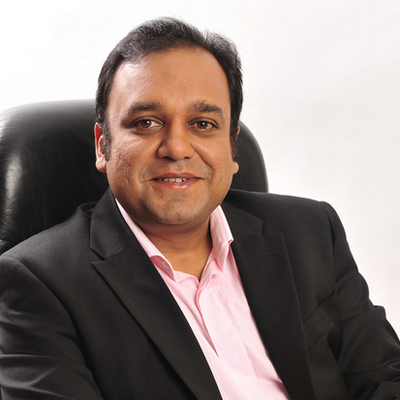
    From just two Doordarshan channels to over 800 channels today, television has come a long way. The good thing is, content continues to get more defined to suit niche audiences.  With the recent changes announced by the Star Network, viewers now have the choice of subscribing to specific channels on an a la carte basis. It will be interesting to see how this will go on to alter viewing patterns. In the long run, this might even lead to a shift of focus, largely from GECs to more diversified, niche content, as television gets more fragmented. Ultimately, as audiences, we will have even greater choice than we have today. Even with so many channels today, I would say the finest moments in television belong to the 90s. MTV and Channel V brought in a cultural change and attitudinal shift of sorts. Programmes such as Different Strokes, The Wonder Years, Mind Your Language and Star Trek were had to miss and are still hard to forget.

  • Zee will launch a new GEC towards the end of FY15, says Punit Goenka

    Zee will launch a new GEC towards the end of FY15, says Punit Goenka

    MUMBAI: The delay in digitisation of phase III and IV markets has got even the industry giants to speak up. And adding to the list is ZEEL MD and CEO Punit Goenka who feels that the delay in digitisation will invariably have negative impacts on the overall industry.

    In an interview with CNBC-TV18’s moneycontrol.com as part of the IDFC Annual India Conference, Goenka spoke about the delay in digitisation, a new GEC launch and his expectations from the advertising revenue in FY15.

     “The growth levels have slowed down for the industry and therefore for us, as well. The consumer billing has not started to happen the way it was envisaged. All this is having a negative impact on the overall industry,” he said.

    When asked if the delay caused a drop in subscription revenues, Goenka explained that the dip in subscription revenues was mostly due to some accounting changes.

    He elaborated, “The dip is largely on account of some accounting changes that we have had since the aggregate of paper that came out of TRAI. Like-for-like, these are flat or just low single digit kind of growth but as I said, it is attributable to the ongoing delay in the digitisation process. But I do expect that this will pick up hopefully in the next fiscal itself.”

    Goenka also revealed that Zee Entertainment plans to launch a new Hindi general entertainment channel (GEC) towards the end of FY15.

    “It will be in line with the cost structures of any other GEC because it is a mainstream GEC launch competing with the current incumbent players in the market. So, it will not be very different from those,” he said.

    Speaking about the sports business, Goenka explained that the losses seen in the sports business were envisaged by the company and they had guided that the losses would be similar to that seen last year.

    Goenka added that he expects advertising revenues to see 11-12 per cent growth in FY15 as from 8-9 per cent seen in earlier two fiscals. He said, “We have seen some improvement in the ad spends especially during the first half of the year. I do expect that the advertising revenues will be seeing healthy numbers from 8-9 per cent that we have been seeing over the past few years to 11-12 per cent.”