Category: GECs

  • ‘M&E industry’s $100 billion dream remains elusive with choking of investment:’ Star India COO Sanjay Gupta

    ‘M&E industry’s $100 billion dream remains elusive with choking of investment:’ Star India COO Sanjay Gupta

    MUMBAI: Despite the India Shining and Digital India waves that the country has been witnessing, the $100 billion dream has remained elusive for the Indian media and entertainment (M&E) industry.


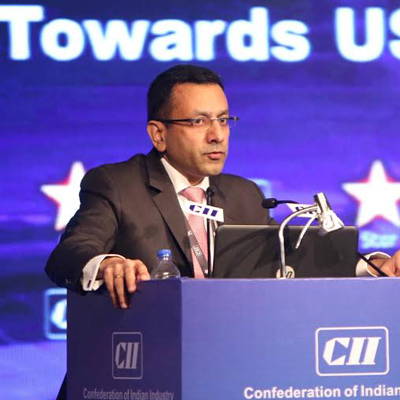
    Speaking at a CII conclave in New Delhi today, Star India COO Sanjay Gupta lamented this fact that saying that from 0.8 per cent of GDP three years ago, the industry had resolved to grow to 1.5 per cent within a decade. However, in the past three years, media as a percentage of GDP has instead fallen by two basis points and the $100 billion dream has continued to remain distant.


    “The biggest hurdle has been the choking of investment. To meet ambitious targets, a business either needs to generate large profits internally, which are then invested back into the business or they grow on the back of external investments – national or international. But the M&E industry boasts of neither,” he said


    CII National Committee on Media and Entertainment and Group CEO, Viacom 18 Group CEO and CII National Committee on Media and Entertainment chairman Sudhanshu Vats, Prasar Bharati CEO Jawahar Sircar, Information and Broadcasting Ministry special secretary JS Mathur and Minister of State for Information and Broadcasting Rajyavardhan Singh Rathore were among those present at the summit.


    During the past 15 years, the M&E sector has barely seen any new entrants and only around $4 billion in foreign direct investment (FDI). To garner $100 billion, the industry needs to invest at least $50 billion over the next decade – something that seems farfetched, given the present circumstances. “With M&E remaining an unattractive destination for investments, investors have no interest to invest in a fragmented and unprofitable business. Despite the 12 per cent year-on-year growth touted for the industry, the sector is paradoxically riddled with a host of unprofitable verticals. For example, sports is a $2 billion industry that could easily grow to around $10 in the next five years. Be it Hockey, Football, Kabaddi or Badminton, the new sporting leagues are being lapped up by the audiences,” Gupta said.


    Yet, the M&E industry has been unable to take off on the back of these investments. “Although Star India has been investing almost Rs 200 crore every season for the past two years, dividends are not commensurate. For this to happen, one needs to scale up the volume of content. In other words, more teams, more players and more days of Kabaddi are required annually to capitalize on this opportunity,” Gupta added.


    “A bizarre challenge confronts us here, however. Although Punjab and Haryana contribute large numbers of Kabaddi players, one cannot add more teams based in either of these two states because they do not have a single indoor stadium that could host a Kabaddi match. In Mumbai, the game is hosted at the NSCI Dome, but the biggest constraint is the availability of this facility for a reasonably long period of time. One venue for a city with more than 1,000 Kabaddi clubs simply does not make sense. In this case, consumer interest and the ability to invest are no hurdles, but the fact that the sporting infrastructure required is simply non-existent. Worse, there are no plans to address this situation,” Gupta continued.


    The movie business is no different. With around 7,000 screens, India has one of the world’s lowest screen densities. Despite breakthrough movies such as Queen, PK or Bajrangi Bhaijaan, revenues are stagnant, although the cost of producing these movies has soared dramatically in the past decade. Therefore, a $2 billion industry that sets a billion hearts racing earns zero profits.


    Even news channels fare no better. Without a robust business model, news channel have no money to invest in their business. Whether English or regional, number one channel or last, none of the channels make any money because none earn any money from subscription. Globally, subscription contributes as much as 60-70 per cent of the total earnings of a news channel.


    Television distribution is roughly a third of the total value of the media industry. In the past few years, immense investments have been made in both direct to home (DTH) and the cable business. But the tragedy of this sector is that even after many years of continued investment not a single company or business makes any money. Since the sector is considered a basic need from a consumer viewpoint, the prices at which content is sold by creators to platforms is regulated – prices frozen in 2003 haven’t changed in the past 12 years. In the same 12-year period, even the price of milk has jumped from Rs 12-15 a litre to Rs 35-40 a litre. 


    “Such anomalies are making the sector bleed. But no one seems to care,” Gupta lamented. “In Delhi, for example, the new government has doubled entertainment tax. Consequently, almost 30 per cent of revenue is paid as entertainment tax. The lack of political alignment and consistency of policy in the sector makes it impossible to plan a sustainable business model.”


    In 2015, where millions across the country receive their daily dose of news from Facebook feed, radio broadcasters can only air news snippets from All India Radio (AIR). “In the US, radio has gone hyper local and people spend an hour daily listening to radio. This gives a fillip to local brands since a quick and cheap platform is available to build their business. In India, conversely, there are a limited number of radio stations and limited content that can be aired – and without any news. It is no surprise then that even in large cities where FM exists, the time spent on radio per person is five minutes. Can any industry on Earth make money in such circumstances?” he asked.


    Gupta concluded by asserting, “Unless we unblock minds, we cannot unblock capital.”


    Accordingly, there is an urgent need to make distribution profitable, position animation as the next wave of export-oriented growth, support a serious scale-up of exhibition screens and sports stadiums and allow content innovation in radio. A hugely attractive pitch for domestic and international investors is required, giving them clarity on the policy environment for the next 10 years and confidence of generating sizeable returns on the investments.


    All stakeholders, businesses, policymakers and regulators need to stop being happy with the status quo and incrementalism. In the new era backed by technology, every sector from automobiles to financial institutions and even grocery shopping have witnessed dramatic growth and serious disruptions on the back of serious flow of capital.


    “M&E too needs to see brave new entrepreneurs, disruptive ideas and unconventional business models but this will only happen if we unblock the capital,” stressed Gupta.

  • Veni, vidi, non vici: Shows that didn’t last on TV in 2015

    Veni, vidi, non vici: Shows that didn’t last on TV in 2015

    MUMBAI: They came, they saw, they failed to conquer!


    While there are a few set formulae for shows to work on television, it is unlikely that all that go on air manage to get viewers’ patronage, specially in the wake of the many entertainment options available today.


    Moreover, gone are the days when broadcasters and production houses launched TV series that ran endlessly for years. With the changing time, change in people’s mindset and growing competition in the television space, creators want their shows to have top recall value. Bringing back to back shows with new concepts and ideologies is what’s trending these days. In this era that is identified with instant acceptance and instant rejection as well as fads galore where variety is the spice of life, it doesn’t take long for viewers to reject shows that don’t match up to their expectations. And more and more broadcasters are choosing not to milk the shows that aren’t turning out to be cash cows. 


    Multiple shows are churned out every year on Indian television across genres and channels. While some hit the ratings jackpot, some are met with disdain and are yanked off air.


    Let’s take a look at the fiction shows on Hindi general entertainment channels (GEC) that failed to stand the test of time in 2015 for various reasons.


    A recent announcement by Star Plus may have come as a surprise to many. After a runtime of just two months, the channel pulled out its musical romantic series Badtameez Dil, which is produced by Swastik Pictures. While the show was low on ratings on the channel despite being appreciated for the content and quality, it was rather popular on Star’s OTT platform Hotstar. And hence the show was shifted from a linear to a digital channel.


    A source in Star Plus asserted, “The reason behind the show going off air was that it failed to generate sustainable ratings. Another reason for Badtameez Dil going off so soon was to pave the way for Balaji Telefilms’ Kuch Toh Hai Tere Mere Darmiyaan.” 


    That said, another show by the same production house called Manmarziyan on Star Plus was launched in April. While it was lauded for its content, it failed on the ratings graph as a result of which it was wrapped up after a four month run on the channel.


    Romance and drama aside, even the comedy genre was not spared from viewers’ apathy. Sab’s comedy show Peterson Hill, produced by Garima Productions, was pulled off air due to low ratings despite having a cast like Rohit Roy, Sucheta Khanna and Ashwin Mushran.


    A finite series Gulmohar Grand produced by Sunshine Productions was launched on Star Plus with a bank of 26 episodes in May. However, the channel pulled it off after airing 17 episodes.


    Sab pulled down four of its shows on 19 July this year. The first one to bite the dust was the weekend comedy showHansi Hi Hansi Mil Toh Lein, which was launched on 29 March. The second show titled Rumm Pumm Po hit the screens on 6 June and was wrapped up within 43 days. The game show titled Sab Ka Sapna Money Money, which started from 26 April went off-air in four months too. Rukawat Ke Liye Khed Hai, which launched on 26 April, was the fourth show that ended on the same date.


    A channel source informed Indiantelevision.com that Sab’s Hansi Hi Hansi Mil Toh Lein was revamped from theThe Great Indian Family Drama. “We tried to tweak the format and content to make it better. The channel’s weekend shows like Rumm Pumm Po and Sab Ka Sapna Money Money were part of the channel’s experimentation with content and formats within the genre of comedy,” the source said.


    Sab’s sister channel Sony Entertainment Television also had its share of shows that didn’t last in 2015. The channel launched the romantic drama soap opera Mooh Boli Shaadi on 23 February and pulled it down within four months. Dil Ki Baateien Dil Hi Jane also met with the same fate.


    Zee TV’s Service Wali Bahu, which also went on air on 23 February this year in the 6.30 pm slot, also adds to the list. A source in the Zee programming team said, “The 6.30 pm time slot is still in an establishing stage and there is no certain phenomenon, which has proved to be sustainable. The programming team decided not to elongate the existing show. Produced by Village Boy Production Service Wali Bahu and was replaced by Sarojini in 6:30 pm slot.”


    Speaking to Indiantelevision.com on the reasons why some shows fail to make a mark, Deepti Bhatnagar Production founder and CEO Deepti Bhatnagar said, “I always believed that creators start the show with one concept but with so many changes taking place in the show, they lose the plot. Once you lose the plot of the show, it stops working for the audience because producers don’t really stick to the story.”


    Elaborating further, she added, “Also another reason I believe is that we don’t really work on character. Pick any Hollywood show like F.R.I.E.N.D.S, every character is well connected with the audience, which is missing here. Nowadays so many channels are launching so many shows and some don’t know what they are actually making. So, one has to work on that.”


    Sunshine Production founder and series director Sudhir Sharma asserted, “People have a lot many choices these days. It’s not that we don’t have good content. We do have good writers in the industry. While shows today have a good story line, the characters, which are essential medium of connection, are not well researched.”


    Director’s Kut Production director Rajan Shahi said, “If there are shows, which are going off air in a short span of time, then there are also shows like Tarak Mehta Ka Olta Chasma, Diya Aur Bati Hum, Yeh Rishta Kya Kehlata Hai and Balika Vadhu, which have been running for a few years. So there are shows, which are sustaining for a longer period. Broadcasters and creators are trying to experiment with genres and subjects. They sometimes hit the mark and sometimes don’t.”


    Shahi was of the opinion that this also had a lot to do with market changes. “I think today competition is severe in the industry. Moreover, what we would like to see and what is actually working on Indian television is very different. We are going back and doing stories that we have been done 10 years back. It’s all about the results at the end of day and the turnaround time for it has to be faster,” he voiced.


    With increasing competition in the Hindi GEC space, rather than experimenting and introducing twists and turns into story lines of shows that don’t work, channels nowadays prefer to take them off air.


    Platinum Media CEO Basabdatta Chowdhuri said, “The content pipeline has improved over the years. Earlier the content supply was not abundant but now that pipeline has improved. It is far more possible to change the programmes more often than earlier. In today’s time, we have enough production houses that produce multiple shows. If the advertiser doesn’t find the show attractive, they can’t make business from it. So ultimately the broadcaster will replace the show with some new shows.”


    Fiction shows are going off air on the basis of performance. Channels are extremely careful and protective about the ratings of their time slots and a lot of money is being poured into research. Madison COO Karthik Laxminarayan said, “If a show is not performing, channels are going back to the drawing board to re-invent them as they are aware that once you lose a viewer, you have to work very hard to get them back. So it’s better to give them something new and keep them engaged rather than keep giving them more of the same non-working shows.”


    He further added, “Earlier the reason they used to run the show for long was to amortise their fixed costs namely the sets and realise profits from their fictions but currently as the market is up and inventory sold is higher than usual, the money is coming in anyways and hence they don’t mind spending that extra on new sets etc. This is a short term strategy and will soon change as bottom lines will plummet and bleed eventually.”


    With more and more entertainment options at the audiences’ fingertips these days, channels will have to pay more heed to the kind of content that the viewer wants.

  • Star Plus readies new mythological series ‘Siya Ke Ram’

    Star Plus readies new mythological series ‘Siya Ke Ram’

    MUMBAI: Going by its history of showcasing shows featuring strong, empowered and inspirational women, Star Plus is all set to launch the classic mythological tale of Ram and Sita, albeit from Sita’s perspective.


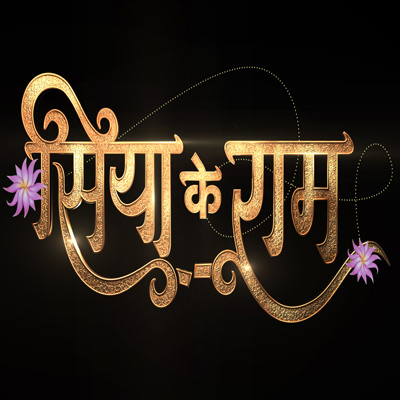
    The show titled Siya Ke Ram, will offer viewers a fresh perspective on Ramayan.


    “Star Plus wants to present Sita as a multi-faceted woman with a mind of her own who was Ram’s ardhangini in the true sense of the word, thus making her relatable to every woman of today. Sita continues to be relevant to this day and we want to pay tribute to the modern Indian woman by presenting Sita’s inspiring story,” said a channel spokesperson.


    The first look of the show encapsulates the scale and grandeur of the epic, while highlighting the key differentiator of a Sita who has a point of view.


    Siya Ke Ram has been conceptualised by Aniruddh Pathak, who brought Lord Shiva’s legend to TV through Mahadev.


    The story has been envisioned and created by some well-known writers  namely – the best-selling author of Asura and Ajaya, Anand Neelakantan and Subrat Sinha – along with creative consultant Devdutt Pattanaik.


    Post Mahadev, Triangle Film Company will also be producing Siya Ke Ram for Star Plus.

  • HooHaa! Amitabh Bachchan all set for ‘AKRHZ’ launch on Star Plus

    HooHaa! Amitabh Bachchan all set for ‘AKRHZ’ launch on Star Plus

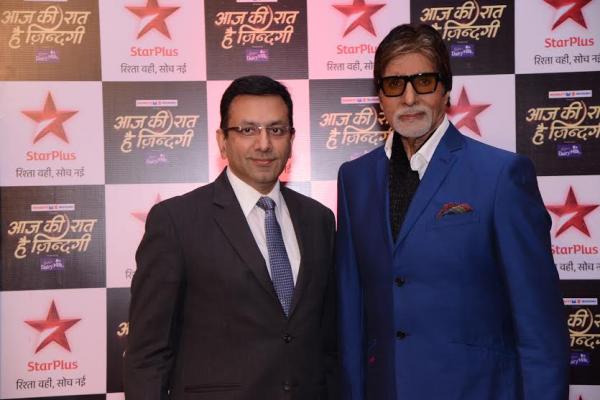
    MUMBAI: Hoooo Haaaa! The excitement is almost palpable amongst one and all as the ever energetic grand old man of the Indian film industry – Amitabh Bachchan’s baritone voice and affable presence is set to yet again fill up television screens across the country this weekend.


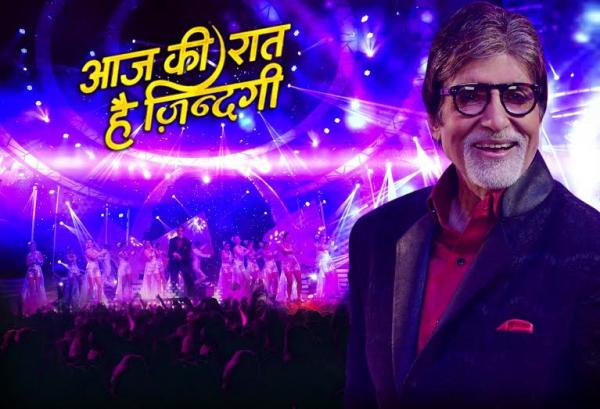
    This time round, Bachchan will be seen hosting Star Plus’ new show Aaj Ki Raat Hai Zindagi, which will launch at 8 pm on 18 October. 


    The show, which aims to celebrate people across India making a difference in their communities, will see three personalities from the film industry as the first guests. Actors Alia Bhatt, Shilpa Shetty Kundra as well as singer Arijit Singh will be Bachchan’s first guests on the show. Aaj Ki Raat Hai Zindagi is being directed by Ken Ghosh. Actor and host Hussain Kuwajerwala will be the show’s co-host alongside Bachchan.


    After his stint on television started with Kaun Banega Croreapati (KBC) on Star Plus back in 2000, Bachchan has been hosting the same show on Sony Entertainment Television thereafter. Apart from the non-fiction show, his tryst with the television medium also saw him acting in the fiction series titled Yudh last year on Sony. While the audience has lapped up his avatar as anchor and host season after season ofKBC, his fiction fare didn’t find much favour from them.


    Now as Bachchan is back in his real avatar as the friendly and charming host on television yet again, albeit on a different kind of non-fiction format show, it remains to be seen how Aaj Ki Raat Hai Zindagi is received by the audience. That said, seeing the spring in his step and the zeal in his voice, Bachchan’s enthusiasm is almost contagious


  • Zee Media Corporation CEO & executive director Ashish Kripal Pandit resigns

    Zee Media Corporation CEO & executive director Ashish Kripal Pandit resigns

    MUMBAI: Zee Media Corporation executive director and CEO Ashish Kirpal Pandit has resigned from the company with effect from 12 October.


    He handled senior management roles for more than 27 years in industries from ranges from telecom to retail. He has been associated with brands like Alcatel, Efirst Technologies, Fortis Healthcare Limited,  Reliance Webstore and Tata Teleservices. 


    Pandit joined Zee Media Corporation in October 2014 and looked after senior management team. Pandit was with Digicall Global for three years before joining Zee.

  • Colors firms up weekend programming with ‘Naagin’ at 8 pm

    Colors firms up weekend programming with ‘Naagin’ at 8 pm

    MUMBAI: After launching the new season of Bigg Boss, Colors is gearing up to firm up its weekend programming with the launch of another show titled Naagin.  Starting from 31 October, the show will be aired on Saturday and Sunday at 8 pm. 

    It will replace the channel’s celebrity talk show The Anupam Kher Show- Kuch Bhi Ho Sakta Hai at 8 pm hosted by Anupam Kher. 

    The concept of Naagin is not new to India. There have been multiple movies based on the Ichhadhari Naagin like the Sridevi starrer Naagin, Nagina,  Sheshnaag and more recently – Mallika Sherawat’s Hiss

    Moreover, in 2007 Zee TV launched a show on the same concept titled Naagin – Waadon Ki Agnipariksh, which was produced by AK Films. The series ran for three years and completed 219 episodes. 

    How Colors’ new television offering brings about differentiation from what has already been tried before will be interesting to see. 

    Produced by Balaji Telefilms, Naagin is based on the snake that changes her form according to will. The promos of the show are already on air.

    On other Hindi general entertainment channels (GECs) Colors’ weekend show Naagin at 8 pm slot will be pitted against &TV’s game show Deal or No Deal hosted by Ronit Roy, which airs at 8 pm on Saturday and Sunday, Zee TV’s Neeli Chatri Wale, Star Plus’ new show Aaj Ki Raat Hai Zindagi (AKRHZ) with Amitabh Bachchan as the host, Life OK’s Dafa 420 and Sab’s Police Factory. On the other hand, Sony Entertainment Television airs Hindi movies from 8 pm on Saturday and Deva Shree Ganesha on Sunday.

  • ‘Bigg Boss 9’ preens on Twitter with 80K conversations

    ‘Bigg Boss 9’ preens on Twitter with 80K conversations

    MUMBAI: As Colors’ most anticipated reality show Bigg Boss season 9 launched on 11 October, Bigg Boss and Salman Khan fans used Twitter as a medium to express and add on to the excitement across the country. Twitter proved to be the largest platform for virtual couch to watch Bigg Boss season 9.


    The mood on the social networking site was in sync with the show’s entertainment quotient, with conversations around #BB9 hashtag reaching more than 80,000 tweets on the day of the premiere episode.


    Twitter conversation went up by 104 per cent this year as compare to compare to last year’s premiere episode day, positioning Bigg Boss season 9 as one of the biggest TV moments of the year on Twitter.


    Fans used Twitter to talk about all the revelations that was stored in hours before the launch episode went on air at 9 pm on Colors.


    As the contestant announcements rolled in, users tweeted their opinions on various things from the possible love triangles that might form on the show, to the theme of #DoubleTrouble twist as well as about Khan’s antics.

    Salman Khan’s Tweet announcing the launch of Season 9 was one of the most shared #BB9 Tweets last night viewed over 250,000 times on Twitter:

    At the start of the episode, the actor walked the contestants through the new #DoubleTrouble twist, where contestants would be entering the house in pairs:

    Bigg Boss’s official Twitter account (@BiggBoss) became the go-to destination for fans to get real-time updates on the premiere episode as the account live-tweeted throughout the 2.5 hour duration of the episode. Minutes before entering the Bigg Boss House, the contestants too opted for Twitter Mirror to dole out exclusive autographed photos of themselves for their fans.

    The content published by @BiggBoss ranged from exclusive photos of the new, neon-coloured Bigg Boss House to performance pictures, selfies. Contestant accounts were also up fronted for fans to follow throughout the season. The fans were delighted with the twist and turns that the first episode provided.

  • Big Magic & Big FM launch integrated show ‘Fakebook with Kavita’

    Big Magic & Big FM launch integrated show ‘Fakebook with Kavita’

    MUMBAI: Reliance Broadcast Network’s entertainment channel Big Magic and 92.7 Big FM will be launching an integrated satirical comedy show called Fakebook with Kavita with TV actress Kavita Kaushik.


    The show, which will be aired as a simulcast on television and radio for the first time in the industry, is a fresh take on the hypocritical Indian society, focusing on topical issues, which make you sit up, think and introspect, albeit with a pinch of humour.


    Starting from 19 October Fakebook with Kavita will be aired at 9 pm on Mondays and Tuesdays on Big  Magic and from Mondays to Thursdays on 92.7 Big FM.


    In line with the programming strategy, the content will be sarcastic, irreverent, relatable and cutting edge. Kaushik will be seen doing sketches where her character will vary depending on situations.


    Big Magic creative director Bimal Unnikrishnan said, “We are introducing a genre – satirical comedy, which has not been explored much on the small screen. Fakebook with Kavita is a light hearted, relatable, satirical comedy series with a fresh take on the hypocritical Indian society. We are excited to launch our first integrated show, which will enthrall viewers of Big Magic as well as the listeners of 92.7 Big FM, thus enhancing the reach of the show across India. It is our consistent endeavour to create shows with cutting edge content coupled with ‘full on LOL’ moments and we do hope that the audiences will love this.”


    Kaushik added, “I am glad to be associated with this unique show. It is a take on our hypocritical society but with a dose of comedy. Audiences will see me discussing real life issues and topical situations with lots of humour. Looking at the scenario today, I genuinely believe that a show of this nature is much needed and it is the perfect time to launch it. The best part is that the reach of the show will be manifold as it will air on both Big Magic and 92.7 Big FM.”

  • Sony turns 20 in India: Retrospect & Prospect

    Sony turns 20 in India: Retrospect & Prospect

    MUMBAI: Glory, agony, poison, panacea… As Multi Screen Media (MSM) (erstwhile Sony Entertainment Television India) completes two decades in the Indian broadcast space, it has witnessed it all. The broadcasting company, which started with one channel, is now sixteen channels strong with even more additions in the pipeline.


    In a rapidly changing scenario, where the entire ecosystem is moving towards the digital platform, there are challenges and opportunities alike. And MSM CEO NP Singh is ready to take them all head on.


    A Sony veteran, Singh has been privy to the business affairs of the company for as many as sixteen years since first joining the organisation in 1999 as chief financial officer (CFO).


    Even as word trickled in about MSM’s collaboration with US-based mega sportscaster ESPN Inc, came the news that the Indian Premier League’s (IPL) title sponsor PepsiCo was withdrawing as it brought ‘disrepute’ to the game. In the midst of some good news and bad, Singh’s core focus at this stage is on the network’s holistic growth.


    “My focus is on aggressive growth of the network and consolidation of our existing channels. Along with this, foraying in new areas of businesses, expanding our portfolio and exploring opportunities on the rapidly growing digital platform is what we are looking at. At the same time, course correction of our flagship channel Sony Entertainment Television (SET) is a priority,” Singh says.


    To that effect, MSM has made a series of changes in its management team and these are likely to reflect in the programming and content soon enough.


    RETROSPECT: PIONEER OF NEW IDEAS


    In its two decades of operations in India, Sony has been a pioneer of new ideas that set benchmarks in the Indian broadcast space.


    “MSM as a network has pioneered a lot of new ideas, for the industry to follow. The first ever big scale live event was done by us; namely, LataMangeshkar’s live concert. Infact, we’ve had the privilege of hosting both Lataji and Ashaji in live shows.” Singh reminisces.


    “In earlier days, MSM also created ripples by airing blockbuster Hindi movies on TV. It started with the airing of the evergreen movie Sholay and was followed by Border. The ratings those days were somewhere close to 30,” he informs.


    While today MSM’s flagship channel SET might have lost its yesteryears’ glory, the fact remains that it aired the first ever daily soap in Ek Mahal Ho Sapno Ka, “The show reached a thousand episodes those days during 1998 – 2000 and used to do well against Kaun Banega Crorepati (on Star Plus),” says Singh. hose days were somewhere close to 30,” he informs. says Singh.


    From CID, which recently completed a run of 19 years on Sony, to the maiden season of the interactive reality show Indian Idol, the finale of which witnessed a total of five crore votes, there have been landmarks galore for MSM. From India’s first homegrown reality show – Boogie Woogie to the now very popular reality show format – Bigg Boss, which was initially brought to India by Sony, the network has been trailblazer of sorts.  


    In March 2005, Sri Adhikari Brothers’ Hindi general entertainment channel (GEC) SAB TV was acquired by MSM and one of the country’s most popular scripted comedy show Taarak Mehta Ka Ooltah Chashmah has been running on the channel for almost eight years now.


    In a bid to bring the glitz and glamor of the film industry on television, Sony was also a first mover in televising the Filmfare Awards.


    “We were the first ever network to bring sports on a Hindi movie channel – Max in 1999. It continues to be the leader even as today there are many others who do the same. The first ever wrap around show (Extraa Innings) for cricket was done by us during the Colombo Champions Trophy. Extraa Innings is now over 12 years old, and is the highest rated wrap around show for any sport on any channel,” informs Singh.


    The rationale behind telecasting cricket on a movie channel was to rope in the women audiences for the game. “In 2003, on the back of Extraa Innings, the female viewership grew by 31 per cent,” he adds.


    The retrospective is indeed dotted with many a milestones.


    PROSPECTS: GEC ROAD MAP, DIGITAL, SPORTS


    “Sony Pal to have original content, ‘KBC’ back in 2016”


    The Hindi GEC space has always been one of MSM’s biggest focus area. However, in recent times, the network’s performance in the category has been disappointing to say the least. Now with a new team in place, it might just be a matter of time before MSM’s flagship channel SET takes off again.


    “Our flagship channel continues to be my number one priority in addition to growing the network. With that in mind, we have put a new management team in place. Danish Khan has joined as SET business head and has a new team under him catering to content, communication, promotions, research strategy and marketing. I am very confident that in the upcoming months, the new programmes to be launched on SET will increase the viewership on the channel, significantly although with a strong male audience base, Sony is already uniquely positioned at this stage.” says Singh


    The centre of the network’s strategy right now is to create new content to lure viewers back to the channel. “We are focusing on gaining both qualitative and quantitative consumer insights so that we can feed those back into the system and create content that not only resonates with the consumer but also reflects his/her cultural ethos”, he says.


    Additionally, Sony will also bring back the next season of KBC, with its superlative host Amitabh Bachchan next year.


    MSM’s third Hindi GEC, Sony Pal, which was launched as a female-centric channel did not take off as was expected. However, where original shows failed, old shows did the turnaround for the channel. The channel, which currently has archival content from Sony’s library as well as airs South Indian movies, may get back original shows in the future.


    “In a few months’ time if we see viewership increasing further, which we are seeing right now, then we will start bringing original content again on Pal. I have a blue print of what I want to do over the next six months,” he says.


    DIGITAL


    MSM has also been aggressively moving on the digital front with its over-the-top (OTT) platform Sony Liv.


    “We are exploring opportunities on the digital platform as it is growing rapidly and we want to be a major part of the action. We’ve taken baby steps towards it by launching Sony Liv. In the last one year, we have upped the ante. Recently we launched our first original series Love Bytes, which already got 1.5 million video views. This resulted in a 300 per cent growth in our video consumption on the digital platform,” says Singh emphasising on digital.


    Sony Liv’s growth strategy will be two-pronged. While the platform will develop new original shows for the digital platform, it will also aggregate a lot of third party content. “One of the key aspect of the collaboration with ESPN is to co-create a multi sport app where we will use the expertise of ESPN-Cricinfo,” informs Singh.

    Even as the digital medium is witnessing immense growth in India, players are yet to figure out a concrete revenue model. While a few of them are providing content for free, others have opted for a pay model. “There’s a classical debate going on across the globe about which models is better. As I see it, currently, we have all our content on AVOD (advertising supported video on demand). But we will start putting up some of our marquee content in SVOD (subscription supported video on demand). Again, we were the first ones to put content on the SVOD platform. FIFA 2014 was one of our subscription based products available on Liv Sports,” Singh says.
     
    “We believe that any marquee content should be primarily subscription led, and then eventually free. However, at this stage, a lot of models are being experimented with.


     With MSM poised for the next phase of growth and expansion with multiple strategies across its businesses, the network’s road ahead will be watched with keen interest.


    SPORTS


    MSM has an extensive sports bouquet at this stage and the primary of them is IPL, which now is making headlines as PepsiCo expressed its desire to opt out of the sponsorship deal.


    “Any sponsor opting out from IPL won’t affect MSM,” Singh tells Indiantelevision.com. “We have seen a change of sponsors before too but the tournament continued and kept growing,” he adds.


    “MSM has made aggressive acquisitions of football properties this year and plans to create a lot of wrap around and editorial programming for it. And now, our collaboration with ESPN has given us an opportunity of presenting international level editorial content. 


    With MSM poised for the next phase of growth and expansion with multiple strategies across its businesses, the network’s road ahead will be watched with keen interest.

  • Star Plus’ ‘AKRHZ’ aims to infuse optimism in life with Amitabh Bachchan

    Star Plus’ ‘AKRHZ’ aims to infuse optimism in life with Amitabh Bachchan

    MUMBAI: Star Plus’ upcoming show Aaj Ki Raat Hai Zindagi is soon going to beam across television screens. The show will showcase Indian superstar Amitabh Bachchan in a pivotal role as he embarks upon a journey to celebrate life and aims to infuse optimism in people.


    As was previously reported by Indiantelevision.com, the show will go on air from 18 October and will be aired on Sundays at 8 pm.


    Aaj Ki Raat Hai Zindagi aims to inspire people to change their outlook, and cherish the good that life has to offer, apart from entertaining them of course.


    Star India COO Sanjay Gupta said, “Entertainment when done with a sense of purpose can be a very powerful tool, one that can break the cynicism and bring about happiness. As a network, we have always strived to inspire a billion imaginations while working towards giving our audience something new and exciting. And with Aaj Ki Raat Hai Zindagi, we are happy to collaborate again with Amitabh Bachchan on a project, which is so special. Off late, an overexposure of negative news has impacted our perspective towards life, so the show is an attempt to bring back a sense of optimism.”


    Sharing his views about the show, Bachchan said, ”The show is all about a celebration of life and people who have made a difference. I am working with Star after a gap of 15 years and wanted a project that befitted the legacy. Aaj Ki Raat Hai Zindagi is One such endeavour that will make you smile, dance, clap and go ‘HuuHaa’ with joy. Life Is all about living, loving and celebrating moments with pepole who put a smile on your face and it is celebration that matters most.”


    The channel has roped in Maruti Suzuki as the presenting sponsor and Cadbury Dairy Milk as the powered by sponsor.


    Maruti Suzuki India marketing and sales executive director R S Kalsi said, “We at Maruti Suzuki always believe in making a difference to every Indian and our inspiration comes from one place – India’s hopes, dreams and aspirations. It’s a privilege to be associated with a show that shares the same belief. Our vision is to be the ‘Pride of India’ and Aaj Ki Raat Hai Zindagi celebrates the pride of the ordinary people who have contributed and made a difference to the society in some form or the other.”


    “Cadbury Dairy Milk has always stood for triggering joy through unlocking relationships and this program is all about people who go beyond to bring joy to the lives of others. CDM stands for generosity, optimism and authenticity and we felt that the stories of AKRHZ mirror those very values- hence it seemed like a great,” added Mondelez India director Prashant Peres.


    The show is based on the Tonight’s The Night format, which is owned and produced by BBC Worldwide.


    The extensive marketing campaign by Star Plus before the launch of the show, has led to immense curiosity and discussions all over. The first teaser of the campaign received over one million views on Facebook in less than 20 hours, creating a new benchmark for TV shows.  The creative campaign has been conceived by O&M and produced by Bubble Wrap Films.


    The punch line of the teasers, ‘Huuhaa’ got the nation talking about the show with #HuuHaa trending on social media. The entire campaign on social media has received over 400 million potential impressions till date creating a lot of positive buzz. This will be followed by a marketing blitz on television, radio, digital and outdoor.


    HuuHaa to that!