Category: GECs

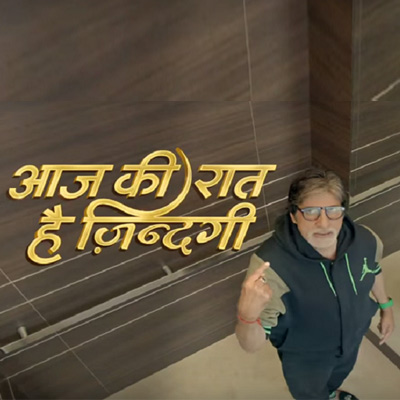
  • Big B’s train journey inspired by ‘Aaj Ki Raat Hai Zindagi’ creates a stir on social media

    Big B’s train journey inspired by ‘Aaj Ki Raat Hai Zindagi’ creates a stir on social media

    MUMBAI: On Sunday morning, the local train commuters from CST to Bhandup were in for a surprise when they saw none other than Amitabh Bachchan in their train. In no time, #BigBAurHeroKaSafar became a trending topic across social media with several people posting pictures and videos of the actor from the train. The hashtag #BigBAurHeroKaSafar was the number one trend nationwide, on Twitter. 


    Big B was there to support a hero, Saurabh Nimbkar who featured on his show, ‘Aaj Ki Raat Hai Zindagi’. He was impressed by Saurabh who sings in the train to raise funds for cancer patients, and wanted to join in for this noble cause. 


    He not only cheered for Saurabh but sang along with him, leaving the crowds in a frenzy. The frenzy evidently wasn’t just limited to the train compartment, but spread across social media with several people appreciating this gesture or expressing how surprised they were.  


    ‘Aaj Ki Raat Hai Zindagi’ which celebrates life and the small joys it offers, airs on Star Plus and hotstar, every Sunday at 8pm

  • Zee TV Middle East launches the hunt for Asia’s Singing Superstar

    Zee TV Middle East launches the hunt for Asia’s Singing Superstar

    MUMBAI: Zee TV has brought back its one of the famous singing reality show Asia’s Singing Superstar on 7 November for its Middle East audience.


    This is a first show which holds no barriers in terms of age and is giving a chance to all those hidden and budding talents across 3 countries to come up and take part in the show.


    Never before has a show gathered more than 1500 singers across Middle East to participate for the UAE Auditions & top 5 were selected by the judge Shafqat Amanat Ali.


    The selected singers come from diverse Asian nationalities and the 6 singers representing UAE would be Tejaswini (India), Ian Cris (Philippines), Yasmina Alidodova (Tajikistan), Shivhari (Bahrain), Sayed Hasan(Bangladesh) and Shreya Roy (India).

     
    The auditions in Pakistan and India also saw a huge response and the show are slated to showcase the best of all 3 countries.

    The contestants selected from the auditions will be mentored by Shafqat Amanat Ali from Pakistan who is best known for his Sufi Music, ‘Mitwa’, songs from movies like My Name is Khan and by the maestro Shankar Mahadevan from India who is an award winning composer and play back singer, best known for his songs like Taare Zameen Par, India Waale, Maa and numerous more.

    Renowned Pakistani Actor Ahsan khan who appeared in films like Nikah, Billi and Indian Singer/composer Shweta Pandit who debuted in Yash Raj’s “Mohabbatein” will be hosting the show. Most importantly one of the best Pakistani Ghazal singer of his era ‘Ghulam Ali’ who is known for Chupke Chupke, Kiya Hai PyarJise would be the Maha Guru in the Grand Finale Episode of the show.


    Speaking about the show, Zee TV’s Chief Content and Creative Officer, Manoj Mathew says “Music has always transcended boundaries across Asia & we look to achieve just that by bringing singers from across Asia together on one platform. The mentors are well selected according to the show requirements as the singers will be divided into two teams. Shankar Madadevan will lead & mentor the Pakistani contestants while Shafqat Amanat Ali will mentor the Indian contestants. UAE contestants will be distributed among both mentors. It will be a unique experience to see contestants from non-hindi/urdu speaking countries sing in hindi/urdu. The show will be produced by the makers of SaReGaMaPa so we expect to put up a great show.”

    Sixteen contestants in total will be chosen from UAE, India and Pakistan to take part in the show. The winner would be crowned ASIA’S SINGING SUPERSTAR and will be launched in a Bollywood movie by Zee Studio – the in-house movie production house of Zee Entertainment.

  • FY-2015: Lower Filmed Entertainment numbers drag Viacom revenue down 3.7 percent

    FY-2015: Lower Filmed Entertainment numbers drag Viacom revenue down 3.7 percent

    BENGALURU: Viacom Inc (Viacom) reported 3.7 percent drop (reduced by $515 million) in revenue for the year ended September 30, 2015 (FY-2015, current year) at $13,268 million as compared to $13,783 million in FY-2014. Viacom says that the fall in revenue was due to due to lower revenues across the distribution windows. Of the two segments that the company has, Filmed Entertainment reported 22.6 percent (reduced by $842 million) lower revenue in FY-2015 at $2,883 million as compared to $3,725 million in the previous year.


    Viacom says that excluding an unfavourable 2 percent impact of foreign exchange, revenues declined 2 percent, while excluding an unfavourable 2 percent and 4 percent impact of foreign exchange, Filmed Entertainment revenues declined 19 percent.


    The company’s operating income fell 22.8 percent (reduced by $970 million) to $3,112 million from $4,082 reported for last year. Adjusted operating income decreased 5 percent ($205 million) to $3,920 million in FY-2015. Adjusted results exclude the impact of restructuring and programming charges totalling $784 million and a non-cash pension settlement loss of $24 million in 2015 and a non-cash impairment charge of $43 million in 2014. Including the impact of these items, operating income decreased $970 million, as mentioned above.


    Filmed Entertainment segment’s adjusted operating income reduced 45.9 percent (reduced by $94 million) in the current year to $111 million as compared to $205 million in the company’s previous fiscal. The lower adjusted operating income for this segment reflects lower contribution from films in release across the distribution windows says Viacom. Last quarter (Q3-2015), also lower results from the Filmed Entertainment segment had pulled down the company’s revenues by 11 percent.


    The company’s other segment, Media Networks reported 3.1 percent (increased by $319 million) increase in revenue in FY-2015 to $10,490 million from $10,171 million, driven primarily by higher affiliate fees and advertising revenues. Media Networks adjusted operating income reduced by 3 percent (reduced by $128 million) in the current year to $4,143 million from $4,271 million in FY-2014. Viacom says that higher revenues from the segment were more than offset by an increase in programming and marketing expenses.


    Viacom Executive Chairman Sumner M Redstone said, “Viacom continues to create some of the most compelling and entertaining content in the world. I am confident that Viacom’s leadership team will continue to lead through our industry’s period of transition and succeed well into the future.”


    Viacom President and Chief Executive Officer Philippe Dauman said, “Viacom’s fourth quarter and year-end results are indicative of our progress in key areas, including recent ratings improvement and renewals of important distribution agreements. Our strategy of increasing and accelerating investment in original content and expanding our profitable international footprint are among the major factors driving this success, which we believe will continue in 2016 and beyond. We are making great progress in tackling industry-wide inefficiencies in audience measurement, while expanding our audience reach with landmark distribution agreements.


    “Viacom’s family of Media Networks are the most watched by highly coveted younger audiences, and we are building engagement on all platforms, leading to first-of-their-kind marketing opportunities with our advertising partners. Our investment in content continues to grow, supporting an unprecedented amount of quality original programming and a more robust slate of films. In addition, in fiscal 2015 we launched 21 channels overseas – including six in India – fuelling the fastest international growth in our history.”


    Segment Performance


    As mentioned above, two segments contribute to Viacom’s numbers-Media Networks, which has three components – Advertising, Affiliate Fees and Ancillary; and Filmed Entertainment which has four components-Theatrical, Home Entertainment, License Fees and Ancillary.


    Media Networks


    Excluding an unfavourable 2 percent impact of foreign exchange, worldwide revenues increased 5 percent. Domestic revenues were $8,635 million, an increase of $10 million. International revenues were $1,855 million, an increase of $309 million, or 20 percent, primarily due to the acquisition of Channel 5 Broadcasting Limited (Channel 5), partially offset by foreign exchange, which had a 10 percentage point unfavourable impact on international revenues says Viacom.


    Advertising


    Worldwide advertising revenues increased $54 million, or 1.1 percent, to $5,007 million in FY-2015 . Domestic advertising revenues decreased 7 percent. The company says that while pricing remained essentially flat, softer ratings caused lower audience delivery, reducing impressions and associated revenue. International advertising revenues increased 60 percent, reflecting growth in Europe driven by the acquisition of Channel 5, partially offset by the impact of foreign exchange, which had a 10 percentage point unfavourable impact on international advertising revenues.


    Affiliate Fees


    Worldwide affiliate fees increased $248 million, or 5.3 percent, to $4,908 million in FY-2015. Domestic affiliate revenues increased 8 percent, driven by rate increases as well as the benefit of distribution arrangements which are affected by the timing of available programming. Excluding the impact from the timing of product available under these distribution agreements, domestic affiliate revenues grew in the mid-single digits. International revenues decreased 7 percent, principally due to foreign exchange, which had an 11 percentage point unfavourable impact, partially offset by an increase in revenues driven by the launch of new channels and new distribution agreements.


    Filmed Entertainment


    Excluding an unfavourable 4 percent impact of foreign exchange, worldwide revenues declined 19 percent, due to lower revenues across the distribution windows reflecting the mix of films. Domestic revenues were $1,374 million, a decrease of $347 million, or 20 percent. International revenues were $1,509 million, a decrease of $495 million, or 25 percent, with foreign exchange having an 8- percentage point unfavourable impact on international revenues.


    Theatrical revenues :in the current year reduced 30.4 percent (reduced by $368 million) to $841 million from $1209 million due to the mix of releases, partially offset by higher carryover revenues of $54 million from prior year releases, principally from Teenage Mutant Ninja Turtles. Domestic theatrical revenues decreased 26 percent and international revenues decreased 34 percent. Foreign exchange had a 10 percentage point unfavourable impact on international theatrical revenue


    Home Entertainment: Worldwide home entertainment revenues decreased $293 million, or 25.2 percent, to $871 million FY-2015, reflecting a decline in revenues from third-party distribution titles, carryover revenues from prior year releases and Viacom’s current year releases due to the mix of titles. Significant titles in the current year included Teenage Mutant Ninja Turtles,Interstellar and The SpongeBob Movie: Sponge Out of Water, while the prior year includedTransformers : Age of ExtinctionThe Wolf of Wall StreetNoah and Jackass : Bad Grandpa. Domestic and international home entertainment revenues decreased 16 percent and 35 percent respectively. Foreign exchange had a 7-percentage point unfavourable impact on international home entertainment revenues.


    License Fees :decreased $135 million, or 12.1 percent, to $980 million FY-2015, primarily driven by the mix of available titles.


    Ancillary:Ancillary revenues decreased $46 million, or 19.4 percent, to $191 million in FY-2015, primarily driven by a benefit from the sale of certain distribution rights in the prior year.

  • “I may distribute a news channel. I just do not want to run one” : Kunal Dasgupta CEO SET

    “I may distribute a news channel. I just do not want to run one” : Kunal Dasgupta CEO SET

    It’s the festival of lights. And for many the festival of noise courtesy exploding fireworks. In the hope of reducing the number of those belonging to the latter tribe, we, at indiantelevision.com, decided to put a display of firecracker articles for visitors this Diwali. We have had many top journalists reporting, analysing, over the many years of indiantelevision.com’s existence.


    The articles we are presenting are representative of some of the best writing on the business of cable and satellite television and media for which we have gained renown. Read on to get a flavour and taste of indiantelevision.com over the years from some of its finest writers. And have a Happy and Safe Diwali!


    Written By: Thomas Abraham


    Sony Entertainment Television has secured the cable and satellite television rights for all ICC-designated One-Day cricket for the next seven years, which includes the next two World Cups. But with a reported $255 million acquisition tab, SET CEO Kunal Dasgupta has his task cut out to profit from it. At a media briefing last Friday, Sony presented the captain of India’s successful World Cup campaign of 1983, Kapil Dev, as its brand ambassador. Dasgupta talks of this and other issues like conditional access, DTH, uplinking from India to indiantelevision.com’s Thomas Abraham.


    What made you plump for Kapil Dev as your brand ambassador?


    The point is, just as Amitabh Bachchan is the icon of movies, Kapil Dev is the icon of cricket and we expect Kapil to do for Sony Entertainment what Bachchan did for Star.


    There is this huge investment of $255 million that has been pumped into getting the rights to ICC-designated One Day cricket tournaments. Recovering that is a tough ask any way you look at it. At least as far as the ICC tourney in September and the World Cup next March, are there any programming initiatives that you have in mind?

    There are a number of them we have lined up but I don’t want to talk about these initiatives at this juncture.


    What about an outline of your overall strategy? 


    First and foremost, we want to take the game beyond the male and offer it as family entertainment. The programming initiatives that we are working on will take cricket beyond the boundary and get the families in. There will certainly be a focus on women in our plans.


    Secondly, we have to generate interest beyond the matches India is playing. And we will have to create devices that provide for that.


    And the ICC rights that we have include under-19 cricket tournaments. There is no interest for this now but we will have to generate it.


    One way is to make the cricketers more media savvy. They will need to be groomed accordingly so as to give the proper sound bytes at the proper time. Tiger Woods is not just a sporting success story but a marketing one as well and this has been achieved by a great deal of coaching on how he conducts himself.


    Now that you have acquired this massive cricket property, have you thought of an IPO. Would this not be a good time to raise funds from the market?
    My board doesn’t think so.


    “The big question is, will the law make it mandatory to declare the subscriber management systems, which are in the hands of the cable operators? How do you control this is a big worry?”


    The big debate currently is around the government’s determination to introduce conditional access systems in the country. What is your stand on this?
    Well I would have to see how it is implemented. My principal concern is that there should not be a disruption of services which is something I am sure the government would ensure when CAS is introduced.


    The Cable TV Networks (Regulation) Amendment Bill, 2002 is almost certain to get cleared in the next session of Parliament in July. How long do you think the first phase of the rollout in the four metros will take? 

    It should take about a year or so at the very least, I would think.


    What will happen to DTH in this scenario? The whole concept of having tiers means that high-end services can be offered to consumers which would incorporate interactivity and other options like pay-per-view. Would this not make the DTH option a non starter?


    The introduction of CAS as is visualised would in fact speed up the entry of DTH. If the customer has any way to invest in a set top to access channels, the quality of service that DTH provides would make it quite a feasible option if the price is right. It should be noted that in India what we are talking about as far as CAS is concerned is an analog service. To digitise, massive investment is needed for cable TV headend upgradation as well as line upgradation. What we are looking at is costs of up to Rs 50,000 crores (Rs 500 billion). At the moment, it is only Reliance that is doing this kind of cabling.


    The introduction of CAS would certainly alter the dynamics of the business. What sort of scenarios do you visualise?


    Bundling of packages will certainly be there. It will ultimately boil down to who offers the best package. There will be possibilities of a number of currently rival networks like Sony, Star and Zee for instance coming together and offering a shared bundle. India is a unique market. Ultimately, market forces will settle the issue.


    What other options are there available to the broadcaster?


    One possibility is to supply boxes directly to the consumer. That way we bypass the cable operator altogether by entering into a direct relationship with the consumer.


    If you are talking packages, then strong bouquets will still be important. Have you earmarked any candidates for joining “The One Alliance” (what the addition of the Discovery and Animal Planet channels to the Sony Entertainment bouquet of SET, MAX, AXN and CNBC India is called)?
    An English movie channel is top of our wish list. Music and niche channels are our other options.


    “We will be continuously introducing new shows but they will be short duration series. The days of the long-running serial are numbered”

    _________

    (Inset) A 1983 file picture of Kapil Dev with the Prudential World Cup trophy.


    How many new channels can we expect on the platform by the end of the year?


    Ask me on 20 June.


    What about a news channel? There is a lot of buzz that a news channel is also on your list.


    As long as I am CEO, a news channel will not happen. We do not want to get into issues of editorial management as that would involve taking sides on issues. The issue we have with running a news channel is that we prefer to remain neutral. We have a lot of products that we promote in India besides our channels. There is the movie business, music and electronics goods that we have as well, so that is the position that we are comfortable with.


    That is not to say I cannot have a news channel on my platform. I can certainly distribute a channel. I just do not want to run one.


    Now that the government has liberalised uplinking, there is talk that broadcasters who uplink abroad will be looking at transferring operations to India so as to bring in new avenues for advertising. Is Sony considering such an option?


    Not for the near term at least. If at some later date, we feel there are clear advantages to be derived, then we would have to reassess the situation.


    What of programming? Is there anything new happening on Sony?


    We will be introducing a new blockbuster series slotted for the weekend prime time. The weekend has been associated with blockbuster movies. Now we are working on a blockbuster series that will run for 39 episodes. With it, we expect to carve out the weekend prime time slot.


    Balaji has said it is readying a 39-part weekend series that is going on air within the next two months, slated to run as a one-hour show on Fridays, Saturdays and Sundays. And the talk is that you are doing a big new show with Balaji. Is this that show?
    Yes it is.


    Still, it is the weekday programming that ultimately decides the success of a channel. What have you lined up for the weekdays?


    We will be continuously introducing new shows but they will be short duration series. The days of the long-running serial are numbered.


    Do you have any big ticket shows lined up?


    One show we are seriously looking at is a game show called Russian Roulette.


    From whom are you acquiring the rights?


    It is a Columbia Tristar property.


    (Russian Roulette, produced by Columbia TriStar Domestic Television [CTDT], is a game of chance where every question could cause a contestant to literally “drop out” of the game and has been a hit in countries as wide apart as Russia and Spain. In this knowledge test, four strangers challenge each other to answer a series of multiple-choice questions. If a contestant answers incorrectly, he must pull the lever potentially triggering one or more “drop zones”. When only one contestant is left standing, that person keeps all of the money won and proceeds to the final round. In the US version, the final winner takes home an additional $100,000.)


    What about Shubh Vivaah (Sony’s blockbuster marriage reality show)? When do you see it finally launching?


    There is a hearing scheduled for 8 July. After that, we will know for certain.


    But I thought the issue was settled. Didn’t the Delhi high court ruling (of 3 March) state that Taal (which went to court over claimed copyright violation) gets a lead time of two months if its own show Swayamvar launches on or before 30 June, otherwise Sony would be free to launch Shubh Vivaah?


    Well, Taal went in appeal of that ruling. So the judge has put 8 July as the date for final hearing of the case. Basically, Taal is only employing delaying tactics. In any case, we expect to have the show out in the next few months.

  • Q2-2016: Eros revenue more than doubles; PAT up 80%

    Q2-2016: Eros revenue more than doubles; PAT up 80%

    BENGALURU: The Sunil Lulla led Eros International Media Limited (Eros) reported more than double the revenue (Consolidated Total Income from Operations or TIO) for the quarter ended 30 September, 2015 (Q2-2016, current quarter). TIO in the current quarter increased 110.5 per cent YoY to Rs 504.91 crore from Rs 239.90 crore and increased 6.9 per cent QoQ (quarter-on-quarter) from Rs 472.48 crore.


    Note: 100,00,000 = 100 lakh = 10 million = 1 crore

    All numbers in this are consolidated unless stated otherwise.


    Profit after tax (PAT) in the current quarter increased 80.1 per cent to Rs 90.30 crore (17.9 per cent margin) as compared to the Rs 50.14 crore (20.9 per cent margin) in Q2-2015 and increased 69.3 per cent from Rs 53.35 crore (11.3 per cent margin) in the immediate trailing quarter.


    The company is its earnings presentation says that it has already collected Rs 75.76 crore of receivables between 1 October and 7 November, 2015. Eros says that as on 30 September, 2015, its total receivables stood at Rs 629.96 crore as compared to Rs 524.74 crore six months ago on 31 March, 2015. The company plans to bring this figure down to Rs 525 crore by the end of the current fiscal. Receivables over 365 days stood at Rs 34.7 crore.


    Further, Eros’ days sales outstanding (DSO) improved to 119 days compared to 133 days on 31 March, 2015. This includes TechZone’s debtors, which have higher DSO due to delayed payments from telecom operators.


    Eros International Plc Group CEO Jyoti Deshpande said, “In spite of our strong business fundamentals and material changes since our March and June results, both of which were positive, we recently became a target of an anonymous attack resulting in great volatility of our stock price. We have already responded in detail to this attack. We expect to follow the strong growth and profitability showcased in our Indian subsidiary results with positive results for Eros International soon after these results.”


    Lulla said, ”We are pleased announce a continued strong performance in the second quarter backed by multiple record breaker Bajrangi Bhaijaan starring Salman Khan that became one of the biggest movie in Bollywood history, laugh riot Welcome Back and Mahesh Babu starrer Telugu film Srimanthudu that registered brilliant box office performances.”


    “The core building blocks of business strategy continues to be to having a balanced portfolio of films, strong presales, and healthy catalogue monetisation that leads to a high degree of predictability to our business,” he added. 


    “In this quarter, we are excited to release the much anticipated Sanjay Leela Bhansali’s magnum opus Bajirao Mastani to light up your holiday season and the remainder of the fiscal has a string of high profile movies that include Tamil film, Surya’s 24; Telugu films Dictator and Pawan Kalyan’s Sardar and the much travelled film festival favourite Aligarh. We have also picked up momentum in the regional markets with releases lined up in Punjabi, Marathi, Bengali and Malayalam,” Lulla further informed.


    Revenue breakup


    The company says that growth in revenues was driven by a strong portfolio of films supported by a healthy contribution from theatrical, overseas, satellite and ‘others’.


    Eros breakup of revenue for Q2-2016: Theatrical Revenue – 59.1 per cent; Overseas Revenue – 11.8 per cent; Television and others 29.1 per cent.


    Release Mix


    Portfolio by Product


    Eros released a total of 20 films in Q2-2016 as compared to 21 in the corresponding year ago quarter. The mix in the current quarter comprised three each of high and medium budget films, and 14 low budget films as compared to one high budget, three medium budget and 17 low budget films in Q2-2015.


    Portfolio by Language


    In terms of language, Eros released 16 Hindi, three Tamil/Telugu and one other language films in the current quarter as compared to 15 Hindi and six Tamil/Telugu films in Q2-2015.


    In line with Eros’s de-risking strategy, the company says that it registered strong pre-sales from theatrical, satellite and music rights exploitation for various movies released during the quarter.


    Let us look at the other numbers reported by Eros:


    Total Expenditure in the current quarter also more than doubled (went up 2.2 times) YoY to Rs 370.97 crore (73.5 per cent of TIO) as compared to Rs 168.19 (70.1 per cent of TIO), but declined 3.5 per cent QoQ from Rs 384.32 crore (81.3 per cent of TIO) in the immediate trailing quarter.


    Eros says that direct costs in the current quarter mainly increased because of increase in marketing costs due the mix of films comprised more high and medium budget films, increased amortisation charge as well overflows accrued to co-producers as a result of high performance of films.


    The company’s EBIT (Earnings before Interest and Taxes) increased 92.8 per cent YoY to Rs 139.01 crore (27.5 per cent margin from Rs 73.79 crore (30.7 per cent margin) and increased 44.4 per cent QoQ from Rs 96.27 crore (20.4 per cent margin).


    Employee Benefits Expense (EBE) in the current quarter increased 112.6 per cent YoY to Rs 14.29 crore (2.8 per cent of TIO) from Rs 6.72 crore (2.8 per cent of TIO) and increased 31.2 per cent QoQ from Rs 10.89 crore (2.3 per cent of TIO).

  • This Diwali, Big Magic & 92.7 Big FM presents ‘Ji Sirji’

    This Diwali, Big Magic & 92.7 Big FM presents ‘Ji Sirji’

    MUMBAI: Big Magic poised to be the ultimate comedy destination from Reliance Broadcast Network Limited, launches yet another innovative concept from its bouquet of differentiated content titled Ji Sirji.


    In line with its integrated programming strategy, this is the fifth successive show being launched by the network, which will air from November 11th, every Wednesday, Thursday at 10 PM on Big Magic and Wednesday, Thursday at 9 PM on 92.7 Big FM.


    Versatile actor Anup Soni will be seen taking the audiences on a hilarious ride, as he would bring forth day to day shenanigans in a professional work set-up, focusing on the relationship between bosses and their subordinates in the form of funny sketches. The show will also witness various actors playing roles of subordinates, who are usually at the receiving end of the whims and fancies of their respective bosses. One of the popular names playing a subordinate on the show is actor Gaurav Sharma, who is known for his character of Pappu from Total Nadaniyaan.


    Talking about the new integrated offering, Big Magic creative director Bimal Unnikrishnan said, “Our current programming strategy revolves around conceptualizing content that resonates easily with our target audience, with a high degree of humor and entertainment. The relationship between a boss and his subordinate is an interesting, relatable theme.


    Ji Sirji will bring forth this very relationship in an unconventional style, with funny, topical sketches, one that hasn’t been seen before by the audience. Moreover, with our integrated approach, we are widening our reach by tapping viewers and listeners on both our mediums of dominance.”


    Each episode of Ji Sirji will see multiple sketches, each focusing on a profession, various types of bosses and their behavior. Anup Soni will be seen playing a boss who has an OCD issue to being unreasonable, sadist, foolish, insecure and many more. Moreover, he will portray bosses across professions, switching between a corporate executive, government babu and even a truck driver!


    Big Magic is available across all DTH players such as Tata Sky, Airtel, Videocon, Dish TV, Reliance Digital TV along with all cable operators as Hathway, Incable, Digicable, DEN, 7 Star, ABS, Siticable, Star Broadband and GTPL amongst others.

  • Zee Talkies’ visual identity takes new avatar

    Zee Talkies’ visual identity takes new avatar

    MUMBAI: Zee Talkies is set to launch a brand new visual identity that reinforces its positioning as a film entertainment channel. The ideology behind the fresh look and feel is to urge audiences to live and experience Zee Talkies, rather than just watch with the tagline – ‘Baghna Navhe… Jagna’.


    The new look aims at adding a flavor of briskness to the visual identity. The channel sheds its ‘sedate’ color for a bright orange color that symbolises vibrancy and festivity. Orange, in its many forms, stands for positivity, energy & richness while representing the essence of Maharashtra to create an affinity for the brand, Zee Talkies.


    The repackaging activity is a part of Zee Talkies’ strategy to provide a wholesome viewing experience to the audiences of Maharashtra.


    With its new identity, the channel will be premiering Double Seat and will also launch a new show called Talkies Lighthouse, which will showcase a collection of acclaimed short films, packaged in an entertaining format. 

  • Zee Magic launches in Indian Ocean Island on Parabole Maurice

    Zee Magic launches in Indian Ocean Island on Parabole Maurice

    MUMBAI: A month after it was launched on the Canal Plus platform in Africa, Zee Entertainment Enterprises Limited (Zeel) has launched its customised general entertainment channel Zee Magic on Parabole Maurice in the Indian Ocean Island.


    Dubbed in French to to accommodate the French African audience, Zee Magic is tailored for all types of viewers from movie fanatics, avid series followers, food lovers and reality show enthusiasts.


    Zee Magic will launch on Parabole Maurice with three series namely Remariage, La Promesse and Lien Sacre as well as Bollywood movies. 


    The channel has been made available on the Parabole Maurice platform on channel 144 from 5 November, 2015 onwards and will be beamed in Indian Ocean Island Mauritius, Madagascar, Comoros, Reunion Island and Seychelles.


    The move is in line with Zeel chairman Dr. Subhash Chandra’s vision to bring authentic and entertaining content to the world stage. “We want you to become a part of our growing family,” he said.


    “We are excited to bring Zee Magic to the Indian Ocean Island countries.  This is an indication of the hunger Africa has for Bollywood and Indian content. Our expansion on the continent brings me great joy,” added Zee TV South Africa CEO Harish Goyal.


    Zeel first ventured into Africa 19 years ago as the brand’s first international territory. Zee TV has been present on DSTV since 1996 and on Canal Plus since 2006.

  • TV editors go on strike; channels fear repeat telecast

    TV editors go on strike; channels fear repeat telecast

    MUMBAI: Daily soaps sagas on Indian television are currently at the mercy of their editors as The Association of Film and TV Editors called for an indefinite strike on 4 November.

    The strike was fuelled when the memorandum of understanding (MoU) addressing the workers’ demand for higher wages and better working conditions, failed to be signed before the promised date of 14 October.

    For now, signing of contract between the forerunners, Federation of Western India Cine Employees (FWICE) and producers’ association has been delayed and there seems to be no surety of their demands being fulfilled, as per the association.

    In a situation like this, one can’t help but wonder about the fate of the numerous shows on television, and how production houses are dealing with the strike, while keeping the show running.

    Sol Productions founder and producer Fazila Allana is of the opinion that the strike is uncalled for as producers were in talks with the federation to come to an understanding, and had no qualms with a properly reviewed memorandum. “It is a very random and ad hoc decision by one federation.” Allana tells Indiantelevision.com.

    “The discussion with the federation is still under progress and it is almost at a closure. A little patience is what was needed. There are 22 crafts involved. Why should one craft decide for the other 21, not listen to their federation and go on a strike putting the entire industry in jeopardy?” she voices.

    As a matter of fact, this strike is further slowing down the signing of the MoU, as per Allana, who also produces the reality show The Stage for Colors Infinity.

    Among the several television shows that have been hit by this crisis, it’s the daily soaps that are most affected.

    “All our shows are affected by this strike as all our main editors, who work on them aren’t in. As of now we are managing with whatever resources we can pull in but it’s concerning if the situation carries on,” she laments.

    From Sol Productions’ perspective, Thapki on Colors is the most affected show; while Beyond Dreams CEO Yash Patnayak informs that their Sadda Hak on Channel V is also taking a hit.

    While some long running shows haven’t yet come to a standstill thanks to their episode bank, the newly launched shows are fearing repeat telecast if the strike from Monday continues.

    It may be recalled that many channels launched new shows in the month of October as the festive season dawned on the Indian turf.

    Voicing his fears, the programming head of a general entertainment channel (GEC), on condition of anonymity says, “If we fail to meet the demands of the association and the strike doesn’t get called off, there is a risk of repeat telecasts. The possibility of that is in cases where shows don’t have a bank, and the newly launched shows will be the worst hit. Everyone is working so that the repeats don’t happen, and thankfully it’s the weekend now, so we might be able to avoid it.”

    As per Indiantelevision.com’s analysis, close to Rs 1 billion ad spends are at stake on GEC channels if the strike continues and channels have to resort to airing repeats for a week during this festive season.

    The looming question here is as to what the alternate routes will be, which producers may have to adopt if the situation prolongs. Allana points out that by going on strike and preventing other editors from going to work, The Association of Film and TV Editors have violated several court orders. Therefore, many producers may take a legal way out of the situation, if it prevails.

    “What they are doing is absolutely illegal. One has the right go on strike but they can’t coerce or threaten others from not coming to work. We have already sent out a letter to them, explaining the illegality of their flash strike without any notice. So if push comes to shove, we will have to take legal action, although that is not desirable for both parties involved,” says Allana.

    Indian Film and TV Producers Council producer and co-chairman JD Majethia adds, “We have written a letter to them stating that no talks can happen under threat. Talks will resume when the work is in progress. We were in talks with their mother body and if there were issues it should not have come to us.”

    The council has further requested the two parties to meet and discuss and come to a general consensus so that the strike may be called off, he further informs.

    While certain producers may take the legal way out, jaded by constant strikes and issues, many are thinking of a more drastic and permanent solution to the issue.

    A well known producer on condition of anonymity informs that it has been getting more and more difficult for producers day after day. “Every other day something or the other is happening. I am afraid that the industry will collapse in Mumbai. Eventually, producers and broadcasters will reach their patience limit. Currently everything is concentrated in Mumbai, and if some drastic steps need to be taken, the industry may move out of the city. And if that happens, the people who work in it will be the most affected,” he informs.

    Lost Boy Productions director Siddharth Manik Gupta feels that a few demands put forth by the TV editor’s association are valid, the rest are unfair. “While I agree that their issues with work hours and health care facilities should be addressed properly, some of their demands regarding fees are very arbitrary,” he says. 

    Gupta is of the opinion that if the situation continues, then the industry might move out of Mumbai. “Shows are already being shot outside Mumbai. For example, Star Plus’ show Swadhinta is being shot outside. The television industry will soon be hitting a roadblock in Mumbai with these kind of unions, which act against their own interest calling such strikes. That will lead to Mumbai having lesser shoots, and it will affect us in a very big way,” he says.

    Even in terms of production cost, Delhi or any other location but Mumbai seems to be a more feasible option. “Today, when you shoot a show in Delhi, one doesn’t face any union issues. They don’t ask for unheard obscene amounts of money. Locations are also cheaper and I feel even the quality of the product is good. More than anything else, it’s stress free and flawless work that takes place. If I have the option to spend the same amount of money in a place where my work is done peacefully, and maybe even better, why wouldn’t I go there?” Gupta poses a valid question.

    Some television producers and industry experts also feel that the issue is being exploited by various political parties as well. Under the promise of anonymity, a television producer and industry insider says, “There are a number of politically linked associations coming up to stir up the ecosystem. They have been increasingly interfering with the way the industry has been functioning. And the recent strike called by the TV editors just tops the situation and signifies a very negative impact upon the industry.”

    Whether GECs will be able to showcase their grand festive episodes and bring in Diwali with fireworks galore next week, now depends upon what happens over the weekend in terms of negotiations between the concerned bodies.

  • Time Warner revenues up 5% to $6.6 billion led by HBO & Warner Bros

    Time Warner revenues up 5% to $6.6 billion led by HBO & Warner Bros

    MUMBAI: Time Warner Inc’s revenue in the third quarter ended 30 September, 2015 was up five per cent to $6.6 billion. The revenue growth was led by Home Box Office (HBO) and Warner Bros, which was partially offset by higher intercompany eliminations and a decline at Turner. 


    Adjusted Operating Income grew 85 per cent to $1.8 billion due to growth across all operating divisions, reflecting the absence of programming charges incurred in 2014 at Turner and lower restructuring and severance charges across all segments, partially offset by higher intercompany eliminations.


    Revenues and Adjusted Operating Income included the unfavorable impact of foreign exchange rates of $290 million and $160 million, respectively, in the quarter. Operating Income increased 89 per cent to $1.8 billion.


    Time Warner chairman and CEO Jeff Bewkes said, “We had another very good quarter, with revenues up five per cent and strong growth in Adjusted Operating Income, which totaled $1.8 billion. Our revenue growth was led by Warner Bros. and Home Box Office, and illustrated how our investments in great content have been paying off in our traditional television businesses, as well as in newer areas such as video games. In September, HBO received a record 43 Primetime Emmy Awards, the most of any network for the 14th  consecutive year. That included 12 awards for Game of Thronessetting a record for a series in a single year,” he added.


    The company posted Adjusted Diluted Income per Common Share from Continuing Operations (Adjusted EPS) of $1.25 versus $1.22 for the prior year quarter. Excluding a net tax benefit of $639 million, programming charges at Turner and restructuring and severance charges in the prior year quarter, Adjusted EPS would have been $0.97 in the prior year quarter. Diluted Income per Common Share from Continuing Operations was $1.26 compared to $1.11 in the prior year quarter.


    For the first nine months of 2015, Cash Provided by Operations from Continuing Operations reached $3 billion and Free Cash Flow totaled $2.9 billion. As of 30 September, 2015, net debt was $21.2 billion, up from $19.8 billion at the end of 2014, due to share repurchases, dividends and investments and acquisitions, partially offset by the generation of Free Cash Flow.


    Segment Performance


    Time Warner’s segments performance for the third quarter of 2015 is as follows:


    TURNER


    Revenues decreased two per cent ($48 million) to $2.4 billion, due to declines of 15 per cent ($18 million) in Content and other revenues, one per cent ($17 million) in Subscription revenues and one per cent ($13 million) in Advertising revenues.


    Content and other revenues decreased due to lower subscription video-on-demand (VOD) revenues. The decline in Subscription revenues was due to the impact of foreign exchange rates and a decline in domestic subscribers, partially offset by higher domestic rates and local currency growth at Turner’s international networks. Advertising revenues decreased due to the impact of foreign exchange rates and the absence of NASCAR programming, partially offset by local currency growth at Turner’s international networks. Domestic advertising was flat in the quarter.


    Adjusted Operating Income increased 206 per cent ($721 million) to $1.1 billion, as the decline in revenues was more than offset by lower expenses, including decreased programming costs and lower restructuring and severance costs. Programming costs decreased 45 per cent primarily due to the absence of the prior year quarter’s $482 million of charges related to Turner’s decision to no longer air certain programming. Excluding these charges in the prior year, programming costs decreased in the high-single digits mainly due to the absence of NASCAR programming.


    Operating Income increased 218 per cent ($735 million) to $1.1 billion.


    TNT’s NBA Opening Night doubleheader averaged 2.9 million total viewers, up 24 per cent over last year, and generated double-digit growth across all key demographics. TBS’ Major League Baseball postseason coverage averaged 6.3 million total viewers, up close to 50 per cent compared to last year, and was the network’s most watched postseason ever. For the 30th consecutive quarter, Adult Swim was ad-supported cable’s #1 total day network among adults 18-34, and it was #1 among adults 18-49 in the third quarter. CNN’s recent coverage of the Republican presidential debate garnered over 23 million average viewers – making it CNN’s most watched program ever – and the Democratic presidential debate reached over 15 million average viewers – making it the most watched Democratic debate ever on cable. CNN continued to grow primetime ratings across all key demographics, up 39 per cent and 35 per cent for adults 18-49 and 25-54, respectively, in the third quarter. Cartoon Network was once again the only top 3 kids network to grow ratings in the quarter, and ranked as the #1 ad-supported cable network in total day ratings among kids 6-11.


    HOME BOX OFFICE


    Revenues increased five per cent ($63 million) to $1.4 billion, due to increases of four per cent ($44 million) in Subscription revenues and 13 per cent ($19 million) in Content and other revenues. Subscription revenues grew primarily due to higher domestic rates, partially offset by lower international revenues, which included the impact of the transfer to Turner of the operation of HBO’s basic cable network in India. The increase in Content and other revenues primarily reflected higher domestic licensing revenues.


    Adjusted Operating Income increased 37 per cent ($139 million) to $519 million, reflecting higher revenues and lower expenses. The decrease in expenses was mainly due to lower restructuring and severance costs as well as decreased distribution and programming costs, partially offset by higher marketing and technology costs. Programming costs decreased six per cent primarily reflecting lower acquired theatrical programming costs. The higher marketing and technology costs related to HBO NOW, HBO’s stand-alone streaming service.


    Operating Income increased 37 per cent ($139 million) to $519 million.


    WARNER BROS.


    Revenues increased 15 per cent ($415 million) to $3.2 billion, reflecting higher video games and television licensing revenues, partially offset by the impact of foreign exchange rates, the absence of revenues from a patent license and settlement agreement in the prior year quarter and lower theatrical revenues. The increase in video games revenues was primarily due to the releases of LEGO Dimensions and Mad Max, as well as carryover revenues from several titles, including Mortal Kombat X and Batman: Arkham Knight. Television licensing revenues benefited from the initial cable and off-network availability of 2 Broke Girls and the initial cable availability and subscription video-on-demand licensing of Person of Interest.


    Adjusted Operating Income increased 61 per cent ($147 million) to $388 million, due to the increase in revenues, lower theatrical and video games valuation adjustments and decreased restructuring and severance costs, partially offset by higher print and advertising costs.


    Operating Income increased 62 per cent ($148 million) to $385 million.


    Season-to-date among adults 18-49: Blindspot and Supergirl ranked as the top two new series, The Voice ranked as the #1 non-scripted series and The Big Bang Theory ranked as the #1 comedy and #2 series overall in primetime on broadcast television. For the first nine months of the year, Warner Bros. ranked as the top US video game publisher, and Mortal Kombat X was the #1 videogame.


    CONSOLIDATED NET INCOME AND PER SHARE RESULTS


    Third-Quarter Results


    Adjusted EPS was $1.25 for the three months ended 30 September, 2015, compared to $1.22 in last year’s third quarter. The increase in Adjusted EPS primarily reflects higher Adjusted Operating Income and fewer shares outstanding, offset in part by higher taxes as a result of the $639 million net tax benefit in the third quarter of 2014 mainly related to the reversal of certain tax reserves in connection with an audit settlement.


    For the three months ended 30 September, 2015, the company had Income from Continuing Operations of $1 billion, or $1.26 per diluted common share. This compares to Income from Continuing Operations attributable to Time Warner common shareholders in the third quarter of 2014 of $966 million, or $1.11 per diluted common share.


    For the third quarters of 2015 and 2014, the company had Net Income of $1.0 billion and $967 million, respectively.