Category: GECs

  • Zee TV’s first fiction presentation of 2016: ‘Meri Saasu Maa’

    Zee TV’s first fiction presentation of 2016: ‘Meri Saasu Maa’

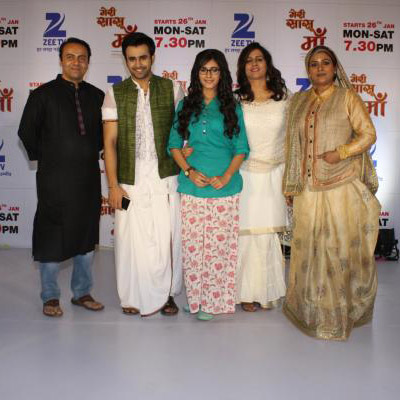
    MUMBAI: With its first new fiction offering for 2016, Zee TV is aiming for a fresh approach albeit with a much saturated concept. The channel is all prepped to launch Meri Saasu Maa on 26 January, which will be aired from Monday to Saturday at 7.30 pm.

    The new infinite fiction show comes from the makers of popular serials like Yeh Rishta Kya Kehlata Hai, Navya and Mahabharat. The show will be produced by Mumtaz Saba Productions — a collaboration between Saba Mumtaz, Siddharth Tewary and Rahul Kumar Tewary of Swastik Productions.

    Explaining the concept behind the show, Mumtaz shares, “Our protagonist is a young 22 year old girl, whose biggest aspiration in life is to find a mother in her mother-in-law. Pari is a Cinderella troubled by her step-mother and siblings, but the only distinction is that she is looking for a mother in her marriage rather than a Prince Charming. She wants a world where her mother will embrace her with open arms every time she enters the house. Pari’s positive thoughts and belief in finding a mother in her mother-in-law will drive her actions. Meri Saasu Maawill be a highly relatable show and every woman out there will empathise with Pari.”
     

    Talking about the new show, Zee TV business head Pradeep Hejmadi adds, “For years, we have seen shows on television exploring the stereotypical relationship of a saas and bahu, where the two are placed at loggerheads, constantly scheming and plotting against each other. Times have changed now and so have relationships. Meri Saasu Maa is our attempt to showcase the changed relationships in society.”

    The show will replace Qubool Hai in the 7.30 pm time slot. Hejmadi adds, “Qubool Hai has been one of our longest running, successful shows with a glorious run of almost three years. We have introduced several exciting sub-plots that have intrigued the audience. It’s now time to make way for another interesting story.”

    With BARC rural inclusive ratings coming in the picture, the industry seems to have woken up to rural and Tier II and III towns, which still enjoy saas bahu sagas over modern contemporary shows. More so, advertisers and content producers are also keen to grab a pie of these eyeballs, which forms almost 50 per cent of BARC’s sample viewership. One can’t help but wonder if the need to cater to these freshly discovered eyeballs is leading broadcasters to return to their tried and tested ‘saas bahu’ formula for GECs.

    “I consider that we are leaders in rural. A lot of the shows we do, we curate from the point of view that the content should also work in LCs and smaller cities and towns, making sure that it resonates with viewers from across markets. We will continue in that direction, keeping our rural and Tier II and III viewers in mind. I feel that in order to achieve that there is no reason to treat a story very differently. Viewers in these pockets are very aspirational, so a familiar storyline that offers a different approach and solution to an issue they relate with, will resonate well with them,” Hejmadi opines on the matter.
     

    Having said that, Mumtaz asserts that she kept viewers beyond the metros in mind when curating content for the show. “With the rural viewership ratings coming in the picture, we tried to keep small towns and rural preference and taste in mind when conceptualising the show. The show also covers the majority of the demography in those markets who are more likely see the show at 7.30 pm. We do a general survey each time before coming up with a show on who’s watching what. We carry it out in metros as well as small markets, and accordingly the show is crafted,” she reveals, adding that the entire process took close to six months to complete.
     

    It is interesting to note that the show’s time slot of 7:30 pm too plays a vital role in targeting a mixed demography and preferred market for the show. “For us, 7.30 pm is an important time slot to place tent pole shows. While curating content we paid special heed to come up with something that resonated with the two demographies — the younger generation, the daughters-in-law and the mothers-in-law, who form the bulk of our viewership in that time frame,” says Hejmadi.

    With the show’s content carefully crafted to strike a chord with both metros and beyond, Zee TV is confident in keeping advertisers happy. The show has already got on board Patanjali as its primary sponsor. “We are in conversation with several other brands to come onboard as sponsors and advertisers for the show,” Hejmadi informs.
     

    “Since most advertisers move according to eyeballs, they are waiting for the numbers to come out as soon as the sow releases and and gains momentum. The response from consumers to the show’s promos has been good and we have received several letters from fans and followers who are eagerly waiting for the show,” he adds.

    So far the channel has released several TV promos that are being heavily pushed through its network channels. “Since the audience we are targeting is a domestic audience that we cater to, it only made sense to heavily promote our show through the network and our electronic arms. Going outdoors with hoardings didn’t fit in our marketing strategy for the show,” Hejmadi says. However, he adds that the show will see some digital presence to reach out to a younger audience that the channel feels can resonate with the contemporary outlook of the protagonist in the show.

    The shows that Meri Saasu Maa will be pitted against on other Hindi GECs in the time slot are: Ye Hai Mohabbatein on Star Plus, Crime Patrol Dial 100 on Sony, Adhuri Kahani Hamari on &TV, Sasural Simar Ka on Colors and Zindagi Abhi Baaki Hai Mere Ghost on Life OK.

  • Colors to launch second season of ‘Mission Sapne’ on 17 January

    Colors to launch second season of ‘Mission Sapne’ on 17 January

    MUMBAI: After the successful first season of Mission Sapne, Colors is all set to launch the second season starting from 17 January at 11 am every Sunday. 

    Produced by Sobo Films, Mission Sapne Season 2 will feature 10 celebrated entertainers who will showcase their talent as they work their magic to learn the professional ongoings and tricks of the trade to raise funds in support of a deserving commoner.

    Speaking to Indiantelevision.com about the second edition of Mission Sapne, Sobo Films director Smruti Shinde said, “I think television is a very strong medium to highlight causes which are read about in the newspapers or seen on news channels. The reason I want to do this show on a GEC was because of the show’s strong entertainment quotient. It doesn’t drag or get boring when you talk about social causes and through entertainment you are able to help that one person or highlight good causes, which needed that kind of attention.”  

    Mission Sapne provides dramatic entertainment with a strong social message as entertainers from different industries willingly live the common man’s professional life for a day. Talking about the research done for the show, Shinde informed, “We did three months of research before going on air. We have a research team, which systematically goes through a lot of cases. We interview people from different walks of life. India is a place where you have many such cases and we cannot help each one of them but with our small initiative we can at least highlight such cases.”

    The first season of Mission Sapne was launched on 27 April, 2014 on Colors. The show was aired at 8 pm every Sunday. This time round, the 10 episodes series will see some changes as the production house will focus more on creating awareness than raising funds for the people.

    “After the first season, we realised that there are many people that we need to help through the show. We decided that we should also talk about the different causes besides helping the individuals. We need to highlight social issues as well. Therefore, this season will have a few important causes, which need to be talked about. We are creating awareness and sending messages through celebrities on issues like farmer suicides, HIV and molestation. We are trying to highlight social causes this season rather than helping individuals. Also, this season we will have lot of women star power on the show,” she informed.


    The second season will also see some important issues like women empowerment. Talking about the selection process, Shinde said, “We picked up the cases, which are relevant in today’s time. There was no particular criteria as such for selecting people. We come across some people that really need help, so we help them.”


    Sharing her experience of working with Colors CEO Raj Nayak, Shinde shared, “A couple of years back we launched this show Bole Toh Malamaal in Marathi on Mi Marathi. Raj Nayak had wanted us to bring it on Hindi GEC so that we can create more awareness through the show. It’s been superb working with him. He has been a big support throughout the journey of Mission Sapne. Viacom, Colors and Raj Nayak supported it to a great extent and I think it’s their own CSR initiative to come on the show and not taking any money.”

  • Star Plus set to replace ‘Sumit Sambhal Lega’ with RDP’s ‘Tamanna’ on 1 February

    Star Plus set to replace ‘Sumit Sambhal Lega’ with RDP’s ‘Tamanna’ on 1 February

    MUMBAI: Star Plus is all set to replace the Indian adaptation of Everybody Loves Raymond – Sumit Sambhal Lega, with a new show called Tamanna, from 1 February.


    The show, produced by Ramesh Deo Productions, will be aired at 10 pm from Monday-Friday. 


    Meanwhile Sumit Sambhal Lega, which went off air on 9 January, will enjoy its presence on the channel till 30 January in the form of Best of Sumit Sambhal Lega during the same time slot of 10 pm.


    Tamanna is based on the life of a female cricketer. The story will revolve around a woman who wants to become a cricketer and the sacrifices she makes to make her dream successful. 


    Tamanna in the 10 pm time band will be pitched against others programmes across Hindi GECs like Colors’ prime time show Meri Aashiqui Tum Se Hi, which is among the top rated show in Broadcast Audience Research Council (BARC) India rating. On the other hand, it will also compete against Zee TV’s Yeh Vaada Raha, Life OK’s Savdhan India, India fights Back; Sab TV’s new show Sahib Biwi Aur Boss, which was launched on 21 December, &TV’s Begusarai and Sony Entertainment Television’s Power Couple. 

  • Star opposes differential data pricing on websites;draws analogy with MSOs & channel placement

    Star opposes differential data pricing on websites;draws analogy with MSOs & channel placement

    NEW DELHI: Opposing differential pricing for data usage for accessing different websites, applications or platforms, Star India has said this violates the core principles of differential pricing, as well as alters and distorts the role of telecom service providers to acting as an interested party instead of just providing telecom services.


    Responding to the Telecom Regulatory Authority India’s (TRAI) Consultation Paper on Differential Pricing for Data Services, Star India said it will open the door to unholy alliances between TSPs and content providers to play the role of gatekeepers for both consumers as well as other content providers. 


    “If differential pricing is permitted, then all the principles of non-discrimination, transparency, affordable access, healthy competition and innovation are likely to be severely violated. In fact, it will represent a big reversal in achieving the vision of Digital India,” Star India said.


    However, the broadcaster said that it had a fundamental concern that has been at the heart of the creative industry in all ongoing discussions and deliberations on “Net Neutrality.” Star India said it must be noted that the owners of copyrightable works are granted the exclusive right to exploit or authorise the exploitation of their works in accordance with market practices. It must further be noted that even under the Act exclusive licensing arrangements are not treated as being presumptively anti-­competitive in nature. This would therefore mean that exclusive licensing would be subject to a case to case examination for an appreciable adverse effect on competition. Consequently, this would mean that instead of being subject to broad brush and overarching regulation or rules, which impose restrictions or are in conflict and in effect unwind or defeat the statutory rights granted to the owners of copyrighted works under copyright law, the legislature has determined that such  conduct would be subject to a case to  case examination. 


    “Clearly there is no justifiable and cogent reason to change this policy at this time. Whilst the principles of net neutrality are of utmost importance to ensure a transparent world wide web, it is pertinent that market forces should determine the relationship of TSPs, content providers and other parties active in the digital environment to foster innovation, creativity and the development of a hyper competitive yet nascent content industry. In a nascent industry still coming to grips with business models, pricing strategies, consumption patterns, it is imperative for the TRAI and the Department of Telecom to understand that the economics of industries dependent on Intellectual Property rights for value creation are very different from economics of TSPs/ ISPs and other distribution pipes and thus superimposing a Network centric regulatory construct on content creators would be akin to putting a square peg in a round hole. In effect the net neutrality principle has never been applicable to or determined how content is licensed but   rather to the behaviour of distribution pipes and network service providers. We will therefore urge both TRAI and DOT to shape and delineate the debate and discourse on Net Neutrality accordingly,” the broadcaster said.


    The arguments against differential pricing are clear and substantive, Star India said. Firstly, allowing differential pricing violates the core principles of tariffing: that they are non-discriminatory in nature and that they are not anti-competitive.


    Star India added that allowing the TSP to charge differently for different uses of data (or different “termination points” of data) “essentially creates a tariff regime where the TSP creates different classes of subscribers based on the kind of content they want to access.” In addition, by allowing the TSP to determine different prices for different websites, applications and platforms, the regime allows TSPs to fundamentally alter the nature of competition between these websites, applications and platforms in a manner not linked to the quality of the services they deliver to consumers, and the business models of their choosing.


    Secondly, giving TSPs the power to do differential pricing “fundamentally alters and distorts the role of TSPs from that of providing a telecom service (provision of data), for which it has been licensed and  for which it uses public resources like spectrum, to that acting as an interested   party intermediating between consumers and the websites, applications and  platforms that these consumers choose to use. Not only is this counter to the license under which TSPs provide services but it also introduces the damaging potential of TSPs being incentivised to extract unfair value from its presence as an intermediary with the power to dramatically change the nature of the relationship between users and service providers. Focus on playing this intermediary role is also likely to distract the TSP from its primary role of providing better and cheaper access to telecom services (including data) for a larger and larger number of users in India.


    Thirdly, differential pricing from TSPs will open the door to unholy alliances between TSPs and content providers to play the role of gatekeepers for both consumers as well as other content providers. Differential pricing will enable large incumbents to create a framework with TSPs that allow them, covertly or overtly, to create different versions of the Internet: an Internet that they package and control, available at a lower price and including only the content and service providers that have chosen to play by the rules established by the large incumbents, and a less privileged Internet: expensive, more difficult to discover, and occupied by the smaller players who do not have the financial ability and muscle to take on powerful incumbents. The most likely scenario is that bigger websites and app platforms will be able to strike deals with TSPs while the smaller players will be left in the cold. The premium that shall be paid by the larger players to the TSPs would provide the necessary incentives for TSPs to differentially price data whereby the bigger players will have better traction with users owing to the resultant subsidy that shall be factored in the data costs.


    Star India said, “We have already seen the harmful effects of such arrangements between carriage and content playing out in the cable and satellite space. MSOs instead of consumers have been prioritising the content to be carried in their cable platforms. The basis of such prioritisation on the part of the MSOs is the Carriage and Placement fees being paid by content owners. This anti-competitive behavior by MSOs have led to small content providers being hit the most as carriage and placement fees act as entry barriers for new content providers. Given that the MSOs own the last mile, they are in a position to abuse their dominance by squeezing as much carriage and placement fees possible from content providers. Instead of consumer choice shaping retail packaging by MSOs, it is carriage and placement fees that prompt MSOs to deliberately prioritise, package and push unwanted channels to the detriment of the consumer. The consumer ends up paying for content that he has no desire to subscribe for, in the first place.”


    In addition, it is almost guaranteed that TSPs will differentially price data to promote their own in-house applications, websites and platforms to the detriment of better, cheaper applications, websites and platforms from competing providers.


    “Nothing will stifle innovation more decisively than enabling such a scenario to emerge,” Star said.


    As the consultation paper suggests, just like in the early days of the voice regime, the same principles should apply to “on-net” as well. Given the data usage and ecosystem is still very early, it is imperative that the non-discrimination applies equally to on-net and off-net.


    Star India added, “It also violates the basic tenet of Internet access: that the flow of information is free (subject to the laws of the country) and no private player can determine what information can be accessed and what is less easily available. In fact, it is pretty obvious, as is evident in the mass disinformation campaign around the idea of a “free Internet” in the last few weeks, that such a framework is but a naked offer to large, for-profit, self-interested incumbents to present themselves as arbitrators of what  is “essential” and “basic.” We have seen the power of a single social media company to present an entirely new definition of the Internet with a level of marketing spend and lobbying that is unprecedented in the country. The effort seems to be to hoodwink the regulator into allowing a practice that is clearly discriminatory in nature. History teaches us that no government or regulator should ever allow the definition of public good to be set, managed and controlled by interested private parties.”


    “Fourthly, we already have a system in which net neutrality is under attack in many ways; where consumer choice is stifled and incumbents set the rules of the game. Therefore, allowing TSPs to do differential pricing will sound the death knell on the idea of a free and neutral Internet,” the broadcaster voiced. 


    The same exploitation of dominance extends to search as well. A dominant search provider is the gateway to the Internet in India with search neutrality not even up for discussion.


    Lastly, even with moderate expansion in access to data, India has seen an explosion in websites, applications and platforms that have had a dramatically positive impact on the country’s GDP growth and in generating employment. Creating a new regime that has the potential of introducing artificial distortions at a critical stage may have a devastating impact on the number and diversity of applications and services, and therefore on GDP growth and employment.


    Star India said its strong stand on net neutrality and differential pricing from TSPs is not meant to stifle companies from doing what is right for their consumers and what is right to grow their private enterprises. “We strongly believe that websites, applications, and platforms non-financial in nature, based on their own economic models and principles. But these transactions should be firmly between the consumer and the website/application/platform. Such incentives are a regular order of business in the offline world as well and limiting the ability to provide such incentives will have a devastating impact on innovation and the emergence of new business models. However, we do not see any role for a TSP in any such transaction,” Star India said.


    It added, “We are deeply supportive of the underlying objective evident in the consultation paper: expanding Internet access to the largest number of consumers in the country as possible in the shortest period of time.”


    Instead of using differential pricing to employ this goal (and it is quite clear that differential pricing will only lead to reduced access) with the attendant risks of market distortions, Star suggested that a more direct path be employed to achieve it. It said that many alternate routes are possible to expand free Internet access to consumers, including: free access for rural consumers, time based models that allow TSPs to provide free Internet access consumers at certain time periods when the network utilisation is low; introductory models allowing TSPs to provide free Internet access to new consumers (those who are new to the Internet or are using data on the TSP’s network for the first time); or public or community networks.
  • Curtains down on Amitabh Bachchan’s ‘Aaj Ki Raat Hai Zindagi’ on 10 January

    Curtains down on Amitabh Bachchan’s ‘Aaj Ki Raat Hai Zindagi’ on 10 January

    MUMBAI: Amitabh Bachchan completes yet another inning on television as his non-fiction show on Star Plus – Aaj Ki Raat Hai Zindagi comes to an end.

    Being a finite series, the show had a life of 13 episodes and will air its last episode on 10 January.

    A source close to the development informs Indiantelevision.com that Big B signed a Rs 1.5 crore deal with Star for hosting the show. What’s more, the ad rates for the show’s 10 second slot was Rs 2 lakh.

    Additionally, the channel had roped in Maruti Suzuki as the presenting sponsor and Cadburys Dairy Milk as the powered by sponsor for the show. 

    However, despite have oodles of celebrity quotient on the show as well as having a unique feel-good factor, the show failed to generate good ratings for the channel. 

    “It didn’t do well in the terms of ratings. Despite bringing in so many celebrities on the show, it didn’t prove a profitable proposition for the channel,” said a senior media planner, on condition of anonymity.

    Dentsu Aegis Network South Asia chairman & CEO South Ashish Bhasin opined, “It’s true that having a celebrity onboard a show does give it an edge. Therefore it is helpful in the initial few days to set up its fan base and audience. But in the long run that won’t sustain a show. Ultimately it’s the content of the show that will retain eyeballs. Advertisers understand this as well. They might want to take advantage of the initial popularity of the show for a celeb, but for continuous investment they will go for a show that is doing well long term.”

    Star India COO Sanjay Gupta said, “Star India has always endeavoured to explore new and disruptive content – one that can fuel a billion imaginations. Aaj Ki Raat Hai Zindagi is one such show that, at its heart, captured the ethos of Star. Through this 13-episode finite series, our vision was to celebrate the extraordinary deeds done by ordinary people thereby inspiring people to believe that they too can make a difference and positivity can triumph. By celebrating the inherent goodness in people, we believe that people will be inspired by the feel-good and do-good spirit of the show long after the series reaches its culmination.”

    On 10 January at 8 pm, the show’s finale will see the legendary Jai-Veeru moment from Sholay being recreated on the stage of Aaj Ki Raat Hai Zindagi along with a surprise performance by Farhan Akhtar for Bachchan. 

    Whether the channel brings back the show for a second season, remains to be seen.

  • Ipsos launches location-based customer satisfaction tracking service in APAC

    Ipsos launches location-based customer satisfaction tracking service in APAC

    MUMBAI: Ipsos has launched a new suite of tools to conduct location-based surveys in Asia-Pacific, starting with Japan and Australia.


    The new offering is powered by the Google Consumer Surveys platform that allows users to survey a representative sample of their target population among millions of respondents across the web and mobile devices.


    Ipsos had introduced geo-triggering capabilities through its own mobile application, currently in use in more than 80 countries. Today’s announcement brings an additional capability to reach users in Japan and Australia.


    Geo-triggering – the ability to share a survey to a respondent’s smartphone when they enter/exit a certain location – enables marketers to better reach consumers and shoppers in a wide variety of situations, including when entering or exiting a shopping area or before or after attending an event.


    With an ever-changing marketing landscape, being able to reach consumers in a particular location is critical. As such, Ipsos now offers its clients one of the most comprehensive suites of mobile-driven solutions, to deliver in-the-moment insights.


    Ipsos Interactive Services APAC CEO Arnaud Frade said, “Our clients need more immediate and faster insights, to inform marketing and sales activities at the same speed as their now consumers and shoppers operate – this great partnership offers yet one more option to do this.”


    Google Consumer Surveys APAC partnerships manager Valentin Cornez added, “We are excited to be working with Ipsos on this new initiative. e’re interested to see how the combination of our Google Consumer Surveys platform with Ipsos’ research expertise will drive new and differentiating insights to our users.”


    As part of our launch activities, an exclusive client seminar, reserved to Ipsos clients, will be held in Tokyo on 13 January. A similar event will also take place in Sydney at a subsequent date.

  • Viacom18 to simulcast Golden Globes on Colors Infinity, Vh1 & Comedy Central

    Viacom18 to simulcast Golden Globes on Colors Infinity, Vh1 & Comedy Central

    MUMBAI: Viacom18’s three channels Colors Infinity, Vh1 and Comedy Central are all set to kick-start this year’s international awards fever by airing the 73rd Annual Golden Globe Awards in India.


    The evening will be simulcast across all three channels straight from Beverly Hills, California on 11 January at 7.30 am with a primetime repeat at 9 pm.


    While this is the first time for Colors Infinity and Comedy Central to air the prestigious awards, Vh1 will be airing the Golden Globe Awards for the fifth time in a row with Erstwhile Golden Globe winner, Ricky Gervais returning with his sensational humour as host for the third consecutive year.


    Viacom 18 EVP and business head English entertainment Ferzad Palia said, “After airing the prestigious and critically acclaimed Golden Globe Awards on Vh1 for four years in a row, we are excited to present yet another edition of the Golden Globes; this time, across all our English Entertainment channels. All nominees are well-deserving and we are especially happy with Colors Infinity’s show Mr. Robot leading the television nominations. With the 73rd Annual Golden Globe Awards, we kick start the year with one of the most glamorous and prestigious awards on television.”


    Carol leads the race this year in the films category with a maximum of five nominations. The other major nominations include Mad Max – Fury RoadBrooklyn and The Martian. The evening will witness a fight for the coveted award by actors such as Leonardo DiCaprio, Cate Blanchett, Kate Winslet, Will Smith, Matt Damon, Al Pacino and Jennifer Lawrence, to name a few.


    Two time golden-globe award winner Denzel Washington will be honoured with 2016 Cecil B. DeMille Award for his outstanding contribution both on screen and behind the camera. His achievements as a filmmaker and a performer have earned him a total of seven nominations across the years.


    In the television categories, Robot leads the nominations followed by shows like Game of Thrones, Orange is the New Black and Fargo.

  • Rishtey refreshes content line-up; extends early prime-time slots

    Rishtey refreshes content line-up; extends early prime-time slots

    MUMBAI: In light of free to air (FTA) channels claiming a chunk of ratings according to the all India data by the Broadcast Audience Research Council (BARC) India, Viacom18’s FTA channel Rishtey is all set to ride the wave by launching a volley of fiction offering covering seven days a week as well as by extending its early prime time slot. Additionally, the channel will be sprucing up its weekend programming by introducing kids-friendly content and airing blockbuster movies.

    What’s more, along with the introduction of new shows, Rishtey will also be refreshing its channel packaging.

    With festivities kicking off in style, Rishtey’s first major outing in 2016 will be the launch of a romantic drama Salaam-E-Ishq, a love-hate story of Zain and Aliya set against the Muslim milieu. The show is set to launch on 11 January and will be aired from Monday t0 Saturday at 9 pm. Pertinent to note here is that this is the same show that previously had its run on Rishtey’s sister channel Colors as Beintehaa.

    Aiming to cater to audiences across age-groups and demographics, the channel will also be extending its early prime time slot, starting from 5 pm with the introduction of shows like Pammi Pyarelal at 5pm , Hamari Saas Leela at 5.30 pm,  Kitni Mohabbat Hai at 6pm and Yeh Pyaar Na Hoga Kam at 6.30pm.  

    In 2016, Rishtey will also be giving prominence to kids’ entertainment and focus on interesting content that will cater to the young audience as part of its Sunday morning programming.

    The fun filled animated series Chhoti Anandi will capture adventures of an eight year old brave and righteous kid Anandi as she explores innumerable escapades in the company of her friends. Additionally the enchanting tales of Vikram and Betal in Kahaani Vikram Betal Ki will further strengthen the entertainment quotient on Sundays. Chhoti Anandi will air from 17 January at 10 am and will be followed by Kahaani Vikram Betal Ki at 11 am.

    What’s more, the channel will also be showcasing the Sansui Colors Stardust Awards, which will be aired on 10 January at 7 pm.

    Some of the movie premieres lined up on the channel include movies of 2015 like Manjhi and Pyaar Ka Punchnama 2.

    Along with the content line up, Rishtey will engage viewers with a series of marketing activities, which includes daily as well as weekly on air contests.


  • IBF urges Centre to grant ‘infrastructure status’ to broadcasting industry

    IBF urges Centre to grant ‘infrastructure status’ to broadcasting industry

    MUMBAI: In a bid to push the digitisation agenda, the Indian Broadcasting Foundation (IBF) today urged the Union Government to grant “Infrastructure Status” to the broadcasting industry, including direct to home (DTH) and cable sectors.


    At a pre-Budget consultation meeting, chaired by Union Finance Minister Arun Jaitley, IBF stressed that the expected investment in STBs (set-top boxes) and optical fibre network alone would be to the tune of Rs 25,000 – 30,000 crore.


    “In the present era of convergence, distinction between Telecom, IT and Broadcasting sectors is getting blurred. Telecom is already treated as an ‘infrastructure service.’ Broadcasters and distribution platforms will be aided with better and affordable financing options in the present capital-intensive growth phase if broadcasting sector is accorded infrastructure status. This will also provide a level playing field to the broadcasting sector with telecom and ISP industry,” IBF secretary general Girish Srivastava said at the high level meeting.


    The Foundation also urged the Government to reduce customs duty on STBs to five per cent from the present 10 per cent. “The Finance Act, 2013 had increased customs duty on STBs to 10 per cent from earlier five per cent. In order to push digitisation, customs duty on STBs should be reduced to the earlier level of five per cent if not entirely removed,” Srivastava added.


    On the direct tax front, IBF urged the Finance Ministry to allow carry forward of losses in case of amalgamation/merger. “Currently all industrial undertakings in manufacturing, software, electricity and telecom sectors are allowed carry forward of losses in case of merger/amalgamation. Media and Entertainment industry should be granted a similar status by amending Section 72(A)(7)(aa) of the Income Tax Act,” IBF said in its presentation.


    Another proposal presented by IBF related to tax withholding on transponder charges. Finance Act, 2012 retrospectively included payment of transponder hire and other charges as royalty. However, these are not regarded as royalty under DTAA definition of royalty. IBF requested the Ministry of Finance that the definition of royalty under the Indian Income Tax Act and Treaty (DTAA) be aligned so that the credit of withholding tax is available to the foreign satellite service providers.

  • RBNL rebrands Big Magic Ganga as Big Ganga

    RBNL rebrands Big Magic Ganga as Big Ganga

    MUMBAI: Reliance Broadcast Network Limited (RBNL) has received approval from the Ministry of Information and Broadcasting (MIB) to rebrand its Bhojpuri channel Big Magic Ganga as Big Ganga.


    The network had earlier reached out to the Ministry to allow it to change the channel’s logo and name.


    The Big Ganga channel will sport a new logo and the change has primarily been brought about to create a distinction between its two channels – Big Magic and Big Magic Ganga.


    Speaking to Indiantelevision.com, RBNL COO Ashwin Padmanabhan said, “This change will not change the ethos of Ganga. We will continue to explore new opportunities and create new shows to give brands a bigger platform to garner more eye-balls.”


    The network received the approval in 31 December, and the new look will be unveiled from today (6 January).