Category: GECs

  • Consistency &Change in ZEEL’s topline FY ’15-16 growth

    Consistency &Change in ZEEL’s topline FY ’15-16 growth

    MUMBAI: Consistency and change are the buzzword in Zee Entertainment Enterprises Ltd (Zeel)’s new swanky office, spread over several floors, in India’s financial capital. And these two words also are also the guiding factors for the company as it continues to spread its wings globally even while consolidating its position at home.

    While company chairman and promoter of India’s first private satellite TV channel(s) Subhash Chandra feels digital is the way forward, taking a macro view, the team at ZEEL, led by Chandra’s elder son, Punit Goenka, peg away at initiatives to make the company bottomline blacker and live up to the visions of the visionary chairman.

    That’s why even in the international market, the group has successfully taken ZEEL’s popular domestic content in the original as well as repurposed form to focus not just on the South Asian diaspora, but on a wider cross section of global audiences in 171 countries.

    Media mogul Subhash Chandra led Zee Entertainment Enterprises Ltd (Zeel) has registered the net profit for the year 2015-16 Rs 10, 267 million representing a margin of 17.5 percent.  This paper is based on Zeel’s Annual report for FY-2015- 16.

    “We are a local player in the markets we enter, identifying content The lines between global and local are getting increasingly blurred. ZEEL is focused on enhancing reach and emerging as a truly world-scale player in the M&E segment,” ZEEL said in its annual report for FY 2015-16 ending March 31, 2016.

    Sample some consolidated facts put out in the annual report: net profit of Rs 10, 267 million representing a margin of 17.5 percent; consolidated revenues of Rs 58,515 million representing a growth of 19.8 percent over previous year; operating profit (EBITDA) of Rs 15,095 million registering a 20.4 percent growth and resulting in a margin of 25.8 percent; Rs 34,297 million in ad revenue; Rs 20,579 million subscription revenue; 33 domestic channels and 38 international channels; Facebook fanbase of 5,10,000 plus and a 1,98,000 plus Twitter family.

    “Zeel has grown steadily since inception establishing itself as a dependable brand and organisation that is efficiently managed, well-governed and forward thinking. Our performance in FY 2015-16 is a further testimony to these practices. Our growth has been ahead of the market growth trajectory, duly reflected in the growing viewership share of our network (17.9 percent),” company MD and CEO Punit Goenka said in his director’s report in the annual report.

    To further strengthening the viewership share in the domestic market through a right-fit content strategy, Zee’s new Hindi GEC, &TV, built onto its successful launch and increased its popularity with the urban audience.

    Noting that the new audience measurement system rolled out by BARC is a welcome change especially as rural audiences are also been counted, Chandra observes, “This (rural audience measurement) is an important reset for all players as strategies are being revisited or drawn afresh. For Zee this is a welcome step given the depth and breadth of our content offerings and the reach of our channels.”

    The Zee network in India has four Hindi general entertainment channels, including Zee TV, Zee Anmol, Zindagi and &TV. While in the regional category, the brand has six channel under its umbrella and four channels under the Hindi movie cluster. The group has two channels under music genre and two in its English entertainment section even as Zee Q is categorised under special and niche genre.  

    We list here some highlights of the Zee family as enumerated in the annual report.

    Hindi GEC highlights

    Zee’s first Hindi GEC Zee TV has ranked third amongst the HGEC in the FY 2015-16. The channel delivered a weekly average of 10 shows among top 50 shows, led by the highly- rated shows like Kumkum Bhagya, Jamai Raja, Tashan E Ishq and Ek Tha Raja Ek Thi Rani.

    The free to air channel Zee Anmol continued to maintain its number 1 position in the FTA GEC category. Shows like Jodha Akbar, Choti Bahu and Bandini were the top performing shows on the channel as per BARC rural data.

    Zindagi, a channel showcasing a mix of content of various hues, including some sourced from Pakistan, introduced original productions in FY 2015-16 starting with the first non-fiction show Shukriya. The channel also introduced Turkish content with the show Feriha, aimed at attracting younger audiences.

    The youngest member of the Zee family, &TV, which completed a year of operations in March 2016 continued to grow in popularity with urban audiences. It achieved 50 percent viewership growth since its launch month and 64 percent viewership growth in weekday primetime.

    Regional GEC

    As per the Annual Report, Zee Telugu increased its market share to become the number two channel in the Telugu GEC genre and number one channel in the urban Telugu market with 27.5 percent relative share in urban markets. The channel dominated the fiction genre with 35.4 percent relative share and the non-film viewership with 32.2 percent  relative share in urban market.

    ZEEL’s other regional channel, Zee Kannada, maintained the number two ranking in the urban Kannada GEC genre during the financial year under review.

    Zee Tamil’s growth is steady in the urban market with 6 percent relative share among Tamil GECs, whereas Zee Marathi maintained dominant leadership in Marathi general entertainment space with 50 percent market share.

    Zee Bangla grew to a stronger number two player with a 40 percent share in urban market, while Sarthak TV   maintained its no. 1 position in the Oriya market with over 50 percent market share.

    Hindi Movie Cluster

    The Hindi movies cluster was the market leader in its genre where it increased its viewership share to 34 percent despite a competitive environment with a significant increase in share of Zee Action and Zee Classic.

    Music Genre

    ZETC gained a 14 percent increase in urban and rural viewership since the inclusion of rural markets. Relative share of ZETC increased to 6percent in the music genre.

    Another music channel, Zing, witnessed a 28 percent increase in urban and rural viewership since the inclusion of rural markets in audience measurement. Relative share of Zing increased to 36 percent in the Youth GEC genre.

    English GEC

    Zee Café maintained its position as the most watched English GEC with a 24 percent market share. The channel boasts of an extensive library of some top US shows like House of Cards, Gotham, The Big Bang Theory, Grey’s Anatomy, Scandal, Two and A Half Men, The Vampire Diaries and Pretty Little Liars.

    Zee Studio had a packed year with Indian television premieres to woo audience. The channel has grown from a 9 percent share to a 13 percent share in FY 2015-16.

    Niche & Special Interest Genre

    Zee Q achieved a stable and consistent rating during a volatile period of market fluctuations. It is the default destination for all things ‘DIY’ or do-it- yourself.

    Sports Channels

    Ten Sports in FY 2015-16 focused on content acquisitions to increase revenue streams and expanding existing ones. Ten Sports concentrated on acquiring/ creating content that created long-term strategic value, a strong programming backbone and also strengthened production as a function.

    New initiatives

    In FY 2015-16, the brand created a new entertainment vertical – Zee Theatre. Zee Theatre created over 30 unique theatre productions during 2015-16 that are ready for showcasing, ZEEL said in its annual report. Of this, nearly 12 will be available as live performances while the entire catalogue will be available for screenings and broadcast. This initiative’s aim is introduce theatre to a larger audience, making it accessible to viewers at their convenience and position theatre as a viable career opportunity for talent.

    Zeal for Unity is another unique endeavour that aims to bring people of India and Pakistan together by creating a cultural bridge. Launched at the historic Wagah-Atari border, Zeal for Unity brought together 12 accomplished filmmakers from India and Pakistan. Their task: to collaborate and make films that change the way citizens of the two countries think about each other.

    It would be quite apt to summarise ZEEL’s journey in the words of company chairman, quoted in the annual report, Chandra as saying, “Just as consistency has been a hallmark of our journey, so has change!”
  • ZEEL deploys NexGuard forensic watermarking system in Mumbai

    ZEEL deploys NexGuard forensic watermarking system in Mumbai

    MUMBAI: In an effort to deter piracy, Zee Entertainment Enterprises Ltd. (ZEEL) has announced that it will deploy NexGuard forensic watermarking system at its Mumbai facilities. The technology will enable the forensic watermarking of its valuable video content with a unique identifier in post-production, making its worldwide distribution traceable and secure.

    This level of protection is particularly important for content owners looking at preserving the value of their content before it is aired.

    “Online piracy in India and worldwide is indeed a major threat for the overall media and entertainment industry. With Peer-2-Peer platforms and illegal re-streaming services flourishing in the subcontinent, we sensed a strong need to deploy solutions to protect our most important asset our content,” said ZEEL chief business officer Sunil Buch. “Using NexGuard forensic watermarking, we can now trace the source of illegal copies of each video asset at any point of the content lifecycle. This enhances our content security by many folds, and above all, it acts as a powerful deterrent against piracy.”

    ZEEL has chosen to deploy the NexGuard system in the form of software plug-ins for their transcoder farms, thereby ensuring a seamless fit in its existing content post-production and distribution workflow.

    “ZEEL’s content and channels are among the most popular in India and worldwide,” said NexGuard managing director Harrie Tholen. “With a global audience and very valuable assets at play, it was crucial for ZEEL to deter piracy and act quickly if it does take place. We are proud to be involved in helping ZEEL safeguard revenues through deterring piracy.”

    According to the Motion Picture Distributors Associations (India), India with over 1,000 original productions every year is the world’s most prolific movie producer. However, the South Asian power also ranks fourth among English-speaking countries for piracy, leading to significant potential revenue loss for content producers and distributors.

    NexGuard provides watermarking plug-ins for most commercially available transcoders as well as solutions for other file, tape and disc workflows. It has solutions for 4K/UHD and HDR support is under testing by the Hollywood studios.

    ZEEL is a global content company with a presence across 171 countries. With a rich bouquet of 33 domestic and 38 international channels, ZEEL reaches over 1 bn viewers across the world.

  • ZEEL deploys NexGuard forensic watermarking system in Mumbai

    ZEEL deploys NexGuard forensic watermarking system in Mumbai

    MUMBAI: In an effort to deter piracy, Zee Entertainment Enterprises Ltd. (ZEEL) has announced that it will deploy NexGuard forensic watermarking system at its Mumbai facilities. The technology will enable the forensic watermarking of its valuable video content with a unique identifier in post-production, making its worldwide distribution traceable and secure.

    This level of protection is particularly important for content owners looking at preserving the value of their content before it is aired.

    “Online piracy in India and worldwide is indeed a major threat for the overall media and entertainment industry. With Peer-2-Peer platforms and illegal re-streaming services flourishing in the subcontinent, we sensed a strong need to deploy solutions to protect our most important asset our content,” said ZEEL chief business officer Sunil Buch. “Using NexGuard forensic watermarking, we can now trace the source of illegal copies of each video asset at any point of the content lifecycle. This enhances our content security by many folds, and above all, it acts as a powerful deterrent against piracy.”

    ZEEL has chosen to deploy the NexGuard system in the form of software plug-ins for their transcoder farms, thereby ensuring a seamless fit in its existing content post-production and distribution workflow.

    “ZEEL’s content and channels are among the most popular in India and worldwide,” said NexGuard managing director Harrie Tholen. “With a global audience and very valuable assets at play, it was crucial for ZEEL to deter piracy and act quickly if it does take place. We are proud to be involved in helping ZEEL safeguard revenues through deterring piracy.”

    According to the Motion Picture Distributors Associations (India), India with over 1,000 original productions every year is the world’s most prolific movie producer. However, the South Asian power also ranks fourth among English-speaking countries for piracy, leading to significant potential revenue loss for content producers and distributors.

    NexGuard provides watermarking plug-ins for most commercially available transcoders as well as solutions for other file, tape and disc workflows. It has solutions for 4K/UHD and HDR support is under testing by the Hollywood studios.

    ZEEL is a global content company with a presence across 171 countries. With a rich bouquet of 33 domestic and 38 international channels, ZEEL reaches over 1 bn viewers across the world.

  • Sony Pictures Networks Distribution India announced no 1 company by Great Place To Work Institute

    Sony Pictures Networks Distribution India announced no 1 company by Great Place To Work Institute

    MUMBAI: Sony Pictures Networks Distribution India Pvt. Ltd. (SPND), the distribution arm and wholly owned subsidiary of Sony Pictures Networks India (SPN), has been ranked as the no. 1 company in the media industry by the Great Place To Work Institute, for 2016. SPND claims to be the only media company to feature yet again amongst the top 50 list for India’s Best Companies To Work For in 2016 having won this laurel for two consecutive years.

    The award was presented by the global research media company in association with The Economic Times. Sony Pictures Networks Distribution India Pvt. Ltd. undertook the Trust Index Survey which surpassed the average industry percentage of positive responses measured through five parameters credibility, respect, fairness, pride and camaraderie.

    Sony Pictures Networks India CEO NP Singh said, “We are honoured to win this laurel yet again and I congratulate this outstanding team for their continuous efforts and contribution towards the organisation’s success. A company is a reflection of its people and it is a wonderful feeling when employees reciprocate the sentiment and vision that we have envisaged for the company.”

    The Great Place to Work Institute is a firm that assists organisations to identify, create and sustain great workplaces through the development of high-trust cultures. In its 13 edition, India’s Best Companies to Work For study attracted participation from 791 companies, ranging across 20 industries, including participation from 20 companies from the media industry alone. This study was done with the most rigorous, credible and comprehensive methodologies to identify organizations in achievement of their goals. Over 1,50,000 employees were surveyed, making it the largest survey of workplace culture in corporate India.

    “Getting recognized as the No.1 Company in the media industry and receiving this honour for the second consecutive year is an incredible feeling and a moment of pride for us. It is a testament to our culture that fosters a great working environment. Our employees are our most valued asset and the reason we can accomplish our mission of exceeding expectations on every level, for our audiences, our partners, and the community. This recognition reflects our commitment and efforts to create fulfilling programs and career experiences for our employees,” added Sony Pictures Networks India president, distribution and sports business Rajesh Kaul.

    According to the Institute’s research, a great place to work is one where you trust the people you work for, take pride in what you do and enjoy the company of people you work with. At the best workplaces in India, 14% employees want to stay for a longer duration with the organization while 19% employees look forward to coming to work, as compared to others. It is an indisputable fact today that creating a great workplace is an integral part of an organization’s strategy.

    Sony Pictures Networks Distribution director HR Hema Malhotra, “It has been our constant endeavor to attract, nurture and retain talent to work in a cohesive and collaborative environment. We are proud of the SPND work culture and the holistic approach we take towards our employee’s overall well-being. We foster an environment where employees feel motivated, valued, and committed to driving great results. Our employees will continue to be our most important growth drivers. It is indeed encouraging to receive this recognition yet again and we will strive to continue being an employer of choice.”

    At SPND the work environment is all inclusive which is built through day-to-day relationships that employees experience and not just a checklist of programs and benefits. The company fosters an environment that supports and rewards excellence, honesty and fair dealing where employees are treated with mutual respect. Performance at SPND is recognized and rewarded, where employees are felicitated by the CEO and President of the company at an annual event.

  • Sony Pictures Networks Distribution India announced no 1 company by Great Place To Work Institute

    Sony Pictures Networks Distribution India announced no 1 company by Great Place To Work Institute

    MUMBAI: Sony Pictures Networks Distribution India Pvt. Ltd. (SPND), the distribution arm and wholly owned subsidiary of Sony Pictures Networks India (SPN), has been ranked as the no. 1 company in the media industry by the Great Place To Work Institute, for 2016. SPND claims to be the only media company to feature yet again amongst the top 50 list for India’s Best Companies To Work For in 2016 having won this laurel for two consecutive years.

    The award was presented by the global research media company in association with The Economic Times. Sony Pictures Networks Distribution India Pvt. Ltd. undertook the Trust Index Survey which surpassed the average industry percentage of positive responses measured through five parameters credibility, respect, fairness, pride and camaraderie.

    Sony Pictures Networks India CEO NP Singh said, “We are honoured to win this laurel yet again and I congratulate this outstanding team for their continuous efforts and contribution towards the organisation’s success. A company is a reflection of its people and it is a wonderful feeling when employees reciprocate the sentiment and vision that we have envisaged for the company.”

    The Great Place to Work Institute is a firm that assists organisations to identify, create and sustain great workplaces through the development of high-trust cultures. In its 13 edition, India’s Best Companies to Work For study attracted participation from 791 companies, ranging across 20 industries, including participation from 20 companies from the media industry alone. This study was done with the most rigorous, credible and comprehensive methodologies to identify organizations in achievement of their goals. Over 1,50,000 employees were surveyed, making it the largest survey of workplace culture in corporate India.

    “Getting recognized as the No.1 Company in the media industry and receiving this honour for the second consecutive year is an incredible feeling and a moment of pride for us. It is a testament to our culture that fosters a great working environment. Our employees are our most valued asset and the reason we can accomplish our mission of exceeding expectations on every level, for our audiences, our partners, and the community. This recognition reflects our commitment and efforts to create fulfilling programs and career experiences for our employees,” added Sony Pictures Networks India president, distribution and sports business Rajesh Kaul.

    According to the Institute’s research, a great place to work is one where you trust the people you work for, take pride in what you do and enjoy the company of people you work with. At the best workplaces in India, 14% employees want to stay for a longer duration with the organization while 19% employees look forward to coming to work, as compared to others. It is an indisputable fact today that creating a great workplace is an integral part of an organization’s strategy.

    Sony Pictures Networks Distribution director HR Hema Malhotra, “It has been our constant endeavor to attract, nurture and retain talent to work in a cohesive and collaborative environment. We are proud of the SPND work culture and the holistic approach we take towards our employee’s overall well-being. We foster an environment where employees feel motivated, valued, and committed to driving great results. Our employees will continue to be our most important growth drivers. It is indeed encouraging to receive this recognition yet again and we will strive to continue being an employer of choice.”

    At SPND the work environment is all inclusive which is built through day-to-day relationships that employees experience and not just a checklist of programs and benefits. The company fosters an environment that supports and rewards excellence, honesty and fair dealing where employees are treated with mutual respect. Performance at SPND is recognized and rewarded, where employees are felicitated by the CEO and President of the company at an annual event.

  • &TV’s new show ‘Tere Bin’ replaces ‘Meri Awaaz Hi Pechan Hai’ at 8pm time band

    &TV’s new show ‘Tere Bin’ replaces ‘Meri Awaaz Hi Pechan Hai’ at 8pm time band

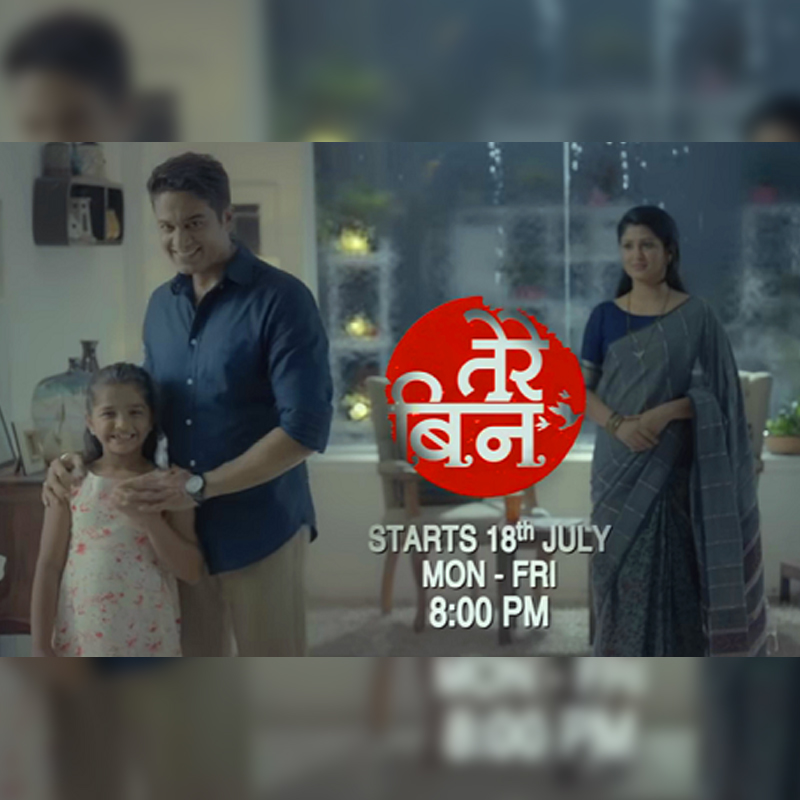
    MUMBAI: After launching new shows like Waaris, Life Ka Recharge and The Voice India, Zee Entertainment Enterprises Limited (ZEEL)’s other Hindi general entertainment channel (GEC) &TV is all set to launch a new show Tere Bin. Starting from 18 July, it will be aired from Monday – Friday at 8 pm.

    Produced by Shree Sidhivinayak Chitra, Tere Bin will replace the Nivedita Basu led House of Originals’ Meri Awaaz Hi Pechaan Hai at the primetime band. Launched on 7 March, 2016 the show is a finite series which marked the television debut of Bollywood actress Amrita Rao, who portrays the character of Kalyani, whereas Aditi Vasudev will be seen as her younger sister Ketaki will come to its logical end in July.

    The new show on &TV, is about a complex mature love story of two people. Tere Bin is based on love and separation. Gaurav Khanna and Shefali Sharma have been roped in as the lead actors of the show.

    &TV’s new offering Tere Bin will be pitched against Zee TV’s Tashan-e-ishq, Colors’ new offering Shakti- Astitva Ke Eshaas Ki, Star Plus’ mythological show Siya Ke Ram, Sony TV’s Sankatmochan Mahabali Hanuman, Life OK’s Bahu Hamari Rajnikant and Sab TV’s Bal Veer in the 8 pm time slot. &TV seems to be betting high with its new offering but only time will show how it will work for it.

  • &TV’s new show ‘Tere Bin’ replaces ‘Meri Awaaz Hi Pechan Hai’ at 8pm time band

    &TV’s new show ‘Tere Bin’ replaces ‘Meri Awaaz Hi Pechan Hai’ at 8pm time band

    MUMBAI: After launching new shows like Waaris, Life Ka Recharge and The Voice India, Zee Entertainment Enterprises Limited (ZEEL)’s other Hindi general entertainment channel (GEC) &TV is all set to launch a new show Tere Bin. Starting from 18 July, it will be aired from Monday – Friday at 8 pm.

    Produced by Shree Sidhivinayak Chitra, Tere Bin will replace the Nivedita Basu led House of Originals’ Meri Awaaz Hi Pechaan Hai at the primetime band. Launched on 7 March, 2016 the show is a finite series which marked the television debut of Bollywood actress Amrita Rao, who portrays the character of Kalyani, whereas Aditi Vasudev will be seen as her younger sister Ketaki will come to its logical end in July.

    The new show on &TV, is about a complex mature love story of two people. Tere Bin is based on love and separation. Gaurav Khanna and Shefali Sharma have been roped in as the lead actors of the show.

    &TV’s new offering Tere Bin will be pitched against Zee TV’s Tashan-e-ishq, Colors’ new offering Shakti- Astitva Ke Eshaas Ki, Star Plus’ mythological show Siya Ke Ram, Sony TV’s Sankatmochan Mahabali Hanuman, Life OK’s Bahu Hamari Rajnikant and Sab TV’s Bal Veer in the 8 pm time slot. &TV seems to be betting high with its new offering but only time will show how it will work for it.

  • Hindi GECs set sights on ad revenues

    Hindi GECs set sights on ad revenues

    MUMBAI: Change is the only constant is an oft-repeated cliché. And we have seen Hindi general entertainment channels brining in their changing streaks of programming every year. Known for setting trends and bold moves, Star India’s Hindi GEC Star Plus was the first broadcaster to open a new slot by extending its early fringe primetime from 5.30 pm onwards on 15 June, 2015 with Mere Angne Mein (MAM). The show failed to generate positive ratings, and hence later the channel changed the time slot and made it a half hour show and started airing it at 6pm.

    On May 9 Star Plus had reopened the slot with Beyond Dreams’ Jana Na Dil Se Door but later it changed the show’s timings and started airing it at the 10.30 pm time band. On the other hand, Zee TV extended its early primetime to the 6.30 slot with Vishkanya. Colors’ early primetime starts at the 6 pm time band whereas Sony Entertainment channel’s primetime starts from 8pm. Zee Network’s new entrant &TV has recently forayed into 7pm time band with its new show Waaris.

    The channels are not only experimenting with the content but also experimenting by expanding their primetime slot to increase ad revenue. Speaking about the extended primetime to Indiantelevision.com, Sunshine Productions founder Sudhir Sharma said, “It’s a good thing for producers and for the viewers as well. Instead of producing four hours of content they are now going to produce five to six hours of it. That also means that the business and the industry is improving and advertising revenue is coming up that is the reason why I think all the broadcasters have started increasing their primetime. There is the availability of clients/advertisers hence they are increasing their primetime slots.”

    Early time slots budgets are different and advertising fee for the ten second slot is different as compared to regular primetime. “This is a business decision that they are doing shows at 6pm or 630 pm. Now on every channel you will see there are the shows on early primetime. It will always be a fight to get ratings on early the primetime slot but that is what the challenge is about. There is a requirement and there are advertisers available. They will not pay the broadcaster as much as the 9 – 10 pm time slot, but that is business strategy,” Sharma further added.

    BBC Worldwide India SVP and GM Myleeta Aga added, “Extending primetime is a welcome thing. Different day parts will have different kinds of audiences. Of course the early fringe and primetime part will be more family co-viewing and maybe during the late part one can try some edgier content, but it’s not a huge change. It’s been there, everybody is trying things one project at a time to see what works.”

    It’s clear that the broadcasters’ decision to extend their primetime slot is not to garner more eyeballs but to attract additional advertising revenue. “Channels claim that 7 pm -12pm is their primetime while earlier it was 7pm – 11pm and even before that it was 8-10pm. It has changed with time and it has changed because of revenue pressure and not because of garnering more eyeballs. The audiences have not particularly increased during those time slots. If you look at the consumer class, it is larger in the metros. They have more money to spend in the larger towns than the smaller towns,” explained a media planner.

    On an average, the 10 second slot ad rate could be between Rs 7000 to Rs 10,000 for 5pm-6pm time band and Rs 15000 Rs 17000 for 6pm and 6.30 pm time slot. But the media planning fraternity believes that the placement of a show majorly depends on its content. “Star Plus has done a lot as a first mover and if the show is good you will find the audience. There is a sizable audience at 500 or 5.30pm, though it’s not as big as the primetime audience, but I think the slot offers a lot more potential. If the show is good then I am sure it will find the audience as well,” the media planner added.

    Undoubtedly, content is the king. The whole money game largely depends on what kind of content the channel is feeding to its consumer. Sharma further explained, “The latest release on Star Plus or Colors, Life OK, Zee or &TV for that matter — Humari Bahu Rajnikant or may be Ishqbaaz, which is launching today, there is a definite change in terms of storytelling, they are not only about a small town girl, how she survives or how she is in Sasural. Various topics are being taped which is a fantastic sign. There is a definite demand and need for different kind of programming.”

    “The main current trend in the industry that we are seeing about the kind of content is supernatural. That is certainly one trend. I think there continue to be attempts to have slightly different ways of storytelling. For example a new show on Life OK has a male lead as also on Star Plus’s Ishqbaaz. There is an appetite to try different things, but it’s not a huge change, it’s very small and subtle moves that broadcasters are making. The more bolder stuff is not necessaril resonating with the audience,” Aga opined.

    Weekend programming is another new trend that is affecting the Hindi GEC waves. Sunshine Productions is among the few production houses which tried to experiment with Gulmohar Grand.

    Sharma said, “We are one of the few production companies that have done many weekend shows. In India we haven’t tried fully and effectively weekend programming. Either the shows have not been marketed properly or they are too expensive to begin with. It’s a question of the viability for the producers and broadcasters versus popularity, there is no perfect match is what we have found.”

    “Weekend programming is still not a part of our viewing habits and it will take some time. We need some more consistent programming on weekends. We do it for a while and change and come back to nonfiction and back again to the daily shows on Saturday and Sunday. Unless you are doing it long enough for habits to form, it will be difficult to get good audiences on weekends for the episodic dramas,” Aga explained.

    Will this new trend of coining new slots as primetime work for the broadcasters? Is it sustainable? Will it work this time around? And though Content is King, the Advertiser is Emperor for the broadcaster and the Viewer is God for all these players. So will the King maker be able to convince the emperor and god/s on a sustainable repeatable basis? Only God can tell, or maybe even she/he/it can’t? Only time will, that is for sure! In the meantime hats off to the industry for making story telling so innovative, older stories more interesting, from another perspective, looking at a Ramayana from Sita’s angle or a Mahabharata from Karna’s point of view are cases in point, for creating additional jobs, for helping in the circulation of money, for …. The benefits go a long way across the value chain.

    Also read

    http://www.indiantelevision.com/television/tv-channels/gecs/star-plus-reopens-530pm-primetime-band-with-jana-na-dil-se-door-160509

    http://www.indiantelevision.com/television/tv-shows/fiction/zee-tv-joins-weekend-ratings-battle-with-amma-at-1030pm-time-slot-160616

  • Hindi GECs set sights on ad revenues

    Hindi GECs set sights on ad revenues

    MUMBAI: Change is the only constant is an oft-repeated cliché. And we have seen Hindi general entertainment channels brining in their changing streaks of programming every year. Known for setting trends and bold moves, Star India’s Hindi GEC Star Plus was the first broadcaster to open a new slot by extending its early fringe primetime from 5.30 pm onwards on 15 June, 2015 with Mere Angne Mein (MAM). The show failed to generate positive ratings, and hence later the channel changed the time slot and made it a half hour show and started airing it at 6pm.

    On May 9 Star Plus had reopened the slot with Beyond Dreams’ Jana Na Dil Se Door but later it changed the show’s timings and started airing it at the 10.30 pm time band. On the other hand, Zee TV extended its early primetime to the 6.30 slot with Vishkanya. Colors’ early primetime starts at the 6 pm time band whereas Sony Entertainment channel’s primetime starts from 8pm. Zee Network’s new entrant &TV has recently forayed into 7pm time band with its new show Waaris.

    The channels are not only experimenting with the content but also experimenting by expanding their primetime slot to increase ad revenue. Speaking about the extended primetime to Indiantelevision.com, Sunshine Productions founder Sudhir Sharma said, “It’s a good thing for producers and for the viewers as well. Instead of producing four hours of content they are now going to produce five to six hours of it. That also means that the business and the industry is improving and advertising revenue is coming up that is the reason why I think all the broadcasters have started increasing their primetime. There is the availability of clients/advertisers hence they are increasing their primetime slots.”

    Early time slots budgets are different and advertising fee for the ten second slot is different as compared to regular primetime. “This is a business decision that they are doing shows at 6pm or 630 pm. Now on every channel you will see there are the shows on early primetime. It will always be a fight to get ratings on early the primetime slot but that is what the challenge is about. There is a requirement and there are advertisers available. They will not pay the broadcaster as much as the 9 – 10 pm time slot, but that is business strategy,” Sharma further added.

    BBC Worldwide India SVP and GM Myleeta Aga added, “Extending primetime is a welcome thing. Different day parts will have different kinds of audiences. Of course the early fringe and primetime part will be more family co-viewing and maybe during the late part one can try some edgier content, but it’s not a huge change. It’s been there, everybody is trying things one project at a time to see what works.”

    It’s clear that the broadcasters’ decision to extend their primetime slot is not to garner more eyeballs but to attract additional advertising revenue. “Channels claim that 7 pm -12pm is their primetime while earlier it was 7pm – 11pm and even before that it was 8-10pm. It has changed with time and it has changed because of revenue pressure and not because of garnering more eyeballs. The audiences have not particularly increased during those time slots. If you look at the consumer class, it is larger in the metros. They have more money to spend in the larger towns than the smaller towns,” explained a media planner.

    On an average, the 10 second slot ad rate could be between Rs 7000 to Rs 10,000 for 5pm-6pm time band and Rs 15000 Rs 17000 for 6pm and 6.30 pm time slot. But the media planning fraternity believes that the placement of a show majorly depends on its content. “Star Plus has done a lot as a first mover and if the show is good you will find the audience. There is a sizable audience at 500 or 5.30pm, though it’s not as big as the primetime audience, but I think the slot offers a lot more potential. If the show is good then I am sure it will find the audience as well,” the media planner added.

    Undoubtedly, content is the king. The whole money game largely depends on what kind of content the channel is feeding to its consumer. Sharma further explained, “The latest release on Star Plus or Colors, Life OK, Zee or &TV for that matter — Humari Bahu Rajnikant or may be Ishqbaaz, which is launching today, there is a definite change in terms of storytelling, they are not only about a small town girl, how she survives or how she is in Sasural. Various topics are being taped which is a fantastic sign. There is a definite demand and need for different kind of programming.”

    “The main current trend in the industry that we are seeing about the kind of content is supernatural. That is certainly one trend. I think there continue to be attempts to have slightly different ways of storytelling. For example a new show on Life OK has a male lead as also on Star Plus’s Ishqbaaz. There is an appetite to try different things, but it’s not a huge change, it’s very small and subtle moves that broadcasters are making. The more bolder stuff is not necessaril resonating with the audience,” Aga opined.

    Weekend programming is another new trend that is affecting the Hindi GEC waves. Sunshine Productions is among the few production houses which tried to experiment with Gulmohar Grand.

    Sharma said, “We are one of the few production companies that have done many weekend shows. In India we haven’t tried fully and effectively weekend programming. Either the shows have not been marketed properly or they are too expensive to begin with. It’s a question of the viability for the producers and broadcasters versus popularity, there is no perfect match is what we have found.”

    “Weekend programming is still not a part of our viewing habits and it will take some time. We need some more consistent programming on weekends. We do it for a while and change and come back to nonfiction and back again to the daily shows on Saturday and Sunday. Unless you are doing it long enough for habits to form, it will be difficult to get good audiences on weekends for the episodic dramas,” Aga explained.

    Will this new trend of coining new slots as primetime work for the broadcasters? Is it sustainable? Will it work this time around? And though Content is King, the Advertiser is Emperor for the broadcaster and the Viewer is God for all these players. So will the King maker be able to convince the emperor and god/s on a sustainable repeatable basis? Only God can tell, or maybe even she/he/it can’t? Only time will, that is for sure! In the meantime hats off to the industry for making story telling so innovative, older stories more interesting, from another perspective, looking at a Ramayana from Sita’s angle or a Mahabharata from Karna’s point of view are cases in point, for creating additional jobs, for helping in the circulation of money, for …. The benefits go a long way across the value chain.

    Also read

    http://www.indiantelevision.com/television/tv-channels/gecs/star-plus-reopens-530pm-primetime-band-with-jana-na-dil-se-door-160509

    http://www.indiantelevision.com/television/tv-shows/fiction/zee-tv-joins-weekend-ratings-battle-with-amma-at-1030pm-time-slot-160616

  • Sony SAB heralds its new show, ‘Khidki’ in an innovative way

    Sony SAB heralds its new show, ‘Khidki’ in an innovative way

    MUMBAI: Sony SAB has undertaken an innovative and unique approach in promoting one of its new shows –‘Khidki’. What defines the new mini-series is that ‘real’ life funny stories sourced from audiences from all parts of Indiawill be dramatized, developed and adapted for the small screen. With the intention of crowd sourcing such genuineand cherished stories from viewers, thec hannel has embarked on a phase-wise campaign to create awareness about the show and invite entries.

    ‘Khidki’s ongoing publicity campaign has met with considerable success generating a total of 12,345 (twelve thousand and three hundred forty-five stories), thus far! The first phase of this campaign was devised to actively scout for comic content from consumers. From partnering with the micro-blogging site – Twitter to run a contest titled ‘#Tweetyourfunnystory’, to a live Q&A session with the producers of the show JD Majethia and Umesh Shukla onTwitter’s video-streaming app Periscope, the channel has pulled out all stops in ensuring that it stokes excitement amongst consumers in sharing some of their funniest stories. Sticking to its promise of presenting viewers ‘interesting, real life stories from every corner of India’, SAB has conducted an activation program in long-distance trains like Rajdhani, Shatabadi and Garib Rath. In addition, SAB has also run multiple promos on its home channel encouraging consumers to upload their funny stories on the microsite.

    From ushering the need for people to share some of their heartfelt stories in the first phase of the campaign, SAB has now decided to add momentum to its campaign movement by undertaking initiatives to drive tune-ins for the show in the second phase. Leaving no stone unturned in creating a buzz about the new show, the channel has embarked on a 9-series illustration-based print advertising campaign, each depicting the kind of story that will be featured in Khidki. The 9-insert campaign is being released across 23 national and regional publications. Further, illustration based outdoor hoardings will be put up across 10 towns. A radio jingle sung by Actor Raghubeer Yadav will be played across Hindi speaking market (HSM) stations and local trains.

    True to its personality of successfully connecting, entertaining and engaging with viewers, SAB has decided tolaunch ‘Khidki’ in a manner no different. For a show who’s USP is ‘real’ stories, the channel has decided to ride high on the ‘relatability’ aspect by getting its SAB Family Club members to unveil the show in different cities across India.

    ‘Khidki’s’cast will feature a set of recurring actors like Sarita Joshi, Rajeev Mehta and Lubna Salim to name a few who will portray different characters in different stories, along with narration by host JD Majethia, who is also the producer of the show. Each story will be weaved in episodes designed to last for minimum of three to eight episodes, depending on the length of each story.